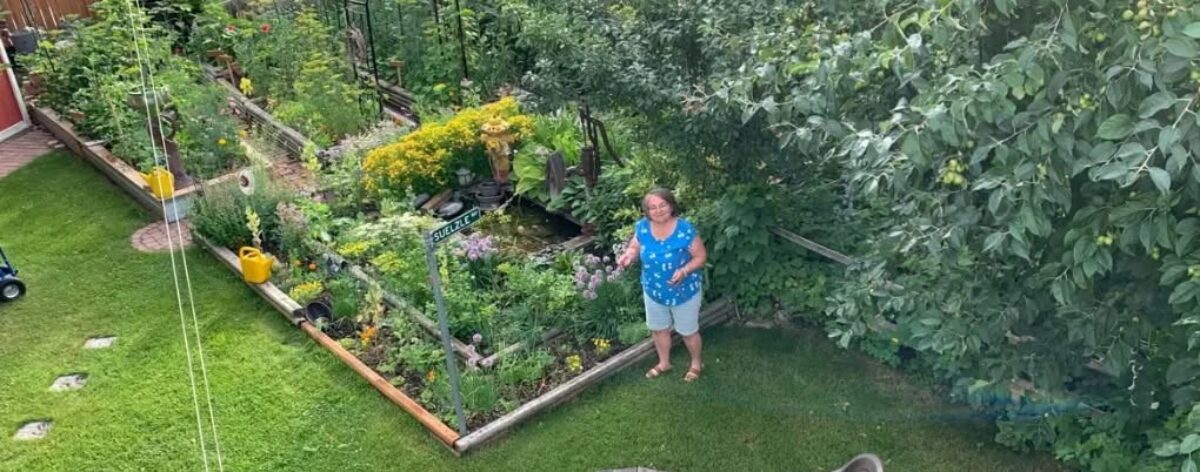
Stocking up on food for winter is about more than simply having a full pantry. It is about being prepared, being practical, and giving yourself a little peace of mind when the world outside becomes less predictable.
For those of us who garden, preserve, and try to live a little more self-reliantly, summer is a natural time to think about what we will need through the coming cold months.

Winter changes the way we get food
In summer, food can feel abundant. The garden is producing, farmers’ markets are overflowing, and fresh produce is readily available. And then there’s winter. In Alberta, that means months of cold, snow – and no local growing. In the past, preparing for winter was critical to having enough food, and keeping your family healthy. In recent generations we’ve become very ‘entitled’, and think we should have everything we want, whenever we want it, but that is not reasonable or sustainable in the long run.
A well-stocked pantry means that when the roads are bad, the weather is miserable, or you simply don’t want to venture out, you already have the makings of good meals at home.
Use the seasons as an analogy. Sometimes ‘winter’ is more than just the months between November and March when the trees are taking a break and the garden is sleeping.
It could be a period of unemployment, when the regular paycheque stops coming. Or an an illness, an unexpected expense that makes the household budget a little tighter than it used to be. Could be a transportation disruption, a shortage, or oh I don’t know …. maybe something completely wild, like – tariffs we’ve never experienced before, or some other circumstance that makes the things we normally take for granted suddenly harder to find.
Sometimes winter is simply a season of uncertainty.
Just as we prepare for the winter that arrives every year, we can prepare for some of these other ‘winters’ too. Stocking up isn’t about living in fear or expecting something terrible to happen. It is about recognizing that life has seasons—and not all of them are predictable.
Many of us have learned to put food by when there is plenty. We preserve the garden harvest, fill the pantry, tuck things into the freezer, and make sure we have some basic staples on hand. We do these things because we know that ‘summer’ won’t last forever.
The wise gardener doesn’t wait for winter to begin before thinking about winter. And perhaps the same principle applies to life. When things are going well is the very best time to prepare for the season when they aren’t.
Eventually, spring comes again.
Stocking up also makes good economic sense
Buying and preserving food when it is plentiful can save money.
When your garden produces more tomatoes, beans, carrots, onions, berries or rhubarb than you can eat immediately, with a few skills, you have an opportunity to turn that abundance into food for later.

The garden doesn’t have to stop feeding you just because the ground freezes.
Potatoes, onions, garlic and jars of roasted tomatoes in the cold room; jars of jam, dried apples and herbs in the pantry, berries and pesto in the freezer, apple cider, kefir and sauerkraut in the fridge – mean that reliance on the grocery store is minimized.
A stocked pantry gives you choices
There is an important difference between having food and having food you will actually eat.
If we’ve been friends for a while, you already know my philosophy has always been to Store what you eat, and eat what you store.
There isn’t much value in filling shelves with foods nobody in the household enjoys. Those jars of gorgeous red crabapple preserves look nice on the shelf but if no one knows how to eat them, they’re a waste of jars.
A practical winter pantry might contain the ingredients your family regularly uses:
- canned and dried tomatoes
- dried or canned beans
- rice, pasta and grains
- flour and other baking supplies
- onions, potatoes and other good keepers
- frozen or dehydrated vegetables
- fruit, jams and preserves
- meat and other sources of protein
- soups, broths and meal ingredients
- spices, oils and other cooking essentials
And don’t forget the simple things that can be surprisingly inconvenient to run out of in winter – special baking ingredients your family likes, pet food and other household staples like laundry soap and toothpaste.
Preserving your own food adds another layer of security

There is another thing I love about gardening and preserving. When I freeze, dry or can something from my own garden, I know where it came from. I know what I DIDN’T use while I watched it grow. I harvested it when it was ready. I preserved it when it was at its best.
There is something deeply satisfying about opening a jar in February and finding summer inside.
It isn’t merely food storage. It is the continuation of the growing season.
And then there is the emergency side of preparedness

We don’t stock food because we expect disaster.
We stock food because life happens.
Power outages happen. Snowstorms happen. Illness happens. Family emergencies happen. Supply problems happen. Sometimes a person simply doesn’t have the time, money, transportation or physical ability to get to the store.
Having food already in the house gives you breathing room.
You don’t need to panic-buy when life throws you a curve ball, because you have been gradually building your supply all along.
Perhaps most importantly, it is a mindset
Stocking up isn’t about fear. It is about responsibility and self-reliance.
I don’t expect to provide absolutely everything my household might ever need. None of us can.
But I can ask:
What can I reasonably provide for myself?

If I can grow some of my food, preserve some of it, store some of it and keep a reasonable supply of everyday staples on hand, then I have made my household just a little less dependent on circumstances beyond my control.
And I think that is a worthwhile goal.
Winter comes every year. We know that.
So rather than waiting until the shelves are bare or the weather turns nasty, now is the perfect time to look at what we have, decide what we will need, and to begin filling the pantry.
There is a wonderful feeling that comes from looking at a well-stocked pantry in the middle of winter and thinking: “We’re okay. We’ve got food.”
I’d love to hear your ideas about what you stock up on, where you store it, and how you use it in the winter.
Warmly,
Cindy Suelzle

A well-organized pantry changes the whole rhythm of cooking through winter – being able to see jars at a glance means nothing gets forgotten at the back. Labeled zones by meal type is a clever touch. Thanks for the practical setup ideas!