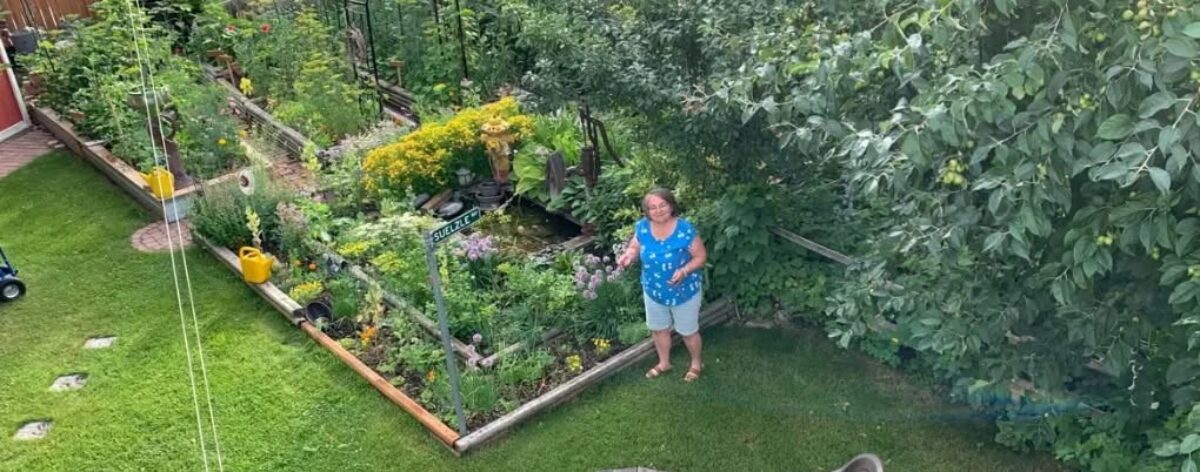
Horseradish is a rugged hardy perennial, even in cold climates. In fact, the winter forces the plant into dormancy, which like the rest of us, can be kind of a reprieve. During the growing season, it likes full sun but does fine in light shade. Since sun in my garden is in such demand, I don’t waste it on any plant that doesn’t demand it. If it can tolerate light shade, it gets light shade. Planting one to three horseradish plants will provide even the diehard fan an abundant supply. You can only eat so much of it, but if you are in love with it or want to share it, plant more. Whether you dig a root from your friend’s garden, or buy one from a greenhouse, they’re ready to go into the ground immediately.

Its interesting to note that the word “horseradish” has nothing to do with horses or radishes. Yes, it is in fact in the radish family, but the word “horse” formerly meant “coarse” or “rough”, and the word “radish” originally meant “root”, so in our language, it would more accurately be called “Rough Root” or “Coarse Root”.
The plant’s most commonly used part is the root, known for its strong, pungent flavour (and its heat) – that you either love or hate. There doesn’t seem to be much middle ground with horse radish. I didn’t develop a taste for it till well into my adult years, but since then I am always on a quest for appropriate ‘carrier’ foods.
Don’t discriminate against the leaves though, as when they’re young, they are quite edible and very delicious. To me they have a ‘hint’ of that wonderful horse radish taste – sharp and peppery but a lot more mild. Similar to arugula and kale and yes, even radishes. Rip off a small piece of the leaf to taste it, then snip a couple fresh young leaves and chop up to add to a mixed green garden salad.
- I’m not suggesting a “horse-radish-leaf-salad”, I am suggesting you try adding a few small leaves to your mixed green salad.
- Try incorporating some of the young leaves into your next garden pesto.
- Or even add to the greens in your stir-fried vegetables.
Be creative. Don’t be a garden bigot by not allowing certain ‘herbs’ or vegetables in your garden to show you how wonderful and versatile they really are.
Horseradish roots are large, tapering to a point, with a dark brown peel and a creamy white interior. They are well known for the ‘bite’, which comes from the release of compounds when the root is grated or chopped. Without grating and exposure to air, horseradish roots seem innocent, but don’t be fooled, once you grate it you release its full potential, and it can become so hot you can feel the heat when you breathe it in – when you know you know. When you don’t know, you’ll be surprised. But I’m serious, it is HOT. It’s not gonna hurt you, but it sure can make you very uncomfortable (in a strong onion sorta way).
*hint: vinegar stops the heat producing chemical process. See below for how to use this fact to your advantage.
growing and caring for your horseradish plants
When looking for the perfect spot to plant it, remember, its gonna be there for a long time. The hardiness of horseradish implies that once invited in and given a seat at the table, it is no longer a guest. It needs it’s own room. Set aside an area in the corner of your garden especially for it. It wants good drainage, not soggy feet. Dig a hole about a foot deep, and loosen the soil around it. Make sure the hole is wide enough to accommodate the entire length of the root. It should be planted at an angle. Allow 18-20 inches between plants, or away from its closest neighbour to allow the roots plenty of room to spread out and grow.
Place the horseradish crown or root into the hole diagonally (roughly a 45 degree angle), with the thinner, bottom portion of the root downward. This allows the roots to radiate out while keeping the leaves of the crown straight up. Always a good idea to add compost to the fill when planting perennials. Good idea to fertilize once in the spring when it starts to grow. Keep them weeded – which is only good manners when inviting a new plant into your garden. A healthy plant should have only 3 or 4 leaf stalks, so prune the others. Not pruning will encourage it to ‘go wild’ and it can quickly crowd out nearby plants, taking over a larger space than you want it to take.
A few years ago, I dug some horseradish roots from my son’s farm where it had gone wild, and transplanted two or three to my garden quite late in the season. They didn’t seem to ‘take’ so the next spring I was convinced I had lost them. I purchased a plant from a local nursery. Within days of planting the new plant, I noticed the other horseradish roots were sprouting up where I had planted a year ago. Good things happen to those who wait, so be patient. It takes time to develop the root system sufficiently to start showing itself in public.
harvesting
‘They’ (whoever they are) suggest we wait for at least two years, maybe even three years before harvesting. I decided to trust them; you might want to as well. Best time to harvest is mid-late fall. That’s always a joke in our climate. When does late become too late? No worries, you can even wait until after a good frost. The frost will kill off the green foliage and you’ll think you’ve lost it, but take heart, some use this as the sign it is ready to harvest.
If its been dry for a while, and the ground is hard, do yourself a favour and water that area a little the day before. You’ll thank me. With a shovel or a fork, gently loosen the soil around the roots and remove the whole plant. Yeah, I know what that sounds like, but trust me – try as you might, you’re not likely to get the entire root out is next to nothing. This is fine, you want the plant to grow back next year right? Expect the root to be between 6 to 10 inches in length so dig deep. Horseradish roots are large near the top, tapering to a point. You’ll usually hear the root break off as you’re digging it out. But if you’re worried that you didn’t leave enough, cut the bottom 3-4 inches and return it to the soil.
Cut the green leaf stalks from the roots, wash and dry the root thoroughly.
Uncut horseradish roots will keep for several weeks in the crisper drawer of the refrigerator. Don’t forget about them though.
OR you can thinly slice them into small, thin sections to store in a plastic bag in the fridge for up to 3 or 4 months.
using your homegrown horseradish

Let me interrupt this part for a plug about the ‘leaves’. Re-read the opening paragraphs in this section – they are not only edible, but very delicious when they are young. Don’t miss out on those, while you wait for the root to mature. And be creative. Okay, I now return you to the ‘roots’.
Wash thoroughly. Easier said than done; when you try it, you’ll know what I mean. Peel roots with a regular kitchen peeler making sure you remove all the brown spots. Continue to rinse the dirt away as you’re peeling. Dry well.
Peeled and chopped horseradish is generally used right away, but some say they store in sealed bags or containers in the FREEZER for a few months.
Horseradish is spicy-hot because crushing or grating the root releases volatile chemical compounds called “allyl isothiocyanates” (mustard oils). Don’t worry about trying to pronounce that word, or even remembering it, just remember that’s when the HEAT happens. You can go from chopping on a board – barely being able to smell the horseradish, to it being so strong it takes your breath away only minutes later – in the blender or food processor.
Why does that happen?
Basically its the cell damage that happens when the intact root cells get broken open creating an enzyme reaction. This reaction creates the mustard oils which vaporize easily. Breathing that vapour in triggers nerve endings we associate with pain. I am always reminded of my then teenaged son saying “Maybe its just me Mom, but it shouldn’t have to hurt to eat.” He’s since become quite the fan of heat as an adult, but his early assessment still makes me smile.
This oil is extremely heat-sensitive and will easily break down when exposed to high temperatures. (Apparently it can dish out the heat, it just can’t take it.) Boiling, simmering or baking horseradish will cook away its punch, leaving a disappointing bitter flavour.
Moral of the story: don’t cook with horseradish.
Traditionally horseradish is served cold or at room temperature as a finishing condiment alongside roast beef, steak or fish. But don’t be tied to those dishes. It is wonderful added to a nice brothy beef-based soup or even to mashed potatoes – just remember, to preserve the sharp kick, add it AFTER the cooking is finished. Because some in my family don’t like horseradish, I always put it on the table as a condiment, adding it to my individual bowl of soup … etc.
Even without cooking though, that wonderful pungent heat we love about horseradish begins fading till gradually there is no heat left at all. This is always disappointing to me, and a bit of a mystery since commercially prepared horseradish is hot for months longer. WHY? And more importantly, how can I extend the life of my hot prepared horseradish. It isn’t about the ingredients, because they’re generally the same as what we use at home. The sad truth is that while homemade horseradish may initially be hotter than store bought, its punch fades quickly because the compounds responsible for the heat are highly volatile and chemically unstable.
WHY does store-bought prepared horseradish maintain its heat longer?
- Precise enzyme deactivation
- Chemical stabilizer in the form of ascorbic acid
- Minimize oxidation
- Attention to temperature. Industrial processing keeps horseradish root and the finished product in a COLD environment (just above freezing)
How can we use those rules at home? The trick is all in applying the science we already know.
- Enzyme deactivation: Using VINEGAR.
We know that vinegar STOPS the heat-producing process, locking the heat level in place. This simply means that whatever the heat level was when the vinegar was added, it won’t get hotter. Adding the vinegar right away will result in a milder horseradish. Adding it later allows for a hotter base line from which to work. When is too early? Too late?
In one batch, I ground the chopped fresh root in a food processor, then added the vinegar slowly to puree.
In the next batch, I waited 3 minutes (while a friend timed it so I wouldn’t lose track lol) before adding the vinegar. The second batch was decidedly HOTTER right off the bat.
I usually use vinegar as all the liquid in my prepared horseradish, but that is not necessary. DO use at least some vinegar to lock the heat at your desired level.
What kind of vinegar?
Plain white vinegar. Unflavoured. - Ascorbic Acid:
Add a small amount of lemon juice to slow down enzymatic changes that can dull or alter the sharpness of the taste. In addition, the ascorbic acid in lemon juice preserves the colour and adds a welcome ‘twang’ of lemon flavour. - Oxidation is an enemy to many preservation techniques, so do your best to minimize its effect. We know that the released oil vaporizes rapidly, so get it into your small, narrow mouthed jars quickly. Using a wide mouth jar exposes a larger surface area to the air = more vaporization = more oxidation and discoloration.
Use glass jars (never plastic), and pack tightly – elimating hidden air bubbles and zero head space. Best to pack in a few small jars rather than a larger one. - Low Temperature:
Commercial producers pay strict attention to keeping the root cold and keeping the bottles of prepared horseradish COLD. It’s an irony that “to keep the heat in horseradish, it must be as cold as possible“.
* BONUS TIP: Heat destroys the enzymes in horseradish, so canning it is impossible for a quality outcome. Vacuum-sealing jars will extend the shelf life, but don’t push it too long. Once opening the jar, keep it in the fridge and plan to USE it within a month or two at the most.
* BONUS TIP: Use only FRESH horseradish root, the freshest you can find. Compared to older, or poorly stored (not cold enough) roots, freshly dug, high-quality roots have the highest concentration of active compounds.
Can you Freeze preserved horseradish?
Yes, you can freeze prepared horseradish, though it may lose some of its sharpness, and it will be a little softer when it is thawed.
- Use only airtight freezer safe containers.
- Leave room for expansion: If using a rigid jar or container, leave a extra headspace at the top for it to expand as it freezes. Otherwise it will crack your jars.
- Thaw only what you need: Take out and thaw only the portion you plan to use immediately, as it cannot be refrozen. The quality and texture will be reduced if you try.
- Storage time: Frozen prepared horseradish keeps its best quality for between 3 to 6 months.
* fun fact: grated horseradish will tarnish silver upon contact. Don’t put it on a silver serving dish.
Fresh horse radish is super-duper-HOT. It even smells hot. Like clean-out-your-sinuses hot. Best to make sure you’ve got some air circulation while you’re shredding it.
Recipe #1: Prepared Horseradish
- 1 cup washed, peeled and chopped horseradish (keep in fridge until you need it).
- 1/3 – 1/2 cup white vinegar (No other vinegar will do) Can replace some of this with water.
- 1 Tablespoon sugar
- 1/4 teaspoon non iodized salt

directions:
Measure out 1 cup chopped root into high powered blender or food processor. Process till finely chopped.
LEAVE FOR 3 MINUTES (time yourself).
Turn processor on again and add up to 1/2 cup vinegar slowly (you may replace half of it with water if desired). Add slowly as it may not require the full amount, and you want to gage the texture to your liking.
Add sugar and salt.
Continue to puree for another minute until horseradish sauce is desired consistency.
Pour into two or three smallish jars with narrow mouths (4 oz jars or smaller).
Get rid of air bubbles and ensure zero head space by packing as full as you can – making sure closely done, put lid on. Tighten to seal.
Label and refrigerate for up to 6 months.
Plan to use it up in less than 6 months.
Basic recipe measurement suggestions. May be multiplied for bigger batches.
Recipe #2: Prepared Horseradish
12.5 ounces (350 grams) washed and peeled horseradish root
I don’t normally use weight as a measurement, but it is much easier to weigh the root than measure in a cup
1 cup white vinegar (or half and half with water if you want less acid)
3/4 teaspoon non iodized salt
2 Tablespoons white sugar
directions:
Keep the root COLD till ready to use. Dice into small pieces.
Put diced root into blender or food processor and grind – puree, using no liquid at first.
Once the root is completely shredded, let it rest for 3 minutes.
After 3 minutes, start the blender again, adding white vinegar, two Tablespoons at a time. Add salt and sugar, continuing to puree and stir down if necessary. You’ll know you’re done when you’ve reached your desired consistency.
optional:
add a large peeled clove of garlic (or two smaller ones)
and a very small peeled onion
The vinegar is not there to add vinegar flavour. It is used for the chemical reaction it causes which stops the heat, so don’t add it too soon. The salt is there to enhance the natural pungent taste, so use according to your taste.
Mix well with spatula and spoon into small clean jars. Avoid breathing in the fumes – it should be pretty hot at this point. Spoon into small jars and close with air tight lid. Do not process in hot water canner, but you can freeze it.
tone it down
like it creamy? Add up to equal parts mayonnaise or sour cream right at serving time.
* Tip:
Don’t cook horseradish as it greatly diminishes the flavour and ‘heat’ of the root. This means you cannot can it with heat. But you can freeze it for up to 6 months.
eating it
I am a huge fan of horseradish and wasabi, but my husband is not. Our kids are on either side of the fence. Nobody seems to be a fence sitter with such strong flavours.
– I like it straight from the jar for all beef dishes, even burgers and sandwiches.
Recipe #3: Creamy Horseradish Sauce

to each 1/2 cup horse radish puree
add 1/4 cup sour cream
and/or mayonnaise,
some chopped chives or green onion and some freshly ground pepper.
Like it milder? Add 1/4 cup sweet cream (whipped after measuring).
Sandwich spread.
Recipe #4: Simple Cocktail Sauce
1 cup ketchup
2 T horseradish
2 T lemon juice
1 T sriracha hot sauce (or 2 T Franks hot sauce) + 2 tsp worcestershire sauce.
Whisk all together.
That’s it. Serve with cocktail shrimp, or as a condiment for burgers, hot dogs, meatloaf, even on top of a ham & cheese omelet or in the mix for devilled eggs.
Be Creative
HORSEY SANDWICH SPREAD: add a little horseradish into mustard or mayonnaise for sandwiches.
HORSEY CRANBERRY SAUCE: Try putting just a little in your next cranberry sauce.
Have fun experimenting with Horseradish. I’d love to hear your experiences.
Warmly,
Cindy Suelzle
