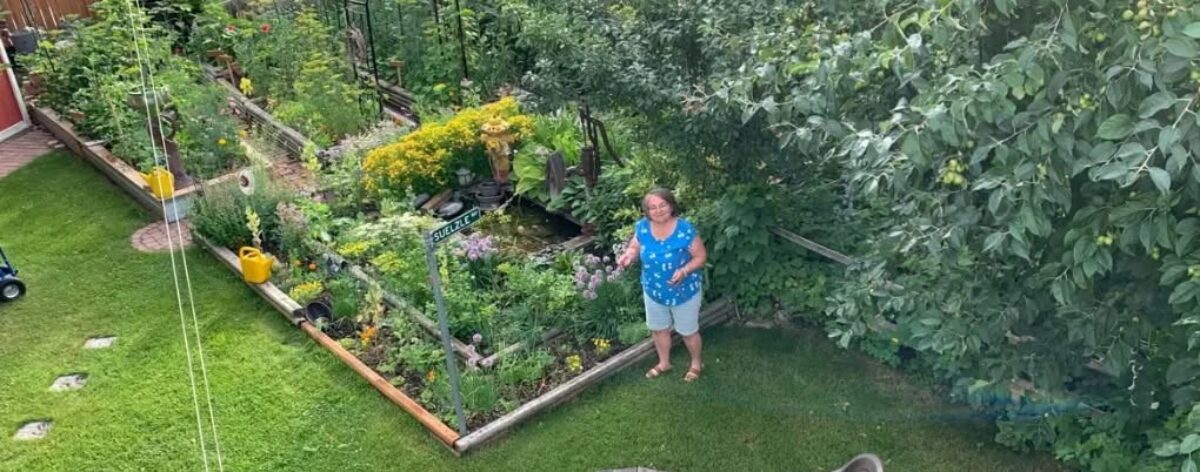
Horseradish is a rugged hardy perennial, even in cold climates. In fact, the winter forces the plant into dormancy, which like the rest of us, can be kind of a reprieve. During the growing season, it likes full sun but does fine in light shade. Since sun in my garden is in such demand, I don’t waste it on any plant that doesn’t demand it. If it can tolerate light shade, it gets light shade. Planting one to three horseradish plants will provide even the diehard fan an abundant supply. You can only eat so much of it, but if you are in love with it or want to share it, plant more. Whether you dig a root from your friend’s garden, or buy one from a greenhouse, they’re ready to go into the ground immediately.
Its interesting to note that the word “horseradish” has nothing to do with horses or radishes. Yes, it is in fact in the radish family, but the word “horse” formerly meant “coarse” or “rough”, and the word “radish” originally meant “root”, so in our language, it would more accurately be called “Rough Root” or “Coarse Root”.
The plant’s most commonly used part is the root, known for its strong, pungent flavour (and its heat) – that you either love or hate. There doesn’t seem to be much middle ground with horse radish. I didn’t develop a taste for it till well into my adult years, but since then I am always on a quest for appropriate ‘carrier’ foods.
Don’t discriminate against the leaves though, as when they’re young, they are quite edible and very delicious. To me they have a ‘hint’ of that wonderful horse radish taste – sharp and peppery but a lot more mild. Similar to arugula and kale and yes, even radishes. Rip off a small piece of the leaf to taste it, then snip a couple fresh young leaves and chop up to add to a mixed green garden salad.
I’m not suggesting a “horse-radish-leaf-salad”, I am suggesting you try adding a few small leaves to your mixed green salad.
Try incorporating some of the young leaves into your next garden pesto.
Or even add to the greens in your stir-fried vegetables.
Be creative. Don’t be a garden bigot by not allowing certain ‘herbs’ or vegetables in your garden to show you how wonderful and versatile they really are.
Horseradish roots are large, tapering to a point, with a dark brown peel and a creamy white interior. They are well known for the ‘bite’, which comes from the release of compounds when the root is grated or chopped. Without grating and exposure to air, horseradish roots seem innocent, but don’t be fooled, once you grate it you release its full potential, and it can become so hot you can feel the heat when you breathe it in – when you know you know. When you don’t know, you’ll be surprised. But I’m serious, it is HOT. It’s not gonna hurt you, but it sure can make you very uncomfortable (in a strong onion sorta way).
*hint: vinegar stops the heat producing chemical process. See below for how to use this fact to your advantage.
growing and caring for your horseradish plants
When looking for the perfect spot to plant it, remember, its gonna be there for a long time. The hardiness of horseradish implies that once invited in and given a seat at the table, it is no longer a guest. It needs it’s own room. Set aside an area in the corner of your garden especially for it. It wants good drainage, not soggy feet. Dig a hole about a foot deep, and loosen the soil around it. Make sure the hole is wide enough to accommodate the entire length of the root. It should be planted at an angle. Allow 18-20 inches between plants, or away from its closest neighbour to allow the roots plenty of room to spread out and grow.
Place the horseradish crown or root into the hole diagonally (roughly a 45 degree angle), with the thinner, bottom portion of the root downward. This allows the roots to radiate out while keeping the leaves of the crown straight up. Always a good idea to add compost to the fill when planting perennials. Good idea to fertilize once in the spring when it starts to grow. Keep them weeded – which is only good manners when inviting a new plant into your garden. A healthy plant should have only 3 or 4 leaf stalks, so prune the others. Not pruning will encourage it to ‘go wild’ and it can quickly crowd out nearby plants, taking over a larger space than you want it to take.
A few years ago, I dug some horseradish roots from my son’s farm where it had gone wild, and transplanted two or three to my garden quite late in the season. They didn’t seem to ‘take’ so the next spring I was convinced I had lost them. I purchased a plant from a local nursery. Within days of planting the new plant, I noticed the other horseradish roots were sprouting up where I had planted a year ago. Good things happen to those who wait, so be patient. It takes time to develop the root system sufficiently to start showing itself in public.
harvesting
‘They’ (whoever they are) suggest we wait for at least two years, maybe even three years before harvesting. I decided to trust them; you might want to as well. Best time to harvest is mid-late fall. That’s always a joke in our climate. When does late become too late? No worries, you can even wait until after a good frost. The frost will kill off the green foliage and you’ll think you’ve lost it, but take heart, some use this as the sign it is ready to harvest.
If its been dry for a while, and the ground is hard, do yourself a favour and water that area a little the day before. You’ll thank me. With a shovel or a fork, gently loosen the soil around the roots and remove the whole plant. Yeah, I know what that sounds like, but trust me – try as you might, you’re not likely to get the entire root out is next to nothing. This is fine, you want the plant to grow back next year right? Expect the root to be between 6 to 10 inches in length so dig deep. Horseradish roots are large near the top, tapering to a point. You’ll usually hear the root break off as you’re digging it out. But if you’re worried that you didn’t leave enough, cut the bottom 3-4 inches and return it to the soil.
Cut the green leaf stalks from the roots, wash and dry the root thoroughly. Uncut horseradish roots will keep for several weeks in the crisper drawer of the refrigerator. Don’t forget about them though. OR you can thinly slice them into small, thin sections to store in a plastic bag in the fridge for up to 3 or 4 months.
using your homegrown horseradish
Let me interrupt this part for a plug about the ‘leaves’. Re-read the opening paragraphs in this section – they are not only edible, but very delicious when they are young. Don’t miss out on those, while you wait for the root to mature. And be creative. Okay, I now return you to the ‘roots’.
Wash thoroughly. Easier said than done; when you try it, you’ll know what I mean. Peel roots with a regular kitchen peeler making sure you remove all the brown spots. Continue to rinse the dirt away as you’re peeling. Dry well.
Peeled and chopped horseradish is generally used right away, but some say they store in sealed bags or containers in the FREEZER for a few months.
Horseradish is spicy-hot because crushing or grating the root releases volatile chemical compounds called “allyl isothiocyanates” (mustard oils). Don’t worry about trying to pronounce that word, or even remembering it, just remember that’s when the HEAT happens. You can go from chopping on a board – barely being able to smell the horseradish, to it being so strong it takes your breath away only minutes later – in the blender or food processor.
Why does that happen? Basically its the cell damage that happens when the intact root cells get broken open creating an enzyme reaction. This reaction creates the mustard oils which vaporize easily. Breathing that vapour in triggers nerve endings we associate with pain. I am always reminded of my then teenaged son saying “Maybe its just me Mom, but it shouldn’t have to hurt to eat.” He’s since become quite the fan of heat as an adult, but his early assessment still makes me smile.
This oil is extremely heat-sensitive and will easily break down when exposed to high temperatures. (Apparently it can dish out the heat, it just can’t take it.) Boiling, simmering or baking horseradish will cook away its punch, leaving a disappointing bitter flavour.
Moral of the story: don’t cook with horseradish. Traditionally horseradish is served cold or at room temperature as a finishing condiment alongside roast beef, steak or fish. But don’t be tied to those dishes. It is wonderful added to a nice brothy beef-based soup or even to mashed potatoes – just remember, to preserve the sharp kick, add it AFTER the cooking is finished. Because some in my family don’t like horseradish, I always put it on the table as a condiment, adding it to my individual bowl of soup … etc.
Even without cooking though, that wonderful pungent heat we love about horseradish begins fading till gradually there is no heat left at all. This is always disappointing to me, and a bit of a mystery since commercially prepared horseradish is hot for months longer. WHY? And more importantly, how can I extend the life of my hot prepared horseradish. It isn’t about the ingredients, because they’re generally the same as what we use at home. The sad truth is that while homemade horseradish may initially be hotter than store bought, its punch fades quickly because the compounds responsible for the heat are highly volatile and chemically unstable.
WHY does store-bought prepared horseradish maintain its heat longer?
Precise enzyme deactivation
Chemical stabilizer in the form of ascorbic acid
Minimize oxidation
Attention to temperature. Industrial processing keeps horseradish root and the finished product in a COLD environment (just above freezing)
How can we use those rules at home? The trick is all in applying the science we already know.
Enzyme deactivation: Using VINEGAR. We know that vinegar STOPS the heat-producing process, locking the heat level in place. This simply means that whatever the heat level was when the vinegar was added, it won’t get hotter. Adding the vinegar right away will result in a milder horseradish. Adding it later allows for a hotter base line from which to work. When is too early? Too late? In one batch, I ground the chopped fresh root in a food processor, then added the vinegar slowly to puree. In the next batch, I waited 3 minutes (while a friend timed it so I wouldn’t lose track lol) before adding the vinegar. The second batch was decidedly HOTTER right off the bat. I usually use vinegar as all the liquid in my prepared horseradish, but that is not necessary. DO use at least some vinegar to lock the heat at your desired level. What kind of vinegar? Plain white vinegar. Unflavoured.
Ascorbic Acid: Add a small amount of lemon juice to slow down enzymatic changes that can dull or alter the sharpness of the taste. In addition, the ascorbic acid in lemon juice preserves the colour and adds a welcome ‘twang’ of lemon flavour.
Oxidation is an enemy to many preservation techniques, so do your best to minimize its effect. We know that the released oil vaporizes rapidly, so get it into your small, narrow mouthed jars quickly. Using a wide mouth jar exposes a larger surface area to the air = more vaporization = more oxidation and discoloration. Use glass jars (never plastic), and pack tightly – elimating hidden air bubbles and zero head space. Best to pack in a few small jars rather than a larger one.
Low Temperature: Commercial producers pay strict attention to keeping the root cold and keeping the bottles of prepared horseradish COLD. It’s an irony that “to keep the heat in horseradish, it must be as cold as possible“.
* BONUS TIP: Heat destroys the enzymes in horseradish, so canning it is impossible for a quality outcome. Vacuum-sealing jars will extend the shelf life, but don’t push it too long. Once opening the jar, keep it in the fridge and plan to USE it within a month or two at the most.
* BONUS TIP: Use only FRESH horseradish root, the freshest you can find. Compared to older, or poorly stored (not cold enough) roots, freshly dug, high-quality roots have the highest concentration of active compounds.
Can you Freeze preserved horseradish?
Yes, you can freeze prepared horseradish, though it may lose some of its sharpness, and it will be a little softer when it is thawed.
Use only airtight freezer safe containers.
Leave room for expansion: If using a rigid jar or container, leave a extra headspace at the top for it to expand as it freezes. Otherwise it will crack your jars.
Thaw only what you need: Take out and thaw only the portion you plan to use immediately, as it cannot be refrozen. The quality and texture will be reduced if you try.
Storage time: Frozen prepared horseradish keeps its best quality for between 3 to 6 months.
* fun fact: grated horseradish will tarnish silver upon contact. Don’t put it on a silver serving dish.
Fresh horse radish is super-duper-HOT. It even smells hot. Like clean-out-your-sinuses hot. Best to make sure you’ve got some air circulation while you’re shredding it.
Recipe #1: Prepared Horseradish
1 cup washed, peeled and chopped horseradish (keep in fridge until you need it).
1/3 – 1/2 cup white vinegar (No other vinegar will do) Can replace some of this with water.
1 Tablespoon sugar
1/4 teaspoon non iodized salt
directions: Measure out 1 cup chopped root into high powered blender or food processor. Process till finely chopped. LEAVE FOR 3 MINUTES (time yourself).
Turn processor on again and add up to 1/2 cup vinegar slowly (you may replace half of it with water if desired). Add slowly as it may not require the full amount, and you want to gage the texture to your liking. Add sugar and salt. Continue to puree for another minute until horseradish sauce is desired consistency. Pour into two or three smallish jars with narrow mouths (4 oz jars or smaller). Get rid of air bubbles and ensure zero head space by packing as full as you can – making sure closely done, put lid on. Tighten to seal. Label and refrigerate for up to 6 months. Plan to use it up in less than 6 months.
Basic recipe measurement suggestions. May be multiplied for bigger batches.
Recipe #2: Prepared Horseradish
12.5 ounces (350 grams) washed and peeled horseradish root I don’t normally use weight as a measurement, but it is much easier to weigh the root than measure in a cup 1 cup white vinegar (or half and half with water if you want less acid) 3/4 teaspoon non iodized salt 2 Tablespoons white sugar
directions: Keep the root COLD till ready to use. Dice into small pieces. Put diced root into blender or food processor and grind – puree, using no liquid at first. Once the root is completely shredded, let it rest for 3 minutes. After 3 minutes, start the blender again, adding white vinegar, two Tablespoons at a time. Add salt and sugar, continuing to puree and stir down if necessary. You’ll know you’re done when you’ve reached your desired consistency.
optional: add a large peeled clove of garlic (or two smaller ones) and a very small peeled onion The vinegar is not there to add vinegar flavour. It is used for the chemical reaction it causes which stops the heat, so don’t add it too soon. The salt is there to enhance the natural pungent taste, so use according to your taste.
Mix well with spatula and spoon into small clean jars. Avoid breathing in the fumes – it should be pretty hot at this point. Spoon into small jars and close with air tight lid. Do not process in hot water canner, but you can freeze it.
tone it down
like it creamy? Add up to equal parts mayonnaise or sour cream right at serving time.
* Tip: Don’t cook horseradish as it greatly diminishes the flavour and ‘heat’ of the root. This means you cannot can it with heat. But you can freeze it for up to 6 months.
eating it
I am a huge fan of horseradish and wasabi, but my husband is not. Our kids are on either side of the fence. Nobody seems to be a fence sitter with such strong flavours.
– I like it straight from the jar for all beef dishes, even burgers and sandwiches.
Recipe #3: Creamy Horseradish Sauce
to each 1/2 cup horse radish puree add 1/4 cup sour cream and/or mayonnaise, some chopped chives or green onion and some freshly ground pepper. Like it milder? Add 1/4 cup sweet cream (whipped after measuring). Sandwich spread.
Recipe #4: Simple Cocktail Sauce
1 cup ketchup 2 T horseradish 2 T lemon juice 1 T sriracha hot sauce (or 2 T Franks hot sauce) + 2 tsp worcestershire sauce. Whisk all together. That’s it. Serve with cocktail shrimp, or as a condiment for burgers, hot dogs, meatloaf, even on top of a ham & cheese omelet or in the mix for devilled eggs.
Be Creative
HORSEY SANDWICH SPREAD: add a little horseradish into mustard or mayonnaise for sandwiches. HORSEY CRANBERRY SAUCE: Try putting just a little in your next cranberry sauce.
Have fun experimenting with Horseradish. I’d love to hear your experiences.
Stocking up on food for winter is about more than simply having a full pantry. It is about being prepared, being practical, and giving yourself a little peace of mind when the world outside becomes less predictable.
For those of us who garden, preserve, and try to live a little more self-reliantly, summer is a natural time to think about what we will need through the coming cold months.
Winter changes the way we get food
In summer, food can feel abundant. The garden is producing, farmers’ markets are overflowing, and fresh produce is readily available. And then there’s winter. In Alberta, that means months of cold, snow – and no local growing. In the past, preparing for winter was critical to having enough food, and keeping your family healthy. In recent generations we’ve become very ‘entitled’, and think we should have everything we want, whenever we want it, but that is not reasonable or sustainable in the long run.
A well-stocked pantry means that when the roads are bad, the weather is miserable, or you simply don’t want to venture out, you already have the makings of good meals at home.
Use the seasons as an analogy. Sometimes ‘winter’ is more than just the months between November and March when the trees are taking a break and the garden is sleeping.
It could be a period of unemployment, when the regular paycheque stops coming. Or an an illness, an unexpected expense that makes the household budget a little tighter than it used to be. Could be a transportation disruption, a shortage, or oh I don’t know …. maybe something completely wild, like – tariffs we’ve never experienced before, or some other circumstance that makes the things we normally take for granted suddenly harder to find.
Sometimes winter is simply a season of uncertainty.
Just as we prepare for the winter that arrives every year, we can prepare for some of these other ‘winters’ too. Stocking up isn’t about living in fear or expecting something terrible to happen. It is about recognizing that life has seasons—and not all of them are predictable.
Many of us have learned to put food by when there is plenty. We preserve the garden harvest, fill the pantry, tuck things into the freezer, and make sure we have some basic staples on hand. We do these things because we know that ‘summer’ won’t last forever.
The wise gardener doesn’t wait for winter to begin before thinking about winter. And perhaps the same principle applies to life. When things are going well is the very best time to prepare for the season when they aren’t.
Eventually, spring comes again.
Stocking up also makes good economic sense
Buying and preserving food when it is plentiful can save money.
When your garden produces more tomatoes, beans, carrots, onions, berries or rhubarb than you can eat immediately, with a few skills, you have an opportunity to turn that abundance into food for later.
The garden doesn’t have to stop feeding you just because the ground freezes.
Potatoes, onions, garlic and jars of roasted tomatoes in the cold room; jars of jam, dried apples and herbs in the pantry, berries and pesto in the freezer, apple cider, kefir and sauerkraut in the fridge – mean that reliance on the grocery store is minimized.
A stocked pantry gives you choices
There is an important difference between having food and having food you will actually eat.
If we’ve been friends for a while, you already know my philosophy has always been to Store what you eat, and eat what you store.
There isn’t much value in filling shelves with foods nobody in the household enjoys. Those jars of gorgeous red crabapple preserves look nice on the shelf but if no one knows how to eat them, they’re a waste of jars.
A practical winter pantry might contain the ingredients your family regularly uses:
canned and dried tomatoes
dried or canned beans
rice, pasta and grains
flour and other baking supplies
onions, potatoes and other good keepers
frozen or dehydrated vegetables
fruit, jams and preserves
meat and other sources of protein
soups, broths and meal ingredients
spices, oils and other cooking essentials
And don’t forget the simple things that can be surprisingly inconvenient to run out of in winter – special baking ingredients your family likes, pet food and other household staples like laundry soap and toothpaste.
Preserving your own food adds another layer of security
There is another thing I love about gardening and preserving. When I freeze, dry or can something from my own garden, I know where it came from. I know what I DIDN’T use while I watched it grow. I harvested it when it was ready. I preserved it when it was at its best.
There is something deeply satisfying about opening a jar in February and finding summer inside.
It isn’t merely food storage. It is the continuation of the growing season.
And then there is the emergency side of preparedness
We don’t stock food because we expect disaster.
We stock food because life happens.
Power outages happen. Snowstorms happen. Illness happens. Family emergencies happen. Supply problems happen. Sometimes a person simply doesn’t have the time, money, transportation or physical ability to get to the store.
Having food already in the house gives you breathing room.
You don’t need to panic-buy when life throws you a curve ball, because you have been gradually building your supply all along.
Perhaps most importantly, it is a mindset
Stocking up isn’t about fear. It is about responsibility and self-reliance.
I don’t expect to provide absolutely everything my household might ever need. None of us can.
But I can ask:
What can I reasonably provide for myself?
If I can grow some of my food, preserve some of it, store some of it and keep a reasonable supply of everyday staples on hand, then I have made my household just a little less dependent on circumstances beyond my control.
And I think that is a worthwhile goal.
Winter comes every year. We know that.
So rather than waiting until the shelves are bare or the weather turns nasty, now is the perfect time to look at what we have, decide what we will need, and to begin filling the pantry.
There is a wonderful feeling that comes from looking at a well-stocked pantry in the middle of winter and thinking: “We’re okay. We’ve got food.”
I’d love to hear your ideas about what you stock up on, where you store it, and how you use it in the winter.
1st Rule of Tomatoes EAT them! Every. Single. Day when they’re in season. There is NOTHING better than homegrown tomatoes. That is a foundational truth I live by.
2nd Rule of Tomatoes Don’t waste them! The end of summer is all about tomatoes ripening daily, counters overflowing with bowls of gorgeous, vine-ripened tomatoes – each one a delicious reminder of the rewards of summer gardening. . . .
Toasted tomato sandwiches (with pesto mayo, of course), fresh tomato salsa, bruschetta made with fresh sourdough bread . . . every day is another tomato day—and that’s awesome!
It’s what we’ve been looking forward to for months.
And I have another personal rule when it comes to tomatoes: I choose not to buy “fresh” grocery-store tomatoes. Honestly, they’re just too disappointing.
I figure that if we’re eating tomatoes every single day when they’re at their freshest, most delicious, and most nutritious—straight from the backyard—we can live without them for a few months when the garden is done.
And you know what?
We do just fine.
In fact, I think it makes that first juicy, sun-ripened tomato of the next season taste even better.
BUT. It. All. Happens. NOW. No stretching it out over the next few months like potatoes and butternut squash. And if you’re paying attention to the rules, you know better than to waste them.
Okay, relax. I get it. And I’m here to help. There are many things you can do to preserve your ‘excess’ – tomatoes are probably the easiest produce to preserve with incredible variety.
But it all takes time! And there’s only so much of that to go around right? As a young mom, I learned a good lesson from an older lady I used to buy milk from. Her name was Elsie Manchak. It was 40 years ago so I might not be quoting exactly, but in essence Elsie told me “when something in the garden is ready – it IS. READY. NOW! That means you adjust, and you pivot. Whatever you thought you were gonna do today, just got trumped. You take care of the food when its ready, because that is what you’re gonna feed your family with all winter long.”
I absorbed her philosophy. It became formative for me at a very impressionable time in my life. It seems it may even have became part of my DNA. Thank you Elsie. There are many things you can do with your excess tomatoes (by excess, I mean more than you can eat fresh), and time becomes of the essence. Did you know you can freeze them?
Freezing Tomatoes
Yes! You can freeze fresh, ripe tomatoes to buy yourself some time now – and then deal with them later when things slow down a bit. Whether it is better to freeze tomatoes whole or chopped depends on how you plan to use them later, AND how much freezer space you have. Freezing them whole (or halved) requires the least amount of effort and lets you easily slip off the skins later. Chopping them first saves freezer space and prepares them to go straight into recipes.
Truth be told, I am not a fan of freezing tomatoes as a general rule, but I do it when I have to buy time.
I freeze them whole and store in a plastic bag to come back to later in the season. Just don’t forget they’re there!
You can freeze without blanching or any special preparation. However, freezing changes their cell structure and they will become soft and mushy once thawed. Sometimes its helpful for what your ultimate plan is. Especially if your plan include Tomato Jam (see below for recipe). Also great for soups, stews, chilis or sauce.
How to Freeze Them Safely
when packing, do your best to remove air from bag
Wash ripe, sound tomatoes and pull off the stems.
Best to core them even if you intend to freeze whole. Easier to do that while they’re still fresh, than later when they’re ‘squishy’.
I freeze whole on a cookie sheet, then bag them frozen into a plastic bag later.
OR you can pack them raw – tightly into freezer bags pressing out the air.
OR you can chop them unpeeled or peeled and pack in amounts to use in specific recipes later.
Seal – eliminating as much air as you are able to, and label with date. *Rookie mistake: you think you’ll remember what’s in the bag and when you froze it. You won’t. Your thawed tomatoes are squishy when they thawed out? Yup. Remember that freezing changes their cell structure and they will become soft and mushy once thawed. Nothing you can do to prevent that. They’re still great for soups, stews, chilis and sauce.
Suggested Shelf Life for frozen tomatoes When I freeze tomatoes it is SHORT TERM, buying me some time at a busy time of year. But if you’re actually planning to STORE them in the freezer, then pay attention to these rules of thumb: *Optimal nutrition for frozen tomatoes is 6-12 months, when stored properly in airtight freezer bags or containers, though they maintain the best flavour and quality if used within 6 months. If they are vacuum-sealed, they can last up to 2 years.
Chopped or Sliced Pieces: Less time before flavour and texture degrade significantly. Shelf Life is 3-6 months max.
Standard Freezer Bags / Containers: 6 to 12 months (best quality under 6 months).
Vacuum-Sealed Bags: 2 years.
Important Tips for Canning Once-frozen Tomatoes
Best Uses: Freezing breaks down the cell walls, making thawed tomatoes very soft. This makes them perfect for cooked products like sauces, juices, or crushed tomatoes. They are not suitable for fresh-style salsas or to be canned whole.
Peeling Trick: When you thaw them, the skins will slip right off easily without needing to blanch them in hot water. Yay.
Acidify: Always follow tested canning recipes and add the required bottled lemon juice or citric acid to each jar, just like you would with fresh tomatoes.
RULES
For the most part, I am very flexible with recipes and I like trying new things, but when it comes to canning, I have a few “Non Negotiable” rules I follow when it comes to canning
1. Acid foods in hot bath canner – non acid foods in a pressure canner. Period! 2. Processing times must come from a reliable source (not your memory or your gramma’s memory). Get yourself a good book. It might be pricey. It’s worth it. If you’re searching google for information, remember anyone can publish information – go to an official government source. 3. Only use jars that are made for canning. They are tempered glass – intended for repeated use in high heat. 4. Use ONLY proper canning lids, and only use them ONCE. There are plenty of ways you can save money. Re-using lids isn’t one of them. 5. Just DON’T MESS AROUND with SOME THINGS.
Canning Tomatoes
So, about Rule #1 about acid foods vs non acid foods . . . . TOMATOES are considered borderline foods. They can go either way, so pay attention. Don’t skip this information and go straight to the recipe. It’s important.
Probably the most common way of preserving tomatoes is to bottle them and process them in a hot water bath canner. Tomatoes are the ONLY vegetable that can be safely canned in a hot-water-bath canner. (yes I know that tomatoes are technically a fruit – which is why they fit into the safe zone, but we usually EAT them like they’re a vegetable) There is a right way to do this, but there are also a few wrong ways to do it. And it’s all about BOTULISM.
“Botulinum spores are on most fresh food surfaces. Because they grow only in the absence of air, they are harmless on fresh foods.
Most bacteria, yeasts, and molds are difficult to remove from food surfaces. Washing fresh food reduces their numbers only slightly. Peeling root crops, underground stem crops, and tomatoes reduces their numbers more. Blanching also helps, but the vital controls are the method of canning and making sure that recommended research-based process times are used.“1
Salt or No Salt, and How Much? Let’s talk about salt first because it’s easy. Yes. Use it because without salt life is boring. How much? 1 teaspoon per quart / litre OR 1/2 teaspoon for a pint / 500 ml What kind? Pickling salt or pure salt of whatever variety you like – as opposed to regular table salt which has added iodine in it – which can make your liquid cloudy or dark. Table salt often contains anti caking agents too.
to ADD ACID or not to add acid; that is the Question. Why and what type and how much? Experts say that modern tomatoes have lower natural acidity levels than older varieties. Additional Acid is an absolute MUST when canning tomatoes.
WHY IS ACID SO IMPORTANT? Botulism prevention: Adding acid lowers the pH to a safe level to prevent the growth of dangerous Clostridium botulinum spores during water-bath canning. See more about botulism here.
Lemon juice or Vinegar? Which is the recommended ACID for canning tomatoes?
Lemon Juice: Flavour: Mild and subtle; blends into the tomatoes without altering the overall taste. Amount needed: 1 tablespoon per pint or 2 tablespoons per quart. Many people prefer to use bottled lemon juice because the level of ph is identified, and consistent. I generally use fresh lemon because its convenient for me and I usually have some on hand because I use it for a lot of other things.
Vinegar: Flavour: Strong and distinct; can cause noticeable changes in plain tomato dishes. Amount needed: Requires twice the volume: 2 tablespoons per pint or 4 tablespoons per quart. Must be standard 5% acidity white or pickling vinegar. Other vinegars such as balsamic, white wine or rice vinegar are not acidic enough. My advice: use lemon juice over vinegar.
To sum up – salt may be optional, but adding acid is not optional. ALWAYS add lemon juice (fresh or bottled) or citric acid to EVERY jar of tomatoes to ensure safety. 2 tablespoons lemon juice per quart/litre, or 1 tablespoon per pint / 500 ml.
When using a Hot Water Canner, how long should Tomatoes be processed?
Processing begins being timed after the water has returned to a full rolling boil. 40 minutes for a pint / 45 minutes for a quart.
Is there such a thing as processing tomatoes too long?
Yes you can process them too long. Once the hot water in your canner has returned to a rolling boil, set the timer so you don’t lose track of it. If you’ve left them an extra 5 or so minutes, don’t worry about it. Its not a safety issue, but it will begin to affect the quality, taste and texture of your finished tomatoes. Boiling longer than necessary affects the texture, breaking down cell walls, giving tomatoes a soft, mush consistency. Obviously nutrient loss will become an issue, as will ultimate flavour (and even colour) loss.
the TOMATO CONTROVERSY
Over the last few decades there has been a good deal of controversy about whether or not all tomatoes are acidic enough to be canned in the traditional boiling water bath method. Tomatoes have generally been considered a sufficiently high acid food, but they are border-line in their PH range. Safe PH level is considered anything under 4.4. Over that is considered a low acid food. Tomatoes can range between 4.05 to 4.7 – just under and just over the acceptable level. Pretty IFFY.
Variations can be attributed to: Tomato Variety There are many types of tomatoes, some of them sweeter than others. Some more acidy than others. Stage of Ripeness or damaged fruit The riper a tomato, the lower the acid level. As a tomato ripens, the concentration of primary organic acids decreases. This causes the overall pH level to rise slightly. The lower acidity is heavily influenced by a surge in natural sugars in the ripening tomato. Damaged tomatoes can have an even higher PH level.
It is therefore very important to use only prime, properly ripened fruit when canning.
AND, as an extra precaution, add 1 tablespoon of lemon juice per pint of tomatoes, and 2 tablespoons per quart.
The additional acid is not intended to compensate for overripe fruit. It is an extra precaution to take when everything else is right—when you are starting with sound, properly ripened tomatoes and following safe canning practices.
Properly canned foods retain about 40% original nutritional value – OF WHATEVER THE FOOD WAS THE MINUTE IT WENT INTO THE JAR. This fact was supremely disappointing to me when I learned it, because I raised my family on home canned food. But it shouldn’t come as any surprise, when you remember that those tomatoes were in boiling water for 45 minutes. It is also very important when preserving food, that you attend to it as soon after harvesting as possible. The nutritional value begins to dissipate within the first HOUR of picking.
Canning tomatoes safely as a beginner requires the following: 1. canning jars – pints or quart sizes, with lids and rings to fit. NEVER RE-USE the lids from a previous canned jar. Modern lids are made for SINGLE USE only. 2. Hot water bath canner or a stock pot deep enough for boiling water to cover the tallest jar in use by at least two inches. 3. A rack or something else to keep glass jars from sitting directly on the bottom of the pot. If you don’t have a rack, use a folded tea towel. 4. Another large pot to boil water for blanching tomatoes. 5. Cold water and ice to cool blanched tomatoes fast. 6. Mason jars that are identifiably intended for hot water bath canning. NEW lids and rings for each jar. 7. Jar lifter or a lowering rack for the canner. 8. pickling salt or any salt OTHER THAN the iodized salt (and pepper if desired) 9. Lemon juice 10. Firm, ripe tomatoes in good shape. Plan for approximately 3 pounds per quart jar or 1.5 pounds per pint.
*TIP: when canning in a hot water bath for a minimum of 10 minutes it is not necessary to sterilize your jars. Freshly wash them in HOT water, rinse in HOT water and allow to air dry. Don’t hand dry. Or of course, use your dishwasher.
Directions
1. Freshly wash jars in hot soapy water. Rinse and set aside to drain. Not necessary to sterilize jars that will be processed at least 10 minutes. 2. Wash tomatoes in cool water. Set aside to drain. 3. Heat a big pot of water to boiling for blanching tomatoes. 4. Fill your canner with clean water and begin heating it to a boil. Make sure there’s a rack on the bottom to prevent the jars from touching the bottom during processing. Set a clean thick tea towel on the counter beside the canner to receive the HOT finished jars from the canner. 5. Wash and core the tomatoes. Cut an ‘X’ on the bottom. Set aside.
6. Prepare a sink or plastic tub with ice water – deep enough for all the tomatoes to fit and be cooled. 7. In stages (no more than 8-10 tomatoes at a time), drop scored tomatoes into the boiling water and let sit for a minute or two, until the skins begin to split. 8. Remove tomatoes from boiling water and immediately drop into ice bath to arrest the cooking process. 9. When tomatoes are cooled, peel them with a sharp knife. The skins should slip off easily. (SAVE THE SKINS – see below) 10. Cut the tomatoes into halves or quarters (depending how big they are).
11. Pack cut tomatoes into freshly cleaned jars, pushing down with your hand, to make the tomato juice come to the surface. You’re goal is to cover the tomatoes with liquid from the tomatoes. Leave 1 inch (2 cm) headspace. 12. Add 2 Tablespoons of lemon juice and 1 teaspoon of salt to each quart. Half that amount for each pint. 13. Remove air bubbles with a long table knife. Wipe the top of your jars with a clean hot cloth to ensure they are perfectly clean. Put a clean lid on the jar, and tighten moderately. (Don’t tighten the lid excessively.) 14. Use jar lifter to slowly lower jars into hot water. Bring water to a boil, or if its already boiled, return to a rolling boil. Jars should be covered by water at least an inch. I usually shoot for two inches of coverage. 15. Begin timing once water has returned to a full rolling boil. 40 minutes for pint jars, 45 minutes to quart jars. If water is boiling violently, reduce the heat but keep it rolling.
16. When the timer goes off, remove jars slowly to the prepared clean tea towel. Set jars on the towel, keeping some air space between them. Loosely cover the jars with a thin clean tea towel. Allow to cool undisturbed for at least 12 hours. 17. Canning jars seal because heating expands the air and food inside, forcing excess air out. Subsequent cooling contracts the contents to create a strong vacuum lock. When the sealing has completed you hear a gentle ‘ping’ as the vacuum pulls the lid down. It’s music to a canner’s ears. 18. When completely cooled, wipe jars with a hot wet cloth and label the lid with date and ingredients.
Once you’ll learned how to peel tomatoes, and how to process them – you can apply the same principles to canning PEACHES, APRICOTS, PEARS, PLUMS, RHUBARB AND APPLES with slight variances that you can work around with a little confidence. ie: – Peaches are peeled the same way (by blanching). Be sure to cool immediately after removing from boiling water. Unlike tomatoes however, you’ll add syrup of your own make (light, medium or heavy syrup – your choice). – Apricots don’t get peeled and neither do plums. Both take a syrup. – Pears and apples get pealed the same way. Apples often get canned as a sauce. Personally I don’t like this kind of apple sauce. I’d rather make it fresh, and since apples are available all winter long, its easy to do. – All fruits (including rhubarb) are best cold-packed) when canning.
The Sealing Process: Heating: As the jars process in a boiling water or pressure canner, the air and food inside heat up and expand. Venting: This expansion pushes the extra air and steam out from under the flat metal lid. This is why the outer band should only be “fingertip tight” – so the trapped air can escape easily. Cooling: When you remove the hot jars from the water and let them cool, the food and remaining air inside contract and shrink. Vacuum Lock: This contraction pulls the lid down tightly against the jar rim. The flexible sealing compound (plastisol) on the flat lid hardens into an airtight vacuum seal.
Roasted Tomatoes
THIS is my favourite way to can tomatoes, and its my favourite way of eating canned tomatoes. instruction with pictures coming soon
Roasted Tomato Sauce
I make my tomato sauce with roasted tomatoes. Once you’ve tried it, you’ll never go back to the old way of boiling on the stove top.
The instructions are pretty simple and easy to customize. Put them into your biggest pyrex cake pan, or roaster in the oven at 350F. OR if you’re making a LOT, use an electric roaster set to 350F. Be creative, use what you have.
15 lb Roma tomatoes chopped 1 T salt and 1 T coarsely ground pepper dried oregano (big handful) dried basil (slightly less of a handful) dried thyme (slightly less than the basil) 1 heaping T garlic salt
Don’t can overripe tomatoes. Eat those today. If you have more than you can eat, make tomato soup for supper tonight and give a jar to your neighbour. Or use them to make tomato paste and then have pizza for supper tomorrow. But don’t can them because the sugar has begun displacing the acid.
15 pounds of tomatoes roughly chopped
Step 1 Wash tomatoes.
Step 2 Remove blossom/core end. Chop tomatoes and put them in a large baking pan or roaster at 350F.
Step 3 Be patient. This is gonna take a long time. 2-3 hours. Maybe even more if you have a lot. I’ve got 15 pounds in this roaster. Stir every 15 minutes or so to keep from scorching.
Step 4 2 hours in. Add salt and pepper. I added 1 Tablespoon of each for 15 pounds of tomatoes. If you’re doing less in the oven, start with 1 teaspoon salt and 1 teaspoon pepper. Easier to add more later than to take it away lol. Repeat step 3.
this is after about 2 hours. Starting to simmer down beautifully. I added 1 Tablespoon each of salt and coarsely ground pepper
to this amount (15 pounds) of Roma tomatoes, I seasoned with a big handful of dried oregano, slightly less dried basil, and slight less again of dried thyme. I also added 1/4 cup tomato powder.
Step 5 Add seasoning of your choice. For this amount, I added 1 big handful of dried oregano 1 medium handful of dried basil 1 slightly smaller handful of dried thyme a heaping tablespoon of homemade Garlic Salt2
Step 6 I like to add a little tomato powder to most tomato recipes. It adds more Tomato-Zing, and helps to thicken a little. In its place, you can add tomato paste if you have it. Otherwise don’t worry about it.
INSERT: If you’re planning to can this tomato sauce, get your canner filled with water and on the stove. Bring it to a boil over high heat. Make sure you’ve got a rack in the bottom to prevent the jars from being sitting directly on the bottom.
Have your jars ready with lids and rings handy. You’ll be hot-packing the sauce so you don’t want to fill the jars until they’re ready to go into hot water. This simply means that you’re packing HOT sauce into the jar, and putting the jar into a HOT water bath canner. Hopefully both jar and water will be in a similar range of HOT.
Step 7 Stir it all in and be patient a little while longer. When most of the water is gone, and the texture is looking ‘saucey’, you’re just about done. At this point, I take about 1/3 of the sauce and zip-zip it for a couple of seconds in the blender, then mix back in. You can puree all or nothing, depending on your personal preferences. I like the sauce, but I also like some texture.
NOTE: If I intend to can the sauce, I do not add onion or garlic cloves, or any type of vegetable. The only thing I add is seasoning. I don’t want to compromise high acid tomatoes with low acid vegetables. THIS IS VERY IMPORTANT. If you add low acid ingredients, the sauce must be canned in a pressure canner. There are acceptable amounts of certain vegetables that can be added, but generally I choose to err on the side of caution, and avoid adding them – except for seasoning. For more information, click the image below.
Step 8 Add lemon juice to the finished sauce. You’re going to have to estimate unless you want to measure it out. About 1/4 cup lemon juice for 2 quarts (4 pints or 8 cups) of sauce. Better to put in a little more than necessary, than to be under. Stir to distribute the lemon juice.
By the time you’re to this point, hopefully your water is ready to receive your jars.
Step 9 Using a wide mouth funnel, and using a big scoop begin measuring out into jars. 2 cups into pint jars, 4 cups into quart jars. Leave about 2 cm head space (just under an inch). Adjust by taking away a spoon here or there, or With a clean, hot, wet dishcloth wipe the jar rim to ensure its perfectly clean. Put the lid on, screw the ring on to hold the lid down – snug but not super tight.
Step 10 Put the jars into the canner with almost boiling water. Make sure there is enough water to cover the highest jar by 1-2 inches of water. Turn the heat up and start watching for it to reach a FULL rolling boil. When it does, set the timer for 40 minutes for pints or 45 minutes for quarts.
Don’t go too far away. Keep an eye on the boiling water. If its too violent, the jars may bang together – adjust the heat down a bit. If its not boiling completely, turn the heat up and start your timer over again.
roasted tomato sauce on the left, canned tomatoes on the right. Each in boiling canner for 45 minute per quart / 40 minutes per pint
Step 11 When the timer goes off, the sauce is finished. Turn the heat off, and one by one remove the jars to set on a clean, thick tea towel. Leave a little space between the jars to cool slowly. I usually drape a clean tea towel over top to ensure they down cool down too quickly.
GOOD JOB! Now you can start listening for that wonderful ‘ping’ sound telling you the jars sealed. Let the jars sit there at least 12 hours. Then label and put away.
Pesto Mayo
disclaimer: there are no tomatoes in this recipe. BUT it is the foundation for all things good about September eating-of-tomatoes.
2 Tablespoons mayoanaise 2-3 Tablespoons pesto (you decide) stir to mix. Use on toasted bread that you are going to lay thick slices of fresh tomato on. Salt and pepper. ENJOY. This is what Augusts and Septembers are all about.
Salsa
“Salsa is America’s #1 condiment. This popularity has extended to home food preservers who want to make use of a seasonal harvest of garden-grown tomatoes and vegetables. Most salsa recipes mix low-acid foods, such as onions, green peppers, and jalapeño peppers, with acid foods, such as tomatoes. Currently the USDA and the National Center for Home Food Preservation recommends that a boiling water canning process be used only for research-tested salsa recipes that provide evidence of safe acidification to inhibit Clostridium botulinum growth. Only a few such research-tested salsa recipes are available and these must be followed with little deviation.”
2. Use your own favourite recipe and go straight to canning with pressure canner.
Sarah’s Salsa
This is my daughter Sarah’s long standing salsa recipe. She takes it from a favourite book of ours – Patti Shenfield’s “Flavors of Home”published 1994. Sarah has tweaked it a little over the years and she’s flexible with what she has on hand. 15 lb tomatoes, chopped (5 quarts / litres / 20 cups) 5 fresh jalapeno peppers seeded and chopped (save the seed from 2) 10 cups chopped white or yellow onions 2 large green peppers finely chopped 2 cups white vinegar (higher acid than other varieties) 1 cup tomato powder or 12 ounces tomato paste 1 Tablespoon salt (never use iodized table salt for canning) 6-8 large garlic cloves minced 1/2 cup white sugar 1 Tablespoon freshly ground pepper 1 teaspoon cumin 2 teaspoons cayenne pepper
Prepare 14 pint jars or 7 quart jars by washing well in HOT water, rinsing well in HOT water and sitting to drain. Don’t hand dry, just let them air dry. Blanch and peel all tomatoes using the system outlined above. (Remember to save the skins to dehydrate later.) Wash, core and chop the tomatoes, placing in a LARGE pot. Using gloves, dice jalapeno peppers. Add the seeds of 2 or 3 jalapeno peppers to pot (discarding the rest). Unless you like more heat, then add all the seeds. Add remaining ingredients, and bring to a boil. Simmer until vegetables are tender (about 15 minutes).
Ladle into hot jars and process in PRESSURE CANNER at 10 pounds for 30 minutes.
~ note ~
Because of the ‘other’ non-acid ingredients, this combination-food MUST be processed in a pressure canner. I know that’s not convenient and I know you may not have a pressure canner, and yes, I know they’re expensive. Sorry about all that inconvenience, but let me clarify: * because of the large amounts of onions, peppers and garlic used in this recipe – THIS IS A PRESSURE CANNING RECIPE. In my “reliable source book”, for onions it recommends 10 lb pressure and 30 minutes for quarts. For peppers, that same source has me using 5 lb pressure. I take the highest recommended pressure for the additional foods I’ve added – 10 lb for 30 minutes, and apply it.
If one eliminates those non-acid foods, electing to add them later AFTER canning but before serving, then we would be completely in the safe zone for hot-water-bath canning.
Tomato Juice
Use only the freshest, juiciest tomatoes in your garden for juice. This is one of those times that meaty tomatoes like Romas are not the best choice. Whichever method you use, wash and core the tomatoes, removing any ugly spots.
Don’t use a steam juicer for tomatoes.
method 1 – if you have a fresh juicer Once you’ve juiced it, you can freeze the juice or you can CAN it in jars just like tomatoes – adding 1 T lemon juice for a pint or 2 T lemon juice for a quart. See the suggestion for seasoning in method 2.
method 2 – if you do not have a fresh juicer Chop the tomatoes coarsely. Add to a large stock pot and add a cup of water to initiate the ‘juicing’. Bring the pot to a boil and simmer until the tomatoes are softened but not mushy. Mash with potato masher. Strain the tomatoes through a fine sieve to remove seeds, skins and extra pulp. You can add this pulp to tomato sauce or put it in the fridge to use in dinner tomorrow. Measure the strained juice and return to the pot. For each quart (4 cups) of juice, add 1 T lemon juice, plus your choice of seasoning: 1 teaspoon pepper 1 teaspoon celery salt or garlic salt or onion salt or dill salt – if you’re not using any seasoned salt, add 1 teaspoon of kosher salt Season to YOUR taste. Stir to dissolve seasonings.
At this point you can pour it into a pitcher and refrigerate it for use in the next couple of days. Or you can process it in a hot water bath canner. to can: Heat the seasoned juice to almost boiling. Pour hot juice into clean and prepared quart jars. Leave the appropriate head space of a 1/2 inch or so. Wipe the jar rim with clean wet cloth, put the lid on, put the ring on – nice and snug but not too tight (air must be able to escape in the process of boiling). Same timing as for canned tomatoes: 45 minutes for a quart, 40 minutes for a pint. Remember: don’t start timing till the water has returned to a full rolling boil.
method 3 – My preferred – unless I have so many tomatoes that I’m desperate to use up. I most often choose to make tomato juice from the tomato powder and cold water. I use a ratio of 1:8-10 ie: 2 T. tomato powder+ 1 cup (16 T.) COLD water Stir to completely emulsify powder. Season as you choose and ENJOY!
A savoury combination of roasted small tomatoes, garlic, basil and butter! Use in place of traditional garlic butter. Spread on toast to serve with eggs, saute vegetables in it, top a quick pasta dish, even spread on your grilled corn on the cob!
It is so-so-so easy to make; start with this basic recipe and then customize to your hearts content. I like to add pepper. A lot of pepper. Like a tablespoon of coarsely crushed pepper. If you’re not a big pepper fan, that’s okay. You be You, but Be a BRAVE You!
Basic recipe: 1 pint (2 cups) cherry tomatoes 2 Tablespoons olive oil Broil tomatoes till nicely charred. Could take up to 10 minutes – but don’t leave the kitchen. Peek at it every couple minutes. When they start to char, its a fine line to ‘burnt’. Stir it up a little, and put it under the broiler again if needed. When you’re happy with them, strain additional tomato water out of the charred tomatoes. You want them pretty dry.
2 garlic cloves handful of fresh basil – if you don’t have any fresh, use a smaller handful of dried basil pinch of salt black pepper – I like coarsely ground and I use a lot. So you do you, measure with your heart. 1 teaspoon – 1 tablespoon 1 cup butter at room temperature (1/2 pound)
Process the whole combination till smooth. Pour into a wide mouth jar and store in the fridge. Can be frozen.
Tip: in the winter when you don’t have fresh tomatoes, use sundried tomatoes and dried herbs to make tomato butter.
Tip: Remember, you’ve got fresh basil, fresh tomatoes and fresh garlic mixed in with your butter. Those foods will mold if they sit too long in the fridge. If you’re not going to use the butter up in about a week, then freeze by generous spoonfulls on parchment paper; once frozen, store them in a ziplock bag – labelled properly, in the freezer. Take out the amount you want to use, and use it.
Tomato Jam
Tomato jam was one of those “surprises” that you need to be open minded for. The word “jam” sometimes puts people off, but get over it. It was never intended to be part of a peanut butter and jam sandwich. It is something far different than that; a rich balance of sweet, savoury, complex and tangy flavours.
It is made by slow-cooking ripe tomatoes with sugar, vinegar and warm spices. The slow simmer breaks down the tomatoes into a gooey, sticky and spreadable ‘jam’.
It raises the bar on the traditional BLT, and adds pizzaz to a normal grilled cheese sandwich. A favourite way for us to eat it, is spread over flat bread, put cheese over top and set under the broiler for a couple minutes. Serve with crackers and cream cheese, on a hamburger (it’s the new ketchup), bagels n cream cheese, on top of frittata or quiche, with cheese, on toasted whole what bred with fried eggs, with butter on fresh sourdough bread or on your next charcuterie board.
Basic Recipe: 4-5 quarts of chopped Roma tomatoes (16-20 cups) 1 cup brown sugar 1 cup white vinegar
Add all ingredients together in saucepan over medium heat, or roasting pan in the oven at 350F. Expect it to take 2-3 hours minimum. Stir frequently to prevent scorching. Lower heat as it thickens. Continue to stir frequently as it thickens.
You’ll know its finished when you’ll be able to slide a spoon through it and see the bottom of the pot distinctly before it starts to slowly seep together.
If you intend to can it, I recommend using 1/2 pint jars (250 ml). Spoon hot jam into jars, affix lid and ring and slowly submerge into a boiling hot water bath. Process for 10 minutes (as you would any other kind of hot jam). Remember not to start timing until the water has returned to a boil. Enjoy!
Dehydrating Tomatoes
Properly dehydrated food can retain as high as 80% original nutritional value. Optimal shelf life is impossible to gage as there are too many factors to consider, like: was it completely dry when you put it into the jar? Storage should be a little on the cool side if possible, and in the dark as much as possible. But if all the conditions are right, you can reasonably expect up to two years.
*Tip: I know you can have dehydrated food stored for YEARS! But just because it doesn’t look disgusting, doesn’t mean there’s any nutritional value in it. Try to keep your ‘stored’ food optimum by rotating it, by EATING it!
You can use any kind of tomato you have, but I find that the ‘meatier’ ones, like a Roma or Romanian Giant work the best because they have less ‘water’ in them, and they hold their body better. But just use what you have. If you’re drying cherry tomatoes, either cut in half or at least puncture them with a knife. The skin protects them well and they’ll take forever to dry otherwise.
*Tip: If your dehydrator has screens for the rack, you’ll want to use them for tomatoes. Not the end of the world if you don’t, they’re just easier to remove from a screen.
directions: Wash tomatoes and core. Slice into 1/4 inch (1/2 cm) slices and lay onto the dehydrator rack. If you slice too thinly they’ll dry paper thin and will be very difficult to remove from the rack or screen.
Dry at medium heat. Expect them to take several hours – so many factors will affect the timing: the water level of the tomatoes, the humidity in the air that day, the heat and fan of your dehydrator etc.
Every hour or so, rotate the racks – moving the bottom one to the top. Rotating helps keep the drying even. If you have to go out for a few hours, simply turn the dehydrator off and restart it when you get home.
When you can see them starting to dry, its helpful to turn each one over by hand, and even move some to other screens to fill in the gaps created by them shrinking. This enables you to another rack of fresh tomatoes if you’ve got more waiting for room.
They will not all be ready at the same time. You’ll know they’re completely dry by feel. They should be leathery or even crispy. No soft spots. If in doubt, leave them a little longer. Remove the ones you deem dry and put into an airtight container with a lid. Label your jar with the date.
Continue to add to your jar till all are done. Easy Peasy!
TOMATO SKINS
I know right? Who ever heard of such a thing?
Did you know that Tomato Skins contain a high concentration of the tomato’s key nutrients!?
MORE ANTIOXIDANTS: Up to 98% of the flavonoids found in tomatoes are located IN THE SKIN. Flavonoids are the phytonutrients that give many fruits, vegetables, and flowers their vibrant colours and offer antioxidant and anti-inflammatory benefits.
HIGH LYCOPENE: The tomato skins hold high levels of lycopene, a powerful compound that helps fight cell damage and may lower the risk of heart disease and certain cancers.
DIETARY FIBRE: Leaving the skin on adds extra fiber to your diet, which aids digestion.
BETTER TEXTURE IN COOKING: Unpeeled tomatoes break down more slowly in sauces, adding richness and better body to cooked dishes.
Next time you’re peeling tomatoes to can them, don’t toss the peels into the compost. Save them, and stick them in the dehydrator, or slow bake them in your oven at 250 degrees F until they’re crispy.
They’re quick to dry (by quick I still mean a few hours lol). Once they’re dry powder them. Use in EVERYTHING TOMATO: soups, stews, sauces, up your salsa or bruschetta, even add some to your meatloaf!
Tomato Powder
Put dehydrated tomatoes into a dry blender in small amounts at a time and turn onto high. (a high powered blender is best) Process till they’re powdered. That’s all there is to it. When the powder gets deep enough that its not receiving any more, stop the blender and pour it into a clean air tight container and put the lid on. Repeat another couple of times till you get as much as you want.
You will inadvertently leave quite a bit of tomato powder residue on the inside of your blender. Juice add a little water and blend again. Tomato Juice! Drink it.
*Hint: tomato powder will in time begin to compress and get ‘chunky’ from the moisture in the air. For that purpose, I usually only make a cup or two at a time. No problem when the powder does get chunky, simply scrape it with a fork to loosen. This ‘compacting’ is unavoidable without anti-caking agents, so live with it.
I also powder up the dehydrated tomato skins. It’s really the only way I can think to use them. They’re super easy to ‘puree’ in a high speed blender, and they remain nice and fluffy – not compressing like the tomato powder itself. For this reason, I often mix the two together in a jar and use them that way.
Pickled Tomatoes
Pickled cherry tomatoes are new to me this year. If you know me well, you’ll know that I make a point of trying at least TWO New things in the garden every year, and I also like to try new ways of using them in my kitchen and of preserving them. This year, one of my ‘new’ things is the whole idea of pickled tomatoes! It literally blows my mind. And they are surprisingly delicious.
Canning pickled cherry tomatoes is not only a delicious way to preserve the harvest, but it adds a wonderful tangy flavour to charcuterie boards, salads, sandwiches and so much more. They are literally bursting with juicy sweetness and a zesty vinegar kick.
method 1 – short term, into the fridge we go fresh pickled tomatoes to consume this week – 1 quart 4 cups of a mixture of different cherry tomatoes (just for colour) 1/4 T whole black peppercorns 2 cloves garlic sliced 2 or 3 sprigs of fresh herbs: basil, rosemary or thyme 2 teaspoons sugar 1.5 teaspoon salt
Preparing the Tomatoes: Wash the tomatoes, removing any green stems Use a toothpick or skewer to poke a small hole in each tomato. This step lets the hot liquid get inside the tomato so it pickles evenly. Put peppercorns and garlic in the bottom of wide mouth quart jar. Put tomatoes into jar, tucking sprigs of fresh herbs along the sides. Pack tightly. Set aside.
Preparing the Brine: 1 cup water 1 cup white vinegar 1.5 teaspoons pickling salt 2 teaspoons sugar dash red pepper flakes Stir to dissolve sugar, heat liquid till almost boiling. Pour hot brine over the tomatoes. Put lid on and wait for it to cool. Store jar in fridge for at least 24 hours. Best after 48 hours. Eat within a few days.
method 2 – longer storage, canned Preparing the Tomatoes for two pints: 4 cups cherry tomatoes few peppercorns for each pint 2 cloves of garlic sliced. One for each jar 1 sprig of fresh herb in each jar (my personal favourite with tomatoes is BASIL)
Same as for above – wash the tomatoes, removing blossom end. Use a toothpick or skewer to poke a small hole in each tomato.
Preparing the Brine: 2 cups white vinegar 2 cups water 1 tsp pickling salt 2 tsp sugar Heat brine on stove and stir to dissolve salt and sugar.
Packing the Jar Put peppercorns and garlic in the bottom of two wide mouth pint jars. Pack tomatoes tightly into jar, tucking one or two sprigs of fresh herbs along the sides. (fresh herbs: rosemary, thyme, basil, dill . . . your choice)
Pour the hot pickling liquid over the tomatoes, leaving ½ inch of headspace. Remove any air bubbles by inserting a table knife along side. With clean cloth – wipe the jar rims, then put the lids and bands on finger tight. (tight enough for the lid to stay in place, not too tight for the air to escape during processing)
Place the filled jars into the canner (you’ve got a rack in there right?). Make sure the water covers the jars by at LEAST an inch. When the canning water returns to a boil then start timing. Process the pint jars for 10 minutes, making sure the water covers the jars by at least one inch. Ensure water stays at a rolling boil.
When the time is up, turn off the heat, remove the jars to a folded kitchen towel or rack (prevent them from touching the cool counter top). Throw a tea towel or cloth napkin over top while cooling. Once the jars have sealed, let them sit a good 12 hours or more, before labelling them and putting them away. ENJOY!
my cousin Kim’s Garlic Salt, made from garlic she dried ↩︎
What is pH? pH is a numerical measure of how acidic or alkaline (basic) a water-based solution is. The pH Scale: Range: The scale normally runs from 0 to 14. Neutral: A pH of 7 is neutral, meaning it is neither acidic nor basic (like pure water). Acidic: A pH below 7 is acidic. Lower numbers mean higher acidity (like lemon juice or vinegar). Basic (Alkaline): A pH above 7 is basic. Higher numbers mean higher alkalinity (like soap or bleach). What does this mean to me? If you looking for a SAFE level of acid in the food you home can, then pH MATTERS! Anything lower than a pH value of 4.6 (4.4 is better) is considered safe to can in a hot water bath – the lower the better. Why a low pH Matters Stops Botulism: Boiling water only reaches 212°F (100°C), which does not kill dangerous Clostridium botulinum spores. Inhibits Growth: High acid levels with a pH of 4.6 or less stop these spores from growing and producing deadly toxins. Safe Foods: High-acid foods like fruits, jams, jellies, and properly pickled vegetables fit this safe zone naturally or with added vinegar.
Managing Borderline Foods Low-Acid Risk: Foods with a pH of 4.7 or higher (like most vegetables, meat, and seafood) are low in acid and require a pressure canner. Adjusting Acid: Borderline foods like tomatoes need added lemon juice or citric acid to safely lower the pH to 4.6 or below for water bath processing. ↩︎
Chickweed deserves it’s own post – there’s just too much to say to have it hidden among other herbs.
I’ve taught classes where I have brought chickweed growing in a pot to show, and had people convinced they’ve never seen it before. I believe they have, they’re just not used to seeing it that up-close-and-personal, or perhaps that well taken care of. The plant lies low and trails the ground, the perfect ground cover. It is easy to pull up and get rid of, but don’t be so quick to try to eradicate it. It is one of my most valued plants (weed or no weed). Learn what it looks like and treat it with the respect it deserves.
Hated by many gardeners, chickweed can be transformed from a pest to a deliciously tender ‘vegetable’ by anyone with an open mind. Hardy, self seeds, highly recommended. With a delicate flavour, chickweed is a nutritional power house: calcium, essential fatty acid, iron, magnesium, manganese, phosphorus, potassium, selenium, silicon, sulfur, zinc, vitamins B1 B2 B3, C and E.
Chickweed harvested in the house in April. An off-season treat.
The common Chickweed that we so often find in our gardens, is a tender plant, branching out from a central root. The small leaves are bright green and sometimes referred to as ‘mouse ears’. The flowers are tiny, white and star like. Although its an annual, chickweed self seeds and so if you’re lucky, you’ll get it again next year. Common in most gardens, especially in damp partly shady areas. If you’re absolutely certain you don’t want it next year, simply continue to pull it out whenever you see it, and DON’T let it go to seed. Eventually you’ll wear it down. I on the other hand – want it; I let it go to seed so I can collect the seed.
Chickweed is super easy to eat right on the spot while you’re working in the garden. Be careful not to pull it up by the root as you don’t want to kill it. I know, that is contrary to what you’re naturally inclined to want to do with ‘weeds’, but once you understand and experience the value of chickweed, it will be a valuable and protected plant in your garden. Coarsely chop to add to a salad, throw into a smoothie or steam with other greens. There is no shortage of ways you can incorporate chickweed into your daily summer diet, and you will feel better for it. I promise.
It normally grows in wet meadows, woodlands, and in marshes where the soil is moist and fertile with full sun. It is considered protected in the wild, and as most native plants are endangered, it should never be picked and transplanted.
in this image, I have a bonus batch of chickweed that came into the house in the late summer with some garden soil. It sits dormant all winter long till the light gets better – mid March. Then it comes to life and doesn’t need much encouragement to grow beautifully.
Now I just save my own seed, and plant them in the house in the middle of winter, for an eventual harvest early spring.
The best way to finally get rid of a ‘weed’ that annoyed you long enough – is to finally find a use for it. Works every time. LOL
Bottom line: Chickweed wants to be your friend. So make friends with it, and help it out if you can.
I hope you give Chickweed a chance to impress you. And when you do, have fun finding new ways to use it. I’d love to hear your ideas.
Black currants are small, dark berries—deep purple to nearly black when ripe. They grow on compact shrubs that naturally spread by ‘layering’: stems that touch the ground, take root and form new plants. Because of this, propagating black currants is wonderfully simple. A cutting or a low-lying branch can easily be encouraged to root and then be transplanted exactly where you want it.
Black currants are native to northern regions—primarily northern Europe and northern Asia, but also parts of Canada—where they thrive in cold and temperate climates. Cultivation began in Russia as early as the 11th century, while western Europe didn’t widely adopt them until the 17th century. Even today, they remain far more common in Europe than in North America, where they are still something of a hidden gem in the garden. (There’s a reason for that. See below.)
An interesting fact about Blackcurrants in North America
Black currants were introduced to North America by English settlers in the Massachusetts Bay Colony in 1629. From there, they were cultivated throughout early settled regions, gaining particular traction in New York. Their natural hardiness—well suited to harsh northern winters—made them an easy and practical choice for growers.
By the late 19th century, New York had become a center of commercial black currant production. However, this success drew concern when the plant was identified as an alternate host for White Pine Blister Rust—a devastating fungus that threatened the economically critical white pine forests.
In 1911, following strong pressure from the lumber industry, the United States enacted a federal ban on black currants. The government prohibited their growing, sale, and transport in an effort to halt the spread of the disease. Federal and state agencies undertook widespread eradication efforts—uprooting bushes and applying chemical treatments—effectively removing black currants from much of the American landscape.
While the United States enforced strict prohibition, Canada took a more measured approach—favouring discouragement and scientific research over a sweeping national ban. Still, the effect was similar. Black currants fell out of favour and were rarely promoted. Though they persisted quietly in rural backyards, they never regained mainstream popularity, instead taking on something of an “underground” status among those who continued to grow them.
In 1935, Canadian researchers launched a dedicated breeding program to find resistance to White Pine Blister Rust in black currants. By crossing traditional varieties with hardy Siberian species, they successfully developed rust-resistant cultivars—‘Coronet,’ ‘Crusader,’ and ‘Consort’—released between 1950 and 1955. These breakthroughs proved that genetic resistance was not only possible, but practical, helping pave the way for modern disease-resistant varieties around the world.
Meanwhile, across Europe—especially in Great Britain—the popularity of black currants continued to grow steadily.
Fifty-five years after the original ban, the United States lifted its federal restrictions in 1966, once it was understood that black currants could be safely grown at a distance from white pines and that reliable rust-resistant varieties were available. Even so, many individual states held onto their own bans until as recently as 2003—nearly a full century after the initial prohibition. That’s a long time to fall out of favour. No wonder so many North Americans are only just discovering them now.
In Canada, black currants never fully disappeared. They quietly endured as a backyard fruit in rural communities for generations and are only now beginning to gain wider recognition. In the United States, commercial production has resumed in regions like the Northeast and Pacific Northwest. Still, it’s estimated that fewer than 1% of North Americans have ever tasted a black currant. (Until recently, I was part of that statistic—LOL.)
As of 2022, the leading producers of black currants are Russia, Poland, and Ukraine—all regions with northern climates well suited to this hardy crop.
Why we should grow them?
Because they are GOOD for you, that’s why. Black currants are nutritional powerhouses—rich in antioxidants and especially high in anthocyanins, the compounds that give them their deep, dark colour. In fact, they contain significantly more of these beneficial compounds than blueberries. For a fruit with such exceptional nutritional density, they remain one of the most overlooked superfoods in North America.
While black currants are widely enjoyed across Europe, they’re still relatively uncommon here. You likely won’t spot them in a typical grocery store—though you might find them in specialty or high-end markets if you keep your eyes open.
The good news? They’re incredibly easy to grow. Give them a sunny spot, and they more or less take care of themselves. The biggest competition we face is from the birds—they love them just as much as we do. We’ve found that simply tossing a lightweight net over the bushes as the fruit begins to ripen is enough to keep our harvest safe, though.
What do blackcurrants taste like?
Black currants have a flavour all their own—I honestly can’t think of anything quite like them. If I had to describe it, I’d say they’re slightly tart, but not sharply sour. They’ve got a bold, almost sophisticated profile—deep, dark-fruit notes that hint at grape or cherry, with an earthy, almost herbal edge. (LOL… that’s about the best I can do!)
I’ll admit, I wasn’t completely sold when I first tasted them fresh. They were a little… underwhelming. But I’m not usually one to give up, so I made a small batch of jam. Homemade jam is always a good way to make friends. That changed everything.
The flavour deepened somehow. It mellowed. And it came alive in a whole new way. I was absolutely hooked.
The rest, as they say, is history.
Blackcurrants are super nutritious –
Black currants are packed with health-supporting nutrients. They contain a wide range of vitamins—including A, B1, B5, B6, C, and E—which help the body produce energy, regulate hormones, and form red blood cells that carry oxygen throughout the body. They’re also especially beneficial for eye health.
One of their standout features is their vitamin C content. Black currants contain up to four times more vitamin C than oranges—a huge advantage when it comes to supporting overall health. And over ten times more than blueberries. Vitamin C plays a key role in maintaining healthy skin, blood vessels, bones, and cartilage. It strengthens the immune system, protects cells from damage, and helps the body heal wounds.
All brightly coloured fruits and vegetables contain antioxidants, but those with deep red, blue, or purple colouring—like black currants—are especially rich in a powerful group called anthocyanins. These compounds have been linked to a number of health benefits, including supporting healthy blood pressure, improving vision, strengthening the immune system, and offering anti-inflammatory and antibacterial properties. Black currants contain about twice the anthocyanins of blueberries, making them particularly potent in this regard.
They may also support gut health. Black currants have been shown to increase levels of beneficial gut bacteria, such as Bifidobacterium, which can aid digestion and help the body defend against infection.
For an unassuming-looking little berry, Blackcurrants are pretty powerful! Well worth seeking after. Blackcurrants and Hascap berries are considered two of the best natural sources of antioxidants. And they both THRIVE in northern climates! Yay for those of us who live in the north.
Blackcurrants are easy to incorporate into your diet.
Cooking can reduce delicate, water-soluble vitamins—especially vitamin C—so that’s something to keep in mind. If maximizing vitamin C is important to you, try to enjoy black currants in ways that don’t involve heat.
Don’t worry though—there are plenty of delicious options.
I’m not a big fan of eating black currants straight off the bush, so when I want them “fresh,” I get a little creative:
Stir them into yogurt or kefir with a drizzle of honey
Blend into smoothies with banana or other berries to mellow the flavour
Sprinkle over oatmeal or cold cereal
Add to salads for a tart pop of flavour
Mash lightly and spoon over toast, pancakes, or waffles
Infuse them in water for a refreshing drink
A little goes a long way—and once you find your favourite way to enjoy them fresh, they become something you look forward to.
Blackcurrant Crush Chop them up in a food processor with a little water to ‘macerate’ them. You can puree them in the blender if you prefer, but I’m a texture girl, and I like something to chew. My daughter, on the other hand, would almost assuredly like them pureed. You do you. You can add them this way to a fresh chia pudding (see below), a serving of plain yogurt, a serving of cottage cheese, or on top of your oatmeal. Since fresh blackcurrants are seasonal and I want to have some on hand all year long, I make quite a bit of this and freeze in two-tablespoon amounts in an ice-cube tray. Once frozen, I transfer to a labelled container and freeze to use later.
Smoothies Wash, stem and freeze whole. Frozen, you can add them to smoothies all year long.
Juice If you have a lotta berries, juice them in a fresh juicer. Lightly sweeten with maple syrup if you like and freeze in ice cube trays. I like to add a ‘cube’ to a tall glass of carbonated water.
Jam There are many health benefits in addition to Vitamin C, so don’t shy away from cooking blackcurrants, in fact, it is the opinion of those who live in our house, that Black Currant Jam is THE Best jam in the world. (see below for recipe)
other suggestions:
Blackcurrant Tea (see below for recipe)
Blackcurrant pancakes – add frozen berries to batter just before cooking
Blackcurrant muffins or scones – add frozen berries to batter just before cooking
Roasted vegetable salad with blackcurrant dressing (see below for recipe)
Blackcurrant tarts – mini pies
Blackcurrant chia pudding (see below for recipe)
Blackcurrant cheese cake (use syrup or jam to top your favourite plain cheese cake)
Blackcurrant jam marbled through vanilla ice-cream
Dehydrate whole blackcurrant berries and store in a glass jar in your cupboard. You can also dry blackcurrant leaves to mix with berries for tea.
Blackcurrant Tea
(anything not using real ‘tea’ leaves is really an ‘infusion’) Measure 2 tablespoons of dried blackcurrants (per cup) into a tea pot. Pour boiling water over top and allow to steep 10 minutes. Strain and serve. Sweeten with stevia, maple syrup, honey or sugar if desired. You can also add dried blackcurrant leaves to your ‘tea’. Or make a single mug if you want. Strain with an infuser.
Blackcurrant Chia Pudding
2 cups milk (your favourite: coconut, almond, rice, dairy, etc . . . ) 1/3 cup chia seeds Stir well. Add 1-2 Tablespoons maple syrup and stir till dissolved. Cover and set in fridge for at least two hours. I usually do it at night and leave till morning. If the ‘pudding’ is thicker than you’d like, add a little more milk and stir it in. Spoon into serving dish and top with heaping tablespoon of blackcurrant crush (see above).
Blackcurrant Vinaigrette OR Glaze
1/2 cup blackcurrant syrup 1/4 cup blackcurrant juice. If you don’t have it, use another dark juice like cherry or grape. Or substitute with apple juice in a pinch. 3 Tablespoons dark Balsamic Vinegar 2 Tablespoons olive oil Add all ingredients into a shaker bottle and shake till thoroughly combined. OR create a glaze by putting syrup, juice and vinegar into a pan and bring to a slow boil. Omit oil. Allow to bubble gently for 5-10 minutes till it thickens slightly. Remove from heat and leave to cool. Drizzle on top of salad or roasted vegetables.
TIP: the Blackcurrant Glaze above is a beautiful thing on grilled salmon
Blackcurrant Jam
I don’t believe in jam RECIPES. I have never bought a specific amount of fruit to make jam, I use what I have available, and I expect you do too. What is more important is to know HOW to make jam. The method is simple, straight forward and dependable. There are only three ingredients: fruit – a lone fruit or a combination you think would go nicely together. Adjust depending on what fruit you have on hand.
sugar – less than you’re used to if you’ve made jam in the past. Sugar is a preservative in its own right, so unless you’re making a small amount that will be used in a few days, it is necessary to use some type of sugar. I generally use a ratio of 1:4 or 1:5 and then judge by taste preference from there.
Yes, you can use honey, but I highly recommend that you do not, until you are quite experienced and know what to expect.
pectin – I never buy commercial ‘pectin’, preferring to use a natural source. The type of pectin I choose will depend on the colour and flavour of jam I’m making. For instance, for a dark red or purple jam I’ll often use cranberries. For light-coloured jam I’ll use lemons.
Cranberries contain a lot of natural pectin. If you’ve ever made fresh cranberry sauce, you likely noticed that, as the sauce ‘sets’ in a very short time with no added ‘pectin’. I used to buy lots of fresh cranberries in the fall when they were in season for Thanksgiving. After making a batch of cranberry sauce, I’d freeze the rest for use during jam-making season. Now I use freeze-dried cranberries that I keep on hand at all times. Citrus fruits contain a lot of natural pectin. Lemons, oranges, grapefruits and limes can be used interchangeably depending on the flavour you’re going for. If you’ve ever made marmalade, no doubt you noticed that. My experience has shown however, that lemons are the best source, and they’re always dependable. Puree the lemon in a high-power blender. If necessary, add a small amount of water (start with a tablespoon). If your blender doesn’t puree completely, not to worry, a little texture will be great. I cut the lemon into quarters and use the whole thing – peel, pith, pulp, juice and seeds. Did you know there is more vitamin C in the peel than in the inside? I use a portion or the whole thing depending on how much jam I’m making. The rest can be stored in the fridge for a week or more.
If I want to make peach, apricot or pear jam, cranberries aren’t gonna be suitable for pectin, but lemons sure would be. Sometimes it might be the taste of lime you’re looking for. Sometimes it might be the taste of a particular type of orange. Be adventurous. Whatever you use, write it down so you’ll know if you want to repeat it.
TIP: testing your jam
Before you start making your jam, put a small dessert plate into the freezer part of your fridge to cool. When you’re ready to start testing, bring the plate out and put a teaspoon of jam on it. Allow the plate to cool the jam. When you’re satisfied that the jam is cool, swipe your finger through it. If the two sides join immediately, it is not ready. Return the plate to the freezer, cook for another 15 minutes and try again. When the two sides remain distinct and separate, your jam is ready. You may have to test a couple of times before you’re satisfied with the texture.
TIP: Turn your jam recipe into a syrup recipe.
Follow the jam recipe below, but don’t cook as long. After boiling for 20-25 minutes, remove some from pot and store it in a bottle labelled “Syrup”. If you’re making a lot, process them in jars the same as you would jam. See below for link on canning in hot-water-bath. Continue to cook the remaining ‘jam’ as instructed below. * You can remove the syrup before or after adding the lemon. Totally flexible.
Recipe
However, for the sake of something to start with, here are some suggested amounts and times – my best attempt at a recipe.
When I made the jam below, I had a couple cups of fresh raspberries looking for a purpose, so I added them. (a great combination bytheway). I ended up with 11 cups of fruit so I adjusted slightly from the picture. Just keep in mind to keep your sugar / fruit raitio (approx 4:1 combination 4 parts fruit to 1 part sugar). I pureed a whole washed lemon and used 1/4 – 1/3 cup for this amount.
ingredients: 11 cups blackcurrants or a blend with raspberries 3 cups sugar 1/4 – 1/3 cup lemon puree.
Blackcurrants are a good source of natural pectin, so they don’t need a lotta help. Note the unripe berries in the picture below. As with most fruit, unripe blackcurrants have more usable pectin than ripe ones, so don’t discard them. They’re a bonus.
directions: 1. Add the fruit and sugar to a large stock pot over medium heat. Stir frequently while fruit breaks down and sugar dissolves. You can mash with a potato masher if you want.
2. Increase heat a bit (NOT HIGH), and bring the jam to a nice low-rolling boil. Boil and stir for about 15 minutes. Add lemon puree. Continue to stir. Taste for sweetness. If you’d like it sweeter, add sugar 1/4 cup at a time. Thoroughly combine and taste test again. Add only small amounts at a time, testing each time till you’re happy with it.
*hint: blackcurrant jam should not be super sweet. It’s natural tartness is part of its charm.
3. In another 15 minutes you’ll notice that the jam is beginning to thicken. You’re looking for a texture that slides slowly off a spoon leaving a film behind. Continue to stir while it slowly boils.
4. Test your jam’s room-temperature texture with a COLD plate. See the TIP above.
5. Once you’re satisfied with the sweetness and texture, you’re done!
I hope you’ll give blackcurrants a bigger chance at being part of your life. Once you get used to each other, I think you’ll become the best of friends, and your world will explode with new tastes and new possibilities.
For now, you’ll probably have to grow your own as they’re not in any markets that I am aware of yet, but that will change in the foreseeable future. But grow them anyway. You’ll be glad you did. It took me a few years to find ways to use them, but now we’re a serious item, and blackcurrants are as part of my everyday life as hascaps are.
We’ve all had ‘moments’ in our lives that influenced us for good; perhaps defining moments that altered our life trajectories, or foundational moments that awakened some sense of who we really are.
Some of my fondest early childhood memories involved our bedtime routine. My mom would come to each of us individually to tuck us in. She always said something nice about our day, and pulled our blankets up nice ‘n’ snug under our chins. It was a safe, comfortable way to close the day. She taught us to say a little prayer.
Now I lay me down to sleep; I pray the Lord my soul to keep. If I should die before I wake, I pray thee Lord my soul to take.
It was a comforting little ritual, and the words themselves caused me to ponder God as I was closing my eyes. I considered what they meant. . . . .
“I pray thee Lord my soul to keep” sounded like I was asking Heavenly Father to take care of my soul while I was sleeping, since I couldn’t do it myself. I was sleeping. “If I should die before I wake, I pray the Lord my soul to take” made me hope that God would take my soul and give it a good home since I wouldn’t be needing it anymore – if I were dead.
I never really understood them, but the ritual and repetition brought comfort to me – the words inspired godly thoughts that helped shape the beginning of my understanding of who I was.
When I was older and learned that prayers should be more personal, I still opened them with that little rhyme. It was a prayer my mother’s mother taught her, and I assume it was one her mother had taught her, since it’s been around that long – and much longer.
Though both my parents were born into it, we weren’t raised in the church. We were, however, all four of us baptized. I have often wondered what propelled my parents to make sure that happened, but I’ve always been grateful they did. Clearly, there was something that pulled them in that direction. I am ever SO grateful they followed through. Some of my aunts and uncles did not.
I admit when I was asked to speak in church on Spiritual Leadership in the Home recently, I wasn’t thrilled about the topic. I told the person who asked me if he’d have asked me 15 or 20 years earlier, I might have felt that I was rockin’ it, but lately I was feeling very inadequate. As I have been thinking about Spiritual Leadership in the Home, though, the spirit began opening new things for me to consider. Like the little prayer I told you about.
Like me, neither of my parents was raised in strong LDS homes, but they and all their siblings were baptized. In both their homes, it was their mothers who were the spiritual leaders.
My mother’s father was not a good dad, and not a good husband, and certainly not a spiritual leader in his home. He abdicated that responsibility to his wife, and he died at the age of 42 years, the father of 8 children. Though his death affected them all and caused great financial hardship, the older four did not miss him, the youngest never knew him, and the others had varying memories of him.
I’ve often wondered about him and the legacy he left his family. I assume from his vantage point in the spirit world, he has many regrets. I imagined he was not unlike Jacob Marley’s ghost, wishing he could undo a bunch of terrible choices. But lately, the spirit has me looking at him a bit differently.
The Hand of God by Yongsung Kim
It was his job to take care of his family. He was a good provider, but he should have done better on the home front. Leaving this earth did not take that responsibility away from him. Families are eternal. And when we die, we don’t get released from all our responsibilities to them.
I believe it may have been Jeffrey R. Holland who taught that guardian angels are real and that they are most likely family members who came before us, intimately connected with us and highly invested in our spiritual well-being and progression. Russel M. Nelson taught that the most important job any of us could ever be involved in is the gathering of Israel, on BOTH sides of the veil.
What if those of our family members who’ve passed away continue to be interested in us? They know us. What if they truly love us? What if they see the good in us and also the challenges we currently struggle with? What if my grandfather repented of the things he did in this world? Repented of breaking the heart of his wife and losing the confidence of his children. What if he is sorrowing for the generational trauma he caused? What if he truly wants to make things better for his children, grandchildren and great-grandchildren? What if he were given the chance to do that?
So this Spiritual Leadership in the Home thing . . . . . Whose job is that anyway? Dads? Moms? What if it’s both of our jobs? And what if we don’t ever get released from that calling when we die?
It wasn’t my dad who took the spiritual lead in the family I grew up in. It was my mom who made sure we blessed our food and said our little prayers at bedtime. We didn’t go to church often in my young years, but when we did, it was she who took us.
We didn’t live the “Word of Wisdom” or read scriptures. My mom smoked the whole drive to church (and then popped a piece of gum in her mouth so nobody would know lol). My dad spent a lotta time in the bar with other dads who should have been home. We had a Bible, and I liked to look at the pictures in it. I didn’t know any of those stories, and neither did she, but I’m confident it was she who made sure we were baptized. It was she who spent her evenings with us, read to us, tucked us into bed and made us oatmeal for breakfast.
It was she who planted the seeds of love we would come back to.
My father’s brother entered our lives when I was 10 years old. He was transferred to CFB Cold Lake, where we lived – both these brothers being in the Royal Canadian Air Force (as it was called then). It didn’t take long for me to notice that my dad was a better dad when my uncle was around. Over the next two years, it was my uncle’s family who influenced me and quietly tutored me in my values, my character, and my understanding of what a strong, caring family could look like. It was my father’s brother who, after having left this life many years later, continued to work with my dad from the spirit world, until we were sealed together as a family in the temple.
I asked my dad as we walked out of the temple that day “Why now? …. After ALL this time, and after all the things we tried, why Now?” He said, “It was Uncle Merlin’s death.” He meant that for the first time in his life, he stared mortality in the mirror and decided he had better start cramming for his final exams, but I came to realize that he was ‘righter’ than he thought. Though my uncle was the younger brother, he was a great example of what a GOOD MAN looked like. I had four girl cousins, three of whom were all within a year of me: one a year younger, one the same age, and one a year older. So I spent more time in my cousins’ home than my siblings did. I saw what a faith-filled home looked like and felt like. When I was only 11 years old, I consciously knew that when I grew up, I wanted to marry someone like my uncle, not someone like my dad (bless his heart). That was one of those defining moments I mentioned earlier, and even from that tender adolescent age, it changed the course of my life.
Uncle Merlin had done all he could for my dad in this life. But after he died, he had different ‘access’. They were no longer miles apart. I don’t pretend to know how things in the spirit world work, but I know Uncle Merlin was with us in the temple that day. There was no way he wouldn’t have been. He literally changed the trajectory of my family’s life and relationship forever – through love and example. And his family did the same.
To be clear, that change of course wasn’t a sharp turn. It wasn’t a right angle. It was a very slight shift—almost imperceptible at the time—that took decades to fully reveal itself.
But it was pivotal.
Let the Children Come by Liz Lemon
And along the way, I learned an important lesson: If you’re ever going to come back, it helps to have something to come back to.
Sometimes we might get impatient when things aren’t moving quickly enough. There were times I didn’t believe anything in my family could change. But I knew I was baptized. I was on the records of the church. I belonged. I had received the gift of the Holy Ghost, who never let me down. And when I decided I wanted to come back, there was a place for me.
~
When I married Dan, he was not a member of the church. He had been attending church every Sunday for the year we dated, because that was where I was. He committed to baptism a time or two, but then changed his mind. His family was not happy with this whole “Mormon thing,” and they didn’t like that Dan seemed to be changing right before their eyes. He wasn’t resolute about the gospel, but he was resolute about me. And the good people in the Cherry Grove ward (which was where I went to church) were kind and welcoming to him. You could even say they were loving. They modelled what a ward family was and what life with the gospel could look like. Among them, and in my Uncle Merlin’s home, he felt the spirit for the first time.
A year after we were married, Dan was baptized. A week or two later, he started smoking again—and so began a roller coaster.
There were times he felt deeply loved by God, and others when he felt like a dismal disappointment. Such is the nature of addiction, pulling a person back and forth, between hope and shame, between resolve and relapse.
That pattern lasted for over 30 years.
During that time, we raised five children. One by one, most of them came to realize that their dad smoked. And one by one, they came to me—each carrying the same difficult question in their own way.
I would ask them, “Are you trying to tell me that you think Dad smokes?”
“YES!” “And you want to know that I know?” “YES!” “Okay. I know, And I have one thing to say. Your dad is a good man. He has an addiction that none of us can fully understand, and it beats him up sometimes. It’s between him and God. But here’s what I do understand…”
“Charity is the pure love of Christ—and it endures forever. Moroni taught that if we don’t have charity, nothing else we do really matters. It all counts for nothing. Because charity is greater than all. Your dad has charity. He would give the shirt off his back—I’ve seen him do it, and so have you. God counts charity. In the meantime, we’ll support him. As long as Dad stops one time more than he starts, he’s still on the right road.”
Spiritual leadership in the home is not about doing everything right. It’s not about never making mistakes. It’s about being real. It’s about knowing that God loves us—and choosing to love Him.
It’s not about being better than anyone else, but about knowing who you are.
It’s about being a window to God’s love. Julie de Azevedo wrote a song by that title –
“I want to be a window to His love So when you look at me, you will see Him. I want to be so pure and clear That you won’t see me standing here ‘Cause His love will shine brightly through me. … I want to be a doorway to the truth So when you walk behond, you will find Him. I want to stand so straight and tall That you won’t notice me at all And through my open door He will be seen.”
Spiritual Leadership in the home when you have young children involves training and teaching and modeling. And sacrifice. It is about protecting your home emotionally and spiritually.
When your kids get older, it also involves letting them see struggle and faith, and letting God prevail. It involves a lot of humility and hoping you did right when you had the chance, because the years have flown by and you need to start letting go. And it involves MORE sacrifice.
When they become adults, there is an added dimension, and it becomes quieter.
Spiritual Leadership now means worrying about them—and praying for them—more than you ever have before. It means trusting that your God is also their God, whether they recognize Him or not.
It means understanding that your job as a parent will never be over. And you continue to love. You continue to sacrifice.
And you hold onto one quiet, steady hope: That if they ever choose to come back, they know they have something to come back to.
As I reflected on all of this, I asked a friend this week for her thoughts on spiritual leadership in the home. Her words are a fitting way to close.
She said, “Love makes everything else work. There is always room to love better and deeper; always room to be kinder and softer; and always room to try to see things from another’s perspective, rather than just our own.”
I whole heartedly agree. I’d love to hear your thoughts and feelings.
1. Stay Off Waterlogged Soil Avoid unnecessary walking on saturated ground. Wet soil compacts very easily, which reduces airflow and makes conditions even harder on plant roots.
2. Improve Drainage (Gently!) Use a garden fork to lightly puncture the soil, allowing oxygen to reach the roots. If possible, dig small trenches in your pathways to help move water away. Otherwise, disturb the soil as little as possible while it’s still wet.
3. Trim and Tidy Plants Remove any damaged, yellowing, or diseased foliage. This helps prevent the spread of fungal issues and allows plants to redirect energy into healthy growth.
4. Add Straw Mulch Mulch with straw to keep leaves from drooping into the mud. Plant leaves should never sit directly on wet soil—it’s an open invitation for disease.
5. Support Heavy Plants Stake or tie up plants that are drooping or top-heavy. Rain adds weight, and unsupported plants can easily bend or break.
6. Replenish Lost Nutrients After prolonged rain, it’s almost guaranteed that nutrients—especially nitrogen—have been leached from the soil. Yellowing leaves are a common sign. I’ve used blood meal at home with good results. It’s a fast-acting, organic nitrogen source that promotes lush, green growth. If it is leaf growth that you’re after, blood meal / nitrogen will help. Not being aware of that, in my younger days I used blood meal too freely one year on tomatoes. The result was big, gorgeous tomato plants that were of fairy tale proportions (Jack and the Beanstalk), but not a single tomato on any of them. It took me years to put that all together and realize what I had done wrong. * It is not for fruiting or rooting crops. It is for LEAFY crops.
organic blood meal fertilizer
* Remember: a little goes a long way—too much can burn your plants. 1
7. Get Ahead of Pests (Especially Slugs!) Wet conditions are a paradise for slugs2… unfortunately. Set out traps and consider natural deterrents like crushed eggshells around your plants to help protect them.
Gardeners, this too shall pass. Maybe quicker than we might imagine. And with it, perhaps the best learning experience we’ll ever have. There is no end to learning. Keep it up.
I’d love to hear your suggestions. Please leave them in a comment.
Warmly,
Cindy Suelzle
Footnotes:
BLOODMEAL: To apply blood meal (it’s a black powder) to already established plants, use 1 teaspoon per plant, working it into the top 2 inches. Water it in. The water will help activate the nutrients and prevent the attraction of animals. I take about a cup of blood meal and mix it into a bucket of good, dry soil. Then I add a handful of soil to the plants I want to treat. Try to prevent direct contact with stem and leaves, as it could cause fertilizer burn. Blood meal is best for leafy greens like lettuce, spinach, kale and cabbage, swiss chard, Asian greens, etc, and nitrogen-loving heavy feeders like corn and squash.
Normally, it’s not recommended for tomatoes, but after a month or record rainfall, my tomatoes had yellow leaves, so I took a chance. Too much may delay fruit production, just so y’know. …..
Blood meal breaks down and washes away, so be prepared to reapply in about 6 weeks. *Caution: don’t overdo it, too much nitrogen will cause “nitrogen burn”, yellowing or browning leaves. You’ll cause more damage than you’re solving by far. Avoid using it late in the summer, as it promotes new growth – not what you want when plants are trying to prepare for end-of-season. ↩︎
SLUGS: Rain creates a perfect damp environment for slugs to thrive and hunt for young plants. Identifying Slug Damage Slugs leave behind distinct clues, especially when plants are wet: Irregular holes: Ragged, chewed edges on leaves and stems. Slimy trails: Silvery, shiny mucus trails left on foliage or pathways as they move. Vulnerable plants: Tender new seedlings, hostas, marigolds, and leafy greens are primary targets.
Effective Control Methods Because rain washes away powdery deterrents like diatomaceous earth, you can rely on these highly effective post-rain tactics: Board Traps: Place a flat piece of wood or an old tile directly on the soil near your plants or even leaning against the edge or base of your raised bed. Leave it there over night and into the next day. Slugs love to hide under these cool, damp spaces during the day. Simply flip them over in the morning and dispose of them in a pail of soapy water. Liquid Traps: Slugs are highly attracted to yeast. Fill shallow containers with cheap beer or a mixture of 1 cup flour, 2 cups water, and standard yeast. Sink them so the lip sits even with the soil. Handpicking: Blech. My least favourite. Go out at dusk or early morning with a flashlight and pluck them off your plants by hand. Drop them into a bucket of soapy water. Physical Barriers: rough, dry or sharp surfaces like crushed egg shells around the base of each susceptible plant. Slugs cannot traverse these sharp, ‘crunchy’ surfaces. While it may protect the plant, it doesn’t get rid of your slugs unfortunately, so best to use egg shells in addition to a trap idea. ↩︎
Even if you’re a first-time gardener, you’ve likely discovered by now that gardening is not simply a matter of planting seeds and watering them. Nor is it as straightforward as planting in the spring and harvesting in the fall. Gardening asks for patience, attention, and a willingness to adapt—especially when nature has plans of its own.
This year has certainly proven that point. Edmonton has just experienced the wettest June in recorded history. The previous record, set in 1914, saw 217 millimetres of rainfall. That record was surpassed well before the end of the month, reaching 262 millimetres by Sunday, June 28—and that doesn’t even include the additional rain that fell on June 29 and 30. (At the time of writing, the evening of June 30, the final total is still climbing.)
While I’m sure that one day we’ll look back on this and even brag about it, right now it’s a record we would have been just as happy not to set. Everyone knows someone whose basement has flooded. Newly planted trees are quite literally floating. And it has created enormous challenges for farmers and gardeners of every kind.
Challenges We’re Seeing in the Garden:
Root Suffocation and Rot Edmonton’s clay-rich soil drains slowly. When water lingers, it displaces oxygen in the soil, causing roots to literally suffocate and, in many cases, develop rot.
Nutrient Loss At best, excessive rain leaches away essential nutrients—especially nitrogen—leaving plants looking pale, weak, and stunted.
Fungal and Bacterial Diseases Constant moisture creates the perfect environment for disease. Splashing soil can carry fungal spores onto lower leaves, leading to issues like powdery mildew, black spot, and various blights.
Pest Surges when the flood dissipates Beyond the mosquitoes we’re all battling, wet conditions also invite an increase in slugs and snails, which can quickly damage tender plants.
Every experience is an opportunity to learn—especially the ones we wish we never had.
Here’s a foundational truth: we will never become good gardeners if the weather is always perfect. And the next truth is just as important: the weather is never perfect.
When I managed our family businesses, and later taught at annual industry conventions, I encouraged people to ask themselves three simple questions after every event—big or small. I’ve found these questions helpful in every area of life as a way to reflect, learn from both good choices and mistakes, from successes and failures, and to continually improve moving forward::
What went well?
What could I have done better?
What did I learn?
So let’s bring these questions into the garden:
Under the circumstances, what am I glad I did? What was working?
Is there something I could have done that would have made this better? What was it?
Where do I go from here? What did I learn—and what will I act on to ensure a better outcome next time?
From this month’s excessive rain, there is much we can take forward—not just for the rest of this season, but for all our gardening seasons to come.
If you and I have ever talked gardening, you’ve probably heard me mention no-till gardening. If you were to look at my plot in the community garden, you’d notice one thing right away: lots of mulch. I admit, in the beginning (several years ago), the appearance took some getting used to. Like most, I was used to seeing the standard black soil. Nice, clean black soil, in a perfectly flat garden. Now I try to have as little bare soil showing through as possible, preferring a generous layer of mulch and no flat ground. I sculpt out rows that sit noticeably higher than the surrounding ground, using the excess soil from paths that are set much lower. You’d also see that my rows are mulched with straw, while the paths are deeply covered with wood chips.
forgive my very amateur attempt to illustrate this lol
Though this method of gardening is often promoted as protection against drought, it works just as effectively in the opposite extreme.
By keeping the paths lower than the rows, excess water is naturally diverted into these “ditches,” moving it safely away from tender plants growing in raised mounds. These rows—often planted with multiple lines of vegetables—stay elevated and better drained.
Heavy mulching plays a dual role. Straw on the rows helps retain moisture when it’s needed, while wood chips in the paths encourage water to move downward into the soil, where it remains accessible to deep, searching roots. At the same time, both types of mulch help prevent rapid evaporation when the sun finally returns.
Advantages of Raised Rows
Slightly Warmer Soil – Ideal for seed germination, especially in early spring.
Improved Drainage – Plants sit above water collection areas and are never left standing in puddles.
Healthy Soil Structure – Undisturbed soil supports a thriving ecosystem, creating natural air pockets and allowing moisture to move freely.
Advantages of Straw Mulch on Rows
Temperature Regulation – Insulates soil, keeping it cooler in heat and warmer in cold.
Moisture Retention – Acts like a “lid” on the soil, reducing evaporation.
Weed Suppression – About 6 inches is ideal, but in smaller urban gardens, that is sometimes not possible. Less when neccessary, still makes a significant difference. Use as much as you can.
Soil Protection – Prevents “sunburn”1 of the soil and protects the living ecosystem beneath. Yes, ‘sunburn for soil’ is a real thing. See the footnote below.
Builds Soil Over Time – As it breaks down, it becomes compost, creating rich, healthy loam.
Tip: Add straw each fall to build a living, breathing soil system year after year.
Advantages of Wood Chip Mulch in Paths
Water Management – Provides a place for excess water to go, allowing it to spread out and soak in—away from plants, but still accessible to roots.
Moisture Conservation – In dry conditions, wood chips help retain water by reducing evaporation.
At Sakaw Garden, we try to keep extra straw on hand for anyone who would like to use it. Personally, I prefer chopped straw—especially in smaller garden spaces, where it’s easier to handle and apply evenly.
How do we chop it? The old-fashioned way. Dan and I have brought a lawn mower down to the garden, spread out a few bales in the field outside the fence (before the dandelions flowered), and mowed over them. We gathered the chopped straw into a wheelbarrow and brought it into the garden for use. Pretty simple and straightforward.
The first time we did this, Dan mowed many bales and left a generous pile just outside the east fence for others to use. These days, when all I need is to top up, I’ll often just bring a large bag from home that we’ve already chopped.
I strongly and wholeheartedly recommend the no-till method: raised rows, deep paths, and plenty of mulch. It’s a simple, resilient system that works with nature—whether we’re facing drought… or the wettest June on record or something in between.
These three garden plots are side by side in the community garden after a month of record-making rainfall. All are adversely affected by the rain, but while plots 1 and 3 are flooded, the middle one is not. The difference? From time to time, over the last couple of years, Gardener #2 has raised her wooden frame just enough to accommodate the additional material she’s been adding: compost, soil and mulch. She’s customized the spirit of no-till gardening and applied it to her 10×10 foot plot. She has a single recessed path in the middle from which she can reach her planted areas. She’s mulched it with straw, diverting all excess water into it. Meanwhile, she’s been gradually adding compost to her growing areas, resulting a garden that is winning in the Edmonton rain-wars of June 2026.
This quote from Maya Angelou is in two prominent spots in my home as a constant reminder to me. It is my personal mantra.
“Do the Best you can until you know better. Then when you know better, DO Better.”
I find its message both liberating and motivating at the same time. The principle is simple: to forgive myself for past mistakes, recognizing that I did the best I knew how at the time—while gently encouraging myself to learn from them and do better moving forward.
Gardeners, this too shall pass. Maybe quicker than we might imagine at the moment. And with it, perhaps the best learning experience we’ll ever have will pass too. Let’s not waste this frustrating experience by NOT learning from it. There is no end to learning. Commit to ‘keep on keeping on’.
Warmly
Cindy Suelzle
Footnotes:
SUNBURN: The sun’s intense UV rays and heat can heavily degrade soil. In Alberta’s usual dry climate, harsh sunlight and hot temperatures can bake topsoil, kill vital microorganisms, and cause rapid moisture evaporation, which turns exposed dirt into cracked, dusty crust. To prevent sun and heat damage to your Alberta soil, use the following actionable tips: Apply a Thick Layer of Mulch: Covering your soil with a minimum of 3 inches of organic mulch (like wood chips, bark, or straw) shields it from direct sunlight, insulates it against extreme temperature swings, and protects it from rapid evaporation. Add Organic Matter: Incorporate compost into your flowerbeds and vegetable gardens. This improves soil structure and water retention, allowing it to better handle our ‘usual’ blazing prairie sun. Water Effectively: By mulching, you will eliminate the need for watering as frequently as you did in the past, but when you do, water your soil early in the morning. This minimizes evaporation and ensures that the moisture absorbs deep into the soil before the peak afternoon heat hits. ↩︎
Studies show the presence of indoor living greenery helps with depression and anxiety, reducing stress and aiding cognitive function. Houseplants improve air quality, combatting dry, stagnant indoor air by increasing humidity and filtering pollutants. They boost mental health, alleviating the winter blues (Seasonal Affective Disorder).
How?
Humidity – Plants release water vapour through their leaves, helping counter dry skin, irritated sinuses, and breathing issues caused by dry indoor heat.
Clean Air – Plants remove contaminants and toxins from the air which build up when windows are sealed shut.
Mood Boost – Taking care of plants is a therapeutic, meditative activity that reduces stress and fatigue. Studies show that being around plants improves concentration, increases mental energy and boosts productivity.
If ever we need the colourful, healthy greens of nature, it would be during the long dark months of winter. But what if we could add a few colours to those greens? For a gorgeous display of colour, common coleus can’t be beat. Don’t let the word “common” fool you—this vibrant plant can brighten up your room or your summer flower garden simply by being there.
As a tropical plant, common COLEUS thrives in heat and humidity, but it does not require full sunlight. In fact, whether grown indoors or in the garden, it performs best in bright, indirect light or moderate shade (not deep shade).
The stunning hues of coleus are the result of how the plant reacts to sunlight. Light enhances certain pigments while reducing others, such as chlorophyll, which explains its rich and diverse colouration. Bright indirect light intensifies its vibrancy, while direct sun can cause fading—and eventually damage.
Brighten up a shady corner in your living room or your summer flower garden with a colourful coleus.
listen up people!
SAD is a great acronym for what it stands for. In addition to the abbreviation, the word is the perfect explanation for what it is – Seasonal Affective Disorder is a recognized type of major depression characterized by a recurrent seasonal pattern – triggered by reduced sunlight, Interventions focus on mimicking natural daylight and building healthy coping mechanisms
Symptoms typically begin during the late fall or winter months when daylight hours decrease and generally resolve in the spring or summer. triggered by reduced sunlight, interventions focus on mimicking natural daylight and building healthy coping mechanisms
Common Symptoms
Persistent feelings of sadness, anxiety, or hopelessness
Low energy and excessive daytime fatigue
Increased appetite, cravings for carbohydrates, and associated weight gain
Difficulty waking up
Loss of interest in normally enjoyable activities and social withdrawal
Treatments
Light: turn on the lights! Some may find specialized lights that mimic natural sunlight helpful in regulating hormones like melatonin and helping to adjust your biological clock and improving brain chemicals linked to mood.
Talk: talking to a friend can help modify negative thought patterns. Using a specialized lightbox that mimics natural sunlight to regulate hormones like melatonin. Talking to a person you trust and admire (may even be a therapist) is considered highly effective and often provides longer-lasting results than light therapy or medication.
Lifestyle Changes: Get OUT of the house. Go for a walk. Challenge yourself to smile and say hello to every person you pass. Get your heart pumping, add more fruits and vegetables to your day. Consider taking a Vitamin D supplement. Maximize natural light exposure.
Serve: Take care of a living thing: like a houseplant or a puppy. Or your family. Or help a friend. Get lost in the care of someone else for a time – who may also be experiencing the same thing. Charitable service always helps.
Three years ago, I came to know this marvelous woman. Her name is America Ann (Steele) Beirdneau. The reason I never knew about her for most of my life was because my sweet grandmother Pearl Harrison, did not like her mother in law. How does that affect my relationship with America Ann? Well, Pearl’s mother in law was America’s daughter Capitolia. So our family was stuck at Capitolia, we never even asked about those who came before her. We never brought her name up in my grandmother’s presence. In fact their disdain for each other was the thing of legends.
I have some semblance of an understanding of the discord between my grandmother Pearl and my great grandmother Capitolia, but I suspect there was another side which I never heard. And it doesn’t even matter. As a mother in law myself, I decided to give Capitolia a little grace, and to try to know her notwithstanding my grandmother’s prejudice. To give Pearl some credit, she was a sweet, kind and loving woman, not given to hating anyone or anything to my knowledge – ‘except her mother in law’. I’m sure she had what she considered good reasons, but I expect she regrets most of them now, and can recognize her part in them a little better from her present vantage point in the spirit world. In fact it’s entirely possible that it is her influence prompting me to get to know America. Who knows how things like this work in the spirit world?
America was born in Kentucky in 1829 just one year before the Church was organized. When she was a little girl her folks moved west to Iowa, where they heard the Restored Gospel preached and embraced it wholeheartedly. Abandoning previous plans, they moved to Nauvoo Illinois, becoming one of the hundreds of convert families who gathered there to live among the Saints.
America Ann Steele Birdneau
There, with people like themselves, they enjoyed a brief time of peace. America was baptized January 1 1844, just 6 months before Joseph and his brother Hyrum were murdered. She was 15 years old.
Her father William H. Steele worked on the temple in Nauvoo, and was in attendance at the meeting where it was reported that Governor Ford “pledged the honor of the State of Illinois that the Prophet and his brother should be protected, and have a fair trial”. It was recorded that when William told his wife Margaret about it later, he remarked that he knew from Governor Ford’s looks and actions, that Brother Joseph would be killed before morning.
When the ‘Mormons’ (those who followed the Church of Jesus Christ of Latter-day Saints) were expelled from Illinois (and everywhere else), the Steele family joined the refugees in their trek to find a place to live and be safe, gathering with others in Council Bluffs Iowa. It was there that America met her future husband Nehemiah Wood Beirdneau (he was called ‘Wood’) in 1846.
She was nearly 17 and he was 22 when they married. I don’t know the events of the next few years. They had 5 children in the transitionary 11 years it took them to reach Utah. Their 5th child was Mary Capitolia, reportedly born in a covered wagon enroute to Zion on 12 August 1859, 17 days before they entered the Valley of the Great Salt Lake (on August 29, 1859). Mary Capitolia later became the mother of Leland Albert Harrison, my grandfather.
In April of 1861, nearly two years after arriving she received her endowment and was sealed to Wood and children in the Endowment House.
The family settled in Logan and built a home where Wood was a successful blacksmith, earning a comfortable living for them. Wood and America had a total of 8 children, 3 of them being born under the covenant in Logan. Like many men, Wood worked on the Salt Lake Temple. He had also worked on the Nauvoo Temple.
What I didn’t know until recently, was that somewhere along the line, not uncommon among the Saints, Wood took a second wife, Mary Bird Farrell a convert from Wales. Polygamy suddenly got real for me, and my heart breaks for the real people in such a difficult situation. Mary and America both received their endowments on the same day April 13 1861. They were both sealed to their husband Wood 10 days earlier, April 3 1861.
I do not know if they had separate homes or not; some polygamous families did, some did not, but clearly they knew each other well. Mary’s first child (a son Charles) was born 6 November 1862, a year and a half after they were sealed, so the implication is that they were married close to their sealing date. Mary had 6 children (all sons), and was 5 years younger than America. I hope they were friends.
Mary Bird Farrell Beirdneau
22 years later, Wood was called to assist in the settlement of Arizona. He was 59 years old when he took up the immigrant trail again to carve out a new life in the desert with Mary. America was 54 years old, and Mary was 49. Wood and Mary settled in Gila Valley Arizona. America refused to go, staying back with her two youngest (teenage) children, close to her six married children. I can hardly breathe when I try to imagine what that must have been like – for all concerned, but especially for America. I would have liked to have known them, these people from whom I came. About this – I would have cried with them. ALL.
It is interesting to note that beginning in 1862, the U.S. government passed a series of laws designed to force Latter-day Saints to relinquish plural marriage. From the very beginning, there had been tremendous opposition to polygamy, which continued to escalate. “In 1882, the U.S. Congress passed the Edmunds Act, which made unlawful cohabitation (interpreted as a man living with more than one wife) punishable by six months of imprisonment and a $300 fine.” 1 Up till that time, the Church did all it could to protect their right to live their religion, including years of court action, but after 1882. living plural marriage became an issue that conflicted with ‘the law‘. As a Church, a foundational tenet of their faith was to obey the law “We believe in . . . . obeying, honoring and sustaining the law.” (Article of Faith 12). Up till now, though unpopular, plural marriage was not against the laws of the land. Now it was. And now what?
Members of the Church were used to living with opposition; plural marriage was just part of the package, but now there was the added heartache of the uncertainty about the future of their families. Nehemiah Wood Beirdneau had two wives, and by 1883, had 14 children between them. Decisions had to be made. Very hard decisions. Painful decisions – that no one should ever have to make.
Wood never saw America or his first 8 children again. And in turn, though they communicated by letter, they never saw their husband, father and grandfather again.
Nehemiah Wood Beirdneau
In 1887 Congress went one step further, passing the Edmunds-Tucker Act to punish the Church itself, not just its members, for continuing to live as plural families. In consequence of tremendous pressure and at risk of losing all property, including the existing temples, Three years later, and more than a decade of fighting in the courts for their right to ‘live their religion’, President Wilford Woodruff announced on September 25 1890, what came to be known as “The Manifesto”. In it, he said, “Inasmuch as laws have been enacted by Congress forbidding plural marriages, which laws have been pronounced constitutional by the court of last resort, I hereby declare my intention to submit to those laws, and to use my influence with the members of the Church over which I reside to have them do likewise.” The Manifesto was presented formally to the Church one week later at General Conference. While some no doubt were relieved, many Saints were devastated. It was an entire generation that had been raised in a world of plural marriage.
Zina Young – then General President of the Relief Society wrote this in her journal: “Today the hearts of all were tried but looked to God and submitted.”
Years later Wood’s daughter Chloe wrote “We tried to persuade him to return to Utah, but he always remarked, ‘I was called to Arizona and I will remain here until I am honorably released.’ He was honorably released by death September 7, l90l in Thatcher Arizona. He was 77.”
Her daughter Chloe said of America “My mother was a typical pioneer woman, taking the raw material and spinning and weaving yarn for stockings and cloth for dresses, petticoats, men’s clothing, blankets, etc. She was a member of the Logan choir for a good many years, and was a member of the Relief Society from the time of its first organization. She raised a family of eight children, but with it all, she had time always to assist the needy and those who were in distress.“
During the later years of her life she was a widow and spent her time with her children in Utah, Idaho, Oregon and Canada. She was active until the last few months of her life. She died in her 80th year in Logan, Utah.” (journal of Chloe Beirdneau) I find these words of her daughter Chloe interesting. She mentions her mother’s last years as a widow (which were 13 years), but before then she had lived 18 years separated from her husband by 800 miles, which may well have been 8000 miles for all their ability to travel them.
Thank you America Ann Steele Beirdneau, for accepting the gospel and for living it’s precepts all your days. Thank you for raising a good posterity, and for every tear you shed while doing so. Thank you for your mother’s heart. I’m sure it would have made you sad to learn of Capitolia’s poor relationship with her daughter in law, and subsequently with 16 of her grandchildren. I wonder what your counsel would have been to her through all those years?
I’ll give my gramma Pearl Harrison one more thing. She knocked herself out to have a loving relationship with her daughter in law – my mom. You’d have been proud of that. And she made a good wife and lifelong companion for your grandson Leland.