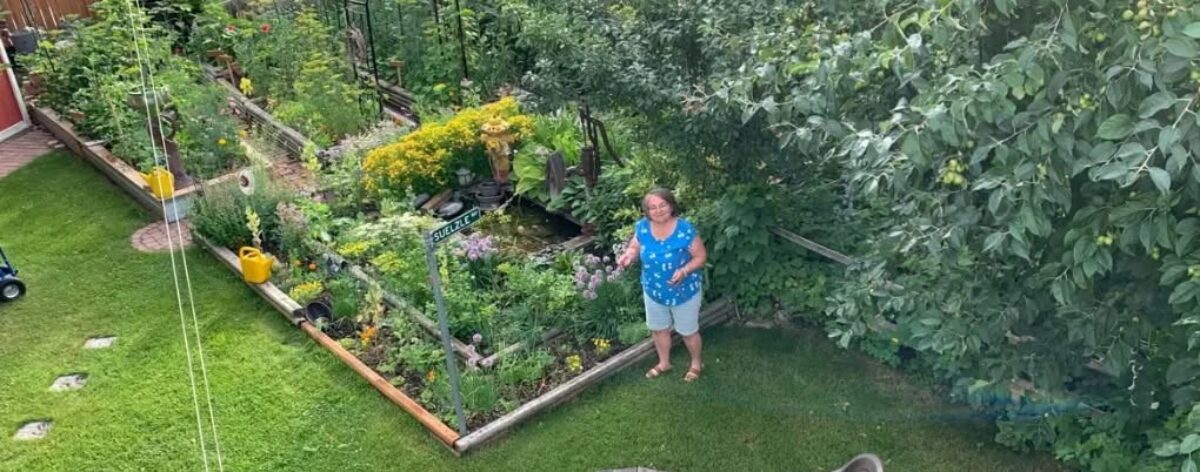
Spiritual Leadership in the Home: leadership through love and example

We’ve all had ‘moments’ in our lives that influenced us for good; perhaps defining moments that altered our life trajectories, or foundational moments that awakened some sense of who we really are.

Some of my fondest early childhood memories involved our bedtime routine. My mom would come to each of us individually to tuck us in. She always said something nice about our day, and pulled our blankets up nice ‘n’ snug under our chins. It was a safe, comfortable way to close the day. She taught us to say a little prayer.

Now I lay me down to sleep; I pray the Lord my soul to keep.
If I should die before I wake, I pray thee Lord my soul to take.

It was a comforting little ritual, and the words themselves caused me to ponder God as I was closing my eyes. I considered what they meant. . . . .

I pray thee Lord my soul to keep” sounded like I was asking Heavenly Father to take care of my soul while I was sleeping, since I couldn’t do it myself. I was sleeping.
If I should die before I wake, I pray the Lord my soul to take” made me hope that God would take my soul and give it a good home since I wouldn’t be needing it anymore – if I were dead.

I never really understood them, but the ritual and repetition brought comfort to me – the words inspired godly thoughts that helped shape the beginning of my understanding of who I was.

When I was older and learned that prayers should be more personal, I still opened them with that little rhyme. It was a prayer my mother’s mother taught her, and I assume it was one her mother had taught her, since it’s been around that long – and much longer.

Though both my parents were born into it, we weren’t raised in the church. We were, however, all four of us baptized. I have often wondered what propelled my parents to make sure that happened, but I’ve always been grateful they did. Clearly, there was something that pulled them in that direction. I am ever SO grateful they followed through. Some of my aunts and uncles did not.

I admit when I was asked to speak in church on Spiritual Leadership in the Home recently, I wasn’t thrilled about the topic. I told the person who asked me if he’d have asked me 15 or 20 years earlier, I might have felt that I was rockin’ it, but lately I was feeling very inadequate. As I have been thinking about Spiritual Leadership in the Home, though, the spirit began opening new things for me to consider. Like the little prayer I told you about.

Like me, neither of my parents was raised in strong LDS homes, but they and all their siblings were baptized. In both their homes, it was their mothers who were the spiritual leaders.

My mother’s father was not a good dad, and not a good husband, and certainly not a spiritual leader in his home. He abdicated that responsibility to his wife, and he died at the age of 42 years, the father of 8 children. Though his death affected them all and caused great financial hardship, the older four did not miss him, the youngest never knew him, and the others had varying memories of him.

I’ve often wondered about him and the legacy he left his family. I assume from his vantage point in the spirit world, he has many regrets. I imagined he was not unlike Jacob Marley’s ghost, wishing he could undo a bunch of terrible choices. But lately, the spirit has me looking at him a bit differently.

The Hand of God by Yongsung Kim

It was his job to take care of his family. He was a good provider, but he should have done better on the home front. Leaving this earth did not take that responsibility away from him. Families are eternal. And when we die, we don’t get released from all our responsibilities to them.

I believe it may have been Jeffrey R. Holland who taught that guardian angels are real and that they are most likely family members who came before us, intimately connected with us and highly invested in our spiritual well-being and progression. Russel M. Nelson taught that the most important job any of us could ever be involved in is the gathering of Israel, on BOTH sides of the veil.

What if those of our family members who’ve passed away continue to be interested in us?
They know us. What if they truly love us?
What if they see the good in us and also the challenges we currently struggle with?
What if my grandfather repented of the things he did in this world? Repented of breaking the heart of his wife and losing the confidence of his children.
What if he is sorrowing for the generational trauma he caused?
What if he truly wants to make things better for his children, grandchildren and great-grandchildren?
What if he were given the chance to do that?

So this Spiritual Leadership in the Home thing . . . . .
Whose job is that anyway?
Dads? Moms? What if it’s both of our jobs?
And what if we don’t ever get released from that calling when we die?

It wasn’t my dad who took the spiritual lead in the family I grew up in.
It was my mom who made sure we blessed our food and said our little prayers at bedtime. We didn’t go to church often in my young years, but when we did, it was she who took us.

We didn’t live the “Word of Wisdom” or read scriptures. My mom smoked the whole drive to church (and then popped a piece of gum in her mouth so nobody would know lol). My dad spent a lotta time in the bar with other dads who should have been home. We had a Bible, and I liked to look at the pictures in it. I didn’t know any of those stories, and neither did she, but I’m confident it was she who made sure we were baptized. It was she who spent her evenings with us, read to us, tucked us into bed and made us oatmeal for breakfast.

It was she who planted the seeds of love we would come back to.

My father’s brother entered our lives when I was 10 years old. He was transferred to CFB Cold Lake, where we lived – both these brothers being in the Royal Canadian Air Force (as it was called then). It didn’t take long for me to notice that my dad was a better dad when my uncle was around. Over the next two years, it was my uncle’s family who influenced me and quietly tutored me in my values, my character, and my understanding of what a strong, caring family could look like. It was my father’s brother who, after having left this life many years later, continued to work with my dad from the spirit world, until we were sealed together as a family in the temple.

I asked my dad as we walked out of the temple that day “Why now? …. After ALL this time, and after all the things we tried, why Now?
He said, “It was Uncle Merlin’s death.”
He meant that for the first time in his life, he stared mortality in the mirror and decided he had better start cramming for his final exams, but I came to realize that he was ‘righter’ than he thought. Though my uncle was the younger brother, he was a great example of what a GOOD MAN looked like. I had four girl cousins, three of whom were all within a year of me: one a year younger, one the same age, and one a year older. So I spent more time in my cousins’ home than my siblings did. I saw what a faith-filled home looked like and felt like. When I was only 11 years old, I consciously knew that when I grew up, I wanted to marry someone like my uncle, not someone like my dad (bless his heart). That was one of those defining moments I mentioned earlier, and even from that tender adolescent age, it changed the course of my life.

Uncle Merlin had done all he could for my dad in this life. But after he died, he had different ‘access’. They were no longer miles apart. I don’t pretend to know how things in the spirit world work, but I know Uncle Merlin was with us in the temple that day. There was no way he wouldn’t have been. He literally changed the trajectory of my family’s life and relationship forever – through love and example. And his family did the same.

To be clear, that change of course wasn’t a sharp turn. It wasn’t a right angle.
It was a very slight shift—almost imperceptible at the time—that took decades to fully reveal itself.

But it was pivotal.

Let the Children Come by Liz Lemon

And along the way, I learned an important lesson:
If you’re ever going to come back, it helps to have something to come back to.

Sometimes we might get impatient when things aren’t moving quickly enough. There were times I didn’t believe anything in my family could change. But I knew I was baptized. I was on the records of the church. I belonged. I had received the gift of the Holy Ghost, who never let me down. And when I decided I wanted to come back, there was a place for me.

~

When I married Dan, he was not a member of the church. He had been attending church every Sunday for the year we dated, because that was where I was. He committed to baptism a time or two, but then changed his mind. His family was not happy with this whole “Mormon thing,” and they didn’t like that Dan seemed to be changing right before their eyes. He wasn’t resolute about the gospel, but he was resolute about me. And the good people in the Cherry Grove ward (which was where I went to church) were kind and welcoming to him. You could even say they were loving. They modelled what a ward family was and what life with the gospel could look like. Among them, and in my Uncle Merlin’s home, he felt the spirit for the first time.

A year after we were married, Dan was baptized.
A week or two later, he started smoking again—and so began a roller coaster.

There were times he felt deeply loved by God, and others when he felt like a dismal disappointment. Such is the nature of addiction, pulling a person back and forth, between hope and shame, between resolve and relapse.

That pattern lasted for over 30 years.

During that time, we raised five children. One by one, most of them came to realize that their dad smoked. And one by one, they came to me—each carrying the same difficult question in their own way.

I would ask them, “Are you trying to tell me that you think Dad smokes?”

YES!”
“And you want to know that I know?”
“YES!”
“Okay. I know, And I have one thing to say. Your dad is a good man.
He has an addiction that none of us can fully understand, and it beats him up sometimes. It’s between him and God. But here’s what I do understand…”

Charity is the pure love of Christ—and it endures forever. Moroni taught that if we don’t have charity, nothing else we do really matters. It all counts for nothing. Because charity is greater than all. Your dad has charity. He would give the shirt off his back—I’ve seen him do it, and so have you. God counts charity.
In the meantime, we’ll support him. As long as Dad stops one time more than he starts, he’s still on the right road.”

Spiritual leadership in the home is not about doing everything right. It’s not about never making mistakes. It’s about being real. It’s about knowing that God loves us—and choosing to love Him.

It’s not about being better than anyone else, but about knowing who you are.

It’s about being a window to God’s love. Julie de Azevedo wrote a song by that title –

“I want to be a window to His love
So when you look at me, you will see Him.
I want to be so pure and clear
That you won’t see me standing here
‘Cause His love will shine brightly through me.

I want to be a doorway to the truth
So when you walk behond, you will find Him.
I want to stand so straight and tall
That you won’t notice me at all
And through my open door He will be seen.”

Spiritual Leadership in the home when you have young children involves training and teaching and modeling. And sacrifice.
It is about protecting your home emotionally and spiritually.

When your kids get older, it also involves letting them see struggle and faith, and letting God prevail. It involves a lot of humility and hoping you did right when you had the chance, because the years have flown by and you need to start letting go. And it involves MORE sacrifice.

When they become adults, there is an added dimension, and it becomes quieter.

Spiritual Leadership now means worrying about them—and praying for them—more than you ever have before.
It means trusting that your God is also their God, whether they recognize Him or not.

It means understanding that your job as a parent will never be over.
And you continue to love. You continue to sacrifice.

And you hold onto one quiet, steady hope:
That if they ever choose to come back, they know they have something to come back to.

As I reflected on all of this, I asked a friend this week for her thoughts on spiritual leadership in the home. Her words are a fitting way to close.

She said, “Love makes everything else work. There is always room to love better and deeper; always room to be kinder and softer; and always room to try to see things from another’s perspective, rather than just our own.”

I whole heartedly agree.
I’d love to hear your thoughts and feelings.

Warmly,

Cindy Suelzle

7 Things You Can Do to Help Mitigate Heavy Rain Damage in Your Garden

1. Stay Off Waterlogged Soil
Avoid unnecessary walking on saturated ground. Wet soil compacts very easily, which reduces airflow and makes conditions even harder on plant roots.

2. Improve Drainage (Gently!)
Use a garden fork to lightly puncture the soil, allowing oxygen to reach the roots. If possible, dig small trenches in your pathways to help move water away. Otherwise, disturb the soil as little as possible while it’s still wet.

3. Trim and Tidy Plants
Remove any damaged, yellowing, or diseased foliage. This helps prevent the spread of fungal issues and allows plants to redirect energy into healthy growth.

4. Add Straw Mulch
Mulch with straw to keep leaves from drooping into the mud. Plant leaves should never sit directly on wet soil—it’s an open invitation for disease.

5. Support Heavy Plants
Stake or tie up plants that are drooping or top-heavy. Rain adds weight, and unsupported plants can easily bend or break.

6. Replenish Lost Nutrients
After prolonged rain, it’s almost guaranteed that nutrients—especially nitrogen—have been leached from the soil. Yellowing leaves are a common sign.
I’ve used blood meal at home with good results. It’s a fast-acting, organic nitrogen source that promotes lush, green growth. If it is leaf growth that you’re after, blood meal / nitrogen will help. Not being aware of that, in my younger days I used blood meal too freely one year on tomatoes. The result was big, gorgeous tomato plants that were of fairy tale proportions (Jack and the Beanstalk), but not a single tomato on any of them. It took me years to put that all together and realize what I had done wrong. * It is not for fruiting or rooting crops. It is for LEAFY crops.

organic blood meal fertilizer

* Remember: a little goes a long way—too much can burn your plants. 1

7. Get Ahead of Pests (Especially Slugs!)
Wet conditions are a paradise for slugs2… unfortunately. Set out traps and consider natural deterrents like crushed eggshells around your plants to help protect them.

Gardeners, this too shall pass. Maybe quicker than we might imagine. And with it, perhaps the best learning experience we’ll ever have. There is no end to learning. Keep it up.

I’d love to hear your suggestions. Please leave them in a comment.

Warmly,

Cindy Suelzle

Footnotes:

  1. BLOODMEAL:
    To apply blood meal (it’s a black powder) to already established plants, use 1 teaspoon per plant, working it into the top 2 inches. Water it in. The water will help activate the nutrients and prevent the attraction of animals. 
    I take about a cup of blood meal and mix it into a bucket of good, dry soil.  Then I add a handful of soil to the plants I want to treat.  Try to prevent direct contact with stem and leaves, as it could cause fertilizer burn.
    Blood meal is best for leafy greens like lettuce, spinach, kale and cabbage, swiss chard, Asian greens, etc, and nitrogen-loving heavy feeders like corn and squash. 

    Normally, it’s not recommended for tomatoes, but after a month or record rainfall, my tomatoes had yellow leaves, so I took a chance.  Too much may delay fruit production, just so y’know. …..

    Blood meal breaks down and washes away, so be prepared to reapply in about 6 weeks.
    *Caution: don’t overdo it, too much nitrogen will cause “nitrogen burn”, yellowing or browning leaves. You’ll cause more damage than you’re solving by far.  Avoid using it late in the summer, as it promotes new growth – not what you want when plants are trying to prepare for end-of-season. ↩︎
  2. SLUGS:
    Rain creates a perfect damp environment for slugs to thrive and hunt for young plants.
    Identifying Slug Damage
    Slugs leave behind distinct clues, especially when plants are wet:
    Irregular holes: Ragged, chewed edges on leaves and stems.
    Slimy trails: Silvery, shiny mucus trails left on foliage or pathways as they move.
    Vulnerable plants: Tender new seedlings, hostas, marigolds, and leafy greens are primary targets.

    Effective Control Methods
    Because rain washes away powdery deterrents like diatomaceous earth, you can rely on these highly effective post-rain tactics:
    Board Traps: Place a flat piece of wood or an old tile directly on the soil near your plants or even leaning against the edge or base of your raised bed. Leave it there over night and into the next day. Slugs love to hide under these cool, damp spaces during the day. Simply flip them over in the morning and dispose of them in a pail of soapy water.
    Liquid Traps: Slugs are highly attracted to yeast. Fill shallow containers with cheap beer or a mixture of 1 cup flour, 2 cups water, and standard yeast. Sink them so the lip sits even with the soil.
    Handpicking: Blech. My least favourite. Go out at dusk or early morning with a flashlight and pluck them off your plants by hand. Drop them into a bucket of soapy water.
    Physical Barriers: rough, dry or sharp surfaces like crushed egg shells around the base of each susceptible plant. Slugs cannot traverse these sharp, ‘crunchy’ surfaces. While it may protect the plant, it doesn’t get rid of your slugs unfortunately, so best to use egg shells in addition to a trap idea. ↩︎

Having a Successful Garden after a month of Record Rainfall – can you save it?

Even if you’re a first-time gardener, you’ve likely discovered by now that gardening is not simply a matter of planting seeds and watering them. Nor is it as straightforward as planting in the spring and harvesting in the fall. Gardening asks for patience, attention, and a willingness to adapt—especially when nature has plans of its own.

This year has certainly proven that point. Edmonton has just experienced the wettest June in recorded history. The previous record, set in 1914, saw 217 millimetres of rainfall. That record was surpassed well before the end of the month, reaching 262 millimetres by Sunday, June 28—and that doesn’t even include the additional rain that fell on June 29 and 30. (At the time of writing, the evening of June 30, the final total is still climbing.)

While I’m sure that one day we’ll look back on this and even brag about it, right now it’s a record we would have been just as happy not to set. Everyone knows someone whose basement has flooded. Newly planted trees are quite literally floating. And it has created enormous challenges for farmers and gardeners of every kind.

Challenges We’re Seeing in the Garden:

Root Suffocation and Rot
Edmonton’s clay-rich soil drains slowly. When water lingers, it displaces oxygen in the soil, causing roots to literally suffocate and, in many cases, develop rot.

Nutrient Loss
At best, excessive rain leaches away essential nutrients—especially nitrogen—leaving plants looking pale, weak, and stunted.

Fungal and Bacterial Diseases
Constant moisture creates the perfect environment for disease. Splashing soil can carry fungal spores onto lower leaves, leading to issues like powdery mildew, black spot, and various blights.

Pest Surges when the flood dissipates
Beyond the mosquitoes we’re all battling, wet conditions also invite an increase in slugs and snails, which can quickly damage tender plants. 

Every experience is an opportunity to learn—especially the ones we wish we never had.

Here’s a foundational truth: we will never become good gardeners if the weather is always perfect. And the next truth is just as important: the weather is never perfect.

When I managed our family businesses, and later taught at annual industry conventions, I encouraged people to ask themselves three simple questions after every event—big or small. I’ve found these questions helpful in every area of life as a way to reflect, learn from both good choices and mistakes, from successes and failures, and to continually improve moving forward::

  1. What went well?
  2. What could I have done better?
  3. What did I learn?

So let’s bring these questions into the garden:

  1. Under the circumstances, what am I glad I did? What was working?
  2. Is there something I could have done that would have made this better? What was it?
  3. Where do I go from here? What did I learn—and what will I act on to ensure a better outcome next time?

From this month’s excessive rain, there is much we can take forward—not just for the rest of this season, but for all our gardening seasons to come.

If you and I have ever talked gardening, you’ve probably heard me mention no-till gardening. If you were to look at my plot in the community garden, you’d notice one thing right away: lots of mulch. I admit, in the beginning (several years ago), the appearance took some getting used to. Like most, I was used to seeing the standard black soil. Nice, clean black soil, in a perfectly flat garden. Now I try to have as little bare soil showing through as possible, preferring a generous layer of mulch and no flat ground.
I sculpt out rows that sit noticeably higher than the surrounding ground, using the excess soil from paths that are set much lower. You’d also see that my rows are mulched with straw, while the paths are deeply covered with wood chips.

forgive my very amateur attempt to illustrate this lol

Though this method of gardening is often promoted as protection against drought, it works just as effectively in the opposite extreme.

By keeping the paths lower than the rows, excess water is naturally diverted into these “ditches,” moving it safely away from tender plants growing in raised mounds. These rows—often planted with multiple lines of vegetables—stay elevated and better drained.

Heavy mulching plays a dual role. Straw on the rows helps retain moisture when it’s needed, while wood chips in the paths encourage water to move downward into the soil, where it remains accessible to deep, searching roots. At the same time, both types of mulch help prevent rapid evaporation when the sun finally returns.


Advantages of Raised Rows

  1. Slightly Warmer Soil – Ideal for seed germination, especially in early spring.
  2. Improved Drainage – Plants sit above water collection areas and are never left standing in puddles.
  3. Healthy Soil Structure – Undisturbed soil supports a thriving ecosystem, creating natural air pockets and allowing moisture to move freely.

Advantages of Straw Mulch on Rows

  1. Temperature Regulation – Insulates soil, keeping it cooler in heat and warmer in cold.
  2. Moisture Retention – Acts like a “lid” on the soil, reducing evaporation.
  3. Weed Suppression – About 6 inches is ideal, but in smaller urban gardens, that is sometimes not possible. Less when neccessary, still makes a significant difference. Use as much as you can.
  4. Soil Protection – Prevents “sunburn”1 of the soil and protects the living ecosystem beneath. Yes, ‘sunburn for soil’ is a real thing. See the footnote below.
  5. Builds Soil Over Time – As it breaks down, it becomes compost, creating rich, healthy loam.

Tip: Add straw each fall to build a living, breathing soil system year after year.


Advantages of Wood Chip Mulch in Paths

  1. Water Management – Provides a place for excess water to go, allowing it to spread out and soak in—away from plants, but still accessible to roots.
  2. Moisture Conservation – In dry conditions, wood chips help retain water by reducing evaporation.

At Sakaw Garden, we try to keep extra straw on hand for anyone who would like to use it. Personally, I prefer chopped straw—especially in smaller garden spaces, where it’s easier to handle and apply evenly.

How do we chop it? The old-fashioned way. Dan and I have brought a lawn mower down to the garden, spread out a few bales in the field outside the fence (before the dandelions flowered), and mowed over them. We gathered the chopped straw into a wheelbarrow and brought it into the garden for use. Pretty simple and straightforward.

The first time we did this, Dan mowed many bales and left a generous pile just outside the east fence for others to use. These days, when all I need is to top up, I’ll often just bring a large bag from home that we’ve already chopped.

I strongly and wholeheartedly recommend the no-till method: raised rows, deep paths, and plenty of mulch. It’s a simple, resilient system that works with nature—whether we’re facing drought… or the wettest June on record or something in between.

These three garden plots are side by side in the community garden after a month of record-making rainfall.
All are adversely affected by the rain, but while plots 1 and 3 are flooded, the middle one is not. The difference?
From time to time, over the last couple of years, Gardener #2 has raised her wooden frame just enough to accommodate the additional material she’s been adding: compost, soil and mulch. She’s customized the spirit of no-till gardening and applied it to her 10×10 foot plot. She has a single recessed path in the middle from which she can reach her planted areas. She’s mulched it with straw, diverting all excess water into it. Meanwhile, she’s been gradually adding compost to her growing areas, resulting a garden that is winning in the Edmonton rain-wars of June 2026.

This quote from Maya Angelou is in two prominent spots in my home as a constant reminder to me. It is my personal mantra.

“Do the Best you can until you know better. Then when you know better, DO Better.”

I find its message both liberating and motivating at the same time. The principle is simple: to forgive myself for past mistakes, recognizing that I did the best I knew how at the time—while gently encouraging myself to learn from them and do better moving forward.

Gardeners, this too shall pass. Maybe quicker than we might imagine at the moment. And with it, perhaps the best learning experience we’ll ever have will pass too. Let’s not waste this frustrating experience by NOT learning from it.
There is no end to learning. Commit to ‘keep on keeping on’.

Warmly

Cindy Suelzle

Footnotes:

  1. SUNBURN: The sun’s intense UV rays and heat can heavily degrade soil. In Alberta’s usual dry climate, harsh sunlight and hot temperatures can bake topsoil, kill vital microorganisms, and cause rapid moisture evaporation, which turns exposed dirt into cracked, dusty crust.
    To prevent sun and heat damage to your Alberta soil, use the following actionable tips:
    Apply a Thick Layer of Mulch: Covering your soil with a minimum of 3 inches of organic mulch (like wood chips, bark, or straw) shields it from direct sunlight, insulates it against extreme temperature swings, and protects it from rapid evaporation.
    Add Organic Matter: Incorporate compost into your flowerbeds and vegetable gardens. This improves soil structure and water retention, allowing it to better handle our ‘usual’ blazing prairie sun.
    Water Effectively: By mulching, you will eliminate the need for watering as frequently as you did in the past, but when you do, water your soil early in the morning. This minimizes evaporation and ensures that the moisture absorbs deep into the soil before the peak afternoon heat hits. ↩︎