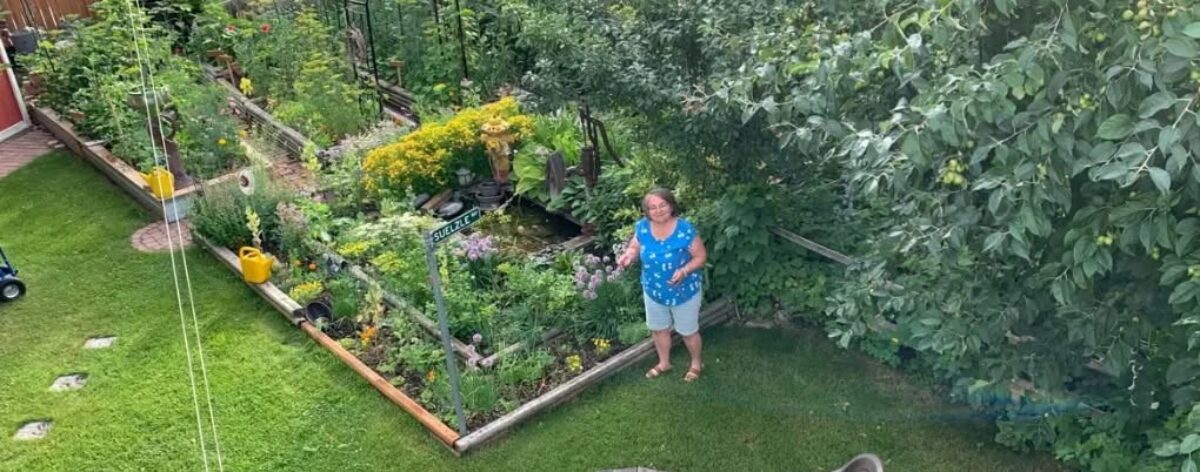
I don’t pretend to be an economist, or an expert in any area other than the way I choose to live. But like you, I have to purchase food, and like you, I’ve witnessed many changes in the way this is done over the years. Never more, than the changes we all witnessed in 2020.
So what is “buying food” gonna look like this year?
As with everything else in our world, grocery buying trends in 2020 were drastically affected by the Covid pandemic. Within weeks the whole landscape, worldwide – changed. As the year wore on, food shortages that modern generations have never before seen, became less of a shock and more of the ‘norm’. Images of empty shelves became common place. Panic buying in the early months, turned to strategic buying, and the term “Food Security” took on new meaning.
There is little doubt that our collective experience in 2020 altered the way we as a society look at food shopping, but have you noticed any changes in your personal experiences? Has your buying behaviour been altered over the last twelve or so months? If so, in what ways?
The pandemic uncovered gaps in the way our food was distributed – as the unthinkable became reality. Our former collective sense of invincibility became a little more vulnerable, and all those freaky people who practiced Food Storage, suddenly seemed a little less strange. Consumers stopped buying just for today, and started buying with tomorrow in mind. Food companies responded by setting aside the development of fun, new products, to make way for the bigger challenge – that of keeping the shelves stocked with staples. And that, was no small challenge!
The pandemic uncovered gaps in the way our food was produced too. We had gotten away from locally produced food, as it had become more cost effective to import from distant producers. This always made me nervous. Market gardens and farms that depended on seasonal migrant workers found that their once dependable labour supply was no longer able to cross borders. Adjustments had to be made. Social distancing requirements made it necessary to close meat plants, and other assembly line productions. More adjustments had to be made. Home gardening skyrocketed in popularity as food supplementation became important to more and more North Americans. Many seed companies began selling out. More adjustments had to be made.
Restriction in movement, and general hesitance to gather in public, with health and safety protocol implemented on every level, created a whole new reality for buying groceries. Newly introduced delivery options were embraced quicker than before, so that consumers rarely had to walk the aisles in person unless they chose to. And all this time, healthy eating remained a priority – even gaining renewed attention. Afterall, our best defense against disease is good nutrition.
So here we are, standing in a new year, not seeing the changes we all hoped we would by now. 2021 looks suspiciously like 2020. After months of lifestyle adjustments, experts believe that the evolution of consumer behavior will continue in it’s current trend, as more and more of us have experienced first hand, the convenience of groceries delivered right to our doors. Online subscription purchasing continues to rise in popularity, providing flexibility, consistency, and food security. Buying ahead requires food stability, so alternatives to perishable foods are critical, and people are looking at the quality of freeze dried food with renewed interest.
Our once ‘outgoing’ society, has given way to a ‘homebody’ society, and for the foreseeable future, that implies a ‘homebody economy’ – of home cooking, home baking, home renovations, home gardening, and DIY projects. Online recipe searches have increased dramatically, and online shopping of food and other essentials, seems to be here to stay.
2020 was a fascinating year, of change that none of us could have imagined at the beginning of it, but we humans are an adaptable lot, and we’ve learned ways of being successful with our new reality. While Covid fatigue is a real thing, and we yearn to get back to our former lives, there is little expectation that we will ever return to many of our pre-covid behaviours. There will be loss in that – of course. But change also implies growth. We’ll figure this out. And in the process, hopefully we’ll hold on to those things we loved about our pre 2020 lives, while we embrace new, innovative ways of going forward.
The challenge of course, is to open our eyes, and to not only ‘see’ for ourselves what those new, innovative ways of improving our Food Security are, but to be willing to incorporate them. Freeze dried food is the most nutritious food on the planet – second only to what we can grow in our own backyard, organic gardens. It is shelf stable, making long term food storage easy. There is zero waste so it is more economical when compared to the 40% food waste in the average North American home. And it is light weight, making it easy to ship thousands of miles. It is the answer to the high cost of food in the north, and food shortages in many countries.
For the average North American home, it is the answer to nutritious, delicious meals prepared in half the time they used to take. For people focused on healthy eating, it is the best way to eat vine ripened, “fresher-than-fresh” nutrition. For people to whom food security is a priority, the 25 year shelf life is a huge benefit.
I’d love to hear your ideas and suggestions for food security going into 2021.
I hope, as you do, that this terrible situation we find ourselves in with the Corona Virus (late winter of 2020) will soon have an end; that we will accomplish what is needed to reduce the rate of spreading infection, as well as develop weapons to use against it, not-the-least-of-which is a vaccine. I hope that soon life will return to one where we can freely be in each other’s company again, and where we can reach out and ‘touch’. Who could have imagined that shaking hands and hugging would become taboo overnight? How can humanity – the social creatures that we are, go on indefinitely without the wonderfulness of ‘touch’?
But in the meantime, there are undoubtedly many things we can learn. Ways we can turn this awful experience to our good. If we come out of it unscathed and in time go back to the way things were, then it benefits us nothing. And I just cannot believe that such a BIG deal is meant to benefit us nothing. The Lord tells us “all things shall work together for your good” and here’s the clincher “if ye walk uprightly and remember the covenant wherewith ye have covenanted one with another. ” (D&C 90:24) This is a ‘covenant verse’. [covenant see below] It carries with it a promise. IF you do this, THEN I will do that. In this case IF we walk uprightly and remember our covenants THEN the Lord will ensure all things work to our good. I love this verse. It is in my top ten favourites. In it I find hope and assurance, because He also said “I the Lord am bound when ye do what I say; but when ye do not what I say, ye have no promise.” (D&C 82:10) This is my mantra. It governs my life. Find out what the Lord wants me to do and DO IT. I cannot think of a single being that I am more anxious to have BOUND to me than my God. And He happily agrees to it. If I am to have Him work an experience to my good, then I am under strict obligation to honour my commitment which is to walk uprightly before Him (remember Him and obey His commandments) and honour my covenants.
I also find it interesting that He says “ALL things shall work together for your good“. He doesn’t say “some things”. He doesn’t even say “most things”. He doesn’t say “all things except drug abuse”, or “all things except for deliberate conscious, stupid choices”. He says “ALL things”. The word ALL is pretty inclusive in our language, and I will take Him at His word. I choose to believe He intended me to know He means “ALL things” including a global pandemic which may in fact take the life of someone I love. I will go forward with that understanding. The question then is – what is my my part? my responsibility in this arrangement? We know that “there is a law irrevocably decreed in heaven before the foundations of this world, upon which all blessings are predicated – and when we obtain any blessing from God, it is by obedience to that law upon which it is predicated.” (D&C 130:18-21) So it is simple. Find the law. Obey it.
There are certain principles of preparedness that are basic. I am sure we’d all select them in a multiple choice quiz, but it is shocking how many of us refuse to live by them. In fact we prefer not to think about them at all. We’d really rather laugh at the people who govern their lives by them. How boring right? Well, when it hits the fan and the unthinkable is happening, some things are just not so funny anymore. At the time of me writing this, we are in (what is probably) the beginning of the Corona Virus pandemic. Schools have closed. Gatherings of more than fifteen are prohibited. For the most part, citizens are voluntarily self isolating at home. Every detail of the fabric of our society has shifted in a matter of weeks. The changes are fluid. Moving targets. Policies replace policies almost every hour. Unemployment is high, stress and anxiety are epidemic, and the future is shrouded in mystery.
Recently I spoke to a friend of mine Helaman Petlacalco, who lives in Mexico, in an area that is 100% dependent on tourism for its economy, the Yucatan Peninsula. Tourism is to them what Oil is to us in Alberta. In light of the pandemic I asked him how he and his family were doing. I have read and re-read his answer multiple times. His perspective is refreshing, encouraging, even empowering. Let me share a little of it here. He reminded me of some memorable, relatively recent times that stood out to him as affecting their economy. Things such as *1985 earthquake in Mexico City – *1988 hurricane Gilbert in Cancun – *9-11 in 2001 which affected air travel and tourist confidence for a very long time – *2005 hurricane Wilma in Cancun – *global economic crises in 2008 – *2009 swine flu originating in central Mexico – *2017 a public shooting in the main police office in Cancun days only after another public shooting in close by Playa del Carmen. . . . . . . . .
He said “Thanks to all of these experiences and the gospel, I was ready and prepared. I told my kids and their spouses several weeks ago to get ready for this adventure. The thing I thank my Heavenly Father so much for, is that this is happening after our high season of tourism. He gave us the chance to work and to save money. Otherwise, it would be really very hard.”
Can I just interject here? He refers to some of the worst times in their recent economic history as “good experiences”. What an interesting perspective. I happen to know that they were bad experiences for tens of thousands of Mexicans, including his own family, and yet – he reflects upon them as “good” experiences. Without trying to read too much into my friend’s words, he is of course, referring to what came out of those experiences. The lessons that were learned. Those lessons taught principles of self reliance by unveiling weak spots in current habits, and showing a better way.
Then he concluded his message by bearing personal testimony – revealing the true foundation for his hope and strength. “I don’t know how long it might take,” he said “but I would love so much if this was part of the second coming and to see my Saviour very soon! That is really exciting!” For millennia, people have referred to that “Great and Terrible Day” of when the Saviour returns. The two terms ‘great’ and ‘terrible’ are generally polar in definition, and imply that for some it might be great and for some it might indeed be terrible. I don’t want to get into a discussion of that right now, other than to acknowledge that my friend’s mention of it refers to more than just a physical, temporal preparation. Just saying. For now. Another conversation for another time.
He then concluded “I don’t know why my character is so positive, but I trust in Him and I understand that He knows what He is doing. I love Him for all that He did, does and will do for us.” – Helaman Petlacalco (private letter)
the Good Shepherd by Simon Dewey
There are pearls of wisdom in Helaman’s comments, that can help us all. We have all had times of difficulty from which we should have learned important life-lessons, and developed skills and attitudes that would sustain us in the future. If that is not the case, or if you can’t recall them specifically right now, then perhaps our current shared experience with the Corona Virus will help. Perhaps THIS will be our “good experience”. The one that teaches us what our strengths are, where weaknesses in our self-reliance lie, and where we can reliably place our trust. Will we get over this and return to normal? I believe we will get over it. I genuinely do. But I hope with all my heart that we don’t ever go back to ‘normal’. There are many things wrong with our ‘normal’. I hope that we will learn from this and become a better people – globally, nationally, in our own communities, neighbourhoods, and especially in our own homes, with our own families. We can only do that if we make the decision to learn, and to do better.
quote from Maya Angelou
Here are two foundational issues of temporal self reliance that I believe are critical for us to focus on. Our physical, mental and emotional well beings are intricately connected to them both.
Money
Most North Americans are a single pay check away from insolvency. That is a scary thought because we’re talking about real human beings – with faces and names, and families and homes that they will lose. Consumer debt is at an unprecedented high, and increasing at an alarming rate annually. This spells d.i.s.a.s.t.e.r for individuals, families, communities and nations. We MUST do our part by starting at home. Rules to live by:
over spending and mismanagement of household funds is a huge source of stress and anxiety
Stay out of debt. Okay I said it. That’s where it begins and ends. If you couldn’t pay for it last month what made you believe you could pay for it this month? Or next month? There is no possession that will make you feel so good that it is worth the stress and burden of debt. Interest never sleeps. It has no sick days, and it never goes on vacation. It is constantly on the clock. And it is not your friend.
Save Up rather than Pay Off. This requires some self governing. Maybe you don’t get that ‘thing’ right now. Maybe you save for another few months (or years) and get it when you can. Maybe you never do. That’s okay. You’re working toward something much more important. Peace of mind. There is no price nor substitute for PEACE of mind.
You don’t ‘deserve’ that thing you want. What kind of foolishness is that line of thinking? Having a shiny new, fully loaded truck is not a basic human right. Get one you can afford. Yes, it might be used. Yes, it might not have all those bells and whistles. And yes, you might even want to learn to change your own oil. But above all, learn to distinguish between “privileges” and basic human rights. They are not the same.
Live within your means. If you can’t pay for it by the end of THIS month, You-Cannot-Afford-it. There it is. Straight forward and unadorned. For something so difficult to live with, it is amazingly simple. Remind yourself of that continually. It gets easier. Trust me.
Debt for this or that? Okay let’s be reasonable. I know some debt is necessary for some things in our society. But those things are FEW. – A house. Modest and affordable. One that you can reasonably hope to pay off, and one with payments you can manage without spending every last dollar. – A vehicle. Perhaps. But one that is modest and affordable and that you can pay off in a year or two at most. – An education. If necessary, and which should be reasonable and subsidised by seasonal or part time work when possible. NOT a vacation-in-the-sun. NOT a fancy new zoom-zoom car. NOT a brand new motor home. NOT dance lessons, dinner out, new clothes or a movie. And for heaven’s sake NOT food! Sacrifice what you need to, to put healthy food on the table – that you can afford. Garden if you can. Go back to the basics, just don’t spend what you don’t have. The other stuff: if you can pay for those things – enjoy them. If you cannot, wait till you can.
“Look to the condition of your finances. Discipline yourself in your purchases, avoiding debt to the extent you can. In most cases, you can avoid debt by managing your resources wisely. If you do incur debt, such as a reasonable amount in order to purchase a modest home or complete your education, work to repay it as quickly as possible and free yourself from bondage. When you have paid your debts and accumulated some savings, you will be prepared for financial storms that may come your way. You will have shelter for your family and peace in your heart” (True to the Faith, 2004, 48–49).
Save for a rainy day. I know it is easy to say we should all set some savings aside, but I also know what it is like when there simply isn’t anything left at the end of the month. We too went through years of living hand to mouth, barely able to make it through the month, being stressed about kindergarten fees, school supplies, additional field trip expenses, new clothes for the kids, and inside shoes for school, not to mention birthdays, Christmas and all those ‘extra’ things that are part of family life. Putting money in the bank seemed impossible. We’ve all read the counsel to “pay yourself first”. Whatever! When you have nothing, that is insulting to even hear. I know.
But I am here to tell you that even $10 in the bank is better than nothing. And $10 once a month turns into $120 in twelve months. And one year turns into two years, then pretty soon ten. The point is to start where you are. Put something aside. Anything. And then do it again. And again. Consistently. Tires need replacing, kids need braces, furnaces quit in the middle of winter cold snaps, …. emergencies that could have put you into debt can be met head-on by a rainy day fund. It gets easier as time goes on. And watching it grow (even slowly) is immensely satisfying.
Be charitable. I saved this for the last, not because it is of lesser importance, but because I want to emphasize it. Moroni tells us that “charity is the greatest of all“, and that though all things must fail, “charity never faileth“. Charity, he clarifies, is the pure love of Christ, and we must all possess it. (Moroni 7:46,47) Taking care of oneself should never be at the expense of charity. How can one reconcile the two when our own personal need is great? They are not mutually exclusive. Jacob counsels us to “seek ye for the kingdom of God …. before ye seek for riches“. (Jacob 2:18) It becomes a principle of faith. We always have something we can share when the spirit prompts, even though there might be sacrifice involved in the sharing of it.
Members of the Church of Jesus Christ of Latter-day Saints are asked to go without food for a period of time every month. The money that would normally be spent on those missed meals is freed up to give to those who have less. We call that a ‘fast offering’, and there are real and tangible blessings that come from a generous fast offering. Yes, it is another principle of faith – to give when you feel you don’t have much to give, but it is a principle that becomes easier with testing. “I the Lord am bound when ye do what I say”(D&C 82:10) is the comforting, and accompanying principle that attends any example of obedience, including charity.
Sharing as the spirit prompts and giving service as opportunity presents itself, will never be in conflict with basic principles of self reliance. One should still avoid debt and live within our means; we cannot give what is not ours to give. It has been my experience that the Lord will never allow himself to be in our debt. When we sacrifice, He blesses us. When we sacrifice again, He repays more. No matter how much we try to get ahead of him, we will always be the ones in His debt, because the attending blessings are too great to number. Trust in Him, and like the Widow of Zarephath, you too will be blessed for your charity.
In our effort toward Self Reliance and Preparedness, never think to get ahead at the expense of charity.
the way out
I am not pretending to be an expert on debt reduction, but we have been on both sides of it. More than once I am embarrassed to admit. We first hand know the despair that comes from over spending and unmanageable debt. Of living outside of our means. We also know the relief of that final payment, and the peace of mind that follows. We know what it is like to lose our house in a season of unemployment. We also know what is to NOT lose our house in another season of unemployment. And I don’t want to trivialise the journey by giving some trite recommendation; it deserves a much bigger picture than that. Such as I have something to offer, I will address it in a future post. But for now, we can say it requires the DECISION to do so, and then the commitment to follow through on that decision. Make the decision now to do whatever it takes to begin the journey of being debt free.
Food and other Necessities
Home Storage During the early days of the Corona crises, we were all shocked at the sudden shortages of certain items in grocery stores that resulted from panic-buying. Ridiculous items like toilet paper. One person’s full cart prompts another to reconsider their decision to buy only one, which prompts another and another. We are so susceptible to social suggestion, and sometimes make regrettable decisions based on crowd mentality. Surely all that money spent on toilet paper could have been put in more sensible purchases if a little forethought had been applied. Whatever the motivation – personal use? possible future trade? business investment? or to take advantage of others later … the whole fear-fed panic purchasing situation is so preventable with a little preparation.
If you are one who relies on weekly grocery shopping or regular take-out, it might seem overwhelming to have a long term supply of food on hand. What to buy? How and where to store it? And most importantly, how to afford it? …. Step back. Take a breath. This is not only good counsel, it is very doable. It may take time (and it should take time), but with a little planning and consistent execution you will start to feel the peace that comes from being a week ahead, two weeks ahead, … a month ahead, six months ahead. Consider these steps:
Don’t go to extremes. Calm down. Avoid the temptation to go into debt by trying to establish your food storage all at once. Remember the rule above – if you can’t pay for it, you cannot afford it. Have a plan. Gradually adding to your ‘Home-Store’ one step at a time, will not be a financial burden to you. I promise.
Store what you Eat and eat what you store. Don’t go all crazy and buy a bunch of shelf stable stuff you have never eaten before and don’t even like. Doing that gives “food storage” a bad reputation. If it would take a zombie apocalypse to talk ourselves into eating it, then we have made some poor food choices. But get real, this might imply that we start integrating more basic foods into our daily routine, so that we can learn to prepare them and become accustomed to using them.
Don’t forget the fruits and vegetables. Yes, the basics: flour, rice, beans, grains, pasta etc, but good health is intricately connected to good nutrition, and good nutrition is dependent on FRUITS and VEGETABLES. Clearly with fruits and vegetables, a form of preservation is required. Nutrition should be our primary focus when considering what form of fruits and vegetables we intend to store. Most fruits are picked before they’re ripe, for better travelling. This is unfortunate as the final stages of ripening involves the development of many vital nutrients, that would get utterly missed if picked before fully ripe.
Options:
* Canned: Whether commercially canned or home bottled, the process retains approximately 40% of the food value. Not ideal, but still an easy and reliable method of home preservation. Shelf life TWO years. Caution: often contains other less desirable ingredients.
* Frozen: Whether frozen at home, or commercially frozen, the process retains approximately 60% of the food value. Must be properly prepared and properly stored. Shelf life three to twelve months, depending on what it is. Caution: completely dependent on electricity.
* Dehydrated: Could retain up to 80% of food value but assurances of this and the shelf life are unstable due to the number of variables. Whether home dried, or commercially dehydrated (drum dried), answers to the questions of *temperature during drying process? *length of time from harvest to dehydrator? *how much moisture did you remove? *are you sure about that? was the use of sulphurs used in the process? all contribute to the bigger picture.
* Freeze dried: Freeze drying could retain up to 98% of the original food value. Whether freeze dried at home or done commercially, it is a two step process that involves 1) freezing as fast as possible, and 2) removing the remaining moisture through a vacuum-like process using no heat. This yields a food that is completely without moisture. When it is packed in an oxygen free container, it’s shelf life is a remarkable twenty five years.
With all these methods of preservation, it is critical to process fruits or vegetables as quickly as possible from the garden to the kitchen. This ensures nutrient stability as produce begins to deteriorate within the first hour after harvest. Buying fruit that was picked green a week ago to can, freeze, dehydrate or freeze dry yields a substandard product to begin with. Attention to this detail is important. When purchasing freeze dried foods, you should have assurance that time from field to freezer is as short as possible.
Starting Small Works: During your normal shopping trip, when you come across a good deal of what you would normally buy – buy an additional one, or even a few more than you ordinarily would. As you can afford it. It really IS as simple as that. When you go home, set it aside as the beginning of your Home-store. A few extra tubes of toothpaste, an extra package of toilet paper, a few additional cans of tomatoes, etc. Keep it up, and watch as it grows, perhaps slowly at first, but steadily nonetheless. Focusing on those foods that are already IN your ‘normal’. reliance. Buy what you can afford, but remember that paying interest on top of a good deal – defeats the ‘good deal’. Every week you will feel more peace-of-mind about your increasing level of self
Rotating food: Every food has a shelf life, and yes, I know that the food doesn’t self destruct the day after that best-before date, but nutrition is lessening every week that goes by. The answer of course, is to USE the food in our Home-store. When we buy more, put the new cans in the back so that we are always using the oldest cans first. I usually write the date I buy the food on the lid so that I see that information readily. With freeze dried food, the open shelf life is generally a year. I mark the day I open the can on the lid to keep it front-of-mind. Remember to keep the lid on, as being without moisture the food will readily absorb moisture in the air (even when you don’t think there is any). Moisture won’t spoil the food, but it will take away its ‘crispness’, and that is what gives it its long shelf life. I keep open cans in my kitchen so they are hand to use for every day meals.
HOME-Store vs Food Storage: The concept of a “Home-store” is that when the kitchen runs out, one simply goes to the home store to bring another one into the kitchen. A Home-store is in a constant state of replenishment because it’s constantly being used. I cannot count to the number of people I have spoken to over the years who live by the principle that food storage is Food Storage and groceries are Groceries, and never the two shall meet. No offence intended, but what kind of goofiness is that? It is contrary to the whole concept of rotation and the counsel to “store what we eat, eat what we store”. We all know how quickly time flies and soon even the food with the 25 year shelf life will be a decade old. I have known people who boasted “I have a whole lot of freeze dried food in my food storage.” As soon as I hear this, I know how the conversation will develop. I ask “How do you like it?” They say “Oh I’ve never used it.” I say “Why not?” They say “Because its FOOD STORAGE. And besides, I haven’t got a clue what to do with it.” Then comes the clincher. I ask “How long have you had it?” The answer: “we bought it the year we moved here.” How long ago was that? “We’ve been here 37 years.” . . . . pause . . . . “You realize its 12 years PAST the expiry date right? When exactly were you thinking about using it?”
I get the concept of ‘protecting’ one’s food storage. But by doing that, we more often unintentionally waste it. Can using it regularly, continually replenishing in a Home-store model, be more expensive than throwing out $6000 worth of food that is decades older than it was ever intended to be?
It is my hope and prayer that we will learn valuable lessons from the wonderful hands-on experience we’re sharing in this Corona Virus chapter. We are in fact living History. Books will be written about what we are going through at this very moment in our lives. Our grandchildren will learn about it, the way we learned about the world wars, deadly Spanish flue epidemic and great Depression. Many of us will suffer more than we needed to, but the lessons we are learning are ones we could never have learned any other way.
I’d love to hear your thoughts. I’d love to hear your strategies for navigating these waters, and riding this wave of social isolation and the tremendous effect it is having on our economy.
Warmly,
Cindy Suelzle
references
Covenant – in the context of Church of Jesus Christ of Latter-day Saints doctrine, a covenant is a two way promise that always includes the Lord. He fixes the terms. We agree to them (or not). Many principles and ordinances are received by covenant which places the recipient of those blessings under strong obligation and responsibility to honour the commitment.
November 18 of this year was a Sunday.
We woke up to an unusually cold house.
It didn’t take a rocket scientist to confirm that our stupid furnace
wasn’t working. In fact, we suspected it stopped working the day
before. In November in Edmonton, you don’t get
along for too long without a furnace!
You may have experienced something similar. If a furnace is gonna quit, its gonna do it in the winter time when its working steady. I know lots of others have had this very thing happen. It may not be common, but it is not rare. It was SO not in our plan for that cold November Sunday. The problem is, these kinds of things never ARE in the plan. Who schedules the furnace quitting into your weekly calendar? But planning for these kinds of possibilities makes all the difference in how you get through them.
Provident Living We could spend hours talking about the different facets of it. But cutting to the quick, being “provident” means having foresight and providing carefully for the future. Its about taking care of yourself today AND tomorrow, and being prepared for the unexpected. And it IS God’s temporal plan for His children.
Many years ago, Dan’s uncle was selling his motorhome. It was a nice one and he had taken exceptionally good care of it, and Dan really thought we should have it. He spent considerable time trying to talk me into it, and finally convinced me. Sort of. Mostly, I just gave in. Then one day he came home from a session of General Conference and said “We’re not buying Uncle Ernie’s motorhome.” I was just starting to warm up to the idea. LOL
It was October 1998. President Gordon B. Hinckley had just told those attending a general session for the men of the church to GET OUT OF DEBT. “I am suggesting” he said ” that the time has come to get our houses in order … Self-reliance cannot obtain when there is serious debt hanging over a household. One has neither independence nor freedom from bondage when he is obligated to others.” He went on to say “I urge you brethren, to look to the condition of your finances. I urge you to be modest in your expenditures; discipline yourselves in your purchase to avoid debt to the extent possible. Pay off debt as quickly as you can, and free yourselves from bondage. This is part of the temporal gospel in which we believe.” He concluded his remarks with this “If you have paid your debts, if you have a reserve, even though it be small, then should storms howl about your head, you will have shelter for your wives and children and peace in your hearts.” 1
It wasn’t that we hadn’t heard the counsel to stay out of debt before. In fact, we felt strongly about it, and even tried to live it. But that particular talk became one of those defining teaching events in our lives. It spoke to Dan’s heart and when we discussed it, it spoke to my heart. It changed things for us. We recommitted ourselves and began working with intent toward becoming completely free of debt.
Three years later, Dan lost his job. A job we had every expectation that he would retire from. “Downsized” was a relatively new word at the time, but people were getting used to it. One day he went to work as usual, and a few hours later he was home. And that was that. The truth is, nothing ever went back to ‘normal’ after that day. We owe a LOT to our strict obedience – finally – to the emphatic admonishment President Hinckley gave that evening three years before. When a prophet speaks that forthrightly, that emphatically, and that urgently – it is a good idea to pay attention. I am so glad we did.
When we had a family meeting a few days later, to tell our kids that Dad no longer had a job, there was silence for a long time. Jacob was just home from his mission, and he asked the questions everyone wondered. “What does this mean? How is this going to affect us in the day to day?” Of course these were questions we had talked about ourselves before we met with the kids. We could tell them this: “Because we listened to, and obeyed the prophet’s counsel to get out of debt, we believe we will ride this out without too much pain. Our most important goal is to keep this house. It is the only thing we owe money on, and every energy must be spent on making sure this house is never in danger.”
Things didn’t work out the way we hoped they would. Dan never re-entered his field. After months of looking, he re-entered the workforce taking a job paying $12 an hour. We had plenty of opportunity to reinforce our testimony to our kids of some very important principles. Like TITHING, FOOD STORAGE, and living within our means – which means avoiding DEBT.
I could not even begin to count the number of times I shook my head and said to myself, or to Dan, or to whatever kid happened to be standing nearby “Wow. Can you imagine? If we had had credit card debt, we would have lost this house by now! Who knew this would go on as long as it has?”
Provident living and being self reliant are not just Latter-day Saint ideals. It is a very popular concept among all sorts of people who focus on independence. However, there are a few things that I think are important to keep in mind when talking about Provident Living in a Latter-day Saint context. And as with all important things, we get our most reliable tutoring from the scriptures.
So where in the scriptures does it tell us to prepare for the furnace to quit, or to get a food storage in, or to stay out of debt, or put some money aside in case the unexpected happens?
Well, we know that when the Lord speaks thru his prophets, that is scripture to us. Almost 60 years before President Hinckley gave that talk, (in 1941) President Heber J Grant spoke from the pulpit “If there is any one thing that will bring peace and contentment into the human heart, and into the family,” he said “it is to live within our means. And if there is any one thing that is grinding and discouraging and disheartening, it is to have debts and obligations that one cannot meet.” 2
In the Doctrine & Covenants we read “… verily I say unto you that all things unto me are spiritual, and not at any time have I given unto you a law which was temporal; neither any man, nor the children of men; neither Adam your father, whom I created. Behold I gave unto him that he should be an agent unto himself; and I gave unto him commandment, but no temporal commandment gave I unto him, for my commandments are spiritual; they are not natural nor temporal …” (DC 29: 34,35)
For the 72 hours we were without a furnace last November, we were surprisingly comfortable. We were sure glad it wasn’t 37 below, but there were other things that made that easier for us. Being prepared for possibilities can take a near tragedy and make it nothing more than an inconvenience. And not being prepared can take an inconvenience and turn it into a tragedy. We had always worried about what we would do if we lost heat in the winter. That was the worst case scenario in our stay-at-home emergency plan. So over time, as we could afford it, we worked toward some solutions.
many years ago we spent considerable energy re-insulating our attic. We’ve noticed that it has made a big difference in our house retaining heat in the winter, and cool in the summer.
we have a gas fireplace which we turned on immediately.
we have a woodstove downstairs with a flat top for cooking if necessary
we have a few cords of wood stacked up outside, some of it by the back door, and some of it downstairs beside the wood stove
we’ve had some bad experiences learning to light that stupid stove when it was 30 below. We’ve smoked out the whole house that not only set off the smoke alarm, but took weeks to get rid of.
we had some money set aside for emergencies that we were able to use to fix the furnace
All these things we used on that Sunday and Monday. By Tuesday morning, it was as if nothing had ever happened, except that our house smelled slightly of wood smoke.
We were so grateful for planning ahead for a possibility we hoped would never happen. And who knows? That might have just been a test run. I hope not.
Provident Living and being Self Reliant means that we learn skills that will help our family should the unexpected rear its ugly head. Knowing those skills takes the fear out of the unexpected. Years ago – before I made my first long distance road trip without Dan, he thought it prudent to teach me how to change a tire. I admit, it wasn’t my finest moment. To say I was resistant would be giving me too much credit. I had absolutely no desire, but he insisted. He made me come out and watch him as he patiently explained each step while he removed a tire, and put it back on. I stood behind him watching and noticed how dirty his hands were getting and I thought “You canNOT be serious! I am not touching that. And what if I break a nail? That’s a risk I’m not willing to take.” I didn’t vocalize any of those thoughts and wisely Dan didn’t insist I actually demonstrate all I learned.
I have since learned to change a tire. I use a CELL PHONE. The way I look at it – I have five sons and a husband. And I didn’t put up with all those boys for 40 years for nothing! Problem is, I got a flat tire in Montana, when I was far from any of those boys. And far from AMA, and in a dead zone for cell coverage. My very pregnant, but smarter niece was with me. Guess who changed the tire? Another one of my un-finer moments.
If you drive, the likelihood of you having a flat tire is extremely high. In fact, I’d venture to say its inevitable. Just a matter of time. Its part of driving.
If you live in Canada, the likelihood of you having a furnace issue one day is real. Even high.
You may have some unexpected and unusually high bills one day – that knock the wind out of you.
One day you may find yourself unemployed.
None of these things have to destroy you. Every one of them can be dealt with better and more smoothly with a little bit of foresight and providence.
Sit as a family and review some possibilities. And then talk out possible solutions.
What would we do if we lost heat in the middle of winter? How would we get thru the first few hours? What if it went on for a few days?
What would we do if Dad suddenly couldn’t go to work? What is our plan to get thru the first few weeks? What if it went on for six months? What if he never worked again?
What skills should we learn to make our life more comfortable if things suddenly changed?
What if we had to cut our grocery budget in half?
What if we had a few bad months when we had zero money after the bills to buy groceries at all?
During some very lean years, it never occurred to me for a minute to say “Wow, wasn’t that lucky that we happened to have a food storage downstairs?”
When Dan lost his job, it never occurred to me for one minute to think “Wow, wasn’t that lucky that we decided several years ago to get out of, and then forever after avoid debt?”
Luck had no part in any of that. They were both results of obedience to the counsel a loving Heavenly Father – given for our comfort and peace of mind.
Some things to put on your list:
FOOD STORAGE: Get one! If you’ve got one, keep it up. I have heard too many older people say something like “Now that the kids are gone, there’s not much point. I don’t bother with it anymore.” Are you kidding me? Did you suddenly stop eating? Who’s supposed to feed you?
DEBT: Get OUT! Out Out Out. Avoid it like it is the plague it is. If you cannot pay for it by the end of this month, you cannot afford it.
Wait for it. Save for it. But do NOT “buy it on time”! There are very few necessary exceptions. Obviously we have to borrow for a house. Sometimes one has to borrow for a reliable vehicle. (be reasonable. Affordability is still key here.) Sometimes one has to borrow for an education. But make paying those debts off a priority, starting with the smallest one first.
You can say “We cannot afford this.” Try it. Its not as hard as you might think it is. Just form the words: “We. Can’t. Afford. It.” See? not that bad. Use that sentence more. If you cannot pay it off by the end of this month – you CAN. NOT. AFFORD. IT! Stop feeling ‘less than‘ because you don’t have all that someone else has. Perhaps they can’t afford it either, but they’ve unwisely chosen debt to make it look like they can. Come ON. Those are mind games we play with ourselves, and ultimately we’re the losers. Stop feeling that you deserve this or that. I’ll tell you what you deserve. You deserve peace of mind. And you’re never gonna have it, no matter how nice your truck is – as long as you owe money.
I do not speak against nice vehicles. I don’t speak against nice vacations. Or leather furniture. If you can afford it, do whatever your little heart desires. But remember – if you can’t pay for it by the end of the month – you cannot afford it. Live with that. And man up to it. Live within your means and be grateful for all you DO have, instead of counting all the things you don’t.
EMERGENCY SAVINGS: If you can only put $5 a week away, then put $5 a week away. But do something. The Lord blesses us when we obey. We don’t have to do great things. Small things count in His eyes, and the Lord blesses us for them.
When referring to the story of Nephi finding ore to build tools necessary to build a ship, L. Tom Perry said “I have sometimes wondered what would have happened if Nephi had asked the Lord for tools instead of a place to find the ore to make tools. I doubt the Lord would have honored Nephi’s request. You see, the Lord knew that Nephi could make the tools, and it is seldom the Lord will do something for us that we can do for ourselves.The Lord does help when we go to Him in times of need, especially when we are committed to His work and respond to His will. But the Lord only helps those who are willing to help themselves. He expects His children to be self-reliant to the degree they can be.”
Elder Perry went on to say “Independence and self-reliance are critical to our spiritual and temporal growth. . . . . If we increase our dependence on anything or anyone except the Lord, we will find an immediate decrease in our freedom to act.” 3 (GC October 1991)
We all could go on and on and on – giving examples and bearing testimony of how living the principles of Providence and Self Reliance has helped us and how they put us in a position of being able to be more charitable. And we could be uplifted and edified by it all. And I think we should have those discussions. In this article, we could only skim over the basics of such an all encompassing gospel lifestyle. And make no mistake, that is exactly what it is. A lifestyle. Learning skills that will help us be self reliant is a life long focus. It is a lifestyle. And it yields gratitude and peace of mind.
I encourage us all to look again at our our situations – no matter where we are on the spectrum, and find a way to do better. Make it your goal this year to become more self reliant and work toward that goal every single day.
The Lord will help us, but remember what Elder Perry said, He will “help those who are willing to help themselves. He EXPECTS [us] to be self reliant to the degree that [we] can be.”
Two more scriptures to leave you with. I find them very motivating when I recommit myself to follow counsel from the Brethren “Why call me Lord, Lord and do not the things which I say?” (Luke 6:46)
“I the Lord am bound when ye do what I say, but when you do not what I say, ye have no promise.” (DC 82:10) I cannot think of anyone I would rather have bound to me, than Him. And He promises. He says “I the Lord am BOUND when ye do what I say.” It is my prayer that we will all willingly “Bind” Him to us as we strive to live what He says. As we strive to live providently, and to know the peace and freedom of a self reliant life.