Having grown up on military bases, other than relatives I rarely saw, I never knew any one personally who had a garden. Gardens were exotic places that I saw from a distance when visiting cousins during summer vacation. I really had no clue as to their purpose, or how many hours were spent in them. It wasn’t until I was a newly married 18 year old and heard a wise man say that everyone should plant one, that I even gave the idea more than a cursory nod. Little could I have comprehended then, the life long relationship I would have with my garden.
We planted our first garden in a corner of my mother in law’s vegetable garden our very first summer. A wise man I trusted and loved had openly counselled that we should ALL plant a garden. So we did. We didn’t know a bush bean from a potato plant, but we were enthusiastic and happy to be engaged in the project. By mid summer, morning sickness took over my life and ruled everything I ate, smelled or even thought of. I lost interest in weeding or harvesting that fledgling garden, but my mother-in-law brought an arm full of produce every time she came to visit. I appreciated the gesture, but I really had no interest in anything that ‘smelled’, and that summer, everything ‘smelled’.
I not only felt like a gardening failure, but disloyal to the new wholesome lifestyle it represented. A lifestyle that only a few short months before, I had been so committed to. Some time during the months that followed, that incessant flu-like sickness faded away and we focused on the new baby that would soon be coming to make our family ‘three’. I had such visions of how it was going to be. He arrived in April. We found a house soon after and made an offer to buy it. We were to move in July 1. It had a small spot perfect for a garden and we received permission to plant seeds while we awaited our possession date. We were excited for all it represented, anxious to begin this next step in our life together, but one week before we moved in, Dan got laid off at work. We never did move in, and since we had given notice in our rental, our plans were readjusted quickly. We moved the three of us and everything we owned into Dan’s mom’s basement while we figured out our next step.
Later that summer I learned an important lesson. One of those defining lessons that shapes the rest of your life. That wise man who said everyone should plant a garden, was a prophet (that wasn’t the lesson). His name was Spencer W. Kimball, and when he had said “plant a garden”, it felt like he was speaking directly to me, and I committed to do whatsoever he told me to do (that wasn’t the lesson either). “We encourage you to grow all the food that you feasibly can on your own property.” he said “Berry bushes, grapevines, fruit trees—plant them if your climate is right for their growth. Grow vegetables and eat them from your own yard.” he said “Even those residing in apartments … can generally grow a little food in pots and planters. Study the best methods of providing your own foods. Make your garden … neat and attractive as well as productive. If there are children in your home, involve them in the process with assigned responsibilities.” – Spencer W. Kimball, April GC 1976
He had a way of driving things home, and he spoke to my young heart. He reminded us of the scripture in Luke 6:46 “Why call ye me, Lord, Lord, and do not the things which I say?” He had me. And yet, as that summer ended we were back in another apartment, Dan going to school. Though we had tried to have a garden twice, there we were. Friends generously shared of their excess: cucumbers, tomatoes, zucchini and other produce, and I marveled at the bounty in my kitchen. I mused this blessing over with a friend one day, saying that I believed we enjoyed more produce this month than we ever could have harvested from our little garden. My wise friend Shirley said “It is because of your garden that you are being blessed this way.“ She pointed out the principle of obedience. That promise that when we obey a law, we receive the blessings associated with it. Plain and simple according to her. The prophet said “plant a garden” – we had. The circumstances surrounding the fact that we didn’t harvest it were incidental. The principle stood. She bore testimony to me in her straight forward way, that I could count on that principle for all the days of my life. “There is a law irrevocably decreed in heaven before the foundations of this world, upon which all blessings are predicated. And when we obtain any blessing from God, it is by obedience to that law upon which is is predicated.” (D&C 130:20,21) THAT WAS THE LESSON. I didn’t know it then, but my life changed that day. I had seen the fruit of the principle with my own two eyes. And yes, Shirley was right, I had planted a garden. Pitiful though it may have been, I had been obedient. I had tried my best to obey. That was all that mattered. God is in the details. He doesn’t ask us to feed five thousand. He asks merely that we bring our loaves and fishes to the picnic. Thank-you Shirley Clelland, for being such a wise friend and such a patient mentor.
I was no longer a girl. I was a mother. With the responsibility now to take care of my little one. And as a mother, there was one thing I knew I wanted – NEEDED. Yearned for. To obtain blessings from God. Which blessings? All of them. And I now knew how to access them. Obey the laws upon which they are predicated. “I the Lord, am bound when ye do what I say; but when ye do not what I say, ye have no promise.” (D&C 82:10) I could think of nothing I wanted more than to have the Lord bound to me, and I committed myself that day to do whatever it took to accomplish that.
There are many lessons I learned from my garden over the years, but they all began from that first one – which was that any good thing must start with a DESIRE to do that good thing. Hearts can change on a dime. I’ve seen it happen. But behaviour takes time. Don’t expect to BE everything in the beginning. Start with the desire to ‘be’. And work from there. Alma summed it up in his sermon to the Zoramites: “But behold, if ye will awake and arouse your faculties, even to an experiment upon my words, and exercise a particle of faith, yea, even if ye can no more than DESIRE to believe, let this desire work in you, even until ye believe in a manner that ye can give place for a portion of my words.” (Alma 32:27)
The next few blog posts will follow the theme of Lessons I learned from my Garden. I hope you’ll join me. I would love to hear your comments, and your own experiences about lessons learned ‘from’ or ‘in’ your own garden.
I hope, as you do, that this terrible situation we find ourselves in with the Corona Virus (late winter of 2020) will soon have an end; that we will accomplish what is needed to reduce the rate of spreading infection, as well as develop weapons to use against it, not-the-least-of-which is a vaccine. I hope that soon life will return to one where we can freely be in each other’s company again, and where we can reach out and ‘touch’. Who could have imagined that shaking hands and hugging would become taboo overnight? How can humanity – the social creatures that we are, go on indefinitely without the wonderfulness of ‘touch’?
But in the meantime, there are undoubtedly many things we can learn. Ways we can turn this awful experience to our good. If we come out of it unscathed and in time go back to the way things were, then it benefits us nothing. And I just cannot believe that such a BIG deal is meant to benefit us nothing. The Lord tells us “all things shall work together for your good” and here’s the clincher “if ye walk uprightly and remember the covenant wherewith ye have covenanted one with another. ” (D&C 90:24) This is a ‘covenant verse’. [covenant see below] It carries with it a promise. IF you do this, THEN I will do that. In this case IF we walk uprightly and remember our covenants THEN the Lord will ensure all things work to our good. I love this verse. It is in my top ten favourites. In it I find hope and assurance, because He also said “I the Lord am bound when ye do what I say; but when ye do not what I say, ye have no promise.” (D&C 82:10) This is my mantra. It governs my life. Find out what the Lord wants me to do and DO IT. I cannot think of a single being that I am more anxious to have BOUND to me than my God. And He happily agrees to it. If I am to have Him work an experience to my good, then I am under strict obligation to honour my commitment which is to walk uprightly before Him (remember Him and obey His commandments) and honour my covenants.
I also find it interesting that He says “ALL things shall work together for your good“. He doesn’t say “some things”. He doesn’t even say “most things”. He doesn’t say “all things except drug abuse”, or “all things except for deliberate conscious, stupid choices”. He says “ALL things”. The word ALL is pretty inclusive in our language, and I will take Him at His word. I choose to believe He intended me to know He means “ALL things” including a global pandemic which may in fact take the life of someone I love. I will go forward with that understanding. The question then is – what is my my part? my responsibility in this arrangement? We know that “there is a law irrevocably decreed in heaven before the foundations of this world, upon which all blessings are predicated – and when we obtain any blessing from God, it is by obedience to that law upon which it is predicated.” (D&C 130:18-21) So it is simple. Find the law. Obey it.
There are certain principles of preparedness that are basic. I am sure we’d all select them in a multiple choice quiz, but it is shocking how many of us refuse to live by them. In fact we prefer not to think about them at all. We’d really rather laugh at the people who govern their lives by them. How boring right? Well, when it hits the fan and the unthinkable is happening, some things are just not so funny anymore. At the time of me writing this, we are in (what is probably) the beginning of the Corona Virus pandemic. Schools have closed. Gatherings of more than fifteen are prohibited. For the most part, citizens are voluntarily self isolating at home. Every detail of the fabric of our society has shifted in a matter of weeks. The changes are fluid. Moving targets. Policies replace policies almost every hour. Unemployment is high, stress and anxiety are epidemic, and the future is shrouded in mystery.
Recently I spoke to a friend of mine Helaman Petlacalco, who lives in Mexico, in an area that is 100% dependent on tourism for its economy, the Yucatan Peninsula. Tourism is to them what Oil is to us in Alberta. In light of the pandemic I asked him how he and his family were doing. I have read and re-read his answer multiple times. His perspective is refreshing, encouraging, even empowering. Let me share a little of it here. He reminded me of some memorable, relatively recent times that stood out to him as affecting their economy. Things such as *1985 earthquake in Mexico City – *1988 hurricane Gilbert in Cancun – *9-11 in 2001 which affected air travel and tourist confidence for a very long time – *2005 hurricane Wilma in Cancun – *global economic crises in 2008 – *2009 swine flu originating in central Mexico – *2017 a public shooting in the main police office in Cancun days only after another public shooting in close by Playa del Carmen. . . . . . . . .
He said “Thanks to all of these experiences and the gospel, I was ready and prepared. I told my kids and their spouses several weeks ago to get ready for this adventure. The thing I thank my Heavenly Father so much for, is that this is happening after our high season of tourism. He gave us the chance to work and to save money. Otherwise, it would be really very hard.”
Can I just interject here? He refers to some of the worst times in their recent economic history as “good experiences”. What an interesting perspective. I happen to know that they were bad experiences for tens of thousands of Mexicans, including his own family, and yet – he reflects upon them as “good” experiences. Without trying to read too much into my friend’s words, he is of course, referring to what came out of those experiences. The lessons that were learned. Those lessons taught principles of self reliance by unveiling weak spots in current habits, and showing a better way.
Then he concluded his message by bearing personal testimony – revealing the true foundation for his hope and strength. “I don’t know how long it might take,” he said “but I would love so much if this was part of the second coming and to see my Saviour very soon! That is really exciting!” For millennia, people have referred to that “Great and Terrible Day” of when the Saviour returns. The two terms ‘great’ and ‘terrible’ are generally polar in definition, and imply that for some it might be great and for some it might indeed be terrible. I don’t want to get into a discussion of that right now, other than to acknowledge that my friend’s mention of it refers to more than just a physical, temporal preparation. Just saying. For now. Another conversation for another time.
He then concluded “I don’t know why my character is so positive, but I trust in Him and I understand that He knows what He is doing. I love Him for all that He did, does and will do for us.” – Helaman Petlacalco (private letter)
the Good Shepherd by Simon Dewey
There are pearls of wisdom in Helaman’s comments, that can help us all. We have all had times of difficulty from which we should have learned important life-lessons, and developed skills and attitudes that would sustain us in the future. If that is not the case, or if you can’t recall them specifically right now, then perhaps our current shared experience with the Corona Virus will help. Perhaps THIS will be our “good experience”. The one that teaches us what our strengths are, where weaknesses in our self-reliance lie, and where we can reliably place our trust. Will we get over this and return to normal? I believe we will get over it. I genuinely do. But I hope with all my heart that we don’t ever go back to ‘normal’. There are many things wrong with our ‘normal’. I hope that we will learn from this and become a better people – globally, nationally, in our own communities, neighbourhoods, and especially in our own homes, with our own families. We can only do that if we make the decision to learn, and to do better.
quote from Maya Angelou
Here are two foundational issues of temporal self reliance that I believe are critical for us to focus on. Our physical, mental and emotional well beings are intricately connected to them both.
Money
Most North Americans are a single pay check away from insolvency. That is a scary thought because we’re talking about real human beings – with faces and names, and families and homes that they will lose. Consumer debt is at an unprecedented high, and increasing at an alarming rate annually. This spells d.i.s.a.s.t.e.r for individuals, families, communities and nations. We MUST do our part by starting at home. Rules to live by:
over spending and mismanagement of household funds is a huge source of stress and anxiety
Stay out of debt. Okay I said it. That’s where it begins and ends. If you couldn’t pay for it last month what made you believe you could pay for it this month? Or next month? There is no possession that will make you feel so good that it is worth the stress and burden of debt. Interest never sleeps. It has no sick days, and it never goes on vacation. It is constantly on the clock. And it is not your friend.
Save Up rather than Pay Off. This requires some self governing. Maybe you don’t get that ‘thing’ right now. Maybe you save for another few months (or years) and get it when you can. Maybe you never do. That’s okay. You’re working toward something much more important. Peace of mind. There is no price nor substitute for PEACE of mind.
You don’t ‘deserve’ that thing you want. What kind of foolishness is that line of thinking? Having a shiny new, fully loaded truck is not a basic human right. Get one you can afford. Yes, it might be used. Yes, it might not have all those bells and whistles. And yes, you might even want to learn to change your own oil. But above all, learn to distinguish between “privileges” and basic human rights. They are not the same.
Live within your means. If you can’t pay for it by the end of THIS month, You-Cannot-Afford-it. There it is. Straight forward and unadorned. For something so difficult to live with, it is amazingly simple. Remind yourself of that continually. It gets easier. Trust me.
Debt for this or that? Okay let’s be reasonable. I know some debt is necessary for some things in our society. But those things are FEW. – A house. Modest and affordable. One that you can reasonably hope to pay off, and one with payments you can manage without spending every last dollar. – A vehicle. Perhaps. But one that is modest and affordable and that you can pay off in a year or two at most. – An education. If necessary, and which should be reasonable and subsidised by seasonal or part time work when possible. NOT a vacation-in-the-sun. NOT a fancy new zoom-zoom car. NOT a brand new motor home. NOT dance lessons, dinner out, new clothes or a movie. And for heaven’s sake NOT food! Sacrifice what you need to, to put healthy food on the table – that you can afford. Garden if you can. Go back to the basics, just don’t spend what you don’t have. The other stuff: if you can pay for those things – enjoy them. If you cannot, wait till you can.
“Look to the condition of your finances. Discipline yourself in your purchases, avoiding debt to the extent you can. In most cases, you can avoid debt by managing your resources wisely. If you do incur debt, such as a reasonable amount in order to purchase a modest home or complete your education, work to repay it as quickly as possible and free yourself from bondage. When you have paid your debts and accumulated some savings, you will be prepared for financial storms that may come your way. You will have shelter for your family and peace in your heart” (True to the Faith, 2004, 48–49).
Save for a rainy day. I know it is easy to say we should all set some savings aside, but I also know what it is like when there simply isn’t anything left at the end of the month. We too went through years of living hand to mouth, barely able to make it through the month, being stressed about kindergarten fees, school supplies, additional field trip expenses, new clothes for the kids, and inside shoes for school, not to mention birthdays, Christmas and all those ‘extra’ things that are part of family life. Putting money in the bank seemed impossible. We’ve all read the counsel to “pay yourself first”. Whatever! When you have nothing, that is insulting to even hear. I know.
But I am here to tell you that even $10 in the bank is better than nothing. And $10 once a month turns into $120 in twelve months. And one year turns into two years, then pretty soon ten. The point is to start where you are. Put something aside. Anything. And then do it again. And again. Consistently. Tires need replacing, kids need braces, furnaces quit in the middle of winter cold snaps, …. emergencies that could have put you into debt can be met head-on by a rainy day fund. It gets easier as time goes on. And watching it grow (even slowly) is immensely satisfying.
Be charitable. I saved this for the last, not because it is of lesser importance, but because I want to emphasize it. Moroni tells us that “charity is the greatest of all“, and that though all things must fail, “charity never faileth“. Charity, he clarifies, is the pure love of Christ, and we must all possess it. (Moroni 7:46,47) Taking care of oneself should never be at the expense of charity. How can one reconcile the two when our own personal need is great? They are not mutually exclusive. Jacob counsels us to “seek ye for the kingdom of God …. before ye seek for riches“. (Jacob 2:18) It becomes a principle of faith. We always have something we can share when the spirit prompts, even though there might be sacrifice involved in the sharing of it.
Members of the Church of Jesus Christ of Latter-day Saints are asked to go without food for a period of time every month. The money that would normally be spent on those missed meals is freed up to give to those who have less. We call that a ‘fast offering’, and there are real and tangible blessings that come from a generous fast offering. Yes, it is another principle of faith – to give when you feel you don’t have much to give, but it is a principle that becomes easier with testing. “I the Lord am bound when ye do what I say”(D&C 82:10) is the comforting, and accompanying principle that attends any example of obedience, including charity.
Sharing as the spirit prompts and giving service as opportunity presents itself, will never be in conflict with basic principles of self reliance. One should still avoid debt and live within our means; we cannot give what is not ours to give. It has been my experience that the Lord will never allow himself to be in our debt. When we sacrifice, He blesses us. When we sacrifice again, He repays more. No matter how much we try to get ahead of him, we will always be the ones in His debt, because the attending blessings are too great to number. Trust in Him, and like the Widow of Zarephath, you too will be blessed for your charity.
In our effort toward Self Reliance and Preparedness, never think to get ahead at the expense of charity.
the way out
I am not pretending to be an expert on debt reduction, but we have been on both sides of it. More than once I am embarrassed to admit. We first hand know the despair that comes from over spending and unmanageable debt. Of living outside of our means. We also know the relief of that final payment, and the peace of mind that follows. We know what it is like to lose our house in a season of unemployment. We also know what is to NOT lose our house in another season of unemployment. And I don’t want to trivialise the journey by giving some trite recommendation; it deserves a much bigger picture than that. Such as I have something to offer, I will address it in a future post. But for now, we can say it requires the DECISION to do so, and then the commitment to follow through on that decision. Make the decision now to do whatever it takes to begin the journey of being debt free.
Food and other Necessities
Home Storage During the early days of the Corona crises, we were all shocked at the sudden shortages of certain items in grocery stores that resulted from panic-buying. Ridiculous items like toilet paper. One person’s full cart prompts another to reconsider their decision to buy only one, which prompts another and another. We are so susceptible to social suggestion, and sometimes make regrettable decisions based on crowd mentality. Surely all that money spent on toilet paper could have been put in more sensible purchases if a little forethought had been applied. Whatever the motivation – personal use? possible future trade? business investment? or to take advantage of others later … the whole fear-fed panic purchasing situation is so preventable with a little preparation.
If you are one who relies on weekly grocery shopping or regular take-out, it might seem overwhelming to have a long term supply of food on hand. What to buy? How and where to store it? And most importantly, how to afford it? …. Step back. Take a breath. This is not only good counsel, it is very doable. It may take time (and it should take time), but with a little planning and consistent execution you will start to feel the peace that comes from being a week ahead, two weeks ahead, … a month ahead, six months ahead. Consider these steps:
Don’t go to extremes. Calm down. Avoid the temptation to go into debt by trying to establish your food storage all at once. Remember the rule above – if you can’t pay for it, you cannot afford it. Have a plan. Gradually adding to your ‘Home-Store’ one step at a time, will not be a financial burden to you. I promise.
Store what you Eat and eat what you store. Don’t go all crazy and buy a bunch of shelf stable stuff you have never eaten before and don’t even like. Doing that gives “food storage” a bad reputation. If it would take a zombie apocalypse to talk ourselves into eating it, then we have made some poor food choices. But get real, this might imply that we start integrating more basic foods into our daily routine, so that we can learn to prepare them and become accustomed to using them.
Don’t forget the fruits and vegetables. Yes, the basics: flour, rice, beans, grains, pasta etc, but good health is intricately connected to good nutrition, and good nutrition is dependent on FRUITS and VEGETABLES. Clearly with fruits and vegetables, a form of preservation is required. Nutrition should be our primary focus when considering what form of fruits and vegetables we intend to store. Most fruits are picked before they’re ripe, for better travelling. This is unfortunate as the final stages of ripening involves the development of many vital nutrients, that would get utterly missed if picked before fully ripe.
Options:
* Canned: Whether commercially canned or home bottled, the process retains approximately 40% of the food value. Not ideal, but still an easy and reliable method of home preservation. Shelf life TWO years. Caution: often contains other less desirable ingredients.
* Frozen: Whether frozen at home, or commercially frozen, the process retains approximately 60% of the food value. Must be properly prepared and properly stored. Shelf life three to twelve months, depending on what it is. Caution: completely dependent on electricity.
* Dehydrated: Could retain up to 80% of food value but assurances of this and the shelf life are unstable due to the number of variables. Whether home dried, or commercially dehydrated (drum dried), answers to the questions of *temperature during drying process? *length of time from harvest to dehydrator? *how much moisture did you remove? *are you sure about that? was the use of sulphurs used in the process? all contribute to the bigger picture.
* Freeze dried: Freeze drying could retain up to 98% of the original food value. Whether freeze dried at home or done commercially, it is a two step process that involves 1) freezing as fast as possible, and 2) removing the remaining moisture through a vacuum-like process using no heat. This yields a food that is completely without moisture. When it is packed in an oxygen free container, it’s shelf life is a remarkable twenty five years.
With all these methods of preservation, it is critical to process fruits or vegetables as quickly as possible from the garden to the kitchen. This ensures nutrient stability as produce begins to deteriorate within the first hour after harvest. Buying fruit that was picked green a week ago to can, freeze, dehydrate or freeze dry yields a substandard product to begin with. Attention to this detail is important. When purchasing freeze dried foods, you should have assurance that time from field to freezer is as short as possible.
Starting Small Works: During your normal shopping trip, when you come across a good deal of what you would normally buy – buy an additional one, or even a few more than you ordinarily would. As you can afford it. It really IS as simple as that. When you go home, set it aside as the beginning of your Home-store. A few extra tubes of toothpaste, an extra package of toilet paper, a few additional cans of tomatoes, etc. Keep it up, and watch as it grows, perhaps slowly at first, but steadily nonetheless. Focusing on those foods that are already IN your ‘normal’. reliance. Buy what you can afford, but remember that paying interest on top of a good deal – defeats the ‘good deal’. Every week you will feel more peace-of-mind about your increasing level of self
Rotating food: Every food has a shelf life, and yes, I know that the food doesn’t self destruct the day after that best-before date, but nutrition is lessening every week that goes by. The answer of course, is to USE the food in our Home-store. When we buy more, put the new cans in the back so that we are always using the oldest cans first. I usually write the date I buy the food on the lid so that I see that information readily. With freeze dried food, the open shelf life is generally a year. I mark the day I open the can on the lid to keep it front-of-mind. Remember to keep the lid on, as being without moisture the food will readily absorb moisture in the air (even when you don’t think there is any). Moisture won’t spoil the food, but it will take away its ‘crispness’, and that is what gives it its long shelf life. I keep open cans in my kitchen so they are hand to use for every day meals.
HOME-Store vs Food Storage: The concept of a “Home-store” is that when the kitchen runs out, one simply goes to the home store to bring another one into the kitchen. A Home-store is in a constant state of replenishment because it’s constantly being used. I cannot count to the number of people I have spoken to over the years who live by the principle that food storage is Food Storage and groceries are Groceries, and never the two shall meet. No offence intended, but what kind of goofiness is that? It is contrary to the whole concept of rotation and the counsel to “store what we eat, eat what we store”. We all know how quickly time flies and soon even the food with the 25 year shelf life will be a decade old. I have known people who boasted “I have a whole lot of freeze dried food in my food storage.” As soon as I hear this, I know how the conversation will develop. I ask “How do you like it?” They say “Oh I’ve never used it.” I say “Why not?” They say “Because its FOOD STORAGE. And besides, I haven’t got a clue what to do with it.” Then comes the clincher. I ask “How long have you had it?” The answer: “we bought it the year we moved here.” How long ago was that? “We’ve been here 37 years.” . . . . pause . . . . “You realize its 12 years PAST the expiry date right? When exactly were you thinking about using it?”
I get the concept of ‘protecting’ one’s food storage. But by doing that, we more often unintentionally waste it. Can using it regularly, continually replenishing in a Home-store model, be more expensive than throwing out $6000 worth of food that is decades older than it was ever intended to be?
It is my hope and prayer that we will learn valuable lessons from the wonderful hands-on experience we’re sharing in this Corona Virus chapter. We are in fact living History. Books will be written about what we are going through at this very moment in our lives. Our grandchildren will learn about it, the way we learned about the world wars, deadly Spanish flue epidemic and great Depression. Many of us will suffer more than we needed to, but the lessons we are learning are ones we could never have learned any other way.
I’d love to hear your thoughts. I’d love to hear your strategies for navigating these waters, and riding this wave of social isolation and the tremendous effect it is having on our economy.
Warmly,
Cindy Suelzle
references
Covenant – in the context of Church of Jesus Christ of Latter-day Saints doctrine, a covenant is a two way promise that always includes the Lord. He fixes the terms. We agree to them (or not). Many principles and ordinances are received by covenant which places the recipient of those blessings under strong obligation and responsibility to honour the commitment.
Studies show that of the 45% of Canadians who make New Years Resolutions, 75% maintain the momentum thru the first week of January. 46% of us last past the 6 month mark, and 8% follow through sufficiently enough to reach their goals.
The key words of course are: FOLLOW THROUGH. If it was a good idea on Dec 31, then it is still a good idea. If we have slipped or wavered from our intentions, we don’t have to throw our hands up in the air and give up – again. There is an alternative. Admitting that you fell off the wagon may be discouraging, but getting back on the wagon is a good strategy.
Self-improvement or education related resolutions take the top spot at 47%. I’m surprised, because I didn’t know there was any other kind of resolution. I mean really, if its not going to make you a better human being, what was the point of making the goal? Oh well, who am I to question statistics?
I know enough however, to know that anything we do that is better than we did, is a step in the right direction. The Best time to Do Better was a long time ago, but the second best time is always today.
I have this quote silk screened onto a scarf that I wear often. It is a personal reminder to me of my commitment to do better, and permission to let go of mistakes: “Do the Best that you can until you know Better. Then when you know better, DO Better.” Maya Angelou
Here’s to RE-commitment to better choices even though January is over ….
Every year since we bought our first house in our early married years (a real honest to goodness fixer upper), we’ve kept to a plan of home improvements as we could afford them. Limiting ourselves to two projects a year, helped motivate us without overwhelming us. It also kept it affordable. Over the years, we’ve stuck to it in every house we lived – even when it was a low income rental when Dan went back to school. It kept us thinking, planning, and making things better for ourselves, while keeping projects in perspective and manageable, All these many years later, we still follow the same formula. One inside project. One outside project.
Some have been big projects – like 2015’s kitchen, and the 2021 greenhouse. Some have been smaller projects – like planting a tree, painting a wall, replacing a fixture or a single window or laying some reclaimed brick in the garden paths. The outside project is in the warm months, the inside project is reserved for the cold months. No one wants to waste beautiful summer days working in the house.
hard to see the glass brick patio in this little bistro area off the kitchen door, but this is where it is. To the right, you can catch a glimpse of a 45 gallon rain barrel hooked up to the rainspout
One year we scored some glass bricks from a friend’s reno project. I was so happy! Dan – not so happy. They sat around for a year or two, Dan trying to talk me into getting rid of them, (hoping they’d break so I’d have to) and me just ‘knowing‘ they had a higher purpose in my life. LOL.
In 2002 a big bush winter killed and had to be removed. Just outside the kitchen door, which was very provident! I had the boys chop it down and dig the roots out. We could have planted another tree, but I had visions of a little bistro-type area. Zack and Joseph were willing to make my vision come to life. Dan was not convinced it would work, and didn’t like the idea of the glass bricks being a floor, so he kept his distance from what he was sure was a doomed project. The boys created a base out of sand from the sandbox, and laid the glass bricks as if they were ‘bricks’. Truth be told, I only expected those bricks to last a year or two. None of us were very hopeful about what the winter might do to them, but we had nothing to lose by trying, and everything to gain. So we did it anyway.
These pictures were taken 14 years later. We’ve had to replace a brick or two from time to time, but not more than 6 or 8 in total. They’ve sunk a little bit, owing to our amateur job of packing the base layer in. But they’re still wonderful, and I still love the spot on our east side, just outside the kitchen door. The perfect spot for a summer breakfast, or a dinner in the shade. In the picture above you can see the strings from the hammock (on the left) strung from this tree to the one next to it.
In 2016, our inside project was a big one that took 10 times longer than we anticipated. We created a bathroom downstairs adjoining a room that we call “Gramma’s room” for my mom. This was the first big project in preparation for my mother coming to live with us, hence the name “Gramma’s room“. We used to call it Uncle Luke’s room, but things have changed. It was a very big deal. The first project quite so all inclusively complicated. When it was done, we considered having a “Bathroom Done Party” to celebrate. If you came to visit in the months after it was finished, we probably invited you to come see it. LOL. We rejoiced for months and I found myself going down to look at it several times a day for the first few weeks.
We had started the bathroom in January and finished the end of June. When I use the word “WE”, I am of course referring to the “royal WE”. Meaning Dan, although I do the clean up when things get done. There were lots of domino projects that had to get done simultaneously to make it possible. It was a big project that impacted every room downstairs before it was done, and our grandchildren couldn’t play downstairs for so long, they forgot we had a downstairs.
The adjoining bedroom “Gramma’d bedroom” would be the next year’s inside project, but that was a subject we avoided discussing for a very long time. Not surprisingly, the outside project that year was a small one. It was tempting to not do anything that year, but we had made the decision long ago, and that meant we would make one improvement a year outside and one inside. And sticking to it was important.
We painted the fence panel behind our bistro area in the backyard. I know. Big deal. It only took me one day. (We needed easy because the bathroom sucked all our energy.) But easy doesn’t mean ‘do nothing‘. It is important to be flexible with our energy and our expenses, and to not bite off more than we can chew, or afford. Some jobs are big and some are just small. But each one moves us forward, and brings with it a sense of accomplishment. It is just as important to stick to the plan, and move forward. Progress means forward. One step at a time.
Do you have a plan for fixing things up in your little world? I’d love to hear it.
Thank goodness, its not over and I still have time to learn. Grandchildren are the great gift of second chances – a chance to make restitution. Whew! And I hold out hope that one day – perhaps by running out of mistakes to make, I will have exhausted the list, and I will finally get it right, and be the kind of mom my kids deserve.
“If God will grant my wish then I will wait for you
beyond the veil, just before you slip through.
As you softly close your eyes I will sing my lullabies to you,
and before you make your way into the light
I will walk you thru the night.”
There were many times as a younger mom when I knew I had made a mistake.
Sometimes I would be so ashamed – I wanted so much to be a ‘good mom’. I wanted to raise my children to the Lord, and have them be well rounded and strong and healthy in every way. I wanted them to enter their youth and adulthood prepared for all that this telestial world could throw at them. But alas, I was so flawed as a mother – that sometimes I realized I was failing miserably at being the mom they deserved.
Sometimes I would try to make it right – and I’d sit on my oldest son’s bed at night and tell him “I know you didn’t mean to ….. I know you’ve never been a little boy before and you’re just learning how, and that you’re doing your best. I never have been a mommy before either, and I’m just learning how, and sometimes I make mistakes too. But I’m trying to get better.” Sometimes I would make deals with him, and always I would promise to be better at it tomorrow. But I don’t know that I always was. More likely, I just discovered a new mistake to make. I was always great at making discoveries. 🙂
One day when he was a teenager and we were having yet another one of our ‘disagreements‘, he sarcastically asked “Is this gonna be another one of those times when you come sit on my bed and say you’re sorry?”
Whoah! To say his timing was poor – was to put it mildly. I was after all, still the flawed Mother, and I certainly was in no mood to hear that!
“MaaaaayBe.”I retorted “But right now – it doesn’t feel that way!” I admit it, it wasn’t my finest mothering moment, and I do believe it marked the end of those tender little bedtime talks.
. . . .
So, long story short – we finally made it, and my kids are all grown up. I’d like to say I finally got it right and that all my mistakes are in the past. ….. But sadly – I am painfully aware that I’m still making them. Sheeeesh. I hate to break it to all you moms who are younger than me, but you may never really ‘get it‘. ….. Or maybe YOU will. ….. Thank goodness, I don’t seem to be repeating a lot of the same mistakes. Nooooo, I am inventing new ones as I go. I told you I was good at making discoveries. It is a talent I don’t seem to have lost.
I am comforted by a revelatory experience I had when my oldest was about 7 or 8 years old. It suddenly occurred to me that he was now the age that I was when I began collecting more vivid memories from my childhood, and specifically of my own mom. I realized that the memories my kids were making NOW would be with them their whole lives, and I also realized – with a stark reality check, and a healthy dose of humility, that my mom had donethe very best she knew how – just like I was trying to do. And I was filled with compassion for her, and forgiveness – for whatever mistakes she may have made along the way, and for whatever faults she may have had. And I fervently hoped that one day, my kids would realize the same thing, and would also forgive me for all my mistakes in this great circle of life, because one day in their turn, they too would be doing the best they know how to do, and one day to follow, they too would pray for forgiveness for not always getting it right. I hoped they would learn from my mistakes and not make the same ones – that somehow they would be better than me, and that with every generation we could minimize the mistakes in our family, and become better parents and better people. Who knows? Maybe – if we were allowed enough generations before this ol’ world comes to an end, and if we put all of our effort into it, we might even become really good parents.
I came across a quote from May Angelou a few years ago and it is very prominently displayed in my home. “Do the BEST you can until you know better. Then when you know better, DO BETTER.” I don’t beat myself up about things I did. I know I did the best I knew how to do, and there is great comfort in that. But I do know better now, and it is my obligation to act on what I know.
Cherie Call put some of my most tender thoughts as a mom to music (she seems to read my mind sometimes) in this wonderful song WALK YOU THROUGH THE NIGHT on her album GRACE. (Mercy River also sings it on their album COME ALIVE.) Perhaps the words speak for you too. Thank-you Cherie – you speak to my heart.
“I may not be the best at very many things
but I believe I love you perfectly . . . ”
If good mothering could be judged by that attribute alone, then I could be the best mom ever!
“. . . you are bound to have some nightmares
so am I
but you can count on me to hold you
when you cry . . . .
I can’t promise that I’ll always get it right,
but I will walk you thru the night.”
Thank goodness, its not over and I still have time to learn. Grandchildren are the great gift of second chances – a chance to make restitution. Whew! And I hold out hope that one day – perhaps by running out of mistakes to make, I will have exhausted the list, and I will finally get it right, and be the kind of mom my kids deserve.
“If God will grant my wish then I will wait for you
beyond the veil, just before you slip through.
As you softly close your eyes I will sing my lullabies to you,
and before you make your way into the light
I will walk you thru the night.”
One day whe Luke was three or four years old, he said to me “Remember when Jesus came to our house Mom?” hmmmm, I was a just a little confused …. “Nooo Luke. I don’t remember that.” “Mom! He came. Remember?” I racked my brain trying to recall some bearded man who had recently come to visit us. But couldn’t. “uh, no Luke. I am sorrry. I don’t remember.” “Mom! You were there!” Had Brother Blommaert come to visit? He had a beard. “Mom! He ringed the doorbell!” Had Brother Blommaert dropped something off recently? When I wasn’t home perhaps? “And he gave you a present.” …. oh my – this was getting very mysterious. “Jesus gave ME a present Luke?” Brother Blommaert MUST have been by. “Yes! And the present was all wrapped up in a blanket.”
Feeling very sorry to disappoint him, but not recalling any recent event that might fit into the description he was giving me, I admitted defeat. “No Luke. I am sorry. But I cannot remember when Jesus came to our door and gave me a present.” “MOM! And he said SURPRISE! and when you opened it up, it was ME!” The light went on. “Oh Yes! I certainly do remember when Jesus gave me a wonderful surprise, and you’re right, it WAS you. Best surprise ever. …… But Luke, Jesus didn’t actually ring the doorbell.”
Luke couldn’t remember a time when he hadn’t heard the wonderful story of how he came to our family. “A long time ago, there was just Mommy and Daddy, and Jacob, and Sarah, and Zack and Joseph. But no Luke. We thought everybody in our family was home. But you weren’t with us yet. You were still living in heaven. You were waiting for your turn to come to us, but we didn’t know that because it was a surprise. And we were just going about doing our stuff. And you were saying “Wait! Wait for me.” but we couldn’t hear you. We were having a picnic, and riding our bikes, and eating dinner and reading stories and you were saying “Hey! Wait for me!” And then one day, Heavenly Father said “its time to go join your family” and you were so happy. And Heavenly Father told us “Surprise!” and He gave you to us. And we were so surprised! And so so so happy.”
Well that boy is almost thirty years old. And just about three decades ago Heavenly Father really did tell us “Surprise!”, and a few months later, Luke joined our happy family, completing that generation of it. April 7 1990. A Happy Day for all of us. Luke gave Jacob the chance to re-find his tender-big-brother-side, Sarah the chance to practice being a mommy on her own real-live doll. He gave Zack and Joseph a little brother to play with and to take care of. And he gave Dan and I another chance to put into practice all the things we learned from the other kids. Another chance to get it right. Baby Luke was a delight to us all. Never was there a little boy more loved and cared for, and cuddled and read to. He was always in someone’s arms. Sitting in church became a political problem …. he was three years old and everyone still wanted to hold him. I am amazed he ever learned to sit on his own, let alone walk on his own.
Why the story? Because at one point, before 1990 we thought we were finished having children. The doctors had strongly advised that my fourth caesarian should be my last, and after months of confusion, and praying for guidance about such an important decision, we decided at length to follow the doctor’s counsel and leave the details up to the Lord. We never had that conclusive feeling that our family was finished, but we knew with God all things are possible. We had good examples of adoption in our extended families. We had fostered briefly. We had provided a home for two years for the teenaged child of a friend. We knew there were numerous ways a child could join a family. It didn’t need to be traditional. We figured that if we were open and receptive, then one day, when the time was right, Heavenly Father would find a use for these parents who still had years to give. We trusted that one day – we might be surprised, and that if we would just be watchful, and receptive to the promptings, that we would respond appropriately when the time came, and the Lord might be able to work through us. It never occured to us that a child could come to us through the normal means after we had taken measures to ensure I didn’t get pregnant again. We didn’t think that was possible. Well, guess what? It is. With God – ALL things are possible. He knows us. He knows our hearts. He knows what is best for us. And He was patient with our decision five years before – knowing afterall, that He was in control. “You do the best you can until you know Better.” right?
My fear was that one day Luke might hear the word ‘surprise‘ from another source,and another perspective. All of our friends and family knew the miracle by which he came to us. I was afraid that at some point, he might overhear a portion of his story out of context, and he might deduce that ‘surprise’ meant something else. I wanted him to always know he was important, and loved and welcomed to our family with open arms and open hearts. I wanted to make sure that he never had a reason to doubt that, and I concluded that the only way I could ensure he never thought differently was if he heard it all from ME first. So from before the time he could talk, he heard his story. About how we didn’t know he was going to come to our family, but we were so happy when we found out. I told him in a way that I thought he could absorb. Funny how kids fit truth into their own reality. They sort it out in the way that they see the world. In the way that makes sense to them. I was okay with that. I knew that as he grew and his understanding developed, he would sort out the details. The only thing that was critically important was that he always feel loved.
Somewhere along the line, Luke grew up. And now he has two babies of his own. Very wanted and welcomed and loved babies that he shares with his lovely wife Pam, and with the rest of us. Cause that’s what families do. But he’s still my baby. And I still refer to him as my baby. And sometimes the grandchildren feel the need to object. “Uncle Luke isn’t a baby!” they say. I tell them “oh yes he is. Don’t ever fool yourselves. Uncle Luke will always be our baby. And you know what? He likes being the baby. Don’t you Uncle Luke?”
“Yup.” (that’s how he talks)
And the world continues to turn. And babies grow up. And mom’s get older too. But some things should never change.
I have often wondered what it might have been like to live at the time of the Saviour, and to have been in His presence. I also wondered if I would have been among those who recognized Him for who and what he was. When describing the world He lived in, Robert Matthews spoke of “the spiritually barren and parched condition of a people led by proud and insistent Pharisees, [wealthy] and powerful Sadducees, exclusive rabbis and learned scribes, . . .” (Robert Matthews pg 84, BEHOLD THE MESSIAH)(1)
There were many who were in the presence of Christ while He lived on the earth, without recognizing Him. He simply wasn’t what they expected him to be. In John we read that “He was in the world and the world was made by Him and the world knew Him not. He came unto his own and his own received him not.” (John 1:10,11)
John the Baptist taught a group of Jewish leaders that the Messiah was not only already on the earth – but living and walking among them, and yet they had not recognized him. So it is fair and reasonable to wonder if we might be any different. And yet. . . . . . . There were those who DID recognize Him. They testified “we have found Him! We have found the Messiah!”
Andrew, Simon, Philip, and Nathanael were among the first who declared that. Simeon at the temple recognized him when he was only an infant. Anna at the temple recognized the baby in Mary’s arms. Elizabeth recognized him before he was born. The magi who travelled from the east knew who He was when they found him. The shepherds who were the very first to visit him knew who he was.
All of these people had two things in common – * THEY were SEEKING Him. They were familiar with the scriptures which spoke of Him, they knew the signs to watch for, they knew the time was at hand. And. They. Sought Him.
There is a difference between knowing the Saviour and knowing about him. We must first learn about Him it is true, and we can do that by reading or listening, but in order to KNOW him, *we must want to know him. *We must actively SEEK to know him. *We must obey his commandments. *And we must be given a spiritual witness from the Holy Ghost. Jesus Christ may only be known through Revelation.
If we had lived in Jerusalem and walked the same streets as did the Saviour, and saw him in the mortal flesh we would not have known that He was the Messiah unless the Holy spirit whispered it to our spirit. The same crucial witness that we require was required of them too. That witness of course, is personal revelation. (2)
So merely being in His presence does not mean FEELING THAT ONE IS IN THE PRESENCE OF CHRIST and vice versa – FEELING the presence of Christ, does not have to mean BEING in His physical presence. In fact, they couldn’t be more exclusive and independent.
There are days when I can truly say “I have found the Messiah!” – and my joy is so full that I literally cannot contain it. It leaks out my eyes. On those days there is nothing I’d rather do than be in His service and feel His arms around me, and I want to try my best to be a “window to His love”(4). Then there are other days when life gets busy and I lose myself in the temporal demands of my day, and although I don’t lose my way, I may not feel that same wonderful closeness that I yearn for.
In the Book of Mormon, the prophet Lehi shares a dream. In it he was led to a “Tree whose fruit was desirable to make one happy.” And he “did go forth and partook of the fruit thereof; and [he] beheld that it was most sweet, above all that [he] had ever before tasted. Yea, and [he] beheld that the fruit was white, to exceed all the whiteness that [he] had ever seen. And as [he] partook of the fruit thereof, it filled [his] soul with exceedingly great joy; wherefore [he] began to be desirous that [his] family should partake of it also, for [he] knew that it was desirable above all other fruit.” (1N 8:10-12)
We know from Nephi that the tree represented the love of God. Everyone has the love of God, because God loves us all. But not all of us can FEEL the love of God. What is the difference? Action. Our action. Lehi partook of the fruit of the tree – the fruit of the love of God. What is the fruit of the love of God? Apostle David Bednar says that the “fruit is a symbol for the blessings of the Atonement.“(5) And what is the Atonement? It is the sacrifice Jesus Christ made to help us overcome sin, adversity, and death. He paid the price for our sins, took upon Himself death and was resurrected. So as Lehi PARTOOK of the fruit of the tree, so must we PARTAKE OF THE BLESSINGS OF THE ATONEMENT.
David Bednar said “partaking of fruit of the tree represents the receiving of ordinances and covenants whereby the Atonement can become fully efficacious in our lives.” (4) The love of God is there. Just like the tree. You don’t have to do anything to make it real. It is what it is. Whether you know its there, whether you care if its there – makes no difference. It IS there. And the fruit – it is there too. But in order to benefit from the fruit, in order to taste it and to be nourished by it – one must partake of it. One must EAT it. Just like Lehi did.
Like many of you, I have felt His spirit. I have partaken of the blessings of the Atonement, received the ordinances and covenants that make the Atonement efficacious in my life – and it IS like the fruit Lehi described. He said that it “was desirable to make one happy, . . . . .” and that it “filled [his] soul with exceeding great joy”. When one feels that kind of joy, one really does think immediately of those we love. Like Lehi, we begin to “be desirous that our family should partake also“.
Lehi’s Vision of the Tree of Life by Robin Luch (6)
That must be what it feels like to be in the presence of Christ. I think that – because there is nothing else quite like it. Lehi described it as being more sweet than anything he had ever before tasted, with a whiteness that exceeded anything he had ever before seen, and that it was desirable above all else. Those are very vague attempts at description. It is as if it defies description. As if words just cannot convey. There are times when what we feel simply cannot be put into words. Those are the times, that feelings leak out of our eyes. At those times, we can say “ahhhhh, this is what I have heard about. No wonder they couldn’t describe it.”
It is my hope that we might all feel that feeling at some point. I absolutely know that we can. If we DESIRE to know Him. If we SEEK to know Him. And if we willingly PARTAKE of the fruit of His love.
Warmly,
Cindy Suelzle
footnotes
quote from Robert Matthews, pg 8 BEHOLD THE MESSIAH
Seasonal Affective Disorder (aka winter blues or winter depression) is a mood disorder in which people who normally enjoy good mental health experience mild to severe depression. In the winter.
Symptoms include a persistent low mood, decreased interest in work and sociability, feelings of isolation, increased anxiety, susceptibility to stress, increased television watching, over eating – especially of high carb foods, which often brings about lack of energy, weight gain, lack of physical exercise, feeling sluggish, over sleeping, and in general just being “SAD”. Believed to be related to light, or the lack of it, causal theories include a low production of the light producing chemical serotonin, and an over production of the dark producing hormone melatonin. People in northern climates are more likely to experience winter blues than people in areas where winters are not as cold, dark or long. Duh. Poor eating habits and resulting poor nutrition in winter months, particularly a reduced amount of fruits and vegetables is also related to symptoms of SAD. Common treatments include light therapy – which consists of the patient sitting beside a full spectrum light, increase in vitamin D levels, nutritional supplements, physical exercise, medication and counseling.
Okay, I’m not trying to pretend to be an expert on SAD, but like many people who live in areas with long months of dark and cold, I experience winter blues from time to time too. And in almost all cases, I could acknowledge a combination of any of the following as contributors: lack of light, extended stretches of extreme cold, going outside less, lack of exercise, minimal fruits and vegetables, lack of sociability and a lack of meaningful projects to occupy my time and mind. I believe that most people in the north experience some level of SAD during the winter months. And it has been my observation that even the worst cases are completely treatable, (if not altogether preventable) with a little extra care and attention given to the basics.
I think we would readily agree that bright, sunny summer days are uplifting to our spirits. It is easier to want to be outside, go for walks and eat better when the world is rosy. So it shouldn’t be a surprise that we would feel the opposite in the absence of those bright sunny days. While there is nothing we can do to lengthen the days or make the sun warmer, there are many things we can do to take charge of our own mental health.
TAKE CONTROL
You know yourself. You can anticipate from prior experience, the areas in which you will struggle as winter approaches. Be proactive. Learn to circumvent your depressive spells with strategy. In short – outwit SAD.
1. LET THE SUN SHINE IN
Winter isn’t completely dark. Take advantage of whatever natural light you have. When the sun is shining, take a few minutes to stand in the window and look outside. Enjoy the beauty of a lovely winter day that you may normally not take note of. Open the blinds. Greet the start of each new day by spending some time looking outside. Invite the sun into the house. Consider getting yourself a full spectrum light to read by. Many people find additional lighting helpful.
2. Bringing GREEN indoors
Get yourself some nice green plants to set in your sunniest spots. Take good care of them. Nurture them along. Their health and wellness can mirror your own. Aside from their visual appeal, plants have benefits that far exceed the aesthetic. When you add indoor plants you’re not just adding greenery. They literally interact with your body, mind and home in ways that enhances your quality of life. Being close to greenery makes us feel more at ease and we experience less stress. Whether in the home, office or in public buildings, plants have the effect of making our environment seem quieter and more relaxed. Research indicates repeatedly that interior plants have dramatic effects on our well being. But they’re not magic. Investing in their care is part of the process. It literally reconnects us with nature. Because plants have large surface areas and exchange gases and water with their surroundings, they reduce carbon dioxide levels, increase humidity in the air, and reduce the level of other certain air pollutants and airborne dust levels.
Not really a plant person? Spider plants and philodendrons are great starter plants as they thrive in even minimal light and are very forgiving. They can become your new best friends and make you feel like you have a real green thumb simply because they’ll thrive on minimal attention, but responding to their care is part of the process, so don’t neglect them. Pay attention to them and learn to read their signs. You’ll see when they need water because they’ll look thirsty. But don’t over water them. The soil should not feel ‘wet’ between waterings. Make sure the water can drain easily.
3. NUTRITION
This is huge. And we have so many more advantages today than what we had even one generation ago. When I was a child, our winter vegetables were still canned – ugh. Canned peas, canned beans, canned corn, even canned spinach. I know right! I shudder to even remember canned spinach. Can you spell s-l-i-m-e-y? By the time I was a teenager though, we began to see frozen vegetables in the grocery stores – which tasted better, and were more nutritious (not that we knew much about that). And now here we are – so many fruits and vegetables available throughout the winter. Variety our parents never saw, and our grandparents couldn’t even imagine – no matter what the season.
I don’t want to rain on this wonderful parade, but admit it, in the winter, most of this wonderful variety is coming from very far away, which means extended time from field to fork. It is a documented fact that nutrients start to diminish within an hour after harvest, so minimizing that time is vitally important to ensure the highest quality. For that reason it is still important that we focus on eating SEASONALLY. (I mean eating IN-THE-SEASON). For instance when we buy ‘fresh‘ broccoli in February in Edmonton, Alberta Canada – commonly it was picked two to three weeks before we see it on the grocery store shelf. And then we take it home and put it into our fridge for another week. Or more. I know right? But admit it. And much of the produce we eat had to be picked green (unripe) to get it to us before spoiling. Understanding that many nutrients develop in the last stages of ripening ON the plant, and that they begin to deplete within the HOUR after harvest, our nutritional expectations of so called ‘fresh’ produce in the winter time are unrealistically high. EVERY effort should be made to buy the MOST nutritious fruits and vegetables possible. And for the record, we’re not talking about organic or not-organic here. Organic still has to travel thousands of miles in the winter to make it to our plates, and so is still susceptible to the same nutrient depletion associated with that travel.
food is medicine
Freeze dried fruits and vegetables are without question, the most nutritious on the market today. With the exception of what we grow in our own backyard organic gardens, or possibly buy in a farmer’s market, nothing we can buy is going to be ‘fresher’. Why? Because they are flash frozen within hours of harvest – that’s why. While I cannot speak about all brands (and there are many brands), I can speak to a particular brand, the North American industry leader of freeze dried food: THRIVE LIFE. THRIVE Life fruits and vegetables are ripened ON the plants (unlike most produce we buy in the grocery store). This gives them the very best possible start. In ripening on the plant, the phytonutrients that nature intended are fully developed and INTACT. That is a huge advantage over produce that is picked unripe. Picked ripe, Thrive Life foods are flash frozen within hours of harvest, 2 – 6 hours. That in itself is amazing. But it gets even better. The process of flash freezing locks in the natural goodness including flavour, colour, texture AND nutrients. In this frozen state, the produce is transferred to a facility where it has all the remaining moisture removed through a vacuum like process called sublimation. The result? The most nutritional food on the planet.
Truly freeze drying is the answer to the food problems in most of the world. And for those of us who live with seasonal gardens, we can eat the best and most nutritious food twelve months a year! Literally, it is eating “in-the-season” all year long. Not simply because it is so readily available, but because the process of freeze drying is the most shelf-stable way of preserving food, AND the most nutrient dense. The shelf life of a sealed can of most freeze dried foods is 25+ years. Does it get any better than that?
So what does all this mean to us? It means that we can eat BROCCOLI (AND cauliflower AND zucchini AND spinach AND kale AND asparagus AND green beans AND red peppers AND peaches AND pineapple AND mangoes AND blueberries AND so many more fruits and vegetables in the middle of winter that are as nutritious as they were on the day they were picked ripe – every! single! day! of the year! Even in November, December, January, February, March and April. That means we can Eat better than we have ever been able to do before.
4. EXERCISE
Getting exercise in the middle of winter requires intent. It is not as easy as it was on sunny days to walk around the block. Frankly, it almost doesn’t matter what you choose to do – any and all exercise is going to benefit you. Whether you decide to go to a gym, do a daily routine along with a video, walk on the treadmill or any other choice, is not as important as simply DOING something. Make a point to set aside at least 30 minutes a day to involve yourself in intentional exercise. Doing it in five minute increments, or all at once – again, fit it in the best way you can. Try to increase your time and endurance as you gain stamina.
Set goals. Write them down. Track your exercise. It is a known and well accepted fact that daily physical activity overcomes fatigue and depression. The details are up to you.
5. GET OUTSIDE
When you can, go outside. Go for a walk. Shovel the driveway and sidewalks (good exercise too). Shovel your neighbours out. Go tobogganing. Skate. Ski – either cross country or downhill. Walk in the country or city parks. Feed the birds. Did you know that chickadees will come and eat right out of your hand!
Feed the birds in your own yard. Attracting them to a tree outside your window will provide enjoyment all winter long. Not only are you doing a good thing for them in the coldest months of the year, but you welcome their cheery chattering on the bright sunny days of winter. It is a wonderful way to bring the joy of outside – indoors.
6. BE SOCIALABLE and BELONG
Invite friends for dinner once a week. Force yourself at first if you have to. It will give you a reason to clean the house, put a smile on your face and cook a nice meal. Make social plans and don’t let yourself talk YOU out of it. Good conversation around a dinner table or around a game of cards makes you happy. Hosting is therapy and going out is good therapy too. Be a friend. Reach out. Think of others who might need a lift. Embrace others. Help others. Serve others. We are not meant to be alone. There is so much good we can do in this world.
Whether to a neighbourhood, a church congregation, a community league, a group of friends, a work place, or any other organization, we can each find an opportunity to contribute meaningfully to someone else. The social ties that accompany a sense of ‘belonging’ help us manage stress and other issues. When we support, and feel the support of others – we are not alone, we are more resilient and we can often cope more effectively with difficult times in our lives.
When we sold the store, it left a big void in my life. An empty spot. As much as I relished being home more, and being more involved with my grandchildren, the store had been a very social place for me. I had also served on a Board of Directors in our industry for over ten years. Within a niche market like store, people found quite an intimate gathering place, and I had come to love many of those people. Some had come to be dear friends: employees, customers, even vendors, artists, other independent store colleagues, and colleagues on the board. Because most of of my customers came from all over northern Alberta, our store was the meeting place, it was our common ground. When the store was gone, I knew that no matter how much I cared, I would never see most of those people again, and that was a lonely realization, the source of significant loss for me, even a degree of grief. Rather than continue to feel that emptiness, I decided to reach out to some of those former customers, and invite them for lunch. So began a few months of sharing meals and renewing friendships that was helpful for me.
For a few years prior to selling our store, I had monthly met with a handful of friends for lunch at each other’s homes. We would chat and catch up, and we found joy in each other’s company. We’ve continued our friendship through these many years, which has been important to me. Stupid Covid threw a monkey wrench into our gatherings for awhile, but we all look forward to reconvening when we can, and I have no doubt it will seem as if we’ve never been apart.
Similarly, Dan and I regularly get together with a group of friends on Monday evenings to have wholesome discussions and learn from one another. We’ve done this for several years, and have developed close friendships within this group. Covid tried to mess with that too, but we found a way around it with zoom. We look forward to meeting again in person like we used to.
The need to affiliate with and be accepted by members of a group is real. As a child we had the need to belong to a peer group at school, or sports team or something similar. And as adult we still have the need to be accepted by co-workers, to be part of an athletic team, social group, club or a religious group. The sense of belonging involves more than gaining acceptance FROM others, it also requires providing that same acceptance TO others. It can lead to changes in behaviours, beliefs and perspectives as we find ourselves influenced by and conforming to the standards of the group. This can be positive, or not so positive, so select the kind of group we want to belong to with care.
7. TURN OFF THE TV and find a meaningful PROJECT
Give yourself a winter project to work on during the coldest days, the days when hours seem to stretch on. A new hobby. Painting, woodworking, knitting, writing, reading, cooking, baking, sewing, weaving, planning your garden, personal study, take a class, complete a home renovation project . . . . Having meaningful projects is excellent use of the slow hours that come with winter. It provides purpose for the hours that you’re tempted to spend in front of the television. Wasting those winter hours in front of the tube gives us more to regret, and no sense of accomplishment. Using those same hours to complete a project, or many projects gives you something to smile about. Something to celebrate. And feelings of celebration over a job well done cannot coexist with sadness.
8. GIVE YOURSELF SOMETHING TO LOOK FORWARD TO
It doesn’t have to be a winter vacation, but find something that you can plan and look forward to.
Gardening: Could be you’re looking forward to your garden. Do you plant a garden in the spring? If so, its time to start looking at what you’re gonna plant, and those improvements you thought of last summer. By the end of January, I’ve often purchased my seeds for the upcoming year. If you don’t have the space for a garden, consider renting a spot in one of the many community gardens that are springing up in urban areas.
Take a Class: Find a hobby or develop a skill. There are lots of classes, both on the community level and online, for beginners and experienced people alike. Check out your local Community league, social media groups, or your local greenhouses for their calendars.
a Getaway Vacation: There was a time I couldn’t even imagine the luxury of getting away in the winter. It took my husband quite a while to sell me on the idea. But once we sprung for that first one in January, it opened up a whole new world for us. Something to look forward to. Something to plan for. I learned to plan our getaway for later in the year. Going away in November only gave me four more months of winter with nothing to look forward to. An escape in November soon becomes only a memory for me. Going away in January was nice, but still – we came back to February (arguably the longest month of the year), and March which can be long and dreary, notwithstanding a little more ‘light’. I found that planning a trip for the end of February or the beginning of March – spread out the joy. It gave me something to look forward to all November, December, January and even February. A literal light at the end of my tunnel. It was empowering.
For many years, I managed our family’s business – a bookstore. I loved the bookstore, thoroughly enjoyed the environment and the people I dealt with – some of the best on this planet. I loved the product I was able to bring into their lives (and to our own as well). I found the work meaningful, and felt that I had lots of opportunity to lighten loads and brighten days – my own, as well as those of others. But it was a lot of work! And sometimes my days were long. And other things in my life got set aside for a season. And I missed important events, and time with my family. And there was related stress. Things didn’t always go smoothly. Bills were unrelenting. Christmas took on new meaning.
Our 4th quarter of the year was our most important and a more successful 4th quarter, meant we could pay our bills easier for quite some time the following year. Preparing for Christmas began in April, when I began ordering Nativities and other novelty items I liked to carry. By June I was pre-ordering books that wouldn’t be published till fall. In the summer I was attending trade shows and an annual convention in Utah, getting ready for 4th quarter sales. My biggest order of the year was September, followed by October. In November we were decorating for Christmas and making the best of every advantage we had. Heaven forbid if I got sick somewhere in there, or had a family wedding, or personal tragedy. And I still had a large family at home who needed a fulltime mom, and a husband, and a calling at church, and other responsibilities. And there was always the stupid Canadian dollar – fluctuating up and down (95% of our products came from the US), and the rising cost of transportation, and occasional bad roads in winter that interfered with us picking up product on time, and although I had wonderful customers, some of whom are still dear friends to this day, not all customers are nice. Some are grumps and nothing you do will ever make them happy, and I took all their criticism and grumpiness personally, and sometimes, it was defeating, and difficult to bear. . . . . and on and on and on. . . . Sometimes in the early fall, I would worry about the next few months to come, and stress about how I was going to ‘do it all again’, and keep the smile on, and be cheerful at work, and pay the bills, and “what if this big product investment I just made doesn’t pay off?” Knowing I was headed for long hours, with uncertain outcome, I would start to sink under the weight of it all. I worried if I could keep it up till Christmas was over, and even if I did, I still had to get through January and February and March – which were so long, and cold and dreary, and business was slow. And all that didn’t even touch issues on the home front: being a mom, and a new gramma, and of course a wife, and a friend, and a good neighbour, and . . . and . . . and.
I had learned in my young adult life that despair was real and that it could be debilitating. And I knew that I was not immune to it. I also knew that it could control me, if I didn’t control it first. I knew I needed something to look forward to. a literal light that I could stretch toward. It became an annual trip for Dan and I. I planned it deliberately for the last week of February and the first week of March. That way, when we came back, no matter what March had to throw at me, my attitude was one of empowerment. “Go ahead! Snow! Blizzard! Be cold! Give it your best shot Winter! Your days are numbered now, and we both know you’re on your way out. There is NOTHING you can do to change the calendar!” Literally, I could say those words with a smile because they were true. And what it did for me in September and October – was give me that light, that vision of warm sunny beaches to look forward to. I could say to myself “I can do this. I am in control. At the end of this, I’m going to Mexico, and when I get there, I’m gonna do a whole lotta nothing.” It didn’t matter what got thrown my way I would think “this is okay, because I’m going to Mexico in February / Who cares about …. ? I’m going to Mexico in February.” For me, it was therapy. And not just the trip itself, almost more than the trip, was the anticipation OF the trip.
Do not underestimate the Value of ANTICIPATION. Anticipating, can also be “savouring”. It can lighten burdens. It can initiate positive decision making. Anticipating a vacation can be as therapeutic as the vacation itself. Anticipating implies making plans and using one’s imagine. And it doesn’t have to be a winter vacation. Looking forward to going camping in the summer – looking forward to a concert in the spring – looking forward to a family reunion later in the year – looking forward to an upcoming family wedding, or a birth – looking forward to a homecoming – looking forward to graduation or any other significant life change . . . The point is to give yourself something to look forward to.
9. Read Good books:
Don’t discount the value of getting lost in a good book. A good book has the power to transport you to another place. It can literally be a vacation-of-the-mind. A good book can contain information about values, morals, and important life principles. Good books give us positive value, and bad books give us negative value.
Be careful about choosing books. There are millions of books in the world, and thousands of them are GOOD. Some of them are even GREAT. I am an avid reader, but I realized long ago that I couldn’t possibly read all the good books this world has to offer me. I am also a slow reader. It takes me twice as long as it takes Dan to read the same book. I read, and then I savour, and sometimes I go back and read that passage again. Sometimes if it was particularly moving, I bask in it for awhile, possibly even marking it for reference later. No wonder it takes me so long to read.
Like you perhaps, I find myself emotionally influenced by what I read. I can be discouraged and depressed or encouraged and uplifted. I can find joy in the resilience of the human spirit and the goodness of humanity. I can be drug down by the evil that exists in the world. Sometimes I can spend hours in a book and when I come to the end, think “what a stupid waste of time that was”. And I resent wasted time; I only have so many hours in my day. I have to protect my mental health and poor choices of where I spend my time can put me in a dark place.
So how to choose where I will devote my reading hours? I set up a single piece of criteria for the books I read. It is this: If at the end, I feel like I am a better person then it was worth it to me. Do I feel lighter? Do I feel closer to my Saviour? Do I feel courage to go forward and do good? Do I feel like I learned something worthwhile? Do I feel like I want to be a better friend, better mom, better wife, better . . . (you fill in the blank)? Do I feel happy? Did it make me smile? Did it make me chuckle or even laugh out loud? I am not saying I don’t read escape novels or even what I call FLUFF novels. Sometimes a good fluff novel is the best escape ever. And I’m not saying my choices are always great literature. But, in the end, if I feel like I am a better person for having read those pages, then it was worth it to me. Taking recommendations from friends is an excellent place to start when looking for a book to invest your precious time in.
10. SERVICE: Volunteer, and lose yourself in the needs of something outside of yourself
Two years ago, I considered the fact that pretty much all my friends, most of my social contacts outside of my own family and neighbours, were members of my own church. Not just my congregation, through my contacts at the bookstore, I had friends all over. But again, most of those were members of my church. I’m not complaining. They are some of the best people who walk the earth. But I felt that I was lacking. Because of my decades in the store, I didn’t have time to seek friends in other places. But we had sold the store in 2015, and I realized that I still had yet to expand contacts outside of my existing friends within the church.
I felt like with the store gone, I should be able to afford to spend some time outside of my usual sphere, and meet new people with whom I might have something in common. At length I decided community service was a good place to start. But it was the spring of 2020, and Covid was dominating everything. I reached out to our community league and emailed “I’d like to offer my time to our community league. I don’t know what you’re even able to do these days, but whatever it is, sign me up to volunteer with it. Just let me know where and when.” Almost as a surprise, I heard back from someone – her name is Karen. I began by volunteering at a customized Covid-style celebration of Canada Day. I was nervous and shy, and masked of course. I was the ‘new kid on the block’ among strangers. I was completely out of my comfort zone. But I was happy to have assisted.
I attended my first Community League meeting later that summer, all of us socially distanced and masked Covid style. Awkward. l listened to a stranger pitch her idea of a community garden, which was well received by the executive and others in attendance. If you know me, you know I ‘garden’. This, I felt was something I could help with. At the end of the meeting, I followed this lady out and told her I would help her in any way I could. We exchanged contact information, and so began a lovely friendship as we toured other community gardens in the city. Since then, we’ve worked together on several garden related projects and I support her happily, as her vision gradually became tangible with garden plots and real people sowing, nurturing and reaping. Her name is Myrna bytheway. Through my work in the garden, I’ve met others who I consider friends now. All people I never would have met without my service in our community.
I work a volunteer shift weekly at the Edmonton Temple for the Church of Jesus Christ of Latter-day Saints. I cannot express the joy I find in working that shift, and the beautiful people with whom I interact regularly. Many former customers of mine, who I thought I might never see again in this world, cross my path inside those doors and I love reconnecting with them.
Reach Out. Be brave. There are people like you out there who also seek meaningful relationships
I work part time as a Consultant for Thrive Life freeze dried foods, and I have come to know some fabulous people through my association with this great company. The company and products that I sell are completely in line with my personal values, so the people I work with: customers, other consultants like myself, as well as in the corporate office, all share those same core values. What a joy to find so many people I have important things in common with. Meaningful and sometimes lifelong friendships develop within this kind of association. This is not a winter thing, its a life hack.
In the end, what you are trying to do, is outwit SAD with avoidance strategies. Seasonal Affective Disorder is not a living breathing organic entity. You are! Don’t give it power over you. Imagine yourself in the ring with it. You are a child of God. Your nature is divine. You have agency and are in control of your choices. ‘It’ is none of those things. Unlike other kinds of depression, SAD can be summed up as a choice. Choose to be stronger than it. Choose to be in control. Choose to use your winter months to accomplish something meaningful and to regain control of your health and wellness.
I used to always tell my kids “be smarter than [the problem]”. I would sometimes lightheartedly add “It’s you and [the problem]. One of you has a high school diploma. See if you can figure this out.” Occasionally with SAD, I’ve had to take my own advice. “Be smarter than SAD. One of us has a high school diploma. I can figure this out.”
I can outwit SAD. And so can you.
I’d love to hear your strategies in outwitting SAD in the winter time. What do you do? What are you planning to do?
I love the quote by Bill Copeland “the trouble with not having a goal is that you can spend your life running up and down the field and never score“. This is a perfect visual image for me and I think it speaks volumes. Especially, as it seems, though goal setting is encouraged on every corner, in every area of life – educational goals, workplace or business goals, family and household goals, goals in gospel living – it has almost become too ‘common’ a term. And because of that, many of us miss the point. So what is the point of playing the game if all you do is run up and down the field kicking the ball? Eternal ‘practice‘? For what? Goal setting is MORE than a worthwhile endeavour, it is absolutely necessary to becoming the person we would like to become.
The truth is, without goals we will spend our lives either spinning our wheels in one spot, or aimlessly adrift being influenced by every wind. The key is to set attainable goals that are meaningful.
Whether they are long term all encompassing goals like getting out of debt, short term easier goals like getting on the treadmill five times a week, or even eternal goals of living with our families forever, the act of setting goals propels us forward. A ship leaving the harbour with no goal or destination? Preposterous. Throwing a dart without a target? For what purpose? And yet, we are no different when we allow ourselves to go through the whole day, a whole week, month or year without purpose, without visualization of a hoped for destination. A GOAL. Whatever talent and abilities we might possess, whatever potential is ours – without focus and directed energy, they will never amount to anything.
I like to look at the idea of LEGACY. Defined, legacy is anything “handed down” (be it good or bad), but for my purpose here, I am speaking specifically about what we as a person are remembered for after we’re gone. Its humbling to acknowledge that we have a lot of control over the legacy we leave behind. For the most part, what it will be is our choice. Imagine that. We create a good legacy through effort and energy, or we let our legacy default into meaningless. Again our choice. So ask yourself these three questions: 1) Where do you want to be in a year? five years? twenty years? 2) What is important to you? 3) What do you want to be remembered for? What legacy do you want to leave behind?
Whether we realize it or not – whether we actually use the words “goal setting” or not, most of us DO set goals for ourselves. I have some suggestions for ways we can make them more meaningful, and have a more empowering influence in our lives.
1. Goals give us Direction and propel us forward
Setting a goal provides a destination to work toward. When you set a goal you naturally direct your attention toward the first step in achieving it. Focusing on it leads your thoughts in a certain direction, and what you think about becomes behaviour.
2. Goals keep us on the path.
You can not walk a straight line without a fixed point to follow. When you have a goal in mind – a particular destination, you will focus on it, and you will be more inclined to avoid detours that would distract you from reaching it. The more specific your goals are, the more likely your path will be straighter and more direct. For example, it has been a life long goal of mine to eat healthily. Generally I do pretty good, but the goal itself is unspecific. In the last few years, my goal has been to be ‘smarter’ about my choices. Still very unspecific. So recently I committed to avoid sugar for one month. This is specific, and measurable (see point #3), and very relevant to me. A clear and relevant goal sets you on a path and provides incentive to make the sacrifices necessary to achieve it. There are always sacrifices involved in reaching a goal, because the nature of obtaining a desired outcome requires changing established behaviour. And that is never easy. Desirable maybe, but not easy.
3. Goals must be measurable to be of any value
By setting a worthwhile but immeasurable goal of “being a better person” or having a “successful business”, we never really know when or if we achieved it. We need to know where we are right now, and compare it to a fixed destination. Our goal should be “measurable“. A big goal to “get out of debt”, broken into smaller goals of paying off the credit cards, the student loan, the car loan, setting a minimum dollar amount aside for unexpected expenses and to eventually replace the car so you don’t take on another debt, are all manageable, measurable, and as you achieve each step you have reason to celebrate. A big goal of getting in a year’s supply of food storage, broken down into smaller goals of buying for one week ahead, one month ahead, and finally three months ahead, are all steps along the way, and are attainable. And measurable. And worth celebrating. The specificity of my goal to avoid sugar for ONE MONTH made it measurable and therefore attainable. I could see the end of the month from the beginning, the light at the end of the tunnel so to speak. It was a mental exercise that made it easy to track success with every accomplishment. You cannot manage what you cannot measure. And you cannot improve what you cannot manage. (*1)
4. There must be flexibility in resetting your compass when working to achieve goals
Without compromising the end goal, you can be patient with yourself when you fall off the wagon briefly from time to time. Simply get back on. You are still better for being on the path, and it has been my observation that though our heart can change on a dime, behaviour sometimes takes time to follow, especially when you are dealing with a full out change of established habits and routine.
One of my favourite quotes is from Maya Angelou. She says simply “Do the best you can until you know better. Then when you know better, DO BETTER.” How very simple and yet profound such a statement is. It gives me permission to be patient with myself when I know that I am doing the best I can – on my path to do better. It steers me away from the temptation to beat myself up over former short comings, and to always move forward reaching for a new bar of excellence. It is motivating by not being unrealistically rigid.
5. Goals
provide accountability – especially when written down
When your goal is specific,
with a start date and an end in sight – you make yourself accountable to both. By
writing it down, you have more accountability.
A goal not written down is just a wish.
By placing it where we will see it often, it can be a constant reminder,
providing even more accountability. And of course sharing that goal with
another, or within a safe support group – strengthens that accountability more yet.
The combination of all the above, creates the best formula for success. Do NOT
allow yourself to procrastinate by giving yourself loopholes. Remember, “the Best time to do better was yesterday. But the second best time is RIGHT
NOW.” Be
firm. Don’t let yourself off the hook
with all your favourite excuses for not changing.
6. Goals provide motivation, and help us believe in
ourselves
Setting achievable,
measurable goals transforms mountainous challenges into manageable hills. Visualizing
the end result provides the incentive to keep working toward it. Without setting actual goals, be honest with
yourself, you’re just dreaming. Providing yourself with the accountability of
writing your goal down and sharing it, is excellent motivation to move forward.
Having a clear, compelling goal motivates you toward behaviour that will help
you reach it. The goal to pay off a specific debt is clear and concise. It is
easy to understand. It is measurable. Visualizing it and what it can mean for
you and your future from that point on provides the motivation necessary to
make it a reality. Fixing your focus on the
end result, and being mindful of your continual changing behaviour along your
path gives you continual feedback by which to measure your success. Success
breeds more success, and a constant motivation to move forward. It isn’t simply about creating a plan, it is
also about providing the inspiration and incentive to aim for and accomplish
great things. Without making that goal
and working everyday to achieve it, how would you ever expect to attain any
level of accomplishment? When you
actually SEE yourself making progress your dreams suddenly become
attainable and your motivation increases. Newton’s basic law of physics remains true in all areas of
life. “An object that is at
rest will stay at rest unless a force acts upon it. An
object that is in motion will not change its velocity unless a
force acts upon it.” Once an
object is moving, it is infinitely easier to keep it moving than to try to get
it moving again once it has come to a stand still. And the same principle applies in our journey
toward a specific goal.
7. Reaching a
Goal should be celebrated as the accomplishment it is!
Seeing progress is addicting. It is invigorating and it sustains momentum. On the path to being debt free are many accomplishments. When you pay off a specific credit card debt (job well done bytheway), you have every reason to rejoice in your progress toward your ultimate goal. On your way to losing twenty pounds, you have every reason to rejoice in losing five pounds, and every other success along the way. Don’t underestimate the mental stimulation of celebrating smaller successes on your way to large ones. Achieving goals builds character. And that is something to celebrate.
Zig Zigler once said, “If you aim at nothing, you will hit it every time.” Of this I think we can be assured. We can never be happy with merely putting in our time till life is over. As children of God, we are simply not wired that way. What we can accomplish by deliberately aiming ourselves toward something meaningful that is in harmony with those things that are most important to us – is absolutely limitless. Remember that what we get by achieving our goals is nothing compared to what we ‘become’ by achieving them.
Warmly,
Cindy Suelzle
footnote: *1 I have no idea where that quote comes from, or who may have originally said it, or I’d be happy to give them proper credit. If if was you – thanks
Michael McLean said something to me years ago that has reframed my life.
It has helped me hundreds of times, when I needed to come out of my personal comfort zone and do what needed to be done. He said simply this: “Its never about YOU.” Then he added the following, summarized in my own words, and edited over more than a decade of implementation, but the essential concept in this post came from Michael McLean.
His counsel: Every time you walk into a room (or situation) you have a decision to make. As you stand briefly in that threshold, before you actually walk through the door, you should ask yourself one question. That question is “Who is the most important person in this room?” If the answer to that question is “ME!” then you are completely justified in all kinds of self centred thoughts like “I am uncomfortable here …. This is awkward for me … No one ever sits beside me … Why bother? … This is soooo out of my comfort zone …. I’d really rather not be here …. ” etc etc – because after all, you ARE the most important person in that room. However, (and this is the clincher), IF the answer to your question today is . . . . . “that woman over there!” or “Laura!” or …. then suddenly, as soon as you’ve made that decision, your thoughts become all about her. “I should go sit beside her – I should tell her how I LOVE her new hair – I should tell her how much I enjoyed her son’s talk last week – I should tell her how much I appreciated that comment she made the other day, and how much it helped me” etc etc. Notice how all your previously self centred thoughts and feelings, turned 180 degrees to focus on someone else. I really think we all want to BE nice. We all want to BE the kind of person who makes other people feel good about themselves. What that boils down to, is that we want to BE more Christlike. More like Christ. Well, if that is genuinely true, then think for a moment. WHEN was it about Him? When did He put himself first and say “nobody likes me”, “They’re not gonna like what I have to say” “I am so stinkin’ sick and tired” … Even when He hung on the cross, it still wasn’t about Him! “Father forgive them.” and “Woman, behold thy son” (John 19). When? When there are other people involved, when should it be all-about-me?
The fact is – sometimes it IS about me. Sometimes I really have to say “this time – I just cannot do that“. And those times are okay. But they should be rare exceptions, not the rule. Most of the time, no matter how you’re feeling, when you’re in a place where you see someone who might need a kind word or wave, or even more – simply ask yourself – “WHO IS THE MOST IMPORTANT PERSON IN THIS ROOM?” I cannot tell you how much that has helped me be a better person and get over myself for the moment. Thank-you Michael.
The only time it backfires is when you raise your children with this philosophy, and then one day when you’re really struggling and feeling sorry for yourself, your daughter says “So why is this all about you mom? Who’s the most important person here anyway?” Stupid kid!
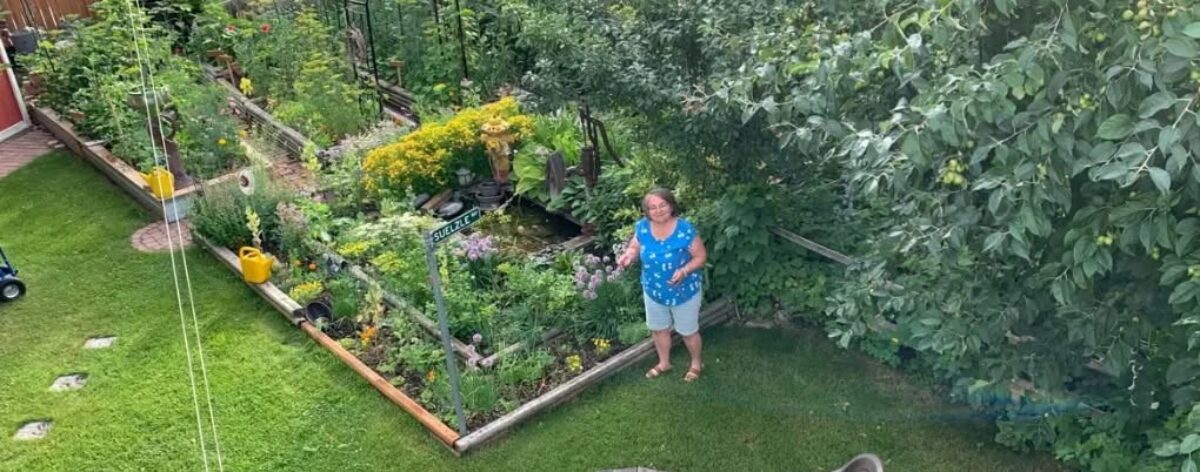


 hen you’re in a place where you see someone who might need a kind word or wave, or even more – simply ask yourself – “WHO IS THE MOST IMPORTANT PERSON IN THIS ROOM?” I cannot tell you how much that has helped me be a better person and get over myself for the moment. Thank-you Michael.