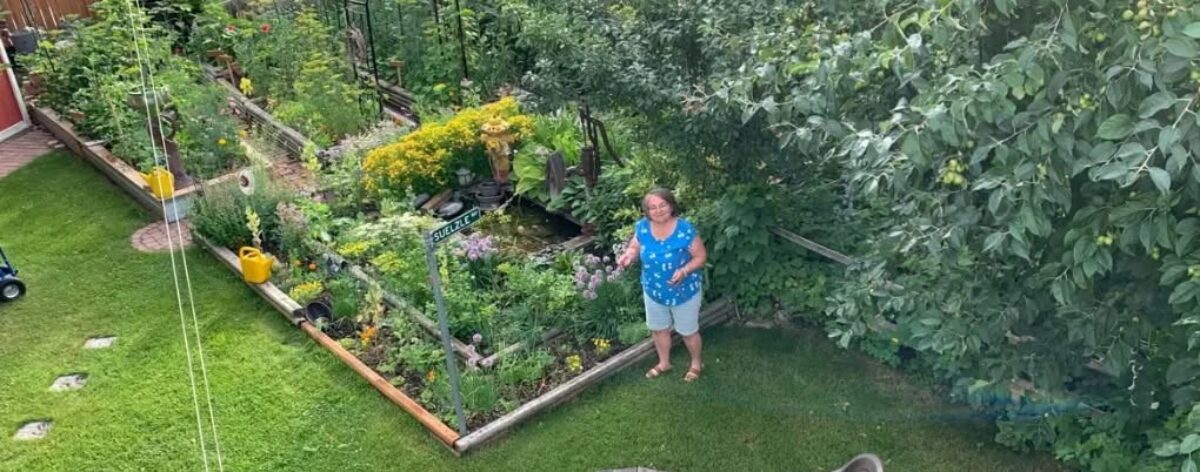
The average North American throws out an estimated 170-183 kilograms (375-405 pounds) of FOOD every year. Each “individual“, not family or household! That make us among the Worst Food Wasters in the world! Not something to be especially proud of is it? And then what about if you have four people living in your home? That’s a whopping estimated 1600 pounds! Of FOOD! How can we afford that?
North Americans are among the Worst Food Wasters in the world.
I don’t even know what 1600 pounds of food-waste looks like, but to simplify, it works out to about 25 – 40% of the average grocery budget. I have a pretty good idea what THAT looks like. Yikes! If you’ve got a couple of teens in your house, you’re likely spending well over $1000 a month on groceries. If we took the most conservative estimate (1/4), then we’re still talking about $250 a month IN THE GARBAGE! That’s $3000 a year! What could you do with an extra $3000 a year? I don’t know about you, but I can think of a lotta things I’d rather do with $3000 a year!
If you’re like me, you’re probably saying “No way. Not me”. I prided myself on being quite resourceful and while I did not doubt the stats, I was pretty certain they didn’t apply to me. I figured that someone else must be wasting a lot of food to make up for me not wasting so much. So I began to seriously pay attention to everything I threw into my kitchen garbage. And it didn’t take me long before I had to reluctantly concede … “well, maybe, that might be me“.
What are we wasting?
Well in my case, it was mostly produce. I was full of good intentions when I brought fresh fruits and vegetable home. And perhaps if I would have personally washed and cut the fruit, and maybe peeled it for my family, and then FED it to them, they would have eaten more of it. But I didn’t have time for that nonsense, and they sure didn’t always take advantage of what I was providing them “fresh”. Conscientious mom that I was, I had to make sure I continued providing it. I was stuck in the routine of: – buy fresh fruit and vegetables from the store – a week later throw much of it into the garbage – back to the store to buy more “fresh” fruits and vegetables. – one week later throw most of it out. Repeat. – often – like doing that somehow made me a better mom.
Composting kitchen waste may be better throwing it into the trash, but I still didn’t purchase it just to throw most of it into the compost.
Round and around we went. More and more money into the compost. Did you know that ‘healthy eaters’ generate the most food waste? Doesn’t seem fair does it? Well, you could say I was “ripe for the picking” when I realized that there was absolutely ZERO waste involved in the new way I had begun to buy groceries. I admit I was first attracted to THRIVE LIFE freeze dried food because of its long shelf life, and I was astounded to learn of the exceptionally high nutritional value of it. But I was even more impressed when I began using it in my everyday meal plan, and noticed that I was no longer throwing out as much food. That was a bonus I hadn’t counted on (duh). The nutritional value might have been the selling feature and the convenience of it sealed the deal, but in a very short amount of time, when I realized that I was in fact saving money, that was the clincher! When you are no longer throwing out a quarter of your monthly groceries, you start seeing your dollar go a LOT further! And that was a happy realization for me.
On a bigger scale, while it pains me to admit it, I read a recent report that says the evidence points to Canada as being among the worst on the globe for wasting food. The report released by the Commission for Environmental Cooperation — “an environmental agency set up under the North American Free Trade Agreement — found when including all stages of the food supply chain, 396 kilograms of food per capita is wasted in Canada every year. That’s compared with 415 kilograms in the United States and 249 kilograms in Mexico.” I’m not sure how excited we can get about being ‘better’ than someone else, especially when that ‘someone else’ produces more produce than we do. So much for my wholesome Canadian pride. Sheesh!
So, I don’t pretend to have the answer to global problems, and I don’t have the energy to even worry about them. But I have always been of the mind that if we each take care of our own front porch, the world will be a much nicer place, so I am gonna focus my attention on what is in my control. What exactly IS in my control? The waste in my own kitchen. I control that. And where I choose to spend my hard earned dollar – I control that too. That is where I started. At home.
Did you know that when you buy a can of THRIVE LIFE freeze dried Spinach, that 0% (yup, a big fat ZERO) goes into the garbage? Every piece of spinach you buy gets eaten. By you. Or me. Compare that to the spinach I used to buy in the cellophane bag from the produce department in my grocery store. I threw some of that into my compost almost every time I bought it. Add to that injury, is the insult of discovering that spinach loses ALL of its Vitamin C within 4 days after harvest? I can promise you that the spinach on my grocery store shelves was not picked within the last 96 hours. And did you know that THRIVE LIFE Spinach is picked at the peak of perfection and flash frozen within 6 hours of harvest? And that it contains up to 6 times more Vitamin A than the so called ‘fresh’ spinach we buy from our local grocery store? Yup. Yup. And Yup. So add those facts to the fact that much of the so called ‘fresh’ spinach I was buying ended up in my compost pail, because really how much time do you have before that spinach starts to go slimy on the bottom of the bag? Lets just say the romance of fresh spinach began to lose some of its appeal.
Spinach is one of my favourite Thrive Life freeze dried vegetables. Certainly its one that I use the most.
Continuing on with the example of Spinach: a family sized can of Thrive Life freeze dried spinach is priced (at time of my writing this – July 2022) at $33.82 USD when purchased in a Delivery (best pricing). For my Canadian friends, converted at a 1.3 exchange rate, that works out to about $44 Cdn. (*hint: you get FREE shipping when your complete order tops $99) That same family sized can contains the equivalent of 11.5 bags of spinach! The size of bag that in my local grocery store cost $4.35 (10 ounces) each. To buy the equivalent amount would cost me $50 Cdn (I live in Canada). I asked myself: “why would I want to pay more for ‘not-so-fresh’ spinach, when I know that the nutritional value of ‘fresher-than-fresh‘ spinach from Thrive Life, is considerably more?” It didn’t make any sense to me. And that doesn’t even factor in the typical waste from that store bought ‘not-so-fresh’ spinach.
Even into Canada folks, that is a huge savings. And I am a sale shopper so I’m always looking for a bargain. When I buy Thrive Life Spinach on sale, I save even more. And you know how much of that goes into my compost pail? ZERO! That is 100% Food! In my pantry. Ready to use when I want it. With a 25 year shelf life. Even after the can has been opened, the shelf life is at least a year.
reducing food waste will save you a ton of money
This story just keeps getting better, and better. I guess you could say “Spinach to Win-it”. But remember, Spinach is just an example. We can repeat this scenario with every single food item that THRIVE LIFE has. Of course details will change, but the waste factor and the nutrition factor remain solid.
My way of reducing waste in this country is by reducing waste in my own home. Since doing so, saves me a lot of money, its a win/win situation. And that’s how I like things. Happy all round.
Cindy Suelzle Independent THRIVE LIFE Consultant and Leader
Two of the most important things to remember about gardening is that 1) there are a lot of ‘rules’ 2) some of those rules should be broken
There are many things about gardening that one has to experience to understand what the rules are there for. There are the things we must learn through experience – but they don’t always have to be your own, we can learn from each others’ experiences too. One of these age old rules in my part of the world, says that we should plant our gardens on the May long weekend (3rd weekend in May). But statistics say that the expected last frost is anywhere from May 1-10. Obeying that rule straight across the board, amounts to a week or more of lost growing time – when there are only an average of 120 (give or take) frost free days in the Edmonton area.
I don’t pretend to be an astronomer or any other kind of expert, but there are some things that simply make sense to me. Consider this: The summer solstice in is between June 20, 21, 22 (so lets just say the 21st). It is longest day of the year – more daylight than any other. The center of “BEST SUN” days. Count back 7 weeks to May 1, and forward 7 weeks to August 9. Those days are going to be the BEST Sun days of the summer right? A reasonable assumption to make. In fact, in Edmonton, on May 1 – 2022 the sun rose at 5:57 AM and set at 9:05 PM = 15 hr 8 min of sunshine. On August 9 – 2022 the sun rose on 6:03 AM, and set at 9:14 PM = 15 hr 11 min of sunshine.
My point? My point is that after August 9, the sun is not as high, and not as present. In fact only one month later, September 9, the sun rose at 6:57 AM (54 minutes later than Aug 9), and set at 8:04 PM (70 minutes sooner than Aug 9). That is 2 hours and 4 minutes LESS sun-time – in ONE MONTH! So yes, those may be frost free days, good time for things to ripen, but the ideal growing time has passed. If we’re planting on May 24, that gives us only two and a half months of best sun days to grow. When we could easily have another month or more.
So, how does one make the best of those high sun, but possibly NOT frost free days of early spring? Answer: Plant earlier. The next obvious question then is this: what can we plant earlier that will not be killed or stunted by those chilly mornings of early spring? Answer: There are many hardy and semi hardy cool weather vegetables that thrive in our growing season. We just need to get to know them and learn to appreciate them. Here are some ‘hardy’ and ‘semi-hardy’ vegetables (and some notable fruits) that you can be growing in the average backyard garden in and around the Edmonton region, and planted much earlier than the May long weekend.
HARDY VEGETABLES can tolerate a hard frost and temperatures between -5 and -10 Celsius
If you haven’t made friends with some of these yet, then open your mind and introduce yourself. They’re not only anxious to make friends, but are extremely forgiving and loyal. Hardy Vegetables include: Brassicas like Broccoli, Brussels Sprouts, Cabbage, Collard Greens, Kale, and Kohlrabi, as well as Leeks, Parsley, Radishes, Spinach, assorted Asian Greens (like mustard greens, bok choi and tatsoi) and Rutabaga. THAT is a lot to choose from, and ALL of them can be planted as soon as the ground is dry enough to work in. If it snows again after planting – no worries, they laugh at snow. I have planted my Spinach seeds the beginning of April, but depending on the type of spring we’re having, I could easily have planted them a week or two early. Its not simply a matter of spinach tolerating the cooler weather, it thrives in it. I’m sure you’ve noticed that as soon as the weather warms up in June, your spinach bolts (goes to seed). These cooler crops don’t like the heat, and they don’t do well in it at all. They are best grown in the earliest parts of spring. In some climates they are winter crops, but not for us in Edmonton LOL. See below for some advice on ‘some’ of these hardy vegetables. I don’t have experience with all of them, but maybe you do. I’d love to hear your opinions and suggestions from your own experience. Please share by commenting below.
KALE: Personally, I am not a fan of growing most brassicas because I’ve lost too many battles with the caterpillars that like them so much, but I make an exception for KALE. Knock on wood, I’ve never had a problem with kale (so far). It’s easy to grow, doesn’t attract pests, and it toughs out the cold weather in both spring and fall. It was a no brainer that we should become fast friends, I just needed to get to know how to use it more in the kitchen. That was the easiest part of all. I pick kale from May through September – a whole season of wholesome green goodness in salads, green smoothies, and everything in between. And it dehydrates beautifully for winter use. What else could I ask for? Depending on the weather, and the the type of spring we’re having, they can be planted outside by seed, as soon as the ground is dry and warm to the touch (anytime from April 1-30). And don’t worry if it snows – they won’t care. You can get a jump on the season by planting young seedlings outside around the 1st of May.
MUSTARD GREENS and other Asian Greens: One of my personal garden rules is to try growing at least one new vegetable every year. I am SO glad I decided to do that many years ago, as I have learned to appreciate all sorts of great vegetables that I never would have any other way. In 2022 I grew Mustard Greens for the first time, 2023 I grew Tatsoi, which I have grown every year since. In 2025 I added Bokchoi. Several years ago I grew ground cherries and tomatillos (both warm weather vegetables) – huge win! I’ve grown them ever since too.
PARSLEY: has been a favourite herb in my garden for years, and occasionally even comes back in the spring – though at best it is still only a biennial, so its best to count of replanting seedlings every spring. But no need to wait till late May, parsley plants can be planted by May 1st for sure. Don’t bother planting seeds outside. They take too long to germinate for that. Either start them indoors in February or early March, or buy your plants from a greenhouse.
SPINACH: is wonderful, and one of the healthiest plants when eaten FRESH (within a couple hours of harvest). It’s leaves are tender and perfect for salads. I used to buy a lot of ‘fresh’ spinach from the grocery store, all year long, but I very rarely do anymore. We know that all produce begins deteriorating nutritionally within the first hour of harvest, and the sad new about spinach is that within four days – it has lost 100% of its vitamin C. I don’t know about where you buy yours, but I can pretty much guarantee that the spinach available in my local grocery store was NOT picked within the last 96 hours! So the very best source of spinach is the one that can it get to your table within only a few hours of harvest. That means its either grown in my garden, or its THRIVE LIFE Freeze Dried Spinach.
The tricky part about growing spinach is that it LIKES COOL WEATHER. That is its great strength as a garden vegetable in Alberta, since we specialize in ‘cooler’ weather. But wait. The convers of that fact implies that it hates hot weather. And it does. When the sun gets real hot, spinach goes to seed (it ‘bolts’ – see below). If you plant spinach around May 24, it will bolt in the heat of late June, and you are very likely to be disappointed. What to do? Plant it earlier.
Its good to know bytheway, that there are several other greens that grow well all summer long without bolting, so it doesn’t have to be “spinach or nothing”. But, back to spinach. Because it’s a cool weather crop, we can plant spinach in the early spring (early to late April depending on the year), when we can take advantage of the long ‘sun’ days that come with the cooler weather of April and May. Ironically spinach wants a nice sunny location, but doesn’t want the heat that comes with the sun, so its the perfect plant to extend your growing season. By the time your spinach has given up in the heat of summer, your swiss chard and other greens are ready to eat!
Is it worth it? Absolutely. If you can get your spinach planted early enough in the spring, you’ll get a beautiful crop that will flourish. Its the perfect opening act to your summer garden. And its a great source of iron, calcium and vitamins A, B, C, and K.
what is “bolting” and what causes it? Bolting is a common response of cool weather vegetables to stresses of summer – temperature stress, day length stress, or water stress. When the plant is in distress, it hastens it’s purpose in life – which is to go to seed. Long spells of hot dry weather may be good for peppers and tomatoes, but NOT good for spinach. Many other leafy vegetables do the same thing. Not much you can do about the weather in summer, so just work with it. Spinach doesn’t want what tomatoes want. So planting it when the days are cooler, and giving it as much cool time to grow as possible will make it happier.
In some zones, spinach might be a good fall crop, but I’ve found that the end of our growing season is too fickle. In Edmonton, the sun is less by the end of August, but the days are still very warm and dry. We could just as easily have snow in October as not, and if we do, temperatures could drop quickly. I’ve tried extending my growing season by planting spinach at the end of August, but experience has shown me I’m gonna have more success in the early spring.
Plant your spinach in rich soil – amended with old manure and/or compost. Keep it consistently moist, but not soggy. Water deeply and regularly. Spinach is a heavy feeder, so sprinkling blood meal around the plant mid growing season will encourage rapid growth of continuous new, tender leaves. Once you see five or six nice healthy leaves on a plant, go ahead and start snipping the larger ones off for spinach salad.
RADISHES and TURNIPS/Rutabagas: I am not a fan of radishes for their roots, but I absolutely AM a fan of their greens! I grow them, but only for their tops. They have a little zip that is great in a fresh garden salad when they’re young – super nutritious – SO worth it. They’re best when they’re young, so start picking early while you’re thinning them out. Once the roots get big, the leaves are not as tender and suitable for salads, but they make a great Pesto. (click here Radish Green Pesto for the recipe)
SEMI HARDY VEGETABLES will tolerate light frosts and temperatures around freezing (0°C)
Semi-hardy vegetables can be planted quite a bit earlier than the May long weekend, but maybe don’t push it too far into April, unless its an especially warm spring. Some great Semi-hardy Vegetables include: Beets, Carrots, Cauliflower, Celery, Chinese Cabbage, Endive, most kinds of Potatoes, all kinds of Lettuces, Radicchio, Rutabaga, and Swiss Chard.
BEETS: good for the tops as well as the roots. Plant at the beginning of May.
young carrot tops are delicious as well as nutritious
CARROTS: for example, take up to 3 weeks to germinate, so getting a heads start on them is important, but planting them too early, when the soil is still cold won’t help. The first days of May should be early enough for carrots. If you haven’t discovered making your own SEED TAPE, then you are in for a treat. Super easy to make yourself, and prevent wasting a ton of carrot seeds.
Did you know that carrot greens are not only good to eat, but super nutritious? More vitamin C than the actual ‘carrot’. I use them lightly chopped when they’re young and tender (the thinnings) in garden salads and in smoothies. If I have more than I can use, then I lightly chop and freeze for later. They make a fantastic Pesto!
LETTUCE: of all kinds is fine with cooler temperatures and even the odd light frost in the beginning. They’ll germinate in a few days and will thrive in the bright light.
POTATOES: could have an entire blog post devoted to growing them, but don’t wait till the long weekend in May to plant them. Shoot for the end of April / beginning of May, depending on the spring, when your soil is nice and warm. You don’t want them to pop up before the last frost, so don’t push your luck toooo far, but two or three weeks before last expected frost should be fine. You can expect them to be ready to harvest in 120 days, but you can begin ‘stealing’ young potatoes in early to mid August (depending when you planted them of course). The best potatoes I ever grew were hilled completely in hay. An experiment that I am trying to recreate this year. Stay tuned.
RUTABAGAS: not to be confused with turnips. They are both root vegetables and have similar shape and appearance, but they are not the same. Turnips are usually harvested young – only 2 or 3 inches in diameter, and are a summer vegetable. Rutabagas are harvested closer to the end of the growing season, and are usually bigger. Turnips are white with a purplish top, rutabagas have a yellowish flesh, also a purplish top. Turnips taste a little like radishes to me, while rutabagas are a little milder and maybe even sweeter. Both can be eaten raw, steamed, boiled, roasted or stir fried. Its all about personal preference when judging between the two, and tastes change over time, so I think its a good idea to come back to certain foods that we may not have liked in younger years. Turnips and rutabagas are the perfect example of that.
Rutabagas was one of my ‘new’ vegetables a few years ago. I had tried growing turnips the year before and discovered that my vague childhood memories of not liking them was very much true, and that I still didn’t like them. So the next year I grew rutabagas for the first time, and I’m a much bigger fan of them. I do like to oven roast them, by themselves like sweet potato fries, or with other roasted vegetables.
swiss chard early afternoon, destined to become spanakopita for dinner
SWISS CHARD: is one of my best friends in the garden. Fast Growing, Forgiving and Fabulous it is delicious, nutritious and very flexible in the kitchen. It is a staple in my summer kitchen, and the most important ingredient in my SPANAKOPITA. In fact I grow swiss chard especially for this summer delicacy.
Chard will tolerate the heat of summer much better than spinach, but hot dry days will still cause it to bolt. Watering well when its dry will help cool it down, but its important to pick continuously throughout the season.
Planting Non Hardy Vegetables must wait
Rushing the season with tender plants like tomatoes and peppers, is asking for trouble, so yes, for them – stick to the age old rule of May long weekend. For the others mentioned above, a little frost, a little snow – pshaw, we’re talking about SUPER HEROES here! They’re not afraid of cold. A late, cold spring, doesn’t have to shorten our season, or decrease our harvest, in fact, cooler temperatures are best for these cool weather vegetables. Be brave, and Be positive. You’re the boss of your garden. Begin looking at cold rainy spring days as SPINACH DAYS. And there’s other good news – in the early spring, there are fewer pests around to damage plants. It’s a total WIN!
Whether you’ve been around the block a time or two, or you’re just getting your feet underneath you in the garden, cool crops are a bountiful way to extend our season. And because they’re so forgivingly easy to grow, they are encouraging plants to start off with. Success means starting with winners. And the key is to EAT them. Broaden your horizons. Commit to experiment every year, with something new to you. Learn about one more vegetable that you never knew before. Plant it. Make friends with it, and learn ways to enjoy it.
SPANAKOPITA is why everyone should always plant Swiss Chard! There is no question that the world would be a happier place if we all did. see full recipe HERE
Hardy fruits:
There are many fruits we can grow in and around Edmonton, most notably – BERRIES. I hope you love berries because we grow awesome raspberries around here. And great red and black currents. And terrific honey berries (haskaps). And saskatoons. And plums and sour cherries. And rhubarb and apples. And all of these come back every year! We also grow excellent strawberries and even some types of grapes. So don’t limit your gardens to annual vegetables, open your mind and your arms to perennial fruits. But that’s another blog post for another time.
The one cardinal garden rule that everyone should obey is to: GROW WHAT YOU EAT, AND EAT WHAT YOU GROW. Otherwise, you’re just wasting your time and space.
Have fun in your garden this year, and have fun planning and planting it. Don’t wait till all the stars align, the sun is warm and everything else is perfect. You’ll have wasted valuable growing time. Embrace the hardy vegetables of cool weather. Put your jacket and garden gloves on and get out there!
I’d love to hear your thoughts on extending your gardening season. Please comment below.
At the time of this writing it is mid April 2022. We’ve had an unseasonably cold early spring. Snow has not completely melted. The world is in turmoil. War is raging in the Ukraine as they fight to remain autonomous from Russia. This is affecting food supplies all over Europe, and the fallout will be felt worldwide. We in the west, are still recovering from droughts, floods, fires, storms, and labour shortages. Food prices have skyrocketed along with fuel and energy prices, and everything related to them (which is pretty much everything). If ever there was a good time to plant a garden to supplement our grocery dollar, this year would be it!