Whether you’re feeding the family, hosting a backyard dinner party or whipping up something quick for a weekday meal, pulled pork is always a guaranteed pleaser. You can serve it with your favourite BBQ sauce and sides, in sandwiches and tacos, or over nachos, but have you ever served it over top a perfectly crispy waffle? Don’t knock it till you try it. My first introduction to chicken on waffles was a complete surprise. This just takes that favourite dish to a whole new level. How bout adding the flavour of maple syrup? Better yet, add a splash of sriracha sauce at the end for some extra zing.
What if I told you it could BE ON THE TABLE in less than half an hour? I know right! True story. Read on.
*full disclosure: this is not my recipe. I just wanted it written down somewhere so that I could share it. It originated with Chef Todd Leonard 1 (see below).
I am not a vegetarian but I do not eat much meat and could easily imagine a life without it. However, I live with people who DO like to eat meat, and I’m okay with that, though I do NOT like to handle raw meat. Having freeze dried meat checks off a few boxes for me.
Box 1: Food storage is important to me – not just for those BIG emergencies where the sky comes falling down, but for the more frequent emergencies like job interruption, like unexpected expenses, like illness that keeps one from shopping or meal preparation, like – I dunno, maybe something WAAAY out there, like a pandemic that keeps us out of the stores . . . . so many other of the day to day realities of normal life. There is something to be said for the peace of mind that comes with preparing for those times. Properly sealed freeze dried food has a shelf life of 25 years. Once opened, it generally will last up to a year if protected from the moisture in the air.
Box 2: Saving money is important to me, by NOT cooking more meat than we need at any given time (meaning we either ate too much, or we ate leftovers for too long, or we wasted food by throwing it away, or worse – all three). Now I just prepare exactly what I want.
Box 3: Convenience of putting a NICE meal on the table in less than half an hour. Thrive Life freeze dried meats are all precooked and in some cases, lightly seasoned. You can even eat them straight out of the can!
Box 4: Never having to touch, smell or deal with raw meat. BIG box for me.
I’ll admit – waffles and meat never used to fit together in my mind UNTIL I tried it a few times. Now this is one of our favourites. So put away your slow cooker and get over yourself. You don’t need to thaw, precook or shred the meat. It’s already done.
*Someone recently told me they spooned the pork mixture onto the waffle maker, and poured the waffle mix over top! Wowzers! Definitely trying THAT next time I make this recipe.
I am using mostly freeze dried ingredients here (FD), but not to worry – you can substitute with equal amounts of garden fresh in every case. And if you have a pork roast in your freezer, but not the freeze dried pulled pork – not to worry. Just slow cook it like you would for any other ‘pulled pork’ recipe (without all the seasoning). What you’re going to end up with is cooked pulled pork – just the long way around. Freeze dried pulled pork is delicious and accessible – the short cut way. Amounts intended to serve 4 or 5 people
Ingredients normal stuff in your kitchen: 3 Tablespoons vegetable oil 2 Tablespoons Soy Sauce 2 Tablespoons Brown Sugar 2 Tablespoons Maple Syrup water 1/4 cup butter
* optional: add more FD vegetables as desired. Green Peppers, Asparagus, Green Beans, Peas, Kale, Spinach . . . . etc Put away your cutting board. These vegetables are already washed and sliced.
Waffles: 2 cups all-purpose flour 1/2 teaspoon salt 1 T baking powder 2 tablespoons white sugar 2 large eggs 1 ½ cups warm milk 1/3 cup vegetable oil
Sift all dry ingredients together, set aside. Beat eggs and oil into milk. Pour liquids into dry ingredients and stir to moisten all.
OR use 2 cups of your favourite Pancake mix or try my mix (recipe in this blog site) + 2 eggs (beaten) to whatever liquid your mix calls for *tip: 2 T Thrive Life Scrambled Egg Mix +3 T water = 1 egg
Directions: 1. refresh PULLED PORK by putting it in a jar or container with a lid. Add 3 cups warm water, fasten lid and roll the jar ensuring all meat is moistened. Set aside to allow to soften 10-15 minutes. A little longer isn’t going to hurt. It is helpful to gently tumble the jar every few minutes.
2. make Waffles: Preheat seasoned waffle iron and pour batter onto oiled, HOT griddle. Approximately 1/4 cup in each quadrant. Close waffle iron and watch the time. I leave mine for 4 minutes until they’re toasty brown, but every waffle iron is probably a bit different. Cook waffles and set aside.
3. Pork mixture: Using a large skillet, heat oil and lightly toast onions and garlic till aromatic and slightly browned.
4. Add the moistened pork with remaining water. Stirring gently (so as not to break up the delicate meat), add all the vegetables and Chef’s Choice Seasoning, adding extra water (1/4 cup at a time) as needed to keep the mixture wet. Last time I made this in addition to the onions, I used red peppers, green peppers, chili peppers, green beans and spinach.
5. Add brown sugar, soy sauce and maple syrup. Reduce heat and simmer gently another couple of minutes stirring, till all vegetables are moistened. If mixture is too dry, simply add a little more water. Taste test and season with salt and pepper to taste if desired (I never add either as I find the Chef’s Choice is perfect for me).
6. Remove from heat and add butter, allowing it to melt and emulsify. Give it one final stir.
As mentioned above: *Someone recently told me they spooned the pork mixture onto the waffle maker, and poured the waffle mix over top! I’m loving that idea! Definitely trying it next time I make this recipe.
Unlike many freeze dried meats, PULLED PORK is a ‘high fat’ meant, which affects its open shelf life. Once the can is open, use it within a few weeks. Personally, I always write the date I open a can on the lid so I can stay on top of it. In the case of PULLED PORK, I put it in the fridge to buy me an extra week or two. If I know for sure I’m not going to use it right away, I’ll put it in the freezer part of my fridge to buy another week or two. Don’t forget about it – USE it! For this reason, I generally buy the smaller cans so that I can use them more efficiently, and I ALWAYS buy them when they are on sale.↩︎
I cannot tell you how many times I’ve had the “one-and-done” conversation with people who are rightly concerned about investing in long term food storage but don’t want to be inconvenienced by it.
Being compelled enough to invest money into food storage, buying a bunch of it all at one time, and then (having their conscience soothed), put it away and forget about it. Their thinking is that they have done their due diligence, with minimal inconvenience and now can get on with life giving no more thought to it.
The first time I heard this philosophy was a friend many years ago. They had learned of a new brand of food being sold locally, that had a very long shelf life. It was kinda pricey but the shelf life was attractive. They bought a year’s supply for their family of four, stacked it into a corner of their basement, and brushed off their hands so-to-speak. They were more than content with this marvelous plan; they had their food storage and didn’t have their life complicated with having to eat it. Simple. I admit, the idea was a little unsettling to me; it didn’t seem that life could really be that easy. Fast forward a couple decades. My friend had passed away of cancer. Their children had grown up. Her husband had remarried and moved to a different city. He called me one day. They’d had a house fire! All was lost including their long term food storage, which he had carried with him ten years before. Insurance had provided the money to replace it and he wanted to do exactly the same thing they’d done before.
1. USE IT
The reason he called me? Because he knew that at the time I sold Thrive Life foods, a relatively new brand of freeze dried food. “Just give me a reasonably varied assortment of food like I had before.” he said. He had no intention of ‘wasting’ it by eating it. It was intended as 100% food insurance, to be packed away again. We talked about the fact that most of the food he had depended on to ease his conscience for so long, was well over 20 years old, and not all of it was freeze dried, meaning it didn’t have the 25 year shelf life he thought it did. We talked about what he’d had previously – including milk and eggs (neither of which at the time he bought it, claimed to have the 25 year shelf life he believed everything had). As a friend, my counsel was to USE some of the food he was buying for two very important reasons: 1) to KNOW what one had, and 2) to know HOW to use it. Long term food storage is not the same as buying perishable food from the grocery store. It requires a little different ‘thinking’ to get used to it. He was adamant about “not bothering with all that”. What he had done two decades ago was conscience soothing and he wanted more of that.
We came up with a reasonable selection, and it was sent to him – which he stacked in a corner somewhere to never think about again.
His details involving the house fire may have been unique, but his philosophy was not. I have had that same conversation with many people over the years.
them: “Oh freeze dried food! I have a ton of that in my basement.” me: “Great. How do you like it?” them: “Oh, I have no idea; I’ve never used it.” me: “Why not?” them: “Because its FOOD STORAGE! And besides, I haven’t got a clue what to do with it.” me: “How long have you had it?” them: “We got it the year after we were married.” me: “How long have you been married?” them: “37 years.” me: “Wow. You know its 12 years past its expiry right? You don’t have milk and eggs in there do you? them: “Yes.” me: “Well, I know the food you’re talking about, and the shelf life of milk used to be 5 years, and eggs was 3 years. Those are over 30 years past their expiry date. You might wanna dispose of them. . . . . I wouldn’t even open them if I were you, just throw them out. . . . . So, . . . just curious, when were you planning to figure out how to use this food anyway?”
I have another friend who had pretty much the same idea. She had a lotta long-term-food-storage that she’d never had any intention of using, but a few years ago it became alarmingly evident to her that it was waaaay past its prime. She doesn’t want to waste it, (and waste all the money she spent on it), she wanted to learn how to use it. She had no recollection of how long she’d had the food (decades she admits), and there was no date on the cans. Apparently the labeling laws have changed since then.
My counsel? To USE it of course. I promised to come over and show her how to use them. We opened up her first can – broccoli. It was absolutely indistinguishable. Looking nothing like broccoli should, and smelling terrible. Nothing anyone would want to eat. “What can I do with it?” she asked. “Throw it in the compost.” was my suggestion. We opened a can of spinach with similar results.
On the left is dehydrated spinach that was deliberately left on the shelf waiting for some emergency that would justify opening it. No one could remember how old it was, and the owner mistakenly believed it was freeze dried when in actual fact it was dehydrated (with a much shorter shelf life). This is what happens when you don’t USE the food you store. The result was a lot of wasted food, and a total waste of the money spent to acquire it. The spinach on the right is a 7 year old can recently opened. It is what freeze dried spinach SHOULD look like today, tomorrow, next year and 17 years from now.
To be fair, the food we opened was much older than it was ever intended to be. It is not the manufacturer’s fault that the food was not used when it should have been. It is the result of faulty “save-and-protect” reasoning. But on the other hand, from the beginning she never knew what she had, what it looked like, or how to use it anyway. Ironically that scarcity mentality intended to not ‘waste’ food by using it, resulted in ultimate waste. Wasted food is wasted dollars. It’s simple math.
I well remember that same brand of freeze dried food when it was a new thing, trying to wrap my mind around the concept of it and trying to justify the cost. I bought some, used it, didn’t see the value at the time, nor the point. As the science of freeze drying got better over the ensuing years, the food got better, and the nutrition got better.
2. FIND THE BEST
In 2009, when I first started buying Thrive Life (the brand I finally settled on after trying several on the market), their guarantee was that the produce went from field to freezer in less than 24 hours. I was impressed with that. By the time I put that into print, the company corrected me – their guarantee was now less than 12 hours. “Can’t get better than that” I thought. Produce picked ripe, washed, peeled, chopped and into the freezer in less than 12 hours? Incredible. “Can’t get better than that” I told people. Wait! In another year, they raised the bar again. Produce picked at perfection when all nature’s goodness was at its height, and then washed, peeled, sliced and into the freezer in less than 6 hours! (usually 2 to 4 hours). Amazing. NOW with a pretty good degree of confidence I can be sure “it really canNOT get better than that!”
In summer months my household eats directly from my backyard garden. I am hard pressed to get produce from my garden to the table in four hours! Truly it cannot get better than two to four hours.
What does that mean to you and me? Why is that such a big deal?
Because all fruits and vegetables begin to deteriorate within the first hour after harvest. That’s why. They begin the process of deteriorating in colour, texture and nutritional value immediately. To pick a fruit before its fully developed is to start out with a handicap. Thrive Life has a commitment to excellence that forbids picking produce before its ripe. Then its a race against the clock. That produce is washed, peeled (if needed), sliced or chopped and flash frozen to -40C within four hours! In that frozen state the food is transferred to a facility where all the remaining moisture is removed in the second step of the two step process of “freeze-drying”.
When spinach or broccoli or mangoes or strawberries or whatever, goes into that BPA free can at the end, it is more nutritious than those same ‘fresh’ fruits we buy in the produce department of our local grocery stores – that in nearly all cases were picked before they were ripe, and have been shipped a thousand+ miles to ripen on the supermarket shelves sometime in the following week or two. Without any moisture, that food is sealed in an oxygen free can, giving it an exceptionally long shelf life. Zero moisture + zero oxygen = zero decomposition. So when I open a can of peaches that was packed 7 years ago, it is as nutritionally sound as it was the day it was sealed. If I open that can another 7 years from now, it is still the same. THAT is what we’re talking about. And that’s why timing is such a big deal.
“freeze drying food is not rocket science”
3. Benefits of using freeze dried food NOW
FAMILIARITY Becoming familiar with freeze dried food while our lives are comfortable and predicable is so important. Sometimes people fool themselves into believing they’ll use it when they have to, but a crises is not the time to start experimenting with foundational necessities like meals. There are bound to be some differences between what you’re using now and freeze dried food. Familiarity brings confidence, and confidence removes fear. When we are prepared, there is no fear.
KNOWLEDGE With familiarity comes knowledge and skill, opening a whole new world of possibilities. Learning how to use freeze dried food will make meal preparation a lot quicker and easier. Those fruits and vegetables are already washed and chopped, ready to eat straight out of the can, or to throw into your soup, casserole, omelette or stir fries. The cheese is already shredded, the meats are already cooked – ready to refresh and add to your meal. You’d be surprised at how streamlined your meals become. You can have dinner on the table in minutes.
ZERO WASTE Not only will you reduce the waste of produce in the fridge going bad before you can get to it, and the waste of trimming a good portion of your broccoli, cauliflower and peppers etc, but you will eliminate the waste of those cans of food timing out. Think of the waste that my friend experienced having to throw out most of her ‘shelf stable’ canned food. My other friend who replaced it all after the fire – he would have had to replace it all anyway, fire or no fire – because most of it was long expired before the fire.
When you regularly USE your food storage, it replaces perishable groceries that would other wise go into the trash. The North American average for household kitchen waste is up to 40%. That’s an incredible figure to wrap your mind around. If you’re the average North American consumer, up to 40% of the food you buy is going into the garbage! What if you could reduce that waste? How much money would YOU save in a month, in a year? Take a minute (knowing your monthly food budget), and use some simple math to roughly calculate what that might look like to you. Imagine what you could do with an extra $3000 or $4000 a year! You could probably have your food storage built up in a very short time for one thing.
CONVENIENCE One of the things we will depend on in any emergency is having food that will be convenient to prepare with fewer resources than we’re currently accustomed to. Knowing what that food is and what kind of variety is available ahead of time is helpful. Also knowing what your family prefers and doesn’t prefer ahead of time is pretty helpful too. You don’t want to learn that when its too late.
4. SCARCITY vs ABUNDANCE
A can of dehydrated cabbage, about twenty years past its expiration. This is the kind of thing that never should have happened.
A scarcity mindset is a way of thinking that focuses on the idea that there is a limited supply; one becomes obsessed with protecting it. Its a trap many of us fall into when it comes to food storage: “This is food storage. It must be protected.” But we’ve already seen where that thinking leads, and its a slippery slope. When the supply is not being replenished, protection mode kicks in. So what is the antidote?
Rotation. Rotation is a “1st in-1st out” mindset. It is continuously using and replacing. It is treating your food storage like groceries and your groceries like food storage. It is the philosophy you’ve heard me repeat many times if you’ve read anything I’ve ever written on the subject: Store what you EAT, and Eat what you STORE.
If you are constantly adding to your food supply every time you buy groceries, and constantly eating from it, then replacing it, you are ROTATING. This keeps everything fresh and updated, saving you money and providing peace of mind. Your food storage becomes an organic thing with a pulse, not an inorganic box of dead food that nobody wants that cost you too much money. Consider a different perspective.
5. CHANGE THE WAY YOU LOOK AT IT
When you change the way you look at it, everything about it changes. The missing link between the SCARCITY mindset and the ABUNDANCE mindset is ROTATION. Rotation of “using and replacing” helps us regain control, and allows us to see abundance instead of scarcity. Change the way you’re looking at things.
I truly believe that when we are prepared, there is no fear. It is a personal mission of mine to help people gain the freedom and peace of mind that BEING PREPARED offers. And that includes FOOD STORAGE. Part of that is to help people stop wasting the food they purchased and are currently purchasing, and to help people acquire their food storage in the best possible way, getting the best prices and benefits in the process.
This is a course of action I have followed my entire adult life; it is very important to me. In the process, I discovered Thrive Life freeze dried food in 2008, and by the beginning of 2009, I brought it into our family bookstore – Generations Bookstore in Edmonton, Alberta. One of our major sidelines was food storage and emergency preparedness so it was a perfect fit. Since that time, we sold the store, but I kept Thrive Life with me as a personal consultant. I believe it is the best brand on the market today for high quality freeze dried food, and I am committed to helping people benefit in the same way I do from it.
In our house I’ve put it to the test. We’ve used it almost daily since those early years, and I know of which I speak.
I’d love to hear your thoughts on food storage and all things related. I welcome any questions you might have about Thrive Life specifically. Who knows? You might even want to become a consultant yourself.
The story of cereal grains is the story of humanity’s transition from nomadic life to one of settlement and agriculture. With the exception of people in the far north, every culture from time immemorial has their own cereal grain, depending on climate and soil conditions: wild grasses, nuts, and seeds gathered, then pounded into flour or roasted and eaten whole. The beginning of agriculture marked the end of dependence on foraging, and the need for constant travel searching for food. Family groups could afford to build more permanent homes and bigger numbers meant more hands in the fields, hence the need for more buildings in which to gather – permanent communities – civilization.
Why wheat?
WHEAT IS GOOD FOR YOU. There, I said it. Notwithstanding all the wheat haters out there and the anti-gluten people, for most of us, wheat is an excellent choice.1 Whole grain wheat is an excellent source of fibre, antioxidants, vitamins (particularly the B vitamins), minerals, and even protein. Almost 80% of its protein comes from ‘gluten’, (a large family of proteins) which is also responsible for the unique elasticity and stickiness of wheat dough, making it so desirable for bread making. 100 grams (3.5 ounces) of wheat contains 15 grams of protein! To put that into perspective, that’s about a quarter of the recommended daily amount of protein for the average 160 pound adult. Gluten can cause side effects in a small percent of people with conditions like celiac disease, IBS (inflammatory bowel syndrome), and gluten allergy, but most people eat it without any issues.
People who eliminate wheat from their diet by extension also avoid the excess calories in too much bread, pizza, junk food and desserts. Obviously one is going to feel healthier as well as experiencing weight loss, and this could cause one to mistakenly assume that wheat and other gluten containing foods are the culprit. To the contrary, wheat in its natural form fuels the body with essential nutrients and is associated with reduced risk of diabetes, heart disease, cancer and obesity. The secret is to avoid the excess oil and sugar that so often accompanies wheat flour in baking. Too much of anything is a bad idea.
2. Wheat is readily available in every part of the world. Wheat is a hardy and forgiving plant, growing in nearly every horticultural zone where there is sufficient moisture and fertile soil. It was cultivated anciently in Western Asia, (being found in archaeological excavations in present day Iraq), accepted now as one of the earliest known sites of agriculture. It was cultivated in Egypt as early as 4000 BC, and from there eventually spread throughout the Roman Empire and Asia. The Romans brought it to Europe where it grew exceptionally well, and 500 years ago the Spanish brought it to the New World. By the 1800’s wheat had literally travelled the world and was being cultivated on every inhabited continent. In 2023, the top ten wheat producing countries in order are: China, India, Russia, United States, France, Canada, Germany, Pakistan, Australia, and Ukraine. Generally Ukraine had been in the top five producers – their current production has suffered since the Russian invasion in February 2022. 2
Dan and I discovered wheat six months into our marriage. We were young and still ‘playing house’, but neither of us had ever used ‘wheat’ as a whole grain before (or probably even seen it if I was to be totally honest). Friends in our congregation were making a group purchase of wheat from the Peace River area, and they invited us to join. We decided we might as well jump into this ‘adult thing’ with both feet so we bought some. 10 bushels of hard red spring as I recall. Dan felt that if we were going to have wheat, we needed to figure out what to do with it, and I agreed. We assumed we could just ask those same friends, but was surprised to learn that most others didn’t feel the same compelling need ‘use’ it. It was after all, for ‘food storage’ – which evidently meant for some future undetermined time when we’d all be glad we had it. That didn’t make sense to us, so we started doing our research – pre internet and social media – the old fashioned way, books! And you might not be surprised to know that there weren’t that many books available on the subject either. A pamphlet in a health food store was the best we found for a long time, so it became a life long quest, with lots experiments. There didn’t seem to be any shortcuts.
“Almost all the wheat produced today for human consumption is used for the making of bread, but the very earliest farmers didn’t use it that way.”3 Evidence from early sites indicate that it was probably soaked and then cooked into a porridge of sorts.
While whole wheat is high in fiber — not surprisingly, refined wheat contains considerably less as the bran is removed during the milling process. That is true with every other good thing that wheat brings to the table.
Whole grain wheat kernels are called ‘berries’, and they are SEEDS, containing everything a new sprouting plant needs to be healthy, made up of three parts: – the protective outer layer: BRAN – the heart or ’embryo’ of the grain: GERM – the starchy middle layer intended to feed the sprouting new plant: ENDOSPERM
When the wheat berry is ground into flour, the bran gives it it’s familiar slightly brownish tint, and oil from the wheat germ is released. Its best to grind fresh, only what you can use in a few days because the wheat germ has a healthy fat that will go rancid if left too long. Pay attention to the ‘best before date’ on store bought whole wheat flour for best results. Better yet, grind your own.
This is precisely why it became desirable commercially to strip milled flour of its bran and especially its germ – which though rich in vitamins and minerals, has that volatile wheat germ oil. The yield is a more shelf stable product, but at a high nutritional cost. This is called UNBLEACHED white flour. BLEACHED flour is whiter than unbleached through a process that uses ‘bleaching’ agents like benzoyl peroxide or chlorine dioxide to break down the starches and proteins in flour, making it softer and more absorbent, but nutritionally void. Consequently bleached flour is regularly ‘ENRICHED’ with the replacement of more shelf stable vitamins – but don’t fall for that. Again, it’s a poor substitute for what it was in its freshly ground day.
So what is your best option for nutrition when it comes to wheat flour? In the order of nutritional and flavour superiority:
I have had this Grain Master for well over 20 years. It is my 3rd electric wheat grinder. It is the grandfather of the current Wondermill, which I highly recommend. As you can see, you can adjust the texture of your flour. I usually have it set on the finest, although in this picture it is set on the coarsest. THIS is some goofball grandson’s (or son’s) idea of a practical joke.
1. Freshly ground wheat. Not to be confused with whole wheat flour from the grocery store (that is not ‘freshly’ ground). This requires a wheat grinder or grain mill of course. 2. Unbleached flour. The only reason I skip the whole wheat flour at the store is because one doesn’t know how fresh it is (how long its been since that wheat germ oil has been released). The unbleached flour has the germ and bran removed true – but at least it hasn’t been bleached. 3. Whole wheat flour from the store. Look for a best before date and make sure you take it seriously. It is important you use it quickly before that oil goes rancid – you’ll know something’s off when the flour starts to smell bad. Once you’re familiar with a ‘rancid’ smell, you’ll recognize it for the rest of your life.
That’s it. Only three options. Don’t buy bleached flour – it’s not an option. And yes, there is cake flour with added salt and leavening added. I don’t have anything to say about that. I’ve never been tempted to buy it because its just another step along the processing journey and I usually avoid that trip if I can.
Personally, I prefer to grind my own flour, but when I want to lighten it up a little, I’ll add some unbleached. I have never purchased Bleached or Enriched white flour.
using the whole wheat berry
Flour is not the only way to enjoy the benefits of ‘wheat’. The healthiest way to enjoy whole grains of any kind is to eat them whole, and if you’re new to this exciting world of whole grains, wheat is a good gateway. Prepare to be delighted.
Cooking the whole wheat berry is easy enough, it just takes time. Don’t rush it. Take a chill pill and let it be what its gonna be. 1 part wheat + 3 parts water + a little salt. Bring to a boil and boil for a couple minutes, then cover, turn off the heat and leave it over night. The next morning, bring it back to a boil and gently simmer for 30 ish minutes, stirring once in a while to prevent scorching and testing for tenderness once the water has been absorbed.
Wheat Porridge Do yourself a favour and open your mind. Make a small batch the first few times – to get used to it. Its a whole new experience but its so GOOD FOR YOU, its worth the adventure. Best to start it the night before, give it time to soak. 1 cup wheat 3 cups water 1/2 teaspoon salt Bring to a boil, let it boil for a couple minutes, stir and turn heat off. Cover and let sit on the stove till morning. Bring it back to a boil and let it gently simmer for about half an hour or just a little bit longer. Stir every once in a while to ensure the water isn’t disappearing too fast – it should be on quite low. After 30 or so minutes, start testing for tenderness. When its pleasantly plumb and tender to chew, its done. Don’t be in a rush. Spoon about 1/4 cup into a bowl, drizzle a little honey over top and cover with your favourite milk. Enjoy.
Reserve some cooked wheat to keep in the fridge to add to other things during the week; you’ll love their sweet, nutty flavour and chewy texture.
Other ways to use cooked wheat berries
Salads:
Fall Kale Salad with Roasted Butternut Squash and Cranberries Kale 3 or 4 cups (measured after its stripped off the stalks) Butternut squash (or sweet potato) 1 Apple 1/4 – 1/2 cup cooked wheat 1/2 cup chopped parsley 2 green onions chopped 1/2 cup dried cranberries or cherries or raisins toasted walnuts 1/2 cup crumbled feta if you have it on hand Much of this can be made ahead and then set aside to be assembled just before serving.
*Peel butternut squash and cut into 1 inch pieces. Drizzle with olive oil and roast in baking dish till fork tender. Set aside. In the meantime, wash kale well and strip greens off stalk. Lightly chop, sprinkle lightly with salt and drizzle a tablespoon (at most) olive oil. Massage with your hands for 2 minutes, rubbing the oil into the leaves, transforming them into ‘tender’ leaves. Set aside. Toast 1/2 cup walnuts. Set aside.
To assemble salad in salad bowl: Start with chopped and massaged kale Sprinkle roasted butternut squash over top Sprinkle 1/2 cup dried berries over top Sprinkle 1/2 cup chopped fresh parsley over top Sprinkle 1/2 cup cooked wheat berries over top Drizzle apple cider vinaigrette over top, and serve.
*optional: arrange freshly sliced pears on the top for the perfect fall touch *optional: add fresh pomegranate seeds over top *optional: use hazelnuts or pecans instead of walnuts, or a combination of your choice *optional: candy the nuts ahead of time for a pleasant crunchy surprise *optional: use mixed greens instead of kale – switch it up depending on the season – tender greens like baby kale, spinach, baby lettuces and arugula.
Apple Cider Vinaigrette 1/2 cup apple cider vinegar 1 Tablespoon maple syrup 2 cloves garlic minced 1/2 teaspoon dijon mustard 1/2 teaspoon your favourite salt about same amount of freshly ground pepper 1/2 cup olive oil
OR Lemon Vinaigrette 1/2 cup fresh lemon juice 1 Tablespoon maple syrup 2 cloves garlic minces 1/2 teaspoon dijon mustard 1/2 teaspoon your favourite salt about same amount freshly ground pepper 1/2 cup olive oil
In small bowl whisk together everything but the olive oil till fully combined. Slowly add olive oil while continuing to whisk till fully emulsified. This will make enough for today’s salad, and a little extra to store in the fridge for tomorrow’s salad.
Basil Tomato and Corn Salad with Wheat 1 cup cooked wheat 1 cup chopped green onion 2 cups corn toasted in 1 Tablespoon olive oil (OR freeze dried toasted in olive oil and then refreshed with a little water) 2 cups cherry tomatoes quartered, or regular tomatoes diced 1/2 cup crumbled feta cheese 1 cup fresh basil chopped finely Combine all ingredients together except cheese and basil. Drizzle dressing over salad and toss, then sprinkle cheese and basil on top before serving.
Lemon Dressing: 3 Tablespoons lemon juice 3 Tablespoons olive oil 1/2 teaspoon mustard powder 1 teaspoon salt 1/2 teaspoon pepper whisk together
TABOULI (Tabouleh) pronounced ta-boo-lee Normally Tabouli is made with bulgur wheat (see below), but you can make it with whole wheat if you like too. Just make adjustments.
2. Soups and stews:
stir cooked wheat into the brothy soup during the last 20-30 minutes, or simmer dry wheat at the beginning of a long cooking soup. Garnish your butternut squash soup with a sprinkling of cooked wheat on top.
3. Casseroles or in a rice pilaf, or on top of Buddha Bowls or Poke Bowls:
On a base of cooked brown rice or quinoa – with any number of fresh toppings of vegetables, fruits and protein artfully arranged on top and drizzled with a light dressing.
4. Breads: Add a cup to your next batch of whole grain (or part whole grain) bread. Add a cup to your next batch of carrot muffins, carrot cake, apple cake, banana loaf . . . etc
5. Whole WHEAT Pancakes using the blender: you’ll be surprised and how light and tender this pancakes are. 3 cups milk 3 eggs 2 cups wheat (just wheat, dry and uncooked) 1/4 cup sugar (white or brown your choice) 1/4 cup vegetable oil 1 scant Tablespoon baking powder Pour milk and eggs into blender. Blend on high, then remove small cap on top to slowly add wheat while still blending. Add sugar, oil and baking powder, continuing to blend till smooth. Test your batter with a spoon. There should be no grit left in it – totally smooth. Spoon batter onto greased skillet and cook as you would any other pancake. Serve with syrup or fresh apple sauce.
5. Baked Wheat Pudding 2 cups cooked wheat (or cooked cracked wheat) I prefer whole wheat but it really doesn’t matter once they’re cooked 3 eggs 1/2 teaspoon salt 1/2 cup honey 1 teaspoon vanilla 3 cups whole milk 1/2 cup raisins nutmeg and cinnamon to sprinkle on top
Beat eggs, add salt, sugar and vanilla. Stir well. Add milk and stir until sugar is dissolved. Add wheat and raisins and stir well. Pour into a well buttered casserole dish and sprinkle with cinnamon and nutmeg. Bake at 325 degrees for about 15 minutes, then stir the pudding to keep the wheat from settling. Bake another 15 minutes and stir again. Bake another 30 minutes (to total approximately an hour) or until toothpick comes out clean. Serve plain or with cream, yogurt or ice cream.
Cracked Wheat
Cracked Wheat Porridge or Multigrain Porridge 1/2 cup cracked wheat 2 cups water dash of salt Bring to a boil, reduce heat and simmer slowly for 30+ minutes, stirring frequently to prevent sticking. When tender to the bite, remove from heat and serve with milk and honey.
Beat eggs till frothy; add salt, honey, vanilla and milk. Beat well. Add wheat and raisins and stir well to combine. Pour into a well buttered casserole dish and sprinkle the top with nutmeg. Cover with a lid or tin foil. Bake at 325 F for about an hour. After 15 minutes, stir the mixture again as the wheat will mostly have sunk to the bottom. Return to heat and continue to bake until the pudding is no longer runny. Remove the lid for the last 15 minutes to allow to brown on the top. Insert a toothpick to test for done-ness as you would for a cake.
Remove from the oven and allow to cool slightly. We used to serve it warm with cream or ice cream.
Bulgur Wheat
Bulgur is the fast food in the health food world: whole wheat that is par boiled and then dried and cracked. Because it is pre cooked and then dried, it rehydrates quickly making it very convenient with a mild, nutty flavour and chewy texture. It is a staple in middle eastern cooking and the key ingredient in Taboulleh (Tabouli) Salad.
Not to be confused with cracked wheat, while bulgar is cracked, it is partially cooked first. Bulgar comes in fine, medium and coarse texture . This shortens the cooking time – in fact it doesn’t need cooking, just soak it in hot water to soften it. Coarse bulgar could take up to half an hour, while medium and fine could take 15+ minutes.
Tabouli Salad 1 cup Hot water 3/4 cup medium bulgur wheat pour hot water over top bulgur wheat and set it aside rehydrate (about 1/2 hour).
When bulgur is tender and cooled, begin adding all the above and toss to combine: 1 medium cucumber, peeled and diced 1 medium tomato, diced 6 green onions, diced 1 medium pepper your choice of colour 1 cup (or more) washed and chopped fresh parsley small handful of finely diced fresh mint 1 teaspoon salt 1 teaspoon chili powder juice of 1 lemon, or 1/4 cup lemon juice 1/2 cup olive oil
Toss well and serve. Enjoy.
sprouting wheat
Super easy and very nutritious, sprouting is a great habit to get into, and great to do with kids. Use sprouted wheat (as with other grains and seeds) are great for salads, sandwiches and more.
Sprouted wheat is UNlike many seeds you may have sprouted in the past. Don’t expect it to look like bean sprouts or alfalfa sprouts – its in a league all of its own. Sprouted wheat is also sometimes referred to as ‘germinated wheat’.
Why sprout wheat? Because sprouting turns a grain into a ‘plant’ – for lack of a better term, a ‘vegetable’. Seeds contain enzymes; when they are sprouted they release their enzymes and the once dormant seed springs into life as a new ‘plant’. Enzyme inhibitors are a plant’s natural defense against degradation. When sprouting, grains are given the signal to neutralize these substances that can be hard on the human body. Vitamins increase, including Vitamin C. As the sprout begins taking energy from the endosperm, the changes that take place alter the carbohydrates, and it breaks down the gluten making it easier to digest for people who otherwise might have difficulty with wheat in general.
The tools are simple. There are a large variety of suitable sprouting containers, but to begin with, start with a simple wide mouth pint jar. When I sprout alfalfa or beans I use a quart jar, but you aren’t going to want that kind of quantity to begin with. You’ll need some kind of a lid to strain water from. A net or cheese cloth with an elastic band, or a screen inside a jar ring, or a plastic strainer made for this purpose.
Day 1: Put 1/2 cup whole wheat into a wide mouth pint jar and cover with plenty of water. Let it soak over night.
Day 2: Strain after 8+ hours and give a gentle rinse. Strain again and set it aside. Repeat again at the end of the day. The point is to never let the seeds dry out while you’re sprouting or they’ll die. By the end of day 2, you may already be seeing the beginning of little white sprouts on one end. Yay.
Repeat the rinsing and straining cycle twice every day. I set mine on the counter where it gets indirect sunlight.
Day 3: repeat rinsing and straining cycle. Day 4: By the end of this day your sprouts should be ready to use, for all the same purposes as you’d use softened cooked wheat but with the added benefit that THESE kernels are not cooked and are loaded with additional vitamins including vitamin C. They are very sweet.
This will be good in the fridge for 4 or 5 days, but don’t store it, USE it.
Wheat Sprout Apple Muesli – 2 servings 1 cup wheat sprouts 2 tablespoons liquid honey or maple syrup 1 cup vanilla greek yogurt (or plain yogurt with another tablespoon of maple syrup) 1 fresh apple diced 1/2 cup dried cranberries 1/4 cup sunflower seeds Mix all together and enjoy
Yes, you can dehydrate your sprouts and then grind them to make sprouted wheat bread. Make sure they’re VERY dry. It’s tempting to get all excited and try everything all at once. For now, my recommendation is to take a chill pill and start gradually trying things out before you go all crazy (like I did). If you’re going to make this a way of life, its gotta be sustainable. Slow and steady wins the race.
adding back the bran
Bran Muffins in separate bowl, cover 2 cups bran in with 3 cups buttermilk or whey. Stir to moisten all and set aside. In large bowl sift together: 3 cups freshly ground whole wheat flour 1 Tablespoons baking powder 2 teaspoons baking soda 2 teaspoons salt
in smaller bowl, cream together: 1 cup butter with 1 cup brown sugar and 1/2 cup molasses. Add 3 eggs and mix well between eggs. Pour sugar/egg mixture into dry ingredients and add moistened bran. Stir only to moisten. Pour into prepared muffin tins. – Bake 400 F for about 20 minutes. When done, remove from heat and let sit in tin to cool slightly before removing.
I hope you’ll give some of these recipes a try, and I hope you’ll start being creative in finding new ways to incorporate wheat into your every day life.
Let me know how it goes.
Warmly,
Cindy Suelzle
Those with gluten sensitivities may have to eliminate wheat from their diets, and those with celiac disease must avoid all gluten in any form. ↩︎
Preserving and storing garden produce extends the harvest season, reducing food waste, cutting grocery costs, and ensuring access to nutritious, homegrown food – bridging the gap between growing seasons (what our pioneer ancestors used to call ‘the hungry months’). It builds your level of self-reliance, providing food security against shortages, and enhancing emergency preparedness.
Appropriate PRESERVING methodsretain more nutrients than many store-bought options, while allowing us to control ingredients, minimizing additives, preservatives and additional sugar. Appropriate STORING methods allow our families to enjoy seasonal fruits and vegetables throughout the winter.
Below, we’ll discuss 7 different ways of preserving food and best storage methods suited to each food you grow in your backyard. We’ll also take a few cautionary side trips to ensure food safety.
What is the Hungry Gap?
The hungry months (‘hungry gap’ or ‘hungry season‘) refer to the time, usually between March and May, when stored supplies from the previous year’s harvest have run out, and before the new season’s crops are ready to be harvested. Historically, this was a time of food scarcity, with families being forced to rely on limited rations, forage for wild food, and eat nutrient-poor diets. Proper food Preservation and Storage aims to reduce or eliminate the hungry gap.
Right off the bat, let’s dispel a few common misconceptions that I observe over and over.
Myth 1: Harvest is at the end of summer. Sometimes new gardeners have the idea that gardening is like a sandwich. They expect to plant in the spring and harvest in the fall. Truth: If you’ve gardened for awhile, you know the truth is very different. Aside from the near daily attention of watering and weeding, you can begin eating out of your garden within the first few weeks after planting (in garden talk that’s almost immediately), and throughout the growing season. Harvest is an ongoing processall-season-long. That means you’re picking and eating of course, but also picking and freezing, picking and canning, picking and pickling or fermenting, and picking and dehydrating all that is not consumed right away.
Yes, there will be things you’ll be harvesting at summer’s end – like winter squash, root vegetables, apples, plums and grapes, but that doesn’t take into consideration all the other fruits and vegetables (especially garden greens) that you’ll miss if you wait.
Myth 2: Fresh food from the grocery store is “FRESH”.
In many cases, it often takes a week or more after harvest before produce arrives on our grocery store shelves, and this, after being picked before it’s ripe. Since all produce begins deteriorating within the hour it’s harvested, having it be two weeks from harvest before we even see it is a problem. Sometimes, preserved food might actually be more nutritious than the older perishable food in the produce department. Open your mind to some new considerations.
t doesn’t matter how good it was on the day it was harvested, if it doesn’t get taken care of immediately. All produce begins to deteriorate within the first hour of harvest, so remember – THE CLOCK IS TICKING!
Truth: The word “fresh” has been stretched and misused to define all sorts of things. The produce in the grocery stores should best be defined as ‘perishable’ instead of ‘fresh’. To be clear, I am not dissing perishable fruits and vegetables in the produce department of our favourite grocery stores. In Alberta, this is the only way we’re ever gonna enjoy pineapple or bananas, or mangoes or citrus fruits, or let’s face it – many other things. All I’m saying is – be reasonable about your nutritional expectations. Don’t expect a mango we buy at the grocery store to be everything it was in the hour it is harvested.
Myth 3: Storing food will make it last indefinitely. Truth: Nothing STOPS food spoilage, it’s food! It’s not indestructible, but certain methods of preserving slow spoilage down. That is the best we can hope for. No matter what you hear, no stored food lasts indefinitely. Be reasonable. Nutrition is optimum the fresher it is, of course, and it is best used within a certain time frame. All storage methods have limits that are shorter than we might assume.
Generally this is what you can expect with home preserving:
Canned food – commercially canned or home-bottled food has a recommended shelf life of 18 months to 2 years. Two years is the time frame I try to work within. Nutritional value is approximately 40% of whatever that food was when it went into the bottle. That nutritional value decreases as it ages, so yes, we may all know someone who has bottled peaches from 2018 still on their shelf, but just because it’s there, doesn’t mean it should be eaten. The nutritional value by that time is so poor . . . . if you’re not gonna eat the doggone thing, give it to the chickens for goodness sakes! And don’t ever let anything get that old again. Get it over with! What are you waiting for?
Frozen fruits and vegetables if prepared properly have a recommended shelf life of 4 months to a year. For me, I use a year as my benchmark. Nutritional value is approximately 60% of whatever the food was the hour it went into the freezer. The key is to have it in the freezer as close to harvest time as possible. Don’t forget about it in there.
Dehydrated foods have a Potential Shelf Life of – 1 year for fruits, 6 months for vegetables, 1-2 months for meat (6 months if vacuum sealed. I say potential because there are so many factors to consider when dehydrating at home. How long between picking time and the dehydrator? Did you remove all the moisture? Are you certain? How are you storing it? Best practise is to store in coolish room temperatures (no less than 40 F / 5 C and no higher than 70 F / 20 C), out of direct light. Nutritional value is approximately 80%; again the key is prompt processing.
Freeze dried foods has the Potential for a 25 year shelf life IF done properly, IF packaged properly, and IF stored properly. Freeze drying is a gentler process preserving and protecting food value. Nutritional value could be over 90%, with a lotta variables in the shelf life. How you package your freeze dried food will influence its long term stability. A sealed oxygen-free can or jar has the longest storage potential. A high quality mylar bag – provides a top 5-8 year shelf life.
It is impossible to achieve the coveted 25 year shelf life in a typical home kitchen – no matter how expensive your freeze-drier is. So stop having unreasonable expectations, and agree to live with the way things are. Freeze drying is a good way to preserve, but if you have to buy the food you’re going to freeze-dry, you’re already behind the 8 ball. And if you don’t store it properly , it will not last as long as you think it will.
To be clear, I am a huge advocate of freeze drying. I believe it is the preserving method that can change the world. So why don’t I own a freeze dryer? I’ve looked into it. I’ve looked at a few freeze dryers and I am very interested. But I am not convinced I have what it takes to consistently provide a BETTER end result than what I could have previously purchased. Until I believe I can do that, I’ll be ‘interested in the principle’, just not ready to invest in it.
The key to success for all preserved food – is ROTATION. Rotation means you USE it! 1st in – 1st out. Commit to using the food you preserve.
Community
One of your greatest resources when learning how to preserve the food you grow (or acquire) is other people. Everyone has an idea you’ve never tried (or even heard about) before. Don’t be stuck in the way you’ve always done things, just because that’s how you always have. But just because your girlfriend’s mom did things a certain way, doesn’t mean that’s best either. Be open-minded and willing to LEARN, willing to try new things. Be wise and pay attention to details. And then share your successes and failures with others so everyone can get better.
get a good book you can trust
I am not saying this is the book you must have (in fact, it’s out of print), but there are other excellent resources available with important details that will be invaluable to you in your food-preserving journey. Look around, do some research and FIND a GOOD BOOK that will not only give you great suggestions and recipes, but more importantly – tell you how to can, and the times to boil your jars, what times and pressure to use when you’re pressure canning, suggested steaming or blanching times when you’re canning etc. These are very important details.
These things have been (and continue to be) studied in test kitchens for decades. What temperatures and times are needed to safely preserve food? What temperatures kill the toxins that cause botulism? Don’t depend on your memory, don’t depend on what Aunt Martha has always done, and if you use google, be very cautious about where you take your information.
before we go on, we must take an important cautionary side trip . . . . . don’t skip this part below, it could save your life
Botulism! is nothing to trifle with.
What is it? Botulism is a rare but serious condition caused by a toxin that attacks the body’s nervous system. It can cause life-threatening symptoms. All forms of botulism can be fatal and are considered medical emergencies, but for our purposes here, we’re only talking about Foodborne Botulism.
Harmful bacteria can thrive and produce toxins in low-oxygen, and low-acid environments. The bacterium responsible for botulism grows best in these conditions which is why improperly processed home-canned or bottled foods pose a higher risk. Freezing does not destroy the bacteria or it’s spores. While boiling can destroy the toxin itself, it does not kill the spores, which can survive and later produce more toxin under the right conditions.
Strict adherence to cleanliness, and ensuring that proper canning methods are used when home preserving is more important than we might suspect. Fruits and vegetables should be washed thoroughly before using. Glass jars should be cleaned with hot soapy water, rinsed with hot water and kept clean till used. It is not necessary to sterilize jars if they will be processed in a hot water bath for at least 10 minutes.
Only high acid foods like some fruits and in some cases pickled vegetables, should be canned in a hot water bath canner. Why? A boiling water bath (212°F) is only safe for high-acid foods (fruits, pickles, jams) because the acid prevents the botulism spores from germinating, even though the heat does not kill them.
Low acid foods: vegetables, legumes, soups, sauces, meat and fish should be processed in a pressure canner under recommended pressure. Don’t guess about the what pressure to use, or the timing, always use a reputable guide. Why pressure? Because botulism spores are highly resistant to heat and can survive boiling water, but they are destroyed at temperatures of 240°F and above.1 which are only achievable in a pressure canner.
Key Facts About Pressure Canning and Botulism Safety:
Temperature Requirement: To destroy botulism spores, food must be processed at 240°F (116°C) or higher, using 10-15 pounds per square inch (PSI) of pressure.
EATING “IN THE SEASON”
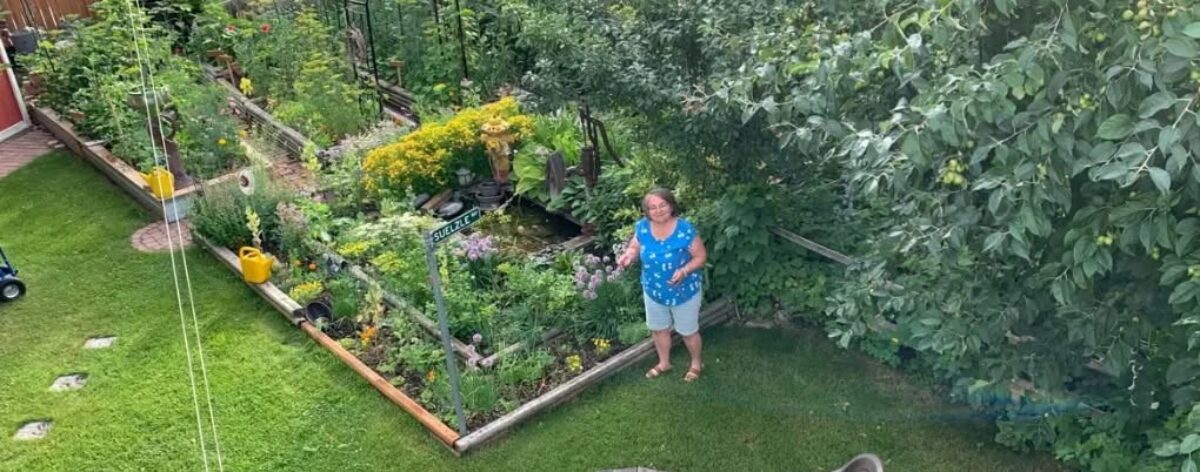
Years ago (for nutritional reasons), I decided to focus our eating IN THE SEASON, preserving the EXCESS of what we could use immediately. Consequently, we eat primarily out of our garden from the beginning of May through the end of September. Other than the watermelon we buy constantly throughout the summer, 90% of our fresh produce comes from the garden. Like everyone else, I still like summer fruits we cannot grow in our climate: peaches, nectarines, citrus, and blackberries – when all those fruits are at their best. Lucky for me, I live in a place where I have the best of both worlds.
Every growing season will be different; not every vegetable will do great every year. Some years are going to be great tomato years, some will be better green crop years. It is important to diversify what we grow to give us the best variety and chances for success. For instance, our growing season – summer of 2024 – was the perfect lesson for why diversification is a good idea.
It threw some unexpected curve balls at us: April was cold, May was cold and excessively windy, even June was cold and very windy. 2 I was still planting my garden in the middle of June – a full month later than than I ever have before. But then the weather was perfect for weeks at a time. By mid July most things had caught up. Who knew? April, May and June of 2024 was perfect spinach weather, but unfortunately for me, and uncharacteristically, I hadn’t planted any spinach. Booooo me.
MAY
What is typically ready in my yard (and probably your yard too) in May? * Early greens like spinach if you got it planted early enough (April, or even the previous August is a good time). * Volunteer Greens: Lambs Quarters – a common garden edible weed that is very much like spinach in many ways. Dandelion leaves – open your mind – when they’re very young, (young dandelion greens are nice added to a salad). Giant hyssop is an edible native plant that comes up early. Chickweed (yes, another common garden edible weed) that springs to life as soon as the ground warms up. * Sorrel, one of the earliest garden greens. * Rhubarb is at its best at the beginning of the season. * Chives, Garlic Chives and Welsh Onions are up and big enough to start picking for meals.
JUNE
What is ready in my yard (and probably your yard too) in June? * All your herbs. * More early greens, including lettuces. * Early strawberries. * Haskaps are the first fruits of the season – usually ready before the middle of the month. * Rhubarb is full on and at its best in June.
JULY
By the first of July, you should be eating something from your garden every day. Peas, beans, more greens including Asian greens, kale, the first cucumbers, every kind of herb, and the first tomatoes, zucchini and onions, black currants and more strawberries.
AUGUST
Very soon the excitement of first ripening turns into mass ripeness – all ready to harvest at the same time. Zucchini that gets so big you can use it for a piece of furniture, or it sits on the counter for several days before you use it; kale that grows bigger by the hour; more salad than anyone can enjoy, and more basil-wrapped-tomatoes than you can put on any table. Who has time to do take-out in the summer? And why would you? There is so much to eat every day right in your garden.
Part of the beauty of summer is the healthful benefits of eating in-the-season. Shop for dinner every day from your garden. There’s nothing like fresh sour cherries or plums from the tree, or those first crisp apples! But don’t miss the more subtle offerings: parsley that is ready fresh all summer long – with plenty to be dehydrated for use all winter, kale that we can literally pick every day and it never stops producing, with lots left to freeze or dehydrate. Gardeners, we have carefully tended our food plants since the weather warmed up, so be open to all the ways they want to give back to us. In some cases, the more we pick, the more will keep coming. When we let vegetables like peas, beans, cucumbers, peppers and tomatoes stay on the plant longer than needful, they start to over-ripen in an effort to produce viable seed, signalling the plant that producing time is over. They’ll stop producing more fruit, and focus on going to seed.
We sabotage our garden’s quality and quantity by not constantly harvesting throughout the entire growing season.
Picking cucumbers every few days as they ripen will keep the plant producing. You’ll have some to enjoy today, some to give away, and some to put up for winter for several weeks. Same with tomatoes: freshly sliced on toasted sourdough bread, in your garden salad of course, fresh bruschetta on fresh sourdough, fresh salsa, roasted pasta sauce, – enough to eat fresh, enough to share and enough to put up for winter.
STORE WHAT YOU EAT AND EAT WHAT YOU STORE
Preserving means NO WASTE, and extending the season – but never at the expense of eating IN the season. We really can have plenty of both, ironically by picking more. And there are several different ways to preserve, some more suitable than others, each with it’s own advantages, disadvantages and optimum shelf life. Not all methods are suitable for all produce. Be open-minded and employ a variety of methods to take advantage of the best options. When you eat what you store, you will have greater success in keeping your food properly rotated. This is what is meant by Food ROTATION.
front and centre you can see two tomatoes that suffered from irregular watering
When harvesting, be GENTLE. All fruits and vegetables are easily bruised and damaged; that damage will affect how long they’ll last. Use injured produce immediately, and the less severely injured ones as soon as possible. Go through your stored vegetables frequently, discarding all that are showing signs of spoilage.
COLD STORAGE Choose the coolest area in your house or garage that is clean with no risk of freezing. Do everything you can to keep it cool: lowest level if you’ve got a basement, no windows, outside walls if possible, no carpet, no heating vents, and dark. Vegetables like potatoes and onions will last for months, beets for a couple weeks at best. If you have a very cold room, you may even be able to keep carrots packed in CLEAN sand for an additional month or two, and possibly even cabbage short-term if it’s cool enough. COLD STORAGE is a temporary short-term storage method, extending the season another month or two or three – the key being to EAT it, don’t leave it there for months. Rotation is important. Most modern homes are not built for cold storage.
2. REFRIGERATION Room is always an issue in any fridge and over packing your fridge reduces its effectiveness to keep everything at a consistently cold enough but not too cold temperature. Additional fridges have additional costs involved in running them. It is an excellent, though temporary, short term storage method. Count your time in weeks at best. Eat your food storage to keep it rotated.
Refrigeration and Freezing are 100% dependent on electricity. For this reason, I don’t consider anything in either one part of my food storage. They are for convenience only, and let’s face it – freezers are mighty convenient. But if you lose power, you’ve lost a LOTTA food. Don’t put all your eggs in one basket – in the fridge or freezer basket.
3. FREEZING Again room is an issue, and leaving foods too long in the freezer is a common problem. Rotate your frozen food, 1st-in 1st-out. Short to medium short-term storage when properly prepared, packed and labelled. Freezing retains approximately 60% nutrition IF prepared properly and frozen quickly after harvesting. Recommended shelf life of frozen food is 4 months to 1 year, depending on what it is. And yes, I know your mom has food in her freezer from 3 years ago. Again, the recommended shelf life is 4 months to 1 year.
4. CANNING Two methods of canning: using a hot water bath with boiling water reaching 212 degrees F, and a pressure canner, which uses steam and pressure to reach up to 250 degrees F. Hot Water Bath canning is for high acid fruits. I always add lemon juice or vinegar – depending on the flavour it’s going to give the fruit. For instance, to a quart jar its recommended to add 2 Tablespoons lemon juice or double that for vinegar.
5. JAMS, JELLIES AND SYRUPS I always process these lovelies in a hot water canner. It is possible to freeze jams but I choose not to. Freezing always seems to require more sugar, and freezer space is a premium in my house. 3 for directions on how to make your own jam click HERE
5. DEHYDRATING is one of the oldest ways to preserve foods, keeping them safe to eat and maintaining reasonable nutrition. Estimates are that up to 80% of original food value is preserved. Times to dehydrate range from 1-2 hours to 24+ hours, depending on what you’re drying. Pay particular attention to ensure there is no remaining moisture in individual pieces.
Do NOT dehydrate high fat foods such as avocados, olives or nut butters, or dairy as the risk of food poisoning is too high. I personally do not dehydrate any kind of protein either.
For optimum storage keep in a cool, dry, dark place at temperatures below 60 degrees F or 15 degrees C. Dried foods should be good for up to 12 months depending on storage conditions. Vacuum sealing dehydrated fruits, vegetables and herbs will extend the shelf life for up to 10 years. The vacuum seal prevents oxygen from entering.
6. PICKLING OR FERMENTING While I have pickled various vegetables over the year: cucumbers, beets and carrots, it seems our family are not big pickle fans so I haven’t kept it up.
We are however, big SAUERKRAUT fans. I like to make a batch of sauerkraut in the late fall – November for the winter.
7. FREEZE DRYING Freeze drying is a relatively new option in home preserving. Commercially, its been on the market for 40+ years, but quality was a little hard to find. Since the year 2000 it became increasingly more available for purchase, but as with most things, the quality varied greatly.
The process is two step: Step 1 is to FREEZE, and step 2 is to remove all remaining moisture WITHOUT thawing. The key to the highest nutritional quality is – how fast can one get it from field to freezer? and how fast can one freeze it? When freeze drying at home, you must have sufficient freezer space to freeze your food in a flat surface layer so that once frozen, the food can be transferred to the freeze dryer. Everything will take different times, but to give you an idea of what to expect, blueberries will take approximately 30-40 hours to completely dry. Because blueberries (and other berries like them) have a protective skin on them, each berry must be punctured. If you don’t do that, the outer skin will dry, sealing in the moisture – exactly what you don’t want! Once they’re completely finished it is imperative that you get them sealed in an oxygen free storage container as soon as possible because they will begin absorbing moisture from the air.
Commercially, the process is the same: Freeze, and remove all remaining moisture without thawing, through a vacuum like process called sublimation. There are many companies that freeze dry, and I have noticed that not all are the same in their commitment to quality. Again, like for home freeze drying, the key to quality is – how fast can one get it from field to freezer? Over the years, I have tried many different brands of commercially freeze dried food, and finally settled on THRIVE LIFE as my brand of choice. There were several reasons for this – all of them relating to their unwavering commitment to quality. Sadly, in 2025 Thrive Life ceased selling to individual households. So the search for quality began again.
Last fall, I found WISE HARVEST Freeze dried food. Based in Utah, they process their own food, so they’re in charge of their own selection, quality and process. They are currently packaging in high quality mylar bags which allow for a shelf life of 5-8 years, and have about 20 items in their inventory. I have tried everything they sell and I am impressed with the quality. It is definitely a company I will be keeping track of as they grow and develop. Incidentally, they ship everything FREE once the order tops $100 – even into Canada. And their prices are both in American or Canadian dollars.
Do I freeze dry my own produce? Not at this time, but I am always considering it.
Why not? I have reflected on doing so many times over the years, and have several friends who have taken the step into freeze-drying their own food. I’d be lying if I said I haven’t been tempted to buy a freeze dryer, and looked a few times very seriously. After all, it is completely cohesive with the way I do things. But the thing that holds me back from this very expensive system, is the fact that I do not believe I can DO better or provide a better end product than what I can buy already freeze dried. In all other methods of preserving, I believe I provide a cleaner and more nutritious end product: canning, freezing and dehydrating. But not when it comes to freeze drying? Not yet. Not as long as there is a good, affordable source providing the quality and variety I cannot match.
Some hard facts to consider: * Living in central Alberta, most produce available for purchase has travelled long distances and is several days from harvest by the time it reaches our grocery store shelves. This means tremendous loss of nutrition. * Living in urban central Alberta, the variety and quantity of food I grow is restricted by my weather. Some of the food my family would like to eat freeze dried are things I cannot grow: bananas, mangoes, pineapple, etc. I feel that if I must buy the food I am going to freeze dry, I might as well buy it already freeze dried – in the end, I am looking for the highest quality.
Currently, of the variety and quantity of food I grow in central Alberta, that are suitable to be freeze-dried, I just don’t think I can justify the cost. One also needs to consider the additional cost of dedicated freezer space (the 1st step of the process). It’s a personal choice, and I totally understand those who go that route. It’s just not my route quite yet.
– Preserving your ABC’s –
Apples
A late summer favourite in our house, we look forward to the apples. Usually coinciding with the beginning of back-to-school time, our apples are ready, and we begin juicing. September smells like apple juice in our house. If the apples are nice then we make a few apple pies to eat and freeze, apple muffins, apple cookies, apples in our salads, apple sauce, apple fruit leather . . . there is no end to the versatility of apples. If your apples are more tart, its not necessary to add lemon juice, but if they’re more sweet, you might want to add 1 T to a pint (500 ml), 2 T to a quart (1 L).
Cold Storage: YES! the colder the better. Refrigeration: YES. can be stored in the fridge for a month or two Freezing: Yes! Also cut up as if for pie filling, apple sauce and juice Canning: Yes! As apple wedges as if for pie filling, apple sauce and apple juice. Dehydrating: Yes! Sliced reasonably thinly in wedges or rings. Pickling or Fermenting: no Juicing: Yes! Freeze Drying: Yes
Cold Storage: no Refrigeration: short term Freezing: Yes. Canning: not really suitable Pickling: yes Dehydrating: No. Texture is not good. Freeze Drying: yes
Beans – green or yellow or purple
Cold Storage: no Refrigeration: yes, short term Freezing: Yes. Freeze in whatever meal amount suits your family best. I blanch for two or three minutes then seal into small freezer bags, label and freeze. I find this better suited for our family so that those few of us who like them can enjoy without cooking up to much at a time. Canning: Yes – under pressure. This is my sister’s family’s favourite winter vegetable; consequently she cans dozens of jars every summer. Cooked beans are not a favourite in our house, so I have never canned them. Pickling: Yes. Several different types of pickled beans – open your mind and seek out recipes that appeal to you. Dehydrating: No, not the best. Takes a while to rehydrate and the texture is not very nice.
Beets can be picked pretty much all July and August as you thin out your rows.
Thinning will allow more room for the beets to grow bigger, and they can be left in the garden till cold weather forces your hand.
Beets are best stored unwashed but with excess soil brushed away, in a ‘cold’ dark place – a cold room or the fridge. Unlike onions and potatoes they can be stored in large food grade plastic bags, but are not suitable to long term shelf life in a cold room. Best place is the fridge. For longer storage, either can, freeze or pickle.
Every year, I look forward to BORSCH, the traditional Eastern European later summer soup, and a national dish in Ukraine.5 click HERE to read my post on Borsch including recipe
Cold Storage: short term Refrigeration: yes, in fact they should be stored in the fridge (short term again) Freezing: yes Beets can be frozen with good results. Cook them first. I prefer roasting covered in a hot oven (400 degrees). Keep 1/2 inch or more of their bottom stem to minimize colour bleed, ensuring they stay to their beautiful deep colour. I use a roasting pan, or a casserole dish or even just tin foil – depending on how many you’re doing. Keep them covered. They’ll cook in their own moisture. Or you can boil: cover with water allowing plenty of room in your pot so it doesn’t boil over (big mess). Roasting or boiling, when tender to the fork remove from heat, cool and remove the peel – it will slip off easily in your hands. Slice, cube or grate and package them into freezer bags or containers. Label and freeze. Plan to use before next season for best results. Canning: Can in pint or quart jars – because they are a low acid food they must be processed in a pressure canner. Don’t have a pressure canner? Consider pickling them. This you can process with a hot water bath canner. For maximum nutrition, plan to use within 18 months – 2 years. Dehydrating: Don’t. You won’t like them. Not a good texture. Pickling: yes Freeze Drying: yes
Berries
Cold Storage: NO Refrigeration: Yes Freezing: Yes Canning: No. The texture of berries is too delicate to withstand the heat and time of canning. Dehydrating: No – with reservations. Depends on the berries. It’s helpful to puncture berries with a skin like blueberries, saskatoons, currants, haskaps. Personally, I don’t like any of these delicate berries dried. Strawberries are good dehydrated if they’re not sliced too thin. I don’t like raspberries dried. Too sour, and I don’t like the texture. Jams: Yes Vinegars: Yes
Cabbage
Cold Storage: no Refrigeration: yes short term Freezing: We often freeze cabbage in the original head, to break down the texture so as to be better/more pliable to make cabbage rolls. Canning: I never have and have no comment Dehydrating: doesn’t sound good to me Fermenting Cabbage : Sauerkraut. A definite YES! 6 Once your sauerkraut is sufficiently fermented, store in the fridge. Freeze Drying: ? maybe?
to read more about sauerkraut, including how to make it, click HERE
Carrots can be stored in a high humidity COLD storage room.
Gently wash and trim the tops to within a 1/2 inch, and thoroughly dry before storing. Store only whole, unblemished carrots; refrigeration is highly recommended. Place in large plastic, food grade bags with several breathing holes punched through. Line the bag with a layer of paper towel to absorb excess moisture. Check carrots every few weeks to ensure they’re not drying out, but are also not too wet (I know – sigh). If the paper towels get very wet, replace them. Cold Storage: yes, packed in clean sand. Use withing a few months. Refrigeration: yes, you can store them in the fridge for a few months Freezing: no, don’t. Very rubbery. That’s all I have to say about that. Canning: Carrots can be bottles and processed in a pressure canner. As with beets, if you don’t have one, consider pickling. Dehydrating: Yes. Chop small. Best to use in a nice brothy soup to refresh. Don’t use too many, they’re pretty strong and will overpower a dish. Don’t do too many the first year – a little goes a long way. After the first year, you can judge for yourself. Pickling : Yes Freeze Drying: no
Cherries or Sour Cherries
Cold Storage: no Refrigeration: yes for the short term Freezing: yes. Pit first or you’ll wish you did. Canning: Yes. I suggest adding 1 T lemon juice to a pint (500 ml) or 2 T to a quart (1 L). Dehydrating: Yes. Pit and cut in half. Freeze Dried: Yes. pit and cut in half, or pit and puncture with pin. Jams: Yes Juicing: Yes, and can combined with apple juice or on its own. Vinegars: Yes
Corn
Corn is best eaten the day it is picked. If needed to pick in advantage, keep as cool as possible and make every effort to use as soon as possible. Suggestion: submerge cobs in ice water right after harvesting, drain and refrigerate with husks on. If the husks have been removed, store in plastic bags, for a few days in the fridge.
Cold Storage: no Refrigeration: short-term Freezing: My preferred way to store corn. Once the corn is cooked, (we prefer to grill it on the BBQ), we cut the kernels off with a sharp knife. I gather the kernels in a plastic tub. and gently tossed the corn with me hands. Then I pack in serving sized freezer bags. . Canning: I have canned excess corn before, under pressure in the Pressure Canner. Dehydrating: no, I don’t recommend it Pickling: I’ve seen corn used in salsas which are canned, as well as relishes. Personally, I would pressure can these.
Cucumbers
Cold Storage: no Refrigeration: short-term Freezing: nope Canning: nope, not unless you’re canning your pickles Dehydrating: doesn’t sound good Freeze Drying: in small pieces the results are excellent. When home freeze drying I find they don’t stay crisp. It’s tempting to freeze dry in slices, but it seems to work a lot better in dices.
Pickling or Fermenting: A definite YES for pickling.
Garlic – as with onions, you can use garlic immediately from the garden,
but for long term storing, as with onions again, it should be cured. Remove all excess dirt and tie in bundles of about 10-12 heads, hang upside down out of the way and out of the sun. Must be cured – as with onions – it is ready to prep and store when it is dry, brown and crispy. Any remaining moisture will promote spoilage down the road.
With scissors cut off the stock, leaving about a 1 inch piece and also remove the root close to the surface. Small paper bags left open at top are perfectly suited for storing garlic in dry dark cold room. Dehydrating: I have never done it myself but I have several friends who do. Slice and dehydrate in a dehydrator. If you don’t have a dehydrator you can dry on a cookie sheet in your oven at the lowest temperature. If you cannot get your oven below 150 degrees, use a wooden spoon to prop your oven oven slightly. Check often to prevent scorching. Once it is thoroughly dry / crispy, powder in a food processer or coffee grinder. A blender will work but you’ll get a lot of powder. Let it settle before opening the lid.
Garlic Salt: My cousin brought me some garlic salt she made herself and now I am a total convert. So doing this myself when I run out. It’s a super simple process. You control the texture of your garlic salt, leave it chunky, coarse or fine – depends on your desired end use.
1 cup coarse kosher salt (non iodized – don’t use regular table salt) 12-15 cloves fresh garlic peeled. Process in food processer until garlic is finely chopped. Spread over parchment line baking sheet and bake 200 degrees till mixture completely dries out. Expect it to take 45-60 minutes.
Baking it makes it a little clumpy, so after its cooled, either crush it in a mortar and pestle or run through your food processer again, or throw it in your high powered blender if you want a finer texture.
Valiant grapes ready to harvest. End of September.
We’ve grown Valiant Grapes in our backyard for almost 20 years. They look and taste very similar to Concord Grapes that are grown in the Niagara region. They are delicious, nutritious, super easy to grow, and winter hardy – everything that is important to me. They have seeds in them and for that reason, some in my family prefer not to eat them ‘fresh’. That doesn’t bother me one little tiny bit. Grape seeds are so rich in nutrition, that I am highly motivated to ‘like’ them.
Cold Storage: no Refrigeration: yes, short-term. Freezing: Yes. We freeze them for smoothies all winter long. Canning: no Dehydrating: no because they contain pits that are too hard to remove. You won’t like them. Juicing: yes, and then can the juice Jamming: YES!!!
We make GRAPE PIE – as a traditional favourite dessert for Thanksgiving and Christmas.
They make a wonderful sauce to add to yogurt, serve over top ice cream or angel food cake, and they make the best jam in the history of the world!
Herbs
Most of the herbs I grow get dehydrated for winter use. The exceptions are dill weed and chives. Dill weed is too delicate to dry – it loses all that makes it wonderful. So I chop it and freeze it, scraping out of its container with a fork while it’s still frozen to use, then returning to the freezer immediately. Chives are also too delicate to dry – becoming ‘woody’ in my opinion, so I chop and freeze them too.
Small amounts of thin leafed herbs (basil, mint, oregano, parsley, tarragon, thyme) – dry on a clean towel on the table or counter. Larger amounts or thick leaves I put in the dehydrator.
Basil – Pesto Pesto is one of my favourite summer traditions. I used to think it was synonymous with basil and at one time it was, but this is a brave new world we’re living in, and pesto can also come from parsley, radish greens, carrot greens, nasturtiums or any combination thereof, or any other flavour you want to preserve. 7
to learn more about pesto, including recipes click HERE. In the link are several different posts about different ways to make pesto using a variety of herbs. Be creative and have fun experimenting.
Dandelion roots – I wash, chop and dry roast them in the oven at 400F. Store in glass jar away from direct light. 8
Dill– I am generally interested in the green weed. I pick when they’re green and lush throughout mid summer, swish in cool water then put in a salad spinner to take excess water off. Chop with a sharp knife on board and scrape into a freezer container. Label and seal. Freeze. To use, I simple scrape the chopped weed out of its container with a fork while its still frozen and return to the freezer immediately. 9
Horseradish – you can make horseradish sauce or freeze it in clumps. It will lose some of its pungency, so plan to use in 6 months. to read more about horse radish including recipes click HERE
Mint – for tea is foundational, probably the first herb most people dry and then use all winter long. Easy to dry. Easy to use.
Kale
Cold Storage – nope Refrigeration – short term Freezing – Yes. Wash and remove stems. Chop coarsely and blanch in boiling water for 1 minute. Immediately plunge into ice water to stop the cooking and to lock in colour. Once the mass is cooled, strain and let the leaves drain for a few minutes. Pat dry with a cloth, and put them in labelled clean freezer bags, removing as much air as possible. Blanching kale increases the shelf life to 6-9 monts, while raw kale frozen is best eaten within 1–2 months. Canning: nope Dehydrating: This is my personal preference. Easy to do and easy to use later. Two to three hours in the dehydrator depending on how full your racks are, and then pack away in a glass jar. Label, and keep out of direct sunlight.
These jars pictured are 2 quart size. You’d be amazed by how much dehydrated kale is in each of these jars. I use it throughout the winter in many dishes, just scooping out of the jar and adding it to soups, stews, chillies, and sauces of all kinds. Pickling or Fermenting: nope Freeze drying: One of my favourite freeze-dried vegetables.
Onions can be used from the garden as needed all summer long
especially when the bulb starts to round out, but by late summer you’ll notice the tops begin to flop over, giving the signal that the plant has stopped growing. They’re ready to harvest.
Cold Storage: Yes. They need a cool, dry, dark, and well-ventilated spot (a pantry will do) to stay firm for months.
To dig, carefully loosen the soil around your onions with a garden fork, then gently pull them up by their tops. Best to keep the full stem intact until fully dry. If the weather is dry with no danger of frost overnight, lay the plants out in the garden for a day or two to dry out. If the weather is not in your favour, move them to a protected area – perhaps the floor of the garage or a covered porch.
Curing onions is the term used to prepare them for long term storage, and is absolutely necessary. The outer layers dry out, tightening around the bulbs to effectively protect them, keeping the onion firm longer. Its a simple process: make sure they have plenty of air space for circulation – ideally outside but protected from the sun. Either hang or lay out. That’s it. You do you, but take care not to bump or bruise them. And don’t rush this process, drying takes TIME, and properly curing onions means you can enjoy the harvest all winter long. Taking shortcuts will prevent proper curing, and the onion bulbs will turn soft and mushy. Curing onions allows them to be stored at room temperature, so even a kitchen pantry would be sufficient if it was nice and dark.
Onions are sufficiently cured when the necks are completely tight and dry, and the stems contain no moisture. Use scissors to trim the roots to about 1/2 inch, and the leaves to about 1 inch. Like potatoes, onions should be kept cool and dark – with good air circulation. The same kind of containers are suitable. If the onions are exposed to light for any long stretches, they may sprout new green leaves. Use any onions that have been bruised or damaged first, as they will not last as long.
It’s tempting to store onions with potatoes because their needs are similar, but potatoes release moisture as they age, which can encourage onions to develop soft spots, so keep a reasonable distance between them.
Either hang or lay out, you do you, but don’t rush the process. Drying takes TIME
Refrigeration: No. The fridge is too damp, causing them to turn soft and moldy. *note: if you only have a few onions and you think you’ll use them up in a few weeks, don’t worry about curing. Go ahead and put them in your fridge.
Not all onions are intended for long storage. Generally, the milder or (or sweeter) onions are intended for short term use. Stronger (or more pungent) flavoured onions may retain quality for up to a year if cured properly. These are things to consider when selecting the type of onion you want to grow in the spring.
Freezing: Yes, though they will lose their crunch. They are best suited for cooked dishes like soups, stews, sauces, and casseroles. Properly stored, frozen onions last about 3-6 months.
Peel and chop, dice, or slice onions to the desired size. Spread out on a baking sheet and place flat in the freezer for about 2 hours. This prevents them from freezing into a solid clump. Pack into airtight bags or containers, removing as much air as possible to prevent freezer burn. Use directly from frozen in recipes; no need to thaw.
I’ve seen my dad put on goggles and chop tons of onions by hand for hours so that he could freeze them for ready use. That was enough for me to never want to do the same thing. Generally, I choose not to freeze.
You can also freeze onions precooked to save cooking time later.
Canning: No Dehydrating: Yes, but you might want to take the dehydrator outside to do it. The smell lingering in the house for days is not appealing. Pickling: Yes Freeze drying: Yes! I don’t freeze-dry onions myself – I prefer the quality of what I have purchased. They are super easy to use, and do not need to be refreshed. One can use them in fresh salsas, chicken or egg salads, or in any other way.
Parsnips – same as carrots.
Peas
Cold Storage: nope Refrigeration: short-term Freezing: Yes. To freeze fresh peas, shell and wash them, then blanch in boiling water for 1.5 to 2 minutes. Immediately plunge into ice water for 2 minutes to stop cooking, drain well, and dry completely. Freeze in a single layer on a tray (flash freeze) before storing in airtight freezer bags for up to 6–12 months Canning: Yes, under pressure Dehydrating: Yes, but . . . . I don’t like them. Pickling: no Freeze Drying: YES! They’re great to snack on, and when they’re refreshed, they taste just like fresh from the garden.
Peppers
Cold Storage: nope Refrigeration: Yes short term. Freezing: Yes. They can be frozen raw and chopped (sliced or diced, seeds removed), no blanching necessary. Freeze on a cookie shett to prevent clumping, then transfer to a labelled freezer bag. Will keep a good 9 -12 months. Canning: Yes, under pressure Freezing: Yes.
Dehydrating: Yes Freeze Drying: Yes
Potatoes
Cold Storage or Refrigeration: Potatoes should never be stored in the fridge, as it converts starch into sugars, changing the texture to a sweet, gritty, unpleasant texture. Cool is good, COLD is not. A nice dark area is necessary as light turns potatoes green. Keep them in a breathable storage container like a cotton or burlap bag, paper bag, basket, or a cardboard or wooden box. Use injured potatoes first – those that may have been damaged with a shovel when harvesting, those with blemishes, those with splits or anything else not perfect. Those injury spots will begin to spoil, so use them first. Continue to go through them from time to time, removing any that look like they are starting to rot. Canning: Yes, under pressure Dehydrating: Yes with reservations. I personally don’t dry them. Freeze Drying: Yes . . . .though I’ve never done so myself. I do however, use commercially freeze-dried potatoes.
Potatoes are easy to store: choose the coolest area you have (NOT the fridge) and keep them in the dark with as much air circulation as possible. No plastic bags or tubs.
Pumpkins and other winter squash
Cold Storage or Refrigeration: Cool, NOT cold. Handle gently, as dents and scrapes will introduce decay. Clean the surface by wiping with cool water in which a capful of bleach has been added. This kills bacteria that will quickly gain a foothold in any injury spots, including cuts when you carve a jack-o-lantern. After it’s been disinfected, dry it thoroughly with a soft cloth before storing it. Keep your pumpkins cool, dry and dark and they’ll reward you by lasting several months. Slight freezing or even too cold will break down the tissue and make the pumpkin soft, but too warm is a problem too. Keep them out of direct sunlight. Best place is in your cold room or garage, as long as it doesn’t freeze. Keep them OFF the cement floor with cardboard, a blanket, wood slats or on a shelf. And try to keep them from touching each other to allow them to breathe.
Freezing: Yes, but the texture gets watery. I don’t care for the final result Canning: Yes, in chunks not puree – and always under pressure Dehydrating: No. Freeze Drying: Yes
Rhubarb – the best friend you never gave the time of day to
Cold Storage: No. Refrigeration: Yes, short-term. Freezing: Yes! Wash, chop, bag and freeze. I use the frozen rhubarb in smoothies for an especially refreshing drink. Canning: Yes! I cold pack macerated rhubarb into pints, using the juice of the rhubarb and sugar as liquid. 10 minutes in a hot water bath. I don’t feel the need to add any lemon juice or vinegar, as it is acidic enough already. We use this to flavour yogurt or to top oatmeal on winter mornings, or for baking.
Jam: Rhubarb is foundational in most of my red summer jams. Dehydrating: Yes, but only as fruit leather. By itself or as a base with strawberries, raspberries, plums, and many other flavour companions. Be creative. Yes you can dry rhubarb in small pieces, but it is not a nice texture or flavour and is hard to find uses for. Freeze Drying: Yessss, although I don’t care for the texture. I guess it depends on what your goals are to use it.
To read more about Rhubarb including recipes, click HERE10
Sorrel and other Greens such as Spinach, Swiss Chard and Amaranth
Cold Storage: No. Refrigeration: Yes, short-term. Freezing: Yes. Lightly blanch and pack into small freezer bags, label and freeze. Canning; nope Dehydrating: nope Freeze Drying: YES
Tomatoes are why I garden
Cold Storage: No. I leave whole tomatoes in my kitchen at room temperature while they’re ripening. I want them close at hand so I can keep an eye on them. We use them daily fresh, but sometimes they ripen a lot at once, so I need to be watching. Refrigeration: No. Cold temperatures stop the ripening process, breaking down cell structure and creating a mealy texture, as well as reducing flavour. But sometimes, if your tomatoes are over ripe, you can refrigerate to buy your some extra time. Best to only use in cooking after they’ve been refrigerated. Freezing: YES! Sometimes if I have too many ripening all at once, I’ll wash and dry them, then place in the freezer to buy me some time. I freeze loose, them pack them frozen in a freezer bag. This is a short term gig, and we’ll use the tomatoes as quickly as we can afterward. Only good for cooking. Canning; YES! I always 2 T vinegar to a pint (500 ml) or up to 4 T to a quart (1 L). Whole, ripe tomatoes are best stored on the counter, but can be refrigerated for 1-2 weeks to prevent spoiling. Cold temperatures (under 55°F/13°C) stop the ripening process, breaking down cell structure to create a mealy texture and reducing flavor compounds. Always bring refrigerated tomatoes to room temperature before eating. Dehydrating: YES! Freeze Drying: YES! but I find the texture very delicate, and that it absorbs moisture from the air very quickly. Not ideal.
to learn more about tomatoes including recipes click HERE
Zucchini is the master of disguise
Cold Storage: Yes, short-term for big ripe zucchini, but not too cold. Refrigeration: Yes, short term for smaller, less mature ones. Canning: Yes, under pressure. Personally, I don’t like the texture. Freezing: Yes, . . . but texture will be watery. For me its a no, unless I shred the zucchini and package in the right amount for zucchini cake. Dehydrating: Yes – my preferred method for long term storage Freeze Drying: YES! but I find the texture gets a little spongy after a while Pickling: No.
Fruit Leather
Fruit leather! Apple leather – rhubarb leather – any kind of fruit leather. Mix it up. Apple Pear. Rhubarb Raspberry. Plum Cherry. Plum Apple, Plum Grape Apple. . . . . Whatever you’ve got on hand that needs to be used up, turn it into a delicious, nutritious snack to grab all winter long.11
to read more about fruit leather including recipes click HERE
Vinegars
Take your favourite flavours from the growing season and use them to flavour vinegars.12
to read more about vinegars including recipes, click HERE
Tips for storing your preserved foods
Don’t just stash your food and forget about it. You’ve done all the work up till now: you’ve grown it, nurtured it, harvested it, preserved it, – now you need to finish the job by keeping it safe, making it accessible and incorporating it into your daily life. EAT IT!
I cannot overstate the importance of STORING WHAT YOU EAT and EATING WHAT YOUR STORE.
In many cases the shelf life of your food will depend on where and how its stored.
Pay attention to the risks : Humidity – Light – Oxygen – Temperature Variations – Pests (insects and mice)
Moisture/Humidity: If dried food picks up moisture molds and bacteria will grow. Moisture can also damage packaging material, and rust jar rings. In areas of high humidity, using moisture absorbers and investing in a dehumidifier is a good idea. Keep everything OFF the floor, especially if the floor is cement.
Light: Direct light, especially sunlight can speed deterioration
Temperature: Optimal temperatures are cool, ranging from a low of 40F (above freezing risk) to maximum of 70F. All food will react badly to heat. Canned food should not be allowed to freeze for the food’s sake but also, freezing will compromise seals. Dehydrated foods can freeze but continual freeze-thaw is detrimental. Even freeze dried food will have its exceptionally long shelf life significantly reduced by heat, and in continuous freeze-thaw conditions.
Pests: Protect your food storage from pests. Moths, ants and mice belong outside but they don’t always stay there, and once they’ve found their way into your food storage – it will be unsafe for you. Glass, food grade plastics and metal are excellent protection but not always practical in every situation. Do the best you can with what you’ve got. Keep food off the ground and off the floor! Aside from being more susceptible to insects, it is also more vulnerable to water damage should that sad event occur.
Preserve Responsibly
KEEP IT CLEAN Pay attention to cleanliness and details like full boiling and timing when canning, full moisture removal when dehydrating, blanching and packaging when freezing. Cleanliness extends to your storage area.
LABEL You think you’ll remember, but you WON’T, and even if you did – you may not be the one who uses it.
USE IT Shop for Dinner from your Food Storage room. Routinely go through your food storage to ensure that seals are still intact, food is still properly packaged, no signs of pests or mould, and to ROTATE it. USE it!
STORE WHAT YOU EAT and EAT WHAT YOU STORE. I know, I know, you’ve seen it before. It is the single most important rule. If you don’t eat what you store, you’ve wasted your time, energy, food and money! Not using what you “put up” is no better than doing nothing with it, because it ends up being the same.
the final word (words)
Eating a nutritious and balanced diet with variety is the best way to protect our health. It gives our bodies the best chance to take care of themselves. That extends into the non growing seasons, those of us who live in northern climates must think about winter, so we store food.
* Storing food properly is the key to protecting ourselves and our families WITH continued good health and FROM foodborne illnesses.
* You cannot always tell when food is unsafe by its appearance, smell or taste. Botulism for instance cannot be seen, smelled or tasted. When in doubt, throw it out!
* Preserving your garden produce is the next-to-final step in the blessings and benefits of growing a garden. It is soul satisfying. The last step of course is to continue to enjoy the produce throughout the winter.
* Everybody has Failures. Failures are the best teachers. Learn from them.
I’d love to hear your tips and suggestions, as well as some of your success stories as well as things you’ve learned from failures.
Warmly,
Cindy Suelzle
Footnotes:
Botulism spores (Clostridium botulinum) are highly resistant to heat and can survive boiling water (212°F / 100°C), but they are destroyed at temperatures of 240°F to 250°F (116°C to 121°C), which are only achievable in a pressure canner. (USDA Food Safety and Inspection Service) ↩︎
Just for fun, I checked some weather history in Edmonton, and in May 2024 we had 8 sunny days!↩︎
Home Canning (and by that we really mean home ‘bottle-ing‘) is the easiest, most reliable and economical way to preserve food at home. It can be done in your own kitchen, doesn’t require a whole lot of pricey equipment, and has a reasonably long shelf life – up to two years. Yes, I know you know someone who’s had their home canned food for eight years (we all do), and that supposedly “it’s still good”. To that I repeat: “the shelf life is UP to two years“. My suggestion is strongly not to push it too much past then.
Fact: Food is Food. You cannot prevent it from spoiling, you can only slow it down. Canning will preserve it, but not forever.
Don’t expect home canned food to be what it cannot be, and everything will work out fine. It’s reality is that the nutritional value of canned foods (commercially or home canned) is about 40% of what it was when it went into the canner. I admit I was super disappointed when I learned that fact, mostly because I raised my children on home canned food, especially fruit, and I thought I was doing the best thing I could for them. In reality, I really WAS doing the best I could for them, but when one gives it some thought, those peaches were in boiling water for 40+ minutes. What did we expect? Still, I reasoned: having 40% peaches in February is highly preferable to 0% peaches in February.
After the recommended shelf life of two years, we can expect that the food will lose more of its nutritional value, which is why I highly advocate not trying to keep it past that suggested time. Having said that, if something gets away from you and you’re into the third year, don’t sweat it – just use the food.
As with any type of food storage, the bottom line is to STORE WHAT YOU EAT, and EAT WHAT YOU STORE. If you do that, you’re gonna be okay, if you do not – you will end up wasting a lotta money. Canning isn’t magic. It cannot make something perishable last indefinitely.
So what’s the point? And why should I can?
Because it’s a good way of extending the valuable useable time of perishable food, preserving good and nutritious food today, to use tomorrow. Instead of preparing for immediate consumption, you are preparing food that you can store for months! Make no mistake, canning IS cooking, but it allows us to capture the best flavour at the peak of season—to enjoy all-year long! Garden Roasted Tomato Sauce, Homemade Garden Salsa, a bowl of peaches, rhubarb to go on your morning oatmeal, raspberry jam – all in the middle of winter! THESE are why we can!
Back when my kids were young we canned a LOT of fruit. When the price was good we’d buy a 100+ pounds of peaches (our favourite) and pears, maybe 50 pounds of cherries, apricots or plums. I’d can half of the plums and dehydrate the rest. Though I did the bulk of the work during the day it was a big job, so it had to be a family affair. Dan always pitched in when he was home and we required the kids to help out. And yes, I got backlash from time to time (especially from one of our boys who shall remain unnamed at this point), but I flat out insisted that everybody help. We all enjoyed the end result of having peaches with breakfast in February, so it only made sense that we all pitch in to make that a possibility. At some point, when this one un-named boy was a teenager, he put his foot down and refused to be involved in the project anymore. HE was not peeling peaches (or pears or whatever it was). HE disliked the work and HE’D had enough! It was too much work for HIM – bordering on child abuse. He was too big to argue with so I told him that was fine, but it was unfair for him to expect to benefit from the effort of everyone else. As with everything there are always consequences, and the consequence to this choice would be that he’d be giving up enjoying the “fruits of our labour”. He couldn’t expect to eat peaches that someone else did all the work to put on the table. I reminded him that he enjoyed eating peaches in the winter. I also reminded him that the likelihood of me forgetting in February that he didn’t help in the summer was next to zero. He may have thought about it for all of thirty seconds, and in the end he trusted me, put on an apron and grabbed a peeler. I’m not gonna pretend he was happy about the job after that, but we never had to have the same conversation again.
My daughter on the other hand, looked forward to “canning season“. It was just as much work for her, but there was something about her that made that work enjoyable in its own way. My other boys were fine to pitch in and participate, it was after all – the means to the end we all wanted: fruit in the winter. Many memories were made in a hot and sticky kitchen on those long summer days.
One summer I went away for a week with a friend. Sarah was 14 years old, and diligently went through the grocery store sales flyers in my absence, as she had seen me do many times. At one point she saw that peaches were a ‘good’ price and she believed they would likely not still be that price when I came home. With urgency, she told her dad that he must pick up several boxes of peaches on his way home from work the next day – which of course he did. While I drove home from New Brunswick with Peggy, Sarah and Dan canned those peaches from beginning to the end. I was amazed when I got home, and kinda still am as I look back on it. I was very proud of her, and I wish that I had expressed that better than I did. I was proud not only that she felt it her ‘motherly’ duty to can peaches in my absence, but also that she took it upon herself to judge when the price was right, make the decision to buy, judge when they were ripe enough to bottle, and then take charge of actually getting it done. Dan wisely let her do all that, and then in typical Dan-style, he put on an apron and began peeling peaches.
the method
The method is to use high temperatures to kill microorganisms and inactivate enzymes that would cause food to spoil. The heating process pushes air from the jars, creating a vacuum seal as they cool. Without oxygen the bacteria, yeasts, and mould will not grow and the food will last a lot longer.
There are two methods: hot water canning, and pressure canning. They are NOT interchangeable. This article deals with HOT WATER canning. How do you know which method is used for which type of food? It’s pretty straight forward: high acid foods require the hot water method – the easiest. What are high acid foods? Most types of fruit and berries. Some suggestions to consider: Apples: apple juice, apple jelly, apple butter, apple sauce, apple pieces, crab apples … Apricots, apricot jam, Berries whole, berry jam, berry syrup, Cherries whole, cherry jam, cherry syrup, cherry juice, Cranberries whole, cranberry sauce, cranberry jelly, cranberry juice, Grapes, grape juice, grape jelly, Grapefruit and Orange sections, Citrus marmalade, Mixed fruit combinations (cocktail), Nectarines, Peaches, Pears, Pineapple, Plums, Rhubarb
adding acid
To most fruits I add a Tablespoon of lemon juice to a pint (500 ml), and 2 Tablespoons lemon juice to a quart (or litre), just as an added precaution. I don’t bother with rhubarb because that is acidic enough.
Tomatoes (yes tomato is a fruit): cold pack whole or cut up, tomato sauce. Less ripe tomatoes are more acidic. Very ripe tomatoes are sweeter and less acidic. (Can them before they’re very ripe and soft.) I add 2 Tablespoons of lemon juice to my quart jars of tomatoes. Half that amount for pint jars of tomatoes.
Low acid foods require the higher temperatures that only using a pressure canner can provide. They include ALL vegetables and proteins.
Hot water canning involves boiling your fruit in glass jars in a big pot of water. There are pots specifically designed for this- called water bath canners – that consist of a large DEEP pot, a rack insert, and a lid. When purchasing, ensure that you have room for a quart jar to have at least two inches of water covering and plenty of room for water to boil. For small batch canning, I often just use my pasta pot because it checks all the boxes and its in my kitchen cupboard already so its handy. It is good for all my smaller jars: my pints, half pints and smaller that I may be using for jams or syrups.
If I am canning quart jars I use a bigger stock pot that I keep up high on my pantry shelf, so not easy to retrieve but not terribly inconvenient either. I can process up to seven quarts in this pot so its perfect! The important thing to remember when repurposing non-canning-specific pots is to put something on the bottom to prevent your jars from being directly on the bottom of your pot. A rack that will fit your pot will help keep the bottles from ‘jumping’ around when the water is fast boiling, preventing unnecessary trauma and possible breakage. If you have a rack that fits then go ahead and use it (I picked up a few different sizes from a thrift store years ago). Otherwise, use a folded dish towel in the bottom of your pot. You’re mostly trying to protect the bottles from banging around during boiling.
Boiling water is 212 degrees Fahrenheit, sufficient for high acid foods like most fruits, pickles, tomatoes that are not over ripe, sauerkraut, relishes, salsas, and all sorts of jams. It is the acidity of these foods helps preserve them safely without the need of higher temperatures and pressure.
VERY IMPORTANT: PLEASE READ
Canning COMBINATION Foods (high and low acid in the same jar)
“Tomato sauce isn’t just tomato sauce once it’s all fancied up with lots of peppers, onions, mushrooms or other vegetables – at least as far as canning procedures are concerned. That’s because vegetables other than tomatoes are low acid, and if you add enough of them to your tomatoes you will bring the acid content down dangerously low. To avoid any risk, just follow this rule: When you’re canning mixed ingredient foods like sauces, soups, mixed vegetables and juice combinations, follow the directions for the ingredient that needs the most processing time. If one ingredient would normally be canned in the pressure canner, process the whole combination in the pressure canner for the full time. Don’t make the mistake of assuming that you should follow the guidelines for the food that is in the greatest quantity. Rather, follow the guidelines for the food with the lowest acidity.
To give you some examples, the following combination foods are high acid and can generally be processed in a boiling water bath, so long as it contains NO MORE than 3 cups of any combination of finely chopped celery, onions, carrots or sweet peppers for each 18 pounds of perfectly sound tomatoes, and it contains NO meats. – stewed tomatoes tomato purees meatless tomato sauce barbeque sauces mincemeats (containing no meat products)
Examples of combination foods that should be processed under pressure because of the low acid ingredients: tomato – celery combinations tomato-pepper sauces vegetable soups – even if they have a tomato base, like minestrone tomato-bean combinations chili (with or without meat, beans or tomatoes)
If in doubt about any of your own recipes, play it safe and pressure can or freeze.”1 Carol Hupping Rodale Food Center
Supplies
Canning jars: not to be confused with single use jars. These are jars intended to be used at extremely high temperatures. Use ONLY clean jars without cracks or nicks in them.
Lids and rings (screw bands): those that are made for the particular jars you’re using. Do NOT reuse the metal snap lids; they are single use only.
Water bath canner: for water-bath canning, it isn’t necessary to purchase a special canner as long as you have a pot that has a fitted lid and is large enough to fully immerse the jars in water by 2 inches—and that will allow the water to boil when covered. You’ll also need a rack that fits inside the pot or canner.
Jar lifter: very important, this tool is relatively inexpensive but indispensable. It is essentially large tongs to assist you in putting jars into HOT water, and in removing them again out of boiling water.
Wide mouth Funnel: sure makes it easier to fill your jars without spilling and making a mess. You can buy plastic or stainless steal. I have both, but I prefer my stainless steal one. I use it for much more than camping – almost daily, for lots of applications.
Utensils: large spoon or ladle to fill jars, and a simple table knife to remove air bubbles.
Clean dish cloth to wipe jar rims, and clean dish towels upon which to place you processed jars.
10 Tips to Review Before you Start
Always use the FRESHEST produce possible – in peak condition. Overripe fruits are lower in acid and are already in a state of decomposing. It is important to know that produce begins to deteriorate IN THE HOUR it’s harvested, so fresh means AS IMMEDIATE AFTER HARVEST as you can get it.
Gather all your ingredients and equipment beforehand, so that they’re at your finger tips. It is so frustrating to realize at the point of no return, that you don’t have that extra bag of sugar or additional lids you thought you had.
It is critical to pay attention to “CLEAN” throughout every part of the process. Freshly CLEAN your jars in HOT soapy water – rinsed with hot water and set aside with a clean cloth cover. Sterilizing jars is good, but current advice is that if the food is going to be processed in a boiling water bath for at least 10 minutes, sterilizing is not necessary. CLEAN however is not negotiable; pay attention to it. If you have a dishwasher – running your clean jars through a cycle should get the job done. In years gone by, I always had my CLEAN jars in a hot oven till I used them, but I hardly ever take the time to do that anymore.
Use REAL canning jars, screw bands, and lids – intended for canning. Jars: Many jars that we may recycle are intended only as ‘single-use’ jars. They were not made to go in high temperatures and are liable to break. They also do not fit regular canning lids which are critical. Those single-use jars may be suitable for dry storage, but they are NOT suitable for canning. Lids: Use only NEW lids, not previously used. New lids have a rubber inner ring intended to seal during the process. They do not need to be heated to activate the sealing compound before placing on the jar top, but I usually heat them anyway – by placing them either in a pan of water that I bring to a boil, or by dipping them into the boiling hot water bath with a lid holder that I have for that purpose. This is just one further way of ensuring they’re CLEAN.
5. “Head Space” is the air space from the top of the contents of the to the top of the jar; it is important to ensure the jar seals properly. Head space and can vary depending on the food (usually between 1/4 inch to 1 inch but on average – 1/2 inch). During the boiling process, contents of your jars expand, and if the head space is too little for the contents (bigger contents like peaches, pears or tomatoes for example) the contents may expand into headspace and jeopardize the clean seal of the lid. Insufficient head space may even cause the contents to boil over and escape the lid, causing a big mess in your canner and again, jeopardizing the seal. You could leave up to an inch to prevent those contents from expanding into the headspace. It is important to remember that even liquid expands when it boils.
So what about too much headspace? If too much headspace is left, the food on the top may discolour in time. That in itself isn’t a terrible thing, but in the case of too much air, processing time may be inadequate to push out all the oxygen within the jar, again preventing a good vacuum and therefore a proper seal. Having said that, I’ve had times when the syrup in my fruit boiled over (having not left sufficient head space) and yet the jar sealed. I’ve had times that everything seemed perfect and yet the stupid jar didn’t seal. I’ve had time that I left too much head space and the jar sealed and times that I had too much when it didn’t seal. The bottom line is that we’re looking for optimum protection from potential spoilage through aerobic bacteria (an organism that can survive and grow in an ‘oxygenated’ environment) so we want to do our best to follow proper canning procedures. In principle, following the procedures closely will leave us with no oxygen in the jar. We’ll know we accomplished this when the jar seals.
6. It is VERY important is to wipe the jar rim and threads clean before putting on the lid and screw band. Having any fruit or syrup residue along the top will prevent a good seal with the lid. When putting on the ring / screw band – don’t tighten more than finger tight. It’s job is not to seal the jar, it is to keep the lid in place while the jar is processed and during the cooling process when the vacuum is complete. After 24 hours the ring can be removed to reuse on other jars.
7. Using the jar lifter, place each jar on the rack in the boiling water. I always put the jars in at a slight diagonal to prevent a possible air bubble creating in the slight dome on the jar bottom. Make sure that the jars are covered by at least 1 to 2 inches of water. Cover the pot with lid and bring the pot to the boil. Start counting processing time once the water has returning to a boil. I usually turn the heat down a bit to keep it at a steady rolling boil but not a furious boil. Allowing the water to hard boil at high heat the whole time, may cause some water loss. If that happens simply top it up with small amounts of new water making sure you don’t pour directly onto the jars.
8. When processing time is done, turn off the heat and remove the canner lid venting the steam away from yourself. Remove each jar with the jar lifter and place upright on a nice thick clean tea towel to cool. Keep a space between them of 1 to 2 inches. Let jars cool 12-24 hours. Do NOT make the mistake of tightening the rings as soon as you remove your jars from the canner. It’s typical that the rings may loosen a bit during processing – that’s okay. Adjusting them while the jars are hot may disturb the seal and interfere with successful sealing. Overcome that rookie temptation.
9. How do you know a jar has sealed? Another rookie temptation I’ve seen people give into is pushing the centre of the lid when the jar is still hot. Their intention is to “finish the seal”, but that is not what happens. The natural ‘ping’ of the jar sealing on its own is indication that it’s sealed. By interfering you don’t have that indication and you will not know if it has properly sealed. It is important to test each jar to ensure it’s sealed properly before putting it away. Wait until the jars have cooled at least 12 hours and up to 24 hours before you test the seals. You may notice that the level of the contents is lower. Relax. It’s okay and it is what it is.
A vacuum is created during the sealing process, by drawing the oxygen out of the jar – pulling the lid down, forming a shallow depression in the centre of it. So what you’re looking for is a concaved lid. * Gently press the centre of the lid with your finger. If it is properly sealed there will be no give, Great. If the lid springs down and up when you press and release your finger, there is no seal, Shucks! Don’t despair. It happens sometimes, especially in the beginning when you’re learning. Put that jar in the fridge and eat the contents in the next few days.
In general, your canned foods should last all year long, as long as they are stored in a cool, dry place. When you open your jar, you should have considerable resistance and need a spoon or table knife to loosen it. It should POP audibly when the seal is broken. If it opens too easily – like with your hand, the lid is NOT sealed and that’s a sure sign that air has gotten in. Not good. Do not keep it. Dispose of immediately.
What signs am I looking for down the road, that a seal has been jeopardized? *a broken seal (the lid is no longer concave) – this is likely because it wasn’t a good seal to begin with; *a bulging lid (in home canned or commercially canned food) is a sign of spoilage; *a lid (not the outside ring) that is corroded or rusty is a sign of spoilage; *when you open your jars or cans and see mould or bubbles or cloudiness, its a sign of spoilage. In all these cases – dispose of the contents immediately.
10. One sign that your jars have sealed properly is the gentle “popping” or “pinging” sound” you hear as the jars cool. The wonderful sound of jars ‘pinging’ is music to the ears of anyone who home cans. It tells you “Job Well Done!” Now all you have to do is wipe up the mess and wait for the next round. Jars that don’t seal can NOT be stored. Put them in the fridge and use within a few days.
It might sound at this point, that its all problems but in actual fact MOST jars seal, so relax – you’re doing the right thing. Home canning is still a good way to preserve food. Because you canned, you can enjoy the taste of summer fruits (and vegetables if you pressure can) in the middle of winter, and you can also customize recipes to suit your family’s taste preferences and dietary needs.
Botulism
The biggest concern of any canning is botulism poisoning. Botulism is an illness caused by the botulinum toxin, and make no mistake – it can be deadly. It wasn’t that long ago that botulism was a real thing and something most people knew enough to be fearful of, but not always how to avoid it. Even today I hear people say things like “My grandmother canned all her vegetables in a hot water canner and they never had a problem.” That makes my blood run chill. I am ashamed to say I was also one of those idiots who blatantly and foolishly disregarded my father’s warning about botulism and canning vegetables without a pressure canner. I didn’t take it seriously in those days and I’m sure I caused some him some unnecessary stress by my flippant attitude. It’s a dangerous game to play. People die from stupid attitudes like that. My father’s sister died of typhoid fever when she was just 15 years old. It was scary and people didn’t always know what caused it or how to avoid it. My grandmother knew it stemmed from contaminated water, and for the rest of her life she was vigilant about unseen contaminants. She boiled their water for years, and my memories of her were always that she was very concerned about germs. My dad was a ‘germaphobe’ decades before I ever heard the word, and though it was frustrating to live with it, I came to have more understanding for him when I realized that though he was only 6 years old when his sister died, and had few memories of her or the situation surrounding her death, he was raised by a mother who lost a daughter to typhoid. That’s pretty life defining. It shaped him, and he helped shape me. My whole life, he was vigilant about foodbourne or waterbourne illnesses. I’m glad I smartened up, but I do regret the worry I caused him.
In actual fact, the bacteria that causes botulism occurs naturally in soil and normally doesn’t cause a threat to people. However, there is a very hardy type of bacteria which thrives in LOW-ACID, low-oxygen environments, like those we create when we can foods – more accurately, when food is canned improperly. The bacteria grows and produces their deadly toxin botulin, making the food unfit for consumption of humans or animals alike.
65% of botulism outbreaks have been traced to home-processed foods. It is not common but it is NOT A THING OF THE PAST.
It is critical that the environment INSIDE the bottled or canned goods be inhospitable to the bacteria by canning only high ACID foods (most fruits) at normal water boiling temperatures of 212 degrees Fahrenheit or 100 degrees Celcius (HOT WATER BATH CANNING). Low acid foods (all vegetables and proteins) must be processed at 240 degrees F which can only be accomplished under pressure (PRESSURE CANNING) . For this reason, even when canning high acid foods I habitually add additional acid in the form of 2 tablespoons of lemon juice to my tomatoes and a tablespoon of lemon juice to all my fruit as an additional acid precaution (in honour of my dad).
I no longer preserve in the same quantity I used to. For one, I don’t have five growing kids living in my house anymore. And I no longer buy fruit for the purpose of canning. I preserve the EXCESS of what I produce myself, and sometimes excess that is given to me – which is MORE than what we can enjoy FRESH. I believe in eating IN the SEASON as much as possible, and preserving excess while its at it’s best.
Another reason I don’t can in the same quantity anymore is that there seems to be no such thing as ‘a good price’ for the fruit I used to can so much of. This makes it necessary to be more creative in what and how I preserve, and more ready to take opportunities when they come our way. It makes it more important for me to have a home garden and to make friends with the fruits and vegetables that want to grow in my part of the world. It makes it all the more important for me to find good nutritious food in times of plenty and to learn to preserve the excess of it for times of less.
– to review – JARS: YES – Jars that are made for repeated high heat use (they will always have a brand name on them) YES – run finger over the rim before using to ensure no chips or cracks YES – wash well with hot soapy water, rinse with hot water before using NO – reuse single use jars like mayonnaise or pickle jars for canning NO – not necessary to sterilize jars that will be processed at least 10 minutes in hot water bath
LIDS and rings: YES – lids and rings made and intended for this express purpose on these particular jars NO – never ever ever re-use a lid except for dry storage NO – not necessary to heat lids, but I do it anyway
Hot water bath canning YES – high acid foods like most fruits, slightly unripe better than over ripe. Perfectly ripe is ideal. NO – to over ripe fruit which is no longer high acid, but rather high sugar NO – to any vegetable or protein – considered low acid foods. These must be pressure canned.
Processing YES – ensure water is two inches or more above the tallest jar YES – check a reliable and trusted source to confirm the recommended time YES – begin timing after water has returned to a rolling boil YES – reduce heat so that water isn’t violently boiling, but high enough to keep a steady boil NO – not enough water to top jars sufficiently NO – guessing at timing for pints or quarts NO – start timing too early
Removal and confirming seal YES – set hot jars on an insulated cloth to ensure the coolness of counter doesn’t come in contact with the bottom of the jar YES – set them with air space between, and lightly cover with cloth to avoid them cooling too fast YES – you’re listening for a gentle ‘ping’ sound telling you the jar has sealed NO – NEVER push or tap the lid. Let it seal on its own. NO – don’t put them away too early. Leave for 24 hours YES – you can remove the ring after 24 and confirming seal JAR IS SEALED WHEN THE LID IN CONCAVED (curved slightly inwards) IN THE CENTRE.
In many ways it was easier back then, when I could count on finding peaches for a good price every July or August. All told, thousands of man-hours were spent in my kitchen by those who would eat later as well as today. I am glad I took those opportunities to learn the skill. I am glad for all that practice. I believe it is an important skill to have.
So go ahead, can the apples, cherries or plums or other high acid fruits that you grow. Find some recipes for jams that sound good to you, or that friends share with you. I’ll share some of my favourite jam recipes in another post. Find some recipes for sauces and salsa – I’ll share my favourites in another post. One of the fruits I can the most is tomatoes (and yes – tomato is a fruit). I fresh-can them and I roast them in the oven to can for sauces later. I have also begun canning rhubarb – never thought I’d see the day, but we love it in the winter this way.
I hope you’ll tell me about your experiences, including your successes and failures. Failure is just another lesson learned about how not to do it again. I’ve had lots of those – you likely will too. Have fun!
Warmly,
Cindy Suelzle
footnotes
from the book STOCKING UP: THE CLASSIC PRESERVING GUIDE, pg 79. Author: Carol Hupping from the RODALE FOOD CENTER ↩︎
Simply put, amending our soil means improving it in texture and fertility. Soil amendment should be looked at as a long term solution with ongoing continual effort and ongoing continual results. If we’re looking for a quick fix, we’ve chosen the wrong hobby. Even if our soil was great five years ago, its not reasonable to expect it to remain that way without continuing to replenish it. Plants use nutrients; water and winter leach out nutrients – it’s simple math. Making our gardens the BEST that they can be begins with healthy soil, and that means we do what we can to continually replenish what is continually being used or lost.
How do I know if my garden soil is good?
The primary way to understand your soil is to check its texture and structure. Good soil has a healthy balance of organic matter, sand, silt, and clay. It should also be moist but not soggy. To determine the texture of your soil, take a handful of damp garden soil and squeeze it into a ball. If it breaks apart easily our soil is on the sandy side. If it clings together, our soil is more clay. Why does this matter? Proper soil texture is essential to allowing roots to take up moisture and air. Most soils contain a mixture of clay, organic matter and sand. Whatever your soil is currently, the objective it to ‘amend’ it so that it is more humus-y. Humus is the result of a long process of decomposition, the combined efforts of earthworms, bacteria, fungi and other microorganisms and time. It is loose, crumbly and spongy and usually dark brown or black in colour. Good soil could have as much as 25% compost and will hold together loosely if we squeeze it into a ball. Ideal soil for growing vegetables could be as high as 50% compost in the soil. This helps hold the moisture in a way that plants can readily access it. Ultimately, it is our goal.
Let’s talk about Clay first:
Clay is a fine grained mineral made when rocks break down. It acts as a binding agent giving the soil elasticity and allowing the soil particles to stick together. Clay soils can be difficult to till, and will not drain quickly after a heavy rain, often hardening when dry.
I remember a certain area near a creek close to my childhood home. We kids called it the ‘clay pit’, and I have no idea who discovered it, but new kids were constantly introduced to it. In the spring we would walk down with pails and (if I was to be totally honest) our mothers’ serving spoons, to dig some clay. We had to go after a rain when the clay was perfect, other wise it would be like cement and good luck getting any out with a serving spoon. It was heavy so we couldn’t bring a lot home in our little pails, but no matter – we didn’t need a heckuva lot. We would get more water and knead it in like we were making bread. When it was the texture of plasticine, we formed small bowls out of it and left them to dry in the sun. I don’t recall how long they took to dry, probably a day or two if it was nice and sunny. Then we’d give them to our mothers (who were always so ‘appreciative‘) as gifts. They used them as ashtrays – which in the world in which I grew up, was a valuable household ornament. When I was much older and observed old indigenous pottery in museums, made in areas further south of where I lived, I remembered that clay pit and our rudimentary attempts at using the clay – and I felt one with the world.
I cannot say anything really ‘bad’ about clay lol, because it holds such fond childhood memories for me. But on the other hand, I didn’t have to grow a garden in it. And I sure wouldn’t want to. Dense clay soil compacts easily, restricting the movement of water, nutrients and air throughout, making it inhospitable for your plants. Roots hit a hard clay floor or wall when they try to grow, and the clay retains too much moisture drowning or rotting roots. Sandy soil is the exact opposite.
to amend clay soil –
add organic matter – like compost, dried grass clippings, shredded leaves, aged horse manure, and compost. That’s pretty much it. Sounds simple doesn’t it? Well you’d be surprised at how many problems can be solved by compost. My advice – after some very positive personal experience – is this three layer lasagna recipe.
1. Distribute a nice deep layer of straw (3 to 4 inches is a good start) over the surface of your garden area in the early spring. 2, On top of that, distribute another 3-4 inches of well aged horse manure. Why horse manure? Because it is a beautiful natural fertilizer rich in nitrogen and perfect for earthworms. (tip: horse manure is a good thing to add to your soil frequently, so make friends with a horse owner and plan to add a top layer every year or two). Your leafy green garden vegetables will be very happy. 3. On top of that – like the shredded cheese on your lasagna, broadcast the clippings of the first mowing of your spring lawn – with all the leftover fall leaves and snow mold and all the other things you thought were ugly when the snow finally melted. All organic grass clippings are wonderful, but the first mowing is full of microscopic critters that make the world go ’round. Their job is to break down organic material and they’re very good at it.
I am reminded that many years ago when our kids were young – for a different reason entirely, we layered a few bales of ‘hay’ all over the top of our backyard garden (yes, I mean hay as opposed to straw). Hay is grass, less coarse than straw (which is the dried stocks of grain) so it breaks down easier than straw. I hear all the time that one should avoid hay in a garden because of the amount of ‘seeds’ in it that are obviously going to grow, but I found that not to be a problem at all. The types of seeds you can expect to find in hay are the type of hay it is – perhaps Timothy Hay, perhaps Alfalfa. Those seeds are going to grow so LOOSELY in the hay itself that they’re easy to pull out as you’re walking by. Nothing to worry about. Don’t avoid hay for that reason.
Over the course of that summer the hay created a marvelous mulch for us, while it began the process of breaking down under the surface. Benefits: – It kept the weeds down, and those that did grow were rooted in the hay so super easy to pull out. – It helped keep the moisture from evaporating. – It was excellent mulch for our potatoes. They literally grew IN the hay, shielded from the sun. – In many ways that was one of the best gardens we’ve every had, and I was anxious to repeat it. – By the next growing season the hay was almost completely assimilated into the garden, and I needed more. But we couldn’t find more that year – we live in the city, so don’t have easy access to things like this. We found straw instead however, and while we understood the difference, didn’t fully envision the significance of that difference. While it looked good initially, it didn’t readily break down like the hay had, and after another growing season and winter, when Dan rototilled the garden the following spring, it got all tangled up in the tines of the rototiller – very frustrating for him. I agreed to not use straw anymore. In retrospect however, understanding it so much more now, I could have done things a little differently. We gave up too easily. All these years later, it is interesting to me that we’re returning to a method we had unwitting success with decades ago, but we’re understanding more about why it worked and that is helping. Such is the nature of gardening: one lesson at a time.
Sand:
Unlike clay, sandy soil allows water to drain more easily, but that requires a lot more water to sustain plant growth, and the constant draining washes nutrients away. My 9 year old Zack, once asked “Why doesn’t the ocean drain out?” He had noted that the sand on the beach didn’t hold water. I thought that was a brilliant question but of course I didn’t have a brilliant answer. The good news is that it is a relatively easy remedy in the garden; but again, don’t confuse ‘easy’ for ‘quick’. Looking for a one time fix is far too simplistic.
Amending sandy soil –
is necessary to help create a happy, healthy home for our garden vegetables. Adding organic material to the soil will not only add important nutrients, but will also help maintain them. It will also help with moisture retention. Compost is the best amendment. How ironic that for these two extremes of inhospitable soil, the solution is the same: COMPOST and other organic matter.
The best quality compost is made of many different types of material: garden greens, shredded leaves, dried grass, as well as kitchen waste of all kinds, and everything else that goes into a homemade compost. If you don’t have a good supply of homemade compost at your disposal, start by using city compost, or commercially purchased compost. Then immediately start your own compost so you can supply yourself every year after this. If you live in a place that isn’t conducive to compost, consider donating your kitchen scrapes to your local community garden. At the very least, donate it to your city’s green bin program if you have one.
Peat moss aids in moisture retention, helps increase the acidic soil level, and we can still buy huge bags of it quite affordably. I use it in my many pots and window boxes – pots of flowers, pots with peppers or tomatoes – all traditionally places that I have a hard time keeping moist. I use a wheelbarrow as a big mixing bowl. Equal parts potting soil, peat moss and compost – pretty much following my mother-in-law’s recipe. Then I add a LOT of water. It will absorb more than you think it will, and I constantly work the water in with my hands till the mixture is very moist but not dripping wet. Then I put it into my pots and plant my plants or seeds in it. It is a lot easier to keep peat moss moist than it is to get it wet in the first place – it’s first reaction is to repel the water, before it finally gives up and absorbs it. If you let it dry out, you’ll be starting again with that process.
Aged horse manure is an excellent compostable material to either mix into our compost or layer over top of our garden surface. Again, avoid the temptation to work it in. Have a little faith and give it time to amaze you.
Ultimately – this simple rule applies: the best way to improve soil texture is by adding organic material, such as compost. Decaying organic matter loosens clay-dense soil helping air and water move more freely so that roots can penetrate easily. It also helps sandy soil by holding water and nutrients that would otherwise drain away. In each soil extreme, it encourages beneficial microbial activity and provides nutritional benefits.
All soil requires amending from time to time – if only just to KEEP it good. And of course there are all sorts of other issues like ‘heavy feeders’, and crop rotation which continually benefit the soil. Gardens are living breathing entities and part of the cycle of life. Though we cannot see most of that life – it is there nonetheless, and living in harmony with it makes life a lot gentler.
Testing your soil for specific nutrient issues
You can test your own soil using a basic soil test kit from your local hardware or garden store. Inexpensive, easy and relatively accurate, soil tests provide good insight about what’s going on under your feet, including the levels of pH, calcium, lime, gypsum and potassium. I have only tested my soil once, the year after we took our spruce trees out. And after a year of fussing about this nutrient or that nutrient, the only thing that made a sustainable difference was something as simple as that garden lasagna recipe – which added compostable material in a very big way.
5 easy tips for healthy soil in your garden
continually add organic matter – every year, and throughout the year by incorporating compost and compostables – which increases air, water and nutrients
try to get out of the habit of using a rototiller, especially in smaller gardens where they aren’t necessary. Breaking up all that soil isn’t helping it.
protect your topsoil from sunburn with mulch
don’t use chemicals unless there’s absolutely no alternative
rotate crops so that they are naturally both using up and replacing nutrients
Crop rotation:
The concept of crop rotation is simple: avoid planting the same crops in the same area every year. Different types of plants require different nutrients from the soil, and in return – provide different nutrients. By not planting the same vegetables in the same spot year after year, new plants will benefit from what the former plants leave behind, and we will discourage pests and diseases from building up in the soil. Ideally, we should rotate a vegetable family so that it grows in an area only once every three or four years.
Beans – include all sorts of beans, peas and other legumes. They are easy to grow and don’t require anything specific in the soil – just lots of sun. They’ll replace the nitrogen that high feeders use up.
Greens – include anything green and leafy: lettuces, spinach, swiss chard etc. They are easy to grow and not too demanding, but will benefit from nitrogen and phosphorus. Beans and peas are known for fixing nitrogen in the soil, so follow them with greens.
Roots – are obviously potatoes, carrots, beets, and other vegetables that grow IN the ground. Phosphorus promotes strong root growth. Bone meal is a good source of it, but don’t over use. 1 Tablespoon mixed into about 2 square feet of soil is a good amount. It’s not fast acting so the sooner you can apply it the better.
Fruits – includes any type of garden produce that produces ‘fruit’ like tomatoes, squash, cucumbers etc. They are heavy eaters so give them lots of attention. Brassicas like broccoli, cauliflower, cabbage etc are also high feeders so I’m including them in with fruits. They want phosphorus – and good sources are chicken and horse manure and fish fertilizer (fish emulsion). For several years I have planted a raw broken whole egg with my tomato plants because I had heard that the protein in the egg was beneficial, and I knew that calcium was – which the shelf provides. I had not taken the time to conduct any experiments but I’ve always had good eggs. Last year (2023 I didn’t take the time to use any raw eggs. I noticed at the end of the year that my tomato harvest was disappointing but I didn’t make a connection right away – and who’s to know if there even was one? . . . A good friend of mine conducted an experiment last season with three sets of three tomato plants each. In one set she planted each tomato in a deep hole with a fish head at the bottom (sprinkle a little compost). Same types of tomatoes, everything else the same, but different things ‘planted’ with the tomatoes. She noted that the set of three with the fish heads had considerably more fruit than the others. That is what made me think about my last season’s disappointing harvest.
This year I will be using eggs again – and in half of my tomatoes, I’ll also be including fish remains. I’ll keep track and watch for any changes. Stay tuned.
Gardening is about learning NEW things Every. Single. Year! So keep your eyes open, listen to others and pay attention.
Personally I avoid growing most vegetables from the brassica family: broccoli, cauliflower, cabbage, kale, brussels sprouts, radishes, mustard greens, and collards. Not to say I don’t like them, I DO. But I despise the ugly voracious caterpillars that come from the cabbage moths – which always seem to find my plants no matter how well I think I’ve hidden them. I have tried every potential solution I’ve heard or read about but in the end, each success is limited and unsustainable. I finally gave up years ago and I’m at peace with that. However, I have three exceptions to my ‘no-brassica’ rule: kale, radish greens and mustard greens (which I have recently discovered). These I plant dispersed throughout my garden – especially kale, which are planted here a few, there a few in the vegetable garden, herb garden, flower gardens, front yard, back yard, . . . . wherever I can find a spot for one or two plants. I do this because I’ve noticed that the cabbage moth will take the easy path of going down a row laying their eggs. If my kale are not in a row, I have a chance of saving more of them. I am ruthless though – if a plant shows evidence of being eaten, I quickly pull it out and get rid of it – saving its neighbours from a similar fate. I tell them “Sacrificing for the greater good is noble“. I don’t know if that helps them or not lol.
Radishes I plant sprinkled among my lettuce and carrots. I don’t really care for radish roots, but I do like their green tops so its worth it to me. Mustard greens – I have only recently discovered mustard greens and I really like them. I haven’t developed a routine for them yet however, still working on that.
For years Dan and I have maintained what I (playfully) refer to as the “grass war”. Its a complicated conflict. He loves his grass and I sorta like it too. I love my garden and he sorta likes it too. I would like more garden and less grass. He would like more grass and less garden. The war has never been won; we remain in a tenuous semi-permanent truce, each awaiting the other to weaken or concede on small issues. Maintaining a healthy balance of both, our yard successfully accommodates every demographic in our family: the little kids who need a play area and a yard to run around in, the bigger kids and Grampa who need a trampoline with water and a treehouse, the young adults and Grampa who need space to set up some yard games and roast hot dogs, Gramma who needs a place to grow food for them all, and the Gramma Great who needs a place to sit and watch the whole goings on.
So far mutual respect is the keeping the peace. However, the ‘conflict’ is further complicated by our opposing views on a few major points – like compost. They’re not irreconcilable differences, just differences of basic idealisms. We both believe in composting – me radically, and him conservatively. It is my insistence on keeping grass clipping IN the yard, being lightly distributed as mulch throughout the gardens and adding the rest to our ongoing compost. His position is that we have too much of it, and some of it has to go. Consequently, he’s motivated to mow the lawn when I’m not around to get the bags of a freshly mowed grass out into the alley for pick up, before I notice and go rescue them – hauling them back in and dumping them out in the compost area.
For years, the quiet but simmering conflict would come to the surface in the spring with the first mowing. My instincts told me that the first mowing was a gold mine of grass clippings, and his instincts told him it was dangerous – full of snow mold and other bad things that had to be eliminated. This remained a stale mate issue since time immemorial UNTIL a mutual friend unwittingly weighed in. Our friend Scott took a stance firmly on my side – stating emphatically that snow mold was a garden’s friend, and that the first mowing was full of hidden treasure. I should state here that Scott and his wife Alana are excellent gardeners with more formal education on the subject than either Dan or myself. It was Scott who prescribed our garden lasagna recipe above, and we both respected his opinion. The success of that ‘experiment’ has become the stuff of legend in our garden. But that’s perhaps a story for another time. Suffice it to say, that since that supreme success, we have agreed on the issue of the first mowing. Score one point for Cindy (not that I’m keeping track of course lol).
Back to the lasagna recipe – I understand that it is tempting to want to “work in” all that additional material you just put on your garden. I admit I was sorely tempted the first time we did this too. My opinion was influenced by many years of tradition – as no doubt, is your’s. But DON’T DO IT! In fact, you will actually do damage to the very thing you’re trying to nurture. The natural state of a soil’s structure is alive and loaded with organic material – bacteria, nutrients, worms and other creatures, and microorganisms all working together in the great cycle of life. As we rototill or dig that wonderful material in, attempting to distribute it, we are actually disrupting and destroying instead of repairing. All those channels that worms and other critters create when they chew through the soil, help to bring oxygen and water into the ground below, making it easier for our plants to develop healthy root systems and find the nutrients they need. With our shovel, fork or (heaven forbid) our rototiller, we will break all that up – destroying colonies and disrupting harmony. Let nature do what she does best, and leave well enough alone.
Let the rain do its job of washing the nutrients from the top layer down into the layers below. If we’re having a dry spring, maybe we can help it out a little by watering from time to time. Yes, I know the wind will blow some of the straw around. Calm down. Just mow it up when you mow your grass and sprinkle it over the top again. In a matter of only a few weeks it will all settle in and make itself at home. We can trust the natural process beneath the surface; leave this part up to God and all his little critters.
If we intend to plant this area right away, we may be obliged to work some of this material in with a shovel or fork. We must do what we must do, but be cautious. In the past, I’ve marked my rows and gently moved the straw mixture away from the row line – to plant my seeds or seedlings, gently pushing it back around the seedlings when they come up. For potatoes, I keep the straw in place. Potatoes are tough; they’re gonna grow through it all, but I’m not as confident about more delicate seedlings, so I baby them a little.
Yes, our garden will be several inches higher than it used to be, but over the season the straw will break down, the aged manure will be distributed into it and and the top layer will become indistinguishable. It will remain a fantastic mulch. By the next year we won’t see any evidence of it – testimony to all that subterranean community effort that went on undisturbed and unseen from the surface.
~
In the process of amending our soil, we may be tempted from time to time by the lure of a ‘quick fix’. This can sometimes look like synthetic fertilizers, which can be relatively cheap and promise to act quickly. (To be fair, I am not opposed to fertilizers but take care in their selection). Fertilizers don’t amend the soil, they feed the plants. A synthetic fertilizer might help us within a couple of weeks, but its usually a single use result, needing reapplication. Organic fertilizers on the other hand, release their nutrients over a period of time. We won’t get the instant fix, but we will get a longer, sustained feeding. Several years ago we had a problem area in our garden, caused by three 40 year old spruce trees that we had removed the previous year. Whatever we were doing to help the shrubs and other plants we planted in their place wasn’t working; it became clear we had a soil problem. We went to a few local nurseries to ask for advice and suggestions for soil amendment, but the best we received were recommendations of fertilizers to help specific plants in our problem area. This was not helpful, as the foundational issue remained ‘poor SOIL’; the plants were just falling victim to it. That is when Scott and I discussed our problem, and he prescribed our lasagna recipe above – which in a single season, transformed our dead zone into a rain forest.
disclaimer: While I believe there is a place for natural fertilizers AFTER the soil has been improved, and I use them from time to time, I don’t pretend to be an expert on the subject. This is primarily a discussion on soil amendment.
Tips for ongoing success
Adding compost or another organic material like horse manure, chicken scratchings, grass clippings, or straw or . . . . any other number of sources, is the easiest way to continually nourish your soil. An annual application of spring compost and an occasional top dressing of aged horse manure should in most cases, eliminate the need for any other form of amendment.
While fertilizers temporarily add nutrients directly to the area, amendments improve the nature and characteristics of the soil while additionally adding nutrients.
Don’t expect a quick fix. Soils cannot be changed in a single gardening season; it will take years of continually adding organic material to prevent your garden from returning to its former heavy clay state. The action of compost and garden plant matter breaking down and working its way into the soil is a process not an event.
When clearing out your garden in the fall, consider allowing leaves and other plant material to decay naturally becoming part of the ongoing ecosystem. In the spring, you can rake out what you need to, mow it up and add it back in as mulch once you’ve planted your rows.
I’d love to hear your tips for a healthier garden. Feel free to comment below.
Q: What is it? A: a disaster supplies pack that you and your family WILL need in the event of evacuation. Q: Why is it called a 72 hour kit? A: because it should contain a minimum of three days supplies.
Okay, I’ll start by confessing the truth –I’d rather not leave my house for anything. In most emergencies, people would prefer to ‘shelter-in-place’ at home, where they’re more in control. With or without power, sheltering in place is still where one would rather ride out just about anything. However, there are times when that simply isn’t possible. And while I’m ‘truthing‘, if I had to evacuate my house, I’d really rather NOT do it in the winter. But since emergencies rarely make appointments, and we likely wouldn’t get our choice, its something we have to strongly consider since (at least for me) winter takes up close to half my year. One last truth: MY evacuation plan may not be the same as yours.
I live in a city, so I won’t be heading out to the great outdoors if I have to evacuate my house, and I don’t have any little kids or pets in my house. There was a time we lived in the country, and a time we had little kids at home, and we did have pets, which made my 72 hour kit then, look a lot different than it does now. Though the basic essentials may be the same, everyone’s kit will be unique to them. Do you have dental appliances? Do you have dentures? Do you have allergies? Or special medications? Do you wear glasses? You get the picture. We’re all different, and so our kits and our plans are going to look different too, but there are some things that are pretty basic.
So what is magic about 72 HOURS anyway? Why choose that length of time?
Three days (72 hours) has long been a minimum guideline to be self sufficient, and its recognized as a standard worldwide. Whatever the disaster, no matter what help might be coming – it is unlikely to arrive inside of 72 hours. Three days is also a manageable time frame that is easy for people to wrap their minds around, and fairly reasonable to plan for. Experts recognize that the first 72 hours are often the most critical, so having an emergency kit ensures that individuals and families are adequately equipped to manage the initial chaos and uncertainty that lie in the aftermath of a disaster. Bottom line – YOU’RE ON YOUR OWN for at least three days.
A supply of food, water, medication and other essential items for three days may be intimidating, but it is entirely manageable in terms of storage space, portability and cost. It is just the beginning though; you should consider it a foundation upon which to build a more comprehensive preparedness plan, as the situation that causes the emergency is not likely to magically end in three days. You should add to your plan – evacuation routes and destinations, communication strategies and community resources as well as how you can lend a hand to your neighbours. These are proactive preparedness steps that when followed will mitigate your family’s risks, enhance your resilience and increase the level of your comfort and security.
For me, our first option after evacuation would be to go to our son’s house – four blocks away. In the likely event that it won’t be far enough away, we’d all head to our other son’s house about 20 minutes away. If that is not far enough, we have another destination 40 minutes away. And so it goes. Worst case scenario – we’d end up sitting on some gym floor somewhere with a hundred other people.
What are YOUR destination options? First choice, second choice, and so forth . . .
Terms to be familiar with: SHELTER IN PLACE – means to remain indoors, or if outside to go indoors immediately. You should follow all instructions and watch your news source for updates. These situations can last hours or days. It is suggested to have enough supplies on hand to last a minimum of 14 days without needing to go to a store.
EVACUATION – evacuating a place – leaving it. Could be temporary, or long term, and can sometimes get quite stressful.
Looking at our Rule of 3’s:
1. AIR – not likely to be a problem UNLESS our need to evacuate is related to air quality – which happened to us many years ago. In an oil town about three hours west of us – Lodgepole (close to Drayton Valley) was a tragedy that ultimately caused some significant future changes to sour gas safety regulations in Alberta. The well blew out of control for 68 days, spewing toxic hydrogen sulphide across west-central Alberta, making thousands of people ill. It caught fire and killed two workers who tried to cap it. Many people with breathing issues or other health concerns chose to leave the area.
2. SHELTER – This always gives me pause to consider the circumstances of the many people without houses right now. Every winter day it seems, I hear about another death or two in the ‘tent cities’ in Edmonton. People just trying to stay warm in the most difficult situations.
Generally, if we need to evacuate our homes there will be temporary shelters set up. Its up to us to provide our own comfort within that temporary shelter though – blankets, food, water, things to occupy our time, etc.
3. WATER – Bottled water should be on the top of your list of important items to include in your 72 hour kit. Whether you’re in a temporary shelter or driving to a distant destination you’ll want to have a supply of drinking water. In the winter time, melting snow may be an option if you have a way to clean it. But for most of THIS winter in my home city – good luck finding snow.
4. FOOD – We have more flexibility with food than anything else. Instant freeze dried meals in a pouch provide tasty and nutritious hearty meals with nothing more than added water. Excellent option to have in your 72 kits. If you have the ability to heat the water, then all the better (a nice HOT meal), and with a 20 year shelf life you don’t have to be constantly switching it out. Other meals that require little preparation are of benefit too. *pro tip: TRY THEM OUT AT HOME FIRST. Don’t ever pack a food that you have not first sampled. While you’re sitting on some gymnasium floor is NOT the time you want to find out you don’t like it. And don’t give me that “we won’t care what it tastes like, we’ll eat it anyway”, because that totally depends on how bad it really is! And even if you could choke it down – you’re not gonna be happy about it. Trust me, you’ll have enough things to worry about without hating your food.
The RULE OF 3 is a good measure when coming up with a game plan for any emergency. Remember, you may be left to your own devises for several days before help can get to you. Being prepared means having enough food, water and other necessities to last for as long as you need them. Three days is the MINIMUM to plan for.
Below is a sample supply list. You’ll want to customize it to your own circumstances – but it’s a good place to start. Compile your own list and take it shopping with you to make sure you pick up things you want. Keep it handy as sometimes its a matter of being in the right place at the right time. Consider the unique needs of your family – children, disabled persons, elderly, pets etc.
ESSENTIALS
*pro tip: when assembling your kit, store items in airtight plastic bags inside an easy-to-carry (or pull) container. Container suggestions: back packs, rolling bags for elderly, duffel bag, plastic bins (in the car).
* FULL GAS TANK. I’m just putting this at the top of my list right off the bat. Nobody’s going very far without gas in the tank. *battery-powered or hand crank radio *flashlight for each adult and older child *lighters or matches in sealed zip lock bags; I prefer lighters *small candles with something for them to sit in while burning *pocket knife *nylon cord to use as a clothes line, and clothes pins *First aid kit *hand sanitizer and disinfecting wipes to disinfect surfaces *extra batteries *whistle (to signal for help) *paper and pencil or pen to leave messages for people *note paper and pen for your own personal writing *dust mask (to help filter contaminated air) *plastic sheeting and duct tape (to prepare some kind of shelter) *moist wipes, garbage bags and plastic ties (for personal sanitation) *small ax – may come in handy for more than just chopping wood *bungee cords of various sizes *duct tape
**Local maps (and don’t say ‘google maps‘) **List of your emergency contacts (don’t say they’re on your phone) **Cell phone with chargers and a battery power bank for back up **Cash. Yes $$$.
BASIC PERSONAL SUPPLIES
* Water – 2 liters per person per day for drinking. Another liter for cooking, another liter for basic sanitation. I know, it’s heavy. Plan accordingly.
* Food – non perishable. Instant meals, preferably freeze dried for long term storage and ease of preparation. Plan for no less than three days. Consider the high probability that you will be near someone else who doesn’t have food. Are you really gonna eat in front of them without offering to share? *Favourite snacks: dried fruit, individual packages of nuts. *cooking pot and spoon, dishes and utensils for each person *ideally – a small portable stove to heat water *manual can opener (even if you aren’t bringing canned food – trust me) *dish soap and cloth
* Personal hygiene supplies: toothbrush and tooth paste, mouthwash, deodorant, comb or brush, shampoo & conditioner, chapstick, nail clippers, emery board, razor if you need it, hand soap, face cloth and hand towel, toilet paper flattened and in a plastic bag, baby wipes, and feminine supplies. Pack these items together in a ziplock plastic bag or other sealed bag.
*Laundry soap. I am not suggesting that we’ll be doing laundry, but lets face it, we may be wearing the same clothes for a few days. It’s nice to be able to spot clean as needed. I recommend Tru Earth Laundry strips. They are easy to store and transport, and fit into a sandwich bag. There is zero waste, no measuring, no mess and they dissolve in hot or cold water. And they are biodegradable. I have used these terrific laundry strips in my every day laundry for over three years, and have a year’s supply of laundry soap in a box the size of tissue box. I am NEVER going back to the way I used to do laundry. Click here to find out more https://bit.ly/backyardcityhomestead
* 2 pairs of socks and 2 pairs of underwear for each person *optional: a change of clothes can take a lot of room, and it doesn’t do any good if it doesn’t fit – so particular care must be given here. For these reasons I say “optional”. You simply may not have the ability to pack additional clothing – but at least you have underwear and extra socks – right? If you have children, clothes are more important, but they’ll have to be switched out every year – perhaps more often at different stages. For my husband, its a piece of cake – throw in a pair of jeans and a t shirt. For me – not so easy; I’m a little more complicated lol. Regardless of who its for, you’ll need to pick something that isn’t bulky; fold or roll it tightly and put in a plastic bag. * A light jacket. Something that can be rolled up tightly and crammed into a corner hopefully. If you have to evacuate in the winter, you’ll likely be grabbing your winter coat, footwear, hat, scarf and mitts on your way out – especially if you’re also grabbing your 72 hour kit. But in other seasons it best to have a jacket or hoodie packed into your backpack. * A light fleece blanket. Don’t underestimate the value of something warm and soft. It does more than take the chill off, its comforting. Fleece blankets can be rolled tightly, packed into a plastic bag and if necessary strapped onto the outside of your backpack.
Additional Emergency Supplies – consider adding based on your individual needs: *Prescription and non prescription (pain relievers, anti-diarrhea, antacids) medications. An emergency can make it difficult to refill prescription or to find an open pharmacy. *Prescription eyeglasses and contact lens solution *way to boil water and a small pot *Infant formula, bottles, diapers, wipes and diaper rash cream *Pet food and extra water for your pet – see below *RED FILE: Important family documents such as copies of insurance policies, identification, bank info saved electronically or in a waterproof container *warm blanket for each person *change of clothing appropriate for your climate and sturdy shoes *Feminine supplies and personal hygiene items *books, games, puzzles to spend the time + activities for children (even if you don’t have children – there WILL be children) *small pocket calendar (don’t say you’ve got one on your phone)
PETS
Knowing how to keep your pets safe and comfortable during and after an emergency is part of being a responsible pet owner. My cousin has two golden labs who are important members of her family. She surprised me one day by telling me she had 72 hour bags for each of them – which I thought was brilliant!
Having a plan for your pets can reduce the stress for both them and you during an emergency. Where will you go? How will you transport them? Is your destination pet friendly? Are your pets friendly with other people and/or other pets? What kinds of things will you bring for them? What stressors trigger your pet? and what calms him down? Having a go-bag ready for your pet ready to grab on the way out will save you a lot of potential agony.
SANDIE ZOBELL’s Dog Pack: in small backpack individual small bags of dog food (about a cup of food in each) jug of water spare collars (put additional ID tags on them) spare leashes poop bags bowl (collapsible bowls take up less room and are water proof) treats towel, brush/comb – depending on the type of pet handy wipes or hand sanitizer toy or ball
Sandie has a 5 gallon pail with a gamma lid (screw top) so that it won’t pop off. It is always by back door and always has food in it. If the top portion is empty then you can stash the go-bags in it if you’re going to be in a vehicle. Original papers for her dogs are in her ‘red book’. Copies are in the go-bags. Dogs are micro chipped in case they get separated.
These are the things that are very specific to your comfort. The things that you know you’ll be unhappy without. Maybe its your face cream, or a type of soap, or a little bit of make up, or something you use in your hair, or something else that another might not find particular value in, but YOU do.
Don’t underestimate the psychological value of ‘comfort’, especially when your life has been turned upside down. If you feel that you need that little bit of make up to help you feel good about things – then you don’t owe anyone an apology or an explanation. Plan it in. In the same way, allow your family members the same favour. Scriptures, a favourite paperback book, a favourite toy, a favourite game, a favourite . . . (fill in the blank). Obviously it has to fit into your backpack, so that’s your firm criteria. But don’t deny something you may at first convince yourself is frivolous, it may make all the difference to your (or their) state of mind. If you ever get to a situation that you actually have to grab your bag and leave your house, you’ve got enough to worry about, and enough to be scared of, and not feel comfortable with – you don’t need to have created some of that yourself by neglecting things you consider important. Cut yourself a break and give yourself a little bit of grace.
That’s just my way of looking at it, you can do whatever you want with it. No one has a right to judge what you decide is important.
I’d love to hear your thoughts on this list. What would you add? What would you not bother with?
With 3 these priorities in mind – whether considering emergency scenarios – especially without POWER or fresh running WATER (both of which could go on several days), do you have plan in place? . . . .
When considering any emergency, I find it helpful to consider the RULE OF THREE to prioritize my means and my energies. *We can live up to 3 minutes without air. *In extreme weather, we’ll be in trouble within 3 hours without shelter. *We can go up to 3 days without water. *Our bodies will start shutting down long before 3 weeks without food. Variables include age, weight, health, activity level, environmental conditions and type of food of course.
So with these priorities in mind – whether considering emergency scenarios – especially without POWER or fresh running WATER (both of which could go on several days), do you have plan in place? . . . . I live in Edmonton, Alberta and in the winter we can experience some pretty severe cold weather from time to time. To be without power during those times can be deadly, and yet it is precisely those times that we may have problems with our furnaces. Furnaces are not going to quit in the summer when they’re not being used, they’re going to quit in the winter when they’re being used daily, especially when it’s bitter cold outside. (sigh . . . . I know right?)
And if you don’t have heat in the winter, you will soon have a water problem as well. Regardless of the time of year, our water supply is precious yet volatile, always susceptible to restriction or contamination. It is worth protecting and having a clean supply on hand.
Rule of 3
AIR – not likely to be a problem UNLESS we need to provide an alternate source of heat, at which time improper ventilation becomes a concern. Carbon Monoxide is produced any time you burn fuel: in vehicles, stoves, lanterns, grills, fireplaces, gas ranges and furnaces. It is a very real, very scary thing – which can kill. *NEVER bring in an outdoor heat source or cooking stove. NEVER EVER. Those are not meant for indoors. link to my post THE NIGHT WE NEARLY WENT TO SLEEP FOREVER https://backyardcityhomestead.com/2018/12/13/the-night-we-nearly-went-to-sleep-forever/
SHELTER – This should give us pause to consider the circumstances of the many people without houses right now. Every day I hear about another death or two in the ‘tent cities’ in Edmonton. People just trying to stay warm in the most difficult situation. But if we’re sheltering in place during an extended power outage, there are things we need to take care of. With no heat, it will take only hours for the inside of your house to be the same temperature as the outside. If we don’t have an alternate source (fireplace or wood stove), we’ll need to leave the house in a short amount of time. Hopefully we’ve got a place in mind that we can go. We do – Right? And of course dressing for the weather is imperative.
Assuming we have a wood stove, lighting it when its really cold is not so easy. The low temperature in our chimney will force the cold air down creating a blockage – that prevents the smoke from escaping. Time to figure out how to light the fire and have it draw properly. Assuming that we’ve mastered that, we may find it a good idea to have everyone sleep in the room with the heat source. We have a Carbon Monoxide detector right? One that is battery run and fully charged. Right? Dressing for the weather is important IN the house too – sweaters, slippers, blankets . . .
WATER
– If we have to leave our home because of no heat, we must ensure the water is turned off and the lines are drained. Water will freeze in only hours and burst water pipes will cause terrible destruction. (don’t ask me how I know this) But even if we’re sheltering in place, there may be parts of our home that are at risk of freezing. It may be advisable to shut the water off anyway. We have another source of water in the house – Right?
If we only have one area that is warm, bring containers of water into that area to prevent them from freezing.
FOOD
We have more flexibility with this than anything else. For the short term, open up a can of pork and beans or make yourself a sandwich. (You have a hand operated can opener – Right?) Eat up some leftovers in the fridge – it could be lost within a day or two.
If the power outage goes on for more than a few days – your frozen food is in jeopardy. When its bitter cold, setting it all outside is an option – but that’s a terrible job! If the weather isn’t cold enough, we better be able to cook – or we’ll lose a lot! But that sounds like an arduous job too, and not very practical. I strongly advise AGAINST having your freezer contain the bulk of your food storage. Not a good idea at all, and this is exactly why. Having said that – I too have a freezer, and I use it. But depending on it alone for your food storage is a terrible idea.
Having some Meals in a Jar (MIJ) on hand will be a life saver if we have the ability to cook a one pot meal. They are nutritious, delicious, easy to prepare, and provide variety to meals that we’ll be glad to have. All we need is a pot, some water and a heat source. 15-20 minutes for most meals.
Instant freeze dried meals-in-a-pouch provide tasty and nutritious hearty meals with nothing more than added water. Excellent resource to have in your pantry or food storage. If you have the ability to heat the water, then all the better.
Always consider the RULE OF THREE and use it to measure every emergency when coming up with a game plan.
note from Cindy: Let me introduce my friend Sandi. I’ve known her for about 20 years and in the last few years, as I’ve learned more about WHO she really is, we’ve become quite close. I have tremendous respect for her, to the point that I think she’s a real live super hero (not all superheroes wear capes you know). Sandi came to Edmonton from southern BC, as an 18 year old for a job with ETS (Edmonton Transit System) in their book-keeping department. It was an exciting time despite the homesickness that naturally came being so far away from all that was familiar, and though she didn’t know a soul before arriving, she made a life for herself.
Flash forward these many years later, through lots of ups and downs, including a failed marriage that blessed her with two children, now grown up and much loved grandchildren. She raised her kids on her own, a single mother with no local support system, in the days before daycare subsidies. There were often tough, tough choices to make. Sometimes daycare expenses were as high as rent, and some of those choices were between groceries and childcare, but childcare enabled to her go to work, which paid the rent . . . . so food insecurity became a constant companion.
25 years ago, she started a side business helping other ETS employees with their tax returns, to be able to afford necessities that her current income didn’t allow, and to have some needed financial flexibility. To build herself a ‘community’, she volunteered wherever she saw the opportunity – often bringing her kids.
She wears many hats these days: an administrator (City of Edmonton), a personal tax specialist, a Bookkeeper, a chief trustee (Civic Service Union 52), a board member (ABCU Credit Union), a Thrive Life Consultant, an active church member, an active member of her community league, and a VOLUNTEER many times over. She grows a garden at home, and is actively involved in her local community garden. She helps her neighbours. Okay but that’s not what I want to tell you. That’s just all the preface to this: Sandi is out of debt. Now that in itself may not amaze you, but there was a time when she in her own words, ‘had more credit card debt than she earned in two years’. Yikes. I fear there are many who can relate to that kind of bondage. She went from there to being completely debt free other than her mortgage – which is under control and nearing its last days. For this reason, I think most of us can learn a lot from her.
It should be of no surprise to learn that one of her volunteer positions is the Food Bank facilitator in her local Community Garden. In the growing and harvest seasons of gardening, Sandi is regularly delivering produce to homes she’s come to identify in her community with food insecurity.
In our society more of us are IN unmanageable debt, than are out of debt. Did you know that Canada has one of the highest rates of consumer debt in.the.world!?! Not something to be particularly proud of. In this environment, and with every excuse under the sun to BE in debt, she dug her way out of it. Not only that, but she has a respectable start on her family’s food storage. So I asked her to speak at a local event on FOOD STORAGE that I was hosting. I asked her to address the question “How Can I Afford To Build a Storage?”. I asked her to do that because I hear “I can’t afford it” all the time, and I always think of Sandi. – Cindy
So Sandi, How DO you afford to build a food storage? And what suggestions would you have for those who would like to.
Sandi’s words below:
My answer – just do it!
Let me ask you this Question: what is your biggest fear or reason for not having a Food Storage? These are the worries I most often hear . . . . . * I don’t know where to start * I can’t afford it * I have no space to store * I don’t know how to use the stored items to create real meals * I don’t think my family will eat that food
I’ve been a single mom for most of my parenting years. I have two adult children and five grandchildren. They are my life. As a single mom with limited means, I struggled tremendously with providing healthy, nourishing meals for my children on the limited income I earned when they were little. I wanted better for my family and I searched out ways that I could afford better options. Over 25 years ago, I started my home based business of helping people with their taxes, to allow for the extras that I could not afford otherwise. Over time that transitioned into other earning streams and I utilize all my resources to ensure I have what I need for today, tomorrow and next year with the peace of mind that I have the basics covered.
I continue to learn each and every day and I have a wish list always on the go to ensure I keep that peace of mind and better the lives of myself, my children and my grandchildren. Accounting runs in my blood but unfortunately I do not have an accounting designation. Nevertheless most of what I do for work revolves around finances. So it is interesting to me that though finances used to be my biggest worry, my understanding of them became my biggest ally.
I wear many hats in addition to my main jobs of a mother and grandmother. A year ago, I was invited to teach a class in my community about getting out of debt because – other than my mortgage – I AM OUT OF DEBT. It was thought that because I had reached that important goal myself, I might have something to offer people like me – who at one time couldn’t see how getting out of debt was even possible. Some thought that my story might help people feel they could DO IT too. The truth is – it’s been a tough road but I knew I was the only chance my kids had to have a better life than my own. I was their sole provider, their support system, and their example – for good or bad. Remaining in debt wasn’t going to help me be a better mom, and it certainly wasn’t going to help me with any of those priorities.
Our community thought my story provided me with some credibility, and that along with my practical advice, I might be able to provide hope. I don’t know how much influence or credibility I might have in those areas – but I know one thing. I LIVED THE LIFE. I DID IT. I GOT MYSELF OUT OF DEBT. For all those same reasons, I am here to address the problem many people think they have when it comes to Food Storage. The “I CANNOT AFFORD IT” mindset. That is a DEFEATIST statement and I spent my share of time with that kind of defeatist attitude. It got me NOWHERE. Long ago, I decided that I had to be stronger than that. When one really thinks something is important – when it Really IS important, then it’s amazing what you can do to make it happen. You will do whatever you need to!
I admit, when I first became serious about it, Food Storage was not foreign to me, but when it became important to me, it became a PRIORITY. I knew that I would find a way and I found a way. I’ll share my secrets with you. Hopefully you may find some of them helpful.
FOOD STORAGE Rules I live by:
1. Never, EVER buy food storage with money you do not have!
2. Set a monthly budget and stay within it – if you don’t have one yet START now! Keep your grocery receipts for a one month period and write down an itemized list of what you bought. Were those items on your grocery list?
3. Shop the Sales but only purchase what you use – don’t add in exotic or one-of meal add-ons to start off with.
Consider making a multi-family purchasing group so that you can buy in bulk and each family gets a share of the discounted product. ie: I can’t use a case of store bought soup in my food storage but I would like to have 4-6 cans and can share the rest. This could also be preserving equipment that could be shared between a group (ie meat slicer, vacuum sealing unit, pressure canner, etc).
4. Make your money work for you – I purchase on a credit card that gets paid off each month but I earn air miles on my purchases or scene points that I can redeem for other items my family can use during the year: cash back, points, aeroplan miles, store apps for discounted/coupons, etc. WARNING: This only works if you are IN CONTROL of yourself and DON’T GIVE IN TO THE TEMPTATION to overspend.
5. ONLY STORE WHAT YOU EAT. When you do otherwise, it is wasted money that you could have used to buy something more useful. This also includes your grocery store fruits and vegetable purchases – only purchase if you are using it in your meal prep that week. Stats say 47% of food is wasted in Canada. That’s a shocking $47 out of every $100! As a single person I am in a risk category for high food waste, especially when it comes to produce. Because of that, I take precautions to avoid waste. I want to buy food that I never have to throw out. That counts big time in my books.
6. EAT WHAT YOU STORE. You need to be rotating your stock and have confidence that every item is usable to you and your family. Space is at a premium when you are building a 6 month to 1 year food storage – don’t waste that space on something you won’t be using. Make sure your food storage takes many different forms – a single form (ie freezer), may not be that convenient and long lasting if you lost power for a few days. Frozen, canned, freeze dried, cold storage, home preserved – these all have a place in your food storage as they all have varying lengths of storage life and costs.
Slow and Steady wins the race. 7. Be patient, and long sighted. This is a long term goal. You will never reach it if you give up. Dedicating a portion of your budget to Food Storage is moving forward constantly. Use it and rotate it so that it becomes ‘groceries’. When you have extra money – devote it to Food Storage. Those bulk purchases are a GOD-send.
Make it a lifestyle. It is my choice to have a food storage – with all that goes into that choice. With it, comes PEACE OF MIND in a troubling world where nothing is certain. It is worth it to me. In the end, my food storage isn’t quite where I’d like it to be, but I am content with my continued progress.
The average Albertan spends almost $300 per person on monthly groceries. I tend to fall right into that average. In the summer, I garden, which helps with fresh produce; in the winter I purchase more fruits and vegetables so my spending may go up an additional $50 per month. I also buy freeze dried food on a monthly basis, which I use regularly. This keeps my waste to a minimum (wasted food = wasted money).
When I have extra money, I set it aside for the bigger sales (which I’ve learned come every spring and fall). During those bigger sales (for which I budget extra money) I buy more expensive items that get higher discounts at these times. Make no mistake, I eat very well. Nutrition is a priority with me. I have made some big health changes in the last couple of years that I’m very happy about. And I am committed to moving forward with them.
When I started really getting serious about building my food storage, I knew that freeze dried food was where I wanted to focus my energies and resources. I do it gradually, adding to it every month, and so it made sense that I’d want the biggest bang for my buck. I decided if I was going to buy monthly anyway, I might as well get a kickback in the way of commission on my own purchases that I could turn around and reinvest if I wanted to. So I became a consultant. My original intention was not to work the business, just to benefit from available perks, but I found myself dabbling in the business and enjoying the process when I told others about it. You never know where something like this will lead you, and I’ve been around enough to know I enjoy new adventures.
I enjoy sharing my resources as well as my knowledge, but I don’t consider myself an expert at Food Storage. I’m just a mom who wants the best for my kids, doing what I think is the best.
Food does not last forever. It must be properly cared for and rotated or you will lose it. And what a waste of money and resources that is! The idea of permanent food storage – or food that lasts indefinitely needs to be discarded. It’s ridiculous. Food will deteriorate even under the best conditions. The secret to success is to work within the facts, to take advantage of the best storage-ability of nutritious (excellent quality) foods, and to make a habit out of USING it, and continually replenishing – “Rotating” – to keep it at its best. That’s the secret in a nutshell; if you live by it the rest is a breeze.
Our early years of storing food
Shortly after Dan and I were married, we began to give serious attention to establishing our own food storage (such as it was possible in a small 2nd floor apartment). And we took more than our fair share of ribbing about it (especially me), from friends and family. Some family members were like minded, some were not – but respectful, and some outwardly ridiculed. And you know what? That’s just the way some people are – no use losing sleep over, adjusting your priorities for, or being offended because some people see life differently (no matter how rude they are).
“Food Storage was never meant to be an inheritance for your grandchildren.”
What is food storage?
I think a good way to explain what food storage is, is to understand what it is NOT. Food storage does not involve ‘panic buying’, and does not involve ‘shelf clearing’, buying on credit or hoarding. It does involve INTENT, coming up with a plan, working on that plan, priorities, budgeting, strategies, vision, some sacrifice , short term inconvenience in the beginning which transitions into long term convenience, satisfaction, comfort and peace of mind. It also requires some dedicated space. It does not have to be accomplished quickly, in fact it shouldn’t be – for a number of good reasons. It doesn’t have to be a whole lotta money upfront – quite the opposite, it can save you a lotta money. It can be accomplished one day at a time. Starting Right Now.
Food storage is all about preparing for adversity by having a basic supply of food, water and necessities on hand. There are two types: short term food storage – 3 months (which is usually just the first stage of a bigger plan) long term food storage – 1 year+ A critical component of any good food storage plan is WATER – for drinking and also household use. I am not including ‘water’ in this post, but only for the sake of room. It will be its own discussion.
Panic buying is based on FEAR, and it causes us to do things that we later might regret with regards to what we purchased or how we purchased it. When we haven’t planned ahead, and are suddenly faced with an emergency, we can find ourselves being very self centered. In that scarcity mentality, we may buy too much, and we may put our perceived needs ahead of every one else’s. We clear shelves. We think we deserve something more than somebody else might, simply because we got there quicker. When Covid first became a thing, we saw items flying off the shelves, people taking much more than they needed with no regard for others. The behaviour was a symptom of fear, but was completely avoidable with a little forethought and planning.
First of all, we are not the most important person in the world – even though we may think we are. And we are not more deserving than any one else. When we remove FEAR from the equation, it changes everything. That scarcity mentality becomes an abundance mentality. Go ahead and shop the sales as you can afford them – in times of plenty. There really is enough for everyone.
8 Hints for Success
Don’t buy more than you can afford
Start small
Picking up an extra can or two when you’re able (and they’re on sale) adds up soon and is Visibly satisfying
Re-allocate a few dollars where you can. In many cases, saving $ from one impulse fast food stop on the way home could be enough to add a case of some food-storage essential.
Be open to try new things. Open your eyes and you mind.
Rotate items to prevent them from expiring.
The freezer is NOT food storage. It is convenient and important, but not dependable in an emergency. It depends on a resource you cannot control: electricity.
Remember, for the most part, electricity is your best friend, and it will not let you down. But there are times it will.
So WHY food storage? That’s the big question . . . .
It seemed that in 2022 more people have opened their eyes to the idea of food storage. Some who may previously have only given it a cursory thought, and others who have never felt the urge or even saw the wisdom of food storage before now – were suddenly getting on board.
For years, governments on all levels, communities, social agencies and even religious organizations have urged people to prepare themselves by storing extra food, water and other necessities at home. With the recent changes we’ve all seen in these unsettling times, the wisdom of doing so is becoming more and more apparent to many of us. There is no replacing the peace of mind that you have when you know you’re prepared. And that doesn’t have to mean the radical preparations of a doomsday prepper. It can mean something as simple as not having to go out for groceries for a week when you’re sick, or for a month when you’ve been laid off. It can mean something as simple as being prepared to live with less income than you currently are.
The sad reality is that when we receive a few days warning of an impending hurricane or blizzard or other disruption in services, stores are crammed with people trying to get the last loaf of bread, the last bag of apples, the last jug of milk, or that last package of toilet paper because they’re not prepared. Or as we’ve all seen, hoarding those commodities preventing others from buying them – out of some sense that “WE” need it more than “they”. But truthfully, without warning, each one of us may face a personal emergency in our own lives. A job loss. A health crises. A death in the family. A pandemic. Let’s face it, life’s emergencies can be sporadic and unpredictable. Being prepared to weather these storms is not as difficult as you might think. What if you could relax, take that veritable load of worry off your shoulders? You can of course. It simply requires a plan, some focus, and some intentional action working toward the goal.
Food Insurance
Food is usually the second largest expense in any family budget, coming in a close second to the cost of shelter. And I’m sure you figured out that food prices only go up, increasing at a shocking rate these last few years. I can’t see that changing any time soon. Can you?
You’d be hard pressed to find someone without household insurance. Most of us agree that life insurance is important, and it’s mandatory to have car insurance. We buy travel insurance when we travel, and medical insurance. So why not for something as important as food? Food insurance! That’s pretty much what food storage is. But its surprising how many of us fail to protect our family with the most basic insurance of all – protection against an interruption in our ability to buy groceries. And with the recent Covid pandemic fresh in our minds, and subsequent shortages in nearly everything, we’ve all seen first hand, things we didn’t ever think we would.
The big difference of course, is that Food Insurance doesn’t disappear at the end of the month like fire insurance. We eat it. For the cost of “insuring” our family against the unthinkable, or simply against an interruption in our income, we can literally BUY peace of mind in the area of food. “Full Coverage Food Insurance“, ready when we need it. And no insurance broker to deal with LOL.
Building your food storage may seem daunting at first, both in effort required and the financial investment. Here are some steps to get you started.
1. Where to start?
When I was a little girl, fruits and vegetables in food storage were in cans or bottles. They were stored in our cold room and brought up daily for meals. Meat was stored in the freezer. Flour and sugar were stored in pails. And pasta was stored in cardboard boxes. (we always had lots of macaroni). When my kids were little, it was more of the same with the addition of more dehydrated foods (more than just raisins), a lot more home bottled fruits, vegetables and even meats, and a bigger variety of grains and beans. These days, I keep some of those same foods, with a few adjustments, improvements, additions and editions I’ve learned over the years.
When you’re just starting out with Food Storage, there is always the question of *Where on earth do I begin(?). And then the follow up questions of *What to get? *How much to get? *Where to get it from? *How to afford it? *How to store it? *Where to store it? *How long will it last? *How to prepare it? *Where to find the time to prepare it? *How to rotate it to keep it ‘fresh’? *How not to waste it? *And will my family eat it?
Nowadays, we have a new player in the food storage game. Ironically, it is not so new, its more a matter of more people becoming increasingly aware of it. And its the answer to all the above questions. FREEZE DRIED FOOD. Nutritious. Convenient: easy to use. Tasty. And get this – shelf life of 25 years. It adds “SMART” to traditional food storage of cans and bottles.
STORE WHAT YOU EAT.
Having a Food Storage may be one of the smartest things you do for your family. But there is one very important rule that everyone must follow. Your Food Storage may not look like mine or anyone else’s, and it shouldn’t. You need to Store what your family eats! Foods you like, that are easy to prepare but more importantly, that your family is used to, and will enjoy. In our younger years, there were often times that we relied on our food storage. Groceries were the only flexible thing in our tight budget, but I never wanted my children to feel that life was harder this month than last month. I wanted every day to be comfortable and normal. So we ate the same way, in good months and difficult months. If I could not buy groceries in any given month, or my budget was reduced for some reason, I didn’t want my kids to notice. I cannot emphasize the rule of “storing what you eat and eating what you store” – enough. When life is hard on so many levels, it is soothing to know that your family has good food that they’re accustomed to, on the table. Store what you eat, but then EAT what you store.
MAKE room.
That’s different that having room. Most houses these days offer no accommodation for food storage, but they’re also bigger than houses of yester-year. Ironic isn’t it? If you can’t find room, then MAKE it. Be creative. You’re the boss. Ideally it should be in the basement where it is cooler, but if you don’t have a basement, convert a bedroom, or a storage room or a portion of your garage if you must, or even a closet. Think outside the box. If possible, keep everything together. When we moved into the house we currently live in, it took us a few years of experimenting with where to put our food storage before we finally ‘found’ the room. We had to put up a wall and create a small room where there wasn’t one.
AFFORD. Never, ever ever EVER invest in something as important as food storage with money you don’t have. It doesn’t matter how good that bargain was, if you’re paying 25% interest on it, its a bad deal. Shift your budget if you need to, do without something else if needed to add $100 a month to your food storage, but do NOT buy it on credit. Debt is contrary to the principle of being prepared. Debt is the quickest way to either lose everything you’ve got, or to be held hostage by it. Preparation can be accomplished on a budget.
ROTATE. Everything has a shelf life, even you! Trying to stretch food too far past it’s recommended shelf life will result in an inferior product – especially in its nutritional value. An important part of using the food in your storage is ‘rotating’ it. First in, first out. Replacing it as you use it keeps it current and puts your ‘food storage’ into the same category as ‘groceries’, which normalizes it. Rotating also gives you experience using the food you’re storing, and lets face it, sometimes we can use the practice right? The shelf life of food varies widely, but here are some basics that might help you estimate.
CANNED FOOD (home canned or commercially canned) has a shelf life of up to 2 years. If your canned food gets too old, you’ll end of discarding it, and that is a sad waste of money.
FROZEN FOOD has a shelf life of 3 months to one year – depending on what it is. So yes, its convenient, but don’t count on it for the long term. And of course we all know that frozen food is 100% dependent on our access to electricity – which may be disrupted without notice. DEHYDRATED FOOD has a shelf life of up to one or two years. If you’ve ever kept raisins longer than two years, you know they’re not very good. Too dry and crystalized.
FREEZE DRIED FOOD has a shelf life of 25 years (sometimes more). Not sure how anyone can beat that, but even 25 years doesn’t mean forever. You’ll be surprised one day to find out how quickly that time has slipped by. But when you’re using the food, and constantly replenishing – it is completely without the stress of worrying about its shelf life. Once you open it, most freeze dried foods will last a year if properly sealed and protected from the moisture in the air.
TODAY. It’s true that those who began investing in Food Storage many years ago, are advantaged. They simply maintain what they’ve been doing all along. But as Maya Angelou once counselled “Do the best you can until you know better. Then when you know better, DO BETTER.” I love this simple piece of advice. It is wisdom to me, and I have adopted it as my personal motto. It reminds me not to beat myself up for mistakes I made in the past, and opportunities I’ve neglected. I did the best I knew how with the resources I had at the time. But now, I know better. And my obligation is to act on my new knowledge and awareness. I am accountable for my actions based on what I understand. Truly the best time to get my food storage together was a long time ago. But if I didn’t, I didn’t. It can’t be changed. The point is, that I can start NOW. The next Best time to do better is always right now. TODAY.
2. What to get?
When I was a young girl, my mother answered that questions with the same answer my grandmother gave – “whatever fills the hollow spot“. She gleaned that philosophy from being a child of the depression and war years. While I respect the practical experience, I’d like to think that we have a more enlightened perspective of nutrition nowadays that would influence the question of what to invest in.
When you’re in a situation where you’re living on your food storage, you want the best nutrition for your family. In fact, if letting “food be thy medicine” was ever important, it will be critically important in times of need. Nutrition is key. Make sure the food you buy has something more to offer than calories. Having said that however, calories will be very important too. Calories are where energy comes from, just make sure they’re super nutritious calories.
All produce (fruits and vegetables) begins to deteriorate in the hour it is harvested, so eating fresh from the garden is of course optimal. But as lovely as that is, most of us cannot do it consistently, at least not all year round. And food storage generally consists of preserved food, so lets look at options. Rule of thumb to remember when choosing the type of food for your food storage: * Canned food (whether home canned or commercially canned) retains about 40% of it nutritional value. This is not the original food value of what it was in the hour it was picked. It represents 40% of the nutritional value of the food when it was put into the can or bottle. When I first learned this, I was very disappointed because I canned fruit all my parenting years, and we relied on canned fruit all winter long. But I was not surprised.
If you’ve ever canned peaches, you know that those peaches are in a hot water bath of 212 degrees for 40-45 minutes. Of course nutrition is going to be affected. And of course, when we buy those peaches (that were picked green before all the nutrients were fully developed), we usually have to wait a few days till they’re fully ripened and perfect for canning. This time means further nutritional loss. Still 40% is better than no peaches in February right? And home canning is still the easiest and most reliable way to preserve food long term at home. So let’s just be mindful of its pros and cons. * Frozen food retains about 60% of its nutritional value and is generally flash frozen very quickly after harvesting. It’s biggest draw back is the limited shelf life. * Dehydrated food is difficult to pin down for nutritional retention, as there are so many factors involved in dehydration. Was it commercially dehydrated? Or dehydrated at home? Sulfur dioxide is a preservative often used in commercial dehydrating. Most raisins, prunes and apricots contain it, and while this sulfite extends the shelf life of dehydrated food, but it is very bad for us. Generally you can count on dehydrated foods having close to 80% original food value, but for how long? And dependent on so many factors, it is difficult to have confidence in it. * Freeze dried foodretains up to 95% of the original food value. This is astounding, especially when considering its exceptionally long shelf life. Look for brands that guarantee their produce was picked RIPE and flash frozen within hours of harvest. This ensures the best possible nutrition right from the beginning. How is this possible? Here’s a good explanation in a nutshell . . . .
3. How much to get?
Following the SMART rules above will help you with most questions you might have, but . . . how much? How much is enough? And how much should you start with? My strong suggestion is to not bite off so much that you are overwhelmed and give up. There are two ways to start slowly:
Add extra Simple adjustments like – if you would normally buy two cans of tomato sauce, buy four. If you would normally buy three cans of tuna, buy six. If you would normally buy a box of cereal, buy two. And so on. Focus on non perishable items. Put them away, in your pantry or in your new ‘food storage’ area. Next time you go shopping do the same thing. Gradually these extras add up and you will be amazed to see the results after only a few months. *hint: always write the date you buy it in permanent marker on the package. This is a loud reminder of keeping it properly rotated.
Two weeks Think of seven meals your family enjoys – one week’s worth. Easy ones, with non-perishable food in them. Perhaps your list is something like this: spaghetti, chili with cornbread, potato chowder, chicken parmesan, lasagna, cheesy chicken and rice, sloppy joes, Italiantuna salad with orzo, refried bean burritos, Indian dahl . . . . whatever your family enjoys. SEVEN meals. Multiply by two – to make fourteen meals. Break each meal into a recipe shopping list like for instance, your recipe for spaghetti might call for one package of spaghetti, two cans of tomato sauce, a pound of ground beef, an onion and some herbs – write it down. Multiply that by two. Add double of each of those ingredients to your shopping list. Go to your next meal. Perhaps your recipe for lasagna calls for one package lasagna noodles, one large can of tomato sauce, one pound of ground beef, one onion, garlic, one pound of mozzarella cheese, one container of cottage cheese and some spinach. Multiply that list by two. Two meals down.
What other meals does your family enjoy? Write up your shopping list, and as you can afford those ‘extra’ items necessary to make the meals, purchase them. Easy peasy. You’ve got two weeks worth of dinners stored. Add breakfast items like porridge, pancake ingredients, juice, etc.
Either of those methods are a great place to start small. But don’t stop there. Once you’ve got two weeks packed away, reset your goal to one month, Then three months. Then six months. Then one year. It’s a process. Celebrate each milestone, and then push toward the next goal. I promise, you’ll feel great about your progress and success. This is easier than you thought.
4. Where to get it from?
For the most part, you’ll want to buy the majority of your food storage items wherever you normally buy your groceries. That is where you’re comfortable. You know what they have, and what you like. Bulk stores or wholesale outlets are good resources for those items you want to buy in larger amounts.
Ask around. There might be places around that you don’t necessarily frequent. Open your eyes and your mind to try new things and new sources. You might find some great resources on line, to have delivered right to your door. While I am all about shopping locally, there are some food items I cannot buy locally. Those, I am happy to be able to order them in.
The industry leaders in the freeze dried world is undoubtedly THRIVE LIFE. They are the largest company in North America, with the biggest variety. Available in United States and Canada at this time.
5. How to afford it?
You afford it by starting small. You buy when you’re shopping already, a little here and a little there, just add a few more cans. Make whatever sacrifices you need to in order to ‘afford’ it. If you’re eating out once in a while, consider how much you could have added to your food storage with what that meal cost you. If you’re in the habit of buying junk food, consider how much real food that bag of chips or candy could have been converted into. Affording important things sometimes requires adjustments. Do what you need to do to accomplish your goal.
Investing large chunks of money will bulk up your food storage of course, but you don’t have to spend a lot to build it up. Just spend with a purpose, and spend differently. Using the illustration above, let’s assume my food budget was $600 a month. By re-allocating 1/3 of that budget into freeze dried foods (beginning with those I often waste), and continuing to spend the remaining 2/3 in my usual way, I slowly begin to introduce food that has zero waste, and long shelf life. As I began substituting the food I used to waste for freeze dried food that I will never waste, my grocery dollar started going a lot further. Within only a couple of months I noticed that by no longer wasting food, I actually saved money. No trim, no spoilage, no waste = saved money. More to invest into more food storage.
Having said that, for most of our parenting years we received tax refunds in the spring. We most often used those lump sums to bulk up on food storage – always watching the sales of course.
6. How to store it? and Where to store it?
Ideally, most foods should be stored in relative cool, with little temperature fluctuation. A shed outside? Absolutely NOT! Unheated garage? Depends where you live. If you can find a place where you can SEE what you’ve got, it will be a lot easier to use it, keeping it properly rotated. Underneath your stairs? Convert a closet?
Frozen food is not food storage. Yes, it is convenient and I wouldn’t want to do without my freezer, but anything that is as dependent on something completely beyond your control – like a freeze is dependent on power, is not something you can count on. Resist the temptation to invest a lot of money in frozen food.
*for more information on storage ideas, click here
7. How long will it last?
Go with accepted shelf life recommendations, and yes, I know you can push them a bit when they’re “best before” dates. But use those dates as a good guideline for trying to consume the food within. Frozen food – 3 months – 6 months – up to a year at most for some items. Canned food – 2 years. Dehydrated food – 1 to 2 years. Freeze dried food – 25 years.
8. How to prepare it? and Where to find the time to prepare it?
If you’re using food you generally use every day, you’ll have that pretty well sorted out. If you’re trying to incorporate some more shelf stable foods, then I highly recommend you start using them today to have all that figured out before a time of need. Remember – Store what you eat, and EAT what you store.
If time is an issue for meal prep now, welcome to the club. Preparing a meal with traditional food storage items like wheat and dried beans can be difficult when utilities may not be available. Using canned and dehydrated foods may be easier and less time consuming. Freeze dried foods are very quick to refresh and to prepare. Freeze dried meals that require only water to prepare, can be ready in about 10 minutes. That’s NO cooking. Very convenient in emergencies.
* a little about Freeze Dried Food It wasn’t that long ago that it was so new most people had never heard of it. Today it is readily available, being a fast growing industry in the food world. It IS the future. I firmly believe it is the answer to the problem of food waste in North America, and it is the vehicle people can use to secure a high quality, nutritious, long term food storage.
9. How to rotate it to keep it ‘fresh’? and how not to waste it?
Proper rotation is critical to a good quality food storage. So many buy food storage specifically for “food storage”, never intending to eat it. They say “Food storage is food storage and groceries are groceries.” The problem with that philosophy is, that your food storage gets dated while you’re not paying attention. And pretty soon, its nutritional value is questionable. You must pay attention. And using the food regularly ensures you stay on top of it. Storing it in the boxes, under beds and tucked away in closets makes rotation difficult. Remember the rule – Store what you eat, and EAT what you store. Abiding by that rule will keep your food fresh, and reduce any potential for waste.
Buying emergency food with the intention of sticking it in a hole in the ground in case of some zombie apocalypse is a good way to waste a lot of food, and a lot of money. No food will last forever. And there are a lot of real life emergencies that happen in the process of living, that can be relieved by a simple, well managed food storage. Imagine not having to worry about buying groceries for a week, or a month! Wouldn’t that take a lotta stress out of an already difficult situation?
10. Will my family / children eat it?
Some believe that when our kids are hungry they’ll eat anything. I suppose if they really are THAT hungry. But let’s hope we never get there. What about when you’re just trying to navigate a temporary interruption in income? Trying to make the best of a less than ideal situation? Familiarity is precisely why we should incorporate food storage items into our daily meals.
I discovered freeze dried foods when most of my children were already grown and gone, so most of them learned about it from an arm’s length distance. Some of my grandchildren however, have learned more up close and personally. My favourite example of this is my grandson Charlie.
When Charlie was a year old, he began spending a few days a week at our house while his mom worked. As he began eating finger foods, freeze dried blueberries were a healthy and delicious food to start out with. He loved them, and ate a lot! At one point, his parents wanted to increase the amount of calcium in his diet so they asked me to give him a glass of milk with lunch. One day while I was feeding him – with a glass of milk nearby, I thought about other excellent sources of calcium. Foods like fish, nuts, kale, eggs, broccoli . . . BROCCOLI. I had some freeze dried broccoli in my pantry. Whether he would like it or not remained to be seen – its a far cry from tasting like blueberries.
I retrieved the broccoli and showed it to him. I opened it up and took a piece out, ate it while he watched, then showed him the contents of the can and offered it to him. He took one and put it in his mouth. As he chewed, I half expected him to spit it out – I wasn’t even sure how many teeth he had. But he did not. When he finished it he asked for more. I gave him more, and he asked for more. And then more. And more. It was the beginning of a good thing. I encouraged his appetite for freeze dried broccoli, including it with every meal. I began calling him “Broccoli Boy”, and I even gave him small cans of it to eat in the car and at home. Those early exposures helped him develop a taste for freeze dried food, which is perfect, because its here to stay.
The point is, that Broccoli Boy wasn’t born on a different planet, transported here to become Broccoli Boy. He was molded and formed to become one, right here on earth. I created that alter ego, by introducing him to that wonderful, crunchy source of calcium early on. It made the perfect companion to his enjoyment of other ‘crunchy’ freeze dried fruits and vegetables.
Will your kids like the food? I think you can take it from Broccoli Boy. They will.
Learning to use foods that are less familiar to you – like freeze dried food, will make all the difference. Your family will be surprised to find out how delicious and satisfying it is. Exposing your kids to it early is very helpful. They get used to it. Again, its that ol’ familiarity thing right? Freeze dried food is easy to use, but it does require you to flip a switch in your brain. So flip the switch! Get used to it. It is the perfect food to insert into your Food Storage.
I’d love to hear ideas that worked for you when you first started out with your Food Storage. Or some of your favourite food storage items and or recipes. Or if you haven’t started yet, I’d love to hear about your journey. You can comment below.