“A weed is a plant whose virtues have not yet been discovered.”
Ralph Waldo Emerson
Whether we’re talking about people, animals, or plants, a good companion provides some sort of benefit, so with that definition in mind, Companion planting is simply the practice of deliberately planting different types of plants in the same proximity for beneficial reasons (often mutual benefit). It could be to maximize available space, it could be to minimize damage from pests or weeds, it could be to attract pollinators, or to provide habitat to beneficial insects, . . . . any reason that could yield better health or an increase in productivity of plants is reason enough to practice ‘companion planting’. It could be because some plants release chemicals that attract or repel predatory insects, cause or prevent problems or disease, or even enhance or damage soil suitability. It is the best way to maximize the efficiency of your garden.
When referring to the practice on a larger scale, the term is “intercropping“.

Just like people, plants need good companions to be their very best. And just like people, some plants can be real jerks to other plants. We sometimes think that because plants don’t freely move around, they don’t have control over their environment. In actual fact however, like us, plants have communities that are either beneficial to them, or harmful. If left up to nature, a plant (we’ll call her Maggie) may not repeatedly volunteer to live in certain community environments because the bully plants have crowded her out or shaded her from the sun or absorbed a disproportionate amount of water or nutrients from the soil. Some plants actually exude chemicals that hurt or even kill other plants. But Maggie doesn’t have much choice if we deliberately, but innocently choose to PLANT her into a toxic community. Her only option is to respond to the stimuli around her. And that, all plants will do.
If Maggie is planted in a good community with good companion plants around her, her response will be health and happiness. And she will be beautiful – all that nature intends her to be. If she is planted in a toxic community, with bad companion plants around her, she will be sickly, limp, prone to disease, susceptible to certain bugs, or will otherwise demonstrate any number of variances contrary to her best self. You can water her all you want, fertilize her, prune her, say kind things to her, . . . but she is doomed, because you put her in a place where her new neighbours don’t like her, or vice versa.

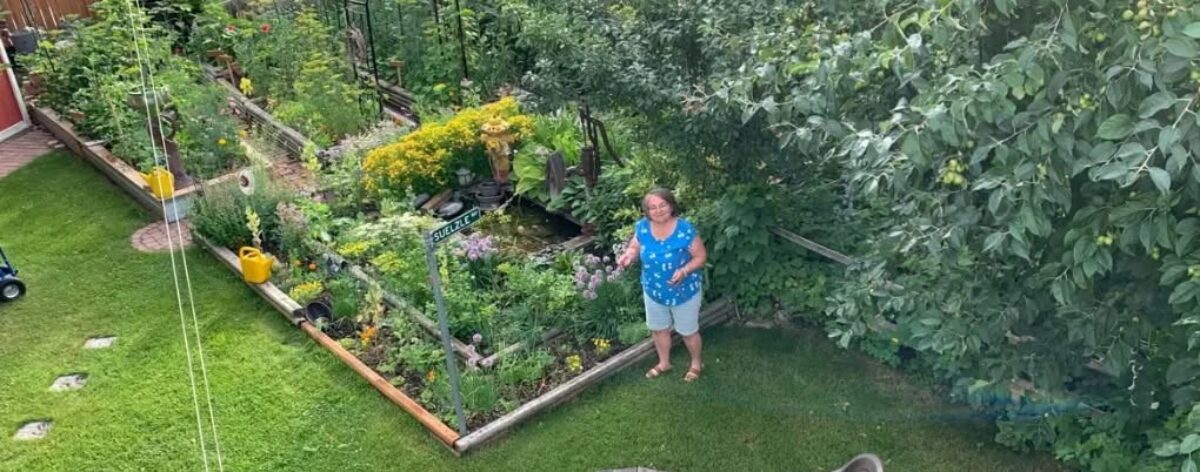
Plants compete for resources, sunlight, space and nutrients. Certain plants support each other while others simply don’t get along. As the community planner of your garden, you can create peaceful neighbourhoods with good companionships, or ruiness neighbourhoods of plants that are poor companions. Don’t be restrictive while you’re planning your garden community. Diversity is the key. Just like people of all colours and kinds can be great neighbours as long as we’re friendly, flowers, vegetables and herbs can happily rub shoulders with each other in the same neighbourhood of your garden. No longer do vegetables need to be grown in long isolated rows, where pests and disease can transfer easily from plant to plant. Intercropping with good companions can break up some of that.
This is especially important in an urban garden where space is the issue. Many vegetables are pretty enough to be planted in the flower garden and many flowers are helpful enough to be planted among vegetables providing vibrant splashes of colour among the varying shades of garden green. Tomatoes grown among roses. Tulips grown among parsley. Kale plants in the vegetable garden, flower garden, herb garden and tomato patch. Having a veritable Heritage Days Festival in your garden all summer long is good in every single way, for everybody.

my first experience with the concept of companion gardening
In 1982 I had a great idea to experiment with – for potatoes. Dan hasn’t always been big about all my ideas, but he usually goes along with them, which he did that year – much against his inclinations. We collected several used tires. I laid four of them along the south west side of our garage, and planted one potato plant in each. As the potato plant grew, I covered it with soil and added a second tire on top, eventually filling it with soil. Throughout the summer as the potato plants continued to grow above the tire, I continued to add another tire which I then filled with more soil. I am thinking we stacked them each five tires high. The idea was, that each plant would fill up the whole space, all five tires high – with potatoes. I had read of some gardeners who received up to a hundred pounds of potatoes from a single plant, and I was very excited about the prospects. At the same time as this experiment was being conducted, I planted the entire rest of our garden in tomatoes! One hundred tomato plants. Nothing else. The potatoes were surrounded by tomatoes on all sides but the backside which was against the wooden garage wall. I didn’t know much about tomatoes in those days, and I didn’t stake them let alone prune them. They pretty much took care of themselves and just grew. I had intentions of making tomato everything that year. Tomato salsa, tomato sauce, tomato ketchup, and of course canning lots of tomatoes . . . you name it, I planned to do it.
We moved from that house at the end of August, but Dan went back sometime in the following weeks without me to harvest everything. He brought back boxes and boxes of tomatoes, in varying stages of ripeness, but not.a.single.potato. Not a one! He removed all twenty tires, and not a single potato! We were both shocked, and disappointed. He was disgusted. I was perplexed. He swore off doing anything similar in the future, I remained perplexed. There had to be a reason because the theory was sound, and others who had gone before me testified that it had worked for them. There was something amiss; I just couldn’t put my finger on it. I figured I would try it again another year, but first I needed to figure out what happened.

A few years later, I came across an article that said tomato plants inhibit root growth of potatoes. I was shocked. Who knew? I thought of my poor potato plants surrounded by their nemesis, and it opened my eyes to the whole idea of companion gardening. It made sense that one simply shouldn’t plant everything wherever one wanted, and then expect magical results. Shortly afterward, I came across a book sold by Harrowsmith Magazine called CARROTS LOVE TOMATOES: Secrets of Companion Planting for Successful Gardening by Louise Riotte. I bought it and eagerly turned to read about tomatoes and potatoes. In it, author Louise Riotte says “Potatoes do not do well near pumpkin, tomato, raspberry, squash and cucumbers. The presence of these plants apparently lowers the potato’s resistance to blight.” In another chapter she says “Don’t plant [tomatoes] near potatoes, since tomatoes render them more susceptible to potato blight.” hmmmmmm I can’t say that I noticed blight on our potatoes, I am not sure I would have known what it was anyway. But I did notice NO potatoes. That was pretty hard to miss. I have searched and searched for confirming information about tomatoes inhibiting root growth of potatoes and have never found it again. I can’t say whether its true or not, but a few things I do know –
1) there are many factors that could have weighed in on the potato misfortune that year,
2) there could very well have been a bad arrangement with the proximity of those poor potato plants growing amongst so many hooligan tomatoes,
3) it was worth trying again from a more informed perspective,
4) I now had a newly awakened interest in plant compatibility.
I wanted to plant potatoes in tires again and many times pitched the idea, but Dan flatly refused to have anything to do with it. His reasoning: “We tried it. It doesn’t work! Learn from our mistakes.” My reasoning: “it didn’t work that time, but there were many factors that could have contributed – like all those tomatoes. Its worth trying again.” But then he threw in that clincher “Old tires in the garden are ugly.” He had me there. He was right. Twenty used tires in an urban garden that was an extension of ones’ back yard – is pretty ugly. I gave up. But its haunted me ever since. It SHOULD have worked.
Another example is the black Walnut tree. I mention in my composting article that there is a toxin produced by the Black Walnut called juglone, which essentially eliminates all competition. Walnuts are not friends with vegetable gardens, and not only do you not want them nearby, you also don’t want to use any part of a walnut tree in compost intended for vegetable gardens.
Sometimes, good companionships make sense when you know the reasons behind their suitability. For others it is like memorizing the periodic table in chemistry. You won’t be able to memorize them all, so don’t even bother, but that doesn’t mean you shouldn’t employ the science of companion gardening. Albert Einstein is reported to have said “Never memorize something that you can look up.” Whether he actually said that or not is disputed and really – who cares? I follow the same philosophy though. In this day and age there are many sources to find reliable companion tables. Find one or two. Refer to them while planning your garden. Follow their advice – you have to start somewhere. Learn for yourself and from the experience of others. Make notes. Go forward. Below, I have a list of companions I have found to be beneficial. It is not an exhaustive list. I only have experience with plants I grow. You might want to add some you have already found to be beneficial.
Terms to be aware of when studying companion gardening
Crop Protection: A protective plant can offer protection from weather for more tender plants. Perhaps a tall sturdy plant can shield another plant from wind, or perhaps a bit of shade from scorching sun.
Trap Cropping: An organic pest management system. Some plants help repel certain pests, while others can be used to lure pests away from more vulnerable plants.
Attracting Pollinators: Some plants are more attractive to bees, butterflies and other pollinating insects, so planting them in proximity to plants which are less attractive, but who nevertheless still need pollination, is very helpful.
Positive Hosting: Some plants attract predatory insects which can help manage harmful insects.
Neighbours good and bad, in alphabetical order
*Asparagus – Since asparagus plants are perennial, they must stay in one spot every year. That means you must bring other beneficial plants to them. Which is perfect, because asparagus is done by the time other plants start to flourish, so they’re good at sharing the same space. Herbs to plant in your asparagus patch – basil, cilantro, dill, marigold, nasturtiums, oregano, parsley, sage and thyme. Parsley is supposed to be especially good with asparagus, adding vigour to both. Asparagus repels nematodes that can attack tomatoes, so plant a few tomatoes in your asparagus patch. Also, tomatoes repel asparagus beetles. Good neighbours.
In my garden, I have a small patch of asparagus. When it is done, I plant three or four tomatoes in it. I don’t usually plant basil there although its supposed to be good for both, because its too far away for me to pay much attention to, and I prefer to keep a closer eye on my basil, babying it to make sure it gets all it wants. Basil is kind of a ‘princess’ plant.

*Herb Basil – “Basil helps tomatoes with both insects and disease, also improving growth and flavour.” said author Louise Riotte. This is easy for me to remember because they go so well together on the plate. I usually serve them together, especially in the summer when they’re both fresh from the garden.
I have a permanent tomato patch, where I stake up the tomatoes to a permanent trellis. This keeps the tomato off the ground, freeing up space to plant basil, chives, nasturtiums and a few other plants in front of the row. Basil repels tomato horn worm, and is also supposed to repel flies and mosquitoes but I’ve never put it to the test.
*Beans – bush or pole. Bush beans planted among potatoes protect them from the Colorado potato beetle. In return, potatoes are supposed to protect against the bean beetle. All beans fix nitrogen in the soil. Plant them with brassicas (cabbage family like kale), carrots, swiss chard, cucumbers, peas, potatoes, radishes and strawberries.
All beans dislike beets, and ALL plants in the onion family like green onions, leeks, chives and garlic, but especially onions, which impede the growth of bean plants. Beans and onions are like the Hatfields and the McCoys so keep them apart if you don’t want grief between the two of them.
*Bush beans are supposed to do well with moderate amounts of celery. I have never grown celery but I plan to this year. Its recommended to plant one celery plant to every six or seven bean plants. Bush beans also do well with cucumbers.
*Pole beans do well with corn, using it as a ‘pole’. Sadly, they do NOT like sunflowers. I say sadly, because I grow a lot of sunflowers and they seem to be the perfect pole to climb up on. Oh well. Beans derive mutual benefit with radishes.
*Beets – Beets grow well near onions, all members of the cabbage family, garlic, leeks, lettuce and mint. In fact, its even advisable to use mint leaves as a mulch for beets.
*Herb Borage – This herb is an excellent all around good neighbour. Borage is great planted near tomatoes as it deters the tomato hornworm, and good near brassicas as it repels cabbage moth caterpillars. It is also particularly good planted near strawberries, but maybe a few along the side of the patch is sufficient as they can get kinda tall, and will take too much room in a strawberry patch unless you live in the country and have a big garden. Borage is very attractive to pollinators, so plant it around squash and cucumbers for improved pollination. It’s also excellent for the soil and compost, as it is rich in organic potassium, calcium and other natural minerals. For those who live in rural areas, borage is deer-proof. The leaves are so prickly, they’re almost people proof too.
I have heard recently, that borage juice is delicious, and I’m sure it is, as it has a delicate cucumber flavour. I have tried to eat it in several ways, and the flavour is quite delicious, but its hard to get past the prickly texture. I do however put it in my green smoothies – problem solved. That is an excellent way to benefit from it.
*Brassicas – (broccoli, Brussels sprouts, cabbage, cauliflower, collards, kale, kohlrabi, turnip) I’ll be honest here, with the exception of KALE and HORSERADISH, I choose not to grow any of this family. After years of trying every method I heard of that was supposed to eliminate the ugly fat worm/caterpillar things that plague these vegetables, I have never been successful, and worse – I don’t even personally know anyone who has been successful. I finally deduced that the only thing way to prevent those uglies is to use chemicals, and since I choose not to use chemicals in my garden, I’ve decided not to grow them. I do however, still like to eat them, so I will buy them from where I know they grow in non-organic gardens, and I will try not to think about the details.
Apparently, they’re supposed to benefit from aromatic herbs such as chamomile, dill, mint, rosemary and sage, so if you’re gonna give them a try, you might want to keep that in mind. And they shouldn’t be planted near nightshade family vegetables like peppers, tomatoes and potatoes so keep that in mind too. Whatever success you have with brassicas, I’d love to hear about, as I would love to try them again with some degree of hope for a better outcome.
*Herb/flower Calendula (pot marigold) – Repels a number of unwanted soil nematodes and asparagus beetles, so plant among tomatoes and asparagus. Calendula flowers provide nectar over a long range of time, so it is a perfect attraction for pollinators. It is possible they may attract slugs, so they might be a good trap plant to pull slugs away from leafy green vegetables. I’m thinking I might try growing a few among my lettuce this year to see how that works.

*Carrots – Carrots should be planted near onions because onions will repel the carrot fly, as well as aphids. Planting side by side, short row after short row is a good thing. I don’t plant long rows of anything. Also, consider planting beans, other members of the onion family, peas, peppers, pole beans, radish, rosemary, sage, lettuce and tomatoes among them. Carrots grow particularly well with lettuce and tomatoes. Carrots release something into the soil that is good for peas, so a good thing to consider as you rotate your vegetables the following year.
CARROTS LOVE TOMATOES!
Tomatoes are known to produce solanine, which is a natural insecticide that targets pests affecting carrot plants. Carrots aerate the soil around the roots of the tomato plants, allowing more air and water to reach the roots.
Carrot enemies are Coriander, Dill and Fennel. They are in the same family, and can cross pollinate with negative results for all involved – everyone knows cousins shouldn’t marry cousins. Coriander, Dill and Fennel also produce compounds that can harm carrot plants, dill in particular, is known to stunt the growth of carrots.
*Celery – I have never grown celery before, but I am determined to grow some this year – encouraged by my friend Myrna Peters. She promises me that they are easy and delicious, and easy + delicious = a winning combination in my books. I read that celery does well with tomatoes, and also with bush beans, lettuce and onion, so I am thinking I’ll be planting a few plants in my tomato patch, my greens patch and a few among my cucumbers. This year will be my celery-experiment year.
*Chives – are reputed to improve the growth and flavour of carrots and tomatoes, so I have several small chive plants planted in my tomato patch. It is also supposed to help repel aphids, and a carrot rust fly, so maybe I’ll plant one among my carrots this year too.
You should avoid growing them too near peas and beans.
*Herb Comfrey – Comfrey is a perennial herb you rarely hear of people growing. It has a deep tap root, so it brings many trace minerals to the surface. It is high in calcium, potassium and phosphorus, rich in vitamins A and C, and the carbon- nitrogen ratio is similar to barnyard manure. Whether that has anything to do with it being referred to as ‘green manure’, I have no idea, but it is often chopped up mid season and used to mulch other plants as well as an excellent green addition to one’s compost. This is exactly how I use it. Although, like most herbs, it likes sun, it is very forgiving when it doesn’t get much. It is hardy and tough. I have mine growing in a very inhospitable spot – a north east corner that is almost completely in the shade. It grows anyway. I let it get three or four feet high then cut it down when Dan is mowing the lawn. He mows over to chop it all up, and I use the resulting mulch in my tomatoes.
It also inhibits grass growth so I’ve read about it being used along a garden border to keep the quack grass out. This sounds brilliant to me, so I intend to plant more comfrey along a perimeter of our fence, where encroaching grass can be a problem. Because it grows so tall, you mostly want to ensure it doesn’t cause shade for any other sun loving plants.
It has been used traditionally as a poultice for surface wounds, and there is modern evidence to support this, as it contains a chemical called allantoin, which is reported to promote the strengthening of organs. Many years ago I tried using a comfrey poultice on some pretty bad road rash after my teenaged daughter fell off her bike. I didn’t put a layer of cloth underneath it, applying it directly to the wound area. (I know right? One of my many regrets as a mom) It ended badly and my lesson was well learned, but my daughter was never too eager to let me try it again, so my experience is limited – sigh.
Although comfrey is an herb I don’t use in the kitchen, or even medicinally, it is still a welcome addition to my garden because of its value as green manure.
*Corn – Does well grown among or near potatoes, and is a good companion to pole beans (which use the stalk to climb), beets, cucumbers, dill, parsley, peas, and squash which grow along the ground while the corn grows straight up. Also a good companion to sunflowers. Amaranth makes a great mulch between rows by competing with weeds and conserving ground moisture.
*Cucumber – Planted near asparagus, beans, celery, corn, dill, kohlrabi, lettuce, onion, peas, radish, and tomatoes, cucumbers are a regular social butterfly in the garden. They like almost everybody, and most everybody likes them. In fact, both corn and sunflowers can act as a trellis. Marigolds and nasturtiums among cucumbers repel aphids and beetles, and nasturtiums are supposed to improve their vigour and flavour. Dill helps by attracting predatory insects like ladybugs. The only ones who don’t seem to get along with cucumbers are potatoes and aromatic herbs like sage. Sigh. There’s always gotta be someone right?

Some gardeners recommend planting two or three radish seeds into every cucumber mound to help repell the notorious cucumber beetle. Some say that has been successful, others have resorted to other ways to get rid of them. I decided that I have everything to gain and nothing to lose by planting a few radishes that I have no intention of harvesting. And I will also do what many recommend, which is to watch for the little devils and knock them off the plant onto a piece of cardboard to dispose of. I hate uglies.
Nematodes are actually an insect that looks like a tiny worm. I know, more uglies. And of course, they like cucumbers. Stupid ugly. In her book CARROTS LOVE TOMATOES, Louise Riotte recommends spraying the plant with sugar water (1/2 cup sugar dissolved in 2 cups water, then diluted with a gallon of water). Evidently, sugars kills the nematodes by drying them out. The sugar also attracts bees, insuring pollination, so it seems its worth doing even if you don’t have a nematode problem.

Another problem I’ve had with cucumbers is stupid cutworms. They’re actually larvae from different moths and look like a curled up caterpillars. Don’t get too caught up in identifying them by colour because they come in assorted colours. They curl up around the stem of a tender new plant and cut it right off. And you’re right – they’re ugly too. Figures. Prevention is the only solution, but there are a couple of things you can do to help prevent the damage.
1) cut a cardboard paper towel or toilet paper roll into 3 inch pieces and use as a collar around the brand new plant. Put about a third into the ground, leaving the other 2/3 above ground.
2) insert a sturdy toothpick or small twig against the plant stem. This will prevent the ugly cutworm from wrapping itself around the stem. If you’re digging in the soil and uncover an ugly that curls itself up, GET RID OF IT!
3) Also, diatomaceous earth. Sprinkling diatomaceous earth in the soil around your cucumbers is supposed to damage the bodies of those stupid uglies. And apparently it does not damage the bodies of earth worms, which have a completely different constitution. I haven’t tried it yet for cucumbers but it worth giving it a try if I ever get a cucumber pest!
*Weed Dandelion – Don’t be a weed bigot. Yes, I know we’re supposed to hate dandelions, and I don’t particularly want them in my lawn either. But consider the possibility that there might be some good in them. Because of their deep root system, dandelions can restore minerals to soil nearer the surface by bringing them upward and depositing them in usable form. They also attract earth worms. I am not suggesting we let them grow wherever they want, but a few dandelions here and there can be our friends if kept under control. Then there’s this thing about them being good for you. Adding young dandelion leaves to a garden salad of mixed greens is actually wonderful. I grow them in a separated area of my garden where they can be safe, and not annoy Dan. He hates them in his lawn. Read more about them in my chapters about garden herbs.
*Herb Dill – improves the health of brassicas (cabbage family of vegetables), but you already know that the only brassicas I plant are kale and horseradish. Horseradish doesn’t seem to need any help from anybody, so I don’t worry about it. But for the rest of the garden – Dill attracts honey bees and other pollinators, as well as several predatory insects like ladybugs, and parasitoid wasps. Again, open your mind, not all wasps are jerks. Parasitoid wasps are tiny, non-stinging wasps of many different species, and they all work in the job of preying on the more pesky insects in a garden.
Dill is a member of the UMBELLIFERAE family, and it will cross pollinate with some of these plants with poor tasting results. Others in this family that you should keep dill away from are carrots, and the herbs angelica, caraway and fennel – which most people don’t grow anyway. Once dill is mature, it can hinder the growth of nightshade plants like peppers and tomatoes, so best to keep them separated. Dill is a good companion for corn, cucumbers, lettuce and onions, but really, because dill is so attractive to predatory insects, it is very beneficial to most plants in the garden. I don’t plant rows or even patches of dill. I generally broadcast dill seed in the early spring, among the whole of the vegetable and herb gardens, paying attention to avoid tomatoes and potatoes.
*Herb Fennel – most plants dislike fennel. Awwww. Sad but true. It has an inhibiting effect on beans, peas, brassicas and tomatoes, and should be planted well OUT of your vegetable garden. Though fennel and dill are cousins, they cannot be around each other, as they will cross pollinate resulting in poor results on both sides. If you must have fennel, consider growing it in your flower beds or herb areas but not with dill and coriander.

*Herb Flax – is a hardy plant that bears stems of blue flowers midsummer. It is a wonderful, airy flowering annual, that grows as a semi-hardy perennial in our climate. My mother in law referred to them as windflowers, and the flax I have now are descendants from what she brought to my garden many years ago. They always remind me of her. I have never started any from seed, but its worth a try. If I was to do so, I would just scatter them directly into the area very early in the spring, since that is what they seem to do naturally. Choose a sunny site with well drained soil Once they’re established, you should be good for years. For a delicate looking flower, it is a surprisingly hardy plant, you will be pleasantly surprised.
Flax is a good companion to carrots and potatoes. It is recommended to grow in potato patches, and I think that sounds like a lovely picture to me.
*Herb Garlic – It is commonly known that planting garlic near roses will help to repel aphids. Because of its sulfur compounds, it may also help repel whiteflies, Japanese beetles, root maggots, carrot rust fly, and other pests. It is a good companion for beets, brassicas, celery, lettuce, potatoes, strawberries, and tomatoes. I have some garlic growing in my strawberry patch.
Avoid planting it near peas or beans of any kind.
When we were young parents, we lived in the small town of Calmar. One of our elderly neighbours had a strong and personal testimony of the health benefits of garlic. You won’t be surprised to hear that he smelled of it constantly lol. He grew it. He ate it raw. And he thought everyone else should do the same. He told us that his wife threatened if he ate anymore garlic, he’d have to sleep in the basement with the cats. He told her “Fine! But at least I’ll be healthy!” We adored him, but we didn’t adore his pesky feral cats. He was born on a farm between Leduc and Calmar before Alberta became a province in 1905, and he told us his birth certificate had his place of birth as the “Northwest Territories”. He also had an interesting story to tell of the great flu epidemic that swept through the area in 1918/19. He said people in towns around were getting sick but that his family planted garlic all around their home to keep the sickness away. He swore that it saved their lives, as not a single one of them got sick the entire time. Thus began a lifetime conversion to its healthful properties. I often reflected on his interpretation of how garlic protected his family. I have no doubt it did. I too, believe in the antibacterial, antiseptic, antiviral, antifungal, and other anti-bad-thing properties of garlic, but I suspect his family’s safety was more due to two other factors:
1) intentional isolation on the farm, and
2) EATING the garlic that was planted all around their house.
Garlic should be a bigger part of our eating, and I think it should be in every garden.
*Herb Garlic Chives – is one of the most used herbs in my garden. Every part of it is edible and delicious, from its small garlic tasting bulb to its flat (not hollow, like other chives) stems, to its pinkish, purple coloured blossoms, even its tiny black seeds. I use the bulb in place of garlic all summer long – though not as pungent. And the leaves as one would use green onions. As they are related to onions, they grow well with beets, carrots, tomatoes, strawberries, potatoes, rhubarb, kale, kohlrabi, and other brassicas, parsley, mustard greens and peppers, and are thought to enhance their flavour and vigour. That makes them extremely sociable and easy to plant into virtually any plant community. Yes, in your herb garden, but also plant a small plant in your strawberry patch, tomato patch, and near lots of other vegetables. Everybody in your garden wants to have garlic chives as their neighbour.
They seed the same way that chives do so if you’re not picking those beautiful blossoms to add to kitchen flower bouquets mid summer, they’ll go to seed, which is fine if you want lots of garlic chive plants. You can move the babies around your garden next year, and supply all your friends too.
*Herb Horseradish – It is true that horseradish has a very strong taste and there are not very many people who sit on the fence about whether they like it or not. It seems you either love it or you DON’T, with not much in between. I love it. Dan hates it. But we like each other, so we’re okay. Even if you don’t like the taste, you should still consider growing it. Horseradish produces a chemical called ISOTHIOCYANATE (don’t ask me to say that outloud) which is both antibacterial and antifungal. This quality is good for not just those who eat it, but also those plants growing near it.
Horseradish and potatoes are great friends, the potatoes are healthier and more disease resistant in the company of horseradish. Strawberries, asparagus and rhubarb are also great companions, but it seems that in companionships, horseradish is the giver with everybody else benefitting from its neighbourliness. The kind of neighbour everyone wants right? Well, sorta.
Horseradish may be easy to grow but, they say its not so easy to get rid of. Or so I hear. And because of that many urban gardeners are afraid to plant it. I have to admit, I don’t see it as a problem at all. The part you’re harvesting is the root, so if you’re digging up the root every fall, it seems to me that you shouldn’t have too much of a problem with it spreading. Ensuring you leave a portion of the root in the ground is how you’ll get some more next year. My first horseradish plants were three or four that I dug from my daughter in law’s garden midsummer. It was so slow to grow in its new home the following spring that I suspected the worst, and purchased another plant from my local greenhouse. By and by, my original newbies who were probably just establishing themselves beneath the ground, started growing up top, so I had both! I left them that whole season to establish themselves.
Last summer, I discovered that in the spring and early summer, while young and tender, the leaves are delicious and their slightly horseradishy flavour is the perfect addition to a summer garden salad or even a potato salad. This pleased me greatly, as now I don’t have to wait the entire season without enjoying it, and Dan doesn’t even mind it in that mild form. Probably in a larger rural garden where it could get away from you, you might end up with a lot of horseradish, but again, I can’t figure out why this should ever really be a problem since so many vegetables seem to do well in its company. I guess you’ll just have to govern your own horseradish situation.
The only vegetables you should not plant around horseradish are beans and leafy vegetables like lettuce and chard.

*Kale – I learned a good lesson from Kale one year, and that is to be more open minded and not so prejudiced. I have avoided kale for years, because its a brassica and therefore prone to those ugly fat caterpillars. On a whim that spring I picked up a package of them from a greenhouse thinking they were ornamental, and intending to plant them in a few pots and in one of my flower gardens. I was disappointed to see that nope, they were just the boring old vegetable kind and I was hesitant to plant any – owing to my extreme aversion to brassicas, but they were in my hand, in my own backyard and in the spirit of fairness I decided to give them a chance. I divided them into three groups of two each, planting them in different spots. My idea was that I didn’t want to devote too much space to them in case I had to get rid of them. If they became infested with worms, I would simply pull them up, dispose of them and with my prejudice renewed, swear off brassicas again.
I watched them closely – ready to jump at the first infraction, but what I saw was goodness. Strong, healthy, attractive looking plants. Two among my scarlet runners, two in my tomato patch, but not too close to them, and two in flower pots. In the spring I began snipping young leaves to add to garden salads and green smoothies. As time went on, I began adding kale to lots of dishes, ever watchful for uglies. It wasn’t until the very end of the season that they started to look a little worse off, but by that time I had had three months to enjoy them, and had plenty of other green leafy plants to take their place. I repented. And now I am a lover of kale, it having earned an honoured place in my garden. Where will I plant them in the future? I’ll do exactly what I did last year. I’ll have a few here, and here, and there. It may very well be, that dispersing them like that was the key to their success.
As they are a brassica, you should avoid planting them near other brassicas because they’re all subject to the same pests and diseases. If they’re together they’ll just all share their troubles. Kale is buddy-buddy with beets, celery, cucumbers, herbs, onions, spinach, chard, and potatoes. Apparently, it isn’t happy growing next to beans, strawberries, or too close to ‘tomatoes‘ – which is interesting since I had two plants in my tomato patch that first summer and all seemed to be fine. I think I may try another two in the same patch again, but just a little south in the interest of rotating. I will however, pay particular attention to ensuring that they’re not too cozy with their tomato neighbours.

Lettuce – Good companions for beets, brassicas, carrots, celery, cucumbers, dill, garlic, onions, radish, spinach, squash, and strawberries. Since they grow fairly quickly, you can plant lettuce in stages for the first few weeks of the season.
Last year we had more rain than usual. The good thing was that we never once had to water the garden with a sprinkler; hand watering specific areas was sufficient. The bad part was stupid slugs. Which love lettuce. I have since learned, that planting mint among one’s lettuce patch is supposed to keep away the slimy uglies that feed on lettuce leaves, and it makes complete sense to me, so I for sure will transplant a piece of my mint plant into my salad garden area this season, to cozy up with the lettuce. For the same slug reason, its a good idea to have a few lettuce plants interspersed throughout your garden, in addition to a small lettuce patch – a few in the carrots, a few among the cucumbers, a few in the strawberries, a few near the garlic chives, . . . . covering all your bases.
*Herb Marigold – (French Marigold and Mexican Marigold – quite frankly I do not know the difference. I have looked them both up and there are so many overlaps in how they look, that I don’t know how one would ever affirmatively distinguish them. If you know, I am receptive to new information. But for now, it’s “Marigolds” for me. ‘Marigolds‘ produce chemicals that repel certain nematodes and other nasties. They are probably the most commonly thought of companion plant. They attract pollinators, and are said to repel ants and even rabbits. I have no experience with the rabbit theory, and I hope to never put it to the test. I plant a couple dozen orange or yellow marigolds, interspersed throughout my herb garden, in my strawberry patch, and in my tomato patch. If for no other reason, I love to see their bright, cheery faces. They are reported to enhance the growth of basil, brassicas, cucumbers, kale, potatoes, squash and tomatoes. It is recommended that they not be planted near beans. Alright then. I guess Marigold can be allowed some personal dislikes too.
*Herb Mint – There are so many different kinds of mint, and I have learned that it is best if you want to keep them uniquely special, to keep them separated from each other. They seem to intermarry, which produces boringness down the road.
Because mint has such a reputation for being invasive, I mistook that to imply it would grow pretty much anywhere. Not true. While it can tolerate a little shade, it thrives in sun. In a very shady area, it will be less likely to come back the following spring. The more sun, the healthier it will be. It spreads through the roots, so if you really want to keep it segregated from the rest of your garden, plant in separated areas, or in pots buried in the ground. I have one kind of mint growing in a good spot in my herb garden, while I have another kind growing in my ‘protected weed garden’. I know its not really a weed, but I needed it to be in a safe place, where it wasn’t gonna get into everybody else’s business.
Mint attracts earthworms, hoverflies and predatory wasps, while the scent repels cabbage moths, aphids, and flea beetles. It is a good companion to tomatoes, so maybe a plant in your patch would be helpful. The counsel is to avoid planting too near parsley. I haven’t learned why yet, but for now I’ll trust the wisdom of ‘them‘ till I learn differently.

*Nasturtiums – herb/flower
Nasturtiums are my current FAVOURITE crop. I’ve always liked their vibrant colours and I knew they were edible, but only last year were my eyes fully opened to just how wonderful they really are. Though they’re often disguised as a flower, they’re the super hero of garden vegetables. Yes VEGETABLES. They’re more than a pretty face. More than a flower, more than an herb. In my garden they are those things, but they are also a vegetable. Every part of them is edible: flowers, leaves, stems and seeds. And all are delicious and vitamin rich. Plus they’re good community members, always helping out a neighbour. At the risk of making them sound too-good-to-be-true, I simply cannot say enough good about them.
Nasturtiums do best in full sun. They’ll tolerate less sun but might not bloom as profusely. That’s okay, their leaves are delicious and make the best pesto. (see the blog article Common Herbs and Spices in your House and Yard: part 4 – Mullein to Poppies) They have a mild peppery taste that is delightful, but apparently many insects don’t like it. Too bad for them. They repel a wide range of harmful insects like whiteflies, cucumber beetles, squash beetles and bean beetles, plus they improve vigour and flavour of brassicas, cucumbers, radishes and tomatoes in their neighbourhood. They’re also a good trap crop for aphids, and their bright colours attract a variety of pollinators. For all the above reasons, I grow nasturtiums in hanging pots (for their colours and to collect seeds), in the herb garden, in the vegetable garden, in the tomato patch and here and there throughout the flower gardens. I hope to never have a summer without them.
*Onions – Plant chamomile and summer savory near onions to improve their flavour. Onions also work well alongside beets, brassicas, carrots, dill, kohlrabi, leeks, lettuce, strawberries and tomatoes. Onions help to repel the carrot rust fly.
Don’t plant onions near asparagus, or peas of any kind.

*Orach – This beautiful self seeding annual is a close relative to lamb’s quarters and tastes very similar. It has shield shaped, wavy leaves that are sometimes red, sometimes green, grows three or four feet in height, and is sometimes called French spinach, mountain spinach, or red orach. I planted a single plant many years ago and have let it self seed ever since. I have never deliberately planted it into a single spot or row. I really don’t have room for that kind of planting in my garden. I let it come up where it wants to come up, and use the small leaves early in the season to add to salads and other dishes I want fresh ‘greens’ in, then when they start getting a little taller, I pull out the ones that are going to cause unwelcome shade. This works perfectly for me. I have enough plants scattered throughout the garden that I am always assured to have sufficient even if I have to pull out a dozen or two. When the plant is tall and mature it will go to seed – about mid August. The seed heads are similar to lamb’s quarters, amaranth, quinoa – big and ferny, quite pretty. The wind will spread them around for you. For the same reason, these could be labelled as ‘weeds’, but its a weed that is a welcome landed immigrant in my garden.
I haven’t found anything that orach particularly does or doesn’t like as far as companionship goes, so the only thing I would be concerned about is the HEIGHT. Because it will eventually get about 4 or 5 feet tall it will shade whatever is behind it. So if you’re going to plant it in a row, keep that in mind. If you’re going to let it self seed like I do, keep the shade thing in mind too.
*Oregano – Oregano is supposed to be good for repelling cabbage moths, but since I don’t grow brassicas anymore I have not put it to the test. It is also supposed to be good around asparagus, but I’ve never tested it there either. Oregano is a favourite herb of mine for a number of reasons. First of all, I use it a lot of in my cooking, so I’m motivated to grow it. Secondly, it’s very hardy and once it’s established, it comes back every spring. It is easy to grow and forgiving, and I always do better with friends who are forgiving. Its always handy to be in love with something that wants to please you in every way.

For the first few springs, it’s not certain to come back and occasionally it might not, so be prepared to rebuy a few times. Baby it by covering with leaves in the fall for the few first years. I have my oregano in three different spots; in the beginning that was mostly in case one of them didn’t come back in the spring – I didn’t want to have all my eggs in one basket. In my herb garden, oregano is an herb and I pick it frequently throughout the season, trying not to let it flower. But it does have a beautiful mauve coloured flower which I really like, so I also grow it as a ‘flower’ in my flower garden. There it is free to flower at will, and I snip the flower stalks to bring into the kitchen; I like to have fresh flowers on the table all summer long.
*Herb Parsley – Ideally, parsley is a biennial in Alberta’s climate, which means it will come back a second season and go to seed, but you can’t always count on it, so don’t. It most often won’t come back, so count on replanting every spring. One or two plants will probably give you all the fresh parsley you want with enough to dry for winter. It likes asparagus, carrots, chives, corn, onions, and tomatoes. Parsley mixed with carrots helps repel carrot flies by it aroma.
*Peas – Are known to be a nitrogen fixer in the soil, so its good to move them around from year to year to enrich different areas. Because of their nitrogen, don’t ever get rid of their vines. Either plough them into the ground at the end of the season, or put them into your compost; they are very valuable. They are good companions to beans, carrots, celery, corn, cucumber, parsley, peppers. potatoes, radish, spinach, strawberries and turnips.
The only thing peas seem to not be good for is onions. But that’s okay. Not everyone can be a nasturtium. Peas are susceptible to the stupid cutworms. Diatomaceous earth has been recommended by several people, so this year, I’ll mix some diatomaceous earth in with the soil I plant them into.
*Poppies – There are several different types of poppies, three of which I grow in my garden: Icelandic poppies – a lovely spring flower, California poppies, with their bigger, more showy flower heads, and Oriental (or Opium) Poppies. They all have similar looks to the flowers, but the plants and seed heads are quite unique. I grow the first two perennials, as flowers in my flower gardens but the Oriental poppy is special. They grow at will throughout my vegetable and herb gardens. Each oriental poppy flower lasts only a few days, but new flowers are generated all summer long, so that is more than enough compensation for me. They can come in white, red, orange, pink and mauve (called blue) colours, but the ones I grow are a steady RED, like the poppies we wear every November.

When the snow melts and the ground is warmed, the seeds germinate and start to grow. Seeds can lay dormant for years and then suddenly spring forth and surprise you. They are trouble free in the garden, but they do need a sunny place. If they’re allowed to grow in clusters, they will be small and cute, but useless. I pull them out of spots where its not convenient for me to allow them to grow, and then the ones I do allow to stay, I try to remove all but one or two healthy plants. Allowing them to grow up solitary in the sun, will encourage them to be big, strong and healthy, producing big beautiful flowers and big full round seed heads.
They are annuals meaning they die back each year, but they produce so many seeds that sometimes people think they’re perennials. Nope. Not in the true sense of the word, since they’re not coming back from their roots, but since if you don’t remove the seed heads, they WILL multiply by a hundred times, I suppose for all intents and purposes you could consider them perennial. Doesn’t really matter – just a definition of terms. They produce nice big seed heads, that if you let ripen will produce hundreds if not thousands (depending on the size) of tiny dark seeds. Yes, these are the same poppy seeds you use in cookies, muffins, cakes and breads. I collect the seeds every year to bring into the kitchen for baking, being careful to make sure I spread thousands of them in the garden first. I like the seed heads almost as much as I like the flowers, and always bring in handfuls at the end of the year for fall arrangements.
Flowers that grow well with poppies are irises, yarrow, asters, black eyed Susans, dahlias, hibiscus, phlox and goldenrod, but probably mostly because they all thrive in the same growing conditions. Because they can get quite tall, and shade plants behind them from midsummer on, I pull them from spots where shade will be a problem. Once they’ve flowered (the flowers only last a couple of days), sometimes I might choose to simply remove their lower leaves to help prevent shading of other plants. At that point the poppy doesn’t care anymore anyway.
*Potatoes – Potatoes do well planted near beans, corn and marigold. It is good to plant horseradish in the corners of the potato patch. Bush beans grown among potato plants are supposed to mutually benefit each other against their own beetle pests.
They do not do well near pumpkin and other squash, tomatoes, raspberries, cucumbers, orach and sunflowers. Apparently these plants lower its resistance to blight.
*Pumpkin – Pumpkins grow well with corn, mostly because they trail and corn grows straight up. Potatoes and pumpkins have an inhibiting effect on each other.

*Radish – Before last year, I have never been a big fan of radishes. I’m good with two or three a year. I’ve tried to like them more because my folks did, and I never really hated them, they simply never appealed to me. But for some reason I decided to plant some last spring. Just cause I like to plant new things once in a while I guess, and they are known to come earlier than most other things. I suppose I was in the mood to have something come up early. One spring day, while I was in the garden looking for assorted greens to add to a spring salad, I noticed the radishes could use a thinning. I tasted one and and added them to my salad. That seemingly innocuous act rewrote history for me. I learned that I LOVE young radish greens! They are sweet and tender, and slightly peppery. They are a great addition to an assorted greens mix in the salad bowl. And they also make a fantastic green pesto! I was enjoying them so much, I was even motivated to eat the actual radishes when they matured, but alas, they’re still not my fave. That’s okay, I’ll settle for their greens. When the leaves get old they’re tough and woody, so eat lots when they’re young. Don’t waste them. If they’re not going to shade anything, let a few go to seed. See below for more information on how to do that.
In the garden, because they come up rather quickly, its a good idea to include radish seed with your carrot seeds to mark the row, as carrots always take forever to germinate. Plant radishes near beans, beets, lettuce, mint, peas and spinach. Planting 3 or 4 radishes among your cucumbers and squash plants is supposed to help repel the striped cucumber beetle, and other insects that like squash. Allow them to grow old and bloom to get the best companion benefit. Avoid planting near potatoes.

When using as companions, let your radishes grow old and go to seed. The greens will be tough and bleh, the roots with be woody and bleh, but you’re in for another garden bonus. First, they’ll grow really tall, three or four feet or more! Then they’ll flower – such pretty delicate light pink flowers which attract pollinators (important to fertilize your seeds). After the flowers, come green seed pods which are actually not only edible, but they’re tender and quite delicious, slightly peppery like the root. If you have lots of seeding radishes, go ahead and pick some pods to eat. The seed pods will mature and begin to dry. When they’re completely dry, pick them, or go ahead and pull out the entire plant and hang to dry. Pick the seed pods, and open them up to shake the radish seed into a bowl. Ta dah! Radish seeds to sprout all winter long, or to plant again in the garden next spring.
*herb Sage – Grow a couple of sage plants in your carrot patch to help protect them from the carrot fly. Sage and rosemary are good friends and like to sit beside each other. Sage is not good for cucumbers though – not its fault. Cucumbers don’t like any aromatic herbs, sage being the one they dislike the most.
*Spinach does well planted with strawberries.
*Squash, winter – like Butternut, Spaghetti, Pumpkin etc, trail along the ground and can take up a lot of room. See below in the zucchini section for ideas on tying them up vertically. They are heavy feeders, and should be moved around in the garden from year to year. Amending their beds in the early spring with fresh compostable soil, and older farm manure will give them the best start.
*Strawberries – Usually we see strawberry plants all by themselves in their own segregated neighbourhood, but we underestimate their sociality. They respond very well to nearby plants like beans, borage, garlic, lettuce, onions, peas, spinach, and thyme. In my strawberry patch I grow a few lettuce plants here and there, and a couple chive plants. I lightly broadcast dill seed in it, and I allow poppies to spring up where they want, always thinning to one or two in a spot to encourage them to grow big and tall. My reasons for the dill and poppies is that they grow UP while the strawberries stay pretty low. By the time my strawberries are ready to fruit again mid August, the lettuce is usually gone and the the poppies are beginning to dry so that I can remove the leaves if they’re causing too much shade. I am only interested in the dill when it is green and ferny. By the time it begins to ripen it attracts too many aphids so I usually just pull it out. This allows more sun to reach the strawberries again. I don’t grow borage IN my strawberries just because my patch space isn’t big enough to allow a borage plant to grow in it (they can get pretty big), but if I had a bigger patch I sure would. On the north end of my strawberry patch (their closest neighbours) is my salad garden – lettuce, spinach, radish, garlic, green onions. Good neighbouring communities.

*Sunflowers – Sunflowers attract pollinators to other crops, particularly squash and pumpkins. Planting near or among corn is said to increase yields. Sunflowers also attract ladybugs which prey on aphids. The inherent problem of course is that they not only NEED sun, they end up being HUGE and create a lot of shade, so they must be planted in spots where that is not going to be a problem. I haven’t planted sunflowers deliberately for years. They’ve been there for so many years, that they just volunteer, and of course, the birds plant some for me. Generally, I let them come up wherever they want and then pull the ones that aren’t gonna work. In areas of lots of hot sun, some plant sunflowers along the west side of the garden to provide filtered shade to cucumbers, but in my garden, I don’t have a too-much-sun problem, I am always looking for more of it.
I have read conflicting claims about sunflowers being good for / bad for pole beans, cucumbers etc. They are a heavy feeder, so where you do grow them – or in my case, “allow them to grow”, make sure you enrich the soil with compost every spring. Sunflowers aren’t nice to potatoes, which are more susceptible to blight when they’re in close proximity.

*Swiss Chard – Good companions for chard are bush beans, brassicas like kale, celery and all kinds of alliums such as garlic, onions, leeks, and chives which can repel many undesirable insects. I grow a lot of chard, its one of my favourite garden vegetables and I wait all year long to use it as a fresh green for spanakopita. I generally plant them in rows, but some varieties are so colourful they look great in a flower garden among annual flowers like nasturtiums and marigolds – which happen to be good companions to them. Who would have thought such a ‘vegetable’ looking vegetable could be such good friends with so many flowers? A good example of integration between the neighbourhoods.
*flower Tansy – is another good example of integration between the neighbourhoods. It is a hardy perennial flower that is a good companion to raspberries, grapes and fruit trees. It deters flying insects cucumber beetles and squash bugs, as well as ants, so having a plant in your squash bed would not only look nice, but would be a helpful neighbour.
*Tomatoes – are my all time favourite garden vegetable. I wait eight months of the year to have a fresh garden tomato, and I rarely if ever buy them at the grocery store. The few times I cave and buy a few, I am always disappointed and promise to never do it again. They are fairly easy to grow. All you need to do is make sure they have sun and water. There are other details that will yield better results of course, but those come with experience and time.

Tomatoes are a good companion to asparagus and will protect them again the asparagus beetle. Usually tomatoes are being planted about the time asparagus is being harvested. But as asparagus needs to finish out its season, even after giving all its got to give that year, a neighbourly tomato can help it out. I usually have two or three tomato plants planted beside or behind the asparagus area, and they’ve always been good to each other.
Tomatoes are compatible with and benefit from – basil, beans, borage, carrots, celery, chives, cucumbers, garlic, lettuce, onion, parsley, peppers, marigold, mint and nasturtiums. Planting a single garlic bulb between your plants protects them from red spider mites.
Unlike most other vegetables, tomatoes don’t mind growing in the same place year after year. If you develop a disease problem, you’ll have to move them of course, but that isn’t likely. They LOVE Sun, and are heavy feeders so give them ample quantities of compost or old manure in the spring. Mulch and water to maintain good soil moisture. Always water tomatoes from the bottom, making sure water doesn’t splash up onto the leaves which can cause disease. I prune the bottom foot of my tomatoes once they have grown at least two feet high. Tying them up to a trellis or cage keeps them off the ground, facilitates good airflow, makes it easier to water properly and to plant companion plants nearby. Whenever you can get your garden growing vertically, you’ll create more room for other things.
TOMATOES AND POTATOES DO NOT LIKE EACH OTHER. Potatoes and tomatoes are affected by the same blight, and may spread it to each other, so keep them apart. Other plants to keep away from tomatoes are brassicas, beets, peas, fennel, dill, and rosemary. Corn and tomatoes both suffer from the corn earworm, so again, best to keep them separated.
*Zucchini – is a summer squash (because of its relatively thin skin), and is a heavy feeder, like winter squash (spaghetti, butternut and pumpkin). They do best in warm, moisture-retentive, fertile areas, recently amended by organic compost and aged manure. They also need plenty of direct sun. Unlike winter squash which trails, zucchini becomes almost bushy. Both take up a LOT of space, creating a literal carpet of leaves in your bed. This is problematic in urban gardens for a few reasons: first – the space they take is difficult to justify, second – the canopy of leaves creates a visual shield to the blossoms which so desperately need pollination, and third – the squash can become victims of pests who like to nibble on them lying on the ground. The answer is vertical. Going UP. Tying them to a trellis or bamboo poles, or stakes pounded into the ground. I tried tying zucchini up last summer, but didn’t have the confidence that I was doing the right thing. This year I am going into the planting season with more confidence to do exactly that. Because of how zucchini grows, its not a natural climber so its gonna need a lot of encouragement in the form of tying and trimming of lower leaves.
Tying your zucchini up to some vertical support helps reduce disease and mildew which thrive in moist surroundings on the ground. The free flowing air takes care of both problems. It makes the blossoms more visible to pollinators, and it makes picking the zucchini easier. It also helps nearby companion plants to get a little closer. Borage is commonly used to attract pollinators, and its possible to plant one nearby when the zucchini is tied to a vertical support. Borage also deters pests from your zucchini. Do not grow winter and summer squash near each other as they can cross pollinate with negative affects.
~
In addition to companion planting, practicing regular, routine crop rotation, helps balances the right soil conditions for most plants, and when maintained, many soil borne diseases can be avoided altogether.
Have fun with your experiences. Keep a journal entry about significant finds, no matter how innocuous they may seem at first. I’d love to hear some of your discoveries.
Warmly,
Cindy Suelzle


