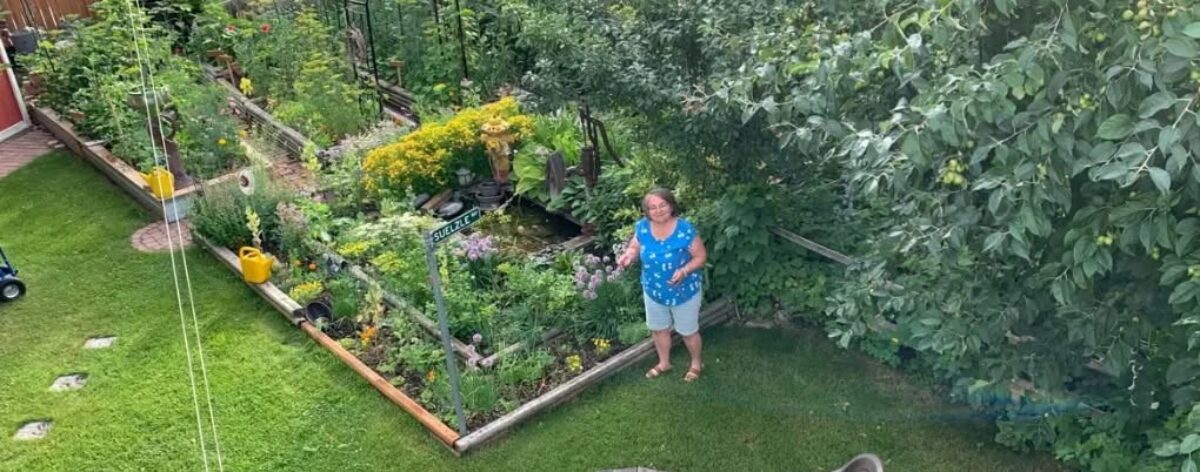
These vinegars are “INFUSED Vinegars” – meaning I started with an existing vinegar and infused the flavours. So easy you can make your own and be guaranteed an amazing result. The results have been spectacular for me from beginning to end, and I am never going to be the same again. Infused Garden Vinegars and me are best-friends-forever now.
2020 was my experiment year for vinegars. I had tried a few vinegars from scratch in the past with varying degrees of success but I think I overthought it, or I simply didn’t know how to use them. Whatever it was, I got discouraged and backed away until that year when it seemed so easy to try again (and I had all the time in the world), I couldn’t resist. SO glad l did. These vinegars below are actually “INFUSED Vinegars”– meaning I started with an existing white vinegar and infused the flavours. So easy, you can make your own and be guaranteed an amazing result. The results have been spectacular and I am never going to be the same again. Infused Garden Vinegars and I are best-friends-forever now.
Sun Vinegars
A new fave way for me to use my fresh garden herbs (and especially to carry their wonderfulness into winter) is to make ‘sun vinegar’. So called because you set them out in the sun to ‘steep’. Use a quart jar, a 2 quart jar, or a gallon jar – depends how much you want to make.
recipe: Chive Blossom Vinegar
Chive blossoms in white vinegar, less than 24 hours and already that gorgeous pink colour!
When the chive blossoms or garlic chive blossoms are in full bloom, pick them, shake off to ensure they’re free of insects or dust. Swish them in clean water and shake off excess moisture. Fill a clean glass jar without stuffing them in. Top up with white vinegar, making sure all are covered. Secure lid and place in a safe, sturdy spot where the sun with shine on it for about 2 weeks. You’ll watch the vinegar change colour into a beautiful pink/rose/mauve shade as the blossoms fade. When the blossoms have lost their colour your vinegar is ready. Strain through a cheese cloth into clean jar to store – discarding old blossoms. Store in pantry out of direct light to preserve it lovely colour. Plan to use within the year, just in time to make some more.
Basil vinegar just before straining. Colour transferred from leaves to vinegar.
Be adventurous. Try other garden herbs alone, or in combination to make other flavours. Use the same basic recipe as for the Chive Blossom Vinegar. They’ll all taste different depending on the herb. Keep everything clean and sterile, strain vinegar well to ensure a nice clear product.
using herb vinegars:
Herb vinegars can be used in a variety of salad dressings, sauces or marinades to add a fresh, delicious ‘herby’ flavour to a perfect garden salad, a bowl of steamed garden greens or fresh sliced cucumbers. Be brave, try different things.
Our very first venture was to use the Basil vinegar ALONE as a marinade for chicken breasts. Wow! Best grilled chicken I ever remember eating. The tangy basil flavour was in every single moist bite. Definitely remaking that one. We also used an herb vinegar to marinade thin strips of chicken and pork to grill on skewers. The meat absorbed too much of the vinegar and took on an almost ‘pickled’ taste, a disappointment. Won’t be revisiting that.
using fruit vinegars:
straining raspberries through jelly strainer
My first fruit vinegar was raspberry. I had a lot in my garden and was picking every other day, so it was a natural place to begin. And raspberries are SO good for you. They are a high antioxidant food and contain several phyto-nutrients that give raspberries their beautiful colour. Making a fruit vinegar is easy and extends the wonderfulness of summer into the non-growing seasons. You can make a refreshingly delicious raspberry vinegarette dressing for your salad in the summer, or long after fresh raspberries are only a fond memory. Whenever possible I try not to heat foods too high (or too long) in an effort to retain as much of the nutritional value as possible, other than the necessary hot water bath if I want to seal the jars. For this reason I opted for a ‘fresh’ uncooked raspberry vinegar. It was shockingly delicious. And because its so easy, there is no reason you cannot make some raspberry vinegar in the middle of winter using frozen berries. You froze your excess from last summer right? *See instructions to make the vinegar below. In the meantime, how to use it . . . .
Raspberry vinegar (scroll down to see recipe) can be used in a variety of salad dressings to add a fresh, delicious flavour, or add a couple of tablespoons to a glass of cold ice water. Oh my. Don’t judge until you try it. For a salad dressing, this vinegar is delicious enough to simply mix with a beautiful oil and shake, but if you’d like something a little more ‘reciped‘, try this one:
Double Raspberry Vinaigrette recipe: (to make in blender or food processor) 1 small onion coarsely chopped (or minced if you’re not using blender) 1/2 cup frozen raspberries, freeze dried raspberries or raspberry jam 2 T honey 1 t dry mustard 1/2 t salt 1/4 t pepper 1/2 cup raspberry vinegar 1 cup of your choice of oil (or combination of two: vegetable oil, olive oil, grapeseed, avocado etc)
add all ingredients except oil into blender. Puree till well combined, then turn the speed down and add oil in a steady stream. If you would like the texture of the whole or mashed raspberries (instead of pureed into a liquid), hold the jam out till after the blender part. Stir in afterward. If the vinegarette is too thick, thin it by whisking in a little water or apple juice.
Raspberry Poppy Seed Vinaigrette recipe: BEST EVER and less than 5 minutes to make. For more than a beautiful green salad. Use it as a sauce for grilled chicken breasts. adapted from a recipe I developed almost 7 years ago – see original post here 1/2 cup raspberry vinegar 1-2 cloves of garlic minced (depending on size and taste) 1/4 minced fresh onion or 2 T THRIVE Freeze Dried Onion cause its so simple 1 tsp coarse salt dash of black pepper * 1/2 cup fresh or frozen raspberries or THRIVE Freeze Dried Raspberries(optional but very nice texture) 2/3 cup Canola oil – or your favourite vegetable oil 2 tsp poppy seeds
Directions: Combine everything except the oil and poppy seeds into the small jar of a small blender. Blend till completely smooth. Or whisk well in a jar with a hand whisk. Not necessary to mince garlic or onion ahead of time if you are using the blender. Slowly drizzle in oil continuing to whisk. Whisk in poppy seeds last. Thats It! Super Simple. Super Quick. Super Delicious. Can be made earlier. Letting it sit in the fridge for an hour or more will give the flavours time to blend better.
Raspberry Vinegar – or Sour Cherry, or Saskatoon, or Concord (Valiant) Grape, or Highbush Cranberry or Black or Red Current Vinegar. The sky is the limit.
Finished Raspberry, Cherry, Basil and Garlic Chive Vinegars. Note the gorgeous deep colour of the fruit vinegars and the delicate rose’ of the herb vinegars.
basic recipe: using a 2 quart glass jar 6 cups clean fresh raspberries 2 cup sugar (consider substituting honey or using half sugar / half honey) 6 cups white vinegar Place raspberries into clean jar. Dissolve sugar or honey in vinegar over low to medium heat. When hot and sugar completely dissolved, pour the sweetened vinegar over top the raspberries, making sure they all get covered. Cover with a lid, and let it sit on the counter out of the sun for a minimum of two days or up to a week. Will turn a gorgeous deep red colour. Strain through jelly strainer or several layers of cheese cloth (to keep the vinegar clear) into a clean storage glass jar. Cover and store at room temperature. * recommended to use within 6 months * I love the unique flavour of honey, but don’t want the raspberry flavour overpowered by it so I use a combination of sugar and honey together.
They’ll all taste different depending on the fruit. Be brave and try new things. Keep everything clean and sterile, strain vinegar very well to ensure a nice clear product.
SO. The next question of course, is what to do with the fruit you strain out of the vinegar. . . .
While the herbs were pretty spent and I had no problem throwing them into the compost, there was no way I was gonna throw the fruit out. I first intended to combine it with some fresh and puree it for a fruit leather. I still might do that one day, but after tasting the strained fruit – Oh! My! Goodness! – it was so wonderful, that it deserved something better. It tasted like chutney to me. So that is what it became.
By definition, a chutney is a relish-type-of-sauce made up of sweet and sour flavours, usually with fruit as the base and seasoned with herbs and spices. A condiment. The origin is from India but the variation of flavours are as wide as the world, lending itself to anything you’ve got on hand. So with the ‘sweet’ of the sweetened cherries and raspberries, and the ‘sour’ of the vinegar – it was a match from the beginning. What do you do with a chutney? Topping for meat (think about cranberry sauce, its a sort of chutney), or any dish that is more mild flavoured (think about plum sauce on egg rolls, another type of chutney). Use it with cream cheese on crackers. Use it with roast beef, pork chops, any type of chicken, with a grilled cheese sandwich, with a cheese plate, with samosas, Asian dumplings, egg rolls . . . . etc.
recipe for CHUTNEY from strained vinegar fruit:
lame title I know, but what else should I call it? The thing to remember is that you can make this from whatever fruit you have leftover from whatever fruit vinegar you make. I added flavours that I thought would go well with cherries and raspberries, but there were lots of other flavour possibilities for another time. See below. Again, be adventurous and creative.
* 3 cups cherries and raspberries combined, strained from making fruit vinegar see below (with the skin, cherries have more texture so I chopped them finely) 1 onion chopped finely 4 apples (the tarter the better) peeled and chopped 1/2 cup apple cider vinegar 1/2 cup brown sugar * 2 cups chopped cranberries (I always have freeze dried on hand, but you can use frozen or dried craisins if you have them. If you don’t, then use raisins.) see below 1/2 t salt 1/4 t pepper 2 T grated fresh ginger (I suppose if you don’t have it, try 1 teaspoon ground ginger) *** other possibilities see below
Into the pot with everything on medium heat, stirring to mix well and heating to combine flavours. I prefer not to over-cook anything, and unless there is a good reason for more cooking, I opt for less heat where I can, so I never boil chutney for the length of time most recipes tell you to. That makes it mushy, and mushy is yucky to me. I just had the pot on the burner and added things as I measured them, stirring often. It eventually came to a natural simmer and I let it simmer for about five minutes.
From this amount, I got three pints. Two pints I processed in a hot water bath (15 minutes) for winter use, and the other one I put in the fridge for immediate use. Obviously the ones processed are going to be a softer texture than the pint in the fridge.
* 3 cups is simply what I happened to have, if I had more or less I might have adjusted the other ingredient amounts. I am sure it would change every time I made vinegar. ** Cranberries are very important in this recipe because of their colour. Raspberries will fade in the heat to a dark pinky colour which I don’t like (so I always add cranberries to raspberry jam). They also seem to have a natural pectin that thickens on its own so I never have to add pectin to raspberry or rhubarb jam if using cranberries. For this chutney, I noticed right away that the raspberries were fading so I added cranberries. My first choice would always be freeze dried because of their superior nutrition and bright colour, and of course the ease of storage. Always ‘ready’. Second choice would be frozen cranberries that I buy lots of at Thanksgiving to keep on hand. Might want to chop them for this chutney. Third choice is dried cranberries. These are usually very sugared so I don’t buy them as a general rule, but they still have that wonderful cranberry taste and of course the colour which is very important when canning.
*** other ingredients to consider adding are numerous. I didn’t want to lose the distinctness of any of the flavours by adding too many, but to consider for another time: Garlic minced – a natural for anything savory Cloves and or cinnamon – preferably whole and in a cheesecloth bag for easy removal later Red pepper flakes for some heat – I almost added it this time but wanted to know what it would be like without first. The ginger has some natural heat too, so that worked Dry mustard – always a great flavour enhancer and a natural emulsifier if using more liquids Lemon or lime – didn’t need it this time with the apple cider vinegar and the strong cherry and raspberry tastes, but I love a citrus zing when suitable. Again, be adventurous with what you have on hand, and flavours you like.
Have fun making your vinegars and in coming up with your own flavours depending on what you have on hand. Necessity is the mother-of-invention right? I’d love to hear your stories with your own flavours. Please leave me a comment.
in this chapter: Mullein, Mint, Nasturtium, Oregano, Parsley, Plantain, Poppies, Radish leaves. Some inside, some outside. Chapter continues to be a work in progress. I’d love to read your comments below.
MULLEIN
Mullein is a big, tall, unique looking plant with long fuzzy leaves, and in the flowering years it can reach six or seven feet tall. Introduced to North America with European settlers, it is considered a weed, that grows wild in fields and ditches in many parts of BC and Alberta. Some of the leaves can grow about two feet long.
Pronounced ‘mull-en’. People often want to give it more pizzaz when they say the word, but its just boring ol ‘mull en’.
in the garden
Mullein is a hardy biennial in the western states and provinces from zone 3 to 9. It loves sun and dry, so its the perfect plant for the backdrop of a country flower garden, or along sunny fence lines. It is drought resistant so once it gets established, it will pretty much take care of itself. It requires winter dormancy before it can flower. Yes its a weed, but its a great ‘weed’ so don’t be a bigot; bees love the yellow blossoms and birds eat the seeds. If you don’t want the seeds to disperse freely, then remove the flower stalk before it seeds. Personally, I don’t mind plants that self seed if they’re easy to pull up where I don’t want them. Mullein is easy to pull up, so I mostly let the wind or birds plant them where they want and I pull them up where its not gonna work for me. In fact, that’s how it came to me. As a gift from either the wind or some of my bird friends. I didn’t know what it was for a couple of years. Since its a biennial, it was different the second year, and confused me when it didn’t come back the third year, but a few babies took its place. My philosophy is to never kill something I don’t understand, and since it was new (and very interesting), I decided to let it prove itself to me. I figured it out finally and we understand each other now, and have a good relationship. It grows tall, so it needs room to be what it wants to be, but its so fun for the kids to touch the soft fuzzy leaves that I want it in a place where they can enjoy it.
Fun fact: because the leaves are so big (up to two feet) and soft and fuzzy, the aboriginal people and early colonists lined their shoes with the leaves to protect from the cold.
As a biennial, the first year is the leaf year, getting only about three feet tall; the stalks and blossoms grow in the second year. Its small, yellow flowers are densely grouped on a tall stem, which grows from a large rosette of leaves. It won’t come back the year after it seeds, so if you can manage it, its good to have a few mullein plants in various stages of their development to ideally, you always have the tall yellow flowered stalks.
In the spring, when a cluster of a few plants appear here and there, I keep two or three at most in any given area and remove the others to replant elsewhere or two give away. With a little care, they’re easy to transplant.
Mullein is reputed to have expectorant and cough suppressant properties that make it useful for relief of the symptoms of sore throat and coughs. It has been used traditionally for respiratory conditions such as cough, asthma, pneumonia, and colds, but there is limited scientific research to support the claims. Currently the jury is still out on the medicinal uses of Mullein so for now, I use it only as an ornamental herb in my garden, and will continue to stay on top of continued research.
MINT
Mint is a fast-growing, aromatic herb that is more of a common part of our life than we might realize. Who is not familiar with the flavours of peppermint and spearmint, or the scent of mint in general? It is a hearty perennial with fragrant, toothed leaves and tiny purple, pink, or white flowers. One of the most popular aromatic oils and flavour extracts, there are over thirty different mint varieties. While I admit to being tempted sometimes into trying various ‘flavours’ over the years, in the end, I just want a normal mint for my purposes. I know, probably boring. What can I say?
fun fact: mint is native to Europe, Asia, North America, southern Africa and even Australia! It is widely distributed throughout the world and grows best in wet, moist soil.
in the garden
Mint is vigorous in the right conditions, and is known for its ‘aggressive’ nature and reputation for taking over the garden, so for years I tried to keep it separate and contained. But the gardens that are ‘separated’ in my yard usually don’t get as much sun, and my mint never really did that well – certainly nothing I would refer to as ‘aggressive’. A few years ago, I admitted defeat and transplanted my mint to a more luxuriously sunny spot in my herb garden that is not contained. There it is doing very well. I finally reasoned that if I wanted to benefit from it then it deserved some advantages too. Even mint needs attention. I am watchful of it, and will keep it under control. This year I went even one step further and planted some spearmint in another garden spot in my yard. My neighbour has mint growing on her east side just outside her gate. It get a lot of sun and does very well, but she doesn’t use it. So I do. Thank-you Jodi. So currently, I have peppermint in my herb garden, spearmint in my “protected zone” and who knows what kind of mint growing in my neighbour’s garden that is accessible to me. It is not uncommon for me to gather some of all three varieties and use them together in whatever dish I am preparing.
A very good way to grow mint IN the garden without the risk of it spreading beyond where you want it, is to use containers IN the soil. Dig a hole and plant the pot to ground level or an inch above if you prefer. This gives it the advantage of being in the ground, which protects it during the winter, but restricts its root growth. I have never done that, but I expect, ever few years, you’d want to dig it up and thin it out. Planting mint in regular pots on the patio or elsewhere above ground may contain it, but it is less likely to survive the winter that way. Although mint will do well in several different conditions, it likes a rich moist soil so give it your best.
in the kitchen
Mint leaves can be harvested once the plants are ready to flower, but for daily use, I snip pieces of them all summer long as needed. I use it as an ingredient in several summer-type dishes that I prefer fresh, and so only make in the summer, like watermelon salad and tabouli salad. I use fresh mint to flavour cold water all summer long, or dried – for mint ‘tea’ in the winter.
To pick, I clip a stem down a few inches to the top of a new set of leaves. Then after washing, gently dry with a tea towel, then tear away the leaves and use a very sharp knife to chop on a cutting board. I use my ulu knife and board. I only use them raw – mostly in salads or salsas, but if you’re going to add them to a hot dish, add at the end of the cooking process to help maintain their delicate flavor and texture. – Chop fresh mint and throw into a fresh fruit salsa with chopped apples, pear, lime juice, jalapeno, and honey, – or with chopped strawberries, cantaloupe, honey dew melon and a little lime juice, – or a refreshingly flavourful watermelon salad – diced watermelon, chopped mint leaves, fresh lime juice (or lime powder), a little olive oil and crumbled feta. (*hint: I love lime, but go ahead and substitute lemon if you prefer) – I love finely chopped cucumbers and lightly chopped mint leaves in water with ice. So refreshing. – or mint tea – pour boiling water over a handful of fresh or dried leaves. Allow to steep for 5 of so minutes and drink hot. Sweeten as desired. I add a portion of a stevia leaf for sweetening.
other uses
– Mint is a calming herb that people have used for thousands of years to help soothe an upset stomach, indigestion and even headaches. Use it in a cool drink or in a tea. – Mint oil is popular as a natural mosquito repellent as the strong scent is apparently unappealing to most insects, and is an effective way to treat many insect bites too. – After a long hot day in the garden, sprinkle a few handfuls of fresh mint into your bath water. The cooling sensation of it will reduce your temperature very effectively. – Mint leaves, especially freshly crushed ones, will help you deal with nausea and headache. During pregnancies a strong mint tea was the only relief I used to get from headaches. – Chew mint as a natural breath freshener. – Because of its amazing scent, use it in potpourri. – Mint has earned its spot in my garden. I wouldn’t want to go through a summer without it.
NASTURTIUM
Nasturtiums are interesting looking plants, with their bright greenery and vibrant flowers, great for pots, hanging baskets or planted directly in the garden. The first time I ever saw them they were spilling over in three gorgeous hanging baskets at the entry way of my friend Dorothy Beck’s beautiful home just outside of Devon, Alberta. She filled her baskets with nasturtiums every spring, and I never see them without being reminded of her. In fact it was Dorothy who first told them they were edible, although I’m pretty sure she never ate them lol. Since then, I’ve come to know and appreciate them much better. They are so much more than a pretty flower.
They’re double agents actually, passing equally for flowers or herbs when it suits them, and they’re they perfect choice for cut flowers on your table, hanging in your yard, planted in your flower garden, or dispersed among your vegetables as companions. They’re super heroes in your vegetable garden – sacrificing themselves for the health of other plants.
in the garden
Nasturtiums are slow to germinate, so you might want to get a head start by seeding indoors 3 to 4 weeks before the last spring frost. If you haven’t done that, give them the advantage of soaking up to three days before planting directly into your soil mid May. Remember, they take a long time to germinate (which is why planting them indoors is good) so be patient. Expect at least two weeks, and even then – they might take longer. I know. I told you – be patient. This year I didn’t decide to plant nasturtiums till it was too late to start indoors, so I soaked the seeds four days and planted directly into planters. I had a vision for what I wanted in an arrangement of five pots, them spilling from one to the other. Once they were planted, I tried to be really good about watering, but after over two weeks (it seemed like longer), I gave up and admitted defeat. I concluded that I must have either soaked them too long, or let them dry out once they were in the soil. Argh! They were new seeds so I was fairly confident they were good. It was undoubtedly my fault. So with empty pots, I went out and bought some lobelias to take their place. Another week at least went by before I started seeing a bunch of cute little round faces of nasturtium seedlings peaking up at me. Little stinkers! “Where were you when I was waiting for you?” I was happy to see them though, and now I’m gonna have some fuller pots than I expected. Interestingly, I even found some nasturtiums growing in my potting soil as well – evidently where I dumped some starter soil back into the box after giving up. I love love love happy surprises, so its all good. I transplanted some among my cucumbers, tomatoes and squash, for their companionable benefit. If I find any more strays, I’ll continue to plant them into my vegetable garden.
In addition to being a down-home-beautiful flower, nasturtiums are useful in your garden for a number of reasons. Their bright flowers attract pollinators – which is a good thing, but they also attract pest insects – which is also a good thing. I know that doesn’t sound right, but by planting one or two among your squash, tomatoes and cucumbers for instance, they will act as decoys for aphids, weevils and certain types of beetles – protecting the vegetables, becoming sacrificial plants for the betterment of your garden’s society. Thank-you nasturtiums. See, I told you they’re super heroes.
The leaves are very identifiable – a most interesting perfectly ROUND shape. And the flowers are unique too. Bright, vibrant colours, funnel shaped with cute little spur-things on the back. They prefer moist, well drained soil in full sun but will tolerate partial shade. They actually prefer poor soil, and will bloom better there, so if you have a less desirable spot, nasturtiums can be your perfect tenants. They need no fertilizer, in fact the more fertile the soil, the fewer blooms and more foliage you’ll get – which is fine because both leaves and flowers are edible and equally delicious. But just because they’re content in poor soil, doesn’t mean they don’t need to be cared for. You should water them regularly throughout the growing season – being careful to not let them sit in soggy soil. Good drainage is the key. If they get too dry you’ll notice them drooping, but don’t worry, they’re quick to forgive when you give them a nice drink of water. Like me, they prefer the non-really-hot days, and will do better in the early and later parts of the season. Perfect for our northern gardens.
Dead-heading throughout the summer will prolong blooming, and if you’re growing in containers, trim them back from time to time because they can get gangly. If you’re using them in the kitchen regularly this shouldn’t be too difficult to keep up with.
Planning ahead: save seeds to plant more next spring. In late summer / early fall, when the plant starts to wilt and shows you that its tired and really wants to die, let it. Allow the seeds to dry out on the vine. They’ll fall off, but collect them, brush off the soil and bring them inside. Once they’re completely dry, store them in a labelled and dated non-plastic envelope with your other seeds. I say ‘non-plastic’ in case they aren’t completely dry. You don’t want them to get moldy during the winter.
Fun fact: Nasturtiums are native to central America, from Mexico to Peru, where the native people used the entire plant as food. Europeans brought them to the Old World in the 1500’s where they were quickly adopted.
in the kitchen
Nasturtium leaves and/or flowers are an excellent addition to any garden leaf salad. They add colour and interest and a brilliant, bright, peppery flavour. As soon as they have 4 leaves, I consider it fair game to pick a leaf or two from each plant. In fact, like most of us, they’re more tender when they’re young, so don’t waste a minute. Once they start blooming, you’ll be able to add the flowers to your salads too. Even the stems and seeds are edible and delicious. Such a valuable plant! And beautiful too. It seems there must be a down side to them, but I haven’t found it yet.
Picking the flowers of course keeps more flowers coming. Its part of the game we play with annual flowering plants: they want to go to seed, its how they survive; we try not to let them go to seed. In their quest to produce seed, they continue to flower. In our quest to prevent seeding (and therefore postponing the ‘end‘), we continue picking the flowers. So in actual fact, the more you eat, the more will grow. * hint: pick in the morning while they’re still plump from the dew.
Nasturtium leaves in the kitchen ready to be made into pesto. Best Pesto ever!
Eventually, the season will draw to a close, or your nasturtium plants will simply get away from you and go to seed regardless of your best efforts. That’s alright too, remember even their seeds are edible! You can add them in salads or even better . . . . you can pickle them in vinegar and use them just like capers. As soon as the flower dies off, pick the seed. The seeds are about the size of pea seeds, and they should be green. If they’ve already ripened and are brown, don’t use them for ‘capers’, but don’t waste them. Set them aside for planting next spring.
recipes
It hard not to like the flavour of nasturtiums in a salad, both leaves and flowers. They do more than look great. The leaves have that sweet peppery, a little spicey taste like a young radish, and the flowers – similar but a little milder and sweeter. But don’t stop at salads. You can eat the stems and seeds too. The seeds are made into ‘nasturtium capers’.
I admit not everyone in our house likes capers. Come to think of it, it might just be Dan who doesn’t like them. They’re strong flavoured, tangy, even pungent. Nasturtium capers aren’t gonna be a whole lot different, so if you like capers you’ll love them, if you don’t you won’t. Because they’re so strongly flavoured you won’t use a lot in any recipe so they go a long way. I love them, especially in a broccoli pasta dish my mother-in-law used to make, or in a Greek Salad. Any recipe you can find for using capers, can be substituted with nasturtium capers.
nasturtium seeds in jar ready for vinegar
The only tricky part with nasturtium seeds might be to find lots of them at the same time. But don’t worry about it, pick what you’ve got and start as if you’ve got a cup. Then continually look for more, adding to your ‘pickling seeds in the jar’ with vinegar as you pick them. Soon enough they’ll catch up to the others and they’ll all taste the same in the end. Remember if the seeds have gone brown, leave them to finish ripening and then use them to replant next year, you want GREEN seeds for this recipe. You can also make nasturtium capers using a salt brine instead of vinegar. The process then is ‘fermenting’ instead of pickling. I’ve never done it, but maybe I might give it a try next summer.
Nasturtium Capers recipe 1 cup green nasturtium seeds 1 cup white or light coloured vinegar (your choice) 1 teaspoon sea salt options: * a little bit of freshly ground pepper or some peppercorns slight crushed in your mortar and pestle, * a few sprigs of fresh dill if desired * use 1/2 vinegar and 1/2 water with 2 more teaspoons sea salt for more of a fermented result
Rinse the nasturtium seeds blotting them dry on a clean towel. Put into a 1 pint pickling jar. Fill a small saucepan with vinegar, salt, and water if you’re using it. Bring to a boil, then let it sit to cool. If you’re using dill and/or pepper, add a few sprigs to the jar, then pour pickling solution overtop. Seal. You can set aside out of direct light for three or four days to begin the fermentation process, or put directly into the fridge. Allow to sit for at least 3 weeks, but the longer they sit, the more flavourful they’ll be. You can probably keep them longer, but best to use within a year or so. Fill a small saucepan with water, vinegar, salt, and sugar, bring to a boil. Add a few sprigs of fresh dill in the jar, then pour pickling solution over the pods. Just in time for the garden to give you more. Enjoy.
Ways to use Nasturtium capers: * in a tuna salad sandwich * in a simple creamy pasta sauce * in deviled eggs * in potato salad * My favourite way (and the dish where I learned to love capers) was one my mother in law used to make. Here’s to you Mom (Miriam Ruth Beck Thomas).
Not really a typical recipe – here goes: Miriams’s Broccoli and Capers with Pasta Bring water to boil and salt. While its heating, prepare a dressing using about 1/4 cup (or less if you’re not making much) capers and about the same amount of its brine (vinegar), crushed garlic, olive oil and a dash of red chili seeds. Set aside to wait for pasta. Cut up broccoli stems and florets into bite sized pieces. If you’re using small pasta, use small pieces, if using bigger pasta like rotini, use bigger pieces. Set aside to wait for pasta. Boil pasta in salted water just until el dente (not over cooked). In the last minute or two, throw in broccoli. Don’t turn your back on the broccoli. Cook only long enough for the broccoli to turn its brilliant green colour. Drain immediately and pour into serving dish. Pour dressing over top and toss to coat all. Sprinkle with grated parmesan if desired, and freshly ground pepper.
nasturtium pesto: stir in the shredded parmesan at the end. I use freeze dried cheese because I always have it, and its wonderful.
Nasturtium leaves in pesto I’m just using my traditional pesto recipe here, substituting the leaves
3 – 4 cups packed nasturtium leaves (or combine them with basil or other garden herbs) 2 cloves garlic little bit of sea salt and freshly ground pepper 1/2 cup almonds or walnuts 1/2 cup olive oil (or more) 3/4 cup grated parmesan cheese
fresh bread with nasturtium pesto and fresh tomatoes
Combine washed greens, garlic, salt & pepper, nuts and olive oil in blender or food processor. Blend till almost smooth. You’ll have to push the leaves down from time to time. Stir in parmesan afterward. Be flexible here, add a little more oil if needed, add a little more cheese if needed. optional – add a small squeeze of lemon juice at the end for some nice zing
Nasturtiums have earned an honoured place in my garden. I can’t imagine a year without them.
OREGANO
Oregano is a staple in every herb garden. Primarily because it is so doggone easy to grow, and easy to please. It is super friendly and loves everything and everyone; a real confidence booster for first time gardeners. * Spring came early this year? Great! Oregano will be one of your first plants to green up. * Late spring? Don’t worry about it. Oregano will be pushing through the cold nights like a trooper. * Lots of rain and hardly any sun? No problem. Oregano can be its own mini rain forest. * Lots of sun and a little on the dry side? Gotcha covered. Oregano is very forgiving on either end of the spectrum. For a plant that originates in the hot areas of the Mediterranean, it is surprising how hearty an established plant can be in a typical Canadian year.
in the garden
Oregano is a hearty perennial that makes a useful ground cover in any sunny part of your garden. It may start out low, but can grow up to two feet high when mature! It has a lovely pink to lavender coloured flower (some varieties might have white flowers) so I make sure to have it in a few different spots: my herb garden of course where I keep it trimmed by harvesting, and in a couple of my flower gardens where I allow it to flower to use in bouquets and flower arrangements. Strip off the lower leaves to use fresh or dry and then enjoy the flowers in a jar of water. Because its so independent (not one of those high maintenance fair weather friends), oregano is the perfect beginner for any herb or backyard garden. If you’re much north of Edmonton, or live out in the country where your garden is open, its possible your oregano might not make it through every winter. Just be prepared for this and don’t take it personally. That’s one reason I keep it in a few DIFFERENT spots throughout my garden. I don’t want to put all my eggs in one basket, and we do live in Canada after all. I even grow some in my vegetable garden as it is a friendly and helpful companion to many other plants.
Oregano in upper right, parsley in center and sage forefront. Lupin (purple flower) upper left of center, feverfew upper far left (flowering like little white daisies). Red orache center left.
Most useful and even culinary herbs are considered weeds (we are such name calling bigots), and as such they’re not particularly fussy about the soil in which they grow. Oregano is no exception. Not surprisingly then, rich loamy soil is not even desirable for oregano. It actually prefers sandier, lighter soil that drains well. So if you have a difficult spot in a sunny area (rock garden, along a sidewalk, or close to your kids’ sandbox) – let your oregano show you what its made of. If you’re in an apartment with a sunny side, or small condo with limited patio space, oregano will do well in a pot. If you live where I live though, be prepared, a pot makes it a one season plant as it won’t likely survive the winter outside of the ground. Best to plant it IN the ground if you have a spot available, so that it can come back, but if you don’t – no problem, just treat it like an annual and replant it again next year. It does best in sun of course, but doesn’t demand full sun. Other than that it is virtually trouble free and maintenance free. Having said all this, my garden has excellent rich soil and I really don’t have a poor-soil place to plant it, so it is where it is. Thankfully its pretty difficult to offend oregano.
The leaves of oregano are flat and oval and can range from fuzzy to almost smooth. Occasionally mistaken for marjoram as they belong to the same family and look very much alike.
Oregano plants are in the mint family (and a close cousin of marjoram) so they propagate themselves through root expansion. I wouldn’t call them ‘invasive‘, but they will spread if not contained, so you can call that whatever you want. I like this fact and it keeps my oregano plentiful so that I have lots to move around and to give away.
It can be started from seeds but they take a long time to germinate. Catalogs offer a wide variety of seeds, but unless you’ve got your heart set on a particular type that you can only get by seed, spend a few bucks and get a plant from your local nursery. Better yet, get a cutting or division from a friend, then you’ll know exactly what to expect and you’re more sure of its hardiness. After a few years, you can divide your own plants to spread oregano to different parts of your garden, and share with friends.
Few garden pests bother oregano, (another great attribute), in fact the strong scent of oregano repels pests, making it an excellent companion plant in your vegetable or flower garden or under fruit trees.
Many use oregano oil as a natural insect repellent, and even as bug spray for your household plants! Simply add a few drops to a spray bottle with water, and spray your plants with it. You will keep aphids away.
in the kitchen
Oregano is a MUST-HAVE in any kitchen garden, probably the herb I use the most during the cold months as it is so wonderful in soups, meat stews, pasta sauces, chicken dishes, dressings, and roasted vegetable dishes (especially any with a Mediterranean flavour. One of my favourite ways to use it in the summer months is with a few other herbs on vegetables roasted over the barbeque with a little bit of olive oil.
Fun fact: did you know that climate, soil, and moisture can cause variation in the flavour? That means that your oregano can be quite unique to YOU.
As with most herbs, oregano leaves taste best before the plant flowers. In my herb garden I pinch the flowers to keep the plants bushy and prevent it from bolting to seed. In my flower garden, I allow them to flower and then cut to use in the house in flower arrangements. Either way, cutting the flower off keeps the plant vibrant.
To harvest (anytime after the plants are close to 6 inches), simply clip with some kitchen scissors or clippers. I cut the stem right to the ground to encourage more stems from the base and keep the plant looking plump. I pick the bigger, older stems that are a little more ‘woody’. Swish lightly in clean water to wash and shake excess water off in the sink. Let sit on a clean tea towel to let the wetness dry off, and when no longer damp, strip the leaves from the top by holding the top and sliding your finger the thumb down the stem.
Oregano and Thyme. Very good friends.
Conveniently, harvesting = pruning. Most woody, perennial herbs don’t require pruning to grow. They’re fine left to their own devices and given the right growing conditions, in fact many will become shrubs or carpets of ground cover. But in a well kept garden, pruning will improve the look and strength of the plants, and the whole idea in a home garden is to USE the herbs anyway right? Pruning also encourages new growth which will have the best flavour. Having said this, the flowers of the oregano plant attract bees and other friendly pollinators which is very desirable in any garden, so allowing some flowers to stay on the plant is a good thing. There simply is no bad way to grow oregano. It is going to like you and help you no matter what you do or don’t do regarding it. Wouldn’t we all like to have friends this loyal and forgiving?
I use it fresh all summer in salads, and many other dishes, and use it dry all winter in tons of hearty meat or vegetable dishes. One can even make into a tea or tea blend – which is quite tasty bytheway. I sometimes use it in my pesto to supplement basil if I’m a little low on basil. When you know something is super nutritious as well as delicious, your incentive to use it MORE is enhanced.
However you use it, just make sure you do!
oregano is good, and good for you
More than just a culinary herb to use in the kitchen, oregano is rich in antioxidants, boasting one of the biggest antioxidant ratings. Keep in mind of course that we don’t eat handfuls of oregano like we eat handfuls of berries, but just knowing that should make us want to include them as much as possible in our diet. Rich in Vitamin K, (a lesser known but important nutrient), it is helpful in preventing heart disease and building strong bones.
a veritable bouquet of herbs! Clockwise from 11:00 and 12:00 is Feverfew in full flower, 1:00 is Red Orache (more green than red here), 3:00 is Orache, 4:00, 5:00 and 7:00 is Mint, 6:00 is Feverfew and dead center is Oregano
Oregano is well known to strengthen our immune system, so make sure you have plenty on hand for flu and cold season. Because it has powerful antibacterial and anti-fungal properties oregano oil is very popular. It has a remarkable ability to fight bacteria and studies indicate that it’s antimicrobial quality is not diminished by heating. For those who suffer from arthritis and other inflammatory conditions, it is helpful to know that oregano contains a substance known as beta-caryophyllin, which inhibits inflammation, so we can add anti-inflammatory to the list of favourite ‘antis“.
Oregano has earned its honoured place in my garden, and I love that the flowers attract bees which are welcome guests. I highly recommend it in your herb, flower, or vegetable garden. A single plant can yield you enough to use fresh during the summer and enough to dry for the rest of the year.
I’d love to hear your Oregano story. How do you grow it and where? What are your favourite ways to use it? Any tips for the rest of us?
PARSLEY
Culinary. Breath freshener and helps with digestion, it is often used on plates as garnish, but we are missing out on the benefit if we think its only decorative. Parsley is native to the Mediterranean area.
in the garden
Parsley commonly comes in two varieties, – flat leaf or curly leaf. Both are biennial plants with bright green leaves, but don’t get your hopes up – in the Edmonton area, it comes back less than half the time, so be prepared to either plant by seed, or rebuy from the nursery every spring. It is in the same family as dill.
If you’re starting your own plants indoors, its best to start well in advance as parsley is a slow starter and can take up to three weeks for the seeds to sprout. Consider about twelve weeks before you want to plant them outside, that makes it mid February in my world. For better germination, soak the seeds for a day or two before planting. For this reason, and because I only want a two or three plants, I usually just buy them from the nurseries.
Easy to transplant into the garden, give them a sunny spot and drains well. Water well in the beginning to get established, and then from time to time as needed. One plant will give you as much fresh parsley as you’ll probably ever need in one season, but since I dry for the winter, I plant a few. I use both the curly and the flat leaf parsley for different things so I grow them both. They say the flat-leaf type has better flavour, but I can’t say as I ever noticed, certainly never put them to the test. To me, they’re interchangeable as desired. Whatever your personal preference is.
fun fact: Parsley is one of the world’s most popular herbs and is widely used in European, Middle Eastern, and North American cooking.
using parsley
ULU Knife – from the Inuit people of the north. Intended to use for butchering and scraping hides, I have never used it for meat. Indispensable in a summer kitchen.
I snip leaves from the outer portions of the plant throughout the season, letting the smaller branches mature. Swish in clear water and flick water off. Tear into desired pieces, or chop on cutting board. I have an ulu knife that I use for thousands of things – chopping herbs is just one of them.
To dry, I cut off the branches of clean parsley and either dry on clean kitchen towel or the dehydrator depending on how much I have to dry at any given time. I don’t pre-chop.
* method 1 – lay the parsley (minus the bigger stems) on a clean kitchen towel and leave to air dry on the table for several days. When completely dry and brittle, stuff into a glass jar, label, cover and store out of the light. * method 2 – if its humid or you’ve got a lot to dry, or are pressed for time, lay the clean parsley on dehydrator shelves. Turn on the dryer and leave for several hours. If I have to leave the house for any length of time, or I’m going to bed, I turn the dehydrator off to prevent it from running longer than I want it to. When the parsley is completely dry, stuff into a glass jar as for method 1.
I’ve tried to keep a parsley plant in a sunny window in the winter time, but I’ve never had much success. No matter how sunny my window is, the sun just isn’t sufficient in the winter to keep it nice. I am kinda into eating parsley ‘fresh’ in the summer as that is when I’m more likely to make things that require a lot of fresh parsley like TABOULI because of the other ‘fresh’ produce I’m getting from the garden. I don’t mind using dry parsley in the winter as my winter cooking is different than my summer cooking and it works just fine for me.
Parsley is packed with important nutrients and offers many health benefits. Particularly rich in Vitamins A, K, and C. Vitamin A is essential in a healthy immune system and eye health. Vitamin K supports bone health and blood clotting. Two tablespoons of parsley gives you more than the recommended daily amount for Vitamin K. Vitamin C is a powerful antioxidant, great for heart health and vital to our immune systems. Parsley is also a good source of minerals such as magnesium, potassium, folate, iron and calcium.
PLANTAIN
Plantain is a low growing perennial weed common throughout most of the world, introduced to North America (like so many things) with settlement by Europeans. Whether you knew the name or not, the chances of you being familiar with plantain is very high, as it is found on disturbed ground almost everywhere – city, town, farm, meadow, woods, … you name it. In earlier days it became known as “white man’s foot” because it was common along roadsides and other disturbed areas. The seeds would stick to the boots of the travelers and to their animals. It grows and spreads in areas close to people and domestic animals. Interestingly, it is also wind pollinated so not dependent on bees, and the seeds along the spikes are popular with birds.
For all the above reasons, it has come to be a noxious weed in North America. Kind of ironic as the definition of noxious is “injurious to physical or mental health“, and plantain although perhaps irritating to farmers, can be very beneficial and in different parts of the world it is actually cultivated as a crop. See below for more. …..
I have transplanted plantain plants to a ‘protected area’ of my garden, where weeds are allowed to grow in peace and safety. It has taken me a few years to educate the people I live with about the value in some plants so that the ‘weeds’ can be left to thrive. They don’t pretend to understand me. They just roll their eyes and shrug their shoulders and promise to stay out of the protected zone. This year, I had to transplant in two more plantain plants because my well meaning mom dug them out in the spring. lol – But I think we’ve made progress. I have put up a sign in that section of my garden that say “Let it Grow“. It was my daughter’s slogan; I voted for “Weeds have rights too”, but she was the one who made the sign so she had veto power.
The seeds and tiny flowers extend just about the full length of the spikes. The leaves are broad and oval shaped. The stocks holding the tiny flowers grow up from the roots.
plantain close up
They say that plantain leaves are edible, though you’d want to eat them very young in the spring as they get bitter and a little tough as the season wears on. I have never eaten them so don’t have an opinion. The seeds are also edible and when cooked will swell. I’ve never eaten them either but see below for some amazing uses of the seed.
It is used as a fresh poultice (called spit poultice) for insect bites. To make a ‘spit poultice (I know, I don’t like the name either), pick several leaves, and mash them together. You can put them in your mouth and chew up to make a green mush – hence the name. This could take you awhile as the leaves can be fibrous and …. well, chewy. The enzymes in your saliva apparently help release the healing and antiseptic properties from the leaf, and give it the proper texture to apply to the bite area. Wrap with gauze or other clean fabric to keep it on for several hours, replacing when it dries out. Similarly it is valued for its soothing quality and is used in salves for open sores.
Fun fact: because of its excellent water solubility, plantain seeds – also known as “psyllium”, is commonly used in commercial bulk laxatives. The seeds absorb water and become a thick, viscous compound that resists digestion in the small intestine. This resistance to digestion allows it to help regulate high cholesterol, triglycerides, and blood sugar levels, as well as relieve mild diarrhea and constipation. Unlike some other sources of fiber, the body typically tolerates psyllium well, making it a helpful natural choice.
Most of the psyllium seed used in North America comes from India as the herb is not commercially grown in North America. People use psyllium as a dietary supplement, available in the form of husk, granules, capsules, or powder. Manufacturers also fortify breakfast cereals and baked goods with psyllium. Psyllium husk is the main active ingredient in Metamucil, a fiber supplement that reduces constipation.
POPPY SEED
One of my garden’s most pleasant surprises is a sudden midsummer splash of RED interspersed here and there throughout. I first discovered Poppies quite by accident, in the little Ukrainian neighbourhood of our tiny farm-town – Calmar, Alberta. We were a year or two into our very first real garden, in our very first real home – an old, rundown house that we loved and fixed up. I worked hard in my garden, trying to keep it as weed free as possible, but one evening when I was wrapping it up for the day, I surveyed my work and noted a single tall weed in the middle of my potato patch. It looked so strong and healthy I didn’t have the heart to pull it out, so I left it. The very next day it rewarded me with a big, gorgeous red flower the like of which I had only seen in pictures. My neighbour confirmed it was indeed, a poppy. A weed. That was my first experience with the idea that the word ‘weed’ is a relative term. We really shouldn’t get so tied up in the word, as if it defined value. And yet we know we do. I learned that my poppy produced seed, the same poppy seed so popular in Ukrainian baking. It was the beginning of a life long friendship. Me and poppies.
Notice the big seed pod that remains after the poppy flowers. Thousands of future poppies in each one.
That single poppy was the beginning of a dynasty. It did what all poppies do after they bloom, it went to seed. Inside a poppy pod are thousands of tiny seeds. At first white, they ripen into an assortment of grey and black. I took those ripened seeds and broadcast them all over my garden. The next year I had lots, and so it began. I brought the seed with me to every house I’ve lived in since then, and shared them with everyone who asked for some. In the mid 80’s we lived in a townhouse for two years while Dan went back to school. We’d lost our house to the economic downturn in Alberta at the time, and had come back to Edmonton for what we thought was a couple of years. (So much for that theory, 35 years later we’re still here.) My poppies were growing in the only sunny spot my small yard offered, one we prepared under our front window, with the many other flowers and herbs we brought with us. Together these flowers softened the discouragement I felt at the time, and made our new dwelling more of a home. After my poppies bloomed, some stupid neanderthal came one night and cut off all the unripe pods, taking them. Of course there was a purpose – it’s an opium poppy after all, and I supposed the thief knew secrets I didn’t know. I never grew poppies in a front yard again.
Poppies are a bright, colourful, early summer addition to any flower, herb or even vegetable garden. All they need is sun. They can grow to three feet high, maybe higher. Straight and tall, with beautiful toothed, light green leaves and striking crepe-papery flowers that tower over their neighbours. They come in lots of different colours, but of this type I have only ever had red with slight variations on red.
I learned long ago that when they grow in clumps of several, or for crowding reasons they don’t gt enough sun, they will not grow very big, so its important to thin them out to no more that two or three relatively close together, and make sure they are not shaded by nearby plants. Single poppies (with less competition for sun) will grow the tallest, making the biggest heads, hence the biggest flowers, and ultimately the most seeds.
Because I have limited space, my gardens are rather . . . . . . FULL, and sunshine becomes a premium resource. I don’t want the poppies being shaded, but I also can’t have them shading lower plants either, and I want good airflow in my gardens, so there are concessions the poppies have to make too so that all my plants are happy. Because I am waiting for their seeds to ripen, they’re in that spot for the entire season, so after the plant has finished its flamboyant display, I pull off the lower leaves, allowing for better air flow and more light to come in. The plant can still ‘ripen’ as for all intents and purposes it is ready to die anyway.
Truth be told, I’d grow poppies just for their brilliant flowers, brief as they are in bloom, but every stage of the plant pleases me. Its a lovely plant as it gets ready to flower and the flower is spectacular. Then when they’re ready, the seeds are edible, often sprinkled on top of bagels and used in muffins, breads, cakes and salad dressings. And when all is said and done, the dried seed pod is its own kind of beautiful, making a classy statement in the maturing garden, and a striking addition to dried fall flower arrangements.
Poppies possess natural pain-relieving properties, making it an important medicinal plant in the pharmaceutical industry. Most medicinal opium comes from Turkey, India, and Australia. The sap from the unripe poppy seed pod contains compounds used to make morphine, which is what made it an important medicinal plant thousands of years ago in southwest Asia.
growing
Poppies are friendly neighbours and good companions in herb, flower or vegetable gardens. Here they are in my strawberry patch growing with dill. Everyone is happy and healthy.
Poppies are easy to grow. They want sun, and otherwise don’t ask for much. They don’t even need good soil, and will grow almost anywhere. There are many different varieties and colours, and from the same seed, I have occasionally had pink or even double flowering blossoms. Such is the miracle of genetics. The poppy is an annual flower, and I broadcast seed freely when I harvest it in September or October. It sits dormant all winter and when the conditions are right in summer, they start to grow. It is not uncommon for me to have sporadic blooms from the beginning of July through the end of August.
I have heard that mixing the seed with a little sand helps to evenly distribute it. Good idea, but I’ve never done it. The plants have a deep taproot and do not like to be transplanted. Don’t even bother trying to transplant, just gather the seed and start fresh in the spring. I always have so many plants volunteering from the seed I sprinkled liberally the previous fall, that I simply pull the ones that are too crowded or in spots I don’t want them to grow.
using poppy seeds
Truth is, poppies are the source of opium, morphine and many other drug compounds. For centuries they’ve been used as mild sedatives and pain relievers, all the way to life and soul destroying drugs. Personally, I decided decades ago I wasn’t interested in pursuing any use other than to the ripe seeds as a food. So while I acknowledge the darker side, I’m not going to waste anytime debating where the line is regarding it.
poppy seed loaves from Eastern Europe have lots more seeds in them than the couple of tablespoons North Americans are used to seeing in our muffins
As a food, poppy seeds contain essential minerals like calcium, magnesium, manganese, phosphorus, zinc and iron, as well as some B vitamins and omega 6 fatty acids so necessary to a healthy heart. They have a distinctive nutty taste and are used whole or ground into meal as an ingredient in pastries and breads. I have always loved poppy seed muffins, cakes and breads, but the true Eastern European poppy seed roll was an acquired taste. Having said that however, I really like it now. Recipes abound for tons of dishes so be adventurous and try them. My faves include: Poppy Seed cookies, muffins, scones, bundt cakes, loaf cakes and even angel food cakes. Poppy seeds as a topping for breads, rolls, bagels etc. Poppy seed dressing for salads.
Poppy Seed Dressing: 1/2 cup mayonnaise, 1 T lemon juice, 1 t lemon zest and 1 T sugar mixed together to dissolve sugar 1 T liquid honey 1 T poppy seed Use whisk to gently combine all ingredients. Refrigerate till ready to use over top salad.
I’d love to hear your thoughts on any of these valuable garden herbs.
Radish Leaves
okay, I know – radishes are vegetables. But did you know that the leaves are not only edible, they’re great tasting and super nutritious too? I’ve never much liked radishes themselves. As a child I didn’t like their strong peppery flavour, although my mom enjoyed them and we always had some on hand to add to green salads. As an adult, I tried them from time to time to see if they got better, but nope. I even grew them a few years, hoping that their home-grown-ness would appeal to me more. Nope. If anything, they were even stronger. So its kind of a mystery to me why, a couple of years ago, I purchased some radish seeds. Two packages actually. I know, right!?! I am pretty sure I had no intention of eating them. I had heard that some gardeners use radishes as a row marker for carrots since they are so quick to germinate and carrots are infamously SLOW to germinate. That interested me and I decided to give it a try.
When the radishes germinated, they were a refreshing sight of early green in the garden. As they grew they were tender but strong and vigorous, and one day when I was out looking for new greens to add to a garden salad, they called to me. I reasoned that radish seeds were often in sprouting mixes I had used in the past, so I invited them to my salad party. They did not disappoint. Their flavour was mildly peppery – not the over powering pepper of a radish bulb. Their texture was tender and delicate, and most appealing. I became an instant convert, and I picked them regularly from then on – for salads.
But radishes grow up, and they developed the traditional radish bulb we are familiar with. I still don’t like those, and I noticed that the greens got a little tougher and even a little prickly, and stronger tasting. Their appeal in a garden salad lessened, but my loyalty to them remained. It was their nutrition that I couldn’t ignore. Like broccoli and kale, radish leaves are a nutritional powerhouse, but they’re a heckuva LOT easier to grow. They’re also rich in vitamins A, B6, and C as well as minerals like calcium, magnesium, phosphorus, potassium and iron, and folic acid! They have long been reputed to speed up digestion.
I decided to try doing something different with them. Something that didn’t care about their prickly texture. PESTO. Because as most people know, Pesto is the solution to most of life’s problems. Wash well in cool water as the coarseness of their texture holds grit. If I end up with a few radish bulbs in my collection of greens, I add them. They’re not good to me for anything else anyway. I cut the radish in half to make sure there are no wormie things inside – a nasty sometimes occurrence. I use a Vitamix blender, because this will get pretty thick. I recommend something similar.
Radish Pesto
radish leaves tucked in the blender, in the fridge, waiting for the right time
5 (or so) cups radish leaves packed into blender 3 or 4 whole cloves of garlic. Don’t even bother taking the husks off when using a high powered blender. Instead of garlic cloves, I use entire stalk (including bud on bottom) of garlic chives. A good sized handful, coarsely chopped. Juice of a whole lemon (sometimes I’ll throw in half of a lemon rind and all) 1/2 – 1 cup almonds 1/2 – 1 cup olive oil, slowly added (begin with 1/2 cup and add slowly if necessary) salt and pepper to taste (begin with 1/2 t salt and 1/4 t pepper and then go from there, tasting all along) 1 cup parmesan cheese (I use freeze dried parmesan)
garlic chives in the garden act as an able garlic substitute all summer long till the real stuff is ready to harvest in September or early October
I realize the amounts might seem a little ‘unprecise’, sorry, I don’t know how to do it any other way. But it really is about availability, and personal preference. Whatever works for you. Begin somewhere and go from there. Put the greens in the blender and turn on low, pushing down as needed with the plunger, and pausing frequently to scrape down sides. Once the leaves have reduced a little in volume, add the garlic and lemon juice, and slowly begin drizzling in the olive oil, continuing to run the blender and using the plunger to ensure everything gets pureed. You don’t have to use all the oil, just until the texture is right. Slowly add the almonds a few at a time; you don’t have to use the whole cup. I like the texture of the parmesan so I only add HALF of it in the blender, and I stir in the rest by hand later. Let pesto sit for about 15 minutes if possible before you use it. And use FRESH! That’s the whole point. Leftover pesto can be stored in the fridge for several days to have on hand for other uses. During the summer, I make several batches of pesto to freeze for use all year long. Its been recommended to hold the parmesan when freezing, then add later. Sometimes I leave it out, sometimes I don’t. Can’t say I’ve noticed any difference actually, but then I use freeze dried parmesan and maybe that makes a difference (?) You can decide yourself.
Enjoy. I would love to hear your comments about any of these herbs and recipes.
All things which come of the earth, in the season thereof, are made for the benefit and the use of man, both to please the eye and to gladden the heart. (D&C 59:18).
Gardening is a lot about preparation. And waiting. You clean up, rake out, dig up, move around, plan for, mow, chop, burn, haul here and haul there for days and days. It means dirty hands, dirty-all-over, and sore muscles. Then you wait till the forecast is favourable and finally you plant! If you’re like me you plant in stages. Spinach first, assuming it’s bed is ready. Then potatoes and peas, carrots and beets and so forth. Lastly are the delicate bedding plants like tomatoes, hoping that you’re not jumping the gun. And very lastly is basil (persnickety little princess that it is). Its a happy day when everything is looking your way, and the sun appears to commit to a lengthy stay – the tomatoes are finally into their summer home. And then! . . . you wait. . . . sigh . . . .
I cannot be the only gardener who wishes things would grow a littler faster. We can prepare the beds, fertilize, water, mulch, weed and water some more, but I’ve never met a seed in a hurry. Every year I try to be more realistic. “Get real!” I tell myself. “Stop peeking.” I tell myself. And I do. For maybe a week. Then we get a good two day rain, and I cannot help but take the inevitable day-after-the-rain-garden-tour, looking closely for any shoots of . . . anything. If I was honest, I am always disappointed. Having said that however, I am still utterly amazed at the difference two weeks in May can make to a garden.
May 1: my world is brown. A few hearty weeds starting to unashamedly show themselves, and the promise of buds on a few early trees.
May 15: The trailing bell flower (I call it devil-weed) is the most hardy green thing in the yard and it’s happy to be alive. (I’m not happy its alive) Dandelion leaves are beautifully tender in texture and taste. More buds on more trees. Most perennials are up, even the hostas have started poking their pointy heads through. Leaves have budded out on the chestnut tree. Blossoms on the Mayday tree, and the scent of them on the breeze. Tulips are blooming. Things are starting to green up.
May 21:
The stupid red lily beetles have sprung out of NOWHERE and are eating every relative of the lily family for miles around. Pink blossoms on the crabapple trees, and white blossoms on the cherry tree. Popcorn literally popping on trees all over our yard. The Delphiniums are two feet high. Mint is poking through the soil. Borage is in the four leaf stage. Mullein is nice and big and fuzzy. Lovage is already three feet high. The bright cheery yellow daisy-like flowers of Leopard Bain are in glorious full bloom. The world is suddenly every shade of green!
June 1: The garden is full of promise and hope! Above all, hope. When all is said and done, after all is said and done – there is nothing one can do to rush the outcome. What if the carrot seeds don’t germinate? What if that one time I let it go dry was the critical time when they were their most vulnerable? What if stupid idiot cutworms cut the cucumbers off again? (stupid idiot cutworms) What if it hails? I hate hail.
faith vs hope
“One of the most delightful things about a garden is the anticipation it provides.” – W. E. Johns
I do not have faith that my seeds will germinate. That would be a misplacement of my faith, as I have seen times that seeds have not germinated. Many factors influence that outcome. Of course, I HOPE they will, and I water them as if they will, and I keep hoping till I see it actually happen.
I don’t even have faith that I will have a harvest. Again I hope every year for a good harvest, but my faith is reserved for something much more dependable than the weather, or the fickle nature of ‘nature’. I have faith in God, and in His Son Jesus Christ. I have faith that He will answer my prayers, and that He will bless me according to my diligence and obedience to the laws and principles upon which those blessings are predicated, and of course those He desires to bless me with. I have faith in His promises; promises like families are eternal and that I will see my dad again. Other things I don’t have faith in.
For my garden, I hope the weather will be good. I hope that the sun will be hot. I hope that we’ll get enough rain and that our rain barrels will refill frequently. I hope that day will follow night, and that night will follow day again the way I’m used to. The way I like it. But this year of Covid19 has taught me that even the things I thought were constant and dependable, are volatile and removable. Do I have faith that life will always be what it is right now? Absolutely not.
If there was no hope in a harvest why would we plant a garden?
our city backyard family garden cc 1988
I love garden fresh carrots. Crunchy and juicy at the same time, there is nothing quite like them. But carrot seeds are very small and they take forever to germinate, and keeping them moist while they germinate is critical and truth be told, . . . . . I’m not always on top of it. Watering them can cause a flood and push them all into one area leaving another area empty. You could easily have 8 billion carrots growing so closely together that you must thin them out or they’ll be puny, spindly, little things.
This year I hit upon two reeeeeally good ideas for growing carrots and I happily carried them out. One was to soak the seeds for four days till they begin to sprout, then suspend them in a cornstarch slurry inside a small ziplock bag. You plant them through a small hole snipped in the corner of the bag, squeezing the slurry of seeds into a pre-watered trench. The other idea was to sprinkle the seeds into a pre-watered area and then keep them under a board to protect them from drying out or from being washed away by water. Both hacks required constant moisture of course. I used the best of both ideas and was ‘hopeful’ (even giddy) for excellent results, reasonably certain of a positive outcome. Between hand watering and the rain, I was confident the row never dried out. After about a week I allowed myself to peek, and thereafter peeked almost daily. Carrots can take an easy twenty plus days to germinate (I told you they took forever), but I was delighted to see little white spears poking out of the ground in less than two weeks. I gingerly lifted off the boards to let the sunlight start greening them up. The ground seemed moist enough but I soon got distracted and didn’t get back to them till the next day. Bone dry with not a sign of seedlings I saw the day before. (sad face) I was certain I had killed the tender startlings by uncovering them too soon. I hoped I hadn’t. I watered gently and often, continuing to ‘hope’ for the best but I had lost my prior confidence. I was just considering taking next year’s seeds (I always buy one year in advance) to begin soaking them. Our season is short enough, that every day that goes by gets closer to being too late to start seeds in the garden, so I didn’t have a lotta flex time to weigh it out. I continued to hope, watering daily for the best possible scenario, and checking daily. A few more days and I saw those wonderful grassy-looking tiny bright green speers poking through the dirt along the carrot trails! I am SO glad I didn’t give up.
If hope hadn’t existed I would have ceased to water, ceased to check daily, ceased to expect the best, and consequently I would have sabotaged potential, losing any chance of carrots in my garden this year.
“When the world says give up, hope whispers ‘try it one more time.‘” – anonymous
Hope is a choice. It doesn’t just happen to us; we consciously and intentionally choose it. Hope strengthens us mentally and emotionally. Hope provides a positive outlook on life. It literally makes us happy. Hope reduces stress and anxiety. Hope improves our general state of health and boosts our immune system. Hope is essential to our feelings of self worth. Hope moves us forward and makes the future look like a brighter place, one in which we’d like to live. Hope energizes us. When we are positive and cheerful it is easier to have energy. Hope increases faith. And faith increases hope. They are very closely tied together Hope is healing. Depression is a state of hopelessness, and the opposite is true. Hope is not stagnate, it is all about ‘doing‘. Acting on hope yields more results than sitting on hope. Hope is infectious. Just like laughing makes us laugh and smiling makes us smile, hope in another inspires hope in ourselves. Hope is realistic. Hope in a fairy tale world is not hope, its fantasy. Hope for a pony while you live in an apartment is not hope, it is pleasant musing.
“Every thing that is done is this world is done by hope.” – Martin Luther
The truth is, hope may let you down. It seems cruel but sometimes even those things we have the greatest amount of hope for, don’t happen. Its at those times we wonder why we ever invested in it. It seems briefly that had we not hoped, we wouldn’t have fallen so far, and wouldn’t hurt so much. But for the most part, hope is such a pleasant companion while we’re walking with it, that at the end of the journey, we decide it really was worth it, and we yearn to walk with it again, because with hope everything looked brighter, and our days were better. I wouldn’t ever want to live without it. No matter what happens, I hope ‘hope’ and I can always be friends.
“Do not spoil what you have by desiring what you have not; remember that what you now have was once among the things you only hoped for.” ― Epicurus
~
The next few blog posts will follow the theme of Lessons I learned from my Garden. I hope you’ll join me. I would love to hear your comments, and your own experiences about lessons learned in your own garden.
Having grown up on military bases, other than relatives I rarely saw, I never knew any one personally who had a garden. Gardens were exotic places that I saw from a distance when visiting cousins during summer vacation. I really had no clue as to their purpose, or how many hours were spent in them. It wasn’t until I was a newly married 18 year old and heard a wise man say that everyone should plant one, that I even gave the idea more than a cursory nod. Little could I have comprehended then, the life long relationship I would have with my garden.
We planted our first garden in a corner of my mother in law’s vegetable garden our very first summer. A wise man I trusted and loved had openly counselled that we should ALL plant a garden. So we did. We didn’t know a bush bean from a potato plant, but we were enthusiastic and happy to be engaged in the project. By mid summer, morning sickness took over my life and ruled everything I ate, smelled or even thought of. I lost interest in weeding or harvesting that fledgling garden, but my mother-in-law brought an arm full of produce every time she came to visit. I appreciated the gesture, but I really had no interest in anything that ‘smelled’, and that summer, everything ‘smelled’.
I not only felt like a gardening failure, but disloyal to the new wholesome lifestyle it represented. A lifestyle that only a few short months before, I had been so committed to. Some time during the months that followed, that incessant flu-like sickness faded away and we focused on the new baby that would soon be coming to make our family ‘three’. I had such visions of how it was going to be. He arrived in April. We found a house soon after and made an offer to buy it. We were to move in July 1. It had a small spot perfect for a garden and we received permission to plant seeds while we awaited our possession date. We were excited for all it represented, anxious to begin this next step in our life together, but one week before we moved in, Dan got laid off at work. We never did move in, and since we had given notice in our rental, our plans were readjusted quickly. We moved the three of us and everything we owned into Dan’s mom’s basement while we figured out our next step.
Later that summer I learned an important lesson. One of those defining lessons that shapes the rest of your life. That wise man who said everyone should plant a garden, was a prophet (that wasn’t the lesson). His name was Spencer W. Kimball, and when he had said “plant a garden”, it felt like he was speaking directly to me, and I committed to do whatsoever he told me to do (that wasn’t the lesson either). “We encourage you to grow all the food that you feasibly can on your own property.” he said “Berry bushes, grapevines, fruit trees—plant them if your climate is right for their growth. Grow vegetables and eat them from your own yard.” he said “Even those residing in apartments … can generally grow a little food in pots and planters. Study the best methods of providing your own foods. Make your garden … neat and attractive as well as productive. If there are children in your home, involve them in the process with assigned responsibilities.” – Spencer W. Kimball, April GC 1976
He had a way of driving things home, and he spoke to my young heart. He reminded us of the scripture in Luke 6:46 “Why call ye me, Lord, Lord, and do not the things which I say?” He had me. And yet, as that summer ended we were back in another apartment, Dan going to school. Though we had tried to have a garden twice, there we were. Friends generously shared of their excess: cucumbers, tomatoes, zucchini and other produce, and I marveled at the bounty in my kitchen. I mused this blessing over with a friend one day, saying that I believed we enjoyed more produce this month than we ever could have harvested from our little garden. My wise friend Shirley said “It is because of your garden that you are being blessed this way.“ She pointed out the principle of obedience. That promise that when we obey a law, we receive the blessings associated with it. Plain and simple according to her. The prophet said “plant a garden” – we had. The circumstances surrounding the fact that we didn’t harvest it were incidental. The principle stood. She bore testimony to me in her straight forward way, that I could count on that principle for all the days of my life. “There is a law irrevocably decreed in heaven before the foundations of this world, upon which all blessings are predicated. And when we obtain any blessing from God, it is by obedience to that law upon which is is predicated.” (D&C 130:20,21) THAT WAS THE LESSON. I didn’t know it then, but my life changed that day. I had seen the fruit of the principle with my own two eyes. And yes, Shirley was right, I had planted a garden. Pitiful though it may have been, I had been obedient. I had tried my best to obey. That was all that mattered. God is in the details. He doesn’t ask us to feed five thousand. He asks merely that we bring our loaves and fishes to the picnic. Thank-you Shirley Clelland, for being such a wise friend and such a patient mentor.
I was no longer a girl. I was a mother. With the responsibility now to take care of my little one. And as a mother, there was one thing I knew I wanted – NEEDED. Yearned for. To obtain blessings from God. Which blessings? All of them. And I now knew how to access them. Obey the laws upon which they are predicated. “I the Lord, am bound when ye do what I say; but when ye do not what I say, ye have no promise.” (D&C 82:10) I could think of nothing I wanted more than to have the Lord bound to me, and I committed myself that day to do whatever it took to accomplish that.
There are many lessons I learned from my garden over the years, but they all began from that first one – which was that any good thing must start with a DESIRE to do that good thing. Hearts can change on a dime. I’ve seen it happen. But behaviour takes time. Don’t expect to BE everything in the beginning. Start with the desire to ‘be’. And work from there. Alma summed it up in his sermon to the Zoramites: “But behold, if ye will awake and arouse your faculties, even to an experiment upon my words, and exercise a particle of faith, yea, even if ye can no more than DESIRE to believe, let this desire work in you, even until ye believe in a manner that ye can give place for a portion of my words.” (Alma 32:27)
The next few blog posts will follow the theme of Lessons I learned from my Garden. I hope you’ll join me. I would love to hear your comments, and your own experiences about lessons learned ‘from’ or ‘in’ your own garden.
in this chapter: Horse Radish, Lamb’s Ears, Lamb’s Quarters, Lavender, Lovage. Some inside, some outside. Chapter continues to be a work in progress. I’d love to read your comments below.
HORSE RADISH
Horseradish is a rugged hardy perennial, even in cold climates. In fact, the winter forces the plant into dormancy, which like the rest of us, can be kind of a reprieve. During the growing season, it likes full sun but does fine in light shade. Since sun in my garden is in such demand, I don’t waste it on any plant that doesn’t demand it. If it can tolerate light shade, it gets light shade. Planting one to three horseradish plants should provide an abundant supply for even those of us who love it. You can only eat so much of it, but if you have a bigger garden, and are in love with it or want to share it, plant more. Whether you dig a root from your friend’s garden, or buy one from a greenhouse, they’re ready to go into the ground immediately.
Its interesting to note that the word “horseradish” has nothing to do with horses or radishes. The word “horse” formerly meant “coarse” or “rough”, and the word “radish” originally meant “root”, and yes, it is in fact in the radish family. The root is large, tapering to a point. It has a dark brown peel with a white inside.
The plant’s most commonly used part is the root, known for its strong, pungent flavour (and its heat) – that you either love or hate. There doesn’t seem to be much middle ground with horse radish. I didn’t develop a taste for it till well into my adult years but since then I am always on a quest for appropriate ‘carrier’ foods. But don’t discriminate against the leaves, as they are quite edible and very delicious when they are young. They have a sharp, bitter, and peppery taste — similar to arugula and kale and yes, even radish. Snip one or two fresh young leaves and chop up to add to a mixed green garden salad. I’m not suggesting a “horse radish leaf salad”, but to have some horse radish IN your mixed green salad is completely delicious. Try incorporating some of the young leaves into your next garden pesto. Or even add to the greens in your stir-fried vegetables. Be creative. Don’t be a garden bigot by not allowing certain ‘herbs’ or vegetables in your garden to show you how wonderful and versatile they really are.
Horseradish roots are large, tapering to a point, with a dark brown peel and a creamy white interior. They are well known for the ‘bite’, which comes from the release of compounds when the root is grated or chopped. Without grating and exposure to air, horseradish roots seem very innocent, but don’t be fooled, once you grate it you release its full potential, and it can become so hot you can feel it when you breathe. LOL – but not really funny. I’m serious – very HOT. *hint: vinegar stops the heat producing chemical process.
growing
When looking for the perfect spot to plant it, remember, its gonna be there for a long time. The hardiness of horseradish implies that once invited in and given a seat at the table, it is no longer a guest. It needs it’s own room. Set aside an area in the corner of your garden especially for it. It wants good drainage, not soggy feet. Dig a hole about a foot deep, and loosen the soil around it. Make sure the hole is wide enough to accommodate the entire length of the root. It should be planted at an angle. Allow 18-20 inches between plants, or away from its closest neighbour to allow the roots plenty of room to spread out and grow.
Place the horseradish crown or root into the hole diagonally (roughly a 45 degree angle), with the thinner, bottom portion of the root downward. This allows the roots to radiate out while keeping the leaves of the crown straight up. Always a good idea to add compost to the fill when planting perennials. Good idea to fertilize once in the spring when it starts to grow. Keep them weeded – which is only good manners when inviting a new plant into your garden. A healthy plant should have only 3 or 4 leaf stalks, so prune the others. Not pruning will encourage it to ‘go wild’ and it can quickly crowd out nearby plants, taking over a larger space than you want it to take.
A few years ago, I dug some horseradish roots from my son’s farm where it had gone wild, and transplanted two or three to my garden quite late in the season. They didn’t seem to ‘take’ so the next spring I was convinced I had lost them, so I purchased a plant from a local nursery. Within days of planting the new plant, I noticed the other horseradish plants were sprouting up where I had planted a year ago. Good things happen to those who wait, so be patient. I waited another full year after that before I tried to harvest any, and then just a little ’cause I was anxious to try it. It was the third year before I seriously dug up the plants to harvest.
harvesting
‘They’ (whoever they are) suggest we wait for at least two years, maybe even three years before harvesting. I decided to trust ‘them’; you might want to as well. Best time to harvest is mid-late fall. That’s always a joke in our climate. When does late become too late? At the very least, wait until you’ve experienced a good frost. The frost will kill off the green foliage and you’ll think you’ve lost it, but take heart, this is the sign it is ready to harvest.
With a shovel or a fork, gently loosen the soil around the roots and remove the whole plant. Try as you might, the likelihood of you getting the entire root out is very low. This is fine, you want the plant to grow back next year right? Expect the root to be between 6 to 10 inches in length so dig deep. Horseradish roots are large near the top, tapering to a point. You’ll usually hear the root break off as you’re digging it out. But if you’re worried that you didn’t leave enough, cut the bottom 3-4 inches and return it to the soil. For kitchen use, cut away the green leaf stalks, wash and dry thoroughly, then slice the horseradish into small, thin sections. These can stored in the fridge in a plastic bag for up to 3 or 4 months.
using your homegrown horseradish
Let me interrupt this part for a plug about the ‘leaves’. Re-read the opening paragraphs in this section – they are not only edible, but very delicious when they are young. Don’t miss out on those, while you wait for the root to mature. And be creative. Okay, I now return you to the ‘roots’.
Wash thoroughly. Easier said than done; when you try it, you’ll know what I mean. Peel roots with a regular kitchen peeler making sure you remove all the brown spots. Continue to rinse as you’re peeling so you don’t transfer the dirt. Dry well. Uncut horseradish roots will keep for several weeks in the crisper drawer of the refrigerator. Cut horseradish should be used right away. Grated fresh horseradish, preserved in vinegar, will keep for several months in the refrigerator. Peeled and grated horseradish can be stored in sealed bags or containers in the freezer for a few months.
You might want to grate it, you might want to puree in a blender. Up to you. Or maybe a little of both. If you’re grating, use the fine side of your hand grater, or use your food processor (I don’t have one). If you’re going to puree it, then you must first chop the root into small pieces before adding to the blender.
* hint: grated horseradish will tarnish silver upon contact. Don’t put it on a silver serving dish.
Fresh horse radish is super-duper-HOT. It even smells hot. Like clean-out-your-sinuses hot. Best to make sure you’ve got some air circulation while you’re shredding it. Horseradish’s bite comes from the release of compounds when the root is chopped or grated / exposed to air. Without grating and exposure to air, horseradish roots really don’t smell like much of anything. Vinegar stops this chemical process. If you want really hot horseradish sauce, leave the grated root exposed to the air for a few extra minutes, but not so long that it begins to discolour or dry out. For milder horseradish sauce, add vinegar right away. Horseradish will lose its powerful heat over time so don’t make a lot at once. Keep jars sealed in fridge. Best to consume an opened a jar within a couple of weeks at most. Every day after it opens it gets milder and milder, until pretty soon it disappointingly doesn’t taste like anything.
To grate or puree – that is the question. The answer is: whichever you prefer. Whatever you choose to do, make sure you have open windows, a fan blowing the air away from you, and be careful not to put your face directly above the rising vapors.
Grated: Grate finely. Measure out your grated horseradish into small bowl.
Pureed: Chop horseradish in pretty small chunks. Measure out 1 cup into blender and add 1/2 cup white vinegar, 1 T sugar and 1/4 t salt. Puree for a minute until horseradish sauce is desired consistency. Pour into 8 oz jar and put lid on. Tighten to seal.
Basic recipe measurement suggestions. May be multiplied for bigger batches.
Recipe 1 – without sugar: 1 cup grated or pureed horseradish if using the blender or food processor, add just enough water to make it easier to puree. Once completely grated or pureed, let sit in the air for a couple of minutes. Add 2 Tablespoons – 1/4 cup white vinegar and 1/2 teaspoon salt The vinegar is not there to add vinegar flavour. It is used for the chemical reaction it causes which stops the heat, so don’t add it too soon. The salt is there to enhance the natural pungent taste, so use according to your taste. Mix well KEEPING YOUR FACE FROM BEING DIRECTLY OVER TOP THE FUMES. Spoon into small jars and seal with air tight lid. Do not process in hot water canner, but you can freeze it.
Recipe 2 – with sugar: 1 cup grated or pureed horseradish (using same method as above) Add 1 Tablespoon of sugar 2 Tablespoon – 1/4 cup white vinegar 1/2 teaspoon of salt. Mix well. Spoon into small jars. Put the lid on and seal lid.
Recipe 3 1 cup horseradish peel and cut for the blender, or shredded. 1/3 cup white vinegar (can use apple cider vinegar, will be darker) 2 Tablespoons of sugar (do you want it more sweet or less? 1/4 teaspoon salt
Recipe 4 – Like it creamy? Take 1/2 cup prepared horseradish sauce and gently stir into 1/2 – 1 cup heavy cream beaten stiff.
* Cooking horseradish greatly diminishes the flavour and ‘heat’ of the root, so be sure to either eat uncooked, or add to recipe only when the heat has been turned off. Prepared horseradish will keep in the fridge for about six weeks, but you can store the wrapped root in your fridge for longer.
eating it
I am a huge fan of horseradish and wasabi, but my husband is not. Our kids are on either side of the fence. Nobody seems to be a fence sitter with such strong flavours.
– I like it straight from the jar for all beef dishes, even burgers.
recipe 5 for creamy sauce: to each 1/2 cup horse radish puree add 1/4 cup sour cream and/or mayonnaise, some chopped chives or green onion and some freshly ground pepper. Like it milder? Add 1/4 cup sweet cream (whipped after measuring).
recipe 6 for simple cocktail sauce: 1 cup ketchup + 2 T horseradish + 2 T lemon juice + 1 T sriracha hot sauce (or 2 T Franks hot sauce) + 2 tsp worcestershire sauce. Whisk together. That’s it. Serve with shrimp, or as a condiment for burgers, hot dogs, meatloaf, even on top of a ham & cheese omelet or in the mix for devilled eggs.
recipe for sandwich spread: add a little horseradish into mustard or mayonnaise for sandwiches.
Try putting just a little in your next cranberry sauce.
LAMBS EAR
Wooly Lamb’s Ear is an easy-care perennial with velvety soft, woolly evergreen leaves that are grey-green in color, similar in shape to that of a real lamb’s ears. That combination is perfectly described in the name. It generally grows 6-8 inches, and in bloom, spikes up to 12-18 inches, producing spikes of pink to purple colored flowers.
growing in the garden
In the early spring, Lamb’s Ear looks very similar to a Mullein plant. Same grey/green tones, fuzzy leaves. Tricky little things. But given time it will sort itself out and confess which one it is. As long as you provide suitable conditions, growing lamb’s ear in your garden is relatively simple. It is more hardy in zones 4-8, but I am in zone 3 (Edmonton) and it grows well in our backyard garden. It wants full sun, so try to be accommodating, although you might get away with partial shade. Since it originates in the Middle East, it dislikes overly moist soil, so if you have a notoriously dry spot, it would be a good resident. Because it is not totally comfortable in our zone, best to give it a protected spot if you can. Mine grows mostly in my front garden, but this year I intend to transplant one or two into my death valley area, a particular spot that is always dry. An area that seems to miss all the rain, and would never get any water if I didn’t see to it personally. Which much of the time I forget to do – hence, it is known as ‘death valley’. Only the heartiest plants can grow there. And the ants. They do splendid there, which is another part of its problem. Stupid ants.
Lamb’s Ear self seeds, but you can also collect the seed after flowering to start indoors next spring. In my zone, this is a good idea, as you can never be completely sure its gonna make it through a particularly cold winter.
using
Mostly I grow it because its a novel plant, fun for the kids to touch and enjoy. Low growing, it is perfect border plant with unique flowers. It’s ever green leaves make it a good plant to dry for wreathes.
The leaves can be used as a “band-aid” of sorts, for healing wounds and in helping painful bee stings. In fact that’s what it used to be known for: a ‘bandaid’ plant. For centuries it was used as a wound dressing, particularly valuable on the battlefield. Not only do the soft, fuzzy leaves absorb blood but evidently they have properties that help it to clot more quickly. They also possess antibacterial, antiseptic, and anti-inflammatory properties. I haven’t ever used it for this purpose, but if you cut yourself badly one day while you’re at my house, in the summer – maybe we can give it a try.
LAMBS QUARTERS
(goose foot or pigweed) – relative of spinach and quinoa. Sometimes known as wild spinach, and considered a weed in most gardens, it deserves more credit than it usually gets. Highly nutritious, rich in V C and E, essential fatty acids, iron, calcium, minerals and antioxidants.
Most of these ‘weeds’ – meaning those plants that volunteer themselves in your garden without an official invitation, are most beneficial in the earlier part of the season before those that you plant deliberately are viable. Most of the weeds grow from self seeding, so they are up and established weeks before your regular garden. This means that you can start eating nutritious and delicious mixed garden greens (lambs quarters, chickweed, dandelion leaves, borage, plantain, etc) in your salad as early as April or May (in the Edmonton area) most years. By mid June, as your garden grows and develops. you should be eating garden more regular garden produce, so you’ll be depending on ones like lambs quarters less.
The underside of Lamb’s Quarters’ leaves and top of the new leaves are covered in a fine pink dust. Resist the temptation to wash it off as it is full of calcium and protein. It contains even more protein than kale. When lamb’s quarters is young, the entire above ground plant is edible. The stems and leaves can be eaten raw, steamed, or sautéed. Can be used any way and in any recipe that spinach is used, including a ‘spinach’ salad. When I am in my garden, I will often pick the tender new plants and eat them while I work. I never pull them to get rid of them. They’re much too valuable for that. I’ll add them to salads, add them to any other green that I steam.
Like spinach, beet greens, swiss chard and most other greens lambs quarters contains some oxalic acid which when eaten raw in large quantities can inhibit calcium absorption. These plants are so loaded with calcium however, that the amount of calcium not absorbed due to oxalic acid is minimized. Its a good idea to rotate your ‘greens’ for that reason anyway. Variety is a good thing. The black seeds are edible and very nutritious. Very good source of protein.
“Sticks and stones can break my bones, but names will never hurt me”. Just because something is called a weed, doesn’t mean we should discount it. The word is only a ‘term’ we use for a plant we haven’t yet found value in. Lambs Quarters is a protected ‘weed’ in my garden and has earned an honoured place in it.
LAVENDER
I don’t know what it is about Lavender that I love so much. Or more accurately I suppose, when my love affair with it began, or ‘from-whence-it-sprang‘. Even as an adolescent when I first discovered the unique and heady smell of lavender, I loved it. I use it in dried bouquets and arrangements. I use it in potpourri. I use it in the bath, and in cosmetics. I use the essential oil. I hope to never have to live without it. A close relative to Rosemary this bushy, strong scented plant is a native to the Mediterranean so don’t expect it to be super hardy in our winters. Having said that, you might be surprised by how often plants in your garden will survive our winters. Every year my lavender comes back is a good omen for me. I learned recently that the life expectancy of a lavender plant is about nine years. This is great information as I can now plan for that demise by encouraging new growth from the mother plant while she’s still young and vibrant.
growing
Best to buy your lavender plants from your local greenhouse or nursery, as they are not that easy to start from seed. But beware, not all lavenders are the same. You may find French Lavender, English Lavender and Spanish Lavender. I prefer English Lavender (pictured here) in every way. The classic lavender scent is English, which is more long lasting than the more mild French and Spanish. French or Spanish Lavenders are lovely and showy, so they’re perfect to have in a pot on a balcony or patio, but to plant in the ground with any expectation of longevity, English it is. English is easy to grow, and is hardier by far, more likely to survive the cold of an Alberta forecast.
In my area (Edmonton, Alberta), lavender may come back a few years in a row, and it may not. Some give up and admit defeat if it doesn’t survive a winter but that’s the coward’s way out, and there’s no glory in it. Every year I buy another four or five lavender plants. I plant them in various spots around my yard. One or two in my herb garden, another one in the back flower garden, another one in my front flower garden. Depends on where my empty spots are. I’ve had lavender come back in a certain spot eight years, and after the ninth winter – it did not. I mourned that one. I really thought I had it licked. Since then I’ve learned that lavender has a life expectancy and it wouldn’t have grown much longer than that anyway. I didn’t do anything wrong. That information is encouraging, and armed with it, I can move forward with more confidence. I’ve had lavender plants come back several years in a row, and some that have not made it through a single winter. Not every spot is ideal, and there’s no beating experimentation while looking for the best one. I plant them in all different locations because I keep hoping to discover the perfect lavender loving spot in my yard. . . . . . still looking. Truth is, Edmonton is not lavender’s ideal climate or soil type, but that doesn’t mean it cannot thrive. You just have to be creative.
Lavender wants SUN. So I give it sun. Sunniest spots I have. Anything it wants that I have the power to provide. Because of its Mediterranean origin, it wants blazing hot sun, but I am not in control of everything – sigh. It will handle drought and heat, but not wet soil or poor drainage. It actually prefers poor soil, which is one of my problems as I have very rich loamy soil (which I try hard to make that way). One of life’s little ironies I guess.
Lavender’s purple flowers attract bees and other pollinators so its a valuable asset to any garden. Plant in the spring but after all danger of frost is past, in the driest part of your garden with good drainage. Because lavender loves dry (even sandy, and slightly alkaline) soil with good drainage, there are a few things we can do to help. If it doesn’t do well, it’s likely due to a wet season, not enough sun and high humidity. Plant your lavender in a raised mound, mixing in a little sand to increase its drainage, and make it less likely to sit in wet soil after a rain. Give it room to expand – about two feet, and think positive thoughts. Not much we can do to keep the rain away in a wet season, but don’t add to it. Avoid the sprinkler. Remember, you’re going for ‘dry’.
harvesting
In the morning, when the oils are most concentrated, clip the base of the flower stalk when approximately half of the flower buds have opened. Cut them as long as possible so that you can put them into bundles. I use an elastic band to secure them, but you can also tie them with string. If I have just a few, I dry them standing up in a dry vase. If I have more, I hang them upside down in an area with good air circulation. Flowers will keep their perfume for months, even years sometimes if in a sealed container. When thoroughly dried, gently rub each stem to remove the flowers.
using
– All parts of a lavender plant are edible, but it has never appealed to me. Kinda like eating soap in my opinion. Store the dried flowers in an airtight jar out of direct sunlight to preserve the perfume as long as possible. – Sprinkle them into bath water, – Tie a handfull into a lavender sachet for a drawer, closet or suitcase. – What a lovely gift idea. Slightly squeeze the dried flowers in the sachet to reawaken the scent. – Lavender oil can take the sting out of bee stings. It is good for minor burns, and reducing inflammation. Use as a wound wash to help prevent infection. – The scent of lavender is said to relieve stress and depression, and promotes relaxation.
LOVAGE – super hardy, self seeds, can be transplanted
Native to the Mediterranean and popular in Europe and Southeast Asia, lovage is quite unique in that it’s hardy in zones all the way from 3 to 9. That’s pretty much Edmonton to Athens! You don’t see that very often! Because it grows so tall, and bushes out in brilliant greenery, lovage makes a beautiful backdrop to any flower, herb or vegetable garden, and is an excellent pollinator plant. It has earned a permanent spot in my herb garden because of its hardiness, usefulness and loveliness.
growing
Related to parsley, but growing like a bush, lovage has a strong taste resembling a parsley/celery combination. It is perennial – coming back from the root, and also self seeds so you’re never gonna run out of it. Will grow to about 8 feet tall in my garden. It likes sun but will tolerate partial shade. That means it gets partial shade. Full sun in my garden is too precious to waste on any plant who doesn’t require it. Give it plenty of room to be what it wants to be. It likes to be moist (probably because it grows so fast), but I don’t water anymore often than I feel the need to water my lawn.
It goes to flower mid summer and will self seed easily, so you may get lots of volunteers next year. Luckily its easy to pull out when its young, or dig out to transplant. All your friends can have grandbabies of your lovage plants. If you’re just starting out with lovage, probably best to get a transplant from someone. Apparently, germination of the seeds isn’t reliable and usually has about a 50% viability, so if you’re starting with seeds, plant more than you want. Definitely, spring transplants have better success than fall ones, although I have given plants to friends all throughout the growing season. Clearly, the more time they have to establish themselves the better.
harvesting and using
mortar and pestle
You can use the seeds, leaves, stalks and even the roots.
Seeds: They flower mid summer, and then go to seed, so expect to start harvesting them toward the end of summer. Make sure they’re dry before you pack them into an airtight jar, and then use throughout the year till next summer’s seed is ready. Sprinkle over salads and mashed potatoes, breads, pastries, biscuits, and cheeses. I find it helpful to slightly crush them in a mortar and pestle to release their flavour before sprinkling over your dish. Strongly aromatic.
Stocks: Stocks are tough and need to be blanched. I personally have never used them, except to simmer in a stock and then discard – they’re too tough for me, but the flavour is intense.
Leaves: The leaves look like very large Italian parsley leaves, and they taste like celery, only much stronger. In the summer, I pick them a little here and there as I use them. Chop coarsely to add to a mix of salad greens. Chop finely and use in place of parsley in chicken salad or tuna salad, or even in a batch of fresh tomato salsa. Use in marinades, soups, creamy dips, chili and potato salad, as well as stocks and casseroles. They’re VERY flavourFUL, so use sparingly at first till you get used to how strong they are. Flavour to taste.
For winter use, I pick the leaves anytime in late summer. I dry them, then powder them in the blender and mix with a nice salt to make “celery salt”, which I use throughout the year in all sorts of dishes that I want to add a parsley / celery taste to. Or for a nicer look, hand crumble the dried lovage leaves, and mix with a coarse Himalayan salt. Keep in a short jar to spoon out for use in cooking.
in this chapter: Dandelion, Dill, Echinacea, and Fennel. Feverfew is in another separate blog post all by itself called FEVERFEW, the Garden Herb you should know. Some inside, some outside. Chapter continues to be a work in progress. I’d love to read your comments below.
DANDELION
– highly nutritious, containing vitamins C and B6, thiamin, riboflavin, calcium, iron, potassium and manganese. Acts as a mild laxative that promotes digestion, stimulates appetite and balances the natural and beneficial bacteria in the intestines.
For the last several years now, I have a set aside a special place in my garden called “the Protected Zone”. In it, I plant ‘weeds’. It’s a weed refugee camp of sorts, where they are supposed to be safe.
Truth be told, I’ve had differences of opinion from time to time with the people who matter most to me about …. ‘weeds’. I maintain that a weed is only a label for a plant that someone doesn’t find value in, or that is growing in a place you don’t want it to grow. Call it whatever you want, but don’t be so narrow-minded as to believe that the name means there is no value. Years ago I decided to let poppies, dill, lambs quarters and even chickweed grow in my garden. Because I found a use for them. I don’t let them grow everywhere. I am aware of the aesthetics of my garden, but there are places where they don’t harm others and where they can serve a useful purpose.
Dandelions however, can be pretty bossy. They flower and seed and can take over easily so I don’t allow them free rein. But they have something to offer, so at long last – I’ve come up with a solution. A protected zone. Where they are free to grow and BE, so that I can partake of what they want to give me. In the protected zone, they can have like-minded neighbours that I’ll talk about later.
my daughter created this sign for me to help me protect the weeds in my “protected zone”
People with less vision try to help me out from time to time. They assume that I have missed this dandelion, or that plantain or heaven forbid, I did not know that chamomile was a ‘weed’, . . . . . and so they do me a favour and pull it out. I appreciate good intentions. Really I do! But I have tried to kindly say things like “I know you think you’re helping me, but that plant is welcome here. Now I have a new emphasis. I have had to remind people I love: “Hey! That’s a protected zone. Don’t touch anything that is in it” more times than I can number.
Why do dandelions have a protected spot in my garden? Because from top to bottom, the dandelion is a highly nutritious plant, loaded with vitamins and minerals.
The name Dandelion comes from the French term dente de lion, meaning lion’s tooth, and referring to the jagged leaves. A common plant native to Europe, it grows wild almost everywhere in the world, and like so many others immigrated to North America inadvertently with European settlers centuries ago. Don’t get lost in its reputation as a weed, it has remarkable nutritional value. The leaves contain almost as much iron as spinach, and four times more Vitamin A. It contains calcium, phosphorus, iron, magnesium, sodium, Vitamin A and C, and is a power house of antioxidants.
The leaves are a little bitter for me, but their nutritional superiority is hard to ignore. When my kids were little, I would often gather some (from my own yard where I knew they were safe) to add to a summer salad of mixed greens. I made the mistake of doing that once in front of my twelve year old brother-in-law. He did not like the idea, and told on me. “Cindy made me eat ‘leaves’.” (I was glad he didn’t say weeds. His mother was a very plain cook and had a problem accepting me in the beginning as it was.) asked him recently (he’s now 50 and a little more adventurous in his eating) “Do you remember having a problem with that sorta thing at my house?” YES! He sure does remember! LOL. I wanted to ask if he felt bad about the criticism I took, but I didn’t want to push my luck.
There are many health benefits in addition to nutrition that are attributed to dandelions. Because of its high amounts of specific vitamins and minerals, dandelion is used for jaundice and other liver disorders, urinary disorders and anemia, as well as inflammation, blood sugar regulation, reducing cholesterol, and lowering blood pressure. Research indicates that dandelion may also have antimicrobial and antiviral properties, which supports your body’s ability to fight infection, making it an immune enhancing herb.
growing
Hahaha – I’m sure no one needs any help figuring out how to grow dandelions, but be sure that any you use are free from sprays intended to kill them. I would never pick a dandelion that didn’t come from my own yard, and sometimes not even then. Hence, the protected zone.
harvesting and using
*Leaves: are more tender and less bitter in the early spring. Simply snip the leaves from your protected plants, as you would any other garden green. Wash in warm water, and dry as you would leaf lettuce. Cut them up to add into a salad to distribute among the other greens. Studies indicate that bitter flavours are great for digestion and curbing sugar cravings. Eating more dandelion can be as simple as sprinkling a handful of chopped leaves into your next salad. Or use them in sandwiches like you would leaf lettuce.
The leaves can be sautéed in oil and added to casseroles or soups, or other dish of greens. Many people like the “earthy, nutty, pleasingly bitter flavour”, that has been compared to the taste of endive.
*Flowers: can be picked when they are nice and young. Remove all green from the underside, not because it’s bad for you, but because it doesn’t taste good. Toss into your salad whole. Some people batter the blossoms and deep fry them like a fritter.
Or make a dandelion iced tea. NOT kidding! It is quite delicious and refreshing. Pick lots of dandelion flower heads, wash them by gently swishing in cool water. You’ll be surprised how much dirt will settle in your water when you thought they were clean. Put them in a clean pot and pour boiling water over to cover and a few more inches. Let them steep for an hour or two till completely cooled. You can drink anywhere along the line, the only difference is gonna be whether its hot or cold, and the strength of the infusion of course. I’ve drunk it hot, room temperature and cold from the fridge. I like it all ways, but probably chilled is my favourite. Surprisingly it does not need any sweetener. I think it would be good with lemon, but I’ve never felt the need to add any.
*Roots: are good throughout the growing season. Some say they’re better in early spring, but I can’t say that I’ve noticed a difference. When digging, make sure you dig deep down to get as much of the root as possible. Cut them off the plant and soak them in water to loosen the dirt. Brush and rub together to clean, changing water as needed.
To make a coffee-like hot drink (decoction): chop into small pieces no more than 1/2 an inch. Heat your oven to 375° F, and place roots on a dry pan to toast for 20-30 minutes (depending on how many you have in the pan). I know it seems like a high temperature, but its okay – you can trust me, just don’t walk away and leave them alone. (If you’re worried about the temperature, reduce your heat to 350 degreesand expect to add a few more minutes.) Check every five minutes or so, and toss them around when they begin to toast keeping the toasting even. The pieces should smoke a little and give off a light chocolaty, earthy aroma while cooking. When most of them look like ‘chocolate’ pieces, and snap apart easily they are done. Allow them to cool, and then store them in an airtight jar out of sunlight.
to prepare your ‘coffee’
Use the toasted dandelion pieces as is (2 Tablespoons for 2 cups of water), bring the water to a boil and lightly brew/simmer for 10-15 minutes. Your water will reduce by about half so you’ll end up with one cup. – OR – Throw your toasted root bits into the blender and blend to a coarse crumble – (like cocoa nibs). To prepare your drink, pour boiling water over top of the nibs (1 Tablespoon to 1 cup of HOT water) and steep as you would a loose leaf herbal tea. Let it sit five minutes or longer, and test for strength and adjust your amounts according to taste. Strain, and enjoy.
For variety, consider adding a cinnamon stick or some cardamom seeds to your cup from time to time. A nice warming hot drink for a cold winter evening.
Dandelion root is often dried and consumed as a coffee substitute, but I’m told it can also be eaten in its whole form. I have never tried to eat it this way, that might be for another year. I’m just happy with what I’ve got now.
DILL
– hardy garden herb. Self seeds, but best to sow new seed every year if you want a nice dependable crop.
growing
I lightly broadcast seed once my garden beds are ready to plant. If you have a bigger garden and can spare the room, grow dill in its own bed close together so that the stalks support each other. I don’t have room to grow a bed of dill, so I broadcast it among other plants in my vegetable and even flower beds. As it will grow about 3 feet tall, I like it interspersed with low plants like cucumbers. This also assists the plant with stability when the wind blows. It loves sun, and is a happy plant that is synonymous with ‘summer’ in my eyes. Especially when its green. For a continual harvest, sow repeatedly from early spring to early summer.
harvesting and using
Once it starts to go to seed, it means the summer is over so I do everything I can to delay its seeding. I pick as much of the green ferny leaves as I can throughout the growing season, trying to delay the inevitable, and using them almost daily in my meals.
I use most of my dill when it is green: the dill weed. I clip as much of the green leaves as I can find, coarsely chop on a board to add it to dishes at the last minute, preserving its wonderful but delicate flavour. What I don’t use immediately, I freeze in a container to use all winter long simply by scraping out of the container with a fork and returning the remainder to the freezer. Make the most of it with all summer produce like cucumbers, zucchini and tomatoes, and in spreads, dips and sauces. It is classic with fish, eggs and potatoes. One of my favourite summer recipes is fresh garden potatoes boiled with a creamy dill sauce poured over top. Adding to potato salad makes all the difference, and put lots in a creamy cucumber salad dressing.
recipe below
recipe: Buttermilk Dill Dressing in blender, put aprox 2 cups fresh dill weed and 1/2 cup buttermilk. Puree. Add 1/2 cup of chopped chives, garlic chives, green onion, or chopped onion. Your choice. Puree again. Add 1/3 cup mayonnaise, 1/2 teaspoon salt, 1/2 teaspoon sugar. Puree again. That’s it! Ready to pour over your fresh garden salad. If you would a thicker creamier dressing, separate 1/2 cup dressing and stir in some plain yogurt or sour cream to it. To your desired consistency. If you would like to make a vegetable dip: 4 oz cream cheese, softened. Beat with hand mixer till fluffy. Add dressing, a tablespoon at a time, beating between each addition. Continue until you are happy with the consistency and flavour. You might even want to add a little more chopped dill, for texture to your dip.
Although I do everything I can do to prevent my dill from going to seed, its gonna happen eventually. The seed is very valuable in the kitchen too. Use crushed or whole to flavour soups, sauces, breads and salad dressings. Steep the seeds in hot water to make a ‘tea’.
Even the stem can be used and is delicious. When small and tender, chop it up right along with the leaves. When the plant is older and the stems are older, use them to flavour soup stock just like you’d use a bay leaf. Add them to the cooking water of boiled potatoes. The flowers too are edible and look beautiful in summer arrangements on my kitchen table.
Medicinal Benefits: Seeds are steeped into a ‘tea’ to treat flatulence, digestive disorders and stomach pain. For all these attributes it is often used to soothe colicky babies. Or a little essential oil in water would do the same thing. Dill seeds act as breath-fresheners.
ECHINACEA (cone flower)
Echinacea purpurea (Purple Coneflower) is a perennial flowering plant native to North America (east of the Rocky Mountains), and a very popular home garden choice. It has a large center cone, surrounded by colourful petals and it brightens up the garden in mid-summer. While considered a perennial, a healthy echinacea plant can be expected to grow from 3 – 5 years in your garden. So if you thought you had a good thing going and one spring your echinacea didn’t come back, stop taking it so personally. If planted by seed, it may reseed itself to continue its presence in your garden, but depending on so many different factors it is impossible to count on it.
Echinacea was used medicinally by the native people of North America, and adopted by settlers. It became popular for household use up until the mid 1900’s when antibiotics became the miracle drug of the 20th century, but in the last few decades it is regaining its former rockstar status, and is now commonly purchased over-the-counter as an herbal remedy.
Studies have linked echinacea to reduced inflammation. It seems to activate chemicals in the body responsible for decreasing inflammation, and is purported to have immune enhancing properties. These attributes make it a popular herb when treating upper respiratory ailments and the flu. All parts: flower, leaves and roots are believed to stimulate the body’s immune system, and are used in tablets, tinctures, extracts and teas. I’ll tell you right now, it tastes awful, so keep that in mind. I’ve never been able to disguise its yucky taste, so be prepared to buck up and get it over with. My kids used to call it “yuck-i-necea”.
growing:
I have only ever purchased my plants from a garden center, but they are kind of a pricey plant and I’ve had the disappointment several times when they didn’t come back in the spring. Evidently one can take cuttings from happy plants, as Echinacea responds well to root divisions, so I think I’ll be trying that this summer (2020). Also, I have never done it but I understand that Echinacea Purpurea (the desirable choice for medicinal properties), grows readily from seed, so I’ll be looking for seeds from my plants at the end of this growing season to start indoors next spring. The seeds are supposed to germinate in ten to twenty days, so for me, in zone 3 that means it is better to sow indoors in containers and then transplant outside later. This also avoids competition from weeds until the plants are strong and growing well.
I have my Echinacea Purpurea in well drained soil that gets a good amount of sun. Once they were established they do well with a normal amount of watering – this year the rain sufficed. Remember, they’re indigenous so they can tough out most natural drought conditions, but they’re not a cactus or a succulent so they’re gonna do better when you give them water. To give them every chance for success, keep the weeds from competing for sun and moisture. I have them in my herb garden around some pretty aggressive plants like St John’s Wort, Borage and Feverfew. I have to go in and referee once in awhile to keep the bullies down.
Leave the plants standing through winter to feed the birds, and trim back in the spring to encourage bushier plants that bloom longer into the season. Coneflowers are prolific bloomers that will keep blooming the whole summer. Each flower remains vibrant for several weeks. Deadheading in the key, and is the primary maintenance. Keeping the plants deadheaded will ensure you keep getting more flowers.
You can use the petal, leaves and roots, but it is generally believed that the roots contain the most active compounds.
harvesting:
roots: Best to harvest in the fall, after the flowers have gone to seed and after a couple of frosts. Cut only a portion of the root so that the plant will come back in the spring. Wash the root thoroughly and then cut it into small pieces about half-inch, lay loosely on a clean tea towel in a well ventilated area and out of direct sunlight. It could take a week or more for the pieces to dry so don’t rush it. If you have a dehydrator, you’ll shorten the time. When you are certain they are completely dry, store them in an airtight glass container out of the light.
flowers and leaves: Best to harvest when they are fresh and new, right after the flowers begin to bloom. Cut each stem just above the first set of leaves. Rinse to ensure they’re free of dust and hang upside down to dry or lay them flat on a clean tea towel or screen. If hanging, tie a paper bag around the flower, as the petals will drop. When the leaves and petals are completely dry, store them in a sealed glass jar. As always, keep the jar out of the light.
using:
An infusion (herbal tea) is the best way to use the leaves and flower petals. To infuse means to steep in liquid, usually hot or warm. It is a gentle preparation usually used to extract flavour, and is what we commonly refer to as ‘tea’ when not using true “tea leaves”. An ‘herbal tea’ is always an INFUSION. Keeping it covered during the steeping, ensures the aroma doesn’t escape in the air. It can be served hot, or cooled and served chilled. For echinacea, use about a tablespoon of dried leaves and flowers to each cup of water. Steep for 15-20 minutes, strain and serve.
A decoction (coffee is more of a decoction) is prepared a little more aggressively, and is generally used for roots. It is a longer process and requires continued heat, keeping the water gently boiling. It involves the extraction of substances that an infusion cannot accomplish. For echinacea decoction, use 2 Tablespoons of dried root in 3 cups of water. Simmer for 20-30 minutes, strain and serve.
. . . . more to come
FENNEL
I’ll be honest. Fennel as an herb is relatively new to me. I’ve used fennel seeds in spaghetti sauce for years (my sister-in-law Pat shared her secret with me when we were both young married), but my son Zack recently taught me that toasting them in a hot skillet for a few minutes brings their flavour to a whole new level. I hope I am never tempted to skip this step in the future. Fennel seed has a unique herbal flavor, reminiscent to anise. Licorice-like but don’t let that turn you away if you’re not a licorice fan.
Toasting fennel seeds give off a wonderful aroma that is hard to describe – it is so wonderful. Fennel extraordinaire. Toasted, there is a nuttiness added to the flavour that they didn’t before. Zack spoke so highly about the whole “experience” that I went out and bought some seeds that very week to try it. Go ahead and do the same thing.
Fennel has a rich history. It is indigenous to the Mediterranean region where it was used anciently. Gradually it migrated east and north where it became popular in Northern Europe and the Far East. It is a main ingredient of the famous Chinese Five Spice mixture. It is used in toothpastes and as a breath freshener in India. (that does not appeal to me) It is a member of the carrot family, and closer to parsley than it is to its very close-look-alike ‘dill’. Every part of the plant is edible and is used in very different ways.
One of my culinary and garden experiments this year (2020) is fennel. I planted only one fennel plant, but you can bet next year I will be planting a whole row next year. I’ve been using the ferny fennel fronds chopped in salads for a long time and I am looking forward to harvesting the bulb as a vegetable. This means I won’t be able to let it go to seed for harvest later, but I know I’ve got enough purchased seed on hand for now. I’ll plan to harvest seed next year.
growing:
Fennel is a poor companion in the vegetable garden and it will cross pollinate with dill so I try to keep them separate. As I broadcast dill freely, keeping them separate is a bit of a challenge. Since I am interested in fennel seed AND the bulb, and I cannot get the seed if I harvest the bulb before it seeds, it seems to me that planting it as a vegetable should be safe in my vegetable garden. Some gardeners say they grow fennel in raised beds close to vegetables as it encourages helpful predatory insects to the garden. Letting one or two of those plants go to seed so that I can harvest the seed should be sufficient for my needs. I have read as many pros to growing fennel with vegetables as I have read cautions, so I guess I’m just gonna have to learn from my own experience.
There is one rules that I will follow: 1. Dill and fennel are kissing cousins. As they are closely related, dill and fennel should not be planted near each other because they cross pollinate, and mixing will yield a very disappointing result with a bitter taste and lack of vibrancy to both.
*mature dill will stunt growth of carrots
using:
Leaves: The feathery green leaves of fennel at first glance look like DILL, but once you see them in the garden together you’ll see that fennel is a lot more compact, and doesn’t go to seed as readily. (don’t use the word ‘together’ too literally, dill and fennel are NOT good garden companions. See above.) Clip the greenery throughout the season as needed and chop coarsely to add to salads, and other cold dishes. You can also make a lovely herbal tea with the leaves. While dill leaves lose their wonderful taste with drying, not so with fennel. So drying the leaves for winter teas is a good option.
Bulb: I am told that you can sneak off a few outer layers of the bulb mid season without harvesting the whole plant, so you can continue to benefit from the greenery. But generally, like any root crop (although the bulb grows above ground), once you harvest the bulb – the plant is done. Thinly slice the root bulb to use as a vegetable, fresh in salads or to lightly saute in stir fries, or to cook in other dishes.
Seeds: Toasting the seeds brings out (and magnifies) their natural scent and flavour. Gently grind them in a mortar and pestle to release the oil (and therefore flavour). Add them in everything to everything Italian. Add them with curry powder, or where you would normally use curry powder. Add them in or on your homemade bread.
How to toast fennel seeds? You can store them in a tightly sealed jar, but I only toast what I am going to use right away. It only takes 5 minutes and it doesn’t dirty any dishes so its quick and easy.
Heat an ungreased skillet over high heat. Once its warm, place your fennel seeds on the surface and either use a wooden spoon to stir or shake the pan to keep seeds moving so they don’t burn. Some may even ‘pop’ a little. Don’t walk away, it will only take three or four minutes. When they’ve become a nice toasty colour and are starting to become noticeably fragrant, remove from heat. Pour onto clean plate to cool. Best to remove the seeds from your skillet to prevent scorching.
as an herb Fennel is most known for helping with digestion, probably more specifically in dealing with INdigestion, and related problems like heartburn, bloating, and colic in infants.
If you are prone to these digestive ailments, you might want to add more fennel to your diet to head them off before they occur. Having cold fennel water in the fridge to sip during the day will not only give you the benefit of fennel, but also the great benefit of adding more water to your diet – which will help immensely.
Bring 3-4 cups water to a boil, add 2 Tablespoons of fennel seed, reduce heat and simmer 10-15 minutes. Drink as a hot tea, or cool and sip as a cold drink throughout the day. Giving a colicky infant a tablespoon or two of fennel water will help ease stomach upset and gas. Alternatively, try steeping fennel seeds in water for a couple hours. This will give a pleasant flavour to the water and will be a refreshing drink throughout the day. Chewing fennel seeds is also supposed to help, and many people recommend it, but this doesn’t appeal to me. I guess its all about what will work for you. Incorporate fennel into your diet in any way you can.
-I’d love to hear your thoughts on these herbs and your experience or recipes for them. Watch for sequel posts on other herbs in the garden or in the house.
in this chapter: Aloe Vera, Basil, Borage, Calendula, Carrot tops, Chamomile, Wild Chamomile (Pinapple weed), Chickweed, Chives, Cinnamon, Cloves, Comfrey, Cornsilk, Cranberry (Highbush). Some inside, some outside. Chapter continues to be a work in progress. I’d love to read your comments below.
ALOE VERA
For all my parenting years I’ve had an aloe vera standing close by for those owies that happen daily. From the minor burns and scrapes of childhood, to the bigger wounds that need stitches and painful sunburns, it has never let me down. We’ve been partners through it all.
Easy to grow indoors in direct sun, it doesn’t need much water (especially in the winter time), and if you’re going to kill an aloe vera, its probably going to be from over watering. When the sun gets higher and warmer though, starting mid March, you’ll be surprised – it will start asking for more water. Readily available to buy from many nurseries, but once you’ve got a good healthy plant started, it will have babies and you’ll soon be giving them to your friends.
Highly beneficial for healing skin burns and wounds. Many use it for healing wound INSIDE too, like stomach ulcers. In its natural form, it tastes yucky, however, aloe vera gel contains many vitamins and an array of essential minerals. It also contains 20 amino acids, including 7 out of the essential 8. There is some question about side effects when used internally though. The aloe plant’s gel, which is in the largest, innermost layer of each leaf, is considered safe and the beneficial part of the plant to consume, while its skin and the yellow layer directly under it, called latex, is considered unsafe. There are many studies that suggest it is unsafe for pregnant and nursing moms as well as young children, as well as studies that indicate the juice – which used to be crazy popular for stomach ulcers, has been linked to kidney problems and liver injury. So its kind of an enigma to me. For now, I choose to avoid eating or drinking it, at least until more evidence compels me to take another look.
To use it externally, simply cut off a portion of a nice full leaf, slice open and gently rub the gelatinous inside on the wound. The plant will soon heal itself, and you can cut from the same leaf another time. We’ve used aloe in our home for years, for household burns to sunburns, from scrapes to serious cuts, from bites to blisters, and a gentle facial astringent.
using:
* My four year old son attempted to remove a loaf of bread from the over with pot holders. They slipped, he touched the pan with his bare hand. Ouch. Ice-cold water, tylenol and cuddles for the rest of the day and a fitful night. Throughout that time when the pain would subside a little, I would slather aloe vera on the burn, and leave it to dry until the pain made us put his hand back into the cold water. By the next morning, no pain, no blister, not even any reddening on the skin. Aloe vera for the WIN. Our first serious experience. * My husband took a hockey puck to the face. It hit him on the bridge of his nose, broke his glasses, and peeled a large piece of his skin away. Also gave him a big headache. He should have had stitches, but his headache won for the moment and he laid down with some tylenol. I laid an open piece of aloe vera gently over the bridge of his nose on this wound. By the time he woke up from a short nap, the wound had fused enough that stitches were of no value. If we had to do it over again we would have gotten the stitches first before we used the aloe vera, to prevent an unsightly. Who knew it would heal so quickly? The downside was a scar that wasn’t necessary. The upside was a lesson well learned, and scars fade. * Sunburns soothed by rubbing the gel over the ouchy parts. * Minor cuts and burns that are part of raising children and running households, all made easier. * I often use the soothing gel of aloe vera to rub over my face in the morning and at bedtime. All the nutrition can be absorbed through the skin and it feels great. The perfect home skin treatment.
I HIGHLY RECOMMEND having an aloe plant in every home for its first aid and skin benefits. I use it for facial moisturizer, and definitely for cuts, scrapes, burns (including sun burns), bites and any other skin issue.
BASIL – culinary
Would summer really be summer without the wonderful sweet and spicy tang of fresh of basil? Its a redundant question because I hope I never have to find out. There are many different kinds and flavours of basil but my favourite and my default is still the basic common ‘sweet basil’.
growing
Basil is a tender annual that is kind of persnickety about a lot of things. It wants full sun, no negotiating on this. And it wants it HOT. It wants plenty of water but doesn’t like to be wet. See? I am not normally that patient with something this picky, not with people and not with plants. But basil has me wrapped around its tender branches. It isn’t possible to have too much basil in my opinion. That’s what pesto is for.
It doesn’t like to be transplanted so be gentle. Very gentle. I find that when its in my garden, it doesn’t do as well, so I keep it closer to me on the patio in a pot, so I can talk to it and make sure it gets enough to drink. It absolutely cannot tolerate a frost or even a chill, so don’t even think about taking it outside till all that is in the distant past. And it being in a pot makes it easy to bring inside on iffy late summer or early fall nights.
Its easy to start by seed. You can plant some indoors about 6 weeks before transitioning outside. I’ve even had good luck planting seeds straight into my planter outside in the middle of May. They germinate in a week or less and are quick to grow when they get sufficient sun. Because they are so persnickety about being transplanted, sometimes I just plant by seed right into the pot outside. If I do transplant, I take the whole mass and gently place them together.
a sprinkling of seed in a pot is easy to grow
Basil is a valuable companion in any garden. Planted nearby, basil helps tomatoes with both insects and disease, and improves growth and flavour. Staking your tomatoes and pruning the lower leaves frees up space to plant basil, chives, nasturtiums and other helpful ‘tomato fans’ in the front row.
harvesting and using
Start picking leaves when the plant gets about 6 inches tall. Th biggest ones of course. To keep the plant bushy, pinch off the top flower wannabees every week or so. (eat them right then and there.) Your plant will respond by producing more leaves and becoming fuller. Like most herbs, its best to pick in the morning before the heat of the day when the leaves are at their juiciest. Use basil FRESH for everything wonderful all summer long. Chop coarsely, snip with scissors or leave whole leaf. Use in salads, sandwiches, soups, sauces, bruschetta, on pizza, …. you name it. Even if you don’t need any, pinch off the top leaves anyway, to keep the plants bushy. If you have some you can’t use right away, dehydrate it, or make fresh pesto.
Pesto: using basil, garlic and parsley
oh. my. goodness. Pesto. Pesto on pasta, pesto in soup, pesto on meat, pesto on scrambled eggs or omelette, pesto on pizza, pesto with mayo on a sandwich, pesto in salad dressing …. everything is better with pesto on it. I wait all year long for the basil to be ready and plentiful enough to make pesto. Then I freeze leftovers in ice cube trays. Once frozen, put them into plastic container or bag and back into the freezer for quick use. I just throw it into the sauce frozen and cook it into your dish. Pesto is always made to taste, based on the ingredients at hand. So adjust the ingredients to your taste. It is amazingly aromatic, so a little goes a long way.
Basil Pesto Basic pesto is made with basil, olive oil, nuts, and Parmesan cheese. Usually pine nuts, but I always use almonds or walnuts instead. I often add parsley and or oregano too. And sometimes I might take the time to toast the almonds. I use all these amounts as a guideline, adjusting to how much basil (or combination of assorted green herbs) I have to work with.
4 cups packed fresh basil leaves 3-4 cloves garlic 1/2 teaspoon freshly ground pepper + 1/2 teaspoon salt 1/2 cup almonds 3/4 cup olive oil, to start with (you will probably end up using another 1/2 cup) *optional: other greens to add to supplement the basil if you don’t have enough: parsley, oregano, radish greens, nasturtium leaves) 3/4 cup grated parmesan cheese *optional: 2-4 tablespoons of lemon juice will help keep the brilliant green colour of the basil, and gives the pesto a nice splash of lemon flavour. *optional: substitute walnuts in place of almonds, (if you like walnuts)
Combine basil and garlic in blender slowly drizzle olive oil in while you blend till smooth. For sure you’re going to need to take breaks to push the basil down toward the blades, and to scrape off the inside of the jar. Add the nuts and salt and pepper. You can add lemon juice at this stage or toward the end. Taste test for salt and pepper. Add a little more if needed (better too little than too much). Be flexible, adding a little more oil as needed to keep it smooth. Don’t skimp on the oil – its a very important part. When the pesto is done, it is nicely smooth. Pour into a bigger bowl and stir the parmesan cheese in with a spoon. If you haven’t added the lemon juice yet, now would be a good time.
Spoon into a small jar to refrigerate. Cover the top with a little olive oil. Don’t store longer than a week. I generally make a batch big enough to freeze several small bottles. Spoon pesto into several small plastic or glass containers. Pat down with the back of a spoon and cover with olive oil, leaving 1/2 inch of head space. Seal with airtight lid, label with name and date. Freeze in an area of your freezer that will be easy to access. Yes I use small glass jars. Leaving a good headspace allows for expansion once it freezes. I stack them gently in a freezer basket, being careful never to jostle them and bang them together. In about 15 years of doing this, I’ve never had one break.
I keep a small container of pesto in the fridge at all times. When I empty one, I just go get another from the freezer, so I always have one thawed and ready if I decide I need some. I find that once its been frozen, it seems to last longer in the fridge. I’ve never had one go bad. I sometimes mix a couple tablespoons of pesto into an equal amount of mayonnaise and use that as a spread for toasted tomato sandwiches, or instead of butter on a grilled cheese sandwich.
* warning: this stains badly! Do NOT get it on your clothes. I don’t wear an apron often enough. But I always wear one when making pesto. ** hint: only use GREEN basil to make pesto. This year I mixed some purple basil in with the green. Oops – not a good resulting colour. Even lemon juice isn’t gonna help that combination.
BORAGE
– hardy, self seeds. This wonderful and very unique plant is an annual that self seeds. It is covered with stiff coarse hairs that make it prickly to the touch. The stem is erect with oval leaves that are rough and wrinkled and it grows up to 2 feet. It flowers all of July and August, in sparse clusters that are first purple, then blue. The flowers produce a lot of nectar which makes them very attractive to bees. It is for this reason that they have an honoured place in my garden.
Borage usually produces four seeds from each flower, which is the source of borage oil – very beneficial to use medicinally. The leaves and flowers are edible and nutritious. The plant itself has a nice light ‘cucumbery’ taste when fresh. Because of the prickly texture I chop the leaf and use sparingly in a salad, but its worth it. Also, lightly steaming it takes away the prickles so its a good green to serve for dinner.
CALENDULA(Pot Marigold)
Calendula are hardy, self seeding beautifully vibrant flowers. When you pick them, always ensure some blossoms get left to go to seed. Freely scatter the seed throughout your garden. This is especially wonderful for us, since calendula is native to the Mediterranean area. It’s name means “the one who follows the sun”, and ancient Greek mythology is full of stories about it. I received my first seeds from a friendly neighbour many years ago, and they’ve been a welcome happy guest in my garden ever since.
The flower petals are edible, as are all marigolds. Nice light peppery taste, add to salads.
Its unique composition of acids, mucilage, resins, and flavonoids, make this plant the ideal base for antiseptic, anti-inflammatory, and healing treatments, so it is most commonly used in skin care products. It’s anti inflammatory properties also make it valuable taken internally as an infusion-tea. Fresh or dried flower petals (about 2 T dried, a little more fresh) in a cup with boiling water poured over top. Leave to infuse for 10 minutes covered. Recommended to take two or three cups a day between meals.
CARROT TOPS
For most of our lives we’ve thrown carrots tops away and have eaten the roots. The tops have more vitamin C and A than their roots! How’s that for irony?
I know right? Open your mind; carrot tops are wonderful. From carrots you grow yourself, or organic carrots you buy from the Farmer’s Market, don’t ever throw the tops away again. Right from the time they’re little and you’re thinning them out, till the season is over and you’re growing some more in your window from the ends of fresh carrots, they are readily available, refreshing, super nutritious and delicious! And the flavour matures from a tender sweet taste in the early summer while you’re thinning to a more robust flavour at the end of summer.
WHY would you?
carrot tops are sweet and delicious in the early spring
The leafy, dark green, ferny tops of carrots are extremely nutritious! They are obviously rich in natural chlorophyll which is a super antioxidant. Also a great source of fibre, and a rich source of magnesium and calcium, making them important for healthy bones and muscles. (Magnesium aids our bodies in absorbing calcium.) Rich in vitamins A, C, K, and potassium; many reports claim the tops have much more Vitamin C than the actual root that we love so much.
At the beginning of the summer when you’re thinning your carrots out, do NOT throw those greens away. Save them, swish them in water to remove the small amount of dirt that you pick up, and lightly chop them to add to a coleslaw, tabouli, or even just sprinkle over top of a garden salad. They are surprisingly sweet.
When you harvest your beautiful carrots at the end of the season, your tops are a lot more mature, but do not underestimate their value. For some of these dishes, you might want to remove the more fibrous stalks between root and leaves, but for others it doesn’t matter. The flavour of mature greens is a little stronger, leaning toward a bitter taste – perfect for things like ‘pesto’ and ‘gremolata’. Both of these condiments originally use basil, but they lend themselves beautifully to other flavours like parsley, tarragon and yes, even carrot tops.
using:
Use in vegetable stalk, saute into stir fries, use as a main ingredient in a pesto, in a green smoothie. If you have a favourite pesto recipe go ahead and use it, replacing the basil with chopped carrot tops in part of full. If you don’t have your own, try mine below.
pesto
Hint: hint: its difficult to use precise measurements when you’re making something straight from the garden, so be adventurous and flexible, and be prepared to adjust at the end when you do a taste test.
Carrot Top Pesto – 4 cups carrot tops, coarsley chopped (removing any big fibrous stalks). Or use 1/2 carrot top, 1/2 basil, or any combination with parsley. Your choice. 3-4 cloves of garlic, peeled juice from 1 lemon 1/3 cup olive oil. You’ll probably use more, but start with this amount. 1/2 cup nuts: your choice of almonds, hazel nuts, pecans, walnuts, pine nuts or even pumpkin seeds pinch or two of your favourite salt ground pepper 1/4-1/3 cup shredded parmesan or asiago cheese. Start with the lesser amount and go from there according to taste.
Puree greens, garlic, lemon juice and olive oil in the blender or food processor. Stop and scrape as needed. Add salt and pepper and nuts and puree again. Adjust oil amount if desire and puree again. Add smaller amount of cheese and puree again. Add more or not, as you desire. What to do with pesto? Toss into pasta, drizzle over roasted potatoes, cook chicken in it or spoon over chicken breast on the barbeque. Mix with mayo to use as a sandwich spread. Add to cream cheese and mayo for veggie dip or spread. Add vinegar and oil to make into a salad dressing.
an Italian herb condiment classically made from parsley, lemon zest and finely chopped garlic
Gremolata – I have recently discovered gremolata and ….. oh my, added to my list of favourite summer flavours. The perfect way to add a flavour punch to any meal including soup, salad, sandwiches, pasta and even meat. 1/2 cup coarsley chopped carrot tops (stalks removed) 1 (or 2) peeled clove of garlic, minced zest of 1 lemon (that’s right, not the juice) Chop carrot greens on a board, add minced clove of garlic and chop into it. Add zest of one large lemon and chop into the mixture. Spoon into small serving bowl.
What to do with Gremolata? Toss over top of pasta, into tabouli or couscous, drizzled over roasted potatoes or any cooked meat, spoon some on top of a bowl of beef stew, and serve with meatballs. Gremolata adds a fresh vibrance to any dish, and instantly makes it SUMMER!
Green Smoothie using Carrot tops Lightly chop greens, discarding the coarse stalks. Put into blender. Add one or two green apples, lemon juice, ripe banana and cold water. Puree in blender.
Carrot Ravioli served with Carrot Top Pesto slice carrot pieces, toss with olive oil and salt. Roast in 375 degree oven for 15 minutes. While that is cooking, saute chopped onion in butter; add crushed garlic and cardamon till onions are tender. Spoon onion mixture and roasted carrots into blender and puree. Add 1/4 – 1/3 cup shredded parmesan and blend again. Spoon by a teaspoon onto wonton squares, moisten edges and seal. Gently boil till they float, then remove from water. Drizzle pesto over top.
The sky is the limit when using this versatile and flavourful garden green. Be open minded and flexible, and it will change your life.
growing more in the house
At the end of the season, you can still have FRESH carrot greens for months to come. Cut the blunt end of the carrot to about 1/2 inch. Set in a saucer of water for a few days till new green starts to develop from the top, and delicate white roots shoot out from the sides. Gently set into prepared soil, water to moisten and set in a sunny window. You’ll be eating fresh carrot greens till Christmas. Eventually the plant will flower in it desperate attempt to propagate seeds. That’s okay. Let it. A pretty, white lacey flower will soon produce seeds.
CHAMOMILE
Native to Alberta, chamomile is known for its soothing-to-the-tummy reputation, with a calming quality. It is the common name for several daisy-like plants of the Asteraceae family. Two of the most common in our area (Alberta) are used to make herbal ‘infusions‘, or herbal ‘teas’. A nice mild hot drink, and refreshing as a chilled “Iced Tea” version.
What is the difference between ‘tea’ and herbal tea?
Now would be a good time to talk about ‘tea‘. I was surprised recently to learn that many of my tea drinking friends did not know the difference between the ‘tea’ that they drink, and the herbal so-called-tea that I drink. It is night and day. The question arose as we visited over a cup of tea. They knew that I didn’t drink tea, but I had no problem drinking certain herbal teas after I checked the ingredients. They assumed I edited my rules according to preference, but what I was looking for in the ingredient list was the absence of the word ‘tea’. Why? For one thing, TEA comes from a plant called – TEA. Black tea, white tea and green tea all come from the same shrub called Camellia sinensis. In all cases harvesters pluck the uppermost buds and leaves from the plant. So what’s the difference? It comes down to the harvesting and processing of it. White tea is picked in the spring and has a short harvest time. For green tea, leaves are harvested, withered, and then heated through steaming or pan-firing to halt oxidation so the leaves retain their colour and delicate flavour. To produce black tea, leaves are harvested and withered and then crushed, torn, curled, or rolled and allowed to oxidize (which triggers fermentation) before being dried. As a result the leaves darken and develop a stronger flavour and aroma. Traditionally, we drink tea by steeping it in hot water, so the word ‘tea’ has come to be synonymous with the process of preparing the hot drink, not just what is actually IN the cup. Iced tea is simply a cold version of brewed tea.
So though we call infusions made from herbs and flowers ‘tea’, we are actually referring to the steeping/brewing process, not necessarily the contents. It is a common error, among tea drinkers and non tea drinkers to assume that ‘tea’ is ‘tea’. And it would be, IF it actually contained ‘tea’. Being one who chooses to abstain from ‘tea’, as well as coffee means that I am avoiding the plant from which it comes from. So technically, my herbal cuppa choice, if it doesn’t contain white, black or green tea, isn’t ‘tea’ at all. It is an infusion. But who has a cuppa infusion?
growing
Three types of ‘chamomile’ grow well in our area (Alberta). Though they both have similar names, they are quite different. Roman chamomile is a low growing (3-6 inches tall) perennial and can take over your garden if you aren’t careful. If you plant it, be sure to select a permanent spot for it. German chamomile is an annual plant that reaches around 2 feet in height. It is probably the one you’re most used to seeing and the one pictured here, and though it is an annual plant, it is an aggressive self-seeder, so it will likely return year after year. Tricky. Wild chamomile is sometimes referred to as Pineapple Plant or Pineappleweed, is an annual ‘weed’ that commonly grows in inhospitable areas like gravel driveways, cracks in sidewalks, road sides and of course in fields – any place where it gets plenty of sun and heat.
Wild Chamomile or Pineappleweed
Pineapple weed gets its nickname from its appearance and scent. The shape of the blossom is reminiscent of a pineapple, and when you pinch one of the flowers you will smell the sweet, light sent of pineapple. Like the other chamomiles, it has medicinal qualities. It is a sedative herb that relaxes the digestive system and settles the stomach (including motion sickness). Also good for calming nerves, and as a mild relaxant to help you sleep. Because of its soothing properties it is used to help reduce stress and anxiety. A few drops of pineappleweed tincture will help with baby’s colic.
growing
Its hard to say how to grow a ‘weed’ because just the nature of a weed means it grows wherever it darn well feels like it. Usually the problem is it to stop growing where you don’t want it. But I find that to be true only until you find a useful purpose for it. Afterward it suddenly gets particular about its growing environ. Wild chamomile grows in cracks and seams and gravel, but in my garden it grows in a protected area, where weeds can be safe. Theoretically anyway. You’d be amazed how many people just want to bend over and pluck a ‘weed’, prompted by their inner good Samaritan to rid the world of these nuisances. It is a constant battle trying to ensure them that all is in control and that the world will not go to heck if we let these particular weeds find joy in their existence.
back to Chamomile proper –
Chamomile seeds (non pineappleweed) could be started indoors 6-8 weeks ahead of time. You need to be patient they take forever to germinate. 14-21 days. Just when you think something went wrong, presto – the sprouts appear. I grew some from seed a few years ago and then transplanted it and babied it but I ended up losing it. Pretty disheartening when you can’t even grow a stupid WEED. So I simply took advantage of a prolific patch that grows behind a neighbour’s house (as a weed). Don’t worry, I asked. I think it would be super easy to take some seed from the daisy like blossoms after they ripen and sprinkle them into my garden, but I am pretty sure I don’t want to have them volunteer indiscriminately.
One year I came across a German Chamomile plant in a nursery. First time ever! I planted it into the ‘protected zone’ portion of my garden, and babied it all summer. Still babying it. I am confident that once it gets started we’ll be best of friends.
Unlike the other two chamomiles we’re talking about here, pineapple weed does not have white flower petals. The flower is simply the small green nodule at the end of the stem that smells like a pineapple when pinched.
harvesting and using
Pick it to use fresh, or to dry for winter use. Of the other two chamomiles you can use the flowers and leaves, and even the stems, but I only pick the flowers because they’re so plentiful I don’t need anymore than that. But for the pineappleweed, because its so small and I usually don’t have a lot to pick from, I pick the blossoms and leaves, and if the plant is young and tender, I pick the stems too. Swish the plant around in water or gently spray the blossoms with water, and then flick off excess moisture.
A warm cup of ‘tea’ made with the leaves, flowers and stems will calm nerves, and sooth an upset tummy. I know that one can make tinctures but I never have. Personally, I’ve not felt compelled to set up my own apothecary, especially now that my kids are all gone. A simple cuppa tea works for me.
To make an infusion / cuppa tea, take a large handful and steep in tea pot with boiling hot water for 10 20 minutes. Easier to keep hot if you gently simmer in a small pot on very low heat. Strain as for any tea, and drink with a touch of honey or a dash of stevia to sweeten if desired. Adding a pinch of mint leaves gives it a nice flavour. Brew lots and chill it for a nice refreshing iced tea later.
As with many – perhaps most non-culinary herbs, not recommended during pregnancy until the very end. Chamomile is believed to initiate uterine contractions.
CHICKWEED
COMMON GARDEN CHICKWEED is a tender plant, branching out from a central root. The small leaves are bright green and sometimes referred to as ‘mouse ears’. The flowers are tiny, white and star like. Although its an annual, chickweed self seeds and so if you’re lucky, you can inadvertently bring in some seed with garden soil if you bring any plants into the house for winter. Common in most gardens, especially in damp partly shady areas.
Hated by many gardeners, chickweed can be transformed from a pest to a deliciously tender ‘vegetable’ by anyone with an open mind. Hardy, self seeds, highly recommended. With a delicate flavour, chickweed is a nutritional power house: calcium, essential fatty acid, iron, magnesium, manganese, phosphorus, potassium, selenium, silicon, sulfur, zinc, vitamins B1 B2 B3, C and E.
Yes, I know its a weed. But try to be open minded. Just because it is a common self seeding plant, its called a weed, but that word is not a swear word. Some of my best friends are weeds. And many are very useful.
Chickweed is super easy to eat right on the spot while you’re working in the garden. Be careful not to pull it up by the root as you don’t want to kill it. I know, that is contrary to what you’re naturally inclined to want to do with ‘weeds’, but once you understand and experience the value of chickweed, it will be a valuable and protected plant in your garden. Coarsely chop to add to a salad, throw into a smoothie or steam with other greens. There is no shortage of ways you can incorporate chickweed into your daily summer diet, and you will feel better for it. I promise.
There is a type of chickweed that is native to Alberta. Called LONG STALK or LONG LEAF CHICKWEED. You can read more about it in my blog article about weeds.
CHIVES
– hardy, self seeds and comes back from roots. Delicate onion flavour. Mostly culinary. There are a few reasons that this pretty plant is a must in every garden, even for those who don’t intend to grow herbs. First of all, its pink-purple flowers attract bees. Very important for the rest of your garden. It is a good companion plant with tomatoes and even strawberries. I have a row of small chives along my tomato patch and a couple of bigger chive plants in my strawberry patch.
Another reason I think every garden should have chives, is that they’re one of the first plants up in the spring. They are the promise of what is yet to come. When everything else is brown and ugly and you have to exercise faith and old pictures to remind yourself that in one month your garden is going to be lush and green, you have cheery green sprigs of chives poking through the soil promising that all is well, and the world is back on track.
And then of course they are just SO EASY to use. You can’t do wrong by chives; you can feel like a failure at everything else in your life, and chives will make you look like a master gardener and will never let you down in the kitchen. Just before dinner go out and cut off a handful of chives to add a light oniony flavour to every meal. Sandwiches, salads, sauces, casseroles, pasta, as a topping for potatoes and other vegetables. You name it, chives is your go to. I rarely use ‘onion’ in the summer because of the ready availability of chives. When your chives come into flower (they will blossom the rest of the summer), pull out or cut off the blossom stems. This keeps your plant fresh and green and prevents it from going to seed – which is the whole purpose of the flowers. Even if you are vigilant about removing the flowers, they will beat you. In an established plant there are simply too many to keep up with. Good thing they’re so versatile. These pretty little flowers are a constant summer bouquet on my kitchen table; but they’re edible too. Break the flower heads apart and sprinkle them over a nice light green summer salad. If they’ve gone to seed, use those tiny black seeds for a peppery addition to your vinegarette dressing. And use them to make a Sun Vinegar.
Sun Vinegar: When your chives are flowering with lots of flowers and buds, pick the flower heads. Wash and shake them out to remove dust and possible insects. Fill clean glass bottles half full of the flowers, then pour whilte distilled vinegar to the top of the bottle. Cap, and leave to sit in the sun for about two weeks. When the vinegar has turned colour – a nice light pink, and your flowers have lost their colour, your chive-vinegar is ready. Strain the vinegar and discard old blossoms into your compost bin. Rebottle and add new blossoms for garnish with a few chive stems. Store the finished vinegar out of the sunlight to retain the delicate pink colour. The mild onion taste is a wonderful addition to garden salads and steamed vegetables all year round.
COMFREY
This hardy perennial is in the same family as Borage, prickly leaves and all, but it grows much bigger! It grows well in sun or partial shade, and I know from experience it does just fine in total shade. Because it is so hardy, I planted mine in the most inhospitable sun spot in my yard. Sorry Comfrey, wicked payment I know for being so easy to get along with. At the end of the growing season, it dies right back for the winter, but is up bright and early first thing in the spring. A healthy comfrey plant in ideal conditions grows a good 2-3 feet across and up to 5 feet high and because it is a relatively fast grower, it can be cut down more than once during a season.
growing
The thing you want to remember is that comfrey has a very deep tap root, so it is difficult to get rid of if you change your mind of where you want it. The key word is “permanence‘, so think hard, think down the road and be very intentional when you plant it, because it is gonna stay there! This tap root makes it drought tolerant, so once its made itself at home, it will pretty much take care of itself. Super easy to propagate too. When you’re ready to plant more, dig the mother plant out and break the root into 3-4 inch pieces. Create a hole in the ground and drop it in. That’s it! I know right? It’s almost embarrassing its so easy. Your original mother plant will come back strong and healthy because any piece that gets left in the ground will grow into a new plant. So moving it can be a real headache, as even one broken piece left in the soil will start a new plant.
Apparently there are many types of comfrey, some of which will self seed, some of which the seed is sterile. I have no idea what the name of my comfrey type is, but after it being in one spot for over 20 years, I know it doesn’t self seed. Whew! Although the root gets denser (and therefore more permanent), it doesn’t trail out either, so at least it stays in one spot. For a plant as strong and powerful as Comfrey, I need it to be well behaved and respectful, or we simply won’t get along in the garden. Its all about manners. So if you’re buying your comfrey starts or getting root pieces from a friend, make sure you ask about its manners.
using
Comfrey is a unique plant with a unique and special use. Its deep taproot draws nutrients from deep in the soil, so it is a great source of garden nutrients for other plants. How do you get those nutrients from the deep to the other plants? I cut it back and throw it on the lawn while Dan is mowing, then he chops it up with the mower. I take the mulch and either distribute around existing plants that like extra potassium tomatoes, or deposit it straight into the compost as the wonderful compost booster it is. It grows so quickly that you can get a second harvest from it in late summer. For the first year, let it get established. Once the leaves have died back in the cold of the fall you can gather them, but I wouldn’t cut them down from an infant plant. Next spring, let it grow and then chop it down just above ground level mid season, then you’ll get the end of the year harvest too. I like the mid season harvest because that’s when my tomatoes need mulching. At the end of the year, I add directly into the gardens I’m putting to bed, or to my compost.
Comfrey was used traditionally for centuries as a medicine, but new evidence warns against taking it internally as it can cause problems with the liver and other organs. Its strength is healing wounds and other topical skin treatments, for non serious skin injuries.
My very first experience using Comfrey was in a poultice for my teenage daughter who had fallen off her bike and had bad abrasions covering one leg and hip. Sadly, I didn’t know how to apply a poultice and the experience was not a good one. For either of us. I caused my daughter more discomfort than necessary, and it took my confidence away for awhile. *Hint: learn how to apply a poultice . . . duh . . . . In my defense, it is a lot easier to learn things like this with the internet than it was in the days without the internet – which was when I was experimenting. Use a shield between the poultice material and the skin. Sheesh. It seems like such a no brainer now. – method 1: chop up washed leaves and pulse them into a paste in the blender with only as much water as needed. LAY A CLEAN THIN CLOTH against the skin, or lay the comfrey against a clean thin cloth. I have an old sheet washed, ripped into squares, folded and stored in a ziplock bag in my bathroom first aid drawer for just such a purpose. The comfrey paste should not be applied directly onto the abrasion because (duh) when it dries, how are you gonna remove it? The cloth also keeps the moisture from leaking everywhere. – method 2: mash up an actual leaf, either by hand, a clean stone, the pestle of a mortar and pestle set, or even the back of a spoon or dull knife. This releases the juices which contains an ingredient called ALLANTOIN, as well as other helpful biochemicals. This method is quicker and easier, so helpful when perhaps your situation demands on-the-spot aid. If you cut yourself, grab a comfrey leaf and rub it against itself to knock off the prickly hairs. Mash it up between your hands to make a poultice and gently lay across the cut. Wrap another other leaf or clean cloth around the wound to secure. The leaf will help stop the bleeding, and begin the healing process.
Allantoin has hydrating properties, increasing the water content of the skin which promotes healing. Because it is a skin protector and stimulates new cell growth, it is soothing to dry, chapped or inflamed skin, burns, rashes, bedsores, cuts, scrapes and abrasions (like road rash), making comfrey an excellent ingredient in healing salves and soaps. Combined with other herbs especially, comfrey can be an effective tool.
Simple salve: infuse olive oil with fresh, cleaned and chopped flowers of calendula, comfrey and yarrow, and chopped leaves of plantain and comfrey in a clean glass jar. Consider adding lemon balm, other mints, chamomile flowers or lavender flowers – what do you have available? Cover and leave in direct sunlight for three weeks. Strain out plant material with a clean thin white cloth, and stir in some melted beeswax, small amounts at a time to add just enough to solidify the salve to a creamy consistency. Pour into small clean tins. Has a reasonable shelf life but don’t expect it to last as long as store bought creams or salves.
a good neighbour in your garden
I hope you have a spot in mind to grow a few comfrey plants, in a spot where they won’t shade others, maybe on the edge of a garden on edge of your yard. It is such a valuable plant to have to use as weed suppressing, fertilizing much for fruit trees, and other garden plants – especially tomatoes. It has earned an honoured spot in my garden. At this moment we are in a little bit of a backyard transition, so I am waiting to have things permanently figured out before I plant 4 or 5 new comfrey plants in a spot I’ve already got picked out for them. The spot gets more sun than the mother plant gets now, so my expectations are high. If all goes well, I should be able to take root cuttings first thing next sun before it gets too into the growing season. Comfrey has a life expectancy of about 20 years and will start to decline after that, so I want to make sure I propagate more before that happens. Next spring is my target.
CORNSILK
I know right? Who knew. But it actually makes a nice tasting ‘tea’, and is used as a diuretic. The actual silk on the corn cob underneath the husk. Just peel it off and keep it in a clean spot. When all together, lay out to dry on a clean white tea towel on the table or counter, for about a week, turning over every day or so to ensure even drying. When completely dry, store in a clean glass jar covered in a cupboard. Use as an infusion in a tea pot with boiling water. Drink hot or chill in the fridge for the next day.
HIGHBUSH CRANBERRY
high bush cranberries can be picked while frozen in the middle of winter
Not the traditional cranberry you’re used to finding in the grocery stores, the High Bush Cranberry isn’t really even a true cranberry at all. Native to North America, it is also known as ‘squash berry’, ‘loose berry’, and ‘pembina berry’. It grows about 9 feet high (3 metres) and 6 feet across (2 metres). The berries grow in beautiful clusters, white in the summer and red when ripe. Interestingly, they can be picked late summer when they’re red, early fall, or even all winter long while they’re frozen on the tree. How cool is that? I had been told years ago that they were better picked after the first frost. Something about being sweeter, but this year we still haven’t even had a frost and its into October already, so we went ahead and picked them. Quite frankly, I can’t say that I noticed a difference in flavour.
growing and harvest
Apparently freezing affects the natural pectin, so if you want to make jelly, best to pick before freezing. I love fruit bearing plants that are native to the north, and I am determined to make the best of them – since we’re relatively limited in selection. We had two high bush cranberries planted in the yard our kids grew up in, and we really missed them when we moved. I was saddened to learn that the people who bought our house took them out because they “didn’t think they’d use them“. Whaaaat? I can’t even understand that line of thinking lol. It took us a few years but we finally planted one in our present yard. They are a beautiful tree notwithstanding their usefulness.
The trees prefer moist areas, so river valleys are a good place to find them if you’re into foraging; we have ours planted right beside one of our rain-water barrels, so there’s always spillage that keeps the ground well watered.
in the kitchen
Generally too sour to eat raw, high bush cranberries make great juice, jelly and (so I’m told) wine. Be prepared, the smell when cooking is NOT nice. In fact, you’ll wonder if something went terribly wrong (I am not kidding), but relax, all is well – even if it does smell a little like rotten eggs or stinky cheese. Keep the windows open and don’t invite company over for a few days. Again, I am not kidding. This year (2020) I read that adding the juice of a lemon when simmering helps eliminate the smell so I figured I had everything to gain and nothing to lose. I tried it. I actually used a tablespoon of the concentrated lemon powder from THRIVE LIFE which I conveniently have on hand all the time. I am happy to say that it worked beautifully. I couldn’t smell anything but goodness the whole time it simmered and afterward, in fact I even invited a friend over for the evening – something I never would have done in years gone by.
cranberry beside seeds
The berries themselves are about the size of blueberries, but the seeds are relatively large and flat, making it difficult to do anything but juice them. But they do make great juice, syrup and jelly. They definitely need some kind of sweetener because they’re quite sour.
I’ve never taken the cranberry juice to the next stage of syrup or jelly. Personally I am not a huge fan of jelly because of the amount of sugar required, and I have plenty of other syrup options. I do very much like fresh cranberry sauce, but I make mine with the traditional cranberries we buy fresh or frozen from the grocery store or the THRIVE LIFE freeze dried cranberries I keep on hand in my food storage.
Juice
highbush cranberries after simmering 20 minutes. Beginning to cool.
Cranberry juice is what I traditionally like to serve with Thanksgiving and Christmas dinners. I buy it when I have to, but how much better is it when it comes from your own garden? I serve it sparkling, with gingerale, a nice seasonal treat.
Don’t think about using your steam juicer, high bush cranberries need water. Rinse with cool water to clean the dust etc away, and discard leaves and stems, but don’t worry about the small stems. Put them in a sauce pan that has a extra headroom in it, and add water to completely cover. That’s enough. Too much water will make the juice wimpy and thin. Over medium low heat bring to a gentle boil stirring occasionally, then immediately turn down and simmer covered about 20 minutes. Turn the heat off and let cool.
Once cool (usually the next day), strain the softened berries through a jelly cloth or cheese cloth. Don’t rush this part. Let it drip till done, then squeeze the bag. That’s it. Easy breezy. Sweeten to taste. If you’re planning to use for jelly, don’t sweeten – follow a recipe for normal cranberry jelly.
Highbush cranberries are good for kidneys, bladder and skin. Helpful for infections in urinary tract. High in Vitamins A and C and antioxidants.
. . . . .
I’d be interested in your thoughts, and your experiences with these or any other herbs and spices commonly in our homes and yards. Find parts 2, 3, 4 of “Common Herbs and Spices in your House and Yard” in BACKYARD CITY HOMESTEAD for lots of other useful plants to grow in your yard.
“… all wholesome herbs God hath ordained for the constitution, nature, and use of man” D&C 89:10
As I worked on this post, it became much too long for a single entry. Consider this an introduction as there will be several posts discussing herbs we can use daily, and also grow in a northern climate such as Edmonton, Alberta.
SYNOPSIS: Growing herbs is one of the most delightful things about summer, and is a perfect first experience with gardening. Herbs are among the easiest plants to grow, usually very forgiving, pleasingly fragrant, lovely to use decoratively, and the majority can be used in the kitchen as well as around the home. Many have additional health benefits that are worth exploring. This article was first drafted to be ‘notes’ I was using for a class I taught. I have edited and expanded several times since originally compiling them, and it soon became too long and detailed for simple class-notes. I originally intended to review my ‘Top 10 Herbs’ for household use: how to grow them and how to use them. But that number grew to my ‘top 15’, then my ‘top 20’, and now I’m not even going to pretend to keep my list to a number. I will likely be adding to it or expanding on the information as I have more time, experience and inclination to do so. Of course there are many I won’t be able to include, but that doesn’t mean I don’t find value in them. Its just that where does one draw the line, right?
The definition of an HERB is “a flowering plant whose stem above ground does not become woody”. In the mid 19th century, the term included vegetables. So in the scripture quoted above (D&C 89:10) “all wholesome herbs . . .” refers to more than simply what we nowadays consider ‘herbs’. This is important to note as one reads further into the chapter, and finds repeated admonitions to eat fruits and herbs.
Another difference is where they come from on the plant. For instance, cinnamon comes from the bark of a tree so it is considered a ‘spice’. Ginger is a root, so it is considered a spice. Some plants produce both herb and spice, like cilantro. In its leaf form this plant produces a very popular leafy herb, but if you leave it too long, it goes to seed it produces coriander seeds – a spice. If we are using the leafy part, the stem or the flower, we’re often referring to it as an ‘herb’. The bark, root and seed are most often considered a spice. Moral of the story is to not get too hung up about the difference and trying to nail down exactly what this or that is. There are exceptions to every rule.
But for certain, there are many herbs and spices that we have in our gardens and homes which are of value to our bodies in more ways than we’re currently using them. It is good to be open minded, creative and willing to try new things. You may discover things you never knew before. And whether you live in a house with a yard, a condo with a patio, an apartment with a balcony, or a basement suite with a sunny window, there are herbs you can grow, and ways they can make your life better. If sun is an issue, consider using grow lights, perhaps even try dabbling into hydroponics.
When we use herbs for self care, we should be treating minor ailments, not serious life threatening illnesses, and for more serious situations it is important not to self diagnose. Make sure you are using them correctly, buying from reputable sources or being absolutely sure of identification if growing or gathering.
Not all herbs are good for you:
Don’t underestimate their effect, and don’t assume the words “natural” and “herb” are synonymous for “healthy“. Just because it grows in your garden does not mean its good for you. For example, Lily of the Valley is a beautiful plant with a simple, elegant and innocent looking flower, but the entire plant is extremely poisonous. Even the water you place the flower in contains deadly traces of its poison. Hydrangea is gorgeous, but other than the roots, the rest of the plant is very poisonous.
Also important, is to use the correct part of the plant. For example don’t substitute the root if it calls for the leaf etc. Rhubarb leaves are poisonous but their stalks are delicious and super nutritious. Potatoes are wonderful, but their leaves and sprouts are poisonous as are parts of the potato itself if allowed to go green. All of the tomato plant – other than the fruit, is poisonous. So just because one part is good, doesn’t mean it all is.
Be open minded and willing to experiment, but be smart.
When using an herb for the first time, start with a small amount and test for allergic reactions. Pregnancy and while nursing is not the time to be experimenting with ‘new’ herbs, in fact it is as advisable to avoid most herbs as you would avoid most drugs. Never underestimate their efficacy. Many drugs come from herbs.
I am looking forward to sharing this journey with you. And I’d love to hear about your experiences both growing and using herbs, especially your recipes.
I hope, as you do, that this terrible situation we find ourselves in with the Corona Virus (late winter of 2020) will soon have an end; that we will accomplish what is needed to reduce the rate of spreading infection, as well as develop weapons to use against it, not-the-least-of-which is a vaccine. I hope that soon life will return to one where we can freely be in each other’s company again, and where we can reach out and ‘touch’. Who could have imagined that shaking hands and hugging would become taboo overnight? How can humanity – the social creatures that we are, go on indefinitely without the wonderfulness of ‘touch’?
But in the meantime, there are undoubtedly many things we can learn. Ways we can turn this awful experience to our good. If we come out of it unscathed and in time go back to the way things were, then it benefits us nothing. And I just cannot believe that such a BIG deal is meant to benefit us nothing. The Lord tells us “all things shall work together for your good” and here’s the clincher “if ye walk uprightly and remember the covenant wherewith ye have covenanted one with another. ” (D&C 90:24) This is a ‘covenant verse’. [covenant see below] It carries with it a promise. IF you do this, THEN I will do that. In this case IF we walk uprightly and remember our covenants THEN the Lord will ensure all things work to our good. I love this verse. It is in my top ten favourites. In it I find hope and assurance, because He also said “I the Lord am bound when ye do what I say; but when ye do not what I say, ye have no promise.” (D&C 82:10) This is my mantra. It governs my life. Find out what the Lord wants me to do and DO IT. I cannot think of a single being that I am more anxious to have BOUND to me than my God. And He happily agrees to it. If I am to have Him work an experience to my good, then I am under strict obligation to honour my commitment which is to walk uprightly before Him (remember Him and obey His commandments) and honour my covenants.
I also find it interesting that He says “ALL things shall work together for your good“. He doesn’t say “some things”. He doesn’t even say “most things”. He doesn’t say “all things except drug abuse”, or “all things except for deliberate conscious, stupid choices”. He says “ALL things”. The word ALL is pretty inclusive in our language, and I will take Him at His word. I choose to believe He intended me to know He means “ALL things” including a global pandemic which may in fact take the life of someone I love. I will go forward with that understanding. The question then is – what is my my part? my responsibility in this arrangement? We know that “there is a law irrevocably decreed in heaven before the foundations of this world, upon which all blessings are predicated – and when we obtain any blessing from God, it is by obedience to that law upon which it is predicated.” (D&C 130:18-21) So it is simple. Find the law. Obey it.
There are certain principles of preparedness that are basic. I am sure we’d all select them in a multiple choice quiz, but it is shocking how many of us refuse to live by them. In fact we prefer not to think about them at all. We’d really rather laugh at the people who govern their lives by them. How boring right? Well, when it hits the fan and the unthinkable is happening, some things are just not so funny anymore. At the time of me writing this, we are in (what is probably) the beginning of the Corona Virus pandemic. Schools have closed. Gatherings of more than fifteen are prohibited. For the most part, citizens are voluntarily self isolating at home. Every detail of the fabric of our society has shifted in a matter of weeks. The changes are fluid. Moving targets. Policies replace policies almost every hour. Unemployment is high, stress and anxiety are epidemic, and the future is shrouded in mystery.
Recently I spoke to a friend of mine Helaman Petlacalco, who lives in Mexico, in an area that is 100% dependent on tourism for its economy, the Yucatan Peninsula. Tourism is to them what Oil is to us in Alberta. In light of the pandemic I asked him how he and his family were doing. I have read and re-read his answer multiple times. His perspective is refreshing, encouraging, even empowering. Let me share a little of it here. He reminded me of some memorable, relatively recent times that stood out to him as affecting their economy. Things such as *1985 earthquake in Mexico City – *1988 hurricane Gilbert in Cancun – *9-11 in 2001 which affected air travel and tourist confidence for a very long time – *2005 hurricane Wilma in Cancun – *global economic crises in 2008 – *2009 swine flu originating in central Mexico – *2017 a public shooting in the main police office in Cancun days only after another public shooting in close by Playa del Carmen. . . . . . . . .
He said “Thanks to all of these experiences and the gospel, I was ready and prepared. I told my kids and their spouses several weeks ago to get ready for this adventure. The thing I thank my Heavenly Father so much for, is that this is happening after our high season of tourism. He gave us the chance to work and to save money. Otherwise, it would be really very hard.”
Can I just interject here? He refers to some of the worst times in their recent economic history as “good experiences”. What an interesting perspective. I happen to know that they were bad experiences for tens of thousands of Mexicans, including his own family, and yet – he reflects upon them as “good” experiences. Without trying to read too much into my friend’s words, he is of course, referring to what came out of those experiences. The lessons that were learned. Those lessons taught principles of self reliance by unveiling weak spots in current habits, and showing a better way.
Then he concluded his message by bearing personal testimony – revealing the true foundation for his hope and strength. “I don’t know how long it might take,” he said “but I would love so much if this was part of the second coming and to see my Saviour very soon! That is really exciting!” For millennia, people have referred to that “Great and Terrible Day” of when the Saviour returns. The two terms ‘great’ and ‘terrible’ are generally polar in definition, and imply that for some it might be great and for some it might indeed be terrible. I don’t want to get into a discussion of that right now, other than to acknowledge that my friend’s mention of it refers to more than just a physical, temporal preparation. Just saying. For now. Another conversation for another time.
He then concluded “I don’t know why my character is so positive, but I trust in Him and I understand that He knows what He is doing. I love Him for all that He did, does and will do for us.” – Helaman Petlacalco (private letter)
the Good Shepherd by Simon Dewey
There are pearls of wisdom in Helaman’s comments, that can help us all. We have all had times of difficulty from which we should have learned important life-lessons, and developed skills and attitudes that would sustain us in the future. If that is not the case, or if you can’t recall them specifically right now, then perhaps our current shared experience with the Corona Virus will help. Perhaps THIS will be our “good experience”. The one that teaches us what our strengths are, where weaknesses in our self-reliance lie, and where we can reliably place our trust. Will we get over this and return to normal? I believe we will get over it. I genuinely do. But I hope with all my heart that we don’t ever go back to ‘normal’. There are many things wrong with our ‘normal’. I hope that we will learn from this and become a better people – globally, nationally, in our own communities, neighbourhoods, and especially in our own homes, with our own families. We can only do that if we make the decision to learn, and to do better.
quote from Maya Angelou
Here are two foundational issues of temporal self reliance that I believe are critical for us to focus on. Our physical, mental and emotional well beings are intricately connected to them both.
Money
Most North Americans are a single pay check away from insolvency. That is a scary thought because we’re talking about real human beings – with faces and names, and families and homes that they will lose. Consumer debt is at an unprecedented high, and increasing at an alarming rate annually. This spells d.i.s.a.s.t.e.r for individuals, families, communities and nations. We MUST do our part by starting at home. Rules to live by:
over spending and mismanagement of household funds is a huge source of stress and anxiety
Stay out of debt. Okay I said it. That’s where it begins and ends. If you couldn’t pay for it last month what made you believe you could pay for it this month? Or next month? There is no possession that will make you feel so good that it is worth the stress and burden of debt. Interest never sleeps. It has no sick days, and it never goes on vacation. It is constantly on the clock. And it is not your friend.
Save Up rather than Pay Off. This requires some self governing. Maybe you don’t get that ‘thing’ right now. Maybe you save for another few months (or years) and get it when you can. Maybe you never do. That’s okay. You’re working toward something much more important. Peace of mind. There is no price nor substitute for PEACE of mind.
You don’t ‘deserve’ that thing you want. What kind of foolishness is that line of thinking? Having a shiny new, fully loaded truck is not a basic human right. Get one you can afford. Yes, it might be used. Yes, it might not have all those bells and whistles. And yes, you might even want to learn to change your own oil. But above all, learn to distinguish between “privileges” and basic human rights. They are not the same.
Live within your means. If you can’t pay for it by the end of THIS month, You-Cannot-Afford-it. There it is. Straight forward and unadorned. For something so difficult to live with, it is amazingly simple. Remind yourself of that continually. It gets easier. Trust me.
Debt for this or that? Okay let’s be reasonable. I know some debt is necessary for some things in our society. But those things are FEW. – A house. Modest and affordable. One that you can reasonably hope to pay off, and one with payments you can manage without spending every last dollar. – A vehicle. Perhaps. But one that is modest and affordable and that you can pay off in a year or two at most. – An education. If necessary, and which should be reasonable and subsidised by seasonal or part time work when possible. NOT a vacation-in-the-sun. NOT a fancy new zoom-zoom car. NOT a brand new motor home. NOT dance lessons, dinner out, new clothes or a movie. And for heaven’s sake NOT food! Sacrifice what you need to, to put healthy food on the table – that you can afford. Garden if you can. Go back to the basics, just don’t spend what you don’t have. The other stuff: if you can pay for those things – enjoy them. If you cannot, wait till you can.
“Look to the condition of your finances. Discipline yourself in your purchases, avoiding debt to the extent you can. In most cases, you can avoid debt by managing your resources wisely. If you do incur debt, such as a reasonable amount in order to purchase a modest home or complete your education, work to repay it as quickly as possible and free yourself from bondage. When you have paid your debts and accumulated some savings, you will be prepared for financial storms that may come your way. You will have shelter for your family and peace in your heart” (True to the Faith, 2004, 48–49).
Save for a rainy day. I know it is easy to say we should all set some savings aside, but I also know what it is like when there simply isn’t anything left at the end of the month. We too went through years of living hand to mouth, barely able to make it through the month, being stressed about kindergarten fees, school supplies, additional field trip expenses, new clothes for the kids, and inside shoes for school, not to mention birthdays, Christmas and all those ‘extra’ things that are part of family life. Putting money in the bank seemed impossible. We’ve all read the counsel to “pay yourself first”. Whatever! When you have nothing, that is insulting to even hear. I know.
But I am here to tell you that even $10 in the bank is better than nothing. And $10 once a month turns into $120 in twelve months. And one year turns into two years, then pretty soon ten. The point is to start where you are. Put something aside. Anything. And then do it again. And again. Consistently. Tires need replacing, kids need braces, furnaces quit in the middle of winter cold snaps, …. emergencies that could have put you into debt can be met head-on by a rainy day fund. It gets easier as time goes on. And watching it grow (even slowly) is immensely satisfying.
Be charitable. I saved this for the last, not because it is of lesser importance, but because I want to emphasize it. Moroni tells us that “charity is the greatest of all“, and that though all things must fail, “charity never faileth“. Charity, he clarifies, is the pure love of Christ, and we must all possess it. (Moroni 7:46,47) Taking care of oneself should never be at the expense of charity. How can one reconcile the two when our own personal need is great? They are not mutually exclusive. Jacob counsels us to “seek ye for the kingdom of God …. before ye seek for riches“. (Jacob 2:18) It becomes a principle of faith. We always have something we can share when the spirit prompts, even though there might be sacrifice involved in the sharing of it.
Members of the Church of Jesus Christ of Latter-day Saints are asked to go without food for a period of time every month. The money that would normally be spent on those missed meals is freed up to give to those who have less. We call that a ‘fast offering’, and there are real and tangible blessings that come from a generous fast offering. Yes, it is another principle of faith – to give when you feel you don’t have much to give, but it is a principle that becomes easier with testing. “I the Lord am bound when ye do what I say”(D&C 82:10) is the comforting, and accompanying principle that attends any example of obedience, including charity.
Sharing as the spirit prompts and giving service as opportunity presents itself, will never be in conflict with basic principles of self reliance. One should still avoid debt and live within our means; we cannot give what is not ours to give. It has been my experience that the Lord will never allow himself to be in our debt. When we sacrifice, He blesses us. When we sacrifice again, He repays more. No matter how much we try to get ahead of him, we will always be the ones in His debt, because the attending blessings are too great to number. Trust in Him, and like the Widow of Zarephath, you too will be blessed for your charity.
In our effort toward Self Reliance and Preparedness, never think to get ahead at the expense of charity.
the way out
I am not pretending to be an expert on debt reduction, but we have been on both sides of it. More than once I am embarrassed to admit. We first hand know the despair that comes from over spending and unmanageable debt. Of living outside of our means. We also know the relief of that final payment, and the peace of mind that follows. We know what it is like to lose our house in a season of unemployment. We also know what is to NOT lose our house in another season of unemployment. And I don’t want to trivialise the journey by giving some trite recommendation; it deserves a much bigger picture than that. Such as I have something to offer, I will address it in a future post. But for now, we can say it requires the DECISION to do so, and then the commitment to follow through on that decision. Make the decision now to do whatever it takes to begin the journey of being debt free.
Food and other Necessities
Home Storage During the early days of the Corona crises, we were all shocked at the sudden shortages of certain items in grocery stores that resulted from panic-buying. Ridiculous items like toilet paper. One person’s full cart prompts another to reconsider their decision to buy only one, which prompts another and another. We are so susceptible to social suggestion, and sometimes make regrettable decisions based on crowd mentality. Surely all that money spent on toilet paper could have been put in more sensible purchases if a little forethought had been applied. Whatever the motivation – personal use? possible future trade? business investment? or to take advantage of others later … the whole fear-fed panic purchasing situation is so preventable with a little preparation.
If you are one who relies on weekly grocery shopping or regular take-out, it might seem overwhelming to have a long term supply of food on hand. What to buy? How and where to store it? And most importantly, how to afford it? …. Step back. Take a breath. This is not only good counsel, it is very doable. It may take time (and it should take time), but with a little planning and consistent execution you will start to feel the peace that comes from being a week ahead, two weeks ahead, … a month ahead, six months ahead. Consider these steps:
Don’t go to extremes. Calm down. Avoid the temptation to go into debt by trying to establish your food storage all at once. Remember the rule above – if you can’t pay for it, you cannot afford it. Have a plan. Gradually adding to your ‘Home-Store’ one step at a time, will not be a financial burden to you. I promise.
Store what you Eat and eat what you store. Don’t go all crazy and buy a bunch of shelf stable stuff you have never eaten before and don’t even like. Doing that gives “food storage” a bad reputation. If it would take a zombie apocalypse to talk ourselves into eating it, then we have made some poor food choices. But get real, this might imply that we start integrating more basic foods into our daily routine, so that we can learn to prepare them and become accustomed to using them.
Don’t forget the fruits and vegetables. Yes, the basics: flour, rice, beans, grains, pasta etc, but good health is intricately connected to good nutrition, and good nutrition is dependent on FRUITS and VEGETABLES. Clearly with fruits and vegetables, a form of preservation is required. Nutrition should be our primary focus when considering what form of fruits and vegetables we intend to store. Most fruits are picked before they’re ripe, for better travelling. This is unfortunate as the final stages of ripening involves the development of many vital nutrients, that would get utterly missed if picked before fully ripe.
Options:
* Canned: Whether commercially canned or home bottled, the process retains approximately 40% of the food value. Not ideal, but still an easy and reliable method of home preservation. Shelf life TWO years. Caution: often contains other less desirable ingredients.
* Frozen: Whether frozen at home, or commercially frozen, the process retains approximately 60% of the food value. Must be properly prepared and properly stored. Shelf life three to twelve months, depending on what it is. Caution: completely dependent on electricity.
* Dehydrated: Could retain up to 80% of food value but assurances of this and the shelf life are unstable due to the number of variables. Whether home dried, or commercially dehydrated (drum dried), answers to the questions of *temperature during drying process? *length of time from harvest to dehydrator? *how much moisture did you remove? *are you sure about that? was the use of sulphurs used in the process? all contribute to the bigger picture.
* Freeze dried: Freeze drying could retain up to 98% of the original food value. Whether freeze dried at home or done commercially, it is a two step process that involves 1) freezing as fast as possible, and 2) removing the remaining moisture through a vacuum-like process using no heat. This yields a food that is completely without moisture. When it is packed in an oxygen free container, it’s shelf life is a remarkable twenty five years.
With all these methods of preservation, it is critical to process fruits or vegetables as quickly as possible from the garden to the kitchen. This ensures nutrient stability as produce begins to deteriorate within the first hour after harvest. Buying fruit that was picked green a week ago to can, freeze, dehydrate or freeze dry yields a substandard product to begin with. Attention to this detail is important. When purchasing freeze dried foods, you should have assurance that time from field to freezer is as short as possible.
Starting Small Works: During your normal shopping trip, when you come across a good deal of what you would normally buy – buy an additional one, or even a few more than you ordinarily would. As you can afford it. It really IS as simple as that. When you go home, set it aside as the beginning of your Home-store. A few extra tubes of toothpaste, an extra package of toilet paper, a few additional cans of tomatoes, etc. Keep it up, and watch as it grows, perhaps slowly at first, but steadily nonetheless. Focusing on those foods that are already IN your ‘normal’. reliance. Buy what you can afford, but remember that paying interest on top of a good deal – defeats the ‘good deal’. Every week you will feel more peace-of-mind about your increasing level of self
Rotating food: Every food has a shelf life, and yes, I know that the food doesn’t self destruct the day after that best-before date, but nutrition is lessening every week that goes by. The answer of course, is to USE the food in our Home-store. When we buy more, put the new cans in the back so that we are always using the oldest cans first. I usually write the date I buy the food on the lid so that I see that information readily. With freeze dried food, the open shelf life is generally a year. I mark the day I open the can on the lid to keep it front-of-mind. Remember to keep the lid on, as being without moisture the food will readily absorb moisture in the air (even when you don’t think there is any). Moisture won’t spoil the food, but it will take away its ‘crispness’, and that is what gives it its long shelf life. I keep open cans in my kitchen so they are hand to use for every day meals.
HOME-Store vs Food Storage: The concept of a “Home-store” is that when the kitchen runs out, one simply goes to the home store to bring another one into the kitchen. A Home-store is in a constant state of replenishment because it’s constantly being used. I cannot count to the number of people I have spoken to over the years who live by the principle that food storage is Food Storage and groceries are Groceries, and never the two shall meet. No offence intended, but what kind of goofiness is that? It is contrary to the whole concept of rotation and the counsel to “store what we eat, eat what we store”. We all know how quickly time flies and soon even the food with the 25 year shelf life will be a decade old. I have known people who boasted “I have a whole lot of freeze dried food in my food storage.” As soon as I hear this, I know how the conversation will develop. I ask “How do you like it?” They say “Oh I’ve never used it.” I say “Why not?” They say “Because its FOOD STORAGE. And besides, I haven’t got a clue what to do with it.” Then comes the clincher. I ask “How long have you had it?” The answer: “we bought it the year we moved here.” How long ago was that? “We’ve been here 37 years.” . . . . pause . . . . “You realize its 12 years PAST the expiry date right? When exactly were you thinking about using it?”
I get the concept of ‘protecting’ one’s food storage. But by doing that, we more often unintentionally waste it. Can using it regularly, continually replenishing in a Home-store model, be more expensive than throwing out $6000 worth of food that is decades older than it was ever intended to be?
It is my hope and prayer that we will learn valuable lessons from the wonderful hands-on experience we’re sharing in this Corona Virus chapter. We are in fact living History. Books will be written about what we are going through at this very moment in our lives. Our grandchildren will learn about it, the way we learned about the world wars, deadly Spanish flue epidemic and great Depression. Many of us will suffer more than we needed to, but the lessons we are learning are ones we could never have learned any other way.
I’d love to hear your thoughts. I’d love to hear your strategies for navigating these waters, and riding this wave of social isolation and the tremendous effect it is having on our economy.
Warmly,
Cindy Suelzle
references
Covenant – in the context of Church of Jesus Christ of Latter-day Saints doctrine, a covenant is a two way promise that always includes the Lord. He fixes the terms. We agree to them (or not). Many principles and ordinances are received by covenant which places the recipient of those blessings under strong obligation and responsibility to honour the commitment.
Studies show that of the 45% of Canadians who make New Years Resolutions, 75% maintain the momentum thru the first week of January. 46% of us last past the 6 month mark, and 8% follow through sufficiently enough to reach their goals.
The key words of course are: FOLLOW THROUGH. If it was a good idea on Dec 31, then it is still a good idea. If we have slipped or wavered from our intentions, we don’t have to throw our hands up in the air and give up – again. There is an alternative. Admitting that you fell off the wagon may be discouraging, but getting back on the wagon is a good strategy.
Self-improvement or education related resolutions take the top spot at 47%. I’m surprised, because I didn’t know there was any other kind of resolution. I mean really, if its not going to make you a better human being, what was the point of making the goal? Oh well, who am I to question statistics?
I know enough however, to know that anything we do that is better than we did, is a step in the right direction. The Best time to Do Better was a long time ago, but the second best time is always today.
I have this quote silk screened onto a scarf that I wear often. It is a personal reminder to me of my commitment to do better, and permission to let go of mistakes: “Do the Best that you can until you know Better. Then when you know better, DO Better.” Maya Angelou
Here’s to RE-commitment to better choices even though January is over ….