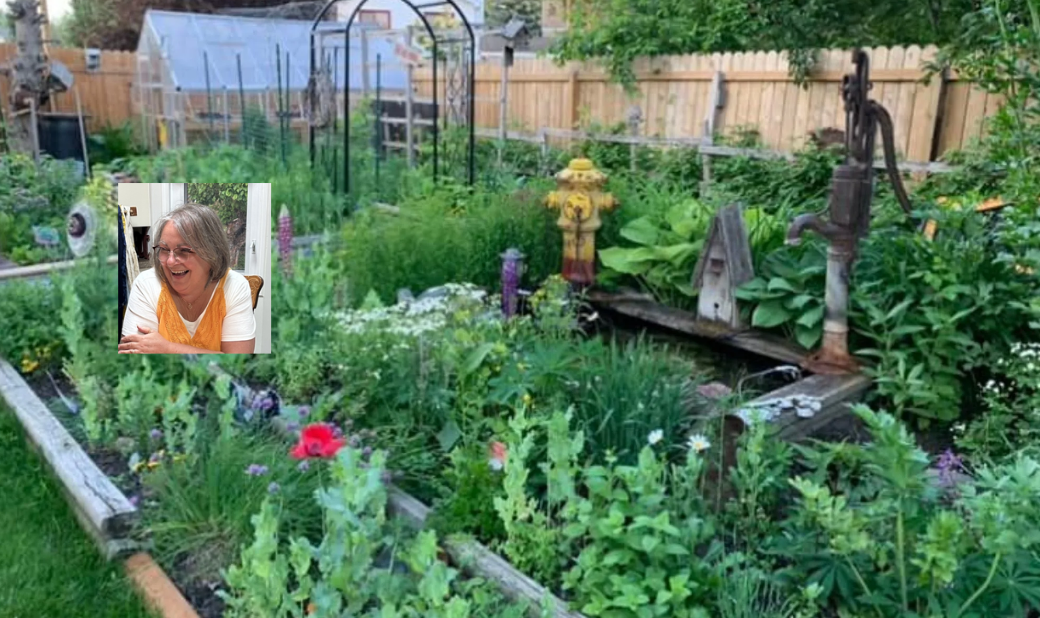
Having grown up on military bases, other than relatives I rarely saw, I never knew any one personally who had a garden. Gardens were exotic places that I saw from a distance when visiting cousins during summer vacation. I really had no clue as to their purpose, or how many hours were spent in them. It wasn’t until I was a newly married 18 year old and heard a wise man say that everyone should plant one, that I even gave the idea more than a cursory nod. Little could I have comprehended then, the life long relationship I would have with my garden.
We planted our first garden in a corner of my mother in law’s vegetable garden our very first summer. A wise man I trusted and loved had openly counselled that we should ALL plant a garden. So we did. We didn’t know a bush bean from a potato plant, but we were enthusiastic and happy to be engaged in the project. By mid summer, morning sickness took over my life and ruled everything I ate, smelled or even thought of. I lost interest in weeding or harvesting that fledgling garden, but my mother-in-law brought an arm full of produce every time she came to visit. I appreciated the gesture, but I really had no interest in anything that ‘smelled’, and that summer, everything ‘smelled’.
I not only felt like a gardening failure, but disloyal to the new wholesome lifestyle it represented. A lifestyle that only a few short months before, I had been so committed to. Some time during the months that followed, that incessant flu-like sickness faded away and we focused on the new baby that would soon be coming to make our family ‘three’. I had such visions of how it was going to be. He arrived in April. We found a house soon after and made an offer to buy it. We were to move in July 1. It had a small spot perfect for a garden and we received permission to plant seeds while we awaited our possession date. We were excited for all it represented, anxious to begin this next step in our life together, but one week before we moved in, Dan got laid off at work. We never did move in, and since we had given notice in our rental, our plans were readjusted quickly. We moved the three of us and everything we owned into Dan’s mom’s basement while we figured out our next step.
Later that summer I learned an important lesson. One of those defining lessons that shapes the rest of your life. That wise man who said everyone should plant a garden, was a prophet (that wasn’t the lesson). His name was Spencer W. Kimball, and when he had said “plant a garden”, it felt like he was speaking directly to me, and I committed to do whatsoever he told me to do (that wasn’t the lesson either). “We encourage you to grow all the food that you feasibly can on your own property.” he said “Berry bushes, grapevines, fruit trees—plant them if your climate is right for their growth. Grow vegetables and eat them from your own yard.” he said “Even those residing in apartments … can generally grow a little food in pots and planters. Study the best methods of providing your own foods. Make your garden … neat and attractive as well as productive. If there are children in your home, involve them in the process with assigned responsibilities.” – Spencer W. Kimball, April GC 1976
He had a way of driving things home, and he spoke to my young heart. He reminded us of the scripture in Luke 6:46 “Why call ye me, Lord, Lord, and do not the things which I say?” He had me. And yet, as that summer ended we were back in another apartment, Dan going to school. Though we had tried to have a garden twice, there we were. Friends generously shared of their excess: cucumbers, tomatoes, zucchini and other produce, and I marveled at the bounty in my kitchen. I mused this blessing over with a friend one day, saying that I believed we enjoyed more produce this month than we ever could have harvested from our little garden. My wise friend Shirley said “It is because of your garden that you are being blessed this way.“ She pointed out the principle of obedience. That promise that when we obey a law, we receive the blessings associated with it. Plain and simple according to her. The prophet said “plant a garden” – we had. The circumstances surrounding the fact that we didn’t harvest it were incidental. The principle stood. She bore testimony to me in her straight forward way, that I could count on that principle for all the days of my life. “There is a law irrevocably decreed in heaven before the foundations of this world, upon which all blessings are predicated. And when we obtain any blessing from God, it is by obedience to that law upon which is is predicated.” (D&C 130:20,21) THAT WAS THE LESSON. I didn’t know it then, but my life changed that day. I had seen the fruit of the principle with my own two eyes. And yes, Shirley was right, I had planted a garden. Pitiful though it may have been, I had been obedient. I had tried my best to obey. That was all that mattered. God is in the details. He doesn’t ask us to feed five thousand. He asks merely that we bring our loaves and fishes to the picnic. Thank-you Shirley Clelland, for being such a wise friend and such a patient mentor.
I was no longer a girl. I was a mother. With the responsibility now to take care of my little one. And as a mother, there was one thing I knew I wanted – NEEDED. Yearned for. To obtain blessings from God. Which blessings? All of them. And I now knew how to access them. Obey the laws upon which they are predicated. “I the Lord, am bound when ye do what I say; but when ye do not what I say, ye have no promise.” (D&C 82:10) I could think of nothing I wanted more than to have the Lord bound to me, and I committed myself that day to do whatever it took to accomplish that.
There are many lessons I learned from my garden over the years, but they all began from that first one – which was that any good thing must start with a DESIRE to do that good thing. Hearts can change on a dime. I’ve seen it happen. But behaviour takes time. Don’t expect to BE everything in the beginning. Start with the desire to ‘be’. And work from there. Alma summed it up in his sermon to the Zoramites: “But behold, if ye will awake and arouse your faculties, even to an experiment upon my words, and exercise a particle of faith, yea, even if ye can no more than DESIRE to believe, let this desire work in you, even until ye believe in a manner that ye can give place for a portion of my words.” (Alma 32:27)
The next few blog posts will follow the theme of Lessons I learned from my Garden. I hope you’ll join me. I would love to hear your comments, and your own experiences about lessons learned ‘from’ or ‘in’ your own garden.
in this chapter: Horse Radish, Lamb’s Ears, Lamb’s Quarters, Lavender, Lovage. Some inside, some outside. Chapter continues to be a work in progress. I’d love to read your comments below.
HORSE RADISH
Horseradish is a rugged hardy perennial, even in cold climates. In fact, the winter forces the plant into dormancy, which like the rest of us, can be kind of a reprieve. During the growing season, it likes full sun but does fine in light shade. Since sun in my garden is in such demand, I don’t waste it on any plant that doesn’t demand it. If it can tolerate light shade, it gets light shade. Planting one to three horseradish plants should provide an abundant supply for even those of us who love it. You can only eat so much of it, but if you have a bigger garden, and are in love with it or want to share it, plant more. Whether you dig a root from your friend’s garden, or buy one from a greenhouse, they’re ready to go into the ground immediately.
Its interesting to note that the word “horseradish” has nothing to do with horses or radishes. The word “horse” formerly meant “coarse” or “rough”, and the word “radish” originally meant “root”, and yes, it is in fact in the radish family. The root is large, tapering to a point. It has a dark brown peel with a white inside.
The plant’s most commonly used part is the root, known for its strong, pungent flavour (and its heat) – that you either love or hate. There doesn’t seem to be much middle ground with horse radish. I didn’t develop a taste for it till well into my adult years but since then I am always on a quest for appropriate ‘carrier’ foods. But don’t discriminate against the leaves, as they are quite edible and very delicious when they are young. They have a sharp, bitter, and peppery taste — similar to arugula and kale and yes, even radish. Snip one or two fresh young leaves and chop up to add to a mixed green garden salad. I’m not suggesting a “horse radish leaf salad”, but to have some horse radish IN your mixed green salad is completely delicious. Try incorporating some of the young leaves into your next garden pesto. Or even add to the greens in your stir-fried vegetables. Be creative. Don’t be a garden bigot by not allowing certain ‘herbs’ or vegetables in your garden to show you how wonderful and versatile they really are.
Horseradish roots are large, tapering to a point, with a dark brown peel and a creamy white interior. They are well known for the ‘bite’, which comes from the release of compounds when the root is grated or chopped. Without grating and exposure to air, horseradish roots seem very innocent, but don’t be fooled, once you grate it you release its full potential, and it can become so hot you can feel it when you breathe. LOL – but not really funny. I’m serious – very HOT. *hint: vinegar stops the heat producing chemical process.
growing
When looking for the perfect spot to plant it, remember, its gonna be there for a long time. The hardiness of horseradish implies that once invited in and given a seat at the table, it is no longer a guest. It needs it’s own room. Set aside an area in the corner of your garden especially for it. It wants good drainage, not soggy feet. Dig a hole about a foot deep, and loosen the soil around it. Make sure the hole is wide enough to accommodate the entire length of the root. It should be planted at an angle. Allow 18-20 inches between plants, or away from its closest neighbour to allow the roots plenty of room to spread out and grow.
Place the horseradish crown or root into the hole diagonally (roughly a 45 degree angle), with the thinner, bottom portion of the root downward. This allows the roots to radiate out while keeping the leaves of the crown straight up. Always a good idea to add compost to the fill when planting perennials. Good idea to fertilize once in the spring when it starts to grow. Keep them weeded – which is only good manners when inviting a new plant into your garden. A healthy plant should have only 3 or 4 leaf stalks, so prune the others. Not pruning will encourage it to ‘go wild’ and it can quickly crowd out nearby plants, taking over a larger space than you want it to take.
A few years ago, I dug some horseradish roots from my son’s farm where it had gone wild, and transplanted two or three to my garden quite late in the season. They didn’t seem to ‘take’ so the next spring I was convinced I had lost them, so I purchased a plant from a local nursery. Within days of planting the new plant, I noticed the other horseradish plants were sprouting up where I had planted a year ago. Good things happen to those who wait, so be patient. I waited another full year after that before I tried to harvest any, and then just a little ’cause I was anxious to try it. It was the third year before I seriously dug up the plants to harvest.
harvesting
‘They’ (whoever they are) suggest we wait for at least two years, maybe even three years before harvesting. I decided to trust ‘them’; you might want to as well. Best time to harvest is mid-late fall. That’s always a joke in our climate. When does late become too late? At the very least, wait until you’ve experienced a good frost. The frost will kill off the green foliage and you’ll think you’ve lost it, but take heart, this is the sign it is ready to harvest.
With a shovel or a fork, gently loosen the soil around the roots and remove the whole plant. Try as you might, the likelihood of you getting the entire root out is very low. This is fine, you want the plant to grow back next year right? Expect the root to be between 6 to 10 inches in length so dig deep. Horseradish roots are large near the top, tapering to a point. You’ll usually hear the root break off as you’re digging it out. But if you’re worried that you didn’t leave enough, cut the bottom 3-4 inches and return it to the soil. For kitchen use, cut away the green leaf stalks, wash and dry thoroughly, then slice the horseradish into small, thin sections. These can stored in the fridge in a plastic bag for up to 3 or 4 months.
using your homegrown horseradish
Let me interrupt this part for a plug about the ‘leaves’. Re-read the opening paragraphs in this section – they are not only edible, but very delicious when they are young. Don’t miss out on those, while you wait for the root to mature. And be creative. Okay, I now return you to the ‘roots’.
Wash thoroughly. Easier said than done; when you try it, you’ll know what I mean. Peel roots with a regular kitchen peeler making sure you remove all the brown spots. Continue to rinse as you’re peeling so you don’t transfer the dirt. Dry well. Uncut horseradish roots will keep for several weeks in the crisper drawer of the refrigerator. Cut horseradish should be used right away. Grated fresh horseradish, preserved in vinegar, will keep for several months in the refrigerator. Peeled and grated horseradish can be stored in sealed bags or containers in the freezer for a few months.
You might want to grate it, you might want to puree in a blender. Up to you. Or maybe a little of both. If you’re grating, use the fine side of your hand grater, or use your food processor (I don’t have one). If you’re going to puree it, then you must first chop the root into small pieces before adding to the blender.
* hint: grated horseradish will tarnish silver upon contact. Don’t put it on a silver serving dish.
Fresh horse radish is super-duper-HOT. It even smells hot. Like clean-out-your-sinuses hot. Best to make sure you’ve got some air circulation while you’re shredding it. Horseradish’s bite comes from the release of compounds when the root is chopped or grated / exposed to air. Without grating and exposure to air, horseradish roots really don’t smell like much of anything. Vinegar stops this chemical process. If you want really hot horseradish sauce, leave the grated root exposed to the air for a few extra minutes, but not so long that it begins to discolour or dry out. For milder horseradish sauce, add vinegar right away. Horseradish will lose its powerful heat over time so don’t make a lot at once. Keep jars sealed in fridge. Best to consume an opened a jar within a couple of weeks at most. Every day after it opens it gets milder and milder, until pretty soon it disappointingly doesn’t taste like anything.
To grate or puree – that is the question. The answer is: whichever you prefer. Whatever you choose to do, make sure you have open windows, a fan blowing the air away from you, and be careful not to put your face directly above the rising vapors.
Grated: Grate finely. Measure out your grated horseradish into small bowl.
Pureed: Chop horseradish in pretty small chunks. Measure out 1 cup into blender and add 1/2 cup white vinegar, 1 T sugar and 1/4 t salt. Puree for a minute until horseradish sauce is desired consistency. Pour into 8 oz jar and put lid on. Tighten to seal.
Basic recipe measurement suggestions. May be multiplied for bigger batches.
Recipe 1 – without sugar: 1 cup grated or pureed horseradish if using the blender or food processor, add just enough water to make it easier to puree. Once completely grated or pureed, let sit in the air for a couple of minutes. Add 2 Tablespoons – 1/4 cup white vinegar and 1/2 teaspoon salt The vinegar is not there to add vinegar flavour. It is used for the chemical reaction it causes which stops the heat, so don’t add it too soon. The salt is there to enhance the natural pungent taste, so use according to your taste. Mix well KEEPING YOUR FACE FROM BEING DIRECTLY OVER TOP THE FUMES. Spoon into small jars and seal with air tight lid. Do not process in hot water canner, but you can freeze it.
Recipe 2 – with sugar: 1 cup grated or pureed horseradish (using same method as above) Add 1 Tablespoon of sugar 2 Tablespoon – 1/4 cup white vinegar 1/2 teaspoon of salt. Mix well. Spoon into small jars. Put the lid on and seal lid.
Recipe 3 1 cup horseradish peel and cut for the blender, or shredded. 1/3 cup white vinegar (can use apple cider vinegar, will be darker) 2 Tablespoons of sugar (do you want it more sweet or less? 1/4 teaspoon salt
Recipe 4 – Like it creamy? Take 1/2 cup prepared horseradish sauce and gently stir into 1/2 – 1 cup heavy cream beaten stiff.
* Cooking horseradish greatly diminishes the flavour and ‘heat’ of the root, so be sure to either eat uncooked, or add to recipe only when the heat has been turned off. Prepared horseradish will keep in the fridge for about six weeks, but you can store the wrapped root in your fridge for longer.
eating it
I am a huge fan of horseradish and wasabi, but my husband is not. Our kids are on either side of the fence. Nobody seems to be a fence sitter with such strong flavours.
– I like it straight from the jar for all beef dishes, even burgers.
recipe 5 for creamy sauce: to each 1/2 cup horse radish puree add 1/4 cup sour cream and/or mayonnaise, some chopped chives or green onion and some freshly ground pepper. Like it milder? Add 1/4 cup sweet cream (whipped after measuring).
recipe 6 for simple cocktail sauce: 1 cup ketchup + 2 T horseradish + 2 T lemon juice + 1 T sriracha hot sauce (or 2 T Franks hot sauce) + 2 tsp worcestershire sauce. Whisk together. That’s it. Serve with shrimp, or as a condiment for burgers, hot dogs, meatloaf, even on top of a ham & cheese omelet or in the mix for devilled eggs.
recipe for sandwich spread: add a little horseradish into mustard or mayonnaise for sandwiches.
Try putting just a little in your next cranberry sauce.
LAMBS EAR
Wooly Lamb’s Ear is an easy-care perennial with velvety soft, woolly evergreen leaves that are grey-green in color, similar in shape to that of a real lamb’s ears. That combination is perfectly described in the name. It generally grows 6-8 inches, and in bloom, spikes up to 12-18 inches, producing spikes of pink to purple colored flowers.
growing in the garden
In the early spring, Lamb’s Ear looks very similar to a Mullein plant. Same grey/green tones, fuzzy leaves. Tricky little things. But given time it will sort itself out and confess which one it is. As long as you provide suitable conditions, growing lamb’s ear in your garden is relatively simple. It is more hardy in zones 4-8, but I am in zone 3 (Edmonton) and it grows well in our backyard garden. It wants full sun, so try to be accommodating, although you might get away with partial shade. Since it originates in the Middle East, it dislikes overly moist soil, so if you have a notoriously dry spot, it would be a good resident. Because it is not totally comfortable in our zone, best to give it a protected spot if you can. Mine grows mostly in my front garden, but this year I intend to transplant one or two into my death valley area, a particular spot that is always dry. An area that seems to miss all the rain, and would never get any water if I didn’t see to it personally. Which much of the time I forget to do – hence, it is known as ‘death valley’. Only the heartiest plants can grow there. And the ants. They do splendid there, which is another part of its problem. Stupid ants.
Lamb’s Ear self seeds, but you can also collect the seed after flowering to start indoors next spring. In my zone, this is a good idea, as you can never be completely sure its gonna make it through a particularly cold winter.
using
Mostly I grow it because its a novel plant, fun for the kids to touch and enjoy. Low growing, it is perfect border plant with unique flowers. It’s ever green leaves make it a good plant to dry for wreathes.
The leaves can be used as a “band-aid” of sorts, for healing wounds and in helping painful bee stings. In fact that’s what it used to be known for: a ‘bandaid’ plant. For centuries it was used as a wound dressing, particularly valuable on the battlefield. Not only do the soft, fuzzy leaves absorb blood but evidently they have properties that help it to clot more quickly. They also possess antibacterial, antiseptic, and anti-inflammatory properties. I haven’t ever used it for this purpose, but if you cut yourself badly one day while you’re at my house, in the summer – maybe we can give it a try.
LAMBS QUARTERS
(goose foot or pigweed) – relative of spinach and quinoa. Sometimes known as wild spinach, and considered a weed in most gardens, it deserves more credit than it usually gets. Highly nutritious, rich in V C and E, essential fatty acids, iron, calcium, minerals and antioxidants.
Most of these ‘weeds’ – meaning those plants that volunteer themselves in your garden without an official invitation, are most beneficial in the earlier part of the season before those that you plant deliberately are viable. Most of the weeds grow from self seeding, so they are up and established weeks before your regular garden. This means that you can start eating nutritious and delicious mixed garden greens (lambs quarters, chickweed, dandelion leaves, borage, plantain, etc) in your salad as early as April or May (in the Edmonton area) most years. By mid June, as your garden grows and develops. you should be eating garden more regular garden produce, so you’ll be depending on ones like lambs quarters less.
The underside of Lamb’s Quarters’ leaves and top of the new leaves are covered in a fine pink dust. Resist the temptation to wash it off as it is full of calcium and protein. It contains even more protein than kale. When lamb’s quarters is young, the entire above ground plant is edible. The stems and leaves can be eaten raw, steamed, or sautéed. Can be used any way and in any recipe that spinach is used, including a ‘spinach’ salad. When I am in my garden, I will often pick the tender new plants and eat them while I work. I never pull them to get rid of them. They’re much too valuable for that. I’ll add them to salads, add them to any other green that I steam.
Like spinach, beet greens, swiss chard and most other greens lambs quarters contains some oxalic acid which when eaten raw in large quantities can inhibit calcium absorption. These plants are so loaded with calcium however, that the amount of calcium not absorbed due to oxalic acid is minimized. Its a good idea to rotate your ‘greens’ for that reason anyway. Variety is a good thing. The black seeds are edible and very nutritious. Very good source of protein.
“Sticks and stones can break my bones, but names will never hurt me”. Just because something is called a weed, doesn’t mean we should discount it. The word is only a ‘term’ we use for a plant we haven’t yet found value in. Lambs Quarters is a protected ‘weed’ in my garden and has earned an honoured place in it.
LAVENDER
I don’t know what it is about Lavender that I love so much. Or more accurately I suppose, when my love affair with it began, or ‘from-whence-it-sprang‘. Even as an adolescent when I first discovered the unique and heady smell of lavender, I loved it. I use it in dried bouquets and arrangements. I use it in potpourri. I use it in the bath, and in cosmetics. I use the essential oil. I hope to never have to live without it. A close relative to Rosemary this bushy, strong scented plant is a native to the Mediterranean so don’t expect it to be super hardy in our winters. Having said that, you might be surprised by how often plants in your garden will survive our winters. Every year my lavender comes back is a good omen for me. I learned recently that the life expectancy of a lavender plant is about nine years. This is great information as I can now plan for that demise by encouraging new growth from the mother plant while she’s still young and vibrant.
growing
Best to buy your lavender plants from your local greenhouse or nursery, as they are not that easy to start from seed. But beware, not all lavenders are the same. You may find French Lavender, English Lavender and Spanish Lavender. I prefer English Lavender (pictured here) in every way. The classic lavender scent is English, which is more long lasting than the more mild French and Spanish. French or Spanish Lavenders are lovely and showy, so they’re perfect to have in a pot on a balcony or patio, but to plant in the ground with any expectation of longevity, English it is. English is easy to grow, and is hardier by far, more likely to survive the cold of an Alberta forecast.
In my area (Edmonton, Alberta), lavender may come back a few years in a row, and it may not. Some give up and admit defeat if it doesn’t survive a winter but that’s the coward’s way out, and there’s no glory in it. Every year I buy another four or five lavender plants. I plant them in various spots around my yard. One or two in my herb garden, another one in the back flower garden, another one in my front flower garden. Depends on where my empty spots are. I’ve had lavender come back in a certain spot eight years, and after the ninth winter – it did not. I mourned that one. I really thought I had it licked. Since then I’ve learned that lavender has a life expectancy and it wouldn’t have grown much longer than that anyway. I didn’t do anything wrong. That information is encouraging, and armed with it, I can move forward with more confidence. I’ve had lavender plants come back several years in a row, and some that have not made it through a single winter. Not every spot is ideal, and there’s no beating experimentation while looking for the best one. I plant them in all different locations because I keep hoping to discover the perfect lavender loving spot in my yard. . . . . . still looking. Truth is, Edmonton is not lavender’s ideal climate or soil type, but that doesn’t mean it cannot thrive. You just have to be creative.
Lavender wants SUN. So I give it sun. Sunniest spots I have. Anything it wants that I have the power to provide. Because of its Mediterranean origin, it wants blazing hot sun, but I am not in control of everything – sigh. It will handle drought and heat, but not wet soil or poor drainage. It actually prefers poor soil, which is one of my problems as I have very rich loamy soil (which I try hard to make that way). One of life’s little ironies I guess.
Lavender’s purple flowers attract bees and other pollinators so its a valuable asset to any garden. Plant in the spring but after all danger of frost is past, in the driest part of your garden with good drainage. Because lavender loves dry (even sandy, and slightly alkaline) soil with good drainage, there are a few things we can do to help. If it doesn’t do well, it’s likely due to a wet season, not enough sun and high humidity. Plant your lavender in a raised mound, mixing in a little sand to increase its drainage, and make it less likely to sit in wet soil after a rain. Give it room to expand – about two feet, and think positive thoughts. Not much we can do to keep the rain away in a wet season, but don’t add to it. Avoid the sprinkler. Remember, you’re going for ‘dry’.
harvesting
In the morning, when the oils are most concentrated, clip the base of the flower stalk when approximately half of the flower buds have opened. Cut them as long as possible so that you can put them into bundles. I use an elastic band to secure them, but you can also tie them with string. If I have just a few, I dry them standing up in a dry vase. If I have more, I hang them upside down in an area with good air circulation. Flowers will keep their perfume for months, even years sometimes if in a sealed container. When thoroughly dried, gently rub each stem to remove the flowers.
using
– All parts of a lavender plant are edible, but it has never appealed to me. Kinda like eating soap in my opinion. Store the dried flowers in an airtight jar out of direct sunlight to preserve the perfume as long as possible. – Sprinkle them into bath water, – Tie a handfull into a lavender sachet for a drawer, closet or suitcase. – What a lovely gift idea. Slightly squeeze the dried flowers in the sachet to reawaken the scent. – Lavender oil can take the sting out of bee stings. It is good for minor burns, and reducing inflammation. Use as a wound wash to help prevent infection. – The scent of lavender is said to relieve stress and depression, and promotes relaxation.
LOVAGE – super hardy, self seeds, can be transplanted
Native to the Mediterranean and popular in Europe and Southeast Asia, lovage is quite unique in that it’s hardy in zones all the way from 3 to 9. That’s pretty much Edmonton to Athens! You don’t see that very often! Because it grows so tall, and bushes out in brilliant greenery, lovage makes a beautiful backdrop to any flower, herb or vegetable garden, and is an excellent pollinator plant. It has earned a permanent spot in my herb garden because of its hardiness, usefulness and loveliness.
growing
Related to parsley, but growing like a bush, lovage has a strong taste resembling a parsley/celery combination. It is perennial – coming back from the root, and also self seeds so you’re never gonna run out of it. Will grow to about 8 feet tall in my garden. It likes sun but will tolerate partial shade. That means it gets partial shade. Full sun in my garden is too precious to waste on any plant who doesn’t require it. Give it plenty of room to be what it wants to be. It likes to be moist (probably because it grows so fast), but I don’t water anymore often than I feel the need to water my lawn.
It goes to flower mid summer and will self seed easily, so you may get lots of volunteers next year. Luckily its easy to pull out when its young, or dig out to transplant. All your friends can have grandbabies of your lovage plants. If you’re just starting out with lovage, probably best to get a transplant from someone. Apparently, germination of the seeds isn’t reliable and usually has about a 50% viability, so if you’re starting with seeds, plant more than you want. Definitely, spring transplants have better success than fall ones, although I have given plants to friends all throughout the growing season. Clearly, the more time they have to establish themselves the better.
harvesting and using
mortar and pestle
You can use the seeds, leaves, stalks and even the roots.
Seeds: They flower mid summer, and then go to seed, so expect to start harvesting them toward the end of summer. Make sure they’re dry before you pack them into an airtight jar, and then use throughout the year till next summer’s seed is ready. Sprinkle over salads and mashed potatoes, breads, pastries, biscuits, and cheeses. I find it helpful to slightly crush them in a mortar and pestle to release their flavour before sprinkling over your dish. Strongly aromatic.
Stocks: Stocks are tough and need to be blanched. I personally have never used them, except to simmer in a stock and then discard – they’re too tough for me, but the flavour is intense.
Leaves: The leaves look like very large Italian parsley leaves, and they taste like celery, only much stronger. In the summer, I pick them a little here and there as I use them. Chop coarsely to add to a mix of salad greens. Chop finely and use in place of parsley in chicken salad or tuna salad, or even in a batch of fresh tomato salsa. Use in marinades, soups, creamy dips, chili and potato salad, as well as stocks and casseroles. They’re VERY flavourFUL, so use sparingly at first till you get used to how strong they are. Flavour to taste.
For winter use, I pick the leaves anytime in late summer. I dry them, then powder them in the blender and mix with a nice salt to make “celery salt”, which I use throughout the year in all sorts of dishes that I want to add a parsley / celery taste to. Or for a nicer look, hand crumble the dried lovage leaves, and mix with a coarse Himalayan salt. Keep in a short jar to spoon out for use in cooking.
Studies show that of the 45% of Canadians who make New Years Resolutions, 75% maintain the momentum thru the first week of January. 46% of us last past the 6 month mark, and 8% follow through sufficiently enough to reach their goals.
The key words of course are: FOLLOW THROUGH. If it was a good idea on Dec 31, then it is still a good idea. If we have slipped or wavered from our intentions, we don’t have to throw our hands up in the air and give up – again. There is an alternative. Admitting that you fell off the wagon may be discouraging, but getting back on the wagon is a good strategy.
Self-improvement or education related resolutions take the top spot at 47%. I’m surprised, because I didn’t know there was any other kind of resolution. I mean really, if its not going to make you a better human being, what was the point of making the goal? Oh well, who am I to question statistics?
I know enough however, to know that anything we do that is better than we did, is a step in the right direction. The Best time to Do Better was a long time ago, but the second best time is always today.
I have this quote silk screened onto a scarf that I wear often. It is a personal reminder to me of my commitment to do better, and permission to let go of mistakes: “Do the Best that you can until you know Better. Then when you know better, DO Better.” Maya Angelou
Here’s to RE-commitment to better choices even though January is over ….
Thirty years ago we bought the best trampoline that we could afford with the money we earned delivering flyers for two years. It was a long two years of seeing little reward except the hope and promise of a trampoline. We had four kids at the time and it was a family effort, not without it’s share of frustration. Hot days. Cold days. Rainy days. Busy days. Days when they’d rather do anything else. Days when they said “This is stupid. I don’t even want a trampoline!” Sometimes I said it too. Quietly to myself. Shhh.
We wondered if we’d EVER have enough, but every nickel we earned went into that savings account, and then one day it was over! We took our money and all of us went to buy the trampoline we had chosen after much research and deliberation.
Our kids grew up on that trampoline. Thousands of hours of fun and noise. Very patient neighbours. Innumerable memories. Not a single regret. Not even for those flyer delivering days.
Three decades later our grandkids are growing up on it too. Seriously this trampoline is right up there with the Top 10 Best Purchases of our life.
What would you say are a few of your Top 10 Best Purchases?
Every year since we bought our first house in our early married years (a real honest to goodness fixer upper), we’ve kept to a plan of home improvements as we could afford them. Limiting ourselves to two projects a year, helped motivate us without overwhelming us. It also kept it affordable. Over the years, we’ve stuck to it in every house we lived – even when it was a low income rental when Dan went back to school. It kept us thinking, planning, and making things better for ourselves, while keeping projects in perspective and manageable, All these many years later, we still follow the same formula. One inside project. One outside project.
Some have been big projects – like 2015’s kitchen, and the 2021 greenhouse. Some have been smaller projects – like planting a tree, painting a wall, replacing a fixture or a single window or laying some reclaimed brick in the garden paths. The outside project is in the warm months, the inside project is reserved for the cold months. No one wants to waste beautiful summer days working in the house.
hard to see the glass brick patio in this little bistro area off the kitchen door, but this is where it is. To the right, you can catch a glimpse of a 45 gallon rain barrel hooked up to the rainspout
One year we scored some glass bricks from a friend’s reno project. I was so happy! Dan – not so happy. They sat around for a year or two, Dan trying to talk me into getting rid of them, (hoping they’d break so I’d have to) and me just ‘knowing‘ they had a higher purpose in my life. LOL.
In 2002 a big bush winter killed and had to be removed. Just outside the kitchen door, which was very provident! I had the boys chop it down and dig the roots out. We could have planted another tree, but I had visions of a little bistro-type area. Zack and Joseph were willing to make my vision come to life. Dan was not convinced it would work, and didn’t like the idea of the glass bricks being a floor, so he kept his distance from what he was sure was a doomed project. The boys created a base out of sand from the sandbox, and laid the glass bricks as if they were ‘bricks’. Truth be told, I only expected those bricks to last a year or two. None of us were very hopeful about what the winter might do to them, but we had nothing to lose by trying, and everything to gain. So we did it anyway.
These pictures were taken 14 years later. We’ve had to replace a brick or two from time to time, but not more than 6 or 8 in total. They’ve sunk a little bit, owing to our amateur job of packing the base layer in. But they’re still wonderful, and I still love the spot on our east side, just outside the kitchen door. The perfect spot for a summer breakfast, or a dinner in the shade. In the picture above you can see the strings from the hammock (on the left) strung from this tree to the one next to it.
In 2016, our inside project was a big one that took 10 times longer than we anticipated. We created a bathroom downstairs adjoining a room that we call “Gramma’s room” for my mom. This was the first big project in preparation for my mother coming to live with us, hence the name “Gramma’s room“. We used to call it Uncle Luke’s room, but things have changed. It was a very big deal. The first project quite so all inclusively complicated. When it was done, we considered having a “Bathroom Done Party” to celebrate. If you came to visit in the months after it was finished, we probably invited you to come see it. LOL. We rejoiced for months and I found myself going down to look at it several times a day for the first few weeks.
We had started the bathroom in January and finished the end of June. When I use the word “WE”, I am of course referring to the “royal WE”. Meaning Dan, although I do the clean up when things get done. There were lots of domino projects that had to get done simultaneously to make it possible. It was a big project that impacted every room downstairs before it was done, and our grandchildren couldn’t play downstairs for so long, they forgot we had a downstairs.
The adjoining bedroom “Gramma’d bedroom” would be the next year’s inside project, but that was a subject we avoided discussing for a very long time. Not surprisingly, the outside project that year was a small one. It was tempting to not do anything that year, but we had made the decision long ago, and that meant we would make one improvement a year outside and one inside. And sticking to it was important.
We painted the fence panel behind our bistro area in the backyard. I know. Big deal. It only took me one day. (We needed easy because the bathroom sucked all our energy.) But easy doesn’t mean ‘do nothing‘. It is important to be flexible with our energy and our expenses, and to not bite off more than we can chew, or afford. Some jobs are big and some are just small. But each one moves us forward, and brings with it a sense of accomplishment. It is just as important to stick to the plan, and move forward. Progress means forward. One step at a time.
Do you have a plan for fixing things up in your little world? I’d love to hear it.
There were many times as a younger mom when I knew I had made a mistake.
Sometimes I would be so ashamed – I wanted so much to be a ‘good mom’. I wanted to raise my children to the Lord, and have them be well rounded and strong and healthy in every way. I wanted them to enter their youth and adulthood prepared for all that this telestial world could throw at them. But alas, I was so flawed as a mother – that sometimes I realized I was failing miserably at being the mom they deserved.
Sometimes I would try to make it right – and I’d sit on my oldest son’s bed at night and tell him “I know you didn’t mean to ….. I know you’ve never been a little boy before and you’re just learning how, and that you’re doing your best. I never have been a mommy before either, and I’m just learning how, and sometimes I make mistakes too. But I’m trying to get better.” Sometimes I would make deals with him, and always I would promise to be better at it tomorrow. But I don’t know that I always was. More likely, I just discovered a new mistake to make. I was always great at making discoveries. 🙂
One day when he was a teenager and we were having yet another one of our ‘disagreements‘, he sarcastically asked “Is this gonna be another one of those times when you come sit on my bed and say you’re sorry?”
Whoah! To say his timing was poor – was to put it mildly. I was after all, still the flawed Mother, and I certainly was in no mood to hear that!
“MaaaaayBe.”I retorted “But right now – it doesn’t feel that way!” I admit it, it wasn’t my finest mothering moment, and I do believe it marked the end of those tender little bedtime talks.
. . . .
So, long story short – we finally made it, and my kids are all grown up. I’d like to say I finally got it right and that all my mistakes are in the past. ….. But sadly – I am painfully aware that I’m still making them. Sheeeesh. I hate to break it to all you moms who are younger than me, but you may never really ‘get it‘. ….. Or maybe YOU will. ….. Thank goodness, I don’t seem to be repeating a lot of the same mistakes. Nooooo, I am inventing new ones as I go. I told you I was good at making discoveries. It is a talent I don’t seem to have lost.
I am comforted by a revelatory experience I had when my oldest was about 7 or 8 years old. It suddenly occurred to me that he was now the age that I was when I began collecting more vivid memories from my childhood, and specifically of my own mom. I realized that the memories my kids were making NOW would be with them their whole lives, and I also realized – with a stark reality check, and a healthy dose of humility, that my mom had donethe very best she knew how – just like I was trying to do. And I was filled with compassion for her, and forgiveness – for whatever mistakes she may have made along the way, and for whatever faults she may have had. And I fervently hoped that one day, my kids would realize the same thing, and would also forgive me for all my mistakes in this great circle of life, because one day in their turn, they too would be doing the best they know how to do, and one day to follow, they too would pray for forgiveness for not always getting it right. I hoped they would learn from my mistakes and not make the same ones – that somehow they would be better than me, and that with every generation we could minimize the mistakes in our family, and become better parents and better people. Who knows? Maybe – if we were allowed enough generations before this ol’ world comes to an end, and if we put all of our effort into it, we might even become really good parents.
I came across a quote from May Angelou a few years ago and it is very prominently displayed in my home. “Do the BEST you can until you know better. Then when you know better, DO BETTER.” I don’t beat myself up about things I did. I know I did the best I knew how to do, and there is great comfort in that. But I do know better now, and it is my obligation to act on what I know.
Cherie Call put some of my most tender thoughts as a mom to music (she seems to read my mind sometimes) in this wonderful song WALK YOU THROUGH THE NIGHT on her album GRACE. (Mercy River also sings it on their album COME ALIVE.) Perhaps the words speak for you too. Thank-you Cherie – you speak to my heart.
“I may not be the best at very many things
but I believe I love you perfectly . . . ”
If good mothering could be judged by that attribute alone, then I could be the best mom ever!
“. . . you are bound to have some nightmares
so am I
but you can count on me to hold you
when you cry . . . .
I can’t promise that I’ll always get it right,
but I will walk you thru the night.”
Thank goodness, its not over and I still have time to learn. Grandchildren are the great gift of second chances – a chance to make restitution. Whew! And I hold out hope that one day – perhaps by running out of mistakes to make, I will have exhausted the list, and I will finally get it right, and be the kind of mom my kids deserve.
“If God will grant my wish then I will wait for you
beyond the veil, just before you slip through.
As you softly close your eyes I will sing my lullabies to you,
and before you make your way into the light
I will walk you thru the night.”
One day whe Luke was three or four years old, he said to me “Remember when Jesus came to our house Mom?” hmmmm, I was a just a little confused …. “Nooo Luke. I don’t remember that.” “Mom! He came. Remember?” I racked my brain trying to recall some bearded man who had recently come to visit us. But couldn’t. “uh, no Luke. I am sorrry. I don’t remember.” “Mom! You were there!” Had Brother Blommaert come to visit? He had a beard. “Mom! He ringed the doorbell!” Had Brother Blommaert dropped something off recently? When I wasn’t home perhaps? “And he gave you a present.” …. oh my – this was getting very mysterious. “Jesus gave ME a present Luke?” Brother Blommaert MUST have been by. “Yes! And the present was all wrapped up in a blanket.”
Feeling very sorry to disappoint him, but not recalling any recent event that might fit into the description he was giving me, I admitted defeat. “No Luke. I am sorry. But I cannot remember when Jesus came to our door and gave me a present.” “MOM! And he said SURPRISE! and when you opened it up, it was ME!” The light went on. “Oh Yes! I certainly do remember when Jesus gave me a wonderful surprise, and you’re right, it WAS you. Best surprise ever. …… But Luke, Jesus didn’t actually ring the doorbell.”
Luke couldn’t remember a time when he hadn’t heard the wonderful story of how he came to our family. “A long time ago, there was just Mommy and Daddy, and Jacob, and Sarah, and Zack and Joseph. But no Luke. We thought everybody in our family was home. But you weren’t with us yet. You were still living in heaven. You were waiting for your turn to come to us, but we didn’t know that because it was a surprise. And we were just going about doing our stuff. And you were saying “Wait! Wait for me.” but we couldn’t hear you. We were having a picnic, and riding our bikes, and eating dinner and reading stories and you were saying “Hey! Wait for me!” And then one day, Heavenly Father said “its time to go join your family” and you were so happy. And Heavenly Father told us “Surprise!” and He gave you to us. And we were so surprised! And so so so happy.”
Well that boy is almost thirty years old. And just about three decades ago Heavenly Father really did tell us “Surprise!”, and a few months later, Luke joined our happy family, completing that generation of it. April 7 1990. A Happy Day for all of us. Luke gave Jacob the chance to re-find his tender-big-brother-side, Sarah the chance to practice being a mommy on her own real-live doll. He gave Zack and Joseph a little brother to play with and to take care of. And he gave Dan and I another chance to put into practice all the things we learned from the other kids. Another chance to get it right. Baby Luke was a delight to us all. Never was there a little boy more loved and cared for, and cuddled and read to. He was always in someone’s arms. Sitting in church became a political problem …. he was three years old and everyone still wanted to hold him. I am amazed he ever learned to sit on his own, let alone walk on his own.
Why the story? Because at one point, before 1990 we thought we were finished having children. The doctors had strongly advised that my fourth caesarian should be my last, and after months of confusion, and praying for guidance about such an important decision, we decided at length to follow the doctor’s counsel and leave the details up to the Lord. We never had that conclusive feeling that our family was finished, but we knew with God all things are possible. We had good examples of adoption in our extended families. We had fostered briefly. We had provided a home for two years for the teenaged child of a friend. We knew there were numerous ways a child could join a family. It didn’t need to be traditional. We figured that if we were open and receptive, then one day, when the time was right, Heavenly Father would find a use for these parents who still had years to give. We trusted that one day – we might be surprised, and that if we would just be watchful, and receptive to the promptings, that we would respond appropriately when the time came, and the Lord might be able to work through us. It never occured to us that a child could come to us through the normal means after we had taken measures to ensure I didn’t get pregnant again. We didn’t think that was possible. Well, guess what? It is. With God – ALL things are possible. He knows us. He knows our hearts. He knows what is best for us. And He was patient with our decision five years before – knowing afterall, that He was in control. “You do the best you can until you know Better.” right?
My fear was that one day Luke might hear the word ‘surprise‘ from another source,and another perspective. All of our friends and family knew the miracle by which he came to us. I was afraid that at some point, he might overhear a portion of his story out of context, and he might deduce that ‘surprise’ meant something else. I wanted him to always know he was important, and loved and welcomed to our family with open arms and open hearts. I wanted to make sure that he never had a reason to doubt that, and I concluded that the only way I could ensure he never thought differently was if he heard it all from ME first. So from before the time he could talk, he heard his story. About how we didn’t know he was going to come to our family, but we were so happy when we found out. I told him in a way that I thought he could absorb. Funny how kids fit truth into their own reality. They sort it out in the way that they see the world. In the way that makes sense to them. I was okay with that. I knew that as he grew and his understanding developed, he would sort out the details. The only thing that was critically important was that he always feel loved.
Somewhere along the line, Luke grew up. And now he has two babies of his own. Very wanted and welcomed and loved babies that he shares with his lovely wife Pam, and with the rest of us. Cause that’s what families do. But he’s still my baby. And I still refer to him as my baby. And sometimes the grandchildren feel the need to object. “Uncle Luke isn’t a baby!” they say. I tell them “oh yes he is. Don’t ever fool yourselves. Uncle Luke will always be our baby. And you know what? He likes being the baby. Don’t you Uncle Luke?”
“Yup.” (that’s how he talks)
And the world continues to turn. And babies grow up. And mom’s get older too. But some things should never change.
I love the quote by Bill Copeland “the trouble with not having a goal is that you can spend your life running up and down the field and never score“. This is a perfect visual image for me and I think it speaks volumes. Especially, as it seems, though goal setting is encouraged on every corner, in every area of life – educational goals, workplace or business goals, family and household goals, goals in gospel living – it has almost become too ‘common’ a term. And because of that, many of us miss the point. So what is the point of playing the game if all you do is run up and down the field kicking the ball? Eternal ‘practice‘? For what? Goal setting is MORE than a worthwhile endeavour, it is absolutely necessary to becoming the person we would like to become.
The truth is, without goals we will spend our lives either spinning our wheels in one spot, or aimlessly adrift being influenced by every wind. The key is to set attainable goals that are meaningful.
Whether they are long term all encompassing goals like getting out of debt, short term easier goals like getting on the treadmill five times a week, or even eternal goals of living with our families forever, the act of setting goals propels us forward. A ship leaving the harbour with no goal or destination? Preposterous. Throwing a dart without a target? For what purpose? And yet, we are no different when we allow ourselves to go through the whole day, a whole week, month or year without purpose, without visualization of a hoped for destination. A GOAL. Whatever talent and abilities we might possess, whatever potential is ours – without focus and directed energy, they will never amount to anything.
I like to look at the idea of LEGACY. Defined, legacy is anything “handed down” (be it good or bad), but for my purpose here, I am speaking specifically about what we as a person are remembered for after we’re gone. Its humbling to acknowledge that we have a lot of control over the legacy we leave behind. For the most part, what it will be is our choice. Imagine that. We create a good legacy through effort and energy, or we let our legacy default into meaningless. Again our choice. So ask yourself these three questions: 1) Where do you want to be in a year? five years? twenty years? 2) What is important to you? 3) What do you want to be remembered for? What legacy do you want to leave behind?
Whether we realize it or not – whether we actually use the words “goal setting” or not, most of us DO set goals for ourselves. I have some suggestions for ways we can make them more meaningful, and have a more empowering influence in our lives.
1. Goals give us Direction and propel us forward
Setting a goal provides a destination to work toward. When you set a goal you naturally direct your attention toward the first step in achieving it. Focusing on it leads your thoughts in a certain direction, and what you think about becomes behaviour.
2. Goals keep us on the path.
You can not walk a straight line without a fixed point to follow. When you have a goal in mind – a particular destination, you will focus on it, and you will be more inclined to avoid detours that would distract you from reaching it. The more specific your goals are, the more likely your path will be straighter and more direct. For example, it has been a life long goal of mine to eat healthily. Generally I do pretty good, but the goal itself is unspecific. In the last few years, my goal has been to be ‘smarter’ about my choices. Still very unspecific. So recently I committed to avoid sugar for one month. This is specific, and measurable (see point #3), and very relevant to me. A clear and relevant goal sets you on a path and provides incentive to make the sacrifices necessary to achieve it. There are always sacrifices involved in reaching a goal, because the nature of obtaining a desired outcome requires changing established behaviour. And that is never easy. Desirable maybe, but not easy.
3. Goals must be measurable to be of any value
By setting a worthwhile but immeasurable goal of “being a better person” or having a “successful business”, we never really know when or if we achieved it. We need to know where we are right now, and compare it to a fixed destination. Our goal should be “measurable“. A big goal to “get out of debt”, broken into smaller goals of paying off the credit cards, the student loan, the car loan, setting a minimum dollar amount aside for unexpected expenses and to eventually replace the car so you don’t take on another debt, are all manageable, measurable, and as you achieve each step you have reason to celebrate. A big goal of getting in a year’s supply of food storage, broken down into smaller goals of buying for one week ahead, one month ahead, and finally three months ahead, are all steps along the way, and are attainable. And measurable. And worth celebrating. The specificity of my goal to avoid sugar for ONE MONTH made it measurable and therefore attainable. I could see the end of the month from the beginning, the light at the end of the tunnel so to speak. It was a mental exercise that made it easy to track success with every accomplishment. You cannot manage what you cannot measure. And you cannot improve what you cannot manage. (*1)
4. There must be flexibility in resetting your compass when working to achieve goals
Without compromising the end goal, you can be patient with yourself when you fall off the wagon briefly from time to time. Simply get back on. You are still better for being on the path, and it has been my observation that though our heart can change on a dime, behaviour sometimes takes time to follow, especially when you are dealing with a full out change of established habits and routine.
One of my favourite quotes is from Maya Angelou. She says simply “Do the best you can until you know better. Then when you know better, DO BETTER.” How very simple and yet profound such a statement is. It gives me permission to be patient with myself when I know that I am doing the best I can – on my path to do better. It steers me away from the temptation to beat myself up over former short comings, and to always move forward reaching for a new bar of excellence. It is motivating by not being unrealistically rigid.
5. Goals
provide accountability – especially when written down
When your goal is specific,
with a start date and an end in sight – you make yourself accountable to both. By
writing it down, you have more accountability.
A goal not written down is just a wish.
By placing it where we will see it often, it can be a constant reminder,
providing even more accountability. And of course sharing that goal with
another, or within a safe support group – strengthens that accountability more yet.
The combination of all the above, creates the best formula for success. Do NOT
allow yourself to procrastinate by giving yourself loopholes. Remember, “the Best time to do better was yesterday. But the second best time is RIGHT
NOW.” Be
firm. Don’t let yourself off the hook
with all your favourite excuses for not changing.
6. Goals provide motivation, and help us believe in
ourselves
Setting achievable,
measurable goals transforms mountainous challenges into manageable hills. Visualizing
the end result provides the incentive to keep working toward it. Without setting actual goals, be honest with
yourself, you’re just dreaming. Providing yourself with the accountability of
writing your goal down and sharing it, is excellent motivation to move forward.
Having a clear, compelling goal motivates you toward behaviour that will help
you reach it. The goal to pay off a specific debt is clear and concise. It is
easy to understand. It is measurable. Visualizing it and what it can mean for
you and your future from that point on provides the motivation necessary to
make it a reality. Fixing your focus on the
end result, and being mindful of your continual changing behaviour along your
path gives you continual feedback by which to measure your success. Success
breeds more success, and a constant motivation to move forward. It isn’t simply about creating a plan, it is
also about providing the inspiration and incentive to aim for and accomplish
great things. Without making that goal
and working everyday to achieve it, how would you ever expect to attain any
level of accomplishment? When you
actually SEE yourself making progress your dreams suddenly become
attainable and your motivation increases. Newton’s basic law of physics remains true in all areas of
life. “An object that is at
rest will stay at rest unless a force acts upon it. An
object that is in motion will not change its velocity unless a
force acts upon it.” Once an
object is moving, it is infinitely easier to keep it moving than to try to get
it moving again once it has come to a stand still. And the same principle applies in our journey
toward a specific goal.
7. Reaching a
Goal should be celebrated as the accomplishment it is!
Seeing progress is addicting. It is invigorating and it sustains momentum. On the path to being debt free are many accomplishments. When you pay off a specific credit card debt (job well done bytheway), you have every reason to rejoice in your progress toward your ultimate goal. On your way to losing twenty pounds, you have every reason to rejoice in losing five pounds, and every other success along the way. Don’t underestimate the mental stimulation of celebrating smaller successes on your way to large ones. Achieving goals builds character. And that is something to celebrate.
Zig Zigler once said, “If you aim at nothing, you will hit it every time.” Of this I think we can be assured. We can never be happy with merely putting in our time till life is over. As children of God, we are simply not wired that way. What we can accomplish by deliberately aiming ourselves toward something meaningful that is in harmony with those things that are most important to us – is absolutely limitless. Remember that what we get by achieving our goals is nothing compared to what we ‘become’ by achieving them.
Warmly,
Cindy Suelzle
footnote: *1 I have no idea where that quote comes from, or who may have originally said it, or I’d be happy to give them proper credit. If if was you – thanks
Loyal. . . . If I had to think of a word to describe that favourite piece of clothing that wears itself out in your service, I suppose it would have to be ‘loyal‘. In this favourite shirt or pair of jeans or pair of shoes, pajamas or whatever – you feel comfortable. You feel like ‘you‘. Even if you don’t always say the right thing, or feel all that confident around others, or have nagging doubts about important things – this shirt is your friend, and in it, you feel comfortable. Is it just me? Or do you have any of those? When I get a new fave its like I have nothing else in my closet. I understand that I might be a little over the top about that sorta thing. Then again, I might have some kindred spirits out there. ?
Truth is, I have a favourite shirt. A denim shirt. What can I say? I am a denim girl. I bought it a few years ago and as unhappy as I am to admit it, I’ve just about worn it out. This is most unfortunate and I have a hard time parting with a favourite companion like my denim shirt – which has served me so well. As it happens, my mom moved in with us several months ago – and although I can mend clothes as well as many others, my mom can do it better. When she mends, it’s professionally done. She breathes new life into the garment. She takes more care than the average mender – precise corners, that sorta thing. Like a true quilter. A few months ago, she saved my denim shirt with three small but important patches, in just the right colour of blue cloth. But as bad luck would have it, I ripped it in another spot and back it went into my mother’s sewing room where it hung for quite a while – while I spent weeks trying to convince her into giving it one last chance with another patch, and she spent those same weeks trying to convince me to let it go, and assuming I’d be reasonable. Reason I have discovered, is a relative thing. It took over a month, but I am happy to report I prevailed, and we went through her scraps looking for the piece that would work just right. Again.
It reminded me of a certain pair of jeans when I was about fourteen years old. In my view they were a patchwork piece of art. In my mom’s opinion they were an embarrassment. She kept saying “this is the LAST patch Cindy” to which I would readily agree, thinking surely this one would be the last needed. But inevitably within another couple of days I was back with my jeans in hand saying “Please Mom?“
She came from war years – where patched clothing may have been a necessity but it sure wasn’t a happy one, and any self respecting kid would have been mortified to have had half as many patches as I wore. Nowadays moms are saved the trouble. My grandkids prefer holes to the patches. But that wasn’t cool in the 1970’s when I was a teenager. Patches were.
Whatever happened to those jeans remains a mystery. They simply vanished one day, never to be seen again. I had already on a few occasions, rescued them from the garbage, to my mother’s embarrassment, so it is not difficult to imagine their eventual fate. But I am not bitter. I promise. And she claims she has no recollection of their fate anyway.
Flash forward a few decades. I am a mother and a grandmother, but it seems that the more things change, the more they stay the same. Some things just keep getting repeated. There I was in my mother’s sewing room again, pleading “Please Mom. Just one more chance. I’m not ready to give up on it.” And her saying “Cindy, have some respect. Give it a proper burial.” This is the same conversation we’ve had over several white cotton nightgowns over the last two or three or four decades.
She did it. She always relents in the end. My denim shirt lived to see another day. We both hope the next rip will not be too soon. Have you ever had a favourite something that you just wore out but couldn’t give up on? Truth be told, I’ve had a few. A worn out patchwork quilt that I talked Mom into making into a housecoat for me when I was in high school. I took it with me into my marriage. Wisely, Dan didn’t have an opinion. And several nightgowns that eventually transitioned into another realm after becoming transparent from wear.
Its not that I don’t like new things. Its just that have such an appreciation for the old. The stalwarts. The faithful friends. Old clothes. Old dishes. Old pictures. Old friends. Old houses.
And I’d like to say that my sentiments are that practical, and I may have even justified myself from time to time with this philosophy. But nah, if I was completely honest – it is because I too am loyal.
I began my parental relationship with Santa Claus with slight trepidation. After introducing him to our four and five year old children I still worried (I was such a worrier) about whether we had done the right thing. The kids understood that Santa had a few rules to follow if he was to remain welcome in our home, and I tried to tread that ground carefully, balancing my idealism with allowing my children to enjoy the gift of magic and excitement that he had always brought to me as a child. I didn’t want to hold him hostage, but . . . . . .
Santa sitting in Charlie’s rocking chair
Oh how I wish that I could have had the slightest glimpse into the future – just enough to know that all would be well so that I could have relaxed a bit.
As time went on, I witnessed Santa evolve into the central figure in our Christmas celebrations as we enjoyed sharing the holiday with grandparents and aunts and uncles who delighted in the few children in both our families. We were riding a wave that I felt powerless to control, and I wasn’t happy about it. The way Christmas had developed – not because we actively created it, but because we allowed it – left me unsatisfied and feeling that I was letting our children down. Santa had become all I said I’d never allow him to become. He became our Christmas. I knew I could ask him to leave. I had reserved that right after all, but now there were so many others to consider. The overwhelming reality however, was that we were still the parents, and it was our responsibility to follow our hearts and reclaim the way we celebrated Christmas.
I tossed it around for months, considering different angles, and discussing the few that seemed reasonable with Dan. Santa and Jesus didn’t have to be mutually exclusive and although we had tried to talk about the source of the tender spirit-of-giving that motivated Santa, it seemed that our kids were so busy being ‘children’ (huh), full of the childhood wonder of Santa Claus with all his trappings, that I feared I had missed something really important. I sensed that time was ticking, and their memories were becoming more firm and important. It was clear that if were were to reclaim the way we chose to celebrate Christmas, we needed to create meaningful Christ-centered traditions. We were approaching Christmas 1986. We had four children, our youngest was just a year old.
In the end, we hit on a plan. We agreed to give Christmas Day to Santa Clause, but we reserved Christmas Eve for the Saviour. I wanted Christmas EVE to BE about Him. We wanted to talk about him and imagine the night of his birth. I realize that many families re-enact the nativity, but that wasn’t ‘us‘. We needed something that worked for us.
We talked about what kind of dinner Mary and Joseph might have had during their travels and after they arrived in Bethlehem. Research resources were not what they are now, but it seemed reasonable that their meal was very simple, and humble.
There was likely cheese. And undoubtedly bread. Flat bread. Perhaps figs or dates if they were lucky. Or dried fish. More than likely they would have drank water from a well or fresh wine / which wouldn’t have been much more than grape juice. It was probable that during their stay in Bethlehem they may have acquired mutton from time to time . . . . After dark, their only light would have been from candles or small lamps. A picture began forming.
We envisioned, and then planned out our meal. It would be a simple one of white cheese with homemade flat bread, and grape juice. By candlelight. . . Preparing it was a family event. Making the bread. Cutting the cheese. Making the juice. Then we lit the candles and turned off the lights. Low light often reduces volume, and quiet discussion allows for tender feelings to be expressed. These are things we discovered while eating bread and cheese in the soft light of candles.
We have eaten bread and cheese by candlelight every Christmas Eve since 1986. There were years that were lean and cheese was expensive so there was less of it. In those years, we put homemade jam on the table. There were other years of plenty that saw fish and olives on the table. Other foods have been added from time to time. Figs. Dates. Pomegranates have become a personal favourite of mine. Oranges. More varieties of cheese. But always homemade flatbread. Always white cheese. Always purple grape juice. The grape juice has become our own, from our own purple grapes – saved for this meal.
It has become our most favourite Christmas tradition of all. One that we have maintained for over three decades. Half of my life. It is a delight to us to watch our children carry it on in their own homes with their children, and to hear that it remains their favourite tradition.
When does Santa get his time?
When the meal is over and cleaned up, and stories have been shared, and songs have been sung, . . . When guests have left, teeth have been brushed, . . . then we gather into the family room and Dan reads a favourite poem that we all know by heart but we listen to him anyway –
“Twas the night before Christmas, when all through the house Not a creature was stirring, not even a mouse. The stockings were hung by the chimney with care In the hopes that St. Nickolaus soon would be there ….. “
I’ll admit it gets a little animated. And for families who normally don’t role-play, or do charades, kid after kid has always wanted a chance to portray the “plump, jolly old elf with a broad face and a little round belly, that shook, when he laughs like a bowlful of jelly.”
We owe a lot to Clement C. Moore – it is his description we rely on when we visualize Santa Claus. And he should know, because he spied him in his very own parlour all those years ago. I am grateful he took the time to write his experience down so that all of us might benefit.
I have come to love Santa Claus – and all he represents to me. I no longer quarrel with him. I am satisfied that he has done our family a great service in visiting us every Christmas Eve since that inaugural visit in 1982. We have felt his spirit as each of our children have discovered for themselves in their own time – who he really is, and what he really looks like, and WHAT HE DOES.
I think the tipping point for me in making that final decision all those years ago, was that I never felt the betrayal I’ve heard others speak of. Of course like others, I reached the age of doubting, but my mother always maintained that she believed. You could never get her to verbalize anything to the contrary. To this very day at over eighty years old, she still maintains that she believes in Santa Clause and always has. Because she always has, I always have, even though I wondered for a few years, whether I’d invite him into our lives as young parents.
One Christmas Eve when I was fourteen years old my older sister and I talked my mother into letting us help fill the stockings. Our Dad was working that night. We prevailed, and she allowed us into the inner sanctuary reserved for parents on Christmas Eve. The next morning I was shocked to wake up and still feel the magic. I confided to my mother that even though logically I understood, and for goodness sakes, had even filled the stockings, I couldn’t help it – I still “believed”! She never let me help again. Not even when I was seventeen years old and protested mightily. Not even after I was married. Until my own children hung their stockings, I was excluded from her private ritual. Although outwardly I rebelled, inwardly I always appreciated her refusal to give in. It kept the magic alive for me. And I have tried very hard to do the same for my kids.
In this house WE BELIEVE.
I’d love to hear how you incorporate your important family values into Christmas traditions. Please comment below.