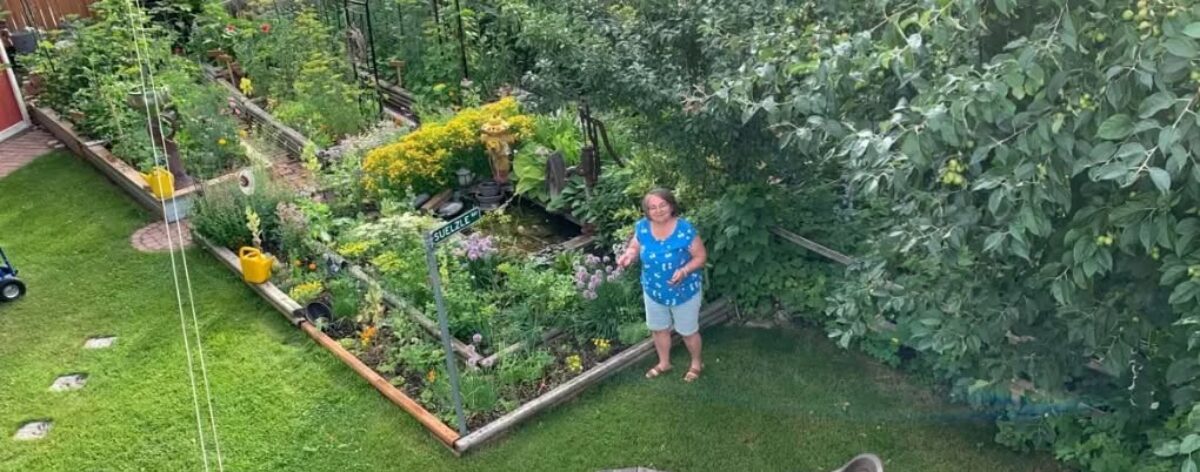
I have always been interested in good health and nutrition, and like all moms wanting to ensure my kids received the very best I knew how (and had the ability to provide), I had to rely on information that came from a variety of sources. The problems arose when informational sources contradicted themselves. I am sure you’ve found that happens – not infrequently.
 Like the whole butter vs margarine debate of the 80’s – which apparently we’re still debating ….. and of course the fat vs no-fat debate. etc.
One can really get wrapped up in knots trying to decipher, give credibility where it’s due and be suspicious without being cynical. Like others I swayed from time to time between fads and science, being in a specific camp only to find out that my sources of information were either wrong, or became suspect because they had hidden agendas or something to sell. Argh …
I decided long ago that when in question about what to feed my family, there was one guideline I can rely on completely to remove all doubt. It is brief and simple but profound in its straightforwardness, and upon investigation one can see incredible wisdom. What is it?
Counsel given long enough ago as to remove all modern conspiracy theories (😉) and yet still be relevant to the world I currently live in.
“All wholesome herbs God hath ordained for the constitution, nature and use of man. Every herb in the season thereof and every fruit in the season thereof, all these to be used with prudence and thanksgiving.”
(D&C 89:10,11)

This portion of a larger code of health called “the WORD OF WISDOM” was recorded in February of 1833, and whether you believe it was from the personal writings of an individual, or that it was given as heavenly revelation, I’ll leave it up to you. But it deserves a close look in light of today’s understanding.
I want to refer to the phrase “in the season thereof”.
I find that increasingly significant in this day when the typical North American can eat watermelon and apples twelve months a year. Firstly, what is referred to by the word herb? as in “every herb in the season thereof“. In the mid nineteenth century the word herb was often synonymous with our word  ‘vegetable’, and the meaning quite literally is – any edible plant in or on the ground, that dies back to soil level at the end of the growing season. So modernizing the line – “Every [vegetable] in the season thereof and every fruit in the season thereof” – simplifies our discussion.
It is easy to understand that in 1833 eating fruits and vegetables in the season they grew would be the most beneficial. At the time, the only accessible ways for the average home to preserve would have been temporary cold storage, ferment or pickle, or in some climates to sun dry, but clearly each method was only suitable for a narrow range of foods, and all were completely weather dependent. And frankly, only for the extension of a few months at best. But still, one does the best one knows how to do right? It was pretty obvious you would get more nutrition from a ‘fresh’ apple eaten in its season, than one stored in the root cellar for several months or dehydrated. But still in the middle of winter, a dehydrated apple is a welcome variation. Although fresh cabbage is preferable, sauerkraut would be a close a second in the middle of January. . . . . you get the point.
So here we are, almost two centuries later – and we can have ‘fresh’ tomatoes in our salads all year round. We see watermelon, oranges, bananas and even blueberries and raspberries on the supermarket shelves in every month of the year. Many fruits we buy from the produce department don’t grow during any season in the country I live in. Bananas, pineapple, mangoes, kiwi, ….. and my personal favourite, citrus fruits. Most of us wouldn’t know if those fruits even had seasons, let alone what they are. Well, let me put your mind at ease. They do. The question is, should we really eat everything all the time, just because we can? I’m gonna save you some time because I am not interested in the debate. I say – “no. We shouldn’t.” If we really want the fruits and vegetables to be of optimum value to us, we should eat them “in the season thereof”. So the next questions would naturally be ‘why?’ and ‘how?’ and ‘what even IS the season?’
Lets get 7 important and applicable facts on the table to begin with:
#1 – fruits and vegetables begin to deteriorate in the hour they are harvested. Nutritionally and in every other way. This implies that ideally, we’d want the journey from “field to fork” to be as short as possible.
#2 – taste and natural colour are excellent indicators of nutritional value. They are intrinsically connected. You can count on it, and trust your taste.
#3 – many fruits and even vegetables we buy in grocery stores are harvested before they have ripened. This gives producers the ability to pick, ship and market them with reduced risk of spoilage. Consider bananas. Does anyone in North America question that bananas are picked green? How often have you bought summer peaches, only to have them be ‘not quite ready’ to eat? Still a little too green or firm. Pears. Obviously picked green. Mangoes. I often joke that I used to buy them when they were green, throw them out when they were brown, and only occasionally eat them when they were orange. … Don’t get me wrong. I am not complaining. Clearly, if we want to eat ‘fresh’ bananas in Edmonton, they must be picked before they’re ripe. I totally understand they couldn’t possibly make the trip if it were otherwise. However …. there is always a price to be paid right?
#4 – When a fruit ripens on the tree, it is complete. Fully developed. With all the vitamins and minerals and other nutrients that nature intended. If we could eat that mango right off the tree, then wow! Wouldn’t we expect to taste the difference? Phytonutrients are the very important antioxidant nutrients contained in fruits and vegetables. They are among the last to develop in the ripening process. Wait! That implies that by picking a peach before its ripe, its nutrition is incomplete? Or at the very least – compromised?

Yeah, it does. In fact, vitamin C is one of those very important antioxidants, and don’t we expect a fresh peach to be loaded with vitamin C? Well yes. Of course. And fairly so. But another fact is ….
#5 – most produce travels thousands of miles to reach its destination markets. We aren’t all fortunate enough to live in a climate where peaches and apricots and blackberries grow in abundance. And even if we did live in Hawaii where pineapple and mangoes grow just down the way, that means we don’t live in a place that grows raspberries and blueberries. Hold that thought.
#6 – the apples we buy in the grocery store are never ‘fresh’. In fact almost without exception, they were picked last year and kept in cold storage all these months. It is the only way to ensure apples stay on the grocery store  shelf twelve months a year. Lets face it, when we eat an apple in May – we KNOW it had to have been picked eight or nine months ago. At the very least. Lets think about that ‘fresh’ apple. Is it reasonable to expect it to be as nutritious as it was in the days after it was harvested? No! That is completely not reasonable. So if you want to eat an apple for your lunch in June, then reduce your nutritional expectation out of it.
How are apples kept so good looking all those months? They’re put into what’s known as Controlled Atmosphere storage where they sit in a sort of stasis. The temperature is very low, and oxygen levels are reduced to 2% which prevents them from ripening; some growers call it “putting them to sleep.” I am not complaining. It’s a part of modern food science that keeps the world eating. And it is necessary with the sense of entitlement that North American consumers have, that tells us we should be able to eat apples whenever we want. It’s a habit we’ve become accustomed to. Personally, I love apples in the fall – when they’re crisp and juicy and at their best. I don’t like them as much when they’re not at their best, and I don’t feel the need to eat them 12 months a year. I will admit however, that I will eat freeze dried apples in those off months – because they are always at their best. But more about that later. 
#7 – going back to fact #1 “fruits and vegetables begin to deteriorate within the hour they are harvested”, when would it be best to eat a fruit or vegetable? As soon after harvest as possible obviously.
#8 – in the area that I live, there are no fruits or vegetables ‘in season’ for almost 8 months of the year. So clearly, those of us in the northern areas must be creative to eat a variety of food with the best possible preservation of nutrients.
So, does that mean that we shouldn’t eat apples in the spring? Or watermelons in the fall or winter? I don’t believe it does. Do whatever you want. Eat whatever you want. But be reasonable in your expectations of the food you’re eating. Don’t expect them to be what they cannot be. So how does one eat a good variety of fruits and vegetables all year round? And make no mistake, variety is important when we’re nourishing our bodies.
Going back to the counsel I quoted above:
“All wholesome herbs God hath ordained for the constitution, nature and use of man. Every herb in the season thereof and every fruit in the season thereof.” (Word of Wisdom)
It is so simple. I am a purist when it comes to the source of this type of counsel. I am convinced that my Heavenly Father quite literally is not only interested in my health and well being, but that He is invested in it. To the point that He is telling me what is best for me. (not by constraint, but by loving counsel). He is telling me to eat fruits and vegetables when they are the most nutritious and beneficial to my health and well being. Did He anticipate that one day we wouldn’t be bound to what we could reap from the earth ourselves? or buy from local farmers? Oh I believe He anticipated everything in my world today. And yet still, He counsels me that ALL wholesome fruits and vegetables He ordained for my use. “For the constitution, nature and use of man.” Not only that, but He tells me we should eat them with “prudence and with thanksgiving“. (D&C 89:10,11)
How could we obey the spirit of the counsel to eat fruits and vegetables “in the season” while still partaking of the wonderful variety our present circumstances provide? To be ‘prudent’ is to be wise and practical especially when considering the future. It implies care and attention to the details of one’s best interests. To use ‘thanksgiving’ is to give grateful acknowledgement of “benefits and favours” especially to God. I think we can agree that thanksgiving is a personal state of mind, completely between oneself and God, but to be clear, it is important to God that we are grateful and express that gratitude. I’ll leave that up to you.
One of the things I am very grateful to modern food science for is the science of freeze drying. Developed and used by ancient people (the Incas in the Andes) to the extent they had the ability to harness the elements of sun and cold temperature, it became a serious science during the Second World War to send stable blood components to hospitals overseas. It really took off during the years of developing space travel. In need of highly nutritious food that didn’t require water and with a long shelf life, it became the subject of very important study. Thank-you space industry. 
The process locks in nutritional value better than any other way of preserving food – even cold storage.
The result: a food with the highest nutritional value, second only to straight-out-of-the-garden. That’s right! Fruits and vegetables that remain the nutritional power houses they were on the day they were picked ripe from the tree or garden.
What is the science of freeze drying?
Well, its really very simple. Its a two step process:
1) flash freeze
2) remove remaining moisture.
That combination = freeze dried. Of course ‘simple’ means the process is pretty straight forward. There is still a lot of science and technique involved in getting the very best result.
Many of us live in areas that have winter or non-growing seasons. In the spirit of prudence, I cannot think of a better way for me to abide by the spirit of eating “in the season thereof” or to ensure the food we eat is the best possible nutrition – than FREEZE DRIED food. Not only is it ‘fresher’ than some of the so-called ‘fresh’ foods in our grocery stores, retaining a higher and more stable level of nutritional value than grocery store produce, but protected in a sealed airtight container, it has an extended shelf life. Quite literally, stored properly it remains ‘in-season‘ for a very long time – 25 years and more.

And in the spirit of thanksgiving, I thank God for the science of freeze drying which provides the best food on earth to the masses, in all climates, and in all seasons. I am grateful for the counsel to eat fruits and vegetables when they can provide the most nourishment to our bodies, and I am grateful that inspired modern food science has provided a way for us to have food security and independence every season of the year.
The best way to eat fruits and vegetables? Still straight out of our gardens. No question. If we have them. Or as quickly as we can purchase them (from a local market garden, or farmer’s market), making that trip from-field-to-fork as short as possible.
The next best way? Freeze dried. Absolutely.
Having said all that – I do not own a freeze dryer. I know right? Seems contradictory. Some friends tell me they’re surprised since I am all about self reliance. food storage, and home production and such. I get it. I can, I freeze, I ferment and I dehydrate – but I choose not to freeze dry myself. Why not? Because in all those other circumstances, I believe I can produce a better end product. I know where my vegetables come from, where my berries, plums and apples come from, I know they’re organic, I know when they were picked, and I am in charge of all the things that I’m most particular about. As a general rule of thumb I don’t preserve produce I didn’t grow myself.
On the other hand, I don’t believe I can produce a better end product if I freeze dry myself. Why not? First of all, I would have to buy the peaches, mangoes, blueberries, bananas, etc in order to freeze dry them. I know the process of freeze drying and what would be required of me and my resources to produce a high quality end product, one that I could have confidence would still be the highest quality in 5-10-15+ years. It is involved, precise and expensive. Very expensive. And then there is the storage of it. The food can only be as good as how well I protect it. That is another process with another expense.
After the expense of the unit (which is only part of the picture), I feel that if I’m going to have to buy the food to freeze dry, I might just as well buy it already freeze dried.
And while I acknowledge that not all freeze drying companies are equal in their dedication to the quality I desire, I know one that is. I have had long experience with this company. I know many of the behind-the-scene details of this company and their processes. I have toured their facilities more than half a dozen times over the years, I have even participated in a few of the steps, and more than that – I have used their food for over a decade. It meets my requirements for quality on every level, and I have confidence that they’ll be around for all my future needs.
For others, purchasing a freeze drier might be the right choice, but for me and my purposes – unless something unforeseen happens in my future – I prefer to purchase my freeze dried fruits, vegetables, dairy and meat from Thrive Life. I highly recommend them. So firm is my resolve in that choice, that years ago I became a consultant with Thrive Life, enabling me to not only benefit from my own purchases, but earn an income as well. I like being able to represent a company that prioritizes quality and value the same way I do. It is important to me on a very personal level. So, while I love freeze dried food, I choose not to freeze dry myself. I find that the quality of the freeze dried food I feed my family and store for future use, gives me the nearest quality to fresh from my backyard garden as I can possibly get. And since I don’t grow bananas or pineapple in my own backyard garden, it opens the world to me – allowing my family to eat ‘in the season’, making that journey from field to fork in the nutritional equivalent of 2 – 4 hours. I’m hard pressed to get things from my garden to my table within 2 – 4 hours. It’s pretty hard to beat.

I’d love to hear your thoughts.
Warmly,
Cindy Suelzle
 I would shine them up with a damp cloth for the table. To this day there is nothing to compare with those deliciously crispy autumn apples. sigh ……
 Within weeks from harvest the natural process of deterioration will continue to break down an apple. According to the US Department of Agriculture, apples stored in temperature controlled, low humidity conditions with low levels of oxygen and high levels of carbon dioxide can be stored for months before being consumed. To extend the fruit’s post-storage quality it is sprayed with an ethylene blocking colourless gaseous compound called 1-methylcyclopropene. This same chemical is used to lessen the “de-greening of broccoli, browning of lettuce and bitterness of carrots” says USDA.
