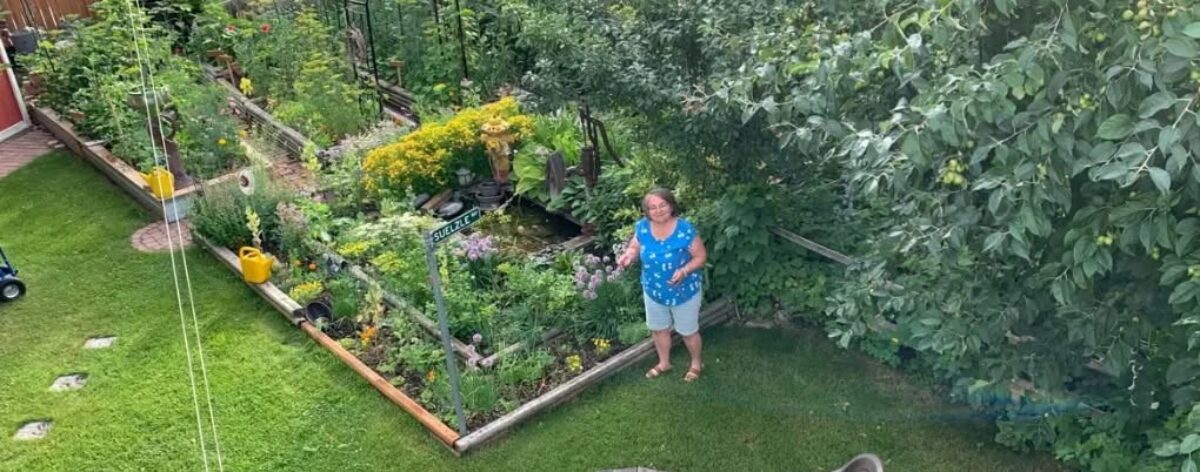
Rhubarb gets it’s own post because there’s just so much to say about it.
Rhubarb as a plant has been used for centuries as a medicinal herb for digestive complaints such as constipation, diarrhea, heartburn and stomach pain. Even for cold sores. Whether it was ever effective for any of those concerns, I don’t even have an opinion. My only interest in rhubarb is as a food. And it is a nutritious food.
Though perfectly suited to our climate, it is not a native of North America. Originally from central Asia, it was introduced to Europe in the 1600’s, and within a hundred years, made it here, where it’s been at home ever since. Botanically, it is a VEGETABLE, but it’s so often used as a dessert that we commonly think of it as a FRUIT. We need to get over that type-casting and let it be what it wants to be. I’ve always thought of it as the vegetable-who-wants-to-be-a-fruit, but in actual fact, it is probably the most versatile food in your garden, lending itself as easily to savoury dishes as to sweet dishes. And contrary to what I believed most of my life, it doesn’t need a whole lotta sugar to make it palatable.

The leaves are poisonous, so let’s get that out of the way right off the bat. They contain a lot of oxalic acid, which, in the amount present, is toxic to both humans and animals. Oxalic acid is in a lot of things we eat, including the rhubarb stalks, many fruits, and leafy green vegetables, nuts and whole grains. We need some of it, so it’s good, but not to the degree that rhubarb leaves contain.
You won’t die from eating some rhubarb leaves, so don’t fret about that. And neither will your kids, so don’t avoid growing rhubarb because of some perceived danger. It would take a LOT of rhubarb leaves to kill someone and they’d have to be pretty dedicated to eating them. Poison doesn’t always mean ‘kill you’. In this case the oxalic acid will upset your stomach, make you sick, and probably cause vomiting and diarrhea if you ate enough. I doubt you’d eat too much to begin with, especially if it made you sick.
I don’t know why someone would, but you’d have to eat a LOT of rhubarb leaves to be poisoned, and the symptoms are stomach, vomiting and diarrhea, (with your body trying to get rid of it).
Sadly, I had a chicken named Lacey who had a thing for rhubarb leaves. No matter how much I tried to make it INconvenient for her, it was impossible to keep her out of them since she was free range in the yard. Seemed like she was addicted. I rarely caught her in the act, but she could polish off a leaf in record time. For a long time, she seemed healthy enough but since the most common symptoms of oxalic acid poisoning are stomach pain, nausea, vomiting, diarrhea, weakness, and difficulty breathing – its kind of hard to pin those down in a chicken. The other hens didn’t seem interested in the leaves at all, but Lacey couldn’t stay out of them. Poor Lacey; she slowed down over a few days until one morning she just didn’t wake up. I don’t pretend to know for sure what killed her. She was older than the other hens, and she could have been nearing her end anyway. Or it could have been the stupid rhubarb leaves. The other ones didn’t seem to care, and no previous hen (or any that came after her) seemed to care about rhubarb leaves. You’d think that an animal would have an inner instinct not to eat things like rhubarb leaves, but I guess Lacey missed that memo.
I use the leaves to compost, and sometimes chop them up with the lawn mower first for mulch. Oxalic acid breaks down fairly quickly during decomposition. Some gardeners, I’ve been told, make a ‘tea’ from the chopped leaves to use as a natural pesticide in the garden, but I have never tried it. It seems like too much work to me.
The stalk is the edible part, and many people find it delicious. I can’t say I’ve always found the taste of rhubarb to be my favourite, and I never craved it, but I would certainly miss it if I didn’t have it. Rhubarb always tasted like ‘spring’ to me. In the last few years however, as I’ve learned to take better advantage of this wonderful garden offering, I can say now that I have come to very much enjoy the taste, and look forward to spring – when it’s plentiful. I love the freshness it adds to a morning smoothie. Like a true friend, it’s stayed with me all these years, selflessly giving to me, always underappreciated, and under-used, until I saw in it, its true value. After all this time, you could say that our friendship has developed into a true love affair.
Rhubarb is always there for you – a true friend
Many of my friends and cousins as children, used to eat rhubarb raw in the summer, dipping the stalk in sugar or even salt. I could never do that – I’ve actually never even tried it, waaay too sour for me to even wrap my mind around it. Although I consider myself an excellent “tryer”, I just can’t bring myself to take a bite of raw rhubarb, and I cannot even think about eating straight sugar. Combining rhubarb with sugar and cooking it however, changes the natural tartness into something quite delightful. Whether in a jam, jelly, syrup, cake, pie or punch, rhubarb’s bitterness fades when combined with a sweetener, and it becomes uniquely refreshing. The surprise is that it doesn’t require nearly as much sugar as we think it does. Try using less than you used to. You’ll be surprised.
I had read once that rhubarb has valuable nutrients to bring to the table, but I was always of the opinion if we had to use so much sugar to make it palatable, that the sugar pretty much negated any nutritional value we might have derived from it. It made it not worth the tradeoff to me. That opinion changed over the years as I have discovered ways to bring the burst of fresh flavour, without an excessive amount of sugar, (sometimes not using any at all.) I hope you’ll give it a better try.

I decided many years ago that since rhubarb grows so readily in cool climates (my part of the world), I should learn to take the best possible advantage of it and help my family enjoy it. Loving the taste of something good for us, that is easy to grow and to use, seems like a better idea than loving an exotic fruit that can be expensive and might be unavailable from time to time. For instance, while I love pineapple, it is impossible to get field-ripened pineapple (which we know is the most nutritious) ,when you live in Edmonton. Rhubarb, however, is in my garden and always at it’s plant-ripened-best when I pick it. I am all about IN SEASON, field-to-fork eating, and though my grow-months in Edmonton, Alberta are limited, I want to take full advantage of everything they have to offer. Though rhubarb is at its best in May, June and July, you can also pick from a well-established plant as early as April and right through to the end of the growing season. How accommodating is that? Rhubarb really WANTS to be your friend! Just don’t pick too heavily in the earliest part of spring or the end of summer. Give it a chance to re-establish its strength.
Why rhubarb?
Because rhubarb is good for you—that’s why.

It helps lower cholesterol, supports digestion and gut health, and is rich in natural fibre and Vitamin K, which plays an important role in maintaining strong, healthy bones.
Rhubarb is also an antioxidant powerhouse—containing as much or even more than an equal amount of kale. Antioxidants help support collagen production, contributing to healthier, more youthful-looking skin, while also protecting the body from harmful free radicals linked to chronic disease.
Its deep red stalks are rich in anthocyanins—the same compounds that give many red and purple fruits their colour. These powerful antioxidants have been shown to help reduce inflammation and support heart health by improving blood vessel function and reducing the narrowing and hardening of arteries.
And rhubarb wants to be your friend. It’s easy to grow, hardy in Alberta, and incredibly forgiving. Move it, divide it, or forget to water it for a while—it won’t hold a grudge.
It prefers a sunny location but will still do its best for you in partial shade. Give it plenty of water and you’ll be rewarded with thick, crisp stalks. Neglect it a little, and the stalks may be thinner and less crisp—but it will keep going.
Rhubarb has a quiet resilience. It will struggle through tough conditions, then bounce back when things improve—growing strong again, as if the hard times never happened.
And it’s versatile as heck in the kitchen, lending itself superbly from desserts to drinks, from salsas and chutneys to beautiful, refreshing summer smoothies (all year long if you freeze some), from breakfast muffins and scones to deep-fried fritters – and everything in between.

* I’ve had rhubarb doubters—even self-proclaimed rhubarb haters—tell me they became converts after sitting at my table. It wasn’t anything magical about the setting, and it certainly wasn’t because I’m some amazing cook (heaven knows I’m not).
The truth is simple: they had never given rhubarb a fair second chance after one bad experience.
I have a friend who came to my house for a late spring Food Drive meeting. Because it was in season, I served all things ‘rhubarb’ as refreshment: rhubarb slush, rhubarb cake, rhubarb crumble, rhubarb ice-cream. He told me later, “I used to make fun of people who said they liked rhubarb. I was convinced nobody actually did—they just pretended because . . . they had to.” As if it would be disloyal not to like something “as Canadian as Rhubarb“.
If he reads this, he’ll know exactly who I’m talking about. He came for information about the upcoming Food Drive… and left a rhubarb convert. LOL

growing
Rhubarb is a perennial plant that will be at its best for close to ten years. Though it will grow and produce, much longer than that, its helpful if you dig it up and separate it once in a while. When selecting a plant, always go with a type of rhubarb with the reddest stalks. They’re sweeter and richer in anthocyanins and other valuable antioxidants. Rhubarb needs a dormant season – winter, and grows best in cool weather, so it’s one of the first garden fruits in the springtime. It wants sun, the more the better, so give it a nice sunny spot. It prefers slightly acidic soil, well drained and rich. Good to prepare your spot with well rotted compost.
If planting in your vegetable garden, plant along the edge so they can remain undisturbed each spring. They’d do well against the house or garage, or in the back of a flower garden. Allow about a square yard of space to grow outward. In the Edmonton area, you’ll be picking rhubarb by May, and certainly May, June and July are when it’s at its best. It will however, do well enough throughout the summer, unless it is an especially hot one, but even then – just make sure it has plenty of water. It really wants you to be happy and will seldom let you down.
If you don’t have a yard to grow your own rhubarb plants …. then ask around, often times people have more on hand than they can use. Next best place is a Farmer’s Market. Next best place is a grocery store. It is so plentiful however, that I cannot even imagine having to resort to buying it from a store. Just find more friends.
harvesting
Pulling vs cutting.
Don’t cut the rhubarb stalks out. This leaves residue that will decay and invite disease. Pulling triggers the plant to replace what was taken. When harvesting rhubarb, select stalks that are firm and upright, and pull up gently from the base of the stem, twisting just a little. The stalk should pop out cleanly, but if it breaks off, pull out the remaining piece out. Don’t leave it there. See above about inviting disease.
Remove all dead, or limp stalks and leaves to throw into the compost. Cut the nice big red stalks from the leaves, and throw the leaves into the compost. Trim any blemishes from the stalks and rinse to clean. From here you can chop into one inch pieces to freeze (in freezer bags) or to use right away. They can be kept a few days in the fridge if needed.
Officially rhubarb is actually a vegetable, but it is most often used as a fruit. Don’t be too quick to typecast it though, just because it’s most commonly used alone or in combination with other fruits to make desserts, doesn’t mean it can’t pull off a respectable part of the main event as a savory dish. Add it to a salsa, use it to make chutney or even as a marinade for meat. I use it with BBQ sauce, and tomatoes when making pulled pork.
Never harvest a plant completely. Leave about 1/3 – the smaller less mature stalks to regenerate new growth. Pick the bigger stalks. At the end of the season, sometime in late August (in central Alberta) or early September, do your last picking, and then remove any plant debris. If you cover the base with a nice thick layer of compost before winter, your plant will be advantaged in the spring. It is not necessary to cover the plant in mulch or hay, but make sure it has a good covering of snow for the winter.
using

Don’t get stuck in the trap of always thinking rhubarb must paired with sugar, and don’t get stuck into thinking it always has to be eaten with a spoon.
For years, I had the mistaken idea that because it was ‘sour’, rhubarb NEEDED sugar, so I didn’t use it as much as I would have otherwise. Though its nutrition was compelling, the sugar seemed to neutralize its goodness. Until one day, I was brave enough to use it without sugar, in a summer smoothie with other fruits. My eyes were opened! It was delicious, refreshing, and NOT sour, the companion fruits compensated beautifully. Fully converted, I chopped a stalk of rhubarb into every smoothie for the rest of the summer, and froze some to use for that purpose later in the year. Now I anxiously look forward to the fresh, crisp red stalks getting big enough for that picking. I have three rhubarb plants in my fruit garden, and two planted outside my fence for alley gleaners. Yes, I still use rhubarb for dessert, but I am not bound by that outdated rule.
Recipes:

Drinking your Rhubarb:

- Rhubarb Lemonade
Can anything be more refreshing than rhubarb and lemon in a chilled glass? Or more simple? for 8 servings: prep time 10 minutes, cook time 10 minutes.
Ingredients:
2 c. chopped rhubarb; the redder, the sweeter
1 c. white Sugar
1 tbsp. unsweetened Lemonade powder or the juice of two lemons
8 c. Water
Directions: In large saucepan, stir together rhubarb and sugar into 2 cups water and bring to boil. Reduce heat and simmer on low for about 10 minutes, or till rhubarb is tender, stirring from time to time to prevent scorching. You want the rhubarb to be soft.
Remove from heat and strain through a sieve to get a reasonably clear juice. Save the pulp for lots of other uses or to just eat. 🙂 Stir in the unsweetened lemonade powder or lemon juice. This is now a rhubarb SYRUP. Let it cool. You can store it in the fridge for a few days. When ready to serve, pour cold syrup into a pitcher with 6 cups ice COLD water. Stir completely to blend. Serve over ice. I am a fan of sparkling water, so I prefer to add sparkling water if I have it on hand.
- Rhubarb Slush
I grew up on Rhubarb Slush. It was at every party, or gathering. Every mom had a pail or two in the freezer that they pulled out for special occasions. For all my early ‘mom’ years, I did too. If it was a big gathering, it was served in a punch bowl, if you only had a few guests, then you would scoop into a glass and top up with ginger ale.
- Basic Slush Recipe with suggested variations:
8 cups coarsely chopped rhubarb
equal amount of water
2 cups sugar
in a fairly large pot. Bring to a boil and reduce heat to simmer rhubarb till tender. This will only take 5-10 minutes so don’t go too far while its cooking. You can puree in the blender at this point, or pour it through a sieve to remove the pulp. I mash the rhubarb with a potato masher and leave the pulp in it. I like the texture, it adds to the ‘slushiness’ of it in my opinion.
Add 1/2 cup lemon juice. Stir well and freeze in an ice-cream pail.
For lg jug or punch bowl, dump in the entire pail of frozen slush and top off with 2-4 litres of gingerale, or 7 Up or your fave pop.
For individual glasses, thaw enough to scoop slush into glasses. Top up with pop.
variations: Add any one of the following, or a combination of your choice. You’re the boss of YOUR Rhubarb Slush. Create your own signature recipe.
Add strawberries to the simmering rhubarb for the last 5 minutes. Cooking the strawberries too long will damage the colour.
Add a pkg of strawberry jello to the hot cooked rhubarb, stir to dissolve well. This will add a lot of strawberry flavour, colour and slushiness.
Add a can of orange juice concentrate after the liquid has cooled down a bit.
Add a litre of pineapple juice after the liquid has cooled down a bit.

RHUBARB CORDIAL
A cordial drink is a sweet, concentrated syrup. You mix it with water or soda before you drink it. I do not cook the rhubarb when making a cordial. In fact the cordial is sometimes a by product of preparing rhubarb for making jam (or just about anything else). A Big Lucky BONUS!
What does it mean to ‘macerate’?
Macerating means to soak the fruit in sugar, alcohol or other liquid to soften it and draw out its natural flavour. The process pulls juices out of fresh fruit to create a rich syrup.
How to Macerate Rhubarb
With Sugar: I measure out the chopped rhubarb to know how much I’m starting with. With Rhubarb I generally use a 5:1 ratio – 5 parts chopped rhubarb, 1 part white sugar. Add the appropriate amount of sugar and toss it well to coat everything. Cover with a clean cloth and leave for a minimum of two hours. I usually prepare the rhubarb at night and leave it sit over night. (if you think you want it sweeter, go ahead and add another cup of sugar making it 4:1, but I suggest giving this amount a try before you assume it’s not sweet enough)

By morning I can easily have a quart (litre) of syrup sitting in the rhubarb. Simply pour it off – into a glass jar. It is absolutely delicious and there is ZERO need to cook it and damage the nutrients. (there might be a slight variation in the amount of liquid you pour off, depending on how well the rhubarb has been watered and how big and crispy the stalks are)
Recipe for Rhubarb Cordial
– expect 2 or 3 cups of syrup from 10 cups of rhubarb. I usually double this amount.
10 cups chopped fresh rhubarb
2 cups white sugar
this is a 5:1 ratio, if you want to use a 4:1 ratio for sweeter cordial, go ahead
Put freshly chopped rhubarb in a large bowl, and cover with sugar. Stir well to completely coat every piece of rhubarb. Cover and let sit several hours. I try to leave mine 8-10 hours (overnight).
Strain rhubarb into a jar.
You’re done! That’s how easy it is.
How to Store Rhubarb Cordial:
In a glass jar in the fridge. You can expect it to last for MONTHS! It will begin to ferment of course, but in the process the flavour is enhanced and the cordial becomes fizzy. I love ‘fizzy’. The fizzier the better.
How to Serve Rhubarb Cordial:
I serve with ice and sparkling water. In an 8 ounce glass for instance: 6 ounces sparkling water with ice + 2 ounces cordial. The carbonation of the sparkling water mixes beautifully with the fizziness of the cordial. A wonderfully refreshing and delicious drink.
* During the summer, I will add cherry liquid, raspberry liquid and any other fruit liquid that comes my way. At that point its lost its identifiability, but not its deliciousness.

Baking:
*Rhubarb Pie, Crisp or Cobbler
What is the difference between pie, Crisp or Cobbler?
Answer:
Baked in a crust = pie
baked in a dutch oven or a baking dish with a crumble topping = crisp or crumble
baked in a batter or with a batter on top = cobbler.
There are many recipes to be found, but essentially the basics are to thicken with flour or cornstarch and sweeten with sugar.
Rhubarb CRISP (with a crumble topping) recipe:

TIP: I always prefer to macerate1 rhubarb when I can spare the time, as it removes a significant amount of liquid. To do this, put chopped rhubarb in a large bowl, sprinkle with full amount of white sugar over top. Toss to coat evenly. Cover with a clean cloth and set aside to rest for a few hours (at least one hour). I try to leave it covered with a tea towel several hours or even over night if possible.)
If you left it overnight, don’t pour off all of the liquid (reserve a cup or two). If you left it only an hour, go ahead and strain the liquid (as there is sufficient moisture still in the rhubarb to make a nice sauce).
This syrup is wonderful. Save it to use for Rhubarb Cordial.
Rhubarb filling: for 9×13 pan (can be halved easily)
You can use the same filling recipe for whatever dish you want to end up with. The difference is in the topping.
8-10 cups chopped rhubarb (about 4 pounds / 10 med-large stalks)
1 cup sugar
2 Tablespoons cornstarch
*optional: add 2 Tablespoons fresh lemon juice
OR if you love the taste of lemon as I do, 1/4 medium lemon, pureed in blender
preparing the filling
In large bowl, use wire whisk or sift, to combine sugar and cornstarch thoroughly.
RHUBARB CRISP TOPPING (for a crispy crumble topping) :
2 cups old-fashioned rolled oats
1/2 cup unbleached flour
1 cup brown sugar (packed)
*1/2 teaspoon salt (optional)
1 cup COLD butter
directions:
– Butter a 9×13 baking pan and set aside. Preheat oven to 375 degrees Fahrenheit.
– Pour sugar/cornstarch mixture over top of the rhubarb, and toss to thoroughly incorporate.
– If you’re using fresh lemon puree or juice, mix it in now.
– Pour rhubarb mixture into prepared pan. set aside.
– Prepare topping by mixing oats, flour and sugar well. Cut in cold butter (or margarine) and mix till crumbly. Spoon over top rhubarb filling.
Bake 375F for approximately 30 minutes – till nice and browned on top.
Remove from oven and let sit at least half an hour before serving.
Great combinations are: Rhubarb & Strawberry, Rhubarb & Raspberry, Rhubarb & Saskatoon, Rhubarb & Cherry . . .
Serving suggestions: with a little table cream poured over top, or ice-cream of course, or just by itself
*hint: if you have macerated your rhubarb, pour off most (but not all) of the liquid, do NOT use the additional cup of sugar (it’s already sweet enough) and use only 1 Tablespoon of cornstarch.
Rhubarb Cobbler

The filling is the same as for above. The only difference is that the topping will be made from a batter. This amount will be for 6-8 cups of rhubarb, in a 9×13 pan as above. The recipe can be easily halfed.
Spoon batter on top of rhubarb filling. Bake in 350F oven for 35 to 45 minutes.
I suggest setting the timer for 30 minutes so you can check on it, then go back for another 5 minutes at a time. Crust will be tender but firm, and lightly browning when done.
Allow to cool at least half an hour before you serve. Enjoy with ice cream.
*Rhubarb Coffee Cake or Muffins
Such an easy variation to make to your favourite recipes. Just use your favourite recipe and add chopped rhubarb instead of whatever else it calls for. I like to add a little lemon powder to the dry ingredients, it just seems to perk everything up.
Soft Rhubarb Cookies
Nice, soft cookies with just the perfect combination of tart and sweet.
Makes 4+ dozen.

Preheat oven to 375 degrees F.
Dice fresh rhubarb (about pea size), enough to make heaping 2 cups, and set aside.
In a large bowl, cream 1 cup butter or margarine with 2 cups brown sugar together.
Beat in 2 large eggs and 1 tsp vanilla.
In a separate bowl, sift 3+1/2 cups of flour
2 tsp cinnamon
1 tsp each of salt, baking soda and baking powder together.
Add to the sugar mixture 1 cup at a time, stirring to mix thoroughly between each addition.
If it gets a little too dry, add a couple of tablespoons of milk.
Add rhubarb pieces and fold in. Spoon onto prepared baking pan (I use parchment paper) and bake 12-14 minutes or until cooked through. Test by tapping gently with your finger.
Cool for 2 minutes, then remove cookies onto a baking rack.
Enjoy!
optional: We’re oatmeal fans in our house. Substitute 1 cup flour for rolled oats.
optional: I like to add even more rhubarb. Another cup.
- Rhubarb Chocolate Extreme Brownies
Strong chocolate flavour pairs itself really nicely to the sudden bursts of ‘zing’ that comes with fresh rhubarb. Cut the pieces small, but make sure you have lots of them. You’ll be glad you did.

1 cup sugar
½ cup vegetable oil (your choice)
3 lg eggs
1 t vanilla
½ cup flour
1/4 cup cocoa powder
½ t baking powder
½ t salt
2 cups rhubarb, diced small
*optional: ½ cup dark chocolate chips
½ cup chopped walnuts
1. Preheat oven to 350 and butter an 8×8 baking pan, set aside.
2. Whisk sugar, oil, eggs and vanilla together, set aside.
3. Sift dry ingredients together, set aside.
4. Stir wet ingredients into dry ingredients until all is moistened. Batter is very thick – just sayin’. Fold in chopped rhubarb, chocolate chips and walnuts, till thoroughly distributed.
4. Pour into buttered baking pan and spread out to make it even. Bake 20-25 minutes or until toothpick comes out clean. Don’t over cook.
5. Allow to cool at least 10 minutes, then cut into squares.
Serve with whipped cream or vanilla ice-cream.
ENJOY!

*Simple Rhubarb Sauce
3 cups chopped rhubarb
1/2 cup sugar
Stir together and let sit (macerate) for an hour or more to draw out some natural juice. Bring to a slow simmer in a medium saucepan, 10-15 minutes or until rhubarb starts to soften and break down. Add more sugar if desired in small amounts taste testing as you go, and add a small amount of water if it gets dry.
Serve stewed rhubarb over pancakes or waffles, ice-cream or in a bowl with cream.
* Special treat, add a cup to homemade ice-cream during the mixing process.
* Add fresh strawberries right at the end of the cooking process so as not to lose their brilliant red colour.
* You will need a lot less sugar than you’re accustomed to expecting, so be cautious as you’re adding it, and taste as you go to prevent adding too much.
* I love the added tart taste of lemon – I add a whole lemon worth of juice, 1/4 cup.
Enjoy.

If you’ve never tried pickled rhubarb, you’re in for a surprise. We usually think of rhubarb as something destined for pies, crisps and jam—but rhubarb has a whole other side that is savoury, tangy and wonderfully crunchy.
Here’s why I think you should give it a try:
🌿 It’s rhubarb in a whole new way.
Forget dessert. Pickling brings out rhubarb’s natural tartness and turns it into a crisp, bright condiment that works beautifully with savoury foods.
🥒 It stays wonderfully crunchy.
Unlike cooked rhubarb, which can quickly turn soft and mushy, properly prepared pickled rhubarb keeps much of its satisfying crunch.
🧀 It’s fantastic with rich foods.
That sharp, acidic bite is exactly what you want alongside foods that are rich or fatty. Try it with cheese, charcuterie, roast pork, sausages, burgers or pâté.
🥪 It can wake up an ordinary sandwich.
Add a few pieces to a ham, turkey or roast beef sandwich and suddenly you’ve got something much more interesting.
🌱 It’s a great way to use a rhubarb harvest.
When your plants are producing faster than you can make desserts, pickling gives you another way to preserve that abundance—and something completely different for your pantry.
🫙 It makes a beautiful little jar.
Those rosy-pink stalks look gorgeous in a jar, especially when the rhubarb is young and brightly coloured. They’re almost as pretty as they are delicious.
And here’s my favourite reason:
Pickled rhubarb makes you rethink what rhubarb can be.
We tend to put rhubarb in the sweet category because that’s how most of us grew up eating it. But rhubarb doesn’t have to be covered in sugar to be good. Its natural tartness makes it perfect for pickling.
So if your rhubarb patch is producing like crazy this year, don’t make just one more strawberry-rhubarb pie.
Cut up a few stalks, put them in a jar, and try pickling them. You may find yourself wondering why you waited so long. 🌱🫙
*Easy Pickled Rhubarb Recipe:
I do not process this recipe or try to preserve it at all. You would lose the “crunch” of the rhubarb. You can keep it a few weeks for sure, but best to know ‘It’s a summer treat’. They are simple refrigerator pickles, and the beauty of that, of course, is that they take only a few minutes to make. They’re tart and a bit crunchy.
ingredients:
nice ‘pink’ stalks of rhubarb cut into 2 inch lengths and about 1/2 inch across
a nice white vinegar like rice vinegar or white balsamic vinegar
OR something completely different like a bold red wine vinegar
1/3 cup white sugar for every cup of vinegar you use
directions:
wash and cut the rhubarb into 2 inch (5 cm) lengths.
Arrange in a nice clean pint (500 ml) jar.
Start with one cup of vinegar and dissolve 1/3 cup sugar in it. Depending on how much you want to make, double it.
Pour the cool, sweetened vinegar into the jar, over top the rhubarb. Submerge completely.
Cover the jar and let sit for about two weeks in the fridge before serving.
optional: insert a couple large basil leaves along the side of the jar OR a sprig of tarragon.
Told you it was simple.
if you’d like to know more about flavouring vinegars and recipes, click on this link
Vinegars from the Garden
Rhubarb Ketchup
is one of those recipes that makes you wonder why you didn’t try it years ago.
It may sound a little unusual, but think of it this way: rhubarb already has the tartness that makes tomatoes so good in ketchup. Add onions, vinegar, sugar and warm spices, and that sharp rhubarb flavour transforms into a rich, tangy, slightly sweet condiment.

Here are a few reasons to give it a try:
🌿 It gives you another way to use rhubarb.
When the rhubarb is coming faster than you can make pies and crisps, it’s nice to have something completely different to put in the pantry.
🍅 It’s a delicious alternative to tomato ketchup.
It’s not trying to taste like tomato ketchup. It has its own personality—tangy, savoury, slightly sweet and wonderfully spiced.
🥩 It’s incredibly versatile.
Try it with burgers, sausages, meatloaf, roast pork, chicken or grilled meats. It’s also surprisingly good alongside eggs, potatoes and sandwiches.
🫙 It’s a great preserving recipe.
Rhubarb ketchup turns a seasonal harvest into something you can enjoy long after the rhubarb season is over.
💚 It’s a good “use what you grow” recipe.
This is exactly the kind of thing I love about growing food. You don’t always have to grow something new—you can find NEW ways to use what is already growing abundantly in your backyard.
And perhaps the best reason?
People are curious about it. Put a bottle of homemade rhubarb ketchup on the table and somebody is going to ask, “What’s that?” Then they’ll try it—and quite possibly ask you for a jar. (so make a few extra)
Backyard City Homestead tip: If you’ve got an abundance of rhubarb this year, don’t just make another batch of jam. Make ketchup. You might just discover your new favourite way to eat rhubarb.
Rhubarb Ketchup recipe
ingredients:
8 cups diced rhubarb
1 lg onion diced – enough to be about 3 cups
1 quart of home bottled tomatoes, or a 28 oz can diced tomatoes – undrained
1/2 cup white sugar + 1/2 cup brown sugar
1 T pickling salt
*optional: 1/4 cup Tomato powder (or tomato paste)
*optional: 1 teaspoon cinnamon
*optional: 1 cup white vinegar
directions:
In a large saucepan, sprinkle the sugar over top the rhubarb and let it macerate for about half an hour. Add all remaining ingredients. Bring to a boil, stirring to prevent scorching. Turn heat down, but keep it at a slow boil till thickened. Cooked rhubarb doesn’t have a beautiful colour, and I thought anything less than red, would be too difficult for my family to accept since I was passing this off as ‘ketchup’. I added 1/4 cup of tomato powder to intensify the tomato taste, and add to the colour. It was perfect! I’ll use it every time. If you want to know more about Tomato Powder click here.
Expect the process of reducing to take at least an hour, but probably not quite 2 hours. Stir frequently to prevent scorching. I set the stove timer for every 20 minutes so I don’t forget. When you’re happy with a nice thick consistency, turn the heat off and allow to cool to room temperature. Store in small jars in the fridge. This amount makes about 3 pints depending on the consistency you like.
The first time I made it I didn’t add the cinnamon or vinegar, but fully expected to do so at some point. It tasted amazing without either of them, and I didn’t want to spoil a good thing, so I didn’t. I will at some point try them both, just out of curiosity, but in the meantime I love this recipe the way it is. Adds a lotta class to things you might typically use ketchup for: hamburgers, meatloaf etc.
* If I was going to can it, I’d be adding the vinegar or better yet, lemon juice – just to be on the acid safe side. I would can it in pint jars and process it for 10 minutes just like for jam.
Fresh Rhubarb Salsa – use both recipes so that you get a feel for how easy and ‘varied’ it can be. Don’t ‘not’ make salsa because you don’t have some of these ingredients on hand. Be flexible, and use what you have.

Fresh SPRING Rhubarb Salsa
this is what you make in the earliest part of spring, when the most courageous plant in your garden is your ever faithful friend – Rhubarb, and maybe your chives too. This is what you make before anything else in the garden is ready. Its my spring tribute to RHUBARB.
1 cup packed of finely chopped (by hand, NOT a food processor) rhubarb
2 T your favourite vinegar (I use a rhubarb vinegar I made the season before)
2 T olive oil (or your fave kitchen oil)
1/2 cup finely chopped red onion OR 1 T freeze dried chopped onion OR 2 T finely chopped fresh chives
1 t sugar
* optional: add juice of a small lime
1. Put everything together, toss to dissolve sugar and mix everything well.
2. Serve immediately, or make ahead a couple of hours. Remember YOU’RE the boss.
Recipes are only guidelines to get you going. I use these amounts only to give you an idea of measurement estimates. It’s not very likely I’d ever make a single cup of this salsa. This is a great start, but if you like it a little sweeter, make it sweeter. If you like garlic, add a little garlic.
*Fresh Rhubarb SUMMER Salsa
I call this ‘summer salsa’ because of the many other ingredients that are plentiful in a summer garden, but not so plentiful in the spring as early as rhubarb is ready. This combination is terrific, delicious all by itself. Who said rhubarb has to be sweet? When you use it as a vegetable, you’re a little more willing to use less sugar. Only 1 tablespoon of brown sugar with over 8 cups vegetables.

4 cups+ finely diced rhubarb
1 small red onion chopped finely (same size as rhubarb pieces)
1 lg green pepper finely diced (*try to keep dice sizes uniform)
1 lg red pepper chopped *
1 lg yellow pepper chopped *
3 fresh meaty tomatoes (like roma) finely diced
1 T brown sugar
1/3 cup lime juice or 1 T powdered lime crystals
2 t coarse salt
I added a few stocks garlic chives including the bulb – chopped slightly smaller than the other vegetables
* optional: if you like a little heat, add 1 seeded and finely chopped jalapeno pepper; if you love the taste of cilantro, add 1/2 – 1 cup chopped fresh cilantro. I didn’t have either of these on hand the first time I made it. It’s all about making what you have – work for you. I added about 1/4 cup of chive vinegar – home flavoured. It was a nice touch.
* optional: I added a beautiful fresh nectarine – because I had one. It was perfect!
* optional: I added two very small garden onions sliced and diced thinly
Directions: Chop the rhubarb quite finely, and measure packed. Stir all vegetables together in large bowl. Sprinkle sugar, lime powder and salt over top and stir to completely distribute.
Use immediately, or let it sit in the fridge for a couple of hours. The first time I made this, I used it as a topping for a barbequed hamburger. Some used it as a relish. I put on about 1/2 cup – it was fabulous. It’s excellent as a side dish to serve with plain taco chips, or with anything else.
Spicy Rhubarb Chutney with a touch of India
I love the sweet spicy smell that fills the house with this gorgeous spiced rhubarb chutney. So delicious, you can eat it straight. Personally, I wouldn’t process it to can, simply because I’d prefer not to cook it that long, but you can always freeze the fresh rhubarb so that you can make this a few times in the off-season, or even freeze small containers of it to pull out for a special dinner. So quick and easy, and the bonus is that your house will smell GREAT! Lovely served over pork roast, beef or chicken – or wherever you typically use chutney.

Ingredients:
1 Tablespoon olive oil
1 small red or white onion, diced (or use freeze-dried onion slices)
2 cloves garlic minced
1 teaspoon ginger powder OR 1 inch fresh ginger, grated
*optional: 1 small hot chili pepper finely minced (seeds in or removed, its up to you. It‘s hotter if seeds stay in)
2 teaspoons cumin
1 teaspoon cinnamon
1/2 teaspoon cloves
1/2 teaspoon salt
5-6 cups coarsely chopped rhubarb
1/4 cup brown sugar + 1/4 cup white sugar
1/2 cup apple cider vinegar or your favourite vinegar (a balsamic would be wonderful)
1/2 cup+ raisins
Directions:
heat olive oil over medium heat, add diced onion, and saute 1 minute. Add garlic, ginger and finely minced hot chili pepper (if you’re using it). Saute another minute while stirring
Add spices and salt. Continue to saute another minute, stirring to prevent scorching.
Add sugar and vinegar. Continue to stir, till sugar is completely dissolved.
Add chopped rhubarb and raisins; reduce heat and gently simmer till rhubarb is softened and liquid is reduced – stirring every few minutes. This could take 10-15 minutes. When the texture is spreadable, its done – you be the judge,
Cool completely. Serve fresh or make ahead to refrigerate a few days.
preserving
Freezing, canning or making jam are the three best ways to preserve rhubarb. I’ve tried dehydrating it – bleh. But adding it to fruit leather is terrific. The nice tart taste is the perfect match for fruit leather – on its own or mixed with any number of other fruits: apples, raspberries, plums . . . . just a reminder: always pull the rhubarb off the plant rather than cutting it. See above if you forget why.
FREEZING
Wash and pat to dry freshly picked rhubarb. Cut into 1 inch pieces.
Most of the time I just throw the chopped rhubarb into a labelled (name and date) bag to freeze. If I’m planning to use most of it in smoothies – where I want it to come out loosely, then I spread the chopped rhubarb in a cookie sheet, then I freeze in the chest freezer. The next day, scoop the frozen rhubarb into a labelled plastic bag and seal. Frozen fruit is best eaten within the first year of freezing. I know plenty of people who keep their’s in the freezer for much longer than that, and while its safe to do that, the food value diminishes considerably. Not worth it to me. Just USE it.
CANNING
Canning is still the most convenient way of preserving high acid fruit. It is easy to do at home with limited equipment: just good quality, CLEAN jars with proper canning lids and rings, and a pot deep enough for at least two inches of water to cover.

Prepare rhubarb by trimming off the leaves, cleaning the stems.
The classic method involves macerating chopped (1/2 inch to 1 inch) rhubarb stock with sugar. A good guide is approximately 1/2 cup (on the light side) to 1 cup of sugar to each quart of chopped rhubarb. You know yourself – you can decide how much sugar. Toss to coat rhubarb evenly with sugar, and then let it sit for a few hours to draw out the juice. This is called “macerating”. I most often chop and toss the rhubarb with sugar at night before going to bed. I cover it with a cloth and let it do its thing. By morning, the ‘fresh’ rhubarb is sitting in a pool of terrific rhubarb juice.
At his point, you can choose to cold-pack it into prepared canning jars, or hot-pack. Rhubarb is a high acid food so it can safely be processed in a hot water bath canner.
Canning Cold pack:
spoon the fruit into a freshly cleaned pint or quart jar. Top up with juice to about 1/2 inch from the top, leaving this as a ‘headspace’. Add clean lids and rings and gently lower the can into hot water bath in large deep pot – ensuring you have 2 inches or more of water on top of jar. Bring the water to a boil; once its returned to a full boil, set your timer for 15 minutes, keeping the water at a continued soft rolling boil the whole time. Gently remove the jars and place on insulated surface about an inch apart. Allow to cool without disturbing. Can lids should ‘pop’ when they seal, ensuring a good vacuum seal.
You can also pressure can under 10 pounds pressure for 8 minutes. I always prefer hot water bath canning for high acid fruits.
Canning Hot pack:
Same preparation as for cold-pack, but once rhubarb has macerated over night and has a good amount of ‘juice’, slowly heat the pot to a slow boil. Simmer only a minute or two, and immediately fill HOT jars with HOT sauce. Leave 1/2 inch head space, wipe the jar mouth with a clean cloth and lower your hot jars into boiling water bath. Return the water to a full rolling boil and set the timer for 15 minutes as above. When the timer goes off, turn heat off, gently remove the jars and proceed as instructed above.
Use your canned rhubarb sauce all winter long as you would apple sauce.
Between the two methods, I prefer the cold pack. I find the rhubarb pieces to be more defined and less ‘mushy’. Hot pack is more of a sauce. Its just a matter of personal preference, but either way, a favourite way to serve it in our house is on top of oatmeal porridge in the morning.
Dehydrating:
I don’t recommend dehydrating it, unless its prepared to be a rhubarb leather.
Freeze Drying:
I don’t recommend it freeze dried.
I’d love to hear your rhubarb recipes. Please tell me in the comments below how you use your rhubarb.
warmly,
Cindy Suelzle
- In cooking, macerate means to soak food—usually fresh or dried fruit—in sugar so it becomes soft, plump, and juicy. The process draws out natural flavours and creates a rich syrup you can use in other things later. ↩︎


