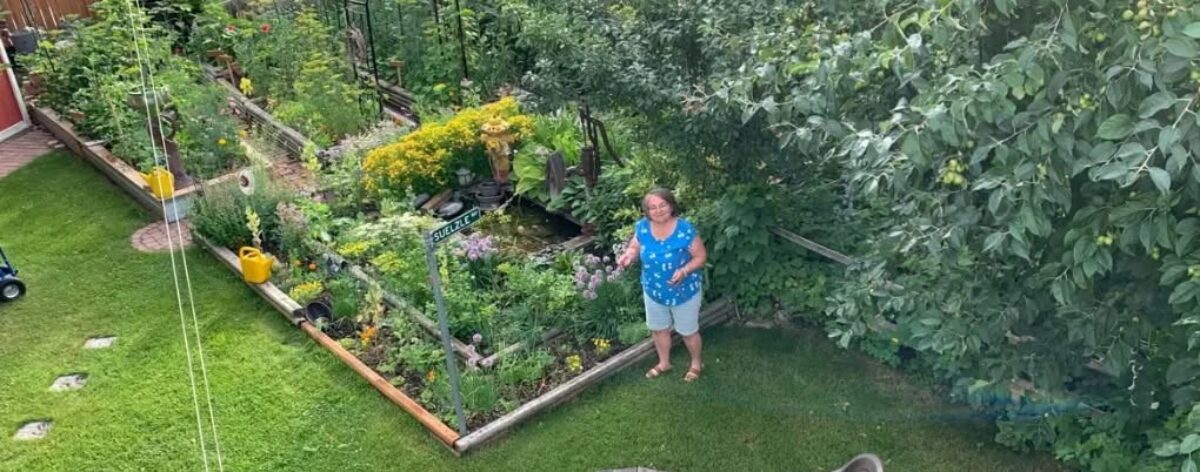
You don’t have to move to the middle of nowhere to become a 'homesteader'. You can start right where you are. Today.
Author: admin
My name is Cindy. I guess you could say my homesteading journey began in our second floor walk up apartment when we were newly married. It was fun to finally be “playing-house” for real, and I suppose I never really grew out of that stage. It just got realer and realer as time went on.
Now I am the mother of five grownup children who all have children of their own. One of my sons called me a “closet hutterite“. Made me laugh. But I couldn’t think of a suitable retort. Still working on that one.
These five great kids have given us nineteen wonderful grandchildren who are the joy of our lives. I am married to my best friend. His name is Dan, and he is not a closet hutterite. But he’s a patient sorta guy who doesn’t mind living with one. Most of the time.
Truth is, in the beginning of our life together we thought (and hoped and prayed) we’d one day live on a small farm. ….. Well, life doesn’t always work out exactly how we picture it in our younger years does it? It didn’t materialize quite the same way we dreamed it might, but that is totally okay. Sometimes Heavenly Father gently nudges us in a different direction, and so here is where we are. In a big Canadian city, surrounded by lots of good neighbours. They’re also patient sorta people. That helps.
– recipe made with Carrot Pulp from juicing carrots – serve with caramel apple bottom OR with lemon sauce poured over top
1+1/2 cup flour 1 tsp baking soda 2 tsp ginger 1 tsp cinnamon 1 tsp allspice 1/4 tsp cloves 1/2 tsp nutmeg Sift all dry ingredients together and set aside.
* optional: ADD 2 CUPS CARROT PULP to flour mixture. Gently fold in to make sure all carrot gets coated in flour. Set aside.
* hint: I’ve made this ginger cake several times WITHOUT carrots. They’re kind of the afterthought (trying to use up extra carrot pulp), so don’t hesitate to go ahead without them. I find that they do moisten the cake so much though, that it sure is worth adding them. If you don’t have carrot pulp, then shred some carrots. If you don’t have carrots, make it anyway – without them. It’s still GREAT.
With beaters, whip: 1 cup butter add 1 cup sugar, beat in add 3/4 cup molasses (I use blackstrap, but if that is too strong for you use a regular molasses) add 4 eggs one at a time and beat in add 1/2 cup milk
add liquid ingredients to dry ingredients and beat with mixture. If you feel its a little too thick, add another 1/2 cup milk. Bake in 350F oven, middle shelf, approximately 30-35 minutes. Start testing at 25 minutes. When cake centre springs back to the touch, it should be done. Serve warm or room temperature – doesn’t matter.
caramel apple carrot cake served upside down with vanilla yogurt
Caramel Apple variation: Butter 9×13 baking dish, Slice up 2-3 apples and arrange slices around bottom of pan. Sprinkle 1/2 cup+ brown sugar over top apples. Pour cake batter evenly over top apples. Serve on plate upside down so the apples are on top. Serve plain or with whipped cream or ice cream or vanilla yogurt (pictured).
Lemon Sauce variation: Butter 9×13 baking dish. Pour cake batter evenly. You’ll be adding the lemon sauce after its baked. Sauce: 1 cup white sugar mixed with 2 tsp cornstarch 1 scoop of butter about the size of an egg 1 cup water Heat over medium heat stirring frequently as it thickens slightly. When its a slightly thick and pourable texture add the juice of one lemon Remove from heat and stir well.
choose one of these two ways to serve lemon sauce. Life is full of tough decisions lol. 1. Cut cake and serve with some lemon sauce drizzled over top. 2. When cake is baked, poke holes with a fork all over the top, and drizzle the lemon sauce over, allowing it to soak in.
Regardless of which option you choose, you still have another choice. Plate suggestions: just a cake on a plate in all its moist gingery wonderfulness OR with whipped cream OR with vanilla ice cream.
– recipe made with Carrot Pulp from juicing carrots – This recipe makes 18 muffins, but plan to double it so you can share with neighbours.
in these muffins I added some dehydrated blueberries for ‘raisins’
Preheat oven to 350F. Sift together dry ingredients and set aside: 2 cups whole wheat flour OR half unbleached flour 3/4 cup sugar 1 tsp baking powder 1/2 tsp baking soda 1 tsp cinnamon 1/2 tsp salt
beat3 eggs, add 1 cup milk and 1/2 cup oil (your choice) set aside * 1 cup raisins or chopped walnuts or combination (optional)
add to flour mixture: 2 cups grated carrots OR carrot pulp OR refreshed dehydrated carrots gently fold carrots into flour mixture till evenly coated If you’re adding raisins or nuts, right now would be a good time. Fold in. * I generally add at least another cup of carrot pulp. If I add two additional cups, I add another egg and another tablespoon of oil as well.
Pour wet ingredients into flour-carrot mixture and gently fold in to moisten completely. If the batter is too stiff and you feel the need to add a little more milk, go ahead. Don’t over stir.
Line muffin tins with paper liners – makes approximately 18 muffins. *tip: I lightly coat the muffin tin with oil and use the liners as well, as it makes it easier to peel off the liners later.
Bake 20-22 minutes at 350F. Test by gently touching the top of the muffin – when it bounces back to your finger, its done. I let the muffins sit on the top of the stove for about 5 minutes to cool slightly before removing them to place onto rack to finish cooling.
I love the poem below. I hope you’ll take the time to read it. It’s spoken from the perspective of a young parent. I’ve been in that place and as a former young mom, the message is a very tender for me. In that young mom’s shoes, I was smart enough to never allow myself to wish any of those moments away. I wanted very much to feel them all and remember them all – knowing that though I couldn’t see it, or imagine what it would look like, the day would come that they’d all be gone.
But I am looking at life from a much different perspective now, and I’ve had so many last times. My heart aches for some of them, not because I wasted them by wishing them away, simply because they are gone. It has been my observation that spending one’s life being unhappy in our circumstances, leads to more of the same – because being happy is not a matter of circumstance, it is a CHOICE.
In my younger years, I never wanted to waste my life wishing things were different. I was self aware enough that I could either make them different, work toward that goal, or accept them by making the best of them. Those were my options. I found it much more satisfying to focus on appreciating the sacredness of each day and what I could learn by living it. Even so, my heart aches for many of those ‘last times’. How much worse would it be if I regretted wasting them by not appreciating them in the moment?
wake up to a new way of doing things
If Covid taught us anything those many months, it should be how quickly life as we know it could be over. No one had the crystal ball to know how long our covid-affected circumstances would last. How long before we could go back to ‘normal’ – a week? a month? how many months? In actual truth, in many ways we never did return to normal. What would we have thought then, if we knew that in many ways we’d be inventing a new normal?
And why risk losing your present by pining away for all those potential last times? . . .
I don’t pretend to be a great philosopher, and I certainly don’t know what the “secret to life” is. But I believe that part of that secret is to be PRESENT, living in each moment. Enjoying each season while we’re in it. Finding ways to reach out and make someone’s world a little better for us having been in it. Never wishing any moment away, because life is so full of last times – not just with our babies but with everything and every one.
The last time we hugged our mom. The last time we said “goodnight, sleep tight” to her. The last time we had dinner with our cousin. The last time we went to the farmers market. The last time we planted a garden. The last batch of jam we made to give away. The last time we laughed with our niece, played go fish with our grandson, pack a lunch for our spouse, even the last time we vacuumed our own floor, or hung laundry on the line. The last time we help a neighbour, chat with that special friend, smile at a passerby, …. made someone’s day better. The last time we flew anywhere? The last time we drove ourself? That last book we read. Who knew it would be the last one? The last time that grandchild came for a sleepover. Who knew it would be the last one? The last time we held hands. Who knew?
Life changes on a dime – with no notice. Last times stack up, and they’re often in disguise. We never recognize them till they’re long gone. I’d love for all of my last times (whether pleasant ones or unpleasant ones), to be with me ‘experiencing them’, enjoying them, or learning from them, so that I could look back and think “I’m sure glad I did that when I did, who knew it would be my last time?” Life is by nature, bound to be full of regrets. I hope when my days get shorter, to have many more “glad-I-did-thats” than “wish-I-did-thats”.
The Last Time
“From the moment you hold your baby in your arms, you will never be the same. You might long for the person you were before, When you have freedom and time, And nothing in particular to worry about.
You will know tiredness like you never knew it before, And days will run into days that are exactly the same, Full of feedings and burping, Diaper changes and crying, Whining and fighting, Naps or a lack of naps, It might seem like a never-ending cycle.
But don’t forget … There is a last time for everything. There will come a time when you will feed your baby for the very last time. They will fall asleep on you after a long day And it will be the last time you ever hold your sleeping child.
One day you will carry them on your hip then set them down, And never pick them up that way again. You will scrub their hair in the bath one night And from that day on they will want to bathe alone. They will hold your hand to cross the road, Then never reach for it again. They will creep into your room at midnight for cuddles, And it will be the last night you ever wake to this.
One afternoon you will sing “the wheels on the bus” and do all the actions, Then never sing them that song again. They will kiss you goodbye at the school gate, The next day they will ask to walk to the gate alone. You will read a final bedtime story and wipe your last dirty face. They will run to you with arms raised for the very last time.
The thing is, you won’t even know it’s the last time Until there are no more times. And even then, it will take you a while to realize.
So while you are living in these times, remember there are only so many of them and when they are gone, you will yearn for just one more day of them. For one last time. author not confirmed, but possibly Taryn McLean
Here’s to APPLES! In all their glory. Red, yellow, green and everything in between. Sweet, tart, big, small. Here’s to apples one and all.
People have long understood that apples were “good for you” even before nutrition was understood. We’ve all heard the aphorism “an apple a day keeps the doctor away“. It appeared in print in America in 1913, one of the first public appeals targeting parents especially, correlating good health with eating ‘nutritiously’.
It likely originated from a similar proverb that first appeared in a Welsh publication in 1866. Though a different rhyming format, the message is the same: “Eat an apple on going to bed and you’ll keep the doctor from earning his bread.”
Apples are probably the most well known fruit in the world. They are nutritious and delicious and grown in most parts of the world – especially the northern hemisphere. They originated in Central Asia – east of the Caspian Sea, and by the 1500’s apple seeds had made it to Europe. When Europeans began transoceanic travel, apples were carried to the Americas and dispersed throughout the world.
Currently, there are literally thousands of different kinds of apples – in every variety, colour and flavour; they’re eaten fresh, cooked into savoury dishes, made into desserts and drank as juices, ciders, wines and teas, and are even a popular vinegar. They are free of fat, cholesterol and sodium, a great source of dietary fibre and vitamins, and help lower blood sugar levels, benefitting heart health. Much of the apple’s fiber is found in its peel, so don’t peel your apples unless you have to.
I discovered a few years back that in most cases the apples on our supermarket shelves can be up to a year old. Whaaaaat!!! Sometimes well over a year old. In fact, the apples you’re buying this week are likely from the previous years’ harvest, having been kept in cold storage since last season – allowing us to have “fresh” apples year round. At the is risk of being too critical of the ‘system’ – there really is no other way if we want to eat apples all year long. Where did we think they came from anyway?
We know that apples in North America generally ripen between August and October. When we buy an apple in May, we’ve gotta know that the earliest it could have been picked was last fall. But to keep the steady supply that we’re used to, it was likely picked even before then.
Its a sign of our times that we want to have everything ALL the time. Well, there’s a cost to the sense of entitlement we’ve gotten used to.
If you want REALLY “Fresh” apples, plant an apple tree. If that’s not possible, get to know you’re neighbours – there are lots of backyard gardeners looking for people to share their apples. A few years before our own apple tree began producing, we had asked a neighbour down the alley if we could have some of theirs. At the time, they were putting them all to good use, but the time came that their health became an issue and they could no longer keep up. We connected, and we’re happy to pick the apples, leaving them a box for eating, and cleaning up the dead fall that attracts wasps. We can help each other out. If you don’t have such a neighbour, ask when you’re out on a walk and see an apple tree in need of attention. Or ask on Facebook if someone knows of someone who’d like their apples picked in return for sharing them. Or shop at Farmer’s Markets.
In central Alberta, some apples start ripening in August, and some don’t ripen till after Thanksgiving – with everything in between, so the harvests of homegrown apples are endless. Some apples are great for eating fresh, some are good baking apples, and still some are only good for making juice, but every edible apple has an important role to play in the gardener’s kitchen.
* Did you know?
Apples are actually BERRIES. Botanically, a berry is a fleshy fruit that develops from a single flower and contains two or more seeds. They are characterized by a soft, fleshy pulp and thin, outer skin – so with this definition, berries include bananas, grapes, tomatoes, pumpkins and watermelons. And interestingly, raspberries, black berries, strawberries and cherries – are not berries.
What to do with all those apples that are ready now, and needing to be taken care of?
Well for starters – Apple sauce . . . . . here are a whole lotta ideas of what you can do with fresh apples when they’re at their BEST.
Apple sauce is generally a purée made of apples. It can be made with peeled or unpeeled apples and can be spiced or sweetened. It is inexpensive and is widely popular in North America and some parts of Europe. Personally, I am not a fan of long cooked apple sauce that is pressed through a screen. I like the texture of apple pieces so I much prefer ‘fresh’ apple sauce, made on the spot with fresh apples softened over medium heat for less than 20 minutes. I am not opposed to canning it as a preservation method, but I want to see apple pieces.
Apple butter is a thick, smooth fruit spread made by slow cooking apples with sugar and spices till the apples caramelize, resulting in a concentrated, deeply flavoured preserve. Essentially it’s apple sauce taken to a whole new level. The name refers to its rich spreadable consistency – butter like, not because there’s any butter in it. It can be spread on toast like jam, used as a topping for pancakes, waffles and crepes – used as extra flavour when making muffins or cakes, or even served as a type of chutney with pork roast.
Your crock pot is the perfect way to make it; long a low is the key. Start with apples, add a little apple juice if desired, and sweeten to taste with brown sugar. We’re talking HOURS here, so adjust your thinking – expect it to take about 10 hours. Stir every once in a while to check consistency. Add the warming spices of cinnamon, nutmeg and cloves. My general rule of thumb is to use 1 part cinnamon : 1/2 part nutmeg : 1/4 part cloves. For instance: 1 tsp cinnamon, 1/2 tsp nutmeg, 1/4 tsp cloves. *hint: cloves are pretty strong so if you’re not used to them, start with less and go from there. That’s why many recipes call for a ‘pinch’ of cloves. If I was starting with a LOT of apples, I’d start with 1 Tbsp cinnamon, 1 + 1/2 tsp nutmeg and 3/4 tsp cloves. Remember, a little cloves goes a long ways and you cannot take it out if you change your mind, so best to start with less if you’re not accustomed to the strong taste, and adjust later as you decide. You’ll have to do your own taste testing and adjusting since only you know the quantity of apples you’re cooking down. You’re the boss.
You’ll enjoy the aroma in the house as much as you’ll enjoy the finished product. As the liquid evaporates, you can decide when enough is enough. You can take the extra step of pureeing it in the blender for an extra smooth texture, or not. You’re in charge. If you choose to puree it, you might want to continue to cook it down a little longer afterward. You’re looking for a glossy dark spreadable consistency.
*hint: if you’re planning to puree in the blender at the end, no need to peel the apples. Just remove the stem, core and any damage spots that offend you.
Make a little or make a lot. Store a jar in the fridge for several weeks, or can it in small jars for extended shelf life or to give as gifts. Apple butter is a strong spread, so use small jars: 1/2 pints (250 ml). 10 minutes in a hot water bath is sufficient. That’s 10 minutes AFTER the hot water bath returns to a rolling boil remember. Click HERE for instruction on hot water bath canning.
Apple pie is the quintessential North American dessert. It is symbolic as a representation of ‘home’ – “as American as apple pie” is an appropriate saying. Not surprisingly, it originated in the 14th century in England, immigrating to North America when the English did. It is generally double crusted (pastry both above and below), and the upper crust may be solid or latticed. The ingredients are pretty basic: apples, sugar and cinnamon, but there are a hundred variations. The best apple pie is always the way your gramma used to make it, whatever that means to you.
In our house, we serve it with vanilla ice cream. Dan likes to eat it with a slice of sharp cheddar cheese melted on top, or better yet, a thin layer of sharp cheddar underneath the top crust. He also likes to cook one or two in the fall – in the smoker. For the smoked apple pie, we’ll often opt for a streusel toppling instead of a top crust.
Apple Crisp is apple pie the easier way – when you want a quick, but wonderful dessert. It’s pretty basic, hard to mess up, and like apple pie, the best apple crisp is what your gramma used to make. It’s the perfect dessert to make when you have a lotta apples on hand.
Filling: 6-10 nice sized fresh apples, peeled and chopped coarsely 2 Tbsp brown sugar 1 tsp cinnamon 2 tsp lemon juice Topping: 1/2 cup cold butter diced into small cubes 1 cup brown sugar 1 cup old fashioned oats 3/4 cup unbleached flour 1 tsp cinnamon Directions: Preheat oven to 350 F and grease an 8×8 baking dish 1. In the prepared baking dish, add apples, sugar, cinnamon and lemon juice. Stir to combine. 2. In mixing bowl, stir together topping ingredients except the butter. When all is thoroughly mixed add the butter and using a pastry cutter or two forks, or your hands, cut the butter into dry ingredients. When the butter is consistently about the size of peas, you’re done. Spread evenly on top of the apples, and gently pat it down. *hint: in our house, we make about 4 x this amount and refrigerate the remainder in a wide mouth jar. Dan likes to use it during the week – for a lotta things. 3. Bake about 45 minutes till golden brown and bubbly. Remove from the oven and cool slightly. Plan to serve warm with vanilla ice cream.
Apple Crisp, Pear Crisp, Plum Crisp, Raspberry / Blueberry or Blackberry Crisp / Peach Crisp / Apricot Crisp / Rhubarb Crisp . . . . . you name the fruit – and you can probably make a great Crisp out of it.
Fruit CRISP / Fruit CRUMBLE / Fruit COBBLER – what are they? and what is the difference?
Crisp and Crumble are pretty much the same thing – except for the OATS. Crisp has oats in the streusel topping, Crumble does not. Every thing else is the same. Fruit Cobbler is similar, but the topping is a batter, like a sweet, richer biscuit dough. It is spooned over top the fruit mixture and it can be loose, allowing the fruit to bubble through, or it can be a complete cover. All are delicious and interchangeable depending on personal preference. Dan prefers Crisp, but sometimes its too much sugar for me, and I prefer a cobbler.
Apple pie cake So many different recipes for using apples in cake. I first tasted this cake pictured at a funeral in the fall. The woman who made it kindly passed the recipe on to me, and its become a favourite in our house. She called it apple pie cake because there’s a bottom and top layer with filling in the middle. Its a good name.
1 Tbsp cinnamon 1/3 cup brown sugar + 1/3 cup brown sugar 1/3 cup white sugar 1/2 cup butter softened 2 eggs 1 tsp vanilla 2 cups unbleached flour (can substitute half for whole wheat flour) 1 Tbsp baking powder 1/2 tsp salt 1/2 cup milk 2 large apples peeled and diced (or some dried apples cut with scissors) 1 Tbsp melted butter Directions: preheat oven to 350 F. Prepare a loaf pan by greasing or flouring or use parchment paper. 1. Combine cinnamon and 1/3 cup brown sugar and set aside 2. Using mixer, cream butter with remaining brown sugar and white sugar. Add eggs and vanilla and mix till smooth. 3. Sift flour, salt and baking powder together. Add to egg mixture alternately with milk, mixing with a spoon only till all is moistened. Batter will be quite stiff. 4. Spoon half the batter into the greased and floured loaf pan and spread it evenly. 5. Spread half the chopped apples over top the bottom layer of batter, then sprinkle half the cinnamon brown sugar mixture over top the apples. 6. Stir remaining apples gently into remaining batter. 7. Spoon apple batter over top the apple layer in the loaf pan. till completely covered. Sprinkle remaining cinnamon sugar mixture over top. 8. Bake 40 minutes, then drizzle melted butter over the top, and continue baking another 10 minutes or so. Test by pressing centre of cake with your finger. When it bounces back, insert a toothpick to see if it comes out clean. 11. Remove from oven and let cool in the pan 15 minutes. Gently loosen edges with spatula and then gently slide out.
Apple Muffins a recipe taken from my well used and well loved recipe book FLAVORS OF HOME by my friend Patti Shenfield (a few slight adaptations to my preference) 4 cups peeled and diced apples 1 cup sugar 2 eggs lightly beaten 1/2 cup butter melted 2 tsp vanilla 2 cup unbleached flour (or substitute half for whole wheat flour) 2 tsp baking soda 2 tsp cinnamon 1/2 tsp nutmeg 1 tsp salt optional: 1 cup walnut pieces Directions: preheat oven to 350 F 1. In large mixing bowl stir together apples and sugar 2. In another bowl stir together eggs, melted butter and vanilla. Pour into apple-sugar mixture and combine . 3. In another bowl, sift together dry ingredients. Add to apple-egg mixture and stir gently till moistened. Stir in nuts if using. Spoon batter into 18 greased muffin tins. Top with the following streusel topping if desired. Bake 15-20 minutes till bounces back from touch and toothpick comes out clean. Streusel Topping: Combine 1/3 cup brown sugar, 1/3 cup chopped nuts, 3/4 tsp cinnamon Sprinkle over top each muffin before baking.
Apples in Salads 1. Toss diced apples with mixed greens, toasted walnuts, dried cranberries, and a simple vinaigrette for a crisp and refreshing salad that’s perfect for any day.
2. A Waldorf salad is a fruit and nut salad generally made of celery, fresh apples, walnuts, and grapes, dressed in mayonnaise, and traditionally served on a bed of lettuce as an appetizer or a light meal. The apples, celery, and grapes can all be green, which harmonizes the color palette of the dish. Or brighten it up with beautiful red apples and red grapes.
3. Adding sliced or chopped apples to a coleslaw is wonderful! This one to the left is fresh cabbage and kale chopped, with chopped apples kept white with lime juice. The vinaigrette dressing was apple cider vinegar sweetened with a little honey and some light oil. I threw in some freeze dried cranberries for colour.
Apples for Breakfast
Apple Pancakes Chopped unpeeled apples tossed into pancake batter. Top with a big dollop of fresh apple sauce.
Apple Waffles Shredded apples in waffle batter, topped with fresh apple sauce.
– Apple Dumplings – Apple Fritters – Apple Cheesecake – Apple Jelly – Apple Turnovers – Apple Strudel – there are literally thousands of recipes for using fresh apples. Look around you, ask others what their favourite apple recipes are. Make this an APPLE AUTUMN.
But what about preserving the Excess?
What about those apples we cannot use IN the season? Typical ways to preserve are: freezing, canning, dehydrating and freeze drying. Many freeze in 4 cup amounts to use in apple pies later. Many make apple sauce to freeze or can.
When I had all five kids at home, I canned and dehydrated in a big way. But my needs are different these days. Nowadays I do most preserving in small batches – so much easier. I generally don’t freeze, but I’m not adverse to canning apples. If I do – I would more likely can them in pint jars: sliced with a light lemon syrup, and I would serve them for breakfast or on top of yogurt.
My preferred ways of preserving apples at this point in my life though, are juicing and dehydrating.
Apple Juice
I have a steam juicer that I wouldn’t want to be without. I use it every summer starting when the apples come on. Let’s face it, not all apples are great eating apples. We inherited some very old apple trees when we bought the house we currently live in. Years ago, the apple trees that grew in Edmonton didn’t even have names. They had numbers. The apples weren’t wonderful but its all we had at the time, and they were good for juicing. They started dripping from the tree mid August attracting the wasps. Annoying. Another tree in our yard – was ready to pick the end of August, so as a family activity on our around Labour Day, we picked what amounted to a few hundred pounds most years. We used them all for making juice. Click HERE for Late Summer Days Should Smell of Hot Apple Juice.
Some apples are not beautiful and not great to eat fresh – that’s okay. Juice them! Throw in the last of your cherries for something special.
Pure apple juice.
Apple Cider Vinegar You can make apple cider vinegar by covering apple scraps with water. Or you can simply make it with the juice or freshly pressed apple cider you already made. After a couple of weeks, the apple juice (or cider) you didn’t process (can), will begin to naturally ferment. This is not a bad thing. It just starts to get ‘fizzy’, which I love. Enjoy it. But don’t expect it to stay in that state forever, its on a ‘natural’ journey. The fizzy juice will get fizzier and fizzier, until it seems to have peaked, and then it ‘breaks’. Not so fizzy anymore, not so delicious. That’s okay. Its just preparing to turn into vinegar. Pour it into a clean glass jar, cover it with a cloth (breathable lid) secured with an elastic band over the jar rings, and set it on the back of your counter where you won’t forget about it. Make a note of your ‘start date’.
Every day or two you will stir it to keep it aerated. This video below is EXCELLENT instruction on how to make your own apple cider vinegar using juice or apple scraps. I highly recommend it.
Dehydrating apple slices and apple leather.
dehydrated apple rings, peeled, cored and sliced. Some cinnamon sugar coated ones are hiding here and there for a special treat.
apple leather, rhubarb leather, raspberry, cherry, plum, peach . . . . Easy to do, great to have on hand
I really hope you’ll find some inspiration here to make the most of the apples you find this year. It’s one of those wonderful foods that WANT to grow in northern Alberta – it only makes sense to me that we find every way we can to benefit from them.
Beautiful. Sweet or tart. Crisp and crunchy. Nutritious and Delicious. Juicy and refreshing. Firm. Fresh. Fragrant. Easy to grow in Alberta. Great and easy snack food. Easy to incorporate into everyday meals and recipes. How does a food get better than that? I want to hear all about the ways you use fresh apples at your house.
Squash is highly nutritious, lends itself to many culinary ways to experience it, and it seems that every culture has a unique way of preparing it.
My personal favourite squash is butternut, and my favourite way to eat it is roasted, or in a bisque.
This time of year in my house we like pumpkin chowder, butternut squash bisque, roasted squash, pumpkin & meatballs over rice, pumpkin pancakes, pumpkin scones, pumpkin bread, pumpkin muffins, pumpkin cake, pumpkin cookies, pumpkin pie of course, pumpkin dip with gingersnaps, . . . . to name a few.
What is squash, and why grow it?
Number 1 reason to grow anything for me, is always nutrition, number 2 reason is level of difficulty to grow, and my number 3 reason is its functionality. Win on all counts with squash, and the variation available is literally from A to Z: Acorn Squash to Zucchini. There are hundreds of types of squash, ranging from the classics like zucchini and pumpkin to the just plain weird. If you’re a relatively new gardener, I highly recommend sticking with some tried and true varieties like zucchini, spaghetti squash or butternut. Once you have some success, start to branch out trying to grow types you’ve never grown before.
There are two basic groups of squash: Summer and Winter. The difference essentially boils down to their harvest stage.
Summer squash can be planted directly outdoors by seed, although they’re often started a couple weeks ahead indoors. It grows in a cylinder type plant with the fruit coming out from the middle area. The fruit begins to develop within about 50 days after planting outdoors (so about mid July). The flavour and texture are mild, with both the flesh and the immature seeds eaten together. Beginner gardeners are sometimes tempted to let zucchini grow bigger, but they are much tastier and tender when picked young and immature – averaging 6 – 8 inches/15-20 centimetres long. And the more you pick when they’re young and tender, the more the plant will continue to produce. Letting one go for weeks to reach the size of a canoe, signals the plant to stop producing. So you may win the award for the biggest zucchini but you waste the entire season on something that didn’t even taste good. While young zucchini is often cooked, it is also often eaten raw, and it has a relatively short shelf life – best eaten within a week of picking.
Winter squash has hard, thick skin that are not eaten, and the flesh has a denser texture, with more distinct flavours between types. While all winter squash have unique tastes, I would describe the general flavour over all, as sweeter than summer squash, with a nutty hint. To me, they taste like ‘autumn’. The texture of the flesh is firm and very dense, sometimes to the point of being difficult to cut with a knife. The hard, thick skin that is also difficult to cut with a knife, protects the squash and gives it it’s extra long shelf life.
Is squash good for you? YES! Winter squash is packed with essential nutrients including vitamins A, B and C. The fiber helps with gut health, and other nutrients can contribute to a decreased risk of certain diseases and improved blood pressure.
Before planting: Choose a spot that gets LOTS of sun. Squash plants are heavy feeders so mix a generous amount of aged manure or compost into your planting area (roughly 50% of the existing soil).
It’s best to get a jump on the season by starting seedlings indoors, but beware: seedlings can get very big and lanky so don’t plant in the house before three weeks before you expect to plant outdoors. Starting squash from seed is easy. Make sure you have a warm spot set out – above 20 degrees C is ideal. Or set your tray on top of a heated matt. Using a soil-less seed starter (soil-less) mix, plant 1 or 2 seeds in each starter pot.
Keep the soil-less mix moist and the seeds will germinate in about a week. Give them as much light as possible and they’ll grow quickly. Once the seedlings are 2 weeks old transplant them into an all purpose plant soil. Keep in a very sunny window or under the lights and continue to keep moist. Squash roots are delicate and the plant will go into shock if they’re disturbed. Transplant very gently, so as not to disturb the roots.
TIP: Since winter squashes need up to 110 days to maturity, it is best that they are grown as transplants in our northern gardens. TIP: Leave a fan blowing on your young seedlings as they grow in the house to help to grow heartier plants and to reduce some seedling diseases. Research has shown that stem diameter can be increased by providing seedlings with constant air movement from an oscillating fan.
I’ve read recently that zucchini should do well in big containers. I’ve never tried that, but I am inclined to do so this upcoming growing season. I have a couple of big planters on my patio, and I have a trough in a nice sunny location. I love planting indeterminate tomatoes in it as it has an arbour, but in the interest of rotating crops, I’m always looking for an alternative. The advantages it seems, are that their roots stay warm and I can better control the watering. Taking the time to work some compost into the trough (or pot) would be important, as squash does best on organic material. Of course a layer of mulch on top is always recommended, whether in the garden or in a container.
Plant seedlings outside after all danger of frost is past, and the soil is warm. Ensure they have full sun. Plant in well-draining, compost-rich soil. Keep the soil consistently moist but not soggy, water regularly. To encourage fruit production, plant pollinator-attracting flowers like cosmos nearby to increase visits from bees and other insects.
For smaller squashes or in limited spaces, consider vertical gardening using an arbour or a string trellis. Winter squash will take more than their fair share of room in the garden, as they send out vines, so plan for that. For years I’ve had mine grow vertically, tying the vines to an arbour or trellis that is strong enough to hold heavy fruit. Growing vertically eliminates the need for a lotta yardage in your garden – perfect for a backyard garden.
*Did you know? the difference between a squash and a gourd is that only that the squash is edible and the gourd is pretty much decorative. The outer skin on the gourd is too thick to make it practical.
Caring for Squash in the Garden Watering: Provide at least one inch deep of water per week, especially during hot, dry periods. Fertilizing: Some recommend feeding squash plants with a balanced vegetable fertilizer or compost tea every few weeks, particularly as they’re fruiting. Personally, I’ve never done this as I start with a good compost base, but I’m thinking I should look into a supplement during the growing season. Pollination: Squash needs pollinators to produce fruit. Plant pollinator-attracting flowers like Salvia, Cosmos or Borage among your squash plants to increase visits from bees and other insects. Mulching: Apply a thick layer of mulch – I use straw – around the root zone to help conserve soil moisture.
TIP: Cutworm prevention – If you’ve had cutworm problems in the past, place a collar around your seedlings right after transplanting. Make collars out of toilet paper rolls, or any plastic container such as a yogurt container with the bottom removed. Insert the collar at least 5 cm / 2 inches in the ground to prevent cutworms from feeding on the stems of your seedlings.
High Yield and Productivity Summer squash plants are known for being substantial fruit producers, with one or two zucchini plants being capable of yielding enough to feed your household and share with friends and neighbors. Think of all the zucchini jokes you’ve heard. If you haven’t had that experience of squash producing abundantly, don’t despair. Simply try again. And again. If you’re not getting enough zucchini, you may have a poor pollination issue. Hand pollinating your female flowers, will help.
* Did you know? Squash are fruits – actually BERRIES. Botanically, a berry is a fleshy fruit that develops from a single flower and contains two or more seeds. It is characterized by a soft, fleshy pulp and thin, outer skin, so with this definition – berries include bananas, grapes, tomatoes, pumpkins and watermelons. Raspberries, black berries, strawberries and cherries, – are not.
A butternut squash plant should be able to yield 4 good sized fruits; other winter squash should yield similar amounts. Squash produce both male and female flowers on the same plant, but if the summer is too cool it may only produce males, which don’t yield fruit. Not much you can do about a cool summer. Female flowers have a distinct squash shaped bulge on its stem.
Remember that while it may be that zucchini is famous for producing an overabundance of fruit, if you don’t pick it continuously, instead leaving a few zucchinis to grow way too big, this will send a signal to the plant to stop producing. You’ll actually be sabotaging your own success.
TIP: Remember to record what and when you plant. It’s helpful to draw a map to help you track planting locations and success each year. This information is important to properly rotate your crops, but also critical to being able to learn from your experience. What went wrong? what did I do right?
Harvesting
Summer squash is picked when its still immature – while the skin is tender and smooth. Many believe the perfect eating size is 6-8 inches, and it is generally eaten without peeling. The most well known summer squash in Alberta is ZUCCHINI, but while all zucchini is summer squash, not all summer squash are ‘zucchini’.
Other varieties of summer squash are: crookneck squash, patty pan squash, and the doppelganger of zucchini – called ‘yellow’ squash, some call it yellow zucchini.
Winter squash is harvested fully mature, after a long growing season. The skin should be hard and not easily punctured with the thumb nail (don’t try too hard as that’s pretty counter productive). Cut the squash off the vine, leaving a generous portion of the stem attached. Harvest before a heavy frost, but most squash can handle a light frost well. Some say that a light frost increases the sugar content, but my counsel is to not to ‘play ‘chicken’ with the frost, you have too much to lose.
Winter squash has separate male and female flowers. The female flower requires pollen in order to produce fruit, but the pollen can come from other compatible species. Pollen is moved by insects such as honey bees, bumblebee, hoverflies, ants and others. If you’re wanting to protect a heritage seed source, then you will not want cross pollination between neighbouring plants. Here is an example of cross-pollination: If you grow acorn squash in the garden and it is pollinated by a nearby zucchini, this year’s fruit will still look like an acorn squash. But if you harvest the seed from that squash, the seed will contain genes from both the zucchini and the acorn squash. If that seed is grown next year, the resulting fruit will look very different – with a combination of characteristics of both parents. This is called a hybrid.
How to Save and Store Seeds: Harvest seeds from full-grown older squashes because their seeds will be fully mature. Carefully cut the squash in half and scoop out the seeds. Wash seeds well in clear water to remove as much of the stringy flesh and slime as possible. Spread on a dish towel and allow to dry completely. Drying can take a week – depends on the humidity in the air.
* Saving squash seeds can be kinda tricky because there are always cross-pollinating with other nearby plants. See footnote 1 How do garden vegetables cross pollinate? see footnote. 2
Vegetable seeds can keep for several years if you store them properly. Seeds should be stored in a cool, dry, dark place. Moisture, heat and light can cause seeds to sprout or rot.
Storing winter squash
If the fruit is fully ripe, hard skinned and blemish free, you should be able to store it in slightly less than room temperature conditions for 3 – 5 months. Make sure there are NO injuries on the skin – as those will be the ‘spot’ where decay will begin.
Yes, I know, you have a friend who says they store their squash till the following summer. I too have such a friend. There will always be those who insist that’s a good thing. It’s not. We’re talking about FOOD, not building material. As with all our food, we should want to eat it when it’s still highly nutritious. The nutritional value, texture and flavour (there is an important correlation between texture, flavour and nutrition), will degrade over its storage life – so the older you stretch it, the less the quality – in every single way. Plan to use winter squash within 4 or 5 months from harvest for best taste, texture and nutrition. That brings you up to February. That’s considered a long time – so be reasonable.
How to save and store seeds:
Vegetable seeds can keep for several years if you store them properly. Seeds should be stored in a cool, dry, dark place. Moisture, heat and light can cause seeds to sprout or rot. Place your seeds in envelopes or make your own envelopes out of foil or waxed paper. Label with name of the seeds and the date (month and year) you harvested them.
* TIP: Once completely dry, place your envelope inside an airtight container.
Here’s an interesting tip I recently read about. To help keep sees dry, place a tablespoon of dry powdered milk in a paper towel or piece of cloth, secured with a twist tie of piece of string. The powdered milk they say, will absorb humidity and keep seeks dry inside an airtight container. I might give this a try this year. I’ll let you know what I think later.
Eating IN-the-season
If you know me at all, you know I’m all about eating IN THE SEASON. Enjoying fruits and vegetables while they are at their very best, “in-the-season” – means eating as much as possible IN the season in which they were harvested, providing their most nutritious offering. Ideally – fresh raspberries, cherries, peaches and watermelon early to mid summer. Fresh tomatoes from July through about November. Fresh apples and plums from mid August through the late fall. Cabbage in the fall and winter. Winter squash from late summer / early fall to January / February. For years, we’ve been trained by supermarkets to think we deserve to eat anything we want, any time of the year. But there is a price to that kind of entitlement. We don’t need to eat everything – ALL the time. We can do just fine without watermelon or FRESH tomatoes in the winter, and without squash in the spring. Personally, I have no desire to eat pumpkin pie in the spring. That just seems all kinds of wrong to me. Some things are meant to eat in the winter – like winter squash. With both summer and winter varieties of squash, we can enjoy a regular harvest of ‘zucchini’ throughout the warm months and store winter squash for months of delicious, healthy eating during the colder times when other vegetables are not so available.
What we cannot eat fresh IN-the-season, we preserve in the best ways available. This is “preserving the excess”.
PRESERVING
Storage Conditions: Proper long term food storage of winter squash is in a cool, dark, DRY place. This will help preserve the nutritional value too. Some winter squash can keep longer than others. For instance, pumpkins and hubbard squash can last longer than acorn squash. Generally ‘long term’ is considered anywhere from 2-4 months) Keep your squash in an area will you will see it often, and off the cement floor. If you tuck it away where you seldom see it, you’ll forget about it and at best, you’re apt to miss the signs of decline.
What are the signs of decline? A squash past its prime will begin to show signs of spoilage. You’ll see soft spots and perhaps mold on the stem. This simply means you’ve waited a little too long, so USE IT NOW! before its too late.
FREEZING: Squash doesn’t lend itself well to fresh freezing. I have found that the texture gets watery and very undesirable. But if you roast it or steam it in the oven it freezes very nicely.
method 1 – steaming: Cut winter squash into wedges, and place on baking dish cut side down. Pour about an inch of water in pan, and bake in 375 degrees F oven till fork tender. Depending on what kind of squash it is, expect it to take between 45 minutes to an hour. Its ready when tender to the fork. You may need to add a little more water from time to time. Allow to cool on counter till you can handle it, then scoop out of the shell and place into a freezer container. Label and date. Freeze up to 3 months.
method 2 – roasting: Cut squash into wedges, put on baking sheet, cut side up. Drizzle lightly with oil, sprinkle with salt and pepper and any preferred seasoning. Bake at 375 till charred, soft and tender to the fork. Allow to cool on counter, then remove the flesh from its shell (I use an ice cream scoop), and place into a freezer container. Label and date. Freeze up to 3 months.
method 3 – roasting: Peel squash and cut into cubes, place on baking sheet, lightly drizzle with oil and sprinkle seasonings. Toss to coat and bake in 375 F oven till fork tender. Cool, then place into freezer container. Label and date. Freeze up to 3 months.
Does it go bad? Sitting in the freezer longer than 3 months will decrease quality significantly. The longer its frozen, the poorer the quality. But no, it doesn’t “go bad”.
Eating winter squash
Winter squash can be roasted to use in salads or served directly on your plate. They can also be made into soups or stews. Who hasn’t tried pumpkin pie? Or pumpkin loaf (like banana loaf), or muffins. One of our favourite cookies in the fall is pumpkin cookies.
This time of year we in my house like pumpkin chowder, pumpkin scones, pumpkin bread, pumpkin muffins, pumpkin cookies, pumpkin cake, pumpkin pie of course, pumpkin dip with gingersnaps, pumpkin pancakes, pumpkin & meatballs over rice, . . . . If you haven’t found a way to enjoy squash – you couldn’t have tried very hard.
If you have a favourite recipe, please share it with me below in the comment area.
Making baby food with winter squash Baby food can be easily made at home. Doing so allows you to take advantage of fresh and seasonal, locally grown fruit or vegetables as well as control the ingredients. You can also adjust the food texture or consistency to whatever stage your baby is at. Winter squash is highly nutritious and its smooth texture makes it easy to dilute with water if necessary, or not if the baby is a little older. It is naturally sweet and appealing. As with all baby food, don’t prepare more than you need for a day.
My personal favourite winter squash for eating is Butternut. Hands down it beats all others in my opinion, so it’s no surprise that its most of what I cook. And my favourite way of preparing it is to ROAST it in the oven, usually in cubes. The variations are endless.
Roasted Butternut Squash in cubes
Ingredients: 1 large butternut squash (about 3 pounds), peeled, seeded, and cut into 1-inch cubes 2 Tablespoons olive oil + 1 more 1 teaspoon kosher salt 1 teaspoon black pepper. This may be a lotta pepper for you, so if you’re not a big fan of black pepper, go ahead and reduce by 1/2. * seasoning variations (see below for suggestions) * optional: fresh chopped rosemary – goes with most other flavours
Directions: 1. Preheat oven to 400 degrees F. 2. Generously wipe two large baking sheets with up to a Tablespoon of olive oil in each pan. 3. Place the squash cubes in a large bowl. Drizzle with remaining olive oil, then sprinkle with salt & pepper and additional seasoning combination of your choice (see below). Toss to coat, then divide between the two baking sheets. Spread the cubes in a single layer on the prepared baking sheets. 4. Place the pans on two separate racks in your oven, for about 30 minutes, turning squash over with a spatula half way through, and rotating pans. 5. Continue baking the remaining 15 minutes or until the squash is tender to the fork. 6. Remove from the oven and sprinkle with fresh rosemary. Serve warm.
Roasted Butternut Squash in wedges
1 medium butternut squash (about 3 lb) 2 Tablespoons olive oil ¼ teaspoon grated nutmeg ½ teaspoon fine sea salt ¼ teaspoon fresh ground black pepper 1 Tablespoon chopped fresh sage leaves (plus a few more whole leaves to top) 2 Tablespoons coconut sugar 2 Tablespoons fresh walnuts
Directions: Cut butternut squash in half lengthwise. Scoop out seeds with a spoon, and discard. Cut each half into 3 wedges. Toss the squash wedges with the oil, nutmeg, salt, pepper and sage (both chopped and whole) until well coated. Arrange flesh-side up on parchment-lined baking sheet with the sage leaves touching the wedges.
Bake for about 50-60 minutes or until the flesh is easily pierced with a knife. Sprinkle coconut sugar and chopped walnuts over squash and return to the oven for another 8-10 minutes or until wedges are golden and caramelized around the edges and the walnuts are toasted.
Serve warm or even room temperature. I even like it straight outta the fridge.
seasoning suggestions for roasted squash:
* Cumin (my usual go to): 1 Tablespoon cumin powder, thyme and oregano: 1 T of each * Cinnamon Roasted: 1-2 T of pure maple syrup, 2 teaspoons cinnamon powder * Sage roasted: ¼ teaspoon grated nutmeg. ½ teaspoon your salt of choice, ½ teaspoon coarse black pepper (or half that amount if you’re inclined to do so, 1 T dried sage leaves crumbled, 2 T coconut sugar, 2 T chopped walnuts
Curried Pumpkin Soup
– a hearty delicious way to use leftover jack-o-lanterns – in large sauce pan, sauté over medium heat till onions are translucent: 2 T butter 1 medium onion chopped 2 cloves garlic minced
Add: 6 cups peeled and cubed fresh pumpkin 4 cups chicken or vegetable broth 1 cup orange juice 2 T curry powder Bring to a slow boil and simmer till pumpkin is soft and tender. Puree in batches in blender, then add 1 cup sour cream Warm thoroughly but do not boil. Serve warm.
based on Patti Shenfield’s Pumpkin Chowder
4 cups cubed potatoes 2 medium carrots sliced 1 stalk celery chopped 1 onion diced 1/2 green pepper diced 2 cups chicken broth 1/4 cup butter 1/3 cup water 3 T flour 1 + 1/2 cup pumpkin puree OR a 398 ml can (14 oz) 1 + 1/2 tsp salt and 1/2 tsp pepper 2 cups water + 1 cup whole milk grated cheddar cheese Directions with variation suggestions at the bottom: 1. In a heavy soup pot, combine potatoes, carrots, celery, onion, peppers in the chicken broth. Cook over medium heat for 10 minutes. Add butter. 2. Mix 1/3 cup water and 3 Tbsp flour till smooth and pour into the soup pot, stirring frequently. 3. Add pumpkin, salt, pepper, parsley, sugar and 2 cups water. Reduce heat and cook on low till vegetables are tender – about 30 minutes, stirring once in a while to prevent scorching. 4. Stir in milk. 5. Serve in bowls with garnish of grated cheddar and chopped parsley. May serve as is – a vegetable soup, or puree in blender before serving as a cream soup. Or puree a third of the soup, leaving the remaining chunks for texture. * I’ve added a quart of home canned tomatoes with 1/4 cup tomato paste – and the results were terrific. * I’ve used freeze dried potatoes, onions, celery, peppers and cheddar – even freeze dried butternut squash instead of onions.
Roasted Butternut Squash Soup
This kind of ‘recipe’ is using what you’ve got on hand. It may never be exactly the same twice, but it will always be delicious.
the ingredients I used in this batch: 1 butternut squash – washed, cut in half and cleaned out 2 onions 5 potatoes – cut in big chunks 1 large sweet potato – cut in big chunks 5 large carrots – cut in big chunks 3 peppers (red, yellow or orange) – cut in half (stem and seeds removed) whole head of garlic with top cut off, or in individual cloves 1 Tbsp each: cumin and paprika 1 tsp each: salt and back pepper 1/3 cup olive oil 1 quart vegetable broth 1 19 oz can coconut cream (560 ml)
Into a large baking dish, put: 1 butternut squash, cut side up, scored crisscross with a sharp knife. Add onions, potatoes, carrots, onions, peppers and garlic. Don’t bother peeling anything, just make sure they’re all clean. Drizzle with olive oil Add seasoning. Don’t be afraid to add your seasoning of choice. Try a teaspoon of cinnamon or ginger. Bake in 350 degree oven about an hour, till fork tender. Add a few minutes if necessary. When fork tender, remove from oven and allow to cool. Once the squash is cool enough to handle, scoop out the softened flesh with an ice cream scoop and put everything (in different stages) into a good strong blender, using vegetable broth as the liquid. Puree. The only peel you’re gonna discard is the squash and the garlice if you used the whole head. Pour each batch into a saucepan as it is done. Once all the vegetables are pureed, gently warm up over medium heat. Add any remaining vegetable broth, and as a last step, pour in coconut cream that has been stirred if necessary.
Serve with sourdough bread toasted. Enjoy.
Dorothy Beck’s Pumpkin Cookies
– I got this recipe in 1983 from my friend Dorothy Beck. It became a favourite in our house on chilly fall and winter school days. A nice soft tender cookie. Makes about 5 dozen. 1 cup shortening 2 cups sugar 4 eggs 2 cups cooked pumpkin 2 teaspoons vanilla 2 teaspoons baking soda 1 teaspoons salt 2 teaspoons baking powder 1 T cinnamon 4 + 1/2 cups flour 2 cups raisins * 1 cup chopped nuts – your choice, optional
Directions: Preheat oven 350 F. 1. In mixer, cream together shortening and sugar. Add eggs one at a time till thoroughly mixed. 2. Add pumpkin and beat in completely. Set aside. 3. Sift together all dry ingredients and set aside. 4. Add dry ingredients to pumpkin mixture one cup at a time, mixing well with a spoon. 5. Half way through flour addition, add raisins and nuts, stir in. 6. Finish adding flour. 7. Drop cookie dough by teaspoons onto prepared cookie sheet – either greased or use parchment. 8. Bake in 350 degree oven till done. Probably 15-20 minutes? Check frequently. Cookies are done when they spring back to the touch. Cool slightly on pan, then using spatula, place them on a rack to cool completely while you re-use the pan to make more.
Patti Shenfield’s Pumpkin Loafbased on the recipe in her bookFLAVORS OF HOME
1/2 cup butter melted or your favourite cooking oil 1 cup pumpkin mash 1/2 cup sour cream or plain yogurt 2 tsp vanilla 1 egg 2 cups flour 1 tsp baking soda 1/2 tsp of each: cinnamon and ginger + 1/4 tsp nutmeg 1 cup sugar 3/4 cup chopped walnut Directions: 1. Preheat oven to 350 degrees F 2. In small mixing bowl combine oil, pumpkin puree, sour cream, vanilla and egg. Beat until smooth. Set aside. 3. In large mixing bowl sift dry ingredients together, and make a well in the middle of it. 4. Add wet ingredients and still around till all is moistened. 5. Pour into greased and floured loaf pan. . 6. Bake 50-60 minutes or until a tookpick inserted into the middle comes out clean. Can be used for muffins instead. of cake Can add chocolate chips.
Pumpkin Scones with Maple Syrup Glaze
3 cups unbleached flour 1 T baking powder 2 teaspoons cinnamon 1 teaspoon allspice 1/2 teaspoon each of ginger and nutmeg 3/4 teaspoon salt sift all the dry ingredients together
1 cup COLD butter cut up Using two forks or a pastry cutter, work the butter into the dry ingredients. Don’t get too carried away and make the pieces too small. Course like whole rolled oats is fine enough. Set aside.
mix liquid ingredients together (*hint: have them cold): 1 cup pumpkin puree 2 eggs 1/2 cup heavy cream OR kefir OR plain yogurt OR sour cream OR buttermilk 3/4 cup brown sugar 2 teaspoons vanilla
Line a cookie sheet with parchment (a baker’s best friend). Preheat oven to 400 F. Put your rack in the centre of oven.
Pour liquid ingredients into the sifted dry ingredients, and gently mix by folding, only until all moistened. Don’t over stir. Sprinkle a little flour onto the counter and dump out the dough onto it. Gently mix with hands only until you’ve created a ball. Divide into two equal smaller balls and place on either end of your parchment covered cookie sheet. Gently pat down with the palm of your hand, to form a disk about 6 inches across. Cut each disk into 8 equal pieces, and gently separate so each piece is an inch or two apart.
Bake 18 – 20 minutes, starting to test after 15 minutes but gently tapping the scones with your finger. You’re looking for it to bounce back. When done, remove from oven and allow to cool on pan.
* While scones are cooling, prepare this delicious glaze: in small sauce pan over low heat, melt 2 Tablespoons butter. Add 1/3 cup maple syrup and mix thoroughly, removing from heat. Add 1 cup icing sugar. Mix thoroughly and drizzle over top baked scones.
I prepared my glaze too early and it was setting by the time I got a chance to use it. I couldn’t drizzle anymore, I had to spread it – which was okay too.
I hope you’ll fall in love with squash – especially winter squash. It’s the end of September as I write this, so in our house we’re just gearing up for cold weather recipes. I’d love to see some of your favourite recipes using all kinds of squash. Please share in the comments. I will continue to add new recipes as I find them in my own collection.
Warmly,
Cindy Suelzle
Footnotes:
Delicata, acorn and spaghetti are related closely enough to zucchini and pumpkin that they can cross pollinate: all are Cucurbita pepo. Winter squashes such as hubbard, kobacha, buttercup and turk’s turban belong to Cucurbita maxima and can cross pollinate one another. Butternut squash is Cucurbita moschata and does not cross-pollinate with the squashes listed above. Winter squash have separate male and female flowers. The female flower requires pollen in order to produce fruit, but the pollen can come from other compatible species. Pollen is moved by insects such as bees, bumblebee, hoverflies, ants and others. Here is an example of cross-pollination: If you grow acorn squash in the garden and it is pollinated by a nearby zucchini, this year’s fruit will still look like an acorn squash. But if you harvest the seed from that squash, the seed will contain genes from both the zucchini and the acorn squash. If that seed is grown next year, the resulting fruit will look very different – with a combination of characteristics of both parents. This is called a hybrid. ↩︎
Here is an example of cross-pollination: If you grow acorn squash in the garden and it is pollinated by a nearby zucchini, this year’s fruit will still look like an acorn squash. But if you harvest the seed from that squash, the seed will contain genes from both the zucchini and the acorn squash. If that seed is grown next year, the resulting fruit will look very different – with a combination of characteristics of both parents. This is called a hybrid. ↩︎
Winter squash have separate male and female flowers. The female flower requires pollen in order to produce fruit, but the pollen can come from other compatible species. Pollen is moved by insects such as bees, bumblebee, hoverflies, ants and others.
Sauces add character and interest to almost anything we’re eating. And the sky’s the limit with the variety! Here are some of my favourites – from teriyaki to ketchup, from peanut sauce to pesto.
chutney, enchilada sauce, hoisin sauce, ketchup (x2), peanut sauce, pesto, plum sauce, sweet & salsa, sour sauce, teriyaki sauce – and a few bonus recipes
This post came from a bigger one called HOMEMADE MIXES that just kept growing and growing. At length I finally had to divide it into sections to keep it manageable. Hence – the separation – sorry about any inconvenience it may have caused in your searching.
HOMEMADE ENCHILADA SAUCE
Stir to combine these dry ingredients: 3 T flour 1 T chili powder 1 t cumin 1/2 t garlic powder 1/2 t crushed dried oregano leaves 1/4 t salt pinch cinnamon 3 T oil – your choice 2 T tomato powder 2 cups vegetable broth 1 T vinegar – your choice Directions: 1. Heat 3 Tablespoons of oil to sizzling temperature, add spice mix and stir to toast. 2. Whisk in 2 Tablespoons tomato powder, then slowly add 2 cup vegetable broth. 3. Bring to a boil, then reduce heat and gently simmer till thickened a bit. 4. Remove from heat, and stir in 1 Tablespoon vinegar. Let sit till ready to use, or cover and refrigerate.
HOISIN SAUCE
Hoisin sauce is a thick, dark, fragrant sauce commonly used in Chinese cooking, in a stir fry, or as dipping sauce for Asian dumplings. Lots of different recipes – give this one a try. 1/2 cup soy sauce 2 T dark molasses 2 T honey 1 T toasted sesame oil (darker and more flavourful than regular sesame oil) 2 T rice vinegar 1/4 cup peanut butter 3 cloves garlic finely minced 2 T sriracha sauce or your favourite hot chili sauce 1/2 t black pepper 1 T miso paste 1/4 cup water with 1 T cornstarch made into a slurry
Directions: In a small saucepan over medium high heat, whisk together everything except cornstarch slurry. When sauce is bubbling, whisk in cornstarch slurry continuing to stir and simmer till it begins to thicken. When it is the desired consistency, remove from heat. Makes almost 2 cups. Pour into a pint jar and allow to cool. STORE in fridge for 4-6 weeks. Use it to glaze salmon, ribs, chicken, shrimp – a little goes a long way as it is highly concentrated.
HOMEMADE KETCHUP – 2 variations
It’s ironic that in most cases, condiments were homemade at first, and then commercially reproduced to taste as close to homemade as possible. Not really possible – but we become so accustomed to the commercial variation that we now try to make the homemade version taste like IT. How backwards is that? The homemade version is all about natural flavours and ingredients. Super easy, and tastes so much better than commercial if FRESH tasting is important to you.
HOMEMADE KETCHUP #1 For when you have lots of FRESH Garden tomatoes that need to be used up.
– Fresh Tomatoes – salt and pepper – optional: fresh garden hot pepper – a little of your favourite vinegar: apple cider, red wine, even balsamic? Your choice. – Tomato Powder1 * some people might add a little sugar. I never have – it doesn’t appeal to me at all, but you do you.
Chop fresh garden tomatoes into a saucepan. Small, medium or large? Depends how many tomatoes you’re trying to use up. No need to peel tomatoes.
Put on medium low heat and bring to a boil. Be attentive at the beginning to prevent scorching; a lot of tomato juice will be created, but be sure your heat at the beginning isn’t too high. Stir frequently as it comes to a slow rolling boil.
At this point, you can cover the pot and let it gently simmer (just below the boiling point), for about an hour. Set the timer every 10 minutes to remind you to check on it, and give it a stir to prevent scorching.
To clarify: simmering is just below the boiling point. It uses moderate heat to soften foods slowly over time, before gradually adding seasonings and other ingredients.
After about an hour, you should notice that a lot of the tomato ‘water’ is evaporating and the sauce is thickening. Add a little salt. Since you’re working with an indefinite amount of tomatoes, I can’t tell you how much salt. Taste test. Start with 1/4 teaspoon and taste. Add 1/4 teaspoon at a time, taste testing as you go.
I really like what black pepper does to a savoury dish, so I add the same amount of pepper as I do salt. Once you’ve salted to your taste, add the pepper. Try adding equal amounts – you might be surprised at how much you’ll like it. I think black pepper is very under used in our culture.
If I have a nice garden pepper on the counter, I’ll chop it finely and add it. It adds some zing.
Add a little vinegar if you want. I generally choose a basil vinegar that I’ve made previously, but use what you have.
* Tomato Powder will thicken your ketchup adding beautiful colour, texture and that familiar tomato acid. Again, since you’re working with an indefinite amount of tomatoes to start with, it’s hard to say how much TOMATO POWDER you’ll want to use, but don’t over do it. Start with a tablespoon at a time, and stir to completely incorporate. Add another tablespoon and incorporate till you’re happy with the texture and taste.
That’s IT! You’re done. The way Tomato Ketchup was supposed to be.
HOMEMADE KETCHUP #2 For when you do not have fresh garden tomatoes – no worries, you’ve always got tomato powder.
1 c. *Tomato Powder2 3 1/2 c. water 1/3 c. honey or sugar – your choice 1/2 c. Cider Vinegar 2 tbsp. freeze dried chopped onions 1 tsp. salt 1/2 tsp. garlic Powder 1/2 tsp. black Pepper 1/2 tsp. dry Mustard 1/8 tsp. ground Allspice
directions: In a medium sized pot combine all the ingredients. Stir to mix and bring to a boil, continuing to stir frequently. Reduce heat and gently simmer, stirring frequently till ketchup reaches the perfect consistency for you. Expect that to be about 45 minutes – depending on thickness desired. Pour into glass jar and refrigerate. , continuing to stir frequently. Reduce heat and gently simmer, stirring frequently till ketchup reaches the perfect consistency for you. Expect that to be about 45 minutes – depending on thickness desired. Pour into glass jar and refrigerate. Mine yielded 2 pint jars. Best to let it sit for a day to allow flavours to fully blend.
STORE 2 – 3 weeks in the fridge. Use as you would normally use regular ketchup.
PLUM SAUCE – 2 variations
A sweet, tangy, and utterly delicious savoury sauce – bursting with flavour. It doesn’t matter what kind of plum you use. They’re all going to make it a little bit different, but that makes it unique to the year. Blue plums, black plums, red plums or even green plums – or a combination of some. Whatever you have on hand. *Try adding some rhubarb if you have some left at the end of the season. How to use plum sauce in? and in what dishes? As a dip: Typically plum sauce is used as a dipping sauce for Asian egg rolls or spring rolls or Asian dumplings. A sweet and tangy contrast to the crispness of an egg roll. But don’t stop there! Meat: Use as a glaze when grilling chicken or pork; or on the table as a sauce to serve along side of pork roast. Crackers: spoon a dollop on to of cream cheese and crackers. Or on a charcutere’ platter. Vegetables: Drizzle over your roasted vegetables, or make a quick homemade salad dressing: start with your favourite oil and vinegar (try balsamic), with a little dijon mustard. Stir in a tablespoon or two plum sauce. Stir Fried Meal: Add a few spoons full to your stir-fries right at the very end. Cranberry sauce substitute: Use as you would a cranberry sauce with chicken or turkey. Use as a spread the next time you make turkey sandwiches.
Plum Sauce #1 – Simple
5 cups pitted and chopped fresh plums – or 4 cups if you’re chopping them in smaller pieces (dicing) – about 1.5 – 2 pounds 1/3 cup apple cider vinegar 1/3 cup brown sugar 2 T soy sauce 2 cloves garlic minced 1-2 T grated fresh ginger or 1-2 teaspoons ginger powder 1/2 t red pepper flakes (optional) * try switching out 1/4 – 1/3 of the plums for an equal amount of rhubarb – for a tangy twist
directions: 1. Put all together in medium sauce pan, bring to boil over medium heat. 2. Reduce heat to low and simmer till sauce is thickened slightly – could be up to an hour. 3. Mash with a potato masher, or if you want a smooth consistency, puree with a blender. Personally I prefer more texture so I don’t puree, but go ahead and do you.
Remember this is a ‘sauce’, not a jam. The thickness you’re looking for is a little runnier than jam; something that can be spooned or even poured. That’s it! It’s so easy its almost embarrassing. But its SO good. The vinegar, soy sauce and brown sugar are such a sweet and yet tangy combination. The perfect compliment to a tangy plum flavour. This will be good in your fridge for a week or so. But if you’ve got a lotta plums, double or triple it and process in pint (500 ml) or 1/2 pint (250 ml) jars in a hot water bath. Process for 15 minutes once the hot water bath returns to a rolling boil. Label with date and description and store up to two years.
*tip – this amount will yield about 3 250 ml jars / 1 cup / half pint. 10 cups chopped plums yielded 3 500 ml jars / 3 pints OR 6 250 ml / 1 cup / 1/2 pint for more direction on home canning click HERE
Plum Sauce #2 – more robust
16-18 cups (about 4 pounds plums pitted and chopped) 1 medium onion, diced 3 large garlic cloves minced 1.5 cups brown sugar 1.5 cups apple cider vinegar 1/2 cup shredded fresh ginger OR 1 Tablespoon powdered ginger 1 Tablespoon ground mustard 1 teaspoon cinnamon 1+ Tablespoon red pepper flakes 1/2 teaspoon cloves
directions: 1. Bring to a boil over medium high heat, stirring frequently to prevent scorching. 2. Reduce heat to medium low and gently simmer 60-90 minutes, stirring every few minutes.
I am usually making preserves according to the produce I have on hand that I want to find good use for. It’s a rare time I buy an ingredient for a recipe. I choose recipes to match what I HAVE on hand. That’s the whole point – to use what I have. Q: So what if you don’t have enough plums to make this recipe? A: be flexible. What do you have that will compliment the flavour and profile? In the season of plums, I generally also have apples, and the last of the rhubarb left. Perfect! Both are excellent companions for the taste of a plum sauce. So here’s a suggestion variation: Substitute half of the plums for apples and/or rhubarb. Will it taste exactly the same as plum sauce? Of course not. But will it be good and will you like it? Why wouldn’t you? Open your mind – be flexible and be creative. And yes, it taste’s great.
PEANUT SAUCE (for Spring Rolls)
*I use this sauce to pour over or as a dip for Spring Rolls, but the truth is – it’s so yummy I may or may not eat it by the spoonful. 2/3 cup peanut butter 1/4 cup T rice vinegar 1/4 cup soy sauce 1/4 cup liquid honey 2 T sesame oil 4 cloves garlic minced 1/4 – 1/3 cup water (start with 1/4 cup and add a little more if needed Whisk together to make creamy but dip-able sauce. Can store in fridge for a week or two.
*BONUS – Spring Roll recipe Spring rolls can seem intimidating, but you’ll get the hang of it quickly and be a pro in no time. It’s kinda like folding a burrito but tighter. The first few won’t be perfect, but don’t stress out – you’re just gonna eat ’em anyway.
filling: thin rice noodles, finely shredded: lettuce, cabbage, carrot; long thin cucumber wedges; chopped green onions, fresh cilantro and fresh mint. Small amount of sesame oil and little bit of salt. 1. Cook noodles in boiling water for 2-3 minutes. Test. DON’T over-cook. 2. Drain and rinse immediately in cold water. Drain again. OR 1. Soak them in warm water (not cold, not hot) for 10-15 minutes till softened. 2. Drain and rinse in cold water. Drain again. T 3. Drizzle 2 T sesame oil over top and 1 t. salt to keep from sticking together. Set aside. *hint: have everything ready to go so that you can focus on the rice paper and folding.
wrapper: Rice Paper Sheets building the rolls 1. lay a round rice paper sheet one at a time in a pie plate of cool water – 10-20 seconds till pliable. Lay on a clean tea towel and place a few pieces of lettuce about one-third from the bottom of the wrapper. You want to leave a couple inches open on the two sides for wrapping. 2. Add remaining ingredients in whatever order you prefer, but I like to do – lettuce, cabbage, carrots, green onions, topped with a couple wedges of cucumber and then sprinkled with the chopped herbs . Leave the top third of the wrapper open for wrapping. 3. Gently pull the bottom of the wrapper up and over the filling. Try to keep the filling as tight as you can as you roll upwards, until the filling is enveloped. Pull the sides over to enclose the filling completely. Continue rolling till fully wrapped.
The more you do, the tighter they’ll get. You may have to eat the first one to get rid of the evidence of it.
PESTO
I am a huge fan of PESTO – in fact, many PESTOS. I grow a lotta Basil for the sake of Pesto, but don’t limit yourself to just basil. You can use many different green herbs, or a combination of some of them. A whole new world of pesto awaits. I have a few different Pesto recipes elsewhere on this site, so instead of pasting them all here – I’m including the links. basil pesto oregano pesto nasturtium pesto radish green pesto I hope you’ll go check them out, and even make up a batch or two in the summer when all is fresh and green.
SWEET AND SOUR SAUCE
Sweet and sour sauce is a exactly what its name suggests: sweet AND sour. Many people use a splash of red food colouring to give it it’s signature red colour. Don’t do that! Use my secret ingredient to get a full bodied flavour, and an all natural, gorgeous red colour.
I grew up on sweet and sour meatballs or short ribs – complete with food colouring. It was the way of things in those day. You could go out and buy a bottle if you crave that food colouring, but it’s SO easy to whip up your own. It tastes better. is free of all those nasty “unpronounce-ables”, and it’s cheap. Great to use as a Dipping sauce for ribs, egg rolls, and dumplings. Great to serve your meatballs in, or to even add to your pulled pork dish. Great to use in your stir fried vegetables and chicken over rice. Great to use as a glaze when grilling chicken pieces, hamburgers or porkchops. Great to even use as a pizza sauce for an Asian twist. Be creative.
In small saucepan, dissolve 1/2 cup brown sugar in 1 cup pineapple juice Bring to a boil, then reduce heat. Create a cornstarch slurry with 1 1/2 Tablespoon cornstarch and 2 Tablespoons water. Pour into the pineapple juice and stir while it simmers and begins to thicken. Add 3 Tablespoons of *TOMATO POWDER* and continue stirring to completely dissolve. Add 2 Tablespoons soy sauce and 1/2 cup rice vinegar, continuing to stir. When its the perfect consistency, turn the heat off and serve!
Pour into a pint jar and allow to cool. Makes almost 2 cups. STORE in fridge for 2-4 weeks.
TERIYAKI SAUCE
1 cup water 1/4 cup soy sauce 1/4 cup brown sugar 2 T honey 1/2 teaspoon powdered ginger 1 garlic clove minced OR 1/2 teaspoon garlic powder
2 T cornstarch mixed into a slurry with 1/4 cup cold water and set aside
Combine everything except cornstarch slurry into a small sauce pan. Bring to medium heat and whisk ingredients till thoroughly combined. Slowly add cornstarch slurry whisking constantly till its thickened to desired consistency. Use as you would any other teriyaki sauce. Make ahead and Store in a glass jar in the fridge for 4-6 weeks.
SALSAS
a Salsa is any of a variety of sauces used as condiments for tacos and other Mexican origin dishes. They can be raw or cooked, used as sauces or dips, and are generally served at room temperature. A similar condiment with an Indian flare is chutney.
MANGO CUCUMBER SALSA with LIME 2 cups freeze dried mangoes OR fresh mango diced 2 cups freeze dried cucumbers OR fresh cucumber diced 1 cup freeze dried red bell peppers OR fresh pepper diced 1/4 cup freeze dried chopped onions OR 1/2 medium red onion diced finely 1/4 cup vegetable oil – your choice 1/2 cup water if using freeze dried OR 1/4 cup water if using fresh 1 T Lime powder OR juice of one lime (don’t be afraid to add more LIME) up to 2 T honey 1/2 c chopped fresh cilantro
Combine all produce in a bowl.
Prepare dressing on the side and drizzle over top.
Let sit for a few minute before serving.
* When you’re using freeze dried ingredients you can prepare this ahead in a jar, all except for the liquids. When you’re ready, just pour into a bowl, add water and oil, stir to combine and presto! You’re done. You’ll have to forego the fresh cilantro, or add it later. This is wonderful for me because I can have ‘fresher-than-fresh’ mango salsa any time it appeals to me. You can store this freeze dried ‘mix’ in a sealed jar for 6 months to a year. Once it is prepared, you can keep it in the fridge for up to a week.
FRESH RHUBARB SUMMER SALSA click link for recipe I call this ‘summer salsa’ because of the many other ingredients that are plentiful in a summer garden, but not so plentiful in the spring as early as rhubarb is ready. This combination is terrific, delicious all by itself. Who said rhubarb has to be sweet? When you use it as a vegetable, you’re a little more willing to use less sugar. Only 1 tablespoon of brown sugar with over 8 cups vegetables.
FRESH RHUBARB CHUTNEY click link for recipe I love the sweet spicy smell that fills the house with this gorgeous spiced rhubarb chutney. So delicious, you can eat it straight. Personally I wouldn’t can it, simply because I’d prefer not to cook it that long, but you can always freeze the fresh rhubarb so that you can make this a few times in the off season. So quick and easy, and the bonus is that your house will smell GREAT! Lovely served over pork roast, beef or chicken– or wherever you use chutney. Enjoy!
Have fun with all these different sauces. Be flexible and be creative. I hope you’ll share your successes with me below.
Tomato Powder is an important part of my kitchen staples. I use it often. You can buy it, or make it by dehydrating your garden tomatoes, then powdering them in the blender. When I make my own, I try to be careful not to powder too finely, as I prefer a more ‘flakey’ texture. *Tomato powder WILL absorb moisture from the air and compress in time. No worries, just use a fork to loosen it and use it anyway. It’s still excellent quality, just responding to the moisture. Keep a tight lid on it to prevent that as much as possible. ↩︎
Learn how to make and use TOMATO POWDER. Recipes and suggestions. Click HERE
Stocking up doesn’t always have to be fruits and vegetables. Having simple things like homemade mixes on hand is convenient, saves you a ton of money, and is full of wholesome ingredients you chose.
DRY MIXES
PANCAKE MIX a basic pancake mix generally contains flour, baking powder, sugar, salt, milk, egg and oil. The types of flour, sugar, milk, eggs and oil are up to you, but for the purpose of a shelf stable mix in my pantry I use certain ones. Flour – if making from scratch, I always prefer freshly ground whole wheat flour, but whole wheat flour has wheat germ oil in it and is best if used fresh. So for a pancake mix I use UNBLEACHED flour. Actually I only ever buy unbleached flour – as opposed to all purpose flour which is ‘bleached’. All purpose flour goes through a chemical process to make it white, and that alone is enough for me to not use it. Yes I know it’s cheaper, and more common, in fact sometimes I can’t find unbleached flour, but the few dollars more and the inconvenience of looking for it is worth it to me. Baking powder – is a leavening agent, and it’s the secret to fluffy pancakes. Sugar – just a tablespoon of sugar is all you’ll need for subtly sweet pancakes. Salt – a pinch will always enhance the flavour Milk – as opposed to water or juice, adds moisture and richness to pancakes. Eggs – add more moisture, richness and helps bind the batter together. Butter or Oil – adds richness, moisture and produces a lighter, more flavourful result
Store mix in a large container with a tight fitting lid. Should be shelf stable for up to a year.
to prepare pancakes: 2 cups mix 1 + 1/2 cup water 1/4 cup oil mix oil and water, pour into dry mix and stir only till moistened. Makes 10 – 4 inch pancakes
A pancake mix makes a hearty pancake breakfast quicker and easier. But what if it could be way more nutritious than a purchased mix? and cheaper too? It can if its Homemade! Make your own shelf stable pancake mix to use whenever you want something GREAT. And the secret ingredient in this video takes it to the next level.
Butternut Squash Pancakes the easy way
BISCUIT MIX
6 cups flour (you do you, but I always use unbleached flour for mixes) 1 cup shortening powder or butter powder(this is REAL butter or REAL shortening) 2 Tablespoons baking powder 1 T salt 1/2 t baking soda 1/2 cup sour cream powder (this is REAL sour cream) Whisk all together till thoroughly combined.
Store mix in a large air tight container in a cool dry place for up to 4 months. This is because of the shortening powder. If you use the butter powder, you can extend that up to 6 months.
to prepare biscuits: 3 cups mix 1 cup milk Stir only till moistened. Roll lightly on floured board till 1/2 inch thick. Cut with biscuit cutter or knife. Bake 425 F oven 8-10 minutes
CORNBREAD MIX recipe makes 2 gallon sized cans (#10 cans) 6 cups cornmeal 3 cups Thrive Instant Milk (yes, it really IS better than any other milk powder you can buy) 8 cups flour (I always used unbleached) 1/2 cup baking powder 1 Tablespoon salt 3 cups sugar * 1 cup sour cream powder(not necessary, but adding it makes it nicer and more cake like) 1 cup Thrive Scrambled Egg Mix (freeze dried eggs, and yes, this brand is the BEST tasting eggs out there. I am inserting a video below of my brother and sister who could not tell the difference between it and FRESH eggs gathered the morning of) Whisk all these powders together completely and store in a marked jar in your pantry.
To use for a batch . . . . preheat oven to 350 degrees F 4 cups mix 1 + 2/3 cup water 1/3 cup vegetable oil Add oil to water and pour into the dry ingredients. Stir to moisten all. Set aside for 3-5 minutes to moisten cornmeal. If you need to add a little more water, do so to get the consistency you prefer. Pour into a greased 9×13 pan and bake for approximately 40 or until center bounces back when touched. Remove from heat and allow to cool for 20 minutes before cutting into it. * We really like cornbread waffles. Pour 1 cup batter into HOT and slightly oiled waffle iron. Cook for 4-5 minutes before removing. Perfect to serve alongside a bowl of chili or taco soup, or homemade tomato soup.
one batch of freshly mixed cornbread batter, made into waffles saves you a ton of time and is a great treat to serve with that bowl of chili soup
HOMEMADE INSTANT OATMEAL PACKS
This almost seems blasphemous to me, because nothing is as wholesome as a bowl of old fashioned oatmeal, but there are times (like when you’re camping) that the kids would like instant oatmeal. I confess that I buy instant oats for lots of other things, and there IS a convenience that I appreciate. I just don’t like all the sugar in the commercially boughten packs, so when I make them up for the kids, (another confession), I add 1/4 cup regular quick oats to their bowl. They don’t seem to notice and it makes me happier. Instant oatmeal is also a great after school snack – nutritious and satisfying. So buy yourself a bunch of small 1/2 pint jars and make some up. in each jar layer: 1/2 cup quick oats 2-3 T Instant Milk powder (Thrive Life is the BEST) 1 T brown sugar or honey granules or your choice of whatever you use *optional: your favourite ‘additive’ – raisins, freeze dried peaches, apples, mangoes, apricots, or blueberries, crumbled cranberries raspberries, blackberries, or whatever you like. Or nothing at all.
Store them in little baggies, or jars. That’s it! To make your oatmeal, pour each package into a bowl, add 1 cup boiling water and stir. Give it a couple of minutes to thicken up and ENJOY. * Consider: mixing up a whole quart of instant oatmeal with quick oats, powdered milk and brown sugar. When you want to make a bowl, shake up the jar (as the milk and sweetener may have settled), and scoop out 3/4 cup. Add your own fruit if you want, then boiling water. How does it get any easier? STORE in your pantry for 6 months to a year – depending on whatever fruit you may have added.
BASIC WHITE SAUCE or CREAM SOUP BASE
2 cups good quality Instant milk powder (you’ll be disappointed if you use cheap powdered milk – just sayin’) 1 cup Sour Cream powder 1 heaping Tablespoon of your favourite all purpose seasoning 2 cups Cornstarch 1/3 cup powdered Chicken Bouillon 1/2 cup freeze dried Chopped Onions. You can substitute dehydrated onions, if you powdered them first in a blender 1 teaspoon black pepper
Sift together all dry ingredients till completely mixed and store in a air tight container. I double the recipe and Store in 3 glass quart sealing jars for about a year.
To use for white sauce: Whisk 1/2 cup into 2 cups water. Bring to a boil whisking all the time to prevent lumping. Reduce heat and simmer gently 3-5 minutes till nicely thickened. To use for base of cream soup: I prepare the same way, and just slowly whisk into your soup.
I love to make cream soups by preparing the white sauce, adding milk or broth and then adding freeze dried vegetable crumbles or powder. Lightly simmer for a few minutes to soften the vegetables and till you’ve reached the desired consistency. Cream of Tomato Soup – whisk in a Thrive Life Tomato Powder (approx 1 T per cup of soup) Cream of Mushroom Soup – saute some fresh mushrooms in butter (mmm), then add to the prepared sauce. OR add some Thrive Life freeze dried Mushroom pieces and some mushroom powder from the bottom of the can. Cream of Celery Soup – add some finely diced fresh celery and simmer long enough for them to become tender to the fork and share their flavour. OR add some Thrive Life freeze dried chopped celery. I crush these pieces up in my hand because I like smaller pieces. If there is any powder at the bottom of the can, throw that in too – its loaded with flavour. Cream of Chicken Soup – add Thrive Life freeze dried Chopped Chicken and some powder from the bottom of the can. Cream of Asparagus Soup – add Thrive Life freeze dried Asparagus and some powdered asparagus from the bottom of the can. Cream of Broccoli Soup – add freeze dried broccoli. Maybe add some shredded cheddar if you want. The list goes on – you can make whatever cream soup you want.
Homemade Taco Seasoning 4 T Chili Powder 3 T Cumin Powder 1 T Smoked Paprika 2 teaspoons EACH salt, garlic powder, onion powder 1 teaspoon black pepper 1/2 teaspoon crushed red pepper flakes – this combination will give you approx. 3/4 cup seasoning. I usually use 1 T at a time, in most recipes. Don’t be afraid to try new combinations of your own.
Curry Seasoning Combination(I try to have 2 small jars of this combination in my cupboard at any given time so I don’t have to dig every ingredient out to make it up for a recipe) 1 t garam masala 2 t chicken bouillon powder 1 t black pepper 1 t cumin 1 t ginger powder 1 t paprika 1 T curry powder 1 T turmeric * 1 t cayenne powder IF you like it a little spicy 3 T tomato powder (OR substitute in 1/4 cup tomato paste when making up the recipe) 1 T brown sugar layer seasoning in small (1 cup size) jar. Put the lid on tight, label with recipe name, and set aside to have ready. Use the whole jar in your recipe. I know, I know. But trust me.
* bonus recipe: CURRY COCONUT CHICKEN This recipe is very similar to traditional “Butter Chicken”, and there are probably as many variations as there are Indian moms or restaurants, but this one uses coconut milk and is a favourite in our house. When you use freeze dried produce, it takes less than 10 minutes to put together.
Recipe for Curry Coconut Chicken (using freeze dried vegetables OR substitute fresh): 1 + 1/2 cup freeze dried chicken pieces OR equal amount cooked chopped chicken 2 cups water (OR if using regular chicken, only 1 cup water) 1/4 cup olive oil 1/4 cup freeze dried sliced onions 2 T freeze dried garlic OR 2 cloves garlic minced 1/2 cup freeze dried peas 1/4 cup freeze dried diced green chilis 1/2 cup freeze dried green peppers 1/2 cup freeze dried red peppers 1/2 cup freeze dried zucchini spice mixture above 2 cans coconut milk – mixed well before adding – cooked rice to serve it over –
Directions: Cover freeze dried chicken in 2 cups warm water and set aside to refresh for about 15 minutes. Cook rice, set aside. In the meantime, prepare everything else – having it ready to add one right after the other. Heat oil in large skillet over medium heat. Sauté onions and garlic till aromatic, stirring all the time to prevent scorching. Add chicken and remaining water, continuing to stir. Add vegetables one at a time, stirring all the while. Add seasoning mix and stir to completely blend in. Add coconut milk and stir to completely till all is blended perfectly. Let simmer till all is heated through. Serve over steamed rice.
* Fun Fact: “Butter Chicken”, a chicken curry dish that is so popular outside of India, is sometimes mistakenly believed to be a western invention. It was however, originally created by the chef at Moti Mahal restaurant in Delhi in 1947. Although it’s name Murgh Makhani translates to “chicken butter”, its name has less to do with butter and more to do with how much yogurt and butter are used in its original recipe. There are probably as many variations as there are Indian moms or restaurants.
HOMEMADE FAJITA SEASONING MIX 3 Tablespoons Chili Powder 2 Tablespoons Cumin Powder 2 Tablespoons Smoked Paprika 2 Tablespoons Garlic Powder 2 Tablespoons Onion Powder 2 Tablespoons Sugar 2 teaspoons salt 2 teaspoons pepper 1 teaspoon cayenne powder Mix all together till thoroughly combined and store in a glass jar with a lid – preferably stored in a dark cupboard. When making fajitas, use one or two tablespoons with lime juice and pour over top the cooking fajitas ingredients.
Go ahead. Try some of them!
Let me know how they work out for you in the comments below. Enjoy!
Every plant wants to go to seed; that’s what their designed to do. Plants like tomatoes, cucumbers, peppers and squash have their seeds inside. Plants like greens will bolt, forming seed heads toward the end of the season. Peas and beans (legumes) produce pods with seeds inside. Annual flowers form seed heads that are easy to gather. Every plant has its unique way to reproduce. They are gifts from nature, and we can afford to be choosy about picking only the best.
Saving seeds is not difficult and there really is no mystery involved. There are a few basic rules to follow, but they all make perfect sense, so once you understand them – you’re off to the races. But first . . . . WHY would you want to? Well, I don’t know why you’d want to, but I know there are some reasons that compel me to want to save seeds.
7 reasons I save my own garden seeds
SELF RELIANCE I love that I’m not dependent on stores providing for all my needs. If COVID taught us anything it was that supply chains are fragile. I still buy seeds – don’t get me wrong, but there is something about being independent in as many areas as possible that speaks to me. Self reliance is a major factor in most decisions I make. I was raised by a dad who always had a ‘backup’, and often times he had a backup for his backup – so it’s kinda ingrained in me. I know now that I have enough seeds to plant my garden next year. That’s not to say I might choose to buy something specific next spring, but I don’t need to.
COST SAVINGS It saves me a lotta money. It’s hard to beat ‘FREE’.
PRESERVING HEIRLOOM VARIETIES Some plants I grow, I couldn’t buy the seed if I wanted. The only way for me to grow my Romanian Giant tomatoes for example, is if I save my own seed. And I love these particular type of tomatoes. I’ve grown them for over a decade – they’re my tomato of choice. I got my first plants from my sister Pearl-Ann, which I loved and saved the seed from. Since then I’ve shared them with countless other gardeners. (see more about HEIRLOOM SEEDS below)
GREATER CONTROL OVER CHARACTERISTICSYOU LIKE By saving seeds, I can select good strong plants with features and traits I prefer in appearance and size, as well as colour, flavour, even resistance to disease. Over time these characteristics can become stronger, allowing me to fine tune exact traits I prefer.
ADAPTATION Similar to control over the characteristics, seeds saved from my own garden are better adapted to the conditions of my location: the climate, the soil, even the pests. Over time, these seeds will produce plants that are more resilient to the negatives and more responsive to the positives features of my area. That means increased yield.
6. COMMUNITY We’re not alone. Sowing Seeds that Others May Reap, and Reaping What Others Have Sown – is part of the cooperative effort that ‘community’ is all about. There are other gardeners like us collecting their own seeds, and like us, they’re likely be happy to share. You’ve probably already benefitted from someone sharing seed and you’ve probably also shared your own. A GARDEN COMMUNITY! That’s what I’m talking about, doesn’t matter whether you live near or far. I’ve shared with my next door neighbour, friends in our community garden, and cousins who live a thousand miles away.
Our local community garden recently hosted our 4th SEEDY SATURDAY. We outgrew our first year’s event in the community hall. Among other things we’ve since added, it’s still essentially a time where people bring seed to share, and hope to come home with shared seed. We look forward to it every year.
7. Personal SATISFACTION Saving my own seed is rewarding and it helps to establish a closer connection to the food I grow and that I feed my family.
If any of my reasons for saving, sound compelling to you, then read on –
HOW TO
STRONG AND HEALTHY Choose only healthy plants that have all the desirable attributes you want to perpetuate. Save seeds from the strongest, best looking, and most disease resistant plants and fruit.
RIPE Allow plants to FULLY mature. Wait for them to complete their life cycle and for the seeds to be dry. For seeds from fleshy fruits like cucumbers and tomatoes, see below.
HYBRID Be careful that the seeds you’re collecting are NOT from hybrid plants. Hybrid plants are created by deliberately cross pollinating two different varieties of a plant aiming to produce an offspring that contains the best features of both parents. These seeds are not likely to produce exactly true to form. If they’re in a package, they’ll be labelled as ‘hybrids’ so don’t forget what you planted. I keep a record of the type of seeds I planted in gardening journal. I suggest you do the same.
LABEL You think you’re gonna remember, but you. will. NOT! Don’t trust yourself. Label with the type of seed, the date gathered or stored, and any other pertinent notes you’ll be glad to know when you plant it. DON’T count on remembering those details, you’re just setting yourself up for failure.
DRY Lay them out: After collecting, spread seeds in a single layer on paper towels or a tray to continue drying. Don’t rush them. Being properly dried will make the difference between whether they last or not. Use a bag for drying: For tiny seeds, place the dried seed heads in a paper bag for a week to allow them to finish drying and release the seeds. Ensure thorough drying: Seeds must be completely dry to prevent rotting.
USING A BROWN PAPER BAG For plants with seed heads (marigolds, poppy pods, lettuce that has bolted, sunflowers, herbs like dill), wait for seeds to dry completely on the plant, then cut them and place in a paper bag to prevent seeds from falling all over the place. Leave in the bag for a couple of weeks depending on how moist or big the seeds were at gathering. Shake the bag to dislodge all the seeds. Remove stems and foliage. Fold the bag and label to store, or pour into another container. Label!
FLESHY FRUITS Cucumbers – allow to over ripen on the vine – yellow. Cut open and gently scoop the seeds out. Rinse in a fine colander and shake seeds on a paper towel to dry. Peppers, select a mature pepper and let it turn completely red, then remove seeds by hand or with a spoon. Spread onto paper towel and allow them to sit till fully dry. About a week if the weather isn’t too humid. Squash – Zucchini or any kind of winter squash – allow to fully ripen, then cut squash open and scoop out seeds to lay on paper towel. Leave for a week or two or even more if necessary. Ensure they are totally dry. Tomatoes – allow to over ripen on the vine (if possible). Cut open and gently scoop the seeds out. 1) Rinse well, freeing the seeds from the jelly like substance they’re suspended in, pour in a fine strainer and allow to drain. You can either spread out onto a paper towel to dry, or let them sit in the strainer till they’re completely dry. Scroll down for more details.
CLEAN Remove chaff, husks, dry leaves or other debris.
STORE Have your containers decided on, prepared and waiting. Prepared means cleaned well and dried. Remove all labels. Suitable containers are envelopes, paper bags for big seeds or seed heads, recycled pill bottles and/or cleaned glass jars.
IT’S ALL ABOUT BEING DRY AND DARK. When completely dry, store seeds in a paper envelop or bag or if you’re absolutely sure they’re as dry as possible, you can store in a pill bottle (with the label removed), or a suitably sized jar. Keep in a cupboard or away from direct sunlight till next planting season. If you have an additional fridge, go ahead and store them in it.
Heirloom Seeds
What is an Heirloom Seed? An heirloom seed is one that comes from an open pollinated (naturally pollinated) plant that has been passed down (sometimes for generations, and typically at least 50 years) without being crossbred or otherwise altered. My Romanian Giant Tomatoes are “Heirloom” to me, but by this definition – they are not a true “heirloom”. Though I have no doubt these seeds have been passed down for over 50 years, I can only attest to the years I personally have been growing them. Heirloom varieties produce plants with the same desirable qualities – like unique appearance, colour, flavour, texture and growing habits. When you find a plant you love, you want to protect it by propagating your own seed. Always ensure you’re saving seed from the healthiest, strongest plants that have thrived in their space.
Recap: features of an heirloom variety are that they are open pollinated and that they “breed true”, meaning that they retain the original traits from one generation to generation. To ensure that they stay “true”, to be grown for seed, that particular variety must be grown in isolation from other varieties of the same plant species.
What is meant by “open pollination”, and why should we care? Open pollinated plants – also called “natural pollination”, are pollinated without our intervention relying completely on insects, birds and wind, and occasionally by natural “self” pollination. Their seeds produce “true to type” new plants – genetically similar to the parent. For gardeners, this is the best way to continue growing plants with unique characteristics we’ve come to prefer. This doesn’t mean there cannot be a certain degree of ‘natural’ genetic variation among heirloom plants, quite the opposite – that’s part of adaptability to local conditions, and is desirable.
Heirloom vegetables are often considered to be more nutritious than hybrid versions of the same type.
SELF POLLINATING FRUITS AND VEGETABLES Many fruits and vegetables are self pollinating, meaning they don’t require assistance from insects or birds – like beans, peas, lettuce, peppers and tomatoes. Generally these are the best ones for beginner seed collectors, as they have true to type descendants. Tomatoes are consider self-pollinating because they have both male and female parts within the same flower, but they do require a little wind or vibrations to spread the pollen around. Though they don’t require pollinators, they may still attract them, which enhances over all plant health.
What vegetables are the easiest for beginners to collect seed from? Focus on open pollinated plants, preferably heirloom varieties – AVOID hybrid seeds and taking seeds from unknown origin produce.
We are more likely to have successful experiences with self-pollinating vegetables and fruits like the following – Legumes: beans and peas Leafy Greens: lettuce, spinach Root Vegetables: carrots, radishes and onions Brassicas: Cabbage, broccoli and cauliflower (which is why they can produce under a netting that prohibits flying insects) Tomatoes and Peppers Grapes, strawberries, raspberries, gooseberries, saskatoons, rhubarb
Why choosing self pollinating plants helps gardeners and over all harvest? We only need one plant to have a successful harvest. While not requiring pollinating insects, bees and other pollinators are still attracted to the plants for nectar and pollen – increasing overall productivity. With less reliance on external pollinators, it is possible to grow many of these fruits and vegetables in enclosed or protected areas and in urban communities.
Annual plants (meaning they grow one season only) produce mature seeds in a single growing season, and are easy to collect. Examples are legumes and flowers like dill, poppies, marigolds and nasturtiums.
Peas and beans: wait until the pods are dry and crisp, then harvest the seeds within.
Poppies with mature poppy pods inset. Wait till the pods are tan coloured and completely dry. You’ll be able to hear the tiny black seeds inside. I bring a bowl with me to shake them into.
Annual flowers: sweet peas, poppies, bachelor buttons, marigolds: wait till seeds are dry, gather in a bowl, clean and ensure they’re completely dry before storing in paper envelopes or bags. Label what, where from and when.
Nasturtiums: wait till seeds are dry to gather.
Seeds form at the base of the flowers and start out small and green. Over time, they’ll grow in size and eventually turn pale green, then light brown or beige, signaling that they’re nearing maturity. Gently pull them off the plant. If they resist, wait a few days. By the time the seeds are ready, many may have already fallen. Go ahead and collect them, ensuring they’re not damaged or starting to rot. Mature nasturtium seeds are the size of a pea, pale green to tan in colour with a wrinkled rough texture. I bring a large plastic bowl with me while collecting seed. It allows me to see what I’ve got and to sort through them, keeping only the best. If they aren’t completely dry when I pick them, then I dry them on a tea towel for a couple of days. Store in a paper bag or envelope, clearly labeled with what they are, when and where collected.
Chives and onions: they will bolt, save the seed Spinach and other greens: they will ‘bolt’ (meaning it puts out a strong, tall stem and flowers to produce seeds). Allow the seeds to dry and gather.
Cucumbers: Allow fruit to ripen fully – yellow and soft texture. Cut open and remove seeds into sieve. Agitate and rinse. Spread on paper towel to dry completely.
Tomatoes: Allow the fruit to ripen fully, then scoop the seeds out. Option #1: fermenting – scoop the seeds and gel into a jar, add some water and let sit at room temperature for 3 or 4 days. A layer of mould will form, which tells you that fermentation has broken down the seed’s protective coating. Drain-rinse-swish, drain-rinse-swish again. then pour into a fine sieve and rinse till clean. Spread out on a paper towel to dry completely. Label and place in a sealed container. Option #2: scoop seeds and gel out into a sieve. Agitate and rinse a few times. Spread on paper towel to dry completely. Label and place in sealed container. Peppers: Collect seeds from fully mature, ripe peppers.
The crisp cheery white and yellow of the daisy-like FEVERFEW flowers in front of the purples of chives, cornflowers and Lupins.
Biennial plants (meaning they grow two seasons, flowering the second season), will produce mature seeds in the second growing season – also easy to collect from. Examples like feverfew, parsley and root crops like beets and carrots.
I rarely if ever collect the seed from biennial plants in my yard like feverfew. I do however, allow some flowers to go to seed, then I pinch them off and sprinkle them over the areas I want them to grow, trusting in nature to do the rest. She never lets me down. Next spring I’ll have a thousand little feverfew plants, so I can decide where I want them to grow and pull up the rest. The only reason I’d save some seed is if someone else wants it.
Collecting seed from Tomatoes – easiest thing ever!
Select the BEST specimen of the variety you want to save for next year. If its a small tomato, simply squish it and squeeze the seeds and pulp into a small glass jar or cup. If its a bigger tomato, cut it and scoop out the pulpy part containing all the seed – into a small glass jar. 3 methods: 1. If you have few – spread the seed onto a paper towel and let them dry.
2. If you have lots – put them in a fine strainer and rinse them well to remove the pulpy parts. You can let them dry in the strainer, or spread on a paper towel to dry.
3. Ferment. Squeeze the seed and pulp into a small jar. Add water and agitate by stirring vigorously. Let sit a couple of days – mould will form on top, simply scoop it off, then strain the seed and spread out onto paper towel to dry.
I’ve done all three, but could never see the value in taking the time to ferment, when it appeared to me that the end result was the same. I’ve read compelling evidence recently however, that claims the additional step of fermenting lowers the odds of the seed carrying disease forward. That extra precaution sounds worthwhile to me. I’m converted.
Regardless of the method you decide on, the seed must be DRIED. I often just leave it on the paper towel, write the name, date and any other details on it, then roll it up and store in a jar or a paper envelop.
an excellent self help video on collecting seed. Keep in mind that he’s on Vancouver Island in zone 8 when he talks about winter. Central Alberta is zone 3b to 4a. But seed collecting methods are pretty standard.
a good summary of saving and storing several different types of garden seed Keep in mind that he is in zone 5b in Colorado, but collecting the seed is pretty standard.
If you’re new to saving seed, I really hope you’ll pick a few easy ones to save this year. It’s a rewarding task. If you’re already a serious seed collector, then try one fruit or vegetable you’ve never saved before. Share some of your favourites with a friend. I’d love to hear about your experiences. Please comment below.
I just came home from doing another Preserving Tomatoes workshop this evening; down in the Rossdale Community this time. What can I say? It’s TOMATO season!
I met another great group of newbie canners this evening – anxious to learn ways to preserve their excess tomato harvest.
Hey, I had another first this week! I was invited to do a short interview about a workshop I taught last week. It was Clare Bonnyman who reached out to me – a producer for the afternoon “Radio Active” show with Jessica Ng, on CBC Radio Edmonton – 740 AM. She said she’d seen a post about a workshop I was teaching in a few days and wondered if I could speak about it on the show. The subject was relatable right about now she thought, because its the time of year many people have excess tomatoes and are often looking for ways to use them or preserve them. That was the subject of my class – taught through Operation Fruit Rescue Edmonton – OFRE.
Yup, I could sure do that. We set up a time to chat, and in the chat she offered to do a recorded interview if it would make me more comfortable. It did, so we found a time for me to go down to the studio record a short segment.
So –
What DO you do with all those tomatoes that ripen at the same?
I admit to being more nervous than the situation warranted, but you never know what you don’t know right? Now I know not to be so nervous. It was a piece a cake thanks to a well prepared producer Clare Bonnyman and a good interviewer Jessica Ng.
You eat ’em fresh of course – * in an open faced, toasted tomato sandwich with pesto mayo, OR * an amazing tomato basil soup. * You can dry roast some cherry tomatoes, then dry pack them into small jars to freeze for later use. How to use them: puree for a shot of strong roasted tomato flavour. Add the flavour punch to a homemade tomato soup), * OR can them whole or halved (personal preference) * OR make a sauce out of them. You can freeze them, dehydrate them, including make tomato powder – which you can use a hundred different ways. .
In fact – I just came home from doing another Preserving Tomatoes workshop this evening; down in the Rossdale Community this time. What can I say? It’s TOMATO season! I met another great group of newbie canners this evening – anxious to learn ways to preserve their tomato harvest.
Earlier today Clare gave me the link to the recorded audio segment, but it wouldn’t work on facebook. Mysteriously it kept disappearing as soon as I finished it. Well, apparently, though not a restriction or setting on the radio station’s part, “there is a ban on news in Canada being shared on social media (who knew?) So Instagram and Facebook won’t let one share links from any Canadian news website (CBC, CTV, Global or anyone really).
If you do want to share it on Facebook,” she suggested, “you could always post it on your website first and then share the link to the website post.” What we have to do eh?
hmmmm – that certainly explains the case of the disappearing facebook posts.
For home canning, please use jars specifically made for this purpose with two-piece sealing lids and rings, as opposed to single-use jars that you may be tempted to recycle. I am all about recycling and I use glass jars for most leftovers in my fridge and dry storage, so I get it. BUT – the specific ‘sealers’ recommended for home-canning are built with heavier glass and higher heat resistance to withstand the high temperatures and pressure of the canning process. With proper care, canning jars can be reused for many years.
assorted sizes of wide mouth jars, from left to right: 1/2 pint (approx 1 cup or 250 ml), pint (approx 2 cups or 500 ml), quart jar (approx 4 cups or 1000 ml or 1 litre), 2 quart jar (approx 8 cups or 2 litres)
A Mason jar is a type of glass jar, not a brand, named after its inventor John Landis Mason, who patented its design in 1858. They have a specialized two piece lid – a flat disc with a screw-on band or ring, and were used primarily for canning and preserving food. When the patent expired, the term became a generic name for a molded glass jar with a screw-top design. and many companies began producing them. Today they are highly versatile, and open used for storage, drinking and home decor.
People expect that all “mason” jars are canning jars, but that is not the case. Mason indicates the style of the jar, not the durability – the term is used generically to describe any jar of that DESIGN. Most mason jars are not intended for the conditions involved in home canning.
How are you supposed to be able to tell the difference? Only buy jars labelled as intended for home canning. There are several brands, the most common are BALL and KERR. Other brands include BERNADIN, ATLAS and GOLDEN HARVEST. * Bernardin is considered Canada’s leading brand of canning jar, but in 2001 Newell Brands purchased Bernardin and moved production from Ontario to Muncie, Indiana. Interestingly, while production is in the US, they are exclusively destined for the Canadian market. Jars intended for the Canadian market are measured in metric sizes: 250 ml, …. litre etc, while those intended for the American market are imperial: ounces, pints, quarts etc.
Types of jars
Regular mouth jars – used to be called narrow mouth): ideal for pourable foods like jams, jellies, syrups, juices, sauces and salsas.
Wide mouth jars – larger openings make it easier to fill them, making them excellent choices for whole fruits and other foods that are chunky. I prefer to use them for tomatoes, peaches, pears, plums and other fruits. They’re easier to serve out of too.
. . . aaand then there’s the ‘in-between’ sized – GEM jars – which were only made in Canada, and came in Imperial sizing of quarts, two quart (1/2 gallon), and pint sizes.
late 19th century. Early versions, such as those produced by the Sydenham Glass Co., emerged around 1895. They became a widely used standard in Western Canadian kitchens, famous for their 78mm wide mouths and distinct chunky glass lids.
Gem jars were made only in Canada, making their first appearance late 19th century. Early versions emerged around 1895, being made by the “Sydenham Glass Company”. The name became a generic term for canning jars in Canada much like “Mason” jars in the United States. They were made in Ontario. The “Improved Gem” jars were produced by the Canadian company Bernardin in Toronto, beginning in the 1930s. Their popularity grew significantly during the war years, when home food preservation became an essential part of everyday life.
Originally, these jars were sold with glass lids paired with separate rubber sealing rings, creating a reliable airtight seal when secured. They became especially popular in Western Canada, where home canning was a vital seasonal practice for preserving garden harvests and ensuring food security through long winters.
I grew up watching my mom use GEM jars with their familiar glass lids and rubber rings—just as she had watched her own mother do before her. Those jars weren’t just tools; they were part of the rhythm of the seasons, a quiet tradition passed from one generation to the next.
In a few decades the tradition began to shift. Metal lids became more widely available and standardized, evolving by convenience and access.
And so, just as I had watched my mother, my own children grew up watching me—this time using metal lids. Different tools, but the same purpose. The same care. The same intention to preserve not just food, but a way of life.
When I began canning in the 1970s, I chose GEM jars as my go-to. What drew me to them was that “in-between” mouth size—wider than the narrow standard, yet not as wide as the wide-mouth jars. It turned out to be the perfect middle ground.
Those jars handled everything with ease. They poured beautifully for liquids like juice and broth, yet were just as accommodating for larger, chunky foods—tomatoes, pears, peaches. One jar, all purposes. Practical in the truest sense.
Interestingly—but perhaps not surprisingly—they became the number one choice for Hutterite colonies across the prairies. In communities where efficiency, durability, and simplicity matter, that “one-size-fits-all” approach made perfect sense.
After a century of making them, in 1994 the Toronto based producer of Gem jars – Bernardin, was purchased by the US company Alltrista Consumer Products, who a few years later, announced they were ceasing production of the jars, lids and rings. By 2001, the manufacturing plant stopped producing them entirely, citing slower sales due to the increasing popularity of the (American) regular and wide mouth sizes. Suddenly literally hundreds of thousands of glass canning jars across the country became useless without the metal snap lids. Canadian home canners took up the fight (by way of petition) to pressure Bernardin back into production of the lids, and they were heard. Bernadin (the new management who cancelled them initially) begrudgingly complied. At the beginning of 2003, they committed to do a large single run of the lids, which created the mentality of scarcity among consumers.
from left to right: standard, gem, wide I’m sure you can see why the middle size would have been so popular in Canada.
In the meantime, Toronto-based Canadian Home Canning Inc. took up the gauntlet to fill the void, and began producing lids for the home canners still in possession of tens of thousands of Gem jars. Since each inner lid is intended for single-use, the jars are pretty useless without them.
The lids were not sold everywhere and many home canners didn’t even know they were available again. Whenever I found them, I bought everything I saw (which was only ever a handful of packages anyway) because I didn’t know when or if I’d see them again. But I never found the rings for sale. While the rings are reusable, they do wear out, so they became a pretty hot commodity, getting rarer by the year. In 2022, Bernardin ceased producing the Gem lids.
A few years ago I learned from a friend – about a relatively new online company – eager to ride the wave of renewed interest in home canning. For Jars. Simple, straight forward name. I’ve made a few orders from them, and they’re my go-to.
The most popular North American brands of Mason jars right now are: Ball, Kerr and Bernardin.
Jar summary:
Canning jars: not to be confused with single use jars. Canning jars are made to handle high temperatures. Use ONLY clean jars without cracks or nicks in them.
Lids and rings (screw bands): those that are specifically made for the jars you’re using. Do not reuse the metal snap lids, they are single use only. You may find that some seal, but they may also not seal. Personally, I’m not willing to gamble with the odds.
other equipment:
Water bath canner: for water-bath canning, it isn’t necessary to purchase a special canner as long as you have a pot that has a fitted lid and is large enough to fully immerse the jars in water by at least 2 inches (5 cm) — and that will allow the water to boil when covered. You’ll also need a rack that fits inside the pot or canner to prevent the jars from sitting directly on the pot bottom. Hot water bath canning is ONLY FOR HIGH ACID FOODS like fruit, jams and juices.
Pressure Canner: for everything that is low acid. Available in assorted sizes. It IS necessary to use one specific to the task. Low acid foods includes all vegetables and all proteins.
Jar lifter: very important, this tool is relatively inexpensive but indispensable. It is essentially large tongs to assist you in putting jars into HOT water, and in removing them again out of boiling water.
Wide mouth Funnel: sure makes it easier to fill your jars without spilling and making a mess. You can buy plastic or stainless steal. I have both, but I prefer my stainless steal one. I use it for much more than camping – almost daily, for lots of applications.
Utensils: large spoon or ladle to fill jars, and a simple table knife to remove air bubbles.
Clean dish cloth to wipe jar rims, and clean dish towels upon which to place you processed jars. I also like to use a long handled jar cleaner to help me get to the far corners when cleaning.
Jar Maintenance and other things
Your Mason jars are heavy duty and suitable for every day use. I can in them, use them in the fridge for liquids and leftovers, as well as for dry storage in the pantry. In smaller sizes, I even freeze some things in them (be very careful when freezing).
Never submit them to thermal shock, as you’ll lose. When they’re hot, sit them on a rack or a padded tea towel to prevent the hot jar from coming into contact with a cold counter surface. Wash in the dishwasher, or in hot soapy water (rinsed thoroughly).
Check your jars frequently for cracks in the body, which could break in the hot water bath, or chips along the top which will prevent a proper seal. If you see either of these, retire the jars immediately. They’re no longer usable.
Often times if I am storing dried or refrigerated food in my jars, I’ll use a plastic lid designed for this purpose.
Plastic Leakproof Storage Lids for Mason Jars, sold in 6-packs; wide or standard sizes. There are other brands sold on Amazon quite a bit cheaper, but I find that you get what you pay for with them.
Flip Top Lids with easy pour spout. Available in both sizes, and online in various colours.
“We’ve come a long way baby” when it comes to canning equipment, especially the most important pieces like jars and lids. Most of the changes have improved the safety of home canning so don’t dismiss them. In THIS case, the new way is much better than what your gramma was doing.
Have fun learning how to can; it starts with having the proper equipment on hand. Enjoy the process!