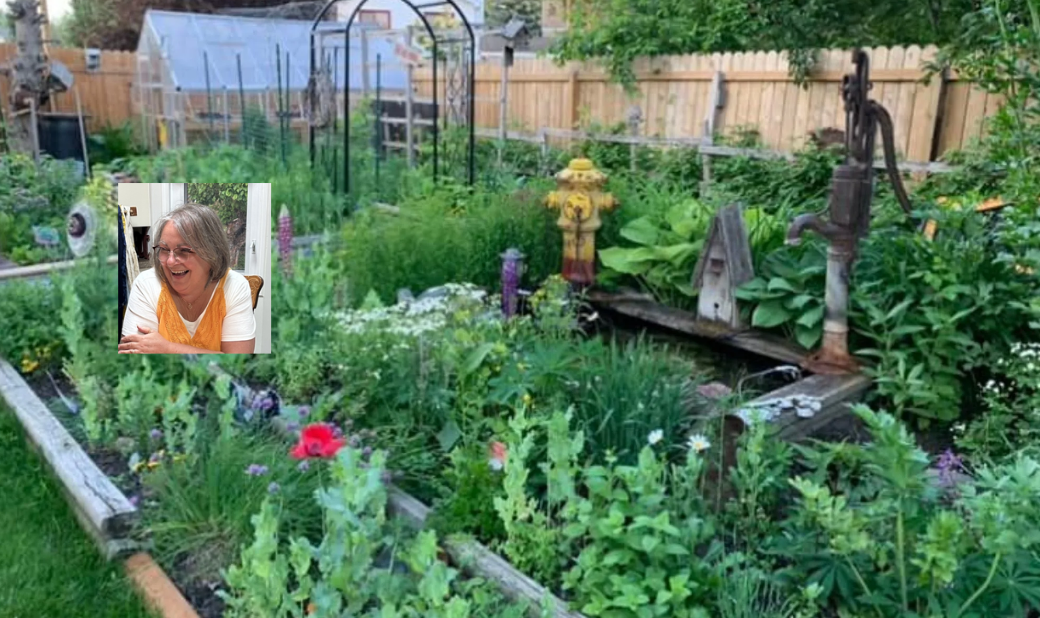
“Yes, I know its a weed.” There I said it. Let’s get that out of the way from the beginning. Just because it volunteers its called a weed, but Hello, “WEED” is NOT a swear word. Just because something is called a weed, doesn’t mean we should discount it. The word is only a ‘term’. Many ‘weeds’ have earned their spots in my garden, in fact, some of my best friends are weeds.
Doubling your garden yield is a lot easier than you think – when you are willing to think outside the box. Open your mind and read on.
A garden is never entirely in our control – no matter how many years experience we have. Sometimes we simply have to roll with the punches, and it requires constant flexibility, and a willingness to be okay with something that may look entirely different than what we were originally working toward. The garden is always an “unbounded source of the unexpected”, but what if you could harvest vegetables you didn’t plant? WEEDS are perfectly suited to grow under the most inhospitable conditions, and are resistant to most diseases. If you could find some value in them – wouldn’t it be worthwhile making friends?

So, what exactly IS a weed? By definition, it is a “valueless plant growing wild” – especially on cultivated ground intended for a more desired crop. Generally, a weed is seen to be a troublesome plant, causing injury to its more desired neighbours. Okay that’s rude, and I’ll admit, if a weed is being a jerk in my garden, it has to go. But many times, the plant hasn’t hurt our feelings; all we know about it is that someone told us it’s a weed. Who gets to decide that? Most often, we consider a plant a weed, because it has been defined that way for us by the historically respected wisdom of “they“, whoever “they” are. “They” say that this is a weed, so therefore I must despise it, and do my best to eradicate it. Simply put, “a weed is a plant considered undesirable“, but perhaps it might be undesirable in one situation – while quite desirable in another. It is merely a label for a plant in the wrong place. The term itself is a relative term, and what may be a weed to you may not be to me, and vice versa.

Okay, so for argument’s sake, let’s agree that a weed generally ‘volunteers‘ itself – essentially, invites itself to the party – which really isn’t polite in some circles. And by common understanding, it competes with the invited guests, for resources like water, sunshine and space. Also – not polite. So it’s a little loud, and takes up too much room at the buffet, and yes – a weed usually reproduces rather aggressively, or is invasive, but still – let’s not HATE a plant just because it doesn’t have good garden manners. A plant that is a weed in one context is not a weed when growing in a situation where it is in fact, wanted. The first time I saw an oriental poppy flower, I was shocked at how beautiful it was. It was growing uninvited in my vegetable garden, and I realized that I had pulled several of that same ‘weed’ out without knowing what it was. I fell in love with it that day, apologized for my short sightedness and we’ve been friends ever since.
If a weed is characterized by not being wanted, does wanting it mean its no longer a weed?
What if you find value in some of them? Would they cease to be the scourge they are now? What if those same weeds became part of your summer meals? Many are available in the early spring, before your vegetables are ready to pick, or perhaps even planted. Used to their fullest, weeds can increase the potential yield of your garden, and at the very least – make it more interesting.
Most of the weeds I talk about in this post grow from self seeding, a few come back every year from their roots, so they are up and established weeks before your regular garden. This means you can start eating nutritious and delicious mixed garden greens (lambs quarters, chickweed and dandelion leaves etc) in your salad as early as the beginning of May (in the Edmonton area) most years. By mid June, as your garden grows and develops. they’re in full form, and by July you will be eating more ‘regular’ vegetables from your garden, adding more and more lettuce to your salad as the days go by and needing weeds less. But not to worry, they don’t get their feelings hurt easily. They’re forgiving and are there for you when you need them. That’s what friends do.
I have one constant exception to my “let’s be friends rule“. Creeping Bellflower is a THUG in the perennial garden. I cannot say a single good word about it.


It is not native to North America – brought as an ornamental from Europe. It is excellent at disguise, and for the first few years, it will be all pretty, with good table manners, but don’t be fooled. Many a well meaning gardener has fallen victim to the pretty blue/purple bell shaped flowers, thinking “it can’t be all that bad, its kinda pretty“. Beneath the surface it’s building a rhizome substructure that is infiltrating your perennial flowers, your lawn and your vegetable garden. It’s goal is to dominate the world (probably in league with ants). By the time you realize what you’re dealing with, you’ve got a real problem on your hands. Learn to recognize its heart shaped leaves, and dig it out the minute you see it. Don’t bother pulling, you’ll never get it all, you’re gonna have to loosen the soil all around it and gently tug. And don’t think chemicals are gonna save you – creeping bellflower laughs at Round Up. If you wait, they’ll continue to thrive and choke out flower beds and lawns.
They thrive everywhere. Sun, shade, wet, dry. They can lay dormant for years and will pollinate themselves to make seeds. It is the stuff of nightmares, spreading from even the slightest hair of a root missed in your soil. Listed as a noxious weed in Alberta.
That’s enough for now about stupid creeping bellflower. I want to talk about good weeds in this post. But because being forewarned is being forearmed, I’ll include some more information about this devil weed in the footnotes1. You can check it out later if you want.
This list is not by any means complete – I am sure there are many weeds others are eating, that we in my house have not yet. And that’s okay. I don’t feel the need to introduce any weeds I don’t already have – I’m content finding value in the ones nature has given me already. You might find the ones I have here helpful.
Garden Weeds
When I was a child, my dad used to tell us that when he was a child they were so poor they had to eat weeds. He was born in 1930 on the prairies so his childhood spanned the depression and war years. I on the other hand, was raised in the 60’s on a military base in northern Alberta. I wasn’t even sure what a weed was. Nevertheless, I was dutifully impressed. It did sound “poor”. Like most people at the time they were poor, and with 16 natural children they were even poorer than most. Though unintended, the idea of eating weeds was imprinted on my young mind, so it was no surprise then, that when as a young adult, I came across this book EDIBLE GARDEN WEEDS OF CANADA advertised in a Harrowsmith Magazine, it jumped out to me, and I bought it. In 1984. The old fashioned way, by mailing my order in along with a checque.
The book was written in 1978, and though a wealth of knowledge, most of the pictures were diagrams – a little tricky for someone as new and clueless as I was to identify. Nevertheless, it became a valuable resource – and I still have it. The authors define a weed this way: “A weed is any plant, usually fast growing and aggressive, that establishes itself without the direct aid of man in gardens, fields, pastures, lawns and other disturbed sites.” Pretty good and simple definition. “Well adapted for survival” they add.

In this book are lots of edible weeds that don’t appeal to me like quack grass, milkweed, daisies, and thistles; but there are others that do appeal to me like amaranth, chickweed, comfrey, dandelion and lamb’s quarters. Its no match for the research available online today, but it got me engaged and serious. “In the future,” say the authors “private gardeners and large scale agriculturalists alike, may find it practical to grow some so called weeds as bonafede crop plants. … We need to take a long, hard look at our conservative eating habits, our less than ideal nutrition, and the amount of money we spend on food. We should be able to do better in all three areas. Weeds can help if only we let them.” Who knew it would forecast my own future? Here’s to all the influences that opened my mind! Here’s to whatever influences open your mind!
AMARANTH
Amaranthus is a group of more than 50 species grown in many different climates and places throughout the world. It is a single season plant which self seeds. In our area, we would know it as pigweed. I’ve always known that pigweed was edible, but as it grows bigger, I discounted it’s value until recently. I had nearly eradicated it from my garden entirely – quite certain that I had – before a ‘mystery plant’ that my community gardening neighbour Fidelis grew in his plot – came to my attention.

– insert my commercial for community gardening here –
I have gardened all of my adult life, but most of it was done in my own backyard. Over the years I have learned much from others; thank you to all who helped me along the way. But gardening alongside others in a community garden, especially those of different cultures, opens up a world I would have missed entirely without it. The first year of our community garden at Sakaw, I volunteered and took care of the herb garden, but I didn’t take a personal plot. But by the second year I decided I was spending enough time down there anyway that I might as well, and I also noted the full sun that I was a little short of at home. I rented a plot.
One of my gardening neighbours is Fidelis from Cameroon (a west African country almost on the equator), and I noticed he consistently planted a green vegetable that did very well, but that I could not identify. One day I asked him what it was. “FOLON” he said. He donated some plants to our food bank plot and gave me some to take home to try. I asked him to teach us about this plant which is not a familiar vegetable to us. He did. Things we can learn from other gardeners!
– end of my commercial for Community Gardens –

What he was growing WAS familiar to us – just not as a vegetable. Amaranth. We call it Pigweed; more specifically – redroot pigweed, or prostrate pigweed – a common weed, it grows prolifically in disturbed soil and self seeds easily; yup, a bonafede legitimate WEED.
The same plant (but another variation), that another friend grows ornamentally – having bought it from a local greenhouse: Love Lies Bleeding. The same plant that two fellow community gardeners from Jamaica call Callaloo. The same annual volunteer plant that I have always known as ‘pigweed’. Who knew?
I’ll admit, having come across it over the years, and being aware that it was edible – it never really appealed to me. I was accustomed to seeing greens only as tender leaves similar to spinach or lettuce. Pigweed is a little coarser, best in my opinion, when cooked.
For an interesting sidenote see the footnote. 2
is it good for you?
YES! Popular as a vegetable throughout the world, amaranth is a treasure. It is a nutritious and healthy food choice, the leaves are nutritionally similar to beet greens, swiss chard and spinach. Rich in vitamins A and C, it is also a superior source of carotene, iron, calcium, protein and trace minerals. The grain (seeds) is gluten-free and rich in protein, fiber, vitamins, and minerals.
who eats it?
A native of the new world, the Spanish spread amaranth throughout the Caribbean, Asia and Europe. In Indonesia and Malaysia the leaf is commonly eaten and harvested, as well as in the Philippines, and throughout India. In China, the leaves and stems are used as a stir-fry vegetable, or in soups. In Vietnam it is used to make soup. A traditional food plant throughout Africa, amaranth is an important agricultural vegetable, improving nutrition and boosting food security. In Greece, purple amaranth is a popular dish boiled, and served with olive oil and lemon juice like a salad, sometimes alongside fried fish. In parts of the Caribbean amaranth is sautéed with onions, garlic, and tomatoes, or used in a soup called pepper pot soup.
ALL THIS – FROM A GREEN VEGETABLE WE GENERALLY DISMISS AND REMOVE BECAUSE WE CALL IT A WEED!
how to eat it?
Though the very young leaves are tender, you’ll miss a lot by not letting them grow bigger. But not toooooo big. It’s a relatively new vegetable for me, but I am having fun learning how to use it.
- Steam it to serve it as you would steamed swiss chard, spinach or beet greens.
- Use instead of spinach in green smoothie.
- Lightly steam and then mix with other ingredients to make a dip for vegetables or a spread for fresh bread or crackers. 3 (recipe in footnotes)
- Add it to a cream soup. 4
- Use it in place of spinach to make Palek Paneer.


the swirl is a teaspoon of the dip that I added and ran a butter knife through
BORAGE
Borage was ‘invited’ initially, into my garden, but because it returns year after year on its own – by definition it has become a weed. If one was a weed bigot, they’d miss out on what Borage has to offer.

Borage attracts bees and other pollinators to your garden. You’ll need to remove it from spots where it will shade or outgrow nearby plants, but for heaven’s sake, don’t deny it a place simply because you didn’t invite it.
Borage is edible in leaf, flower and seed, and fairly nutritious; it is for this reason that it was first invited into my garden but it has earned its honoured place for other reasons. Borage flowers and young leaves have a mild cucumber flavor. The leaves are prickly and it’s hard to get passed that, so to me they’re not worth it. But that’s okay, we’re friends anyway. The blue-purple flowers make a cheerful addition to a glass jug of ice water or lemonade and a pretty topping on salads and desserts. It is also an attractive decoration to cake tops.
Borage flowers feed pollinators and provide shelter to beneficial insects that help keep pests in check. It’s big leaves shade the soil around, keeping it cool. The flowers will set seed, which is a good thing, ensuring you get more next year. You can easily pull the ones that grow in places you don’t want them.
Borage makes a rich and nourishing ‘green manure mulch’ to use around other plants. You can chop a borage down and throw it on the lawn to be mowed up, then gently tuck the mulch around your heavy eaters like tomatoes. As it breaks down, it provides minerals for the plants. The plants can grow quite big and have a wild shape to them – sometimes providing too much shade, so trimming them down and removing rogue unruly branches will keep them tidy. By allowing them to flower you attract pollinators, and by cutting them back from time to time to add back to your soil as mowed mulch, you have a win/win situation.
Borage is a flowering herb, flower, weed that I planted deliberately and would plant deliberately again if needed. HOWEVER, (there’s generally a ‘however’ when you’re talking about weeds), under good conditions a borage plant could grow up to three feet high, and spread an easy two feet in diameter. That’s a lotta space, and that’s a lotta shade! If you have a country garden and a lotta space, then this is good news. If like me, you have limited space in a backyard garden, then you have to be a little particular. So set some ground rules.
The rules for borage in my herb garden.
1. I let it go to seed in the summer so that I will have several plants to choose from next spring. Eventually in the late summer, I’ll probably have to pull out most borage plants in my garden, because I’m needing things to ripen and they need sun. But I don’t pull out more than necessary, and always after it has flowered and gone to seed.
2. And even then, it either goes into the compost pile, or I have Dan mow it up when he’s mowing the lawn. Then I use it as fresh mulch around some plant I want to be especially attentive to. It will be very moist mulch, but also fluffy – perfect. It will break down and share all its goodness.
3. In the spring, there is no way I can keep all the borage plants that would like to stay. These are the life and death decisions a gardener has to make. I choose the ones that are in a position to not crowd or shade plants that are important to me. Usually that is in the north east corner of my herb garden, where it will shade the brick walk way. But that is also where I have a Summer Savory plant so I need to make it gets enough sun and space.
I’ll find a few other areas to allow it to grow as well. Maybe one or two in my vegetable area. Maybe one or two in my black currant area. Wherever it looks like I have room.
*Tip: Borage does NOT like to be transplanted, so choose wisely which one you’re gonna move, and be gentle. Dig the new hole in advance of digging it up, and get it in there immediately. Be sure to water it well, and be attentive for the first week till it stops sulking. If you forget about it, you’re almost guaranteed to lose it in the first few days.

CALENDULA
Calendula are hardy, self seeding beautifully vibrant flowers, free spirits who grow where they want. Also known as Pot Marigold or English Marigold, I love their gorgeous bright orange splashes of colour throughout the gardens: flower, herb and vegetable. Because I pick them for fresh flowers in the kitchen, I sometimes worry that I am not leaving enough to self seed, so I intentionally ensure some blossoms get left to ‘seed’, and when ripened I freely scatter them throughout the area they’re in. My investment in the future.

My discovery of calendulas came as a gift from a neighbour who thought I’d enjoy them. I didn’t know what to expect, but trusting her I broadcast the seed and was delighted the next spring when they sprang to life, and even more so later, when they showed their cheery bright orange faces. Calendula flowers attract pollinators all season long, so they are valuable as companion plants.
Calendula petals are edible and add beautiful colour to a summer salad.
They are often used in infusions, salves and ointments (see below). It’s on my list to try using them in more ways than I currently do.
Calendula is a flowering herb, flower, weed that I planted deliberately and would plant deliberately again if needed. I was so happy with them in the first couple of years of our relationship that I share some seed with my mom. By their second summer she told me she hated that she’d planted them and that they were a nuisance. (?) I was surprised and asked why. “They’re a weed!” she said. “They come up everywhere.”
“Mom” I tried to explain “that’s the whole point! We want them to come back because they’re so wonderful. It’s a gift.”
The nice thing about them is that they only grow from seed, so they’re easy to manage. Simply pull them out where you don’t want them. If there was a “however” about calendula it would be that they self seed, but this is a very good thing in my opinion and I count on it from year to year.
The rules for calendula in my perennial flower garden.
- I let a few plants go to seed in the summer so that I can broadcast the seed over the entire area. Sometimes I save the seed to give away, and sometimes I take a seed head to another garden in my yard to share the wealth.
- I generally let them grow where they want in the spring, but if they’re too thick, I’ll pull a few out as needed. Later, when they’re bigger if they get a little unruly, I’ll pull a few more where they’re getting too crowded or too leggy.
- As the summer goes on and the plant is finished flowering, I’ll generally pull them out (making sure I’ve broadcasted generously before I do). The plants go into my compost pile.
Infusion
Put a handful of calendula flowers in a small boil. Pour 1 cup boiling water over top, cover with a plate and let sit for 30 minutes. Strain out flowers through a coffee filter.
for eyes: Use as an eye bath for dry irritated eyes. Dip cotton swab into infusion and gently wipe eye from inside to outside. Discard used swab; get a fresh one to wash the other eye.
for feet: Use as a foot soak. Supposed to have antifungal properties.
Ointment
About 20 fresh flowers, cleaned and roughly chopped.
In a double boiler (OVER hot water, not IN), combine with 1/4 cup petroleum jelly or shea butter, stirring occasionally until completely melted. Reduce heat, cover and simmer the water gently for up to three hours, checking frequently to ensure you don’t boil it dry. The ointment should be the colour of calendula petals.
Strain through a fine mesh sieve into a sterilized jar and allow to cool. Cover with lid.
use topically for skin: scrapes, scratches, abrasions, diaper rash, heat rash, chapped hands, superficial cuts and other surface wounds, eczema, psoriasis,
Apply sparingly to areas affected two or three times a day.
Keep up to three months in cool dark place.
* Make in small batches as it has a limited shelf life.
Oil
Using a sterile glass jar, fill to about half with DRIED CALENDULA petals (using fresh will introduce moisture into the oil and contaminate it). Pour a pure oil of your choice over top to fill the jar to about 1 inch from top (sunflower, almond, olive, avocado etc). Put a lid on and keep in cool dark place for 4 weeks, shaking from time to time to ensure everything is immersed. If the flowers float to the surface, they’ll mould. If that happens discard everything affected.
After 4 weeks or there abouts, strain oil through fine mesh strainer.
It’s ready to use, but if desired, you can add more dried flowers and repeat the process for a stronger oil.
Dehydrate to use throughout the winter.
*to dry: peel clean petals out of blossoms by turning them inside out. Petals will fall out.
Dry in single layer on clean cloth on the table, turning over every day – for a week or more, till petals are completely dry. Or better yet, dry in a dehydrator on low heat for a couple of hours. Store in sealed glass jar in dark cupboard.
CHAMOMILE
German chamomile is an annual plant that reaches around 2 feet in height. It is probably the one you’re most used to seeing and the one pictured here, and although it is an annual plant, it is an aggressive self-seeder, so it will likely return year after year. Tricky.
Having said that, it has been a multi year long struggle to get a chamomile patch established in my ‘protected zone’, or my herb garden. I’m the only one I know who actually BUY the seed to try to grow it. The patch pictured here was in our alley. I loved it, but one day the owners dug it all up and laid sod (boooo). It was in the perfect sunny spot for them. My back fence is facing north so it gets very little sun and chamomile does not thrive there.
I’m sure my neighbour thought they were doing the world a favour by getting rid of it, and in all fairness, chamomile is listed as a noxious weed. In rural areas it can be a real nuisance in fields of planted crops, or in ditches. So it seems ironic that I am having such a hard time getting a patch established. I do have a few plants volunteering this year in my herb area at the Community Garden, so I’m hoping for the best. I’ll continue to try.
Wild chamomile is sometimes referred to as Pineapple Plant or Pineapple-weed, is an annual ‘weed’ that commonly grows in inhospitable areas like gravel driveways, cracks in sidewalks, road sides and of course in fields – any place where it gets plenty of sun and heat.

Pineapple weed gets its nickname from its appearance and scent. The shape of the blossom is reminiscent of a pineapple, and when you pinch one of the flowers you will smell the sweet, light sent of pineapple. Like the other chamomiles, it has medicinal qualities. It is a sedative herb that relaxes the digestive system and settles the stomach (including motion sickness). Also good for calming nerves, and as a mild relaxant to help you sleep. Because of its soothing properties it is used to help reduce stress and anxiety.

It thrives in the most inhospitable areas.
Its hard to say how to grow a ‘weed’ because just the nature of a weed means it grows wherever it darn well feels like it. Usually the problem is to stop growing where you don’t want it. But I find that to be true only until you find a useful purpose for it. Afterward it suddenly gets picky about its growing environ. Wild chamomile grows in cracks and seams and gravel, but in my garden it grows in a protected area, where weeds can be safe. But because it is used to abuse and inhospitality, it doesn’t thrive in a wholesome environment. Poor thing. So if you have a terrible spot in your yard, plant pineapple week in it. You’ll both be happy.
Pick it to use fresh, or to dry for winter use. Of German Chamomiles you can use the flowers and leaves, and even the stems, but I only pick the flowers because they’re so plentiful I don’t need anymore than that. But for the pineapple weed, because its so small and I usually don’t have a lot to pick from, I pick the blossoms and leaves, and if the plant is young and tender, I pick the stems too. Swish the plant around in water then flick off excess moisture or run through a lettuce spinner.
To make an infusion (a cuppa tea), take a large handful and steep in tea pot with boiling hot water for 10 – 20 minutes. Easier to keep hot if you gently simmer in a small pot on very low heat. Strain as for any tea, and drink with a touch of honey or a dash of stevia to sweeten if desired. Adding a pinch of mint leaves gives it a nice flavour. Brew lots and chill it for a nice refreshing iced tea later.
Chamomile is another flowering herb, flower, weed that I planted deliberately and would plant deliberately again if needed.
CHICKWEED (common chickweed and long stalked chickweed)

I’ve taught classes where I have brought chickweed growing in a pot to show, and had people convinced they’ve never seen it before. I believe they have, they’re just not used to seeing it that up-close-and-personal, or perhaps that well taken care of. The plant lies low and trails the ground, the perfect ground cover. It is easy to pull up and get rid of, but don’t be so quick to try to eradicate it. It is one of my most valued plants (weed or no weed). Learn what it looks like and treat it with the respect it deserves.
Hated by many gardeners, chickweed can be transformed from a pest to a deliciously tender ‘vegetable’ by anyone with an open mind. Hardy, self seeds, highly recommended. With a delicate flavour, chickweed is a nutritional power house: calcium, essential fatty acid, iron, magnesium, manganese, phosphorus, potassium, selenium, silicon, sulfur, zinc, vitamins B1 B2 B3, C and E.


Common Chickweed that we so often find in our gardens, is a tender plant, branching out from a central root. The small leaves are bright green and sometimes referred to as ‘mouse ears’. The flowers are tiny, white and star like. Although its an annual, chickweed self seeds and so if you’re lucky, you can inadvertently bring in some seed with garden soil if you bring any plants into the house for winter. Common in most gardens, especially in damp partly shady areas.

Chickweed is super easy to eat right on the spot while you’re working in the garden. Be careful not to pull it up by the root as you don’t want to kill it. I know, that is contrary to what you’re naturally inclined to want to do with ‘weeds’, but once you understand and experience the value of chickweed, it will be a valuable and protected plant in your garden. Coarsely chop to add to a salad, throw into a smoothie or steam with other greens. There is no shortage of ways you can incorporate chickweed into your daily summer diet, and you will feel better for it. I promise.

Long-leaved Chickweed is a native plant to the Edmonton area. Also known as long-leaved stichwort or long-leaf starwort, it is a perennial clump-forming plant with stems that are erect or straggling, often branched. It can grow up to 20 inches long. It’s flowers are small and delicate, white with five parted petals.
It normally grows in wet meadows, woodlands, and in marshes where the soil is moist and fertile with full sun. It is considered protected in the wild, and as most native plants are endangered it should never be picked and transplanted. The only way to get one is to purchase a plant or seed from a responsible organization like EDMONTON NATIVE PLANTS SOCIETY which you can look up online. They also have a face book page. They propagate for the purpose of sharing the plants to interested gardeners.
DANDELION

In addition to just good nutrition, dandelions have the potential to provide some therapeutic health benefits. They contain powerful antioxidants which we all know is important to a healthy immune system, and research also indicates they may have anti inflammatory properties as well as being a natural diuretic. Dandelions contain bioactive compounds that are known to assist in reducing cholesterol, and for generations they have been used to promote a healthy liver.

Personally, I don’t know about all that stuff. Some people are passionate about the health benefits, and of course some are always skeptical. But for sure they are nutritious and are unlikely to cause harm, as long as you’re not allergic, so for me – that’s good enough for now. I consider them a gift from Heavenly Father, and I’ll use them where I can.
Dandelions are a power house of nutritional value: highly nutritious, containing vitamins C and B6, thiamin, riboflavin, calcium, iron, potassium and manganese. Compared to spinach – the well respected “super food” – dandelion greens have 8 times more antioxidants + 2 times more calcium + 3 times more vitamin A + 5 times more vitamin E and K. That should be enough information to at least compel us to want to give them a try. Dandelion acts as a mild laxative that promotes digestion, stimulates appetite and balances the natural and beneficial bacteria in the intestines. They are a unique addition to your well balanced diet and healthy lifestyle.
using:
Dandelion greens are one of the healthiest of green vegetables. Yes, they’re a little on the bitter side, like radicchio and endive only more so. It seems that “bitter herbs” are the ones with all the nutrients in them. (How ironic is that?) So be creative, and be persistent in finding ways that you can enjoy them.
*Leaves / the greens: are more tender and less bitter in the early spring. Simply snip the leaves from your protected plants, as you would any other garden green. Wash in warm water, and dry as you would leaf lettuce. Cut them up to add into a salad to distribute among the other greens. Studies indicate that bitter flavours are great for digestion and curbing sugar cravings. Eating more dandelion can be as simple as sprinkling a handful of chopped leaves into your next salad. Later, the leaves get quite strong tasting with that bitterness unique to dandelions. I have heard the blanching them helps to get rid of the bitter taste. To blanch, put into boiling salted water for 30 seconds to 2 minutes. Strain them and transfer them to ice water.

Served with cucumbers and crumbled feta.
recipe: DANDELION OMELETTE for one (see footnote below) 5

*Flowers: can be picked when they are nice and young. Wash them by gently swishing in cool water. You’ll be surprised how much dirt will settle in your water when you thought they were clean. Remove all green from the underside, not because it’s bad for you, but because it doesn’t taste good. Toss into your salad whole. Some people batter the blossoms and deep fry them like a fritter.
Or make a dandelion iced tea. NOT kidding! It is quite delicious and very refreshing. Pick lots of dandelion flower heads, being sure to wash them in cool water. Put them in a clean pot and pour boiling water over to cover and a few more inches. Let them steep for an hour or two till completely cooled. You can drink anywhere along the line, the only difference is gonna be whether its hot or cold, and the strength of the infusion of course. I drink it hot, room temperature and cold from the fridge. I like it all ways, but probably chilled is my favourite. Surprisingly it does not need any sweetener.

*Roots: are good all year long, but some say better before frost (can’t say that I have noticed any difference). When digging, make sure you dig deep down to get as much of the root as possible. I am always looking for the nice big deep roots; the deeper, the more minerals they’re bringing to the table, and lets be truthful, those are the ones that are easier to peel.
Cut them off the plant and soak them in water to loosen the dirt. Brush and rub together to clean, changing water as needed.
I gently scrape each one with a small paring knife to remove remaining dirt and to peel. I chop them then leave them on a plate to dry until I have enough to roast.
To make a coffee-like hot drink (decoction): chop into small pieces no more than 1/2 an inch. Heat your oven to 400° F, and place roots on a pan to toast for 10-15 minutes. Don’t leave them alone, as they will burn easily, checking every three or four minutes and move them around when they begin to toast to try to keep the toasting even. The pieces should smoke a little and give off a chocolaty aroma while cooking. When most of them look like ‘chocolate’ pieces, and snap apart easily they are done. Allow them to cool, and then store them in an airtight jar out of sunlight.

I have a coffee grinder but I’ve never used it for coffee. LOL. I just throw these toasted root bits into the blender and blend to a coarse crumble – like cocoa nibs. Or just use in the small chopped pieces you roasted.
To prepare a hot drink:
I add two tablespoons to 4-5 cups of boiling water.
Lightly simmer for 5 minutes, remove from heat. It will be a very dark colour, not unlike coffee.
Strain through a sieve as you pour into a mug. Add a half dried stevia leaf to sweeten or a small amount of honey.
I sometimes reuse these same nibs, by adding more water later and gently simmering till I like the colour. I’ve reused as much as twice, and though the strength lessens, that last batch makes a nice refreshing drink when cooled.
FEVERFEW
Feverfew is a cheerful, ferny plant with lots of pretty small white daisy-like flowers with bright yellow centers. It is adaptable and low maintenance. It loves full sun and well drained soil, but is agreeable to partial shade. When the flowers are mature / ripe, their yellow centers will begin to dry and brown into seeds. I usually take two or three of these seed heads and sprinkle them among my entire garden. That will give me hundreds of volunteer pop-up plants for next summer. They are a biennial which means they flower and go to seed in their second year. They don’t come back the next spring, but lots of little feverfew babies do.

In its second year, in a favourable spot it can grow to up to 20 inches. A nice bushy, ferny plant. Feverfew is easy to remove where you don’t want it, and its easy to transplant too. Its just an easy going friend, who doesn’t take offense. I allow it to grow profusely in my herb garden, flower gardens and even a few in my vegetable garden. Just because we’re friends, and we get along well.
Feverfew is such a pretty plant, it brings me joy. The taste however, . . . it may have medicinal qualities, but it would never make it in the kitchen. That’s okay. You can’t be every thing to everybody. The taste is strong and bitter to me. My mother-in-law said she’d have to put it in a mouthful of something else to eat it. And that is exactly what I would have to do. Be creative. You only have to eat one leaf.
Feverfew is NOT a pain reliever, so don’t take it when you’re in the middle of a migraine. It is a preventative. I have never suffered from a migraine, and rarely get bad headaches, but those who take one pill a day, or one leaf a day as prevention, swear by it. It is effective in decreasing frequency and severity, and many people I have spoken to about it, say that their headaches are significantly fewer and more manageable.
It is also used to relieve chronic premenstrual cramping.
HORSERADISH

So many people are afraid of planting horseradish. They’ve heard nightmare stories about how invasive it is, and the truth is, if you don’t want to eat it, there isn’t much point in growing it. Yes, it will come back every year, so I guess that makes it a bit of a weed, but open your mind. It is a very helpful plant to have around as a companion plant, but also as a salad green in addition to the sauce you make from its root. And therein lies the secret of controlling it. If you eat it, you EAT THE ROOT. Harvesting it is how you control it. Digging out the root at the end of every season, prevents it from getting too far ahead of you, and robustness is pretty important if its gonna continue to come back.

Yes, horseradish’s most commonly used part is the root, known for its strong, pungent flavour (and its heat) – that you either love or hate. But don’t discriminate against the leaves, as they are quite edible and very delicious when they are young. They have a sharp, bitter, and peppery taste — similar to arugula and kale and yes, even radish. Snip one or two fresh young leaves and chop up to add to a mixed green garden salad. I’m not suggesting a “horse radish leaf salad”, but to have some horse radish IN your mixed green salad is completely delicious. Try incorporating some of the young leaves into your next garden pesto. Or even add to the greens in your stir-fried vegetables. Be creative. Don’t be a garden bigot by not allowing certain ‘herbs’ or vegetables in your garden to show you how wonderful and versatile they really are.
LAMBS QUARTERS
Like many weeds, lambs quarters self seed, so they are up and established weeks before your regular garden. Also called goose foot – lambs quarters is a relative of spinach and quinoa. Sometimes known as wild spinach, and considered a weed in most gardens, it deserves more credit than it usually gets. Highly nutritious, rich in V C and E, essential fatty acids, iron, calcium, minerals and antioxidants.

Like spinach, beet greens, swiss chard and most other greens lambs quarters contains some oxalic acid which when eaten raw in large quantities can inhibit calcium absorption.
These plants are so loaded with calcium however, that the amount of calcium not absorbed due to oxalic acid is minimized. Its a good idea to rotate your ‘greens’ for that reason anyway. Variety is a good thing. The black seeds are edible and very nutritious. Very good source of protein.
The underside of Lamb’s Quarters’ leaves and top of the new leaves are covered in a fine pink dust. Resist the temptation to wash it off as it is full of calcium and protein. It contains even more protein than kale. When lamb’s quarters is young, the entire above ground plant is edible. The stems and leaves can be eaten raw, steamed, or sautéed. Can be used any way and in any recipe that spinach is used, including a ‘spinach’ salad.

When I am in my garden, I will often pick the tender new plants and eat them while I work. I never pull them to get rid of them. They’re much too valuable for that, I’ll just break them off.
I’ll also add them to salads, or to any other green that I steam.
MULLEIN

Mullein is a big, tall, unique looking plant with long fuzzy leaves, and in the flowering years it can reach six or seven feet tall. Introduced to North America with European settlers, it is considered a weed, that grows wild in fields and ditches in many parts of BC and Alberta. Some of the leaves can grow about two feet long.
Mullein is a hardy biennial in the western states and provinces from zone 3 to 9. It loves sun and dry, so its the perfect plant for the backdrop of a country flower garden, or along sunny fence lines. It is drought resistant so once it gets established, it will pretty much take care of itself. It requires winter dormancy before it can flower. Yes its a weed, but its a great ‘weed’ so don’t be a bigot; bees love the yellow blossoms and birds eat the seeds. If you don’t want the seeds to disperse freely, then remove the flower stalk before it seeds. Personally, I don’t mind plants that self seed if they’re easy to pull up where I don’t want them. Mullein is easy to pull up, so I mostly let the wind or birds plant them where they want and I pull them up where its not gonna work for me. In fact, that’s how it came to me. As a gift from either the wind or some of my bird friends. I didn’t know what it was for a couple of years. Since its a biennial, it was different the second year, and confused me when it didn’t come back the third year, but a few babies took its place.

My philosophy is to never kill something I don’t understand, and since it was new (and very interesting), I decided to let it prove itself to me. I figured it out finally and we understand each other now, and have a good relationship. It grows tall, so it needs room to be what it wants to be, but its so fun for the kids to touch the soft fuzzy leaves that I want it in a place where they can enjoy it.
As a biennial, the first year is the leaf year, getting only about three feet tall; the stalks and blossoms grow in the second year. Its small, yellow flowers are densely grouped on a tall stem, which grows from a large rosette of leaves. It won’t come back the year after it seeds, so if you can manage it, its good to have a few mullein plants in various stages of their development to ideally, you always have the tall yellow flowered stalks.
In the spring, when a cluster of a few plants appear here and there, I keep two or three at most in any given area and remove the others to replant elsewhere or two give away. With a little care, they’re easy to transplant.

Mullein is reputed to have expectorant and cough suppressant properties that make it useful for relief of the symptoms of sore throat and coughs. It has been used traditionally for respiratory conditions such as cough, asthma, pneumonia, and colds, but there is limited scientific research to support the claims. Currently the jury is still out on the medicinal uses of Mullein so for now, I use it only as an ornamental herb in my garden, and will continue to stay on top of continued research.
ORACH
Orach is closely related to spinach and lambs quarters. It is a self seeding annual, that stand erect and grow very tall. The leaves are most tender when they are young of course. Freely branching stems carrying many more leaves that decrease in size from bottom to top. Often the stems and leaves are tinged with red or purple. Sometimes they are all red, called Red Orach, and often referred to as “red spinach”. Aside from the fact that it is valuable as a food, it is extremely attractive in a vegetable, herb or even flower garden.

growing:
In my opinion, orache (a relative of the amaranth) is far superior to spinach as a crop vegetable because it can be harvested over a much longer period of time. I brought my first orach plant in as a transplant. A gift from a friend of my mother in law’s. For over a decade I let it grow where it wanted and removed what was in an unsuitable spot.
HOWEVER: Here’s the big ‘however’ . . . it grows TALL. This is good news because it produces well, but its also bad news because it shade everything behind it. Typically it grows 4 to 6 feet, but I’ve seen it grow even taller when its in a happy spot. A happy spot for orach though means it casts a long shadow. After a while, evidently I culled too many, and not enough went to seed. I ended up losing it. It propagates through seed only, and up till then I had not collected the seed, letting it self seed. A very good thing came to an end.
After a few years of nothing, in 2021, I purchased seeds online (a great find), and planted a deliberate patch of orach, hoping it would flourish, and go to seed. I promised to be more attentive to keeping it. I had planted all the seeds I bought (a mistake), and though they grew, they didn’t do very well, didn’t grow very tall and did not go to seed. I suspect that the spot I offered them was not sunny enough. I had a dry spell for a few years. Then, this year (2025) I see a few orach plants growing where I didn’t deliberately plant them. It’s likely that the seed sat dormant for a long time, recently being transplanted – as I frequently top this spot up with wonderful soil coming from my compost area. Just the right spot, with just the right sun – to grow. THIS IS THE BIGGEST ADVERTISEMENT I CAN USE FOR NEVER GETTING RID OF A PLANT before you know for sure what it is. If I had done that this time, I’d have missed this gift at second chances. As it was, I didn’t recognise it, so I let it grow bigger till I could recognize it. You can bet I am nurturing it – even though the location isn’t ideal. I hope to regain my former plentiful situation, and I promised I would be a better steward.
As orach grows taller, the leaves get smaller. So pinch off the big leaves to eat while you can, they don’t last forever. Pinching leaves off promotes new growth, so its a win/win thing.
using:
I use Orach like spinach or beet greens, or swiss chard, or lambs quarters. When young, in a salad, when a little older and less tender, then I add them to anything I use normal ‘greens’ for: steaming as a side dish, chopping and adding to omelettes, or scrambled eggs, to an Indian dish called palek paneer, to a favourite dish called Spanakopita (Greek spinach pie) with feta, . . . . be creative. Don’t waste it.
PLANTAIN
Plantain is a low growing perennial weed common throughout most of the world, introduced to North America (like so many things) with settlement by Europeans. Whether you knew the name or not, the chances of you being familiar with plantain is very high, as it is found on disturbed ground almost everywhere – city, town, farm, meadow, woods, … you name it. In earlier days it became known as “white man’s foot” because it was common along roadsides and other disturbed areas. The seeds would stick to the boots of the travelers and to their animals. It grows and spreads in areas close to people and domestic animals. Interestingly, it is also wind pollinated so not dependent on bees, and the seeds along the spikes are popular with birds.

For all the above reasons, it has come to be a noxious weed in North America. Kind of ironic as the definition of noxious is “injurious to physical or mental health“, and plantain although perhaps irritating to farmers, can be very beneficial and in different parts of the world it is actually cultivated as a crop.
I have transplanted plantain plants to a ‘protected area’ of my garden, where weeds are allowed to grow in peace and safety. It has taken me a few years to educate the people I live with about the value in some plants so that the ‘weeds’ can be left to thrive. They don’t pretend to understand me. They just roll their eyes and shrug their shoulders and promise to stay out of the protected zone. Last year, I had to transplant in two more plantain plants because my well meaning mom dug them out in the spring lol. But I think we’ve made progress. I have put up a sign in that section of my garden that say “Let it Grow“. It was my daughter’s slogan; I voted for “Weeds have rights too”, but she was the one who made the sign so she had veto power.
The seeds and tiny flowers extend just about the full length of the spikes. The leaves are broad and oval shaped. The stocks holding the tiny flowers grow up from the roots.
Plantain leaves are edible, both young and older leaves. In the spring, the young leaves are more tender and suitable to add to salads, while older leaves are a little tougher and best suited for cooking in stews, soups, etc. I would rather not eat them at that point. They can also be dried and used to make tea or infused into oils. While in season, the leaves can be macerated and applied to bug bites or stings.
The seeds can be ground into a meal and cooked with grains like quinoa.
Nutritionally Plantain leaves are a good source of vitamins and minerals including calcium, Vitamins A, C and K.
The seeds are also edible and when cooked will swell. I’ve never eaten them either.
The leaves are also used as a fresh poultice (called spit poultice) for insect bites. To make a ‘spit poultice (I know, I don’t like the name either), pick several leaves, and mash them together. You can put them in your mouth and chew up to make a green mush – hence the name. This could take you awhile as the leaves can be fibrous and …. well, chewy. The enzymes in your saliva apparently help release the healing and antiseptic properties from the leaf, and give it the proper texture to apply to the bite area. Wrap with gauze or other clean fabric to keep it on for several hours, replacing when it dries out. Similarly it is valued for its soothing quality and is used in salves for open sores.
Fun fact:
A close relative to the common plantain we find growing freely in Canada, is a a plant called Plantago Ovata. The seeds of this plant are particularly rich in mucilage, a soluble fiber that absorbs water and forms a gel – known as psyllium, a popular bulk-forming laxative. The seeds absorb water becoming a thick, viscous compound that resists digestion in the small intestine. This resistance to digestion allows it to help regulate high cholesterol, triglycerides, and blood sugar levels, as well as relieve mild diarrhea and constipation. Unlike some other sources of fiber, the body typically tolerates psyllium well, making it a helpful natural choice.
Most commercially sold psyllium sold in Canada comes from India – as the herb is not grown in North America as a crop. Psyllium husk is the main active ingredient in Metamucil, a fiber supplement that reduces constipation.
* Because of its excellent water solubility, common plantain seeds (very closely related to the Plantago ovata) is a good resource for the same properties.

POPPIES
Poppies are the perfect example of why we should wait to see
what something is before we decide its destiny.

One of my garden’s most pleasant surprises is the sudden midsummer splash of RED interspersed here and there. I first discovered Poppies quite by accident, in the little Ukrainian neighbourhood of our tiny farm-town – Calmar, Alberta. We were a year or two into our very first real garden, in our very first real home – an old, rundown house that we loved and fixed up. I worked hard in my garden, trying to keep it as weed free as possible, but one evening when I was wrapping it up for the day, I surveyed my work and noted a single tall weed in the middle of my potato patch. It looked so strong and healthy I didn’t have the heart to pull it out, so I left it. The very next day it rewarded me with a big, gorgeous red flower the like of which I had only seen in pictures. My neighbour confirmed it was indeed, a poppy – a “weed”. That was my first experience with the idea that the word ‘weed’ is a relative term. We really shouldn’t get so tied up in the word, as if it defined value. And yet we know we do. I learned that my poppy produced seed, the same poppy seed so popular in Ukrainian baking, and so began a life long friendship: Me and poppies.
That single poppy was the beginning of a dynasty. It did what all poppies do after they bloom, it went to seed. Inside a poppy pod are thousands of tiny seeds. At first white, they ripen into an assortment of grey and black. I took those ripened seeds and broadcast them all over my garden. The next year I had lots of poppies, and lots of seeds. I have taken the seed with me to every house I’ve lived in since then, and shared them with everyone who asked for some. In the mid 1980’s we lived in a townhouse for two years while Dan went back to school. My poppies were growing in the only sunny spot my small yard offered, one we prepared under our front window, with the many other flowers and herbs we brought with us. After my poppies bloomed, some stupid Neanderthal came one night and cut off all the unripe pods, taking them. When we woke up in the morning, they were all gone. Of course there was a purpose – it’s an opium poppy after all, and I supposed the thief knew secrets I didn’t know. I never grew poppies in a front yard again.
Poppies are a bright, colourful, early summer addition to any flower, herb or even vegetable garden. All they need is sun. They can grow to three feet high, maybe higher. Straight and tall, with beautiful toothed, light green leaves and striking crepe-papery flowers that tower over their neighbours. They come in lots of different colours, but of this type I have only ever had red, and slight variations on red.
I learned long ago that when they grow in clumps of several, and for crowding reasons they don’t get enough sun, they will not grow very big. Could be even just a few inches. They will flower, but just small flowers with small seed heads. Its important to thin them out to no more that two or three relatively close together, and make sure they are not shaded by nearby plants. Single poppies (with less competition for sun) will grow the tallest, making the biggest heads, hence the biggest flowers, and ultimately the most seeds.
Because I have limited space, my gardens are rather . . . . . . FULL. And sunshine becomes a premium resource. I don’t want the poppies being shaded, but I also can’t have them shading lower plants either, and I want good airflow in my gardens, so there are concessions the poppies have to make so that everybody can be happy. If it’s seeds you’re after, when the poppies have finished flowering, leave it to ripen. But they no longer need all their leaves, in fact the leaves begin to dry anyway. I pull off all the lower leaves, which allows for better air flow and more light to get to surrounding plants.

Truth be told, I’d grow poppies just for their brilliant flowers, brief as they are in bloom, but every stage of the plant pleases me. Its a lovely plant as it gets ready to flower and the flower is spectacular. Then when they’re ready, the seeds are edible, often sprinkled on top of bagels and used in muffins, breads, cakes and salad dressings. And when all is said and done, the dried seed pod is its own kind of beautiful, making a classy statement in the maturing garden, and a striking addition to dried fall flower arrangements.
Poppies are easy to grow. They want sun, and otherwise don’t ask for much. They don’t even need good soil, and will grow almost anywhere. There are many different varieties and colours, and from the same seed, I have occasionally had pink or even double flowering blossoms. Such is the miracle of genetics. The poppy is an annual flower, and I broadcast seed freely when I harvest it in September or October. It sits dormant all winter and when the conditions are right in summer, they start to grow. It is not uncommon for me to have sporadic blooms from the beginning of July through the end of August.
using poppy seeds
Truth is, poppies are the source of opium, morphine and many other drug compounds. For centuries they’ve been used from mild sedatives and pain relievers, all the way to life and soul-destroying drugs. Personally, I decided decades ago I wasn’t interested in pursuing any use other than to the ripe seeds as a food. So while I acknowledge the darker side, I’m not going to waste anytime debating where the line is regarding it.
As a food, poppy seeds contain essential minerals like calcium, magnesium, manganese, phosphorus, zinc and iron, as well as some B vitamins and omega 6 fatty acids so necessary to a healthy heart. They have a distinctive nutty taste and are used whole or ground into meal as an ingredient in pastries and breads. I have always loved poppy seed muffins, cakes and breads, but the true Eastern European poppy seed roll was an acquired taste. Having said that however, I really like it now. Recipes abound for tons of dishes so be adventurous and try them. My faves include:
Poppy Seed cookies, muffins, scones, bundt cakes, loaf cakes and even angel food cakes.
Poppy seeds as a topping for breads, rolls, bagels etc.
Poppy seed dressing for salads.
STINGING NETTLE
Stinging nettle is not native to North Americas, brought by European settlers, but it has moved right in and made itself at home from Alaska to South America. It is a nutritious plant popular in days gone by as a steamed green vegetable, and used in Western herbal medicine. reported to reduce inflammation, hay fever symptoms, blood pressure and even blood sugar levels.

Also referred to as ‘Burning nettle’, its leaves can cause a temporary burning sensation upon contact. It can be an unpleasant surprise when walking through the woods, causing instant stinging pain which eventually reduces to a tingling but can last for several hours. You can be ‘stung’ without even seeing what you rubbed up against or inadvertently grabbed. Ironically, the antidote is to mash the leaves up in your hands creating wet pulp and rubbing the pulp onto the affected area. Counter intuitive I know, but it really works – I’ve tried it.
Stinging nettle can grow from two to nine feet high, depending on how hospitable its surroundings are. The heart shaped oval leaves are serrated and grow directly opposite of each other – between 3-6 inches (7-15 cm) long. The plant has pretty yellow, green or pink flowers, the stem is square and covered in tiny, stiff hairs that release stinging chemicals when touched. The leaves also have protective hair like structures that sting, producing itching, redness and swelling.
Stinging nettle’s leaves and root provide a wide variety of nutrients, including:
vitamins A,C and K, as well as several B vitamins; minerals calcium, iron, magnesium, phosphorus, and potassium and all of the essential amino acids.
The leaves, stem, or root from the nettle plant can be crushed and made into powders, tinctures, creams and teas. It has been used it for centuries as an herbal medicine, but more recently, modern research supports many of it’s potential health benefits. Stinging nettle contains a variety of compounds that may help to reduce inflammation. Applying a stinging nettle cream, taking extracts, or even eating the leaves appears to relieve inflammatory conditions, such as arthritis and gout.
I have very limited experience with Stinging Nettle other than to have been stung a time or two. They do not grow in my garden, and I haven’t felt any compulsion as of yet, to import them.
Many years ago I heard this little rhyme, and for some reason it stuck with me. I’ve searched, but I cannot find its source – it’s in my head without an owner. But I think of it from time to time, as I consider my present footing and what direction I’m headed.

additional weeds
There are a myriad of other ‘weeds’ and volunteers that are wonderful and highly valued, and edible. But I don’t have them all in my garden. Every once in a while I hear something that compells me to want to add another volunteer, but for the most part – I have enough, and they keep me picking from early May right through to frost. It’s gotta be pretty magnificent and of “good report” to tempt me to transplant some new ones at this point.
Having said that – it’s not unlikely that if you come back to this post in a few months, there will be another one to ‘meet’.

Fireweed:
I mention this only because it is a flowering native plant that thrives in a northern climate, valued by the native peoples of the north across continents. The young leaves are edible, but they get tough as they get older. They’re sometimes dried for tea.
The flowers are edible and can be made into jelly.
And the honey from fireweed is highly valued and unique tasting – only found in the north where it flourishes.
While we see fireweed in meadows and such, it’s not one we usually see in a garden – perhaps a country garden.
I have no personal experience with it as an edible weed.

this post is a work in progress . . . . I will undoubtedly add to it from time to time, so stay tuned. In the meantime, as always – I’d love to hear your relevant comments.
Below are the slides I use for presentations.
Cindy Suelzle


Footnote:
- Creeping bellflower. I’m sure that someone might come up with something good to say about it, but I don’t want to hear it. It’s tricked me a few times and I am on a lifelong mission to never allow it in my hemisphere again. I recommend being careful when you accept perennials from a friend. You could inadvertently be bringing some sneaky little roots in with the newcomer.
Before moving to our current house many years ago, I never knew what they were, and after moving here, I fell for the pretty blue flower, even transplanting some to my front flower bed – ON PURPOSE (not realizing what I was doing). Ignorance doesn’t save you from being exploited.
After several years I seemed to have conquered them in my back yard and gardens, but my front flower bed was a mess. I spent no less than twenty – thirty hours a season on my knees meticulously digging them out and digging out perennial plants, gently trying to remove bellflower roots from among their roots. My husband’s solution was to round up the whole garden and start from scratch but I couldn’t entertain that. I kept thinking I’d win out, but in the spring of 2024, I finally said “ENOUGH”!
We dug out the entire garden area that was infected. Every plant and cup of soil was removed with a shovel – two truck loads! We went down at least a foot, maybe more – to the solid hard pack beneath the top soil. We left the area open and bare for three weeks to ensure nothing would surprise us, then refilled it with good soil mixed with compost. I replaced all my loved perennial flowers with assorted new ones, and some I split and moved from the back yard. It was a lotta work, and a little pricey – but well worth it. Since then I have found the devil weed along the front garden border in two or three places but you can bet I’m on top of it, digging and removing as fast as I can see them. ↩︎ - An interesting sidenote: Amaranth was cultivated by the Aztec in central America in a quantity very similar to maize. It is thought to have represented up to 80% of their energy consumption before the Spanish conquest. Another important use of amaranth throughout Mesoamerica, was in drinks and as a grain, toasted much like popcorn and mixed with honey to make a treat.
Believed to be native to the Americas, the Spanish brought amaranth to Europe and introduced it to warm regions worldwide. The earliest archeological evidence for amaranth in the Old World was found in an excavation in Narhan, India, dating back to 1000–800 BC, making it one of the many plants providing evidence of pre-Columbian oceanic contact. This is of tremendous personal interest to me – but that is another very interesting conversation for another time. ↩︎ - Amaranth Feta Dip
Ingredients
1 cup chopped green amaranth leaves (8 oz) packed snugly
½ cup thick plain yogurt (or cottage cheese)
¼ cup feta, crumbled
handful of fresh chives, chopped (or green onion)
handful of fresh dill, chopped
1 Tbsp fresh lemon juice
1 small garlic clove, crushed
4 oz cream cheese (1/2 c)
pinch of salt – maybe (taste test at the end. Remember that feta is pretty salty)
fresh bread (sourdough is best)
Directions
Wash leaves and lightly chop any really large ones. With a little bit of water, steam in a covered medium saucepan on med heat till wilted and bright green. Don’t walk away, this will only take a minute or two. Strain in a colander and cool with COLD water. Squeeze any excess liquid out by using your hands.
Transfer wilted leaves to a food processer. Add yogurt, feta, chives or green onion, dill, lemon juice, garlic clove and cream cheese. Process till smooth. Taste and season with salt.
*Because of the salty feta, you may decide its salty enough.
*Serve with fresh sourdough bread or focaccia torn into pieces
OR
Brush thickly sliced bread with olive oil and broil on a cookie sheet as close to the broiler as possible till golden brown
OR
brush with olive oil and toast bread on grill till golden brown.
OR
add ¼ cup to ¼ cup olive oil for a salad dressing
OR
drizzle over grilled fish ↩︎ - Amaranth Cream Soup
Ingredients
3 Tbsp vegetable oil
2 tsp curry powder
1 tsp cumin powder
1/2 tsp salt
1/2 tsp pepper
1 small onion chopped OR 1 cup of chopped green welsh onion (winter onion / spring onion / walking onion)
1 medium potato diced
2 cups vegetable broth (or chicken broth)
1 14 oz can coconut milk (mix it well so that its nice and creamy)
1 cup (stuffed full) of fresh amaranth (or lambs quarters), washed and coarsely chopped
Directions:
Heat oil over medium flame in large skillet or med pot
Saute spices for about a minute stirring continuously.
Add onions and potato and saute till onions are tender.
Add broth, bring to a boil then simmer till potatoes are tender. Add greens and cook only until their colour has brightened and leaves have wilted.
Puree with an emulsion blender or in portions in your regular blender. The broth will thicken nicely and be a gorgeous green colour. Pour back into the pot and slowly add well mixed coconut milk into soup. Stir and heat thoroughly. Serve. ↩︎ - recipe: DANDELION OMELETTE for one
6 – 10 dandelion leaves, washed, stem removed and lightly chopped.
1 stalk of garlic chives with bulb, chopped
* optional: 1/2 red pepper coarsely chopped
2 eggs, lightly beaten
salt and pepper to taste
* optional: small amount of crumbled feta to sprinkle on top
Boil some water and blanche the leaves for a minute or two. Strain and set aside.
In a little oil, saute chopped garlic chives over medium heat till tender (just a minute or two).
Add the peppers and blanched greens, saute another minute or so. Turn heat down a bit, and pour beaten eggs over vegetables.
Sprinkle with salt and pepper or your favourite seasoning. Cook omelette till eggs are set.
Turn out onto plate and serve.
Enjoy. ↩︎
One Reply to “Making Friends with Your Weeds”